


12,99 €
12,99 €
-100%
Sammeln Sie Punkte in unserem Gutscheinprogramm und kaufen Sie E-Books und Hörbücher mit bis zu 100% Rabatt.
Mehr erfahren.
Mehr erfahren.
- Herausgeber: John Wiley & Sons
- Kategorie: Fachliteratur
- Sprache: Englisch
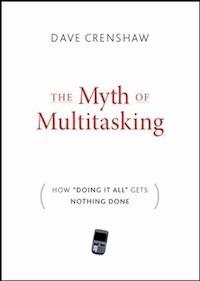
In a compelling business fable, The Myth of Multitasking confronts a popular idea that has come to define our hectic, work-a-day world. This simple yet powerful book shows clearly why multitasking is, in fact, a lie that wastes time and costs money. Far from being efficient, multitasking actually damages productivity and relationships at work and at home.
Sie lesen das E-Book in den Legimi-Apps auf:
Seitenzahl: 91
Veröffentlichungsjahr: 2010
0,0
Bewertungen werden von Nutzern von Legimi sowie anderen Partner-Webseiten vergeben.
Legimi prüft nicht, ob Rezensionen von Nutzern stammen, die den betreffenden Titel tatsächlich gekauft oder gelesen/gehört haben. Wir entfernen aber gefälschte Rezensionen.
Ähnliche



















Table of Contents
Title Page
Copyright Page
Dedication
THE COMPANY
THE OWNER
THE LIE
THE COST
THE ORIGIN
THE EXERCISE
THE EXAMPLE
THE QUESTION
THE MEETING
THE EXPECTATION
THE TRUTH
THE DEAL
THE CHANGE
THE STEPS
THE SYSTEMS
THE FOLLOW-UP
WORKSHEETS
SOURCES
THE AUTHOR
Copyright © 2008 by Dave Crenshaw. All rights reserved.
Published by Jossey-Bass
A Wiley Imprint
989 Market Street, San Francisco, CA 94103-1741—www.josseybass.com
No part of this publication may be reproduced, stored in a retrieval system, or transmitted in any form or by any means, electronic, mechanical, photocopying, recording, scanning, or otherwise, except as permitted under Section 107 or 108 of the 1976 United States Copyright Act, without either the prior written permission of the publisher, or authorization through payment of the appropriate per-copy fee to the Copyright Clearance Center, Inc., 222 Rosewood Drive, Danvers, MA 01923, 978-750-8400, fax 978-646-8600, or on the Web at www.copyright.com. Requests to the publisher for permission should be addressed to the Permissions Department, John Wiley & Sons, Inc., 111 River Street, Hoboken, NJ 07030, 201-748-6011, fax 201-748-6008, or online at www.wiley.com/go/permissions.
Readers should be aware that Internet Web sites offered as citations and/or sources for further information may have changed or disappeared between the time this was written and when it is read.
Limit of Liability/Disclaimer of Warranty: While the publisher and author have used their best efforts in preparing this book, they make no representations or warranties with respect to the accuracy or completeness of the contents of this book and specifically disclaim any implied warranties of merchantability or fitness for a particular purpose. No warranty may be created or extended by sales representatives or written sales materials. The advice and strategies contained herein may not be suitable for your situation. You should consult with a professional where appropriate. Neither the publisher nor author shall be liable for any loss of profit or any other commercial damages, including but not limited to special, incidental, consequential, or other damages.
Jossey-Bass books and products are available through most bookstores. To contact Jossey-Bass directly call our Customer Care Department within the U.S. at 800-956-7739, outside the U.S. at 317-572-3986, or fax 317-572-4002. Jossey-Bass also publishes its books in a variety of electronic formats. Some content that appears in print may not be available in electronic books.
Library of Congress Cataloging-in-Publication Data
Crenshaw, Dave, 1975-
The myth of multitasking : how “doing it all” gets nothing done / Dave Crenshaw.
p. cm.—(The Jossey-Bass business & management series) Includes index.
ISBN 978-0-470-37225-8 (cloth)
1. Time management. 2. Executives—Time management. 3. Organizational change. 4. Management. I. Title.
HD69.T54C74 2008
658.4’093—dc22 2008014797
HB Printing
For Carlos,who always taught me to“move very slowly, but in a great rush”
THE COMPANY
Phil glanced at the digital clock on his sedan. It read 8:54 A.M. He nodded to himself in satisfaction at being several minutes early. He had learned years ago that if he was going to teach efficiency and time management to others, he had better be living it himself.
After grabbing his briefcase, Phil opened his car door and stepped out. He turned and looked up at the sign on the sprawling building that proudly proclaimed GREENGARB: CLOTHES MOTHER NATURE INTENDED.
Phil had done his research about his new coaching client. Helen Whitman had been an influential executive in a large retail clothing chain for nearly a decade. Just a few years ago, however, she recognized the trend toward eco-friendly products and decided to make the jump into entrepreneurship. Last year, GreenGarb boasted sales of over $20 million and was heading for even greater growth.
Despite the success—or more likely because of it—Helen had hit a brick wall. After a bit of burnout, Helen had contacted a few close friends, asking for a referral to someone who could help.
As Phil walked toward the building, he reflected on his first conversation with Helen. Her situation was all too familiar. While the company sizes and industries of Phil’s clients varied greatly, their stories were echoes of each other. His clients were stressed out, overworked, and underpaid. They were finding themselves with more and more to do at work and less and less time for their family and other personal life.
These business owners all came to Phil for help. They were looking for someone who understood that it was lonely at the top. They were looking for someone who could help them make the behavior corrections that would get them more time and less stress.
Helen’s company was unique, but her story was the same.
As he walked through the front door of the building, Phil was greeted by a receptionist with a no- nonsense look about her. Phil found his mouth a little dry as he spoke up.
“I’m here to see Helen.”
The receptionist looked up. “Do you have an appointment?”
“Yes. Yes, I do.”
“Just a moment.” The receptionist pressed the intercom button and politely said, “Ms. Whitman? There is a gentleman here at the front who says he has an appointment with you.” After listening to the response, she said, “Please follow me.”
As Phil followed the receptionist down the hall, he glanced in each direction and noticed the offices of the company managers. There was a general feeling of controlled chaos on all sides. A few desks appeared organized, but most offices had piles of papers on the desk that occasionally flowed onto the floor. People walked in and out of the offices in a hurry, speaking in brisk, determined tones to each other.
Phil had certainly seen this before. Just by looking into the offices of the company managers, Phil grew a bit more comfortable. He knew what to expect when he walked into Helen’s office. In fact, he knew what to expect from Helen. The common saying was true: the business truly is a reflection of its owner.
THE OWNER
The situation in the CEO’s office was just short of chaos. A woman with glasses shot him a glance as if to say, “If you’ re here for Helen, wait in line.” Phil smiled. Helen waved Phil in and gestured to an open chair. “Please, come in and have a seat. We’ re just finishing up.”
Phil moved to the chair and considered the scene carefully. Two men whom Phil guessed were managers were sitting at the small conference table with Helen.
The woman with glasses stood impatiently, watching the proceedings. It was obvious to Phil she was not part of the conversation and was eager for a moment to catch Helen’s ear. Phil watched her with curiosity. She was biting her lower lip just slightly, trying to contain herself.
Finally the managers completed their conversation with Helen and stood up from the table.
Helen turned to the woman, displaying a bit of her own impatience. “Yes, Sally, what is it?” As Sally began speaking, Helen turned to Phil and interjected, “This will take just a moment, I’ m sorry.”
Sally sighed audibly.
“No need to be sorry,” Phil replied. He could sense the tension in the room and was doing his best to diffuse it. Helen turned back to Sally and shot a controlled, “Go.”
“I wish we could have talked about this before you went into that meeting. I have a supplier in Kansas who is chomping at the bit. He wants to know if you approved the change in color from khaki to light tan.”
Now Helen bit her bottom lip. She was clearly attempting to control her emotions. “Sally, I talked to him yesterday and told him everything he needed to know.”
“So what is the answer?”
“Tell him again that light tan is fine. Delaying our shipment is not!”
“Got it. Um . . . ” Sally stood motionless in front of Helen. Phil could tell she was going through her memory to find something to tell Helen.
“Yes?”
Sudden recognition flashed across Sally’s face. “Did you get to the designs I sent to you yesterday?”
Helen sighed. “No, Sally. I haven’t. I’ve been buried. I’m trying to do a million things. I’ll get to it sometime today.”
Sally shrugged. “Fine.” She turned and left abruptly.
“Sally?” Helen called out.
“Yes? ” Sally said, turning. She was obviously anticipating something of great importance.
“Please close the door behind you.”
THE LIE
Helen began speaking in a rush. “Phil, I just don’t have enough time to do everything I need to! Everyone is constantly demanding my attention. I’ m behind on checking my e-mail. My voice mail is full. I ’m constantly thinking about what I need to do! Helen shook her head as her voice trailed off. “I guess that’s what you’ re here for, isn’t it?”
“Yes, ” said Phil sympathetically, and glanced around the room. “So, just to check in regarding the phone conversation we had last week, have you been able to let everyone know that we’ re going to be meeting today? Will we be able to have uninterrupted time?”
“I guess so,” Helen sighed. “I’ve told everybody that I was not to be disturbed. However, there is one call I need to take if it comes in.”
Phil smiled. “Okay, then.” He leaned forward in his chair and looked her directly in the eyes. “Tell me, Helen: When I say the word multitasking, what comes to mind?”
Helen’s face changed into a broad smile of self-satisfaction. “Me,” she said.
“You? What do you mean?”
“Me! I’ m an excellent multitasker. I ’m the Queen of Multitasking. It’s actually a requirement when we post ads for new hires. My employees are all expected to be good multitaskers.”
Phil grinned and leaned back in his chair. “Then you may be shocked with what I’ m about to teach you.” He paused. “Do you like Mark Twain?”
Helen looked puzzled. “Sure, I like Mark Twain. I read Huckleberry Finn when I was in high school. What does he have to do with multitasking?” Phil rocked his head casually from side to side. “Actually, not much. Mark Twain was credited with a quote—maybe you’ve heard it: ‘ There are lies, damned lies, and statistics.’ ”
Helen chuckled softly. “I’ve heard that before.”
“Let me give you a different version, a twenty-first-century version. It goes like this: ‘There are lies, damned lies, and multitasking.’ ” Phil stopped and waited for a reaction.
Helen blinked. “I don’t get it. Why is multitasking a lie?”
“It isn’t a lie,” Phil smiled. “It’s worse than a lie. It’s even worse than a damned lie.”
“Why do you say that?”
“It’s a lie because nearly everyone in our fast-paced world has accepted it as something that’s true. We’ve all adopted it as a way of life. People are proud of their skills at multitasking, but the truth is that multitasking is neither a reality nor is it efficient.”




