


0,49 €
Niedrigster Preis in 30 Tagen: 2,49 €
Niedrigster Preis in 30 Tagen: 2,49 €
Mehr erfahren.
- Herausgeber: Booksell-Verlag
- Kategorie: Fachliteratur
- Sprache: Englisch
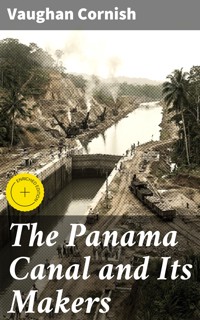
In 'The Panama Canal and Its Makers,' Vaughan Cornish provides a comprehensive exploration of the monumental engineering feat that reshaped global trade and geopolitics. This meticulous account blends detailed technical analysis with vivid storytelling, capturing the challenges and triumphs of the men and women who toiled to create one of the world'Äôs most ambitious infrastructures. Cornish's literary style combines clarity with depth, allowing readers to appreciate both the human and mechanical elements of the canal's construction within the broader context of early 20th-century imperialism and industrial advancement. Vaughan Cornish, a noted geographer and engineer, brings his extensive background in the study of geographical phenomena to illuminate the gargantuan project. His first-hand knowledge of engineering principles lends credibility to his accounts while also framing the social and political ramifications faced by those involved. Cornish's passion for exploration and the complexities of modernity undoubtedly influenced his desire to document not only the physical construction of the canal but also its lasting impact on global trade routes and international relations. For readers interested in history, engineering, or societal transformation, 'The Panama Canal and Its Makers' is an essential read. Cornish's insightful narrative not only educates but also provokes thought regarding the interplay between technological advancement and human endeavor, making it a vital addition to any library seeking depth in historical understanding. In this enriched edition, we have carefully created added value for your reading experience: - Hand‐picked Memorable Quotes shine a spotlight on moments of literary brilliance. - Interactive footnotes clarify unusual references, historical allusions, and archaic phrases for an effortless, more informed read.
Das E-Book können Sie in Legimi-Apps oder einer beliebigen App lesen, die das folgende Format unterstützen:
Veröffentlichungsjahr: 2019
Ähnliche


















The Panama Canal and Its Makers
Table of Contents
THE AUTHOR.
PREFACE
I AM indebted to many persons for advice and information in connection with my study of the Panama Canal, and wish to thank particularly His Excellency the Rt. Hon. James Bryce, the Rt. Hon. Lord Avebury, Mr. Claude Mallet, C.M.G., Colonel George E. Church, Colonel George W. Goethals, chairman of the Isthmian Canal Commission, and his colleagues, Colonel W.C. Gorgas, M.D., Major D.D. Gaillard, Major William L. Sibert, Mr. Jackson Smith, and Mr. Bucklin Bishop. Also Major Chester Harding, Mr. Arango, Mr. G.R. Shanton, Chief of Police, Mr. William Gerig (formerly in charge of the Gatun Dam), Mr. Mason W. Mitchell, and Mr. Tracy Robinson.
VAUGHAN CORNISH.
November, 1908.
ILLUSTRATIONS
MAKERS OF THE CANAL
Frontispiece
to face page
STATUE OF COLUMBUS, CHRISTOBAL, COLON
18
CHRISTCHURCH, COLON
18
LOCK AND DAM SITE, GATUN (The house is on the crest-line of the dam, which will extend to the hills on the right)
26
EXCAVATING FOR THE DOUBLE FLIGHT OF THREE LOCKS AT GATUN (In fine-grained argillaceous sandstone rock)
26
RE-LOCATION OF RAILWAY ABOVE GATUN DAM (The trestle embankment will run as a causeway across a bay of the lake)
30
MOTOR TROLLEY FOR INSPECTION OF WORKS (In the background are screened houses of employees)
30
TROPICAL FOREST, WITH HEAVY GROWTH OF PARASITIC PLANTS
36
JUNGLE WITH PIPE THROUGH WHICH OIL IS CONVEYED BY GRAVITATION ACROSS THE ISTHMUS
36
CHAGRES RIVER NEAR BARBACOES (In the dry season—looking down stream)
42
CHAGRES RIVER NEAR OBISPO (In the dry season)
42
FRENCH DREDGER LAID UP (Several of these have recently been put in use again)
48
FRENCH TRUCKS PARTLY COVERED WITH FOREST GROWTH (Many of these were used at first by the Americans, but are now replaced by larger ones)
48
EXCAVATION NEAR TAVERNILLA
52
RIVER CHAGRES AND RAILWAY NEAR GORGONA
52
LIDGERWOOD UNLOADER, WINDING APPARATUS
56
ANOPHELES
BRIGADE OILING A DITCH
56
100-TON WRECKING CRANE, GORGONA
62
INTERIOR OF MACHINE SHOP, GORGONA
62
MACHINE SHOPS, GORGONA
66
CLUB HOUSE FOR EMPLOYEES, GORGONA (Managed by the Y.M.C.A.)
66
EXCAVATION IN THE CUT
72
PIPE FOR DIVERSION OF A RIVER, NEAR EMPIRE
72
IN THE CUT, WIDTH 500 FEET
76
IN THE CUT, LOOKING SOUTH TOWARDS CULEBRA (The gorge between Golden and Silver Hills just visible)
76
ROCK DRILL (These machines bore a hole 30 feet deep in eight hours)
82
ROCK DRILLS AT WORK IN THE CUT
82
THE CUT, LOOKING NORTH FROM CULEBRA
86
THE CUT, LOOKING SOUTH FROM CULEBRA
86
FROM CULEBRA, LOOKING EAST TO DISTANT HILLS
92
FROM CULEBRA, LOOKING EAST ACROSS THE CUT (Terraces formed by landslip are just visible behind the smoke of a distant steam shovel)
92
FROM CULEBRA, LOOKING EAST TO GOLDEN HILL (Showing excavation in steps and ledges. Each ledge has carried a railway track)
96
THE CUT AT CULEBRA, LOOKING NORTH (The scarped face of Golden Hill on the right. Taken April, 1908, in the then bottom of the cut, 120 feet above Canal bottom)
96
GANG OF WEST INDIAN LABOURERS (Unloading spoil-train at Gatun)
102
GANG OF SPANISH LABOURERS AT CULEBRA (Working in the sun in April, which is one of the hottest months, less than 10 degrees from the equator. The men are wearing European kit)
102
STEAM SHOVEL EXCAVATING SOIL AT CULEBRA
106
STEAM SHOVEL UNLOADING INTO A DIRT CAR
106
STEAM SHOVEL NEAR END OF STROKE (The marks of the teeth made in a former stroke are visible on the right. Golden Hill, with the highest berm, or ledge, in the distance)
112
STEAM SHOVEL, STROKE FINISHED, LOADED WITH SOIL
112
STEAM SHOVEL AT CULEBRA
116
SHOVEL-MEN AT CULEBRA
116
SCREENED BUNGALOW, CHRISTOBAL, COLON
122
SCREENED QUARTERS OF EMPLOYEES, CULEBRA
122
READING ROOM, EMPLOYEES' CLUB, CULEBRA
126
HALL OF EMPLOYEES' CLUB, CULEBRA
126
CUT SOUTH OF CULEBRA, LANDSLIP ON LEFT
132
LOOKING NORTH, THE SCARPED FACE OF GOLDEN HILL ON THE RIGHT
132
LOOKING NORTH FROM RAILWAY BRIDGE AT PARAISO
136
ABANDONED FRENCH MACHINERY
136
GANG OF EUROPEAN LABOURERS (IN 1907)
142
A FORMER HOT-BED OF MALARIA, NOW DRAINED
142
NEAR THE SITE OF MILAFLORES LOCKS
146
LOOKING NORTH TO CULEBRA DIVIDE FROM ANCON HILL
146
RIO GRANDE, NEAR LA BOCA
154
RIO GRANDE, FROM ANCON HILL (Country north of that shown in the last photograph)
154
LA BOCA, FROM ANCON HILL
158
ANCON CEMETERY
158
COMMISSION'S HOTEL AT ANCON
162
ADMINISTRATION BUILDING, ANCON
162
VIEW FROM SPANISH FORT, PANAMA
166
CATHEDRAL SQUARE, PANAMA
166
PALACE OF PRESIDENT OF THE REPUBLIC OF PANAMA
174
OLD FLAT ARCH AT PANAMA (Adduced as evidence of comparative freedom of Panama from destructive earthquakes)
174
MAP OF CANAL ZONE (Showing also profile of Canal, cross section of Culebra Cut, the borings below Gatun dam, and the cross section of Gatun dam as designed in April, 1908. The design of this dam, however, is still undergoing modifications)
At end of volume
INTRODUCTION
AT the present moment the Canal Zone of the Isthmus of Panama is the most interesting place in the world. Here is gathered an army of 40,000 men engaged in the epoch-making work of uniting the Atlantic and Pacific Oceans, and here is the greatest collection of machinery ever massed for the accomplishment of one undertaking.
If the present rate of progress continue unchecked, the Canal, it is calculated, will be opened in 1915. Then will that Isthmus, which has hitherto been a barrier between two oceans but has failed to act as a bridge between two continents, be pierced by a waterway capable of floating the largest ships now built or building. Then will the Pacific coasts of the Americas be accessible from ports on both sides of the Atlantic without the necessity of a voyage by the Straits of Magellan. Then will the distance from New York to San Francisco be shortened by 8,400 and that from Liverpool by 6,000 miles; the distance from New York to South American ports will be shortened by an average of 5,000 and that from Liverpool to these ports by an average of 2,600 miles: then for the first time Yokohama on the north and Sydney on the south will be brought nearer to New York than to Liverpool or Antwerp, and then will New Orleans and the ports on the Mexican Gulf be brought nearer than New York, by sea, to San Francisco, South America beyond Pernambuco, Australia, and Japan.
No one who cares to know the greater things which are shaping the world can now afford to be ignorant of what is happening on the Isthmus of Panama. In the former days of unstable companies the student of affairs might decline to occupy himself in the study of an undertaking of which the fruition was doubtful. Now, however, that the Government of a great nation have put their hands to the plough the furrow will be driven through. The United States have acquired complete ownership and control of the Canal and of a strip of land five miles wide on either side, called the Canal Zone. The small State of Panama, in which this zone is situate, has placed itself under the protection of the United States. The Government of Great Britain has by a treaty ratified in 1901 waived the treaty right which it formerly enjoyed to share with the United States the control of any trans-Isthmian canal. The Isthmus has been freed from those pestilences which were the greatest obstacles to human effort, and the engineering difficulties are no longer beyond the scope of modern science.
Having first visited the Canal works at the beginning of 1907, I decided to make upon the spot a careful examination of the whole undertaking. For this purpose I visited Washington and made application through the proper channel to the Department of State, which kindly consented to further the inquiry. A set of the published documents was supplied to me, and I proceeded from New York to the Isthmus by the R.M.S.P. Magdalena, arriving at Colon April 12, 1908. Here Colonel Goethals, chairman of the Isthmian Canal Commission, provided me with a letter to those concerned to furnish all information, and proposed that I should make my way about unattended and pursue my inquiries independently. I was thus enabled to converse with perfect freedom with the rank and file, while drawing freely on the special information possessed only by the heads of departments.
For the benefit of readers in England I may explain that these circumstances were to me of especial importance on account of the doubts thrown by American writers, and also by Americans of repute in conversation, upon the reliability of official and other information supplied to the American public on the burning topic of the Isthmus. As an Englishman, and therefore standing outside American party politics, and as a scientific student not engaged in commerce or political life, I came to the study of the subject without prepossessions. This at least was my happy state when I arrived in Washington in March last. When I left for the Canal Zone a month later I was filled with gloomy forebodings that I might after all find a rotten state of affairs on the Isthmus. It was with intense relief that I found that I had what is called in America "an honest proposition" to deal with. As my doubts hitherto had been due to the patriotic anxiety of their compatriots, I am sure Colonel Goethals and his colleagues will forgive me for this frank statement of my difficulties and their solution.
Any Englishman, accustomed to see the work of our own soldiers and civil servants in the Crown Colonies or in Egypt, would recognise in the officers of the corps of Engineers and of the Army Medical Corps who are in charge of the Canal Zone men of a like high standard of duty. As this account is written not only for my own countrymen but also for readers on the other side of the Atlantic, I should be glad, if it be possible, to convince of my own bona-fides those anxious patriots who find it difficult to believe any good report from Panama. It may tend in this direction to state that I travelled and sojourned at my own charges, and that I went out on an independent inquiry. That I had promised to give an account of the Canal works to my brother geographers in London was my only undertaking, and the acceptance of a free pass on the Panama Railway my only financial obligation either in Washington or on the Isthmus.
In order properly to understand the present and future of the Canal undertaking, it is necessary to give a short account of the history of Isthmian communication, for the conditions which now face the American Government and the Commission are not solely due to present physical causes, but also to previous events.
CHAPTER I
HISTORICAL REVIEW
THE conquest of Constantinople by the Ottoman Turks in 1453 completed their capture of the trade routes between Western Europe and the East Indies. The East Indian trade had long been a source of great enrichment to European merchants. It was especially suited to the restricted carrying power of those times, the products (such as pepper) being small in bulk and high in price. The maritime nations therefore sought sea routes to the Indies in pursuit of this trade, and it was Columbus himself, in his efforts to open up a western route to the Indies and China, who discovered the Bay of Limon in 1497. He and his successors sought for a strait or channel which should open the way to the East Indies. Cortes sought for the strait in Mexico. Others sought as far north as the St. Lawrence, which was supposed to afford a route to China. No opening could, however, be found nearer to the Equator than the Straits of Magellan (1520), and the hopes of a short route westward to the Indies were disappointed. An Isthmian canal was talked of even in the days of Charles V. of Spain to open the route to the East Indies. In those days of small vessels, the river channels would have served for a great part of the traverse, so that the scheme was not so wild as it may seem.




