


9,59 €
Mehr erfahren.
- Herausgeber: Eye Press
- Kategorie: Fachliteratur
- Sprache: Englisch
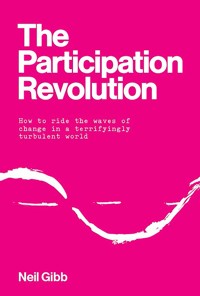
It can sometimes feel like everything is falling apart. And there is a reason for this. It really is. In the next ten to twenty years, seven in ten current jobs will disappear. Half of today's corporations will no longer exist. We can either see this as an end or a beginning. In this essential guide to a bewildering future, Neil Gibb shows we are at one of those rare points in human history when a whole way of thinking is on the turn, just as it was in the Renaissance and the Industrial Revolution. In the new world order, passive consumers are being replaced by active participants. Those who catch the swell early are the ones who prosper. Those who don't get it willl be left behind. 'So brilliant we started work on thinking about its impact on our company before I even finished it.' Lee Woodward, CXO Crabtree & Evelyn 'A rich and topical narrative for the changes we sense in the world around us but may not yet have been able to verbalise'. Dr Neil Stott, Cambridge Judge Business School
Das E-Book können Sie in Legimi-Apps oder einer beliebigen App lesen, die das folgende Format unterstützen:
Veröffentlichungsjahr: 2018
Ähnliche



















The Participation Revolution
Neil Gibb is a consultant, writer, speaker, and social advocate. He has spent his whole career looking at how new thinking and technology can be applied to improve business and society. Today he works with companies and organisations, helping them transform to thrive in the new economy. He also works with social enterprises, start-ups and recovery communities.
This book was a decade in the making, based on experience working in Europe, North America, Australia, Asia, and South America.
It’s about transformation – about the emergence of a new social and economic paradigm.
It is designed as a manifesto for those who are out to change the world.
It provides a framework for transformation in the new economy.
And for anyone who might be interested, it shows you how to be a billionaire…in three easy moves.
The Participation Revolution
How to ride the waves of change in a terrifyingly turbulent world
Neil Gibb
Published in 2018
by Eye Books
29A Barrow Street
Much Wenlock
Shropshire
TF13 6EN
www.eye-books.com
ISBN: 978-1-78563-055-2
Copyright © Neil Gibb 2017
All rights reserved.
The moral right of the author has been asserted.
No reproduction without permission.
Cover design by Heath Kane
Cover photograph by Bernie de Chant
Edited by John Ciavarella, Simon Edge, Clio Mitchell
Typeset by Clio Mitchell
www.neilgibb.com
www.transformation.ist
British Library Cataloguing in Publication Data
A catalogue record for this book is available from the British Library
Printed by CPI Group (UK) Ltd, Croydon CR0 4YY
I would like to acknowledge Eric Hutcheson, whose incredible life story, and mentoring, encouraged me to set off on the journey of discovery that led to this book. And Simon Fenton, whose friendship and support throughout my journey was so precious and who, tragically, died while the book was in preparation.
Thanks to Sarah Baxter, Sandy Rappaport, Robert Power, Mal Gibb, Josh Samuels, Nancy Nguyen, William Morgan, Kirsty Donovan, Erica Szabo, Nick Rimmer, Ed Tota, Julian Kell, Ira Rahmad, Philea Adhanti, Melody Briggs, Valeria Gonzales, Amanda Noga, Mei Lai Swan, Annie Belcher, Howard Johnson, Cindy Moussi, Christine Seale Nielsen and a whole load of other people I met along the way.
Also thanks to Suzanne Stein for both the term and philosophy of “deep hanging out” when we were working at Sapient.
In memory of Simon Fenton (1970-2017)Writer, explorer and pioneering social entrepreneur
Prologue
Saturday 16 September 2008, Regents Street, London
The bright, hazy late-summer sun is beginning to dip in the sky, slanting a dark shadow across the elegant white-fronted Regency buildings that make up one of London’s chicest retailing thoroughfares.
A rare balmy summer’s day has bathed Regent Street in a dreamy, lazy ambience. On the wide pavements, the crowds have started to thin as afternoon cruises towards evening. People are meandering rather than the usual pushing and shoving.
About halfway down the west side of the street, in a patch still drenched in sunlight, there’s a very different vibe. A scrum of people is pushing to enter a store-front door. It’s a stark contrast to the relaxed feeling on the rest of the street. The expression on some of their faces is somewhere between panic and desperation.
This is the doorway to Apple’s first flagship European store. The shop has been jammed with customers since it opened two years ago, but today it is particularly frenetic – the new iPhone 3 has just been released. Inside has the air of a fire sale. Sales assistants in blue T-shirts snake through the crowd, often with two or three customers vying for their attention.
Over by the iPhone demo area, a woman in her mid-30s is looking around frantically. She has been in the store for over half an hour, desperately trying to get the help of a sales assistant. Just as she is about to give up, and relinquish the demo model she is clutching, a thin young man emerges from the crowd, smiles, and starts to talk to her. Within minutes they are deep in conversation – she hanging on his every word, and he enthusiastically showing her how the phone works.
Across the street, things couldn’t be more different. A hundred meters up towards Oxford Circus, a blue Nokia sign, lit by the late rays of the sun, hangs over a doorway that clearly doesn’t have a scrum outside it. This is the home of Nokia’s own new concept store. At a cost of over £4 million for its elegant fit-out alone, with a state-of-the-art translucent interactive wall, and a hip-looking lounge area, it’s been designed to take the fight to Apple. Inside, good-looking, well-groomed, and well-trained assistants are aplenty. While Apple is a one-phone wonder, Nokia is the world’s number one mobile phone maker. The racks in the store are resplendent with a range of cool-looking, well-designed smartphones, the top-end ones every bit as good as the iPhone in terms of functionality. What is more, Nokia has a proven track record in mobile communications and bulletproof reliability, while Apple is the new kid on the block with a somewhat patchy record when it comes to battery reliability in its smaller devices.
This should be a winning proposition.
But the Nokia store is practically empty. While customers in the Apple Store are pleading for sales assistants’ attention, here they are acting far more consistent with the UK’s cultural stereotype: friendly offers of help are at best met with a tight-lipped “No, thank you” and at worst by customers just marching out of the shop empty-handed.
By the end of 2009, with Apple’s sales booming, and its stock price heading into outer space, new Apple Stores were popping up all around the world – each time heralded by the kind of mania that used to be reserved for pop bands like the Beatles.
Meanwhile, the Nokia flagship store on Regent Street quietly closed.
By 2012, Apple had displaced Exxon Mobil as the world’s most valuable company. And in China, a particularly odd thing happened: a bunch of counterfeit Apple Stores were discovered. Yes, counterfeit stores – shops designed to look like Apple Stores. Everyone, it seemed, wanted a part of Apple.
Meanwhile, Nokia was a company in crisis. In April 2012, it announced it was cutting 7,000 of its workforce, and another 2,500 jobs were slashed later in the year.
The question on every analyst’s lips was obvious: why did these two high-tech giants with equally fantastic products and reputations for innovation have such radically different fortunes?
People pointed to design, and leadership, and a whole host of other internal factors.
But they all missed a critical point.
The answer didn’t lie inside the companies, but with that young man who approached the woman customer in the Regent Street Apple Store and started to help her with her phone. He wasn’t an Apple sales assistant or employee – he was just a kid off the street; another shopper.
Why was it that in the Nokia store, where there were great products, free coffee, loads of space, and plenty of attentive sales assistants, customers were running out of the shop without a new phone, while in the crowded Apple Store other shoppers were actually prepared to help one another out?
In answering this question, we not only find what it takes to build successful businesses in the emerging new-world economic order, we actually have the answer to what it is going to take to successfully rebuild our societies in the networked age.
Contents
I. Introduction
When things fall apart
Disruption is the future calling
The great transformation
Creative destruction
How to use this book
The emergence of a new paradigm
That thing we seek
The rise of social economics
The participation revolution
Connected
Strategic shifts
The process of transformation
Architecture
II. Case stories
1. We are United!
2. The power of fans
3. How to be a billionaire in three easy moves: part 1
4. How to be a billionaire in three easy moves: part 2
5. Generation why
6. Vision and blindness
7. Why we do what we do
8. In the club
9. The deadly serious game
10. How to be a billionaire in three easy moves: part 3
11. A higher calling
12. It ain’t what you do, it’s the why that you do it
13. The pursuit of happiness
14. Together
15. Home
III. How it works
Framework
1. Create a cause
A new kind of leadership
Bank to the future
The non-linear business model
2. Mobilise a movement
Weapons of mass participation
The Art of transformation
Analytics and performance metrics
3. Build a community
Together
That thing we most seek
Social economics
IV. Into action
A call to action
Manifesto
An open-source tool kit
“Tomorrow belongs to those who can hear it coming”
David Bowie
I. Introduction
When things fall apart
“You can’t stop the waves, but you can learn to surf”
Jon Kabat-Zinn
Galileo Galilei was a clever lad. He is often referred to as the founding father of modern physics, of modern astronomy, of the scientific method, and of science itself. Einstein was one of his many fans.
Galileo was a geek, an engineer, a 16th-century hipster, and he could code. He was a pivotal figure in the great social and economic transformation that we now call the Renaissance. He was the inventor of one of the breakthrough technologies that enabled the discovery of the New World. He also played a pretty mean lute.
So influential was Galileo that, like Madonna and Prince, he was known simply by his first name.
But Galileo spent the latter part of his life under house arrest, having been very lucky to escape being executed in one of the many excruciating ways favoured by the inquisitions of the time.
The reason for this is worth remembering as we seek to navigate our way through a period of societal transformation very similar in scale and magnitude to the Renaissance.
Galileo said something that challenged the fundamental beliefs of the time – that the Sun, not Earth, was at the centre of the universe.
Like all great insights, it seems crazy with hindsight that people could be so resistant to something that now seems so obvious. It was a distinction that, once accepted, triggered one of the greatest periods of intellectual growth that mankind has ever experienced, critical to the development of navigation systems that allowed the New World to be discovered, and leading to a new system of logic, on which a whole new society and economy was built.
But it was something that, at the time, a lot of people just didn’t want to hear – because people really don’t like their beliefs to be challenged, even when all the signs are there that they are no longer working.
We are in the middle of a great transformation – a revolution that is blowing to bits beliefs, certainties, social systems and economic models that many of us had thought, and many still think, to be immutable and sacrosanct.
Now if that sounds a little dramatic, just take a look around. Political systems are breaking down, economic models are malfunctioning, opinion polls are no longer working, markets have become irrational, and once solid industries are being shaken apart. Everywhere, someone or something is disrupting, challenging and fundamentally changing how things are done.
At the same time, a social revolution is under way. Social media is dramatically reshaping the way we communicate, build relationships, and behave. Social conventions are being questioned and redrawn. Immigration and the movement of people on a scale never experienced before are putting cultures under huge pressure. National identities are being challenged, and individual certainties rocked to the core.
Across the globe, a cultural war has broken out – between progressives and conservatives, multi-culturalists and nationalists, atheists and those with faith, vegans and meat-eaters. It doesn’t matter what the issue is, someone is shouting at someone.
Fear, anger, and conflict have become contagious.
When Pope Francis said, at a ceremony in Italy commemorating the centenary of First World War, that “perhaps one can speak of a third war, one fought piecemeal, with crimes, massacres, destruction,” he put words to what a lot of people were feeling.
It can at times feel like everything is falling apart.
And there is a reason for this.
Because it is.
Disruption is the future calling
“It was the best of times, it was the worst of times, it was the age of wisdom, it was the age of foolishness, it was the epoch of belief, it was the epoch of incredulity, it was the season of Light, it was the season of Darkness, it was the spring of hope, it was the winter of despair, we had everything before us, we had nothing before us, we were all going direct to Heaven, we were all going direct the other way – in short, the period was so far like the present period, that some of its noisiest authorities insisted on its being received, for good or for evil, in the superlative degree of comparison only”
Charles Dickens, A Tale of Two Cities
On 11 March 1811, a small group of people started to congregate on the main street in Arnold, a leafy suburb on the edge of Nottingham in England. It was a cold, damp day, but the group grew quickly. A rebellious energy coursed through their ranks. They were not agitators by disposition. They were skilled workers from the local textile industry. But they were very angry.
The city’s manufacturing companies were introducing radical new technologies and working practices that were disrupting their jobs and livelihoods beyond recognition. Skilled jobs were being lost to automation. Salaried jobs were being replaced with zero-hour contracts. Wages were falling, jobs were disappearing, people were being laid off. At the same time, local business owners were getting extremely rich.
On top of this, there was the shock of a new leader of what was then the world’s most powerful nation – George IV, King of the United Kingdom. Whereas his predecessor, George III, had been a liberal, thoughtful man, popular with the people, George IV was brash, impulsive, and divisive. In the month since his inauguration, he had installed a bunch of his cronies in positions of power, subverting the normal mechanisms of government and making a series of seemingly alarming decisions.
It was just all too much. The small group was going to march on the city and mount a protest.
By the time it reached the city centre, its ranks had swollen into a huge indignant crowd. There were placards and angry speeches. A small faction broke away and marched on the factories in the Lace Market, breaking in and causing havoc.
The spontaneous uprising was contagious. Within a few days, much bigger protests had broken out in industrial cities across the country. Momentum grew. It was an insurgency that triggered mounting civil disorder – the largest protests the country had ever seen.
More than 200 years later, we call this group “Luddites”, a movement that has become associated with resistance to change, people who are seen as being attached to old and outdated ways.
But at the time, that isn’t what they were about. As far as the Luddites were concerned, they were fighting against a society that seemed to be falling apart, they were fighting against chaos and collapse. Because what they couldn’t see was the future.
The words “change” and “transformation” are often used interchangeably, but they mean very different things. Change is an orderly process: it is linear, predicable, and manageable. Transformation is a disruptive process: it is non-linear, challenging, and often quite traumatic.
Whereas the process of change is orderly, the process of transformation is highly disruptive. What is more, the greater the transformation, the greater the disruption leading up to it.
This is what the Luddites were experiencing.
Societal transformation has three distinct stages that bleed into one another, often with a great deal of turbulence as we move from one to the next.
It starts with an “enabling phase”, a period that is triggered by the rapid emergence of some radical new technology that enables things to be done totally differently. In the Industrial Revolution, this technology was the steam engine and blast furnace, which enabled the mechanisation that the Luddites were protesting against.
And it ends with a “transformative phase”, marked by the establishment of a new social, economic, and political paradigm – literally, a whole new set of rules, structures, systems, and social values. It was in this latter stage of the Industrial Revolution that the majority of the key social, political, and economic systems we have come to take for granted today were put in place: the Western democratic system, the abolition of slavery, the creation of the stock market, the corporation, running water, electric lighting, modern medicine, to name just a few.
In between these beginning and final phases is a difficult, uncomfortable, and increasingly unstable period of transition – the “disruptive phase” – a turbulent and, for many people, traumatic phase, in which the old paradigm breaks down while the new one emerges. It is a period that when looked back on makes a great deal of sense, but at the time can just seem like everything is falling apart – and, of course, that is because everything is.
It was this increasingly disruptive and unsettling transitional phase that the Luddites were caught up in.
And it is the increasingly disruptive and unsettling transitional phase we are in now.
Lesen Sie weiter in der vollständigen Ausgabe!
Lesen Sie weiter in der vollständigen Ausgabe!
Lesen Sie weiter in der vollständigen Ausgabe!
Lesen Sie weiter in der vollständigen Ausgabe!
Lesen Sie weiter in der vollständigen Ausgabe!
Lesen Sie weiter in der vollständigen Ausgabe!
Lesen Sie weiter in der vollständigen Ausgabe!
Lesen Sie weiter in der vollständigen Ausgabe!
Lesen Sie weiter in der vollständigen Ausgabe!
Lesen Sie weiter in der vollständigen Ausgabe!
Lesen Sie weiter in der vollständigen Ausgabe!
Lesen Sie weiter in der vollständigen Ausgabe!
Lesen Sie weiter in der vollständigen Ausgabe!
Lesen Sie weiter in der vollständigen Ausgabe!
Lesen Sie weiter in der vollständigen Ausgabe!
Lesen Sie weiter in der vollständigen Ausgabe!
Lesen Sie weiter in der vollständigen Ausgabe!
Lesen Sie weiter in der vollständigen Ausgabe!
Lesen Sie weiter in der vollständigen Ausgabe!
Lesen Sie weiter in der vollständigen Ausgabe!
Lesen Sie weiter in der vollständigen Ausgabe!
Lesen Sie weiter in der vollständigen Ausgabe!
Lesen Sie weiter in der vollständigen Ausgabe!
Lesen Sie weiter in der vollständigen Ausgabe!
Lesen Sie weiter in der vollständigen Ausgabe!
Lesen Sie weiter in der vollständigen Ausgabe!
Lesen Sie weiter in der vollständigen Ausgabe!
Lesen Sie weiter in der vollständigen Ausgabe!
Lesen Sie weiter in der vollständigen Ausgabe!
Lesen Sie weiter in der vollständigen Ausgabe!
Lesen Sie weiter in der vollständigen Ausgabe!
Lesen Sie weiter in der vollständigen Ausgabe!
Lesen Sie weiter in der vollständigen Ausgabe!
Lesen Sie weiter in der vollständigen Ausgabe!
Lesen Sie weiter in der vollständigen Ausgabe!
Lesen Sie weiter in der vollständigen Ausgabe!
Lesen Sie weiter in der vollständigen Ausgabe!
Lesen Sie weiter in der vollständigen Ausgabe!
Lesen Sie weiter in der vollständigen Ausgabe!




