


21,99 €
Mehr erfahren.
- Herausgeber: John Wiley & Sons
- Kategorie: Geisteswissenschaft
- Sprache: Englisch
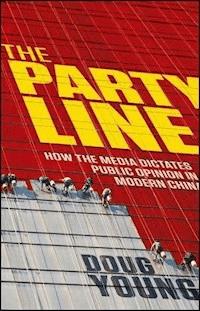
The first in-depth, authoritative discussion of the role of the press in China and the way the Chinese government uses the media to shape public opinion China's 1.3 billion population may make the country the world's largest, but the vast majority of Chinese share remarkably similar views on these and a wide array of other issues, thanks to the unified message they get from tightly controlled state-run media. Official views are formed at the top in organizations like the Xinhua News Agency and China Central Television and allowed to trickle down to regional and local media, giving the appearance of many voices with a single message that is reinforced at every level. As a result, the Chinese are remarkably like-minded on a wide range of issues both domestic and foreign. * Takes readers beyond China's economic miracle to show how the nation's massive state-run media complex not only influences public opinion but creates it * Explores an array of issues, from Tibet and Taiwan to the environment and US trade relations, as seen through the lens of the Xinhua News Agency * Tells the story of the official Xinhua News Agency along with its history and reporting over the years, as the foundation for telling the story
Sie lesen das E-Book in den Legimi-Apps auf:
Seitenzahl: 454
Veröffentlichungsjahr: 2012
Ähnliche




















Contents
Acknowledgments
Introduction
Chapter 1: The Agenda
Tool for Social Stability
Changing with the Times
Chapter 2: Spreading the Word
Rise of the Internet as a New Major Force
Breaking News: An Uneasy Truce
Chapter 3: Ultranetworked
Promoting the Party’s Agenda
Steering Clear of Well-Connected Organizations
Chapter 4: Reporters
Investigating Trouble in the Provinces
Xinhua: The Party’s First Take on History
Chapter 5: Korea and Tibet
Four Media Approaches
Tibet: A Lost Family Member Returns to the Fold
Chapter 6: Cultural Revolution
Guerilla Coverage at Fever Pitch
Educator of the Masses
Chapter 7: A Nixon Visit, the Death of Mao, and the Road to Reform
Kissinger’s Secret Trip
Starting with a Handshake
Chapter 8: The Tiananmen Square Divide
Key Moments: Death of a Former Reformer
Students Go on Strike
Chapter 9: Falun Gong
Starting with a Stealth Demonstration
Explaining the Evil
Chapter 10: A Bombing in Belgrade and Anti-Japanese Marches
Putting out the Flames
Japan: A Case of Old Resentments
Chapter 11: SARS
Cracks in the Monolithic Façade
Breaking Open the Coverage
Chapter 12: The Beijing Olympics and Sichuan Earthquake
Resurrecting the Laundry List
Proud to Be Chinese
Chapter 13: Google in China
When Issues Go Viral
Breaking the Silence: “China’s Internet Is Open”
Afterword
About the Author
Index
Copyright © 2013 by John Wiley & Sons Singapore Pte. Ltd.
Published by John Wiley & Sons Singapore Pte. Ltd.
1 Fusionopolis Walk, #07–01, Solaris South Tower, Singapore 138628
All rights reserved.
No part of this publication may be reproduced, stored in a retrieval system, or transmitted in any form or by any means, electronic, mechanical, photocopying, recording, scanning, or otherwise, except as expressly permitted by law, without either the prior written permission of the Publisher, or authorization through payment of the appropriate photocopy fee to the Copyright Clearance Center. Requests for permission should be addressed to the Publisher, John Wiley & Sons Singapore Pte. Ltd., 1 Fusionopolis Walk, #07-01, Solaris South Tower, Singapore 138628, tel: 65–6643–8000, fax: 65–6643–8008, e-mail: [email protected].
Limit of Liability/Disclaimer of Warranty: While the publisher and author have used their best efforts in preparing this book, they make no representations or warranties with respect to the accuracy or completeness of the contents of this book and specifically disclaim any implied warranties of merchantability or fitness for a particular purpose. No warranty may be created or extended by sales representatives or written sales materials. The advice and strategies contained herein may not be suitable for your situation. You should consult with a professional where appropriate. Neither the publisher nor the author shall be liable for any damages arising herefrom.
Other Wiley Editorial Offices
John Wiley & Sons, 111 River Street, Hoboken, NJ 07030, USA
John Wiley & Sons, The Atrium, Southern Gate, Chichester, West Sussex, P019 8SQ, United Kingdom
John Wiley & Sons (Canada) Ltd., 5353 Dundas Street West, Suite 400, Toronto, Ontario, M9B 6HB, Canada
John Wiley & Sons Australia Ltd., 42 McDougall Street, Milton, Queensland 4064, Australia
Wiley-VCH, Boschstrasse 12, D-69469 Weinheim, Germany
ISBN 978-0-470-82853-3 (Cloth)
ISBN 978-0-470-82855-7 (ePDF)
ISBN 978-0-470-82854-0 (Mobi)
ISBN 978-0-470-82856-4 (ePub)
I would like to dedicate this book to my parents, Bernard and Ellen Young, who have patiently put up with all my China fixations over the years.
Acknowledgments
Tackling such a broad and complex subject as the media in China has been a challenge that I never could have undertaken without the help of many people, both inside and outside the country. First and foremost, I would like to thank the many people who provided me with insight on the workings of the Chinese media and the broader context of events described in this book, including Dou Fengchang, Paul Pickowicz, Shen Yachuan, Sun Qian, Tu Yan, B.Y. Wong, Xiao Jiansheng, William Zhang, Zhang Zhi’an, Zheng Zhong, and Zuo Zhijian. I’d also like to thank Gao Qi and the Universities Services Centre for Chinese Studies at the Chinese University of Hong Kong, where I spent many happy hours poring over old copies of Chinese newspapers for my research. I would also like to acknowledge the book Marketing Dictatorship, and thank its author, Anne-Marie Brady, for providing me with insight on many of the finer points about how the Chinese media machine operates.
Readers are also critical to improving any manuscript, especially when the writer is someone like myself, who has spent way too much time working in the subject area and may lose perspective on some of the issues that might not be so familiar to others. In that regard, I’d like to thank Bill Berkeley, John Brill, Renee Chiang, Emily Rourke, and Gina Keating for their feedback, and especially Josephine Khu and my sister, Margo Young, for making it through the entire manuscript.
At Wiley, special thanks are due to Nick Melchior for helping me to develop my idea into a real book, and I’d also like to thank Gemma Rosey, who helped me see the project through to completion. Much of my knowledge of the Chinese media comes from nearly a decade working as a journalist in Asia, and for that I’d like to thank Reuters for giving me the opportunity to report from a wide range of positions and locations over that time. Also at Reuters, I’d like to thank Don Durfee for introducing me to Wiley, and for his additional support in my endeavor.
Finally, I’d like to thank a woman who probably doesn’t even remember me, my graduate school historiography teacher at Columbia University, Madeleine Zelin, who unknowingly helped to set me on my current course in life through one of her class assignments. That assignment, which asked us to compare a historical event as detailed in the press versus how it was later recorded by historians, helped me to see how I could join my passions for writing and history through a journalism career, with the realization that journalists really are the first recorders of history.
Introduction
Imagine this: You wake up one morning, roll out of bed, and turn on your radio to hear the morning drive-to-work show as you get ready to go to the office. Mike, Harold, and Samantha are going through their usual banter when the news announcer breaks in: “This just in,” he says. “We’re getting word that Clinksburg Mayor Tom Whitfield has been arrested as an accessory to murder. There are no further details at this time, but we’ll be back with more on this breaking story when we have new information.”
The show returns to Mike, Harold, and Samantha, who instantly jump on this breaking story by cracking jokes about Whitfield, the mayor of Clinksburg, who was elected two years ago on a campaign of toughness on crime. You wonder how the very man you voted for could have been busted for such a serious offense, even though you’re not really sure what the crime actually is.
After dressing, you turn on your laptop and go to the Clinksburg Chronicle homepage. Sure enough, under the “breaking news” section is an article accompanied by an unrelated photo of Mayor Whitfield at a recent event. It offers several new details beyond the original bulletin without citing any sources. “Mayor Whitfield Arrested in Murder Cover-Up” reads the headline in bold, followed by the lead: “Clinksburg Mayor Tom Whitfield has been arrested and charged as an accessory to murder. The mayor was taken into custody this morning at his home in suburban Clinksburg.” You want to know more, but you really need to leave for work.
You pull out of your driveway and quickly tune to the local radio news station. You learn that Mayor Whitfield’s wife is the one actually accused of murder. The report adds that the mayor found out about the crime and tried to hide it, but again no further details are given.
You soon arrive at work, where the story is already the talk of the office. Everyone is generally as surprised as you are, but no one ever stops to question where the accusations are coming from, despite the lack of details and attributions. What’s more, the story so far has been devoid of images, with no news conferences, video, or photos of the mayor or his wife being led away in handcuffs, or anyone making statements. It’s all been text on the page and announcers stating facts with no sources.
You check the Chronicle and several other web sites throughout the morning for updates, and are also in regular touch with friends and close colleagues via e-mail and instant messaging to stay on top of the story. You have a few more details by lunchtime, but you’re no longer sure what is coming from where and how reliable the sources are. According to various reports you’ve received, the mayor’s wife fell out with one of her business associates, an unnamed Kenyan man, whom she is now suspected of having killed. There are still no names of accusers behind the allegations, but the Chronicle is now saying that Mayor Whitfield was believed to have known about the murder just a few days after it occurred but failed to go to the police.
Minor details trickle in through the rest of the day. Oddly enough, there are no comments from the mayor or any member of his staff, from the district attorney, or from anyone else, for that matter. After work, you skip the usual drink with your colleagues and drive straight home to catch the evening news on TV.
The mayor’s arrest is at the top of the broadcast, and by now the report is probably as close to complete as it’s going to get today. The announcer rehashes the details you’ve already heard, with yet another old photo of Whitfield. She says the mayor was arrested at about six-thirty this morning at his suburban home, and is being charged as an accessory to murder. He reportedly learned about the crime committed by his wife a couple of days after the Kenyan man died in a mysterious auto accident. But he failed to go to the police for at least the next week, leading to his arrest this morning.
The whole story has a certain strangeness—not so much the actual facts, but the lack of attribution. You expected the usual multimedia circus, which should have included TV footage and photos of the mayor and possibly his wife being led away in handcuffs from their home, press conferences by his lawyer and the district attorney, and possibly even written statements from the family of the Kenyan man. Instead, all the reports and images have a kind of flatness to them.
The next morning, the newspapers mostly rehash accounts from the previous day. On your way to the kitchen you notice someone has slipped a manila envelope under your front door with the words “strictly confidential” written in heavy black marker on the front. Upon opening it, at the top left of the document inside you see “Official, Final Version,” and below that “For Immediate Release.” Then two lines down, at the center of the page, comes the headline: “Clinksburg Mayor Tom Whitfield Guilty of Murder Cover-Up.” As you read down the page you realize that the document you are now holding is the sole source of information for all the facts you heard yesterday, containing everything from the auto accident that killed the Kenyan man to the fact that the mayor knew about his wife’s involvement in the case for at least two weeks without going to the police. Nowhere on the sheet is there any indication of who is accusing the mayor, what evidence there is against him, where he is now, or how he or anyone else in the case has responded to the allegations. And yet, he was arrested anyway—and the media reported it all as if it were fact without noting any sources.
Welcome to news reporting as experienced in China. While the following story may sound strange, it closely mirrors a case that captivated much of China in the spring of 2012. That case saw a former Communist Party high-flier named Bo Xilai arrested for serious breach of discipline after his wife allegedly had a British business associate murdered when their relationship soured. No stories appeared in the Chinese media for several weeks after Bo’s disappearance from public view, despite widespread rumors. When the media finally reported on the matter, all stories came from a single source: the official Xinhua News Agency, with editors and reporters throughout the country understanding that this was the truth of the matter as decided by the highest ranks of the Communist Party.
The following pages will explore how the Party has used its tight control of the media over the past six decades to publicize news and win over public opinion for its agenda, first for building a socialist state and later for its current plan to build a market-oriented economy with “Chinese characteristics.” They will also explore how that media message gets cast, by examining the vast bureaucracy that news stories must pass through before being published to make sure they conform to the message of the day.
There is one overriding theme that holds just as true today as it did in 1949 when the People’s Republic of China was founded: On major issues, the Chinese media speak with a single voice, which is that of the Communist Party. Any semblance of many voices created by the nation’s wide and varied range of newspapers and TV and radio stations is mostly an illusion. Yet at the same time, this book will also explore how China’s media are far from a stagnant force and have undergone a steady process of change over the years. Perhaps nowhere is that change more apparent than in the current era, when the Party is having to rethink its approach in response to the rapid rise of the Internet, which now allows millions of Chinese to voice their views on current events alongside official versions in the state-owned media.
In the course of my survey, I will examine several major events and how the Chinese media reported on them, from the 1950–1953 Korean War, to the Tiananmen Square crackdown of 1989, to the 2008 Beijing Olympics. In exploring these events, my purpose is not to critique how closely Chinese media accounts conformed to reality, but rather to provide some insight into why the Chinese media reported on those events the way they did, and what their approach said about the Communist Party’s agenda at the time. At the same time, I also hope to show how the government has modified its approach over the years in response to new proprieties and challenges of the times.
After more than a decade of working as a reporter in China, I find the Chinese media especially fascinating for their remarkable focus and ability to stay on message. In many ways, my interest in this subject dates back to a project in my graduate school days when we were asked to compare newspaper accounts of a historical event with later accounts in history books. My fascination with the idea of journalists and newspapers as the first recorders of history quickly grew, and was one of the reasons I became a reporter.
A key misconception among Westerners about the Chinese media is their assumption that, as with Western media, the ultimate goal is to report a story as objectively and truthfully as possible. Whereas the Western media are interested in presenting developments as they appear to reporters on the ground, China, through its media, is more interested in reporting a version of the truth that it wants its own people to believe, a sort of idealized image of itself.
From the Western perspective, the depiction of events in the Chinese media is often considered highly flawed—painting an overly simplistic view of the world where everything is black and white: white if the matter is in line with Party objectives and priorities, and black if it is not. From the Communist Party’s perspective, this all makes perfect sense. To quote Party doctrine, the media are simply the “Voice of the Party.”
Chapter 1
The Agenda
Telling the Party’s Story
Locals read Chinese newspapers displayed on a public notice board in central Beijing March 23, 2011. The practice of displaying newspapers on public bulletin boards for all to read dates back to the earliest days of the founding of the People’s Republic of China in 1949.
Photo Credit: Reuters/OTHK
A helpful metaphor to understand the world as depicted by China’s media is the classic family portrait. This highly choreographed photo has mother and father at the center surrounded by their sons and daughters, everyone cheerful and smiling. Nowhere is there any sign of the many conflicts that most such families have, from minor issues like everyday fights between siblings to deeper resentments due to different priorities. All of those negative elements have been left out of the portrait, even though they exist and are very real factors for everyone within.
As head of the Chinese “family,” the Communist Party uses China’s media to show the world a harmonious place—one where farmers and factory workers smile and whistle while they work, where scientific and economic achievements abound, and where the Party is a source of comfort and assistance in times of trouble. Seldom is there mention of the constant power struggles taking place behind the scenes, or of smaller embarrassments like the naming in 2010 of a jailed dissident as China’s first Nobel Peace Prize winner, to say nothing of major screw-ups like the Great Leap Forward—an agricultural fiasco of the 1950s that saw as many as 40 million people die of starvation during one of Mao’s many disastrous initiatives under the country’s centrally planned economy.
China’s media are a sort of window on the soul of the Communist Party. They present the Party’s message of the day, its broader agenda, and information on how it aims to achieve its goals. They also contain messages—some straightforward and others more veiled—of what is and is not acceptable, and what happens to those who make trouble. Equally important is what’s reported, be it an event that’s considered taboo or an official who has fallen out of favor. By understanding China’s media, and how and what they choose to report, one can start to understand not only the Communist Party’s agenda, but also its hopes and insecurities, what it sees as its accomplishments and shortcomings, and how it plans to lead the world’s most populous nation and second-largest economy through the 21st century en route to becoming the next global superpower.
Lesen Sie weiter in der vollständigen Ausgabe!
Lesen Sie weiter in der vollständigen Ausgabe!
Lesen Sie weiter in der vollständigen Ausgabe!
Lesen Sie weiter in der vollständigen Ausgabe!
Lesen Sie weiter in der vollständigen Ausgabe!
Lesen Sie weiter in der vollständigen Ausgabe!
Lesen Sie weiter in der vollständigen Ausgabe!
Lesen Sie weiter in der vollständigen Ausgabe!
Lesen Sie weiter in der vollständigen Ausgabe!
Lesen Sie weiter in der vollständigen Ausgabe!
Lesen Sie weiter in der vollständigen Ausgabe!
Lesen Sie weiter in der vollständigen Ausgabe!
Lesen Sie weiter in der vollständigen Ausgabe!
Lesen Sie weiter in der vollständigen Ausgabe!
Lesen Sie weiter in der vollständigen Ausgabe!




