


27,99 €
Mehr erfahren.
- Herausgeber: John Wiley & Sons
- Kategorie: Fachliteratur
- Sprache: Englisch
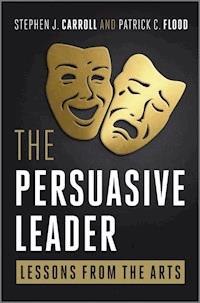
The communication aspect of leadership – to actively engage your followers and achieve understanding and motivation whilst making the message memorable – has never been more important. Using vivid lessons and examples from spheres outside business organization, The Persuasive Leader explores the leader's role as a communicator and teaches the fundamental principles of successful leadership.
This book provides insights and principles about persuasive leadership from a broad range of human experiences. It draws on examples of persuasive leaders and persuasive leadership principles from the performing arts, the fine arts, literature, philosophical writings, and biography. The authors use their unconventional material to explore themes such as moral leadership, toxic leadership, learning from failures, 'distributed' leadership, leading for results and the leader as a mentor and counsellor.
Leaders described in The Persuasive Leader:
Abraham Lincoln, Jack Welch, Cleopatra, Teddy Roosevelt, Alexander the Great, Rachel Carson, Joshua Chamberlain, Governor John Winthrop, Barack Obamma, Steve Jobs, Henry V, Julius Caesar, John Quincy Adams, Dwight Eisenhower, Susan B. Anthony, Elizabeth Cady Stanton, Huey Long, Napoleon, Ghandi, Sam Walton, Archbishop Sean O'Malley, Benjamin Franklin, Franklin Roosevelt, Jim Sinegal, Dolly Madison, James Jones, Clarence Darrow, William Harvey, Ronald Reagan, Fletcher Christian, Thomas Jefferson, Nelson Mandela, Charles McCormick, George Washington, Oprah Winfrey, Joan of Arc, John Kennedy, Herbert Hoover, Christopher Columbus, Anita Roddick, John DeLorean, Ronald Reagan, Margaret Thatcher, and others less well known persuasive leaders such as Anne Sullivan, TS Lin, Maria Galantry, Dorothy Collins, Scott Nash, Jane Hughes, William Barnes.
Sie lesen das E-Book in den Legimi-Apps auf:
Seitenzahl: 486
Veröffentlichungsjahr: 2011
Ähnliche



















Contents
Cover
Title page
Copyright page
Dedication
Foreword
Preface
Acknowledgements
About the authors
Chapter 1: Persuasive leadership in life and work
What is leadership?
Persuasive leadership in a new world
A newer focus on emotions and logic
Leadership as a social role in all living groups
Leadership legacies
Leadership goals
Leadership in changing crcumstances
Leader agendas
Leadership and the arts
Leadership and strategies
Do leaders need charisma?
Persuasion as a key to all leadership efforts
Leaders as coherent wholes
Learning from examples
Types of persuasion settings
Leadership skills as identified in the arts and humanities
Do we need empirical studies of leadership?
Leaders and ethical behaviours
Leaders as examples of persuasive and moral principles
Works cited
Chapter 2: Using aesthetics and the arts in persuasive leadership
Leaders using the arts
What are the arts?
Practical use of the arts
Aesthetics and human evolution
Unity among the arts
Performance art
Leader–managers as architects
The orchestra conductor metaphor
Music in aesthetics
Humans as artists
Theatrical principles in leadership
Fictional versus actual leaders
Behaving like an artist
Exercise 2.1
Exercise 2.2
Works cited
Chapter 3: Using words effectively in persuasive speech and writing
Evolution of language
Importance of word choice
Power of words to evoke emotion
Aesthetic versus non-aesthetic language
Function of fictional stories
Use of stories in persuasion
Delivering words effectively
Audience reactions to words
Words reflect characteristics of the speaker
Being open-minded in one’s communications
Exercise
Works cited
Chapter 4: Persuasive leadership and rhetoric principles
Persuasion principles from philosophy
Persuasion in literature
Henry V
Julius Caesar
Joshua Chamberlain
Discussion of speeches
Exercise
Works cited
Chapter 5: Persuasive leadership-planning considerations
Studying the prospective audience
Building credibility
Obtain endorsements by influential persons
Build competence and coalitions
Gather facts and arguments in favor of goals
Plan for creating arousal/activation and more memorable messages
Planning for message content
Preparation
Practice
Choose optimum timing and setting
Emotional appeals
Use of dramatic principles in persuasion planning
Creating an engaging character—yourself
Learning acting skills
Process of planning
Using the arts in planning
Exercise
Works cited
Chapter 6: Audience characteristics
Audience characteristics
Audience to leader effects
Use of participation
Audience concerns
Psychological needs of the audience
Effect of cultural differences in audience responses
Motivational propensities in an audience
Occupational differences
Gender, ethnic, racial, and age differences
Exercise
Works cited
Chapter 7: Leader–follower emotional ties
Leader–follower attraction
Leader–follower bonding
Narcissistic behaviour
Attraction to morality
Attractiveness versus behaviour
Similarity
Openness and attraction
Optimistic and hopeful leaders
Respect for differences
Works cited
Chapter 8: Creating positive emotions in sub-leaders and followers
Leading sub-leaders
Counselling group members as individuals
Creating positive emotional states
Leaders as role models
Positive psychology
Optimism in the arts
Adversity coaching
Matching individuals and groups with appropriate tasks
Social barriers to persuasion
Exercise
Works cited
Chapter 9: Persuasive leadership and change
Change as a constant
Some fundamental causes of resistance to change efforts
Importance of feelings of self-efficacy in the motivation to change
Leader effectiveness versus likeability
Leadership and admiration—Benjamin Franklin
Franklin’s targeted virtues
Using goals in change
Handling multiple factors in change
Self-leadership and change
Psychotherapy as an aid to change
Creating positive emotions
How small changes can have big effects
Exercise
Work cited
Chapter 10: Strategic plans as a persuasive tool
What are strategies?
Importance of acceptance of strategies
Credibility in the strategic planning process
Strategic plans and goal setting
Importance of self-perceived efficacy in goal achievement
Visioning and goal setting
Follow-up activities in strategic implementation
Exercise
Works cited
Chapter 11: Harmful persuasion
Doing harm with persuasion
Types of harm
Why do such persuasive leaders act the way they do?
Confronting evil
Why is harmful persuasion accepted?
Standing up to injustice
Helping orientations
The role of deception in harmful persuasion
Deceptive messages well delivered
Exercise
Works cited
Chapter 12: Self-leadership
Leadership and self-management
Political liberty
Freedom in organizations
Trends in self-direction in several fields
Self-direction in parenting and preparation for self-direction
Therapy and other individual change programmes
Differential degrees of self-leadership and wasted human assets
Self-management and human respect and dignity
Self-leadership and the professional
Exercise
Work cited
Chapter 13: Persuasive variations in different settings
Persuasion in the courtroom
The law as a symbol of justice
Persuasion in the medical community
Persuasion in the home
Architecture
Philanthropic and artistic organizations
In the political arena
Exercise
Work cited
Chapter 14: Achieving trust and cooperation
Leadership issues in cooperation
Reactions to authority
Origins of trust
Types of trust
Follower and leader needs
Explaining and fostering cooperation among group members
Exercise
Work cited
Chapter 15: The noble persuasive leader
What is nobility?
Roots of noble behaviour
Religion and nobility
Nobility in business enterprises
Nobility as a social class
Noble behaviour in the form of altruism and helping
The appeal of noble leaders
Immoral leaders
What are immoral practices in terms of morality within organizations?
Moral development
Exercise
Work cited
Chapter 16: Leadership emergence
Choosing leaders
Situational factors in persuasive leader emergence and effectiveness
Some indicators of leader emergence and success
Leaders as independent visionaries
Persuasiveness and leader effectiveness
Leader–follower interactions
Mindsets of effective leaders
What do prospective followers want in a leader?
Leadership changes
Exercise
Work cited
Chapter 17: Handling problems and failure
What are problems and failures?
Failures due to a changing world
Causes of persuasion failures
Persuasion failures mixed with successes
Persuasion failures due to competing social cultures
Politics and persuasion failures
Personal characteristics in reacting to problems and failures
Role of arrogance and hubris in failures
Exercise
Work cited
Chapter 18: Why become a persuasive leader?
Persuasiveness as a means to significant ends
Changing life roles
The human search for happiness
What is true (rather than perceived) happiness?
Expectations and happiness
Good and evil ends
Redeeming oneself
The ideal persuasive leader in fiction
Search for a meaningful life
Expectations and success
Avoidance of regrets/remorse
Persuasion and performance and a changed self-identity
Role of positive values
Life as a search for beauty
Exercise
Works cited
Appendix A: Another brief look at some of the relevant arts and humanities
Fine arts
Music
The performing arts
Film
Appendix B: Happiness
Some happiness findings
Reflections on happiness
Appendix C: Behaviours of the best and worst bosses
Best
Worst
Appendix D: Selected social science theories relevant to persuasive leadership
Bibliography
Index
Persuasion is an essential proficiency for leaders, to enable them to get the best out of people. Using a lens, influenced by the arts and humanities, Stephen Carroll and Patrick Flood provide us with highly original insights into the mystique of leadership. The two authors took me on a “leadership” adventure that I found extremely enjoyable. I very much recommend this book to people wanting to deepen their understanding of the vicissitudes of leadership.
Professor Manfred Kets de Vries,Raoul de Vitry d’Avaucourt Chaired Clinical Professor of Leadership Development, Director INSEAD Global Leadership Centre
Much of the material in this book was given in many executive development classes conducted by Syracuse University. I observed all of these classes and found that the executives rated these classes very highly.
Dennis Gillen,Chair, Management Department and former Associate Dean of Executive Education, Whitman School of Management, Syracuse University
Success in business and even our personal lives almost invariably comes down to good leadership – values-based, convicted, example-setting, and above all, self-less. The Persuasive Leader offers a much-needed dusting off of our thoughts on leadership for modern times, demanding times requiring a new style of leader … all of us … capable of bridging the impersonality of the information age.
Paul Jensen,CEO, HALO Maritime Defense Systems, Andover, Massachusetts
This is a timely and engaging book. Rich in examples and precise in definition, the authors provide an insightful approach to leadership from the arts and everyday life. The emphasis on persuasion is, in my opinion, pertinent and feels right for the times we live in.
Alexandre Ricard,Chairman and CEO, Irish Distillers Pernod Ricard
The social science of leadership is extensive, but not complete. This new book provides a thoughtful and comprehensive account of why persuasive leadership is important and how the arts can give added – and often unique – insight into its operation.
Rob Goffee,Professor of Organisational Behaviour, London Business School
Professors Carroll and Flood bring a lifetime of experience with the arts to one of the most difficult tasks of the leader’s work: Persuasion. In doing so, they have managed to compellingly join the visual arts, literature, film, music, and theater to mainstream leadership theory and practice. Unlike many other books that use the phrase “art of leadership” and then never mention “art” again, this book does the opposite – the authors’ treatment of both art and leadership sets a refreshingly new standard and is a fine contribution to what is an important up-and-coming field. For anyone who has wondered what the arts might genuinely contribute to leadership, this book is really a must have.
Daved Barry,Professor of Creative Organization Studies, Copenhagen Business School
Carroll and Flood provide a refreshing and convincing alternative to other highly empirical and less accessible works on the subject of leadership. They show that positive persuasion can be seen in examples from all walks of life and that much can be learned from history, literature, and film. They do not rely too heavily on obvious popular references and as a result the reader is much better off for the richness and depth of experience this approach provides. A recommendable book for anyone who strives to become a better leader or indeed for those who need now more than ever before to ensure that leadership skills are fostered in others.
David Finlay,EDC Manager Inbound Operations, Inventory & Projects at Siemens Healthcare Diagnostics Products GMBH, Germany
A key theme pervades this book – leadership is a privilege – and with privilege comes great responsibility. We must lead by example and remove the obstacles that prevent employees from going the extra mile. This book shows how leaders can do both in imaginative ways inspired by the arts.
Peter Durante,Pirelli Car Tyre HR Director
The Persuasive Leader sheds new light on what it takes to be an effective leader. Written in fine style and showing great erudition, the book develops a distinctive and compelling analysis of leadership. Drawing on a wide range of sources from business and particularly from the arts, this book is a major advance in thinking on leadership.
Dr Philip Stiles,Senior Lecturer in Corporate Governance and Director, Centre for International Human Resource Management, Judge Business School, University of Cambridge
The Persuasive Leader provides a fresh perspective on leadership with examples drawn from the rich fabric of history and the arts. The authors have articulated the importance of persuasive leadership in the modern world, providing examples of the positive and negative outcomes that can follow leadership actions, and have framed this in a moral and ethical context.
Matthew Line, Pensions & Benefits Manager at Standard Bank and Executive Education Alumnus at Judge Business School, University of Cambridge.
Lessons from this book have helped a lot of managers in my leadership training courses to become aware of the potential leadership they could develop not only in their job, but also in their day-today life whatever the setting or social entity. As for me, I find that the adoption of the positive side of persuasion, “the art of persuasion”, attributed to leadership by the authors, can help to generate the successful, effective, and acknowledged leaders we need in the present time and for the future.
Francesco Fanelli,Associate Partner, Coreconsulting, Milan
Rich in illustration, precise in definition, holistic in approach, the authors provide us with essential leadership lessons from the arts and everyday life. This is a timely and engaging book, the emphasis on persuasion, is to me, correct in logic and emotion. I recommend it to anyone interested in improving their leadership impact.
John Purcell,Leadership Development Manager, Irish Distillers Pernod Ricard
The Persuasive Leader is a welcome addition to the leadership literature. It offers an insightful and practical examination of leadership today. This book provides practical wisdom for anyone who is interested in becoming a more effective leader. I highly recommend this book!
Eithne Hannan,Chartered Organisational Psychologist and Leadership Coach, previously Senior Manager of Learning & Development, Ernst & Young, Sydney, Australia
Leaders have much to learn from the world of arts in improving their presence and communication. This book provides many lessons on the importance of combining persuasive ability with firmly rooted ethical values to guide decision making in the public interest.
Professor Amit Gupta,Indian Institute of Management, Bangalore
The most successful military commanders, humanitarian directors, war lords, village elders, peace activists, politicians, and tribal chiefs that I have encountered have all had the ability to persuade those around them to follow a particular course of action. This book identifies many of the subtleties in persuasive leadership behaviour that other leadership writers have until now chosen to ignore.
Captain David Clarke,Irish Defence Forces
This edition first published in 2010 © 2010John Wiley & Sons Ltd
Registered office John Wiley & Sons Ltd, The Atrium, Southern Gate, Chichester, West Sussex, PO19 8SQ, United Kingdom
Under the lossey-Bass imprint, 989 Market Street, San Francisco CA 94103-1741, USA www.jossey-bass.com
For details of our global editorial offices, for customer services and for information about how to apply for permission to reuse the copyright material in this book please see our website at www.wiley.com
The right of the author to be identified as the author of this work has been asserted in accordance with the Copyright, Designs and Patents Act 1988.
All rights reserved. No part of this publication may be reproduced, stored in a retrieval system, or transmitted, in any form or by any means, electronic, mechanical, photocopying, recording or otherwise, except as permitted by the UK Copyright, Designs and Patents Act 1988, without the prior permission of the publisher.
Wiley also publishes its books in a variety of electronic formats. Some content that appears in print may not be available in electronic books.
Designations used by companies to distinguish their products are often claimed as trademarks. All brand names and product names used in this book are trade names, service marks, trademarks or registered trademarks of their respective owners. The publisher is not associated with any product or vendor mentioned in this book. This publication is designed to provide accurate and authoritative information in regard to the subject matter covered. It is sold on the understanding that the publisher is not engaged in rendering professional services. If professional advice or other expert assistance is required, the services of a competent professional should be sought.
ISBN 978-0-470-68828-1
A catalogue record for this book is available from the British Library
Project management by OPS Ltd, Gt Yarmouth, Norfolk, UK
Dedication
Stephen (Steve) Carroll dedicates this book to his wife Donna, brothers Creighton and Robert (Robbie), and to his brother-in-law Keith Sueker with gratitude for the years of intellectual stimulation through discourse they have given him. His mother, Helene Carroll, was a professional artist, dancer, and singer and his father Stephen J. Carroll inspired him to read great books.
Patrick Flood dedicates this book to his wife, Patricia, and sons, Chris and Patrick Ellis, and his mother, Catherine, for their ongoing love and support, and to his late father, Bartholomew, who gave him a life-long interest in art, poetry, and literature, and taught him to search for shapes in the sky and in wood.
We also dedicate the book to the unsung leaders in the world—in homes, classrooms, communities, hospitals and surgeries, military units—as well as those at all levels in organizations everywhere in the world.
Foreword
Leadership is a social force that makes common goals achievable. It’s as ancient as Herodutus, Exodus, and the Bhagavad Gita. At the same time, leadership at its most powerful is fresh and utterly alive.
Looking back on how 20th century social science parsed the subject, leadership research would seem to be a mixed bag of unfulfilled promises. Diminished to supervision, “leadership” studies often left out its heart and aspirations. Set up the task. Direct the people. Reward appropriately. Repeat. Not much for the imagination.
Leadership is too critical a matter to be routinized. Science, trying to interpret the world appropriately, has moved on. In the 21st century, we see a far more compelling take on leadership’s fundamentals. Contemporary leadership studies put the complexity and richness back in. Part of a larger movement, with lots of names from integrative pluralism to multidisciplinary practice, we see what biologist Edward O. Wilson referred to as consilience, a synthesis of fields.1 Wilson notes that the sciences, humanities, and arts share a goal: to give a purpose to understanding the details, to lend to all inquirers “a conviction, far deeper than a mere working proposition.” Integrating the sciences, humanities, and arts means taking their distinct ways of knowing and reading them into each other. The result recognizes the world as a different place than any single field could discover.
Stephen Carroll and Patrick Flood’s Persuasive Leadership brings consilience to the realm of leadership as it can be known through the arts, humanities, and science. Their book encourages the reader to re-imagine, or better to re-image, a fuller representation of the ancient and enduring, fresh and visceral phenomenon that is leadership.
Denise M. Rousseau
H.J. Heinz II University Professor of Organizational Behavior and Public Policy at Carnegie Mellon University’s H. John Heinz III College and the Tepper School of Business
1 E.O. Wilson (1998) Consilience: The Unity of Knowledge. New York: Knopf.
Preface
The already extensive literature on leadership needs no repeating. This book takes a fresh look at the leadership role from a number of different perspectives. One example is in its emphasis on the persuasive requirements in leadership especially in today’s new world in which so many social, economic, political, and technological changes have taken place. Another is in its emphasis on looking to the arts and humanities and to life examples for leadership persuasive principles instead of research carried out in the field of organizational psychology. This is actually a current trend in advanced executive training. The writing on leadership from the perspective of organizational psychology is already so extensive the authors have chosen not to explore it further, even though they are quite familiar with it, recognize its importance, and use many principles which are derived from psychology. Another aspect of the book is in its focus on leadership efforts carried out in everyday life in addition to leadership activities in various types of work organizations including non-profit, education, and government, medical, and military entities. In addition, the book discusses many current issues in leadership such as moral leadership, harmful leadership, learning from failures, leading through sub-leaders, the leader as a counsellor, leadership in specialized professions, and so on. Furthermore, this book explores leadership used for socially desirable ends and leadership as a life legacy activity which often remain unexplored in leadership books.
The book idea originally came out of courses in persuasive leadership lessons from the arts taught by Stephen J. Carroll to executive audiences at various teaching locales of Syracuse University. He also presented it to managers and MBA students at other locations in Australia, Italy, Poland, Ireland and programmes at the University of Maryland. It was at one of the sessions at the Syracuse Blue Mountain Facility that Patrick C. Flood was exposed to the material and incorporated it in his various executive development programmes in Ireland (at Dublin City University Business School), Italy, the United Kingdom, and The Netherlands. It was also at that session that the authors agreed in principle to write this book.
Stephen J. Carroll
Acknowledgements
We are particularly grateful to Professor Dennis Gillen, then Associate Dean for Executive Education at the Whitman School of Management at Syracuse University who gave us the opportunity to test our ideas on leadership with subsequent cohorts of the MBA Upgrade executive Programme.
The book was greatly aided by the editorial assistance, good humour, and efficiency of Rachel Kidney, PhD research scholar in leadership at Dublin City University Business School.
We also wish to acknowledge the encouragement and ideas in this project of various academic colleagues. These include Professors Daved Barry and Stefan Mesiak of the Department of Leadership, Politics and Philosophy, Copenhagen Business School; Professors Ken Smith and Henry P. Sims of the Smith School of Business, University of Maryland; Dr. Philip Stiles, University of Cambridge; Dr. Aoife McDermott, DCU Business School; Dr. Johan Coetsee, University of Northumbria; Professor Jim Guthrie, University of Kansas; Professor Paul Sparrow, University of Lancaster; Professor Nigel Nicholson, London Business School; Professor Michael West, Aston Business School; and Professor Denise Rousseau, Carnegie Mellon University. We also give our heartfelt thanks to those academic colleagues and professionals who have generously endorsed our book. They are listed inside the front cover and on the back cover of the book.
As authors we have worked with John Wiley & Sons before and it has always been a good experience.
We are also greatly indebted to our editor at Wiley, Rosemary Nixon, who recognized the distinctiveness of the book in its earliest stages and made several helpful suggestions. Other staff members at Wiley such as Louise Cheer and Michaela Fay, and Neil Shuttlewood at OPS Ltd were extremely helpful and professional and made useful contributions to the final shape of the book.
About the authors
Stephen J. Carroll is Professor Emeritus of Management and Organization at the Robert H. Smith School of Business at the University of Maryland. He holds a PhD degree from the University of Minnesota and a BA from UCLA. He is an Elected Fellow of the Academy of Management, The American Psychological Association, The Society for Industrial and Organizational Psychology, and is a Charter Fellow in the Association for Psychological Science. He was one of the founders of the Organizational Behavior and Human Resources Management Divisions of the Academy of Management and was president of the latter group at its inception. He was selected as a Distinguished-Scholar teacher at the University of Maryland and has received many other academic honors. His outside activities include being a consultant and executive teacher in more than 30 industrial and government organizations. He has been a research Fulbright Professor in Japan and an invited scholar in residence for government agencies in Japan and China. He has also been a visiting professor at various universities in Australia, China, Japan, Ireland, Italy, Poland, Taiwan, and in the USA. His more than 100 academic papers include articles in journals such as Administrative Science Quarterly, Journal of Applied Psychology, Academy of Management Journal, Academy of Management Review, Personnel Psychology, Human Relations, Human Resource Management, and Public Opinion Quarterly. He is the author or co-author of 14 books, 2 monographs, and 3 book revisions. These include Management by Objectives, Ethical Dimensions of International Management, Managing Organizational Behavior, Management, The Management of Compensation, and Performance Appraisal and Review Systems. In 2010 he received the Heneman Lifetime Scholarly Achievement Award from the Academy of Management.
Patrick C. Flood is Professor of Organizational Behaviour at Dublin City University. He is Head of the HRM-Organizational Psychology Group and a Director of the Leadership, Innovation and Knowledge Research Centre. He serves as Honorary Professor of Management at Northeastern University, China and as an Academic Fellow at the Centre for International HRM, Judge Business School, University of Cambridge. He earned his PhD at the London School of Economics under the supervision of John Kelly and is an alumnus of the International Teachers Programme at London Business School. Patrick teaches leadership and organizational change to MBA students and executives. His new books include Leadership in Ireland and Persuasive Leadership: Lessons from the Arts. Other books include Effective Top Management Teams, Managing Strategy Implementation, and Managing without Traditional Methods. Patrick held faculty positions at the London Business School and University of Limerick, and various appointments at the Australian Graduate School of Management, Irish Management Institute, London School of Economics, and the R.H. Smith Business School, University of Maryland. His teaching and research has been recognized with awards for excellence. These include fellowships from the Fulbright Commission, European Human Capital and Mobility programme, British Council, and Irish Cement Ltd. His research programme on organizational effectiveness has generated significant research income. He has published over a dozen books and monographs and numerous articles in journals such as the Journal of Organizational and Occupational Psychology, Human Relations, and the Strategic Management Journal. Much of his research work addresses the impact of leadership and management practice on organizational performance. He is particularly interested in improving hospital effectiveness. An experienced executive educator and keynote speaker, he has taught in Ireland, the UK, Australia, Italy, China, The Netherlands, and the USA. A Consulting Editor of the Journal of Occupational and Organizational Psychology, he is also on the editorial board of Business Strategy Review. He has served as an examiner at the University of Oxford, Trinity College, Dublin, and Queens University, Belfast.
Lesen Sie weiter in der vollständigen Ausgabe!
Lesen Sie weiter in der vollständigen Ausgabe!
Lesen Sie weiter in der vollständigen Ausgabe!
Lesen Sie weiter in der vollständigen Ausgabe!
Lesen Sie weiter in der vollständigen Ausgabe!
Lesen Sie weiter in der vollständigen Ausgabe!
Lesen Sie weiter in der vollständigen Ausgabe!
Lesen Sie weiter in der vollständigen Ausgabe!
Lesen Sie weiter in der vollständigen Ausgabe!
Lesen Sie weiter in der vollständigen Ausgabe!
Lesen Sie weiter in der vollständigen Ausgabe!
Lesen Sie weiter in der vollständigen Ausgabe!
Lesen Sie weiter in der vollständigen Ausgabe!
Lesen Sie weiter in der vollständigen Ausgabe!
Lesen Sie weiter in der vollständigen Ausgabe!
Lesen Sie weiter in der vollständigen Ausgabe!
Lesen Sie weiter in der vollständigen Ausgabe!
Lesen Sie weiter in der vollständigen Ausgabe!
Lesen Sie weiter in der vollständigen Ausgabe!
Lesen Sie weiter in der vollständigen Ausgabe!
Lesen Sie weiter in der vollständigen Ausgabe!
Lesen Sie weiter in der vollständigen Ausgabe!
Lesen Sie weiter in der vollständigen Ausgabe!
Lesen Sie weiter in der vollständigen Ausgabe!




