


Erhalten Sie Zugang zu diesem und mehr als 300000 Büchern ab EUR 5,99 monatlich.
- Herausgeber: epubli
- Kategorie: Geisteswissenschaft
- Sprache: Englisch
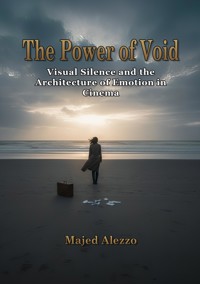
The Power of Void" explores the invisible forces that shape cinematic emotion through space, silence, and visual minimalism. Blending filmmaking theory with visual philosophy, the book presents a new framework that redefines the role of emptiness in directing. Across twenty-one chapters, it examines how distance, light, color, stillness, and spatial tension guide the viewer's perception and construct the emotional architecture of a scene. Drawing from psychological principles and cinematic practice, the book reveals how the void becomes an active expressive tool—shaping narrative rhythm, character presence, and the deeper layers of meaning within an image. Whether you are a filmmaker, writer, artist, or student of visual storytelling, this work opens a fresh perspective on the unseen elements that give cinema its power.
Sie lesen das E-Book in den Legimi-Apps auf:
Seitenzahl: 171
Veröffentlichungsjahr: 2025
Das E-Book (TTS) können Sie hören im Abo „Legimi Premium” in Legimi-Apps auf:
Ähnliche




















The Power of Void
Visual Silence and the Architecture of Emotion in Cinema
By:
Majed Alezzo
Vienna, 2026
© All rights reserved to the author. 2025 No part of this book may be copied, reproduced, republished, or distributed in any form or by any means without the explicit written permission of the copyright holder.
First Edition – 2026 Austria | Germany
Art Direction & Design: Vienna City Academy of Cinema – Creative Team
Contact: [email protected]
Why the Void?
Although this book addresses directors and filmmakers, I cannot shed the literary vision that shapes how I see the world. What keeps me returning to the void is the extraordinary power of “nothingness”: an active presence that affirms what cannot be seen.
I am not proposing an inquiry into the “philosophy of nothingness,” but a brief account of the idea’s background and why I study the void—and its direct impact on a viewer’s response to a film.
My novel Letters to Nothingness (2016) was less a point of departure than an extension of my long-standing preoccupation with what I call the silent forces—the void, silence, and shadow. These elements do not decorate the image; they reorder our perception of it. They alter a shot’s mood, steer emotion, and influence the visual narration as a whole.
I am writing the original edition of this book in Arabic and will later translate it into several languages. My deeper motive, however, is that Arab film discourse too often accepts the role of “recipient” of other people’s theories. This work offers an original, tightly argued proposal on the void and its effects, with examples crafted specifically for it. I have not relied on famous—or obscure—films as citations, because the subject, in this formulation, is unprecedented, and because off-the-shelf examples are not built on a theory of the void to begin with.
Methodologically, I adopted an applied research approach. I presented shots designed with measured variations in the void—visual, sonic, dramatic, and social—to directing and filmmaking students at the Vienna City Academy, as well as volunteers of diverse ages and cultures. We then studied their psychological and emotional responses within different dramatic contexts. The aim was not to describe the void in its obvious spatial sense, but to test its perceptual impact when the Negative Space shifts, the nose room varies, or the blocking/staging is reconfigured.
The importance of these silent forces lies in how they operate—silently. We barely sense them until we change them deliberately and measure the resulting transformation. To my knowledge, no prior work treats the void in cinema with the breadth and depth attempted here. Yes, fundamentals are taught—distances, compositional forms, geometric patterns—but the void, in this book, is not a branch of composition; it is a perceptual instrument that reshapes the viewer’s relationship to the image.
Beyond cinema, the void has a firm presence in philosophy, sociology, and the behavioral sciences. Clinically, a set of common spatial disorders is telling: claustrophobia, agoraphobia, acrophobia, enochlophobia, and even astrophobia. Each points to how space—its breadth, its narrowness, its crowding—molds our emotions and conduct.
For the filmmaker, the void’s value is that it invites thinking beyond the “size of a location” or its “contents.” It adds a semantic layer to shot size, lenses, character placement, color, and to the precise relations between hollowness and congestion within the frame. In shots where the void is not used consciously, its value is hard to grasp—until a counter-shot is constructed with a different void effect and the contrast becomes clear. The void is acutely sensitive to changes in light, color, and lens, and this is what amplifies its impact.
Managing the void is neither a luxury nor an impossibility; it is part of production design and day-to-day camera decisions. While its effect shifts with context—like any cinematic element—awareness of it equips the director with a set of practical questions before each scene:
What impression do I want to leave with the viewer?What is the character’s psychological and emotional state?Do I align that inner state with the environment, or engineer a measured dissonance?What is the film’s overall atmosphere, and how do I serve it through the distribution and distances of the void?This book invites us to read the void as a force that shapes cinematic experience. We will move between rigorous theorization and application supported by original examples, to see how the void, together with silence and shadow, becomes a language—one that crafts feeling, calibrates rhythm, and frees the image from its excessive fullness, so it can say more with less.
Part OneVisual Void on the Screen:The Geometry of Space and Its Impact on Cinematic Narrative
This section forms the essential core of The Power of the Void. It represents the broadest and most influential dimension in shaping the viewer’s visual experience. Here, we delve into the analysis of different kinds of voids as they appear on the screen—those silent spaces that may seem marginal at first glance yet carry hidden meanings and visual implications that strengthen the narrative, reveal the characters’ psychological states, or even add layers of tension and suspense to the film.
We will explore how, when used deliberately, the void becomes a powerful tool in the filmmaker’s hand—an instrument for shaping emotion, guiding attention, and composing meaning.
Chapter One:
The Space Surrounding the Characters
The space surrounding the characters refers to two aspects: the physical setting of the scene (whether narrow or wide), and the emptiness—or crowdedness—within that setting.
The environment that hosts the event profoundly influences the viewer’s emotional and psychological response. Such response depends on several factors: the narrative context, the film’s theme, and the viewer’s own experience. When examining the impact of space in filming locations, we can observe different emotional outcomes across distinct dramatic situations.
In scenes shot within large, empty spaces, the viewer experiences feelings of isolation and solitude. This interpretation stems from the way vast expanses make characters appear small and insignificant within their surroundings, thus amplifying a sense of loneliness. Empty spaces also evoke uncertainty and loss—where place and direction become difficult to define—fostering an atmosphere of mystery and questioning.
In another context, a vast space can also create tension and anxiety, particularly in thrillers or mysteries. Wide areas may seem filled with potential threats or unseen dangers. The void heightens uncertainty, suggesting that anything might be concealed within it—an unseen presence or imminent event—keeping the viewer in suspense.
When characters retreat into an open space to reflect on inner conflict or loss, this deepens the cinematic experience. The viewer, drawn into contemplation, begins to reflect not only on the film’s events but on their meanings as well.
Because the psychological response to space is strongly context-dependent, let us consider an illustrative example.
A police officer, the film’s protagonist, receives a message from an unknown sender. It contains crucial information about an ongoing case and instructs him to meet at a warehouse on the city’s outskirts. In this context, the officer encounters the mysterious figure inside a large, empty, enclosed space.
In this scene, the director can guide the audience’s emotions in several ways. The vast, vacant warehouse can evoke a sense of latent danger. The emptiness suggests the possibility of something hidden or ominous—something about to unfold. The viewer’s unease grows because such places, when deserted, trigger primal associations with vulnerability and suspense. We begin to question why this location was chosen for the meeting, anticipating what might happen to the officer. The tension that results pulls us deeper into the film.
In contrast, if the same meeting were moved from the empty warehouse to a crowded café in the city center, the audience’s emotional response would shift dramatically due to the change in environment.
In a bustling café, the director can still create tension, but of a different kind. The level of anxiety drops because the officer is surrounded by people, providing a sense of relative safety. The viewer feels that immediate danger is less likely, as any threat would be quickly noticed in a public setting. This shared environment suggests that the officer is not entirely alone, reducing fear but redirecting our focus toward why the meeting takes place and who the mysterious man might be.
Yet the same crowdedness introduces another challenge: noise, movement, and constant background activity can distract the audience’s attention. Concentrating on the dialogue or subtle interaction between the officer and the stranger becomes harder, which affects comprehension of the crucial information being exchanged.
And here we find that, although the crowded environment may lessen the tension evoked by the vast, empty warehouse, it can also generate another kind of unease—one born of congestion itself, and of the officer’s effort to interact with the unknown man without letting the situation slip out of control or anyone nearby get hurt by an unforeseen turn of events.
Yet when studying the role of emptiness in cinema, the director’s ability to shape audience emotion is not confined to the physical void surrounding the characters; it also engages the viewer’s own memory and assumptions about the setting in which the story unfolds.
Take, for instance, the desert—an expanse where sand stretches endlessly and oases are rare. The director can use this environment to embody, almost perfectly, the characters’ sense of solitude or loss. At the same time, the desert generates in the viewer a visceral tension and anxiety, born of uncertainty about unseen dangers or the difficulty of survival in such a harsh, unforgiving landscape. The vastness of this void, reinforced by our cultural associations with deserts, intensifies that tension: the audience instinctively anticipates the hardships awaiting the protagonist, sensing the severity of a journey stripped of refuge or shelter.
Open locations with wide voids may provoke similar or contrasting reactions. A character, for example, might go to the seashore when overwhelmed by loneliness or grief. Yet the same seaside can also convey calm and contemplation. The horizon’s openness and the soft rhythm of waves create a layer of tranquility that turns the shore into a fitting space for meditation and reflection on life and fate—an association deeply rooted in our shared imagery of the sea.
To examine this difference in how audiences respond to open spaces, consider the following scenario: in a film, the protagonist loses his way and must face numerous challenges to survive. If the setting is a desert, two voids appear simultaneously on screen—the emptiness of a place devoid of people, and the visual emptiness of a barren landscape covered in sand. Such a scene, as noted earlier, powerfully reinforces feelings of isolation and danger, for no visible means of rescue exist. The immense visual void amplifies the sense of helplessness and disorientation, raising the audience’s levels of tension and anxiety.
By contrast, if the same scene is filmed in an empty forest, the sensation changes. Here, the density of trees may evoke a feeling of confinement, yet there is no visual emptiness—reducing the sense of solitude. The presence of trees and water enhances the protagonist’s perceived chance of survival, softening the continuous dread that the desert would inspire. Still, the forest presents its own perils—predatory animals, natural hazards, and the unknown—eliciting a different kind of emotional response from that provoked by the stark desolation of the desert.
The Impact of Emptiness in Places That Are Usually Crowded:
Have you ever found yourself in a school devoid of students—with its vast courtyards and long, empty hallways? On a personal level, the most unsettling kind of emptiness for me is that which appears in spaces that are usually crowded. Many participants whose reactions I studied while developing the Power of the Void theory shared this same feeling, though for different reasons.
Using emptiness in locations typically filled with people—football stadiums, theaters, schools—can have a powerful psychological effect on viewers. This impact stems from the mental association between such places and the presence of crowds, energy, and noise. When shown empty, the contrast between expectation and reality becomes jarring and emotionally potent. The viewer anticipates movement and sound, yet is met with silence and void—an inversion that heightens the sense of loneliness. The tension born from this contrast also evokes unease, as if something ominous has just occurred or is about to happen.
A director can employ emptiness in such spaces to reflect a character’s inner state or emotional circumstances within the film’s context. The effect can be especially striking when these spaces appear full of life early in the film but later become deserted, mirroring the character’s psychological or emotional transformation.
When emptiness replaces the crowd in places the audience expects to see bustling, and silence settles over them, the result can stir feelings of grief or contemplation. The protagonist revisits these spaces, recalling moments once filled with joy and vitality—doubling the sense of loss and nostalgia and projecting that emotion directly onto the screen.
The Emotional Effect of Crowded Settings in Cinema
Earlier, we discussed the space surrounding characters in filming locations. But what about crowding itself?
Crowded environments—whether filled with objects or people, especially in confined spaces—can generate strong psychological responses in viewers. Congestion within a limited area evokes sensations of entrapment and psychological pressure, raising levels of tension and anxiety. This effect becomes especially intense in scenes involving confrontation or conflict, where the cramped setting visually communicates the inability to escape. Such environments can trigger feelings akin to claustrophobia, because the viewer instinctively identifies with the protagonist and experiences the space through them. The effect is particularly vivid in scenes set in narrow corridors, crowded rooms, or elevators.
The constant noise and movement characteristic of such settings can further heighten confusion and discomfort. Yet within these dense spaces, directors can focus on character interaction, enhancing the viewer’s emotional engagement. Physical proximity between characters amplifies tension and conflict, making emotional dynamics more palpable—an idea we will explore in depth later.
Crowded environments also allow filmmakers to guide the audience’s attention toward small but meaningful details that enrich the narrative—objects, photographs, or mementos that reveal fragments of a character’s past. Through this density, new dimensions of personality may emerge.
Placing a character in a crowded space can be especially powerful when the story demands solitude. Imagine a protagonist who suffers emotional pain or loss—circumstances that would normally call for isolation and reflection. Instead, the character is denied this “luxury of solitude” and confined to a noisy public space: a packed bus or a café full of people celebrating loudly. The protagonist, lost in thought and detached from the surrounding chaos, embodies emotional disconnection. This visual contrast deepens the viewer’s empathy, intensifying feelings of grief and alienation in a subtle, unexpected way.
A Comparative Example: Emptiness vs. Crowding
Consider a dramatic film in which the protagonist struggles to emerge from loneliness after the death of his wife. The director’s decision to set these scenes in either a large, empty house or a small, cluttered one can completely alter the message and emotional resonance.
If the man is shown alone in a large, empty house, the vastness underscores his isolation. The empty spaces highlight the absence of life and energy, making grief and loneliness almost tangible. The viewer immediately senses the emotional void in his life—the wife’s absence has created an unfillable gap.
In contrast, if the man lives in a small house filled with his late wife’s belongings and their shared photographs, the emotional atmosphere changes entirely. Here, emptiness is not physical but emotional. The surrounding objects evoke warmth and presence even in her absence. The mementos and memories that fill the space make us feel close to the couple’s shared life, stirring both nostalgia and tenderness. Loneliness remains—but it is intertwined with affection, remembrance, and the ache of love.
Through this contrast, focus shifts from the pure desolation of the large empty house to the bittersweet, layered emotions of grief and warmth within the smaller, cluttered home. This illustrates how a director’s choice of setting can profoundly alter both the meaning of a scene and the audience’s emotional response to it.
Summary
Through exploring how cinematic emptiness influences audience emotion, it becomes clear that the spatial void surrounding characters—whether vast and empty or dense and crowded—serves as a profound narrative instrument in the filmmaker’s hands, capable of eliciting a wide range of emotional responses.
In this chapter, we observed that surrounding emptiness heightens feelings of isolation, loneliness, and tension: expansive spaces make characters appear small and insignificant. In contrast, environments crowded with objects or people—particularly confined ones—provoke sensations of entrapment and claustrophobia, intensify confusion and chaos, yet also deepen emotional engagement by focusing attention on interpersonal interaction and subtle visual detail.
When emptiness emerges in spaces that are usually crowded—football stadiums, theaters, or schools—it produces a uniquely powerful psychological effect. The contrast between expectation and reality amplifies the sense of loneliness and unease, evoking tension, anxiety, and an undercurrent of melancholy and contemplation.
By manipulating the void around characters, a director can convey complex emotional meanings and guide the audience’s responses with precision—allowing emptiness itself to speak the language of feeling and form.
Chapter Two:
The Space Between Characters (Distance)
This form of void refers to the physical distance separating characters within a scene or a single shot. In most film schools and directing manuals, this concept is mentioned only briefly—typically reduced to a simple rule: greater distance conveys detachment, reserve, or emotional coldness, while proximity suggests intimacy and warmth. But what happens when two enemies are placed too close to each other? What emotions arise then? And conversely, what meaning emerges when close companions are shown far apart, though no hostility exists between them?
When the distance between adversaries is extremely small, the audience perceives an intense sense of tension and hostility. This physical closeness mirrors alertness and threat, amplifying the feeling of imminent danger. Such proximity visually communicates the immediacy of conflict—verbal or physical—and the likelihood of confrontation. The viewer senses collision as inevitable, which heightens suspense and anticipation.
By contrast, when the distance between two emotionally close characters is unusually large, the message may carry several emotional or dramatic nuances. The space may reflect grief, absence, or a shared melancholy. For example, a significant gap between them might underscore an emotional distance caused by an event or circumstance, even if affection remains intact. The separation can also suggest a moment of reflection or inner withdrawal, or highlight a character’s comfort and ownership of space by the way they occupy it.
Using the space between characters strategically—as a narrative tool—allows directors to shape how audiences read relationships beyond dialogue or traditional visual cues. The size of the void—large or small—can magnify tension, intimacy, sadness, or serenity depending on the scene’s context and the emotional nature of the relationship. Research indicates that physical spacing has deep psychological effects, revealing different dimensions of human connection and enhancing audience empathy. It is this awareness that enables filmmakers to create emotionally rich, resonant experiences—inviting the viewer not just to see relationships but to feel them.
A Case Study: The Dinner Scene
Let us take, as a study case, a family dinner scene charged with conflict or tension, and examine the effect of either expanding or reducing the distance between characters.
When the characters in conflict are seated far apart around the same table, the spacing amplifies the feeling of coldness and detachment. Emotional distance is mirrored in physical space, reinforcing the sense of unresolved tension and lack of connection.
If, on the other hand, the same characters are placed too close to one another, the scene radiates immediate hostility. Physical proximity in a confrontational context heightens the perception of danger and volatility; the viewer feels that an outburst could occur at any moment.
Wide shots can emphasize the empty space between chairs, focusing on closed body language and detached expressions to convey emotional distance. Here, short focal-length lenses play a key role in expanding spatial perception and highlighting isolation. Conversely, close-up shots on faces and small gestures—tightened jaws, clenched fists, nervous glances—intensify the sense of confrontation and unease. Long focal-length lenses can also visually compress space, making characters appear closer, thus altering the perceived emotional tension of the scene.
Research supports the notion that physical voids often mirror emotional ones. Large distances accentuate alienation and detachment, while small distances embody heightened tension and hostility. Understanding this allows directors to manipulate the audience’s emotional engagement with precision—guiding perception, rhythm, and empathy not through dialogue, but through the invisible geometry of space itself.
Closeness and Submission:
Proximity does not always signify affection—a truth we recognize in daily life, and cinema is no exception. Physical closeness can also imply intrusion, dominance, or submission. When films manipulate spatial distance between characters, that distance can carry meanings far beyond emotional or physical intimacy. Extreme proximity may reveal complex dynamics of power, control, and surrender, giving the scene deeper psychological and social resonance.




