


64,99 €
Mehr erfahren.
- Herausgeber: John Wiley & Sons
- Kategorie: Fachliteratur
- Serie: Jossey-Bass Public Health/Health Services Text
- Sprache: Englisch
"This book answers 'why not' and 'how to' for health care accreditation bodies, quality experts, and frontline professionals, moving the reader from timely information, to inspiration, and through patient-centered action with practical tools and potent case studies."
Paul vanOstenberg, DDS, MS, vice president, Accreditation and Standards, Joint Commission International
"This superb guide from Planetree illustrates that providing high-quality, high-value, patient-centered health care is not a theoretical ideal. The case studies make clear that these goals are attainable; they are being achieved by leading health care organizations worldwide, and there is a clear road map for getting thereright here in this book."
Susan Dentzer, senior policy adviser to the Robert Wood Johnson Foundation
"At IHI, we follow the principle, 'all teach, all learn'the idea that everyone, everywhere has something to teach, and something to learn. This remarkable and indispensable guide is as pure an example of this principle as I've come across."
Maureen Bisognano, president and chief executive officer, Institute for Healthcare Improvement
"The International Society for Quality in Health Care's mission is to inspire, promote, and support continuous improvement in the quality and safety of health care worldwide. It is in this spirit that we welcome this new book on patient-centered care. As in their previous work, the authors demonstrate just how critical it is to develop an organizational culture that puts patients first."
Peter Carter, chief executive officer, International Society for Quality in Health Care
Sie lesen das E-Book in den Legimi-Apps auf:
Seitenzahl: 392
Veröffentlichungsjahr: 2013
Ähnliche



















Table of Contents
Title page
Copyright page
Tables and Figures
Dedication
Acknowledgments
The Editors
Susan B. Frampton, PhD
Patrick A. Charmel, MPH, FACHE
Sara Guastello
The Contributors
Prologue
Foreword
Introduction: Patient-Centered Care Goes Global
Patient-Centered Care: A Cresting Wave of Change
Still Much Work to Be Done
The Patient Experience Is the Human Experience
Patient-Centered Care Field Work
About This Field Guide
Part 1: Patient-Centered Care as a Fundamental Strategy for Achieving High-Quality, High-Value Care
1: The Patient-Centered Care Value Equation
The Value Equation
Health Care Consumers Are Challenging Us to Do Better
Improving Efficiency and Freeing Up Time to Care
Conclusion
2: Defining and Measuring Patient-Centered Quality
Defining Patient-Centered Care
The Tie That Binds Quality, Safety, and the Patient Experience
The Big Question
Raising the Bar in Patient-Centered Care Through Designation
Measuring Patient-Centeredness
Conclusion: A Goal That Can Be Set, Measured, and Achieved
Part 2: Challenges and Solutions in Patient-Centered Care
3: Compassion in Action
Quality Outcomes Linked to Compassion and Empathy
Compassion and Empathy in Practice
Embedding Compassionate Care in Education
Practical Tools to Enhance Compassionate Practice
Putting Compassion First
Conclusion: Compassion and Transformation
4: Words That Work: Patient-Centered Physician Communication
Transforming an Organization's Communication Curriculum: Step by Step
How the Change Affected Patient and Staff Experience
Conclusions
5: Activating Patients Through Access to Information
Information Yields Activation
Patient Activation Improves Health Outcomes
“Nothing about Me, without Me”
Shared Medical Records
Using Personal Health Records to Promote Continuity of Care
Redesigning Patient Education
Cultivating a Teaching and Learning Culture
Community Education
Conclusion: Measuring the Impact
6: Healing Partnerships: The Role of Family in Patient-Centered Care
Why Partnering with Family Is Good for Patients
Patient-Directed Family Presence
Turning Concepts into Practice
Beyond Family Presence: Embracing Family Involvement
Supporting the Needs of Family
Conclusion
7: Healing Environment: Architecture and Design Conducive to Health
Setting the Stage for Patient-Centered Care
Planetree Design Principles
Employing a Patient-Centered Design Process
Wayfinding
The Auditory Environment
Healing Design Is Safe Design
Balancing Healing Design and Safety in Behavioral Health Settings
Conclusion
Part 3: Activating Stakeholders to Create Organizational Change
8: Creating Lasting Organizational Change: Turning Hopes into Reality
Business as Usual Is No Longer an Option
But How?
Focus on What Really Matters: Where do We Want to Go?
Harnessing the Power Of People to Be the Change
Support Implementation and Execution of Excellence
Staying on Track: Defining, Measuring, and Showing Meaningful Progress
Conclusion: Small Enough to Start, Big Enough to Matter
9: Culture Change and the Employee Experience
Shared Values, Beliefs, and Vision
Quality Human Interaction within a Shared Vision
Wellness Experts
Conclusion
10: Partnering with Patients and Families to Improve Quality and Safety
Creating a Culture of Safety and Quality
Engaging Patients and Families in Transforming Health Care Systems
Conclusion: The Next Horizons in Patient Engagement
11: The Role of Physicians in Patient-Centered Care
Patient-Centered Care: The Work of the Soul
What Matters Most
Deconstructing Resistance to Patient-Centered Care
Tackling the Challenge of the Disrespectful Physician
The Physician Perspective on …
If You're Not Part of the Solution, You're Part of the Problem
Conclusion: Personal Commitments Physicians Can Make to Be More Patient-Centered
12: Creating a Patient-Centered Continuum of Care
Lessons from the Field: The Netherlands
Lessons from The Field: Quebec
Strategies for Improving Continuity
Conclusion: Planetree Designation Promotes an Integrated Approach to Patient-Centered Care
Index
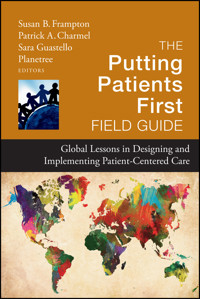
Cover design: JPuda
Cover image: (map) © sorendls/Getty; (figures) © ImagesbyTrista/istockphoto
Copyright © 2013 by John Wiley & Sons, Inc. All rights reserved.
Published by Jossey-Bass
A Wiley Brand
One Montgomery Street, Suite 1200, San Francisco, CA 94104-4594—www.josseybass.com
No part of this publication may be reproduced, stored in a retrieval system, or transmitted in any form or by any means, electronic, mechanical, photocopying, recording, scanning, or otherwise, except as permitted under Section 107 or 108 of the 1976 United States Copyright Act, without either the prior written permission of the publisher, or authorization through payment of the appropriate per-copy fee to the Copyright Clearance Center, Inc., 222 Rosewood Drive, Danvers, MA 01923, 978-750-8400, fax 978-646-8600, or on the Web at www.copyright.com. Requests to the publisher for permission should be addressed to the Permissions Department, John Wiley & Sons, Inc., 111 River Street, Hoboken, NJ 07030, 201-748-6011, fax 201-748-6008, or online at www.wiley.com/go/permissions.
Limit of Liability/Disclaimer of Warranty: While the publisher and author have used their best efforts in preparing this book, they make no representations or warranties with respect to the accuracy or completeness of the contents of this book and specifically disclaim any implied warranties of merchantability or fitness for a particular purpose. No warranty may be created or extended by sales representatives or written sales materials. The advice and strategies contained herein may not be suitable for your situation. You should consult with a professional where appropriate. Neither the publisher nor author shall be liable for any loss of profit or any other commercial damages, including but not limited to special, incidental, consequential, or other damages. Readers should be aware that Internet Web sites offered as citations and/or sources for further information may have changed or disappeared between the time this was written and when it is read.
Jossey-Bass books and products are available through most bookstores. To contact Jossey-Bass directly call our Customer Care Department within the U.S. at 800-956-7739, outside the U.S. at 317-572-3986, or fax 317-572-4002.
Wiley publishes in a variety of print and electronic formats and by print-on-demand. Some material included with standard print versions of this book may not be included in e-books or in print-on-demand. If this book refers to media such as a CD or DVD that is not included in the version you purchased, you may download this material at http://booksupport.wiley.com. For more information about Wiley products, visit www.wiley.com.
Library of Congress Cataloging-in-Publication Data
The putting patients first field guide : global lessons in designing and implementing patient-centered care / editors, Susan B. Frampton, Patrick A. Charmel, Sara Guastello. – First edition.
p. ; cm.
Includes bibliographical references and index.
ISBN 978-1-118-44494-8 (cloth), ISBN 978-1-119-45008-6 (epub), ISBN 978-1-119-45009-3 (ePDF)
I. Frampton, Susan B., editor of compilation. II. Charmel, Patrick A., editor of compilation. III. Guastello, Sara, editor of compilation.
[DNLM: 1. Patient-Centered Care–methods. 2. Physician-Patient Relations. 3. Quality Assurance, Health Care–methods. W 84.7]
R727.3
610.69'6–dc23
2013011587
Tables and Figures
Tables
Table 1.1:Sharp Memorial Hospital Patient- and Family-Centered Care Program EnhancementsTable 2.1:Patient-Centered Hospital Designation Readiness AssessmentTable 2.2:Measures to Assess Aspects of Patient-Centered CareTable 3.1:All About Me: Questions to Elicit Information About the Person to Enable Delivery of CompassionTable 3.2:Examples of Positive, Neutral, and Negative InteractionsTable 4.1:Short Teaching Pearls to Integrate Communication Teaching into Teaching EncountersTable 6.1:Examples of Patient-Directed Family Presence Guidelines and PoliciesTable 7.1:Auditory Environment Self-Assessment for Health Care ProvidersTable 8.1:Responses to ChangeFigures
Figure 1.1:SMH Employee and Physician Satisfaction Percentile Rank (FY2008–FY2011)Figure 1.2:SMH Overall Patient Satisfaction Percentile Rank (FY2008–FY2011)Figure 1.3:SMH Overall Percentage Perfect Care Compliance Composite (FY2008–FY2011)Figures 1.4 and 1.5:HCAHPS Patient Experience Survey Comparison of U.S. Designated Patient-Centered Hospitals and the National Average. Reporting Time Period: 04/01/2011–3/31/2012Figure 1.6:Percent of Patients Who Would Definitely Recommend This Hospital to Friends and Family, Rates of ImprovementFigure 1.7:Percentage of Patients Highly Satisfied, Rates of ImprovementFigure 7.1:Maasziekenhuis PanteinFigure 7.2:Hospital Israelita Albert Einstein Garden and LabyrinthFigure 7.3:Tane Hospital Roof GardenFigure 7.4:Tane Hospital InteriorFigure 7.5:Elmhurst Memorial Hospital Patient RoomFigure 8.1:Excellerator Tool: Creating the Right Movement AbilityFigure 8.2:Do Want Matrix: Right ActionFigure 9.1:Living in Coherence with Our FoundationsThis book is dedicated to the continuing inspiration provided to caregivers around the world by the life and work of Laura C. Gilpin (1950–2007).
Acknowledgments
THIS IS THE third edition of the Putting Patients First series, the first published a decade ago. The success of this series is a testament to the forward-thinking ideas of Planetree's early leaders, led with quiet grace and a strong vision by Angelica Thieriot, who contributed the prologue to this book. These visionaries were defining what it meant to be patient-centered before there was even a term to define. They established a firm foundation for patient-centered care and the Planetree model and philosophy to flourish.
Where it flourishes is in hospitals, medical centers, nursing homes, clinics, physician practices, assisted living communities, behavioral health centers, rehabilitation hospitals, and other care settings where, day in and day out, caregivers devote themselves to the care of others. In putting together this book, we have been humbled by those who have taken on this tremendous responsibility and privilege—often doing so as they try to make the most of scarce resources in the face of many external demands that exert additional pressures. It could be very easy for these caregivers to dismiss patient-centered care as one more thing to do, but they don't. Instead, they have approached it as THE thing to do. The ideas and innovations captured throughout these pages originated with them. This book is a testament to their attitudes of compassion and empathy, their resourcefulness, and their creativity.
Our dear friends Laura Gilpin and Harvey Picker embodied these attributes of compassion, empathy, resourcefulness, and creativity. Their spirits and influence are present throughout this book.
Many of the innovations in these pages have originated with health care professionals. Others are examples of codevelopment where patients have gone beyond sharing their experiences with us to guide improvement, and have fully partnered with health care providers to develop and implement practices that improve the health care experience for all involved.
In each edition of this series, it has been a pleasure to invite a diverse group of patient-centered care champions to share their expertise and unique perspectives on what it takes to create and sustain an organizational culture that puts patients first. For this book, as in years past, these requests were consistently met with eager desire to impart knowledge and an enthusiastic willingness to share, despite busy schedules and heavy responsibilities. We are immensely grateful for the time, energy, and effort each contributor dedicated to this project. You will find them listed after The Editors.
In every aspect of creating this book, we have drawn heavily on the experiences of our colleagues around the world from whom we have learned so much. Their support and guidance in this process have been invaluable. We do not have the space to list all of their names, but we wanted to especially thank some key global leaders, including Jim van den Beuken and Marcel Snijders of Planetree Nederland; Lucie Dumas of Réseau Planetree Quebec; Henrique Sutton de Sousa Neves, CEO of Sociedade Beneficente Israelita Brasileira and the staff of Planetree Brazil; Lucile Hanscom of the Picker Institute and Sir Donald Irvine of Picker Europe; Karen Luxford of the Clinical Excellence Commission in Australia; Antonello Zangrandi and Federico Zangrandi of Progea in Italy; Ana Augusta Blumer Salotti; kz Morihiro; Dr. Dorothea Wild; Dr. Etel Veringa; Marie Fuglsang and Karin Jay for being international ambassadors for Planetree, helping to expand patient-centered care around the world and facilitate global sharing of best practices and innovations.
The progress documented in this book builds on the work of many organizations, among them Joint Commission International, the International Society for Quality in Health Care, the National Quality Forum and the National Priorities Partnership, the Picker Institute, the World Health Organization, the Institute for Healthcare Improvement, Health Consumers' Alliance of South Australia, the Saskatchewan Union of Nurses, the Danish Unit of Patient-Perceived Quality, the Arnold P. Gold Foundation, and the African Patient-Centered Care Initiative led by Peter Arimi of USAID, Fred Wabwire-Magnen of the Regional Centre for Quality in Healthcare and Stephen Kinoti of Fio Corporation.
The Putting Patients First series would not be possible were it not for Andy Pasternack and Seth Schwartz at Jossey-Bass who have been valuable partners on this project. They have guided us through the publishing process, and have worked hard to ensure that the manuscripts we have so painstakingly developed ultimately make it into the hands of readers so that the concepts can be put into practice.
To our draft manuscript reviewers, Karen Adams, Sir Donald Irvine, Jerod M. Loeb, Debra Ness, and Jennifer Sweeney, we thank you for your thoughtful and constructive comments.
We would finally like to acknowledge our colleagues and friends within Planetree—the members of the board of directors and the Planetree International Advisory Council, and an enormously talented staff for whom patient-centered care is nothing less than a personal mission. It is an honor to work with this brilliant group of people as we turn the page to Planetree's next chapter.
Susan B. Frampton, Patrick A. Charmel, and Sara Guastello
The Editors
The Editors
Susan B. Frampton, PhD
For over a decade, Dr. Susan Frampton has been the president of Planetree, a nonprofit advocacy, consultation, and membership organization that works with a growing network of hospitals and continuing care communities around the world to implement Planetree's comprehensive patient- and person-centered model of care. Dr. Frampton has authored numerous publications, the most recent including a series on patient-centered care in the American Journal of Nursing, International Health Federation Journal, Patient-Centered Care Improvement Guide, Long-Term Care Improvement Guide, and the edited collection Putting Patients First, Second Edition (Jossey-Bass, 2008). The first edition of Putting Patients First (Jossey-Bass, 2003) won the ACHE Hamilton Book of the Year Award in 2004.
In 2013, Dr. Frampton was appointed cochair of the National Priorities Partnership (NPP), a collaborative of fifty-two major national organizations working to identify strategies for improving safety, quality, and patient-centered outcomes for the U.S. health care system. Her work with the National Priorities Partnership extends back to 2009, when she was first named a member. In 2011, she served on NPP's Better Care Subcommittee, which helped to shape a set of comprehensive national goals to improve the quality of health and health care. She also was cochair of the NPP (Re)admissions Action Team, which developed and executed strategies to safely reduce avoidable readmissions and increase the uptake of patient-centered team-based care delivery models. In addition to this work with NPP, Dr. Frampton has participated on the Joint Commission's Expert Advisory Panel on culturally competent patient-centered care standards, the National Quality Forum's Care Coordination Steering Team and the Institute of Medicine's review panel for their 2009 publication on integrative medicine.
In addition to speaking internationally on culture change, quality and safety, and the patient experience, she has presented keynotes on designing patient-centered practices in acute care, continuing care, and ambulatory medicine settings for various hospital associations, Veterans Health Administration, and the World Health Organization. In addition, Dr. Frampton was honored in 2009, when she was named one of “20 People Who Make Healthcare Better” by Health Leaders Magazine.
Patrick A. Charmel, MPH, FACHE
Patrick A. Charmel, president and chief executive officer of Griffin Hospital and its parent organization, Griffin Health Services Corporation, has been associated with Griffin since 1979, when he served as a student intern while attending Quinnipiac University. He became president in 1998. As president of Griffin Health Services Corporation, he is also the chief executive officer of Planetree Inc., a subsidiary corporation. Under his leadership, Griffin has appeared on the Fortune magazine list of the 100 Best Companies to Work for in America for ten consecutive years. The Griffin Hospital management team was selected as the 2008 Top Leadership Team in Healthcare in the nation for community and mid-size hospitals by HealthLeaders Media. Griffin has been the recipient of numerous quality, value, and patient experience awards from various national organizations that measure and monitor hospital performance. Griffin is the only Connecticut hospital named a Top Quality Performer by The Joint Commission, the leading accreditor of health care organizations in America. Griffin Hospital was also recognized by the Premier healthcare alliance as a winner of the 2010 Premier Award for Quality, putting it in the top 1 percent of the nation's hospitals. Griffin also received this award in 2007.
Charmel is a coeditor of the book Putting Patients First, which received the American College of Healthcare Executive's Health Care Book of the Year award in 2004. A second edition of the book was released in October 2008.
In 2008, he completed a three-year term as a member of the National Advisory Council for Healthcare Research and Quality, to which he was appointed by the U.S. Secretary for Health and Human Services. He also serves as immediate past chairman of the board of directors of the Connecticut Hospital Association, formerly served as chairman of the Greater Valley Chamber of Commerce board of directors, and currently serves as chairman of the board of Diversified Network Service (DNS), the Connecticut Hospital Association's for-profit subsidiary.
Charmel is the immediate past chairman of the board of governors of the Quinnipiac University Alumni Association and a former university trustee. Quinnipiac University honored him with the Distinguished Alumni Award in 2008. In 2011, he received the Distinguished Alumni Award from the Yale School of Public Health. In 2006 he was the recipient of the John D. Thompson Distinguished Visiting Fellow Award at Yale University. He is a recipient of the James E. West Fellow Award from the Boy Scouts of America and the 2009 Planetree Lifetime Achievement Award.
Sara Guastello
Sara Guastello is director of Knowledge Management for Planetree. In this role, she oversees the Patient-Centered Hospital Designation Programand the associated Patient-Centered Merit Recognition Program, the only such program to recognize excellence in person-centered care across the continuum of care and around the world. Sara collaborates and consults with Planetree members and other partners to heighten awareness and understanding of patient- and person-centered approaches to care. She has authored numerous publications, including articles in the American Journal of Nursing Patients First Series, the International Hospital Federation World Hospitals and Health Services Journal, Provider magazine, The Patient journal, and Food Studies: An Interdisciplinary Journal. She has authored white papers on integrating the patient and family voice into hospital operations and advancing person-centered care across the continuum, and developed a series of toolkits spotlighting field-tested strategies for HCAHPS improvement. With support from The Picker Institute, she led the efforts to create the Patient-Centered Care Improvement Guide and the companion Long-Term Care Improvement Guide, comprehensive compendiums of premier patient- and resident-centered practices in place at health care organizations around the world.
The Contributors
Róisín Boland, RGN, MBA, former chief executive officer, International Society for Quality in Health Care
Michelle Bowman, BSN, RN, LAc, nursing director, Longmont United Hospital, Longmont, Colorado
Randall L. Carter, senior vice president, Planetree
Catherine Crock, MD, executive director, Australian Institute for Patient and Family Centred Care; physician, Royal Children's Hospital, Melbourne, Australia
Belinda Dewar, PhD, MSc, RGN, RCNT, professor of practice improvement, Institute of Care and Practice Improvement, University of West Scotland, Hamilton, Scotland, UK
Sylvie Doiron, clinical services director, Centre de réadaptation Estrie, Sherbrooke, Quebec
Sir Liam Donaldson, chair in health policy, Imperial College, London; World Health Organization Patient Safety Envoy
Lucie Dumas, CEO, Centre de réadaptation Estrie, Sherbrooke, Quebec; CEO and founder, Réseau Planetree Quebec
Deborah Felsenthal, manager of patients, families and consumers center, Patient-Centered Primary Care Collaborative
John T. Findley, MD, Planetree physician consultant, Valley View Hospital, Glenwood Springs, Colorado
José Henrique Germann Ferreira, MD, CEO, Management Consultancy, Albert Einstein Hospital, São Paulo, Brazil
Richard E. Hanke, EdD, SPHR, leadership development & coaching consultant; founding co-chair, Patient Partnership Council, Delnor Hospital, Geneva, Illinois
Steven F. Horowitz, MD, FACC, medical director, Planetree and Cardiac Care Management, Stamford Hospital, Stamford, Connecticut; professor of clinical medicine, Columbia University College of Physicians and Surgeons, New York; Physician Liaison, Planetree
Edward Kelley, PhD, executive coordinator, WHO Patient Safety Programme
Joep P. Koch, MBA-Health Care, Sector Manager Treatment, Planetree coordinator, Rivas Zorggroep, Gorinchem, The Netherlands
Anna Lee, programme officer, Patients for Patient Safety, WHO
K. J. Lee, MD, FACS, associate clinical professor, Yale University; emeritus chief of otolaryngology, Hospital of St. Raphael, New Haven, Connecticut
Claudio Luiz Lottenberg, president, Sociedade Beneficente Israelita Brasileira Hospital Albert Einstein, São Paulo, Brazil
Karen Luxford, PhD, FAIM, FAAQHC, director, Patient Based Care, Clinical Excellence Commission, Sydney, Australia
Jeanette Michalak, RN, MSN, vice president, Clinical Services, Planetree
Marci Nielsen, PhD, MPH, chief executive officer, Patient-Centered Primary Care Collaborative
Dennis S. O'Leary, MD, president emeritus, The Joint Commission
Anna W. J. Omtzigt, MD, PhD, chairman, medical board, Flevo Hospital, Almere, The Netherlands; medical director, Vrouw & Klinieken, The Netherlands
Dan Otero, BSHA, CLP, LSSBB senior coach, Patient-Centered Lean
Lisa Platt, RID, LEED AP BD+C, EDAC, Planetree consultation service specialist
Marie-Claude Poulin, Planetree coordinator and communications officer, Centre de réadaptation Estrie, Sherbrooke, Quebec; consultant, Réseau Planetree Quebec
Nittita Prasopa-Plaizier, MPH, MHSc, programme manager and technical lead, Patients for Patient Safety Programme, World Health Organization
Heidi Ruis, area manager integrated care, Rivas Zorggroep, Gorinchem, The Netherlands
Marcel Snijders, founder/board member; Designation Specialist, Planetree Nederland
Susan Stone, PhD, RN, NEA-BC, senior vice president and CEO, Sharp Coronado Hospital and Healthcare Center, Coronado, California
Angelica Thieriot, founder, Planetree
Jim van den Beuken, founder and chairman, Planetree Nederland; managing partner, Creative Power
Dorothea Wild, MD, MPH, dr. med., president, Griffin Faculty Practice Plan; associate program director, Combined Internal Medicine and Preventive Medicine Residency Program, Griffin Hospital, Derby, Connecticut
Paula Wilson, president and chief executive officer, Joint Commission Resources/Joint Commission International
Prologue
THIRTY-FIVE YEARS AGO I was hospitalized with a mysterious virus. What I encountered at the hospital was both surprising and devastating.
Soon after arriving I, in essence, lost my citizenship to the human race. I was no longer an adult with rights and privileges.
My privacy, my modesty, my autonomy, and my identity were taken from me when I was most vulnerable—desperately ill and afraid.
Lesen Sie weiter in der vollständigen Ausgabe!
Lesen Sie weiter in der vollständigen Ausgabe!
Lesen Sie weiter in der vollständigen Ausgabe!
Lesen Sie weiter in der vollständigen Ausgabe!
Lesen Sie weiter in der vollständigen Ausgabe!
Lesen Sie weiter in der vollständigen Ausgabe!
Lesen Sie weiter in der vollständigen Ausgabe!
Lesen Sie weiter in der vollständigen Ausgabe!
Lesen Sie weiter in der vollständigen Ausgabe!
Lesen Sie weiter in der vollständigen Ausgabe!
Lesen Sie weiter in der vollständigen Ausgabe!
Lesen Sie weiter in der vollständigen Ausgabe!
Lesen Sie weiter in der vollständigen Ausgabe!
Lesen Sie weiter in der vollständigen Ausgabe!
Lesen Sie weiter in der vollständigen Ausgabe!
Lesen Sie weiter in der vollständigen Ausgabe!
Lesen Sie weiter in der vollständigen Ausgabe!
Lesen Sie weiter in der vollständigen Ausgabe!




