


12,99 €
Mehr erfahren.
- Herausgeber: Atlantic Books
- Kategorie: Geisteswissenschaft
- Sprache: Englisch
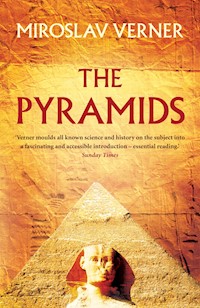
How did a people who lived nearly five thousand years ago, who knew neither iron nor bronze and who lacked mastery of elementary rules of calculation, manage to construct enormous stone structures with a precision seldom matched even by modern architecture? By one of the world's leading Egyptologists, The Pyramids sets our knowledge of these unique, haunting and perennially fascinating edifices into the context of ancient Egyptian culture and politics.
Das E-Book können Sie in Legimi-Apps oder einer beliebigen App lesen, die das folgende Format unterstützen:
Veröffentlichungsjahr: 2014
Ähnliche




















THE PYRAMIDS
Miroslav Verner directed the Czech Institute of Egyptology for seventeen years and is Professor of Egyptology at Charles University in Prague. He has also been guest professor at the Universities of Vienna, Hamburg and the American University of Cairo and, since 1976, has been leading excavations currently being carried out by Czech archaeologists in Abusir.
Originally published in Czech in 1997 under the title Pyramidy,tajemstvi minulosti by Academia, Prague.
Basis for this translation is the German edition as published by Rowohlt Verlag GmbH, Reinbek bei Hamburg, which has been completely revised and extended by the author.
First published in Great Britain in 2001 by Atlantic Books, an imprint of Grove Atlantic Ltd.
This digital edition published in Great Britain in 2014 by Atlantic Books.
Copyright © 1997 by Miroslav VernerCopyright © 1998 by Rowohlt Verlag GmbHTranslation copyright © 2001 by Steven Rendallllustrations copyright © 1997 by Jolana Malátková
The moral right of Miroslav Verner to be identified as the author of this work has been asserted by him in accordance with the Copyright, Designs and Patents Act of 1988.
All rights reserved. No part of this publication may be reproduced, stored in a retrieval system, or transmitted in any form or by any means, electronic, mechanical, photocopying, recording, or otherwise, without the prior permission of both the copyright owner and the above publisher of this book.
A CIP catalogue record for this book is available from the British Library.
eISBN: 9781782396802
Atlantic BooksOrmond House26–27 Boswell StreetLondon WC1N 3JZ
www.atlantic-books.co.uk
Pyramids have been built in various places on earth,at various times, and for various purposes.But only a few have been considered wonders of the worldever since antiquity—the Egyptian pyramids.This book is dedicated to them and to their creators.
CONTENTS
Foreword
Note on Usage
Introduction: The Rediscovery of the Pyramids
PART ONE: THE BIRTH OF THE PYRAMIDS
Chapter One: Before the Pyramids
Chapter Two: The Way to Eternity: Ritual and Cult
Chapter Three: The Construction of the Pyramids
PART TWO: THE PYRAMIDS
Chapter Four: The Old Kingdom(Third to Sixth Dynasty)
Chapter Five: The Fourth Dynasty—The Greatest of the Great
Chapter Six: The Fifth Dynasty—When the Sun Ruled
Chapter Seven: The Sixth Dynasty—The End of an Era
Chapter Eight: The First Intermediate Period(Seventh Dynasty to the Beginning of the Eleventh)
Chapter Nine: The Middle Kingdom(Eleventh to Twelfth Dynasty?)
Chapter Ten: The Second Intermediate Period(Thirteenth to Seventeenth Dynasty)
Postscript
Epilogue: The Secret of the Pyramids
Appendix 1: Basic Dimensions of the Pyramids
Appendix 2: Egyptologists and Pyramid Scholars
Appendix 3: Chronological List of Rulers and Dynasties
Appendix 4: Glossary
Selected Bibliography
Index of Names
Index of Places
THE PYRAMIDS
FOREWORD
It is both surprising and unfortunate that in recent decades professional researchers of the pyramids have seldom made their fascinating work accessible to the general public. There are a few short guides to specific excavation sites and specialized works that discuss questions relating to the construction of the pyramids and the fantastic theories associated with them in particular historical periods, yet only three significant general presentations of the subject addressed to a wider audience are currently available. The Pyramids of Egypt (1st ed., London, 1947), by the late Eiddon Edwards, a British Egyptologist and celebrated connoisseur of the Egyptian pyramids, has gone through several reprintings and has been translated into several languages. In addition, there is Die ägyptischen Pyramiden: vom Ziegelbau zum Weltwunder (1st ed., Mainz, 1985), by the no less celebrated German expert Rainer Stadelmann; its success with readers led the author to publish an expanded version of this work. There is also The Complete Pyramids (London and Cairo, 1997), a richly illustrated overview of the subject by the American archaeologist Mark Lehner.
Archaeologists continue to deepen our knowledge of the pyramids and to produce new theories about them. As a result, many earlier views concerning these monumental edifices, their creators, and their epoch have had to be partly corrected or wholly revised. Even today, it is possible to find previously undiscovered or completely unknown pyramids. Thus even if Egyptologists were able to provide satisfactory answers to many questions still outstanding today, research on the pyramids would continue. This work has recently been complicated by the fact that excavators are now responsible for the preservation of archaeological monuments and have even less time for research. This book presents the general state of research on the pyramids in the late 1990s, and is based primarily on the results of excavations undertaken by the University of Prague’s Czech Institute of Egyptology over the last twenty years.
The complexity of the subject makes it particularly difficult to present it to nonspecialists. The construction of the Egyptian pyramids can be adequately explained only in relation to the social relationships, religious conceptions, administrative and organizational capabilities, technical knowledge, and modes of labor that existed at the time of construction. Just describing the pyramids and explaining their individual parts is harder than it might at first seem, because there is considerable disagreement as to their exact dimensions as well as to how each of these monumental building complexes is to be explained. I have tried to avoid oversimplification and to offer a complete presentation of this very complex subject, even though doing so requires that certain standard situations and fundamental facts be repeatedly described. I have also sought to respond to the broadest possible spectrum of interests, ranging from those of a reader looking for a fascinating account of research, to those of the critical expert on the pyramids.
To that end, I have chosen to present a wealth of illustrations that help the reader form an image of the pyramids while at the same time offering a survey of objects dating from the age when the pyramids were being constructed. These illustrations will allow the reader to become familiar with ancient Egyptian art’s specific mode of expression and with the most notable individuals who have devoted their lives to research on the pyramids. Appendices offer biographical information on these researchers, basic dimensions of the pyramids, a list of the pharaohs and dynasties, and a glossary of important technical terms. A selected bibliography gives suggestions for further reading.
I would like to express my gratitude to all those who made important contributions to the publication of this book. Special thanks are due to Milan Zemina for his outstanding photographs of the Egyptian pyramids, to Jolana Malátková for her drawings and general editing of the Czech manuscript, to Dirk Moldenhauer for his careful supervision of the German edition of this book and many useful comments on it, to Kathrin Liedtke, who translated the book into German, and to Steven Rendall for his translation of the book into English.
Miroslav Verner
A NOTE ON USAGE
The following notations have been used to augment the text throughout:
(?)—Indicates that the accuracy of the preceding statement is in doubt.
(after ___)—Indicates that the preceding information corresponds to the opinion of the cited scientist (see “Select Bibliography” for relevant works by the scientist).
()—Parentheses around a ruler’s or monument’s title indicate that the title was given during a tradition later than the ruler’s or monument’s own. The style follows that of The Oxford Encyclopedia of Ancient Egypt (D. B. Redford, ed.), 3 vols., Oxford University Press 2000.
Both imperial and metric measures are given in “Appendix 1: Basic Dimensions of the Pyramids,” but elsewhere only metric measures have been used.
INTRODUCTION: THE REDISCOVERYOF THE PYRAMIDS
The temple of the goddess Isis, known as the Pearl of Egypt, stands on the little island of Philae near the first cataract of the Nile, not far from Aswan. Although it was built long after the last Egyptian pyramids, it is nonetheless a curious milestone in the history of the land of the pyramids and the hieroglyphs.
Far removed from cultural and political centers on the southernmost border of Egypt, this temple remained, at the end of the fourth century C.E., one of the last bastions of paganism. Here were still practiced the age-old Egyptian religious cults whose traditions had been adopted by the tribes of Nubia. And it was here, on 24 August 394, that the last known hieroglyph was inscribed.*
The ancient Egyptian hieroglyphic script was subsequently forgotten. In its Coptic form, which used the capital letters of the Greek alphabet along with a few symbols based on demotic models, the spoken language survived a few centuries longer. The fall of the Egyptian Babylon (in what is now the Misr al-Qadima quarter of modern Cairo) and the ultimate victory of the Arabs in 642 ended the epilogue of ancient Egyptian culture in late antiquity and inaugurated an entirely new era in Egyptian history. Pyramids and temples, along with much of ancient wisdom, were inexorably lost in the depths of time—forever, it seemed. These grandiose, mysterious structures inscribed with incomprehensible symbols gradually fell into ruins. Increasingly, they became the subject of legends and superstitions and the prey of thieves looking for plunder and adventurers hungry for knowledge. But above all they became a source of easily accessible stone useful for other purposes.
In the Middle Ages, Arab scholars seldom showed any interest in ancient Egyptian structures, but when they did—as in the cases of Abd al-Latif Shelebi, Ja’ut ar-Rumi, Shams ad-Din al-Jashari ad-Dimashqi, and Taki ad-Din al-Maqrizi—they generally approached the subject in a serious way. At the same time, Arab culture developed myths and legends about the pyramids, some of which endure to this day. According to one of these legends, three hundred years before the biblical flood King Saurid had a dream in which the (flat) earth turned over and the stars began to fall on it. This so frightened him that, fearing that the end of the world was near, he decided to erect the pyramids and to enclose within them all the knowledge of his age.
Christian Europe in the Middle Ages based its idea of Egypt mainly on the Bible, assuming that the pyramids were Joseph’s grain storehouses (Genesis 41–42). In addition, hermetism exercised a significant influence that was not limited to intellectuals. (The doctrine of hermetism traced its ancestry back to Hermes Trismegistus, a Greek version of Thoth, the ancient Egyptian god of wisdom and writing; it combined ancient Egyptian religious ideas with abstract Greek philosophical conceptions and emphasized the occult aspect of the Egyptian heritage.) In fifteenth- and sixteenth-century Europe the mysterious image of ancient Egypt gradually assumed more rational features. Renaissance humanists, who returned to the works of ancient authors and rediscovered the roots of European culture, made an important contribution to this development. Travelers and conquerors also played an important role by exploring the lands along the Nile. The knowledge and documents they collected and brought back with them laid the foundations for further research.
In the first half of the seventeenth century, John Greaves (1602–1652), a leading English astronomer, mathematician, and orientalist, went to Egypt to study the pyramids. His Pyramidographia, or a Discourse of the Pyramids in Egypt, the first study to report relatively precise measurements of the Great Pyramid, ranks among the most significant forerunners of the future scientific discipline of Egyptology. Travelers from Central Europe also visited Egypt, for example, men such as Christof Harant von Polžice und Bezdružice (1564–1621), the author of Die Reise nach Ägypten (1598). But the person who clearly dominated research on ancient Egypt in the seventeenth century was the German Jesuit Athanasius Kircher (1602–1680). A multifaceted expert on mathematics, philosophy, and oriental languages, Kircher invented the “magic lantern” and constructed the first calculating machine. His greatest achievement, however, was in linguistics. Kircher believed that the ancient Egyptian language that had been written in hieroglyphics was concealed within Coptic. Yet, because he regarded this ancient writing as being purely symbolic, he was not able to decipher it.
In medieval Europe, the pyramids were long regarded as having originally been Joseph’s grain storehouses. The mosaic on the ceiling of the portico of St. Mark’s in Venice reflects this view.
Further light was shed on the subject in the eighteenth century. Captain Frederik Ludwig Norden (1708–1742), a Dane who assembled a remarkable collection of drawings and descriptions of edifices, traveled through Egypt, as did the English clergyman Richard Pococke (1704–1765). Scholars working in the tranquil atmosphere of their European libraries also devoted increasing attention to ancient Egypt, and particularly to deciphering the apparently incomprehensible hieroglyphics. In 1761, the French abbé Jean-Jacques Barthélemy (1716–1795) published a study in which he arrived at the conclusion that symbols enclosed in an oval—known as a cartouche—represented royal names. The German scholar Carsten Niebuhr (1733–1815) started out from the correct assumption that some of the hieroglyphs were alphabetic signs and that with the help of Coptic it might be possible to read them.
The Bohemian aristocrat, traveler, and humanist Christof Harant von Polžice und Bezdružice.
These steps toward understanding marked the end of a long phase of discovery in which ancient Egypt was still a mysterious world wreathed in myths and legends. The next period, which was to end with the deciphering of the hieroglyphs, the lost key to genuine research on ancient Egypt, was already on the horizon. It began at the end of the eighteenth century, as a result of Napoleon’s Egyptian expedition.
“Egypt was a province of the Roman republic; it must become a province of the French republic! Roman government led to the decline of this land, French government will bring it prosperity,” announced the Directorate’s foreign minister, Charles Maurice de Talleyrand-Périgord, in a famous speech delivered in February 1798. Three months later some four hundred ships carrying some 36,000 men left for Egypt under Napoleon’s command. His effort to gain mastery of the world ultimately ended in the defeat and capitulation of the French forces in 1802, but the expedition’s cultural and scientific consequences laid the foundations of a new discipline: Egyptology.
The French had planned an expedition of considerable scope and made their military preparations with great care. Thus the expedition included a “scientific and artistic commission” comprising 167 specialists in the most diverse areas—mathematicians, Arabists, astronomers, surveyors, physicians, mining engineers, draftsmen, and printers. This commission was to investigate, measure, and make sketches and maps in order to provide a solid basis for the administration of the future “French province.”
The ancient Egyptian monuments were central to French concerns. Toward the end of September 1798, accompanied by his whole staff, Napoleon visited for the first time the Great Pyramid and the Sphinx at Giza. The artist and draftsman Dominique Vivant Denon (1747–1825) went along. While the French army pursued the vanquished Mamluks through the Nile Valley, Denon continually sketched new sights. Like other members of the commission, and like the officers and ordinary soldiers, he was fascinated and deeply impressed by the monuments. When the expedition reached the ruins of the enormous Temple of Amon in Karnak, they all stared in astonishment and, enchanted by the fabulous scene that lay before them, began to clap their hands. Denon set down his impressions in masterly fashion in the pictures illustrating his book Voyage dans la Basse et la Haute Égypte (1802), which was translated into English and German. More than any other work of its time, Denon’s book ignited the Egyptomania that swept through European culture and influenced the plastic arts, fashion, and design.
“Soldiers, forty centuries are looking down on you!” Historical illustration of Napoleon’s famous cry.
Denon’s Voyage was the first of several books bearing witness to this great expedition. At the urging of one of the leaders of the expedition, General Jean-Baptiste Kléber, the members of the French “commission” began to write down a systematic list of all their discoveries, which later became the famous Description de l’Égypte. By 1798, at Napoleon’s command, scientists and artists at the Institut d’Égypte founded in Cairo were already working on this study, which remains unparalleled. Set forth in four large-format volumes—Antiquités, État moderne, Histoire naturelle, and Carte topographique—it became a source of national cultural pride among the French. The first volume appeared in 1809, the last in 1828. The foundations of Egyptology had been laid.
Self-portrait of Dominique Vivant Denon, a member of Napoleon’s expedition and an artist whose pictures first gave the world a comprehensive idea of the ancient Egyptian monuments.
In the development of this discipline, as is so often the case in the history of science, chance played a great part. In July 1799, while extending the fortifications of Rosetta (Arabic El-Rashid), a town that guarded the western branch of the Nile where it flows into the Mediterranean, the French discovered a fragment of a dark stone slab, or stela, on which were inscribed hieroglyphics as well as demotic and Greek writing. The French scholars immediately recognized the value of the “Rosetta stone”: it was the key to deciphering the hieroglyphs. This was also recognized by the English, which is why the French, after being defeated by them in 1801, were required by the terms of the surrender to hand over the Rosetta stone along with all the scientific documentation they had assembled up to that point.
The discovery of the Rosetta stone and the rapid dissemination of copies of the inscriptions on it lent fresh impetus to efforts to decipher the hieroglyphs. In 1802, the Swedish scholar and diplomat Johan David Åkerblad (1763–1819) was able, by comparing the texts, to identify the personal names, and he also succeeded in determining the cardinal numbers. Scholars’ efforts were nearing their goal. One of the main figures in this process was the English physician and physicist Thomas Young (1773–1829), a prodigy who had learned to read fluently at the age of two and by the age of fourteen had mastered half a dozen languages, including oriental languages. Chiefly as a hobby, he procured a copy of the inscriptions and quickly arrived at astounding conclusions. Starting out from the demotic, he was able to draw up a list of 204 words and thirteen hieroglyphs, and he correctly interpreted more than a fourth of them before abandoning his analysis in 1818.
Like Young, Jean-François Champollion (1790–1832) was considered a prodigy; as a youth, he too had mastered a series of foreign languages, including six ancient oriental languages. It is said that as a boy he had seen a copy of the Rosetta stone at the home of Baron Fourier, who had taken part in Napoleon’s expedition, and decided he was going to decipher the hieroglyphics. The traditional view, which was then still dominant, held that the hieroglyphics were secret symbols that represented the “highest truths” and were intended to conceal those truths from ordinary people.
Champollion made his first great discovery on 23 December 1821, his thirty-first birthday, when he suddenly realized that the theory that the hieroglyphics were purely ideographic (each symbol signifying a specific referent) was untenable. He decided to count all the Greek words and all the hieroglyphs in the corresponding versions on the stela, and noted that 1,419 hieroglyphs were required to express 486 Greek words.
On 14 September 1822, he made another breakthrough. On that day, Champollion received copies of reliefs found at Abu Simbel in which a cartouche was associated with a royal name. He knew the last two symbols, which were the same, and read them as ss. The preceding symbols he did not recognize, but on looking at the first sign in the group, a small image of the sun, it occurred to him to interpret it as re, on the basis of the Coptic. The name re——ss: it was the royal name Ramses! His assumption was immediately confirmed by a similar name in the cartouche, in which the first character was an ibis symbol instead of the sun image. The ibis was a bird sacred to the god Thoth. He was thus also looking at the name Tuthmosis. A symbol he did not know, but which he found in both inscriptions, had to be read as mes, Coptic mise, mose, which meant “to give birth.” He summoned his brother Jacques-Joseph, threw a handful of papers with the copies of the hieroglyphs on the table before him, and shouted, “Je tiens l’affaire!” (I’ve got it!), whereupon he fell in a faint on the floor, overcome by excitement and exhaustion. The path to research on ancient Egypt, which had been blocked for a millennium and a half, was now open.
The Rosetta stone (today in the British Museum, London), a document written in Egyptian (hieroglyphic and demotic) and Greek characters, was the cradle of Egyptology. The text on the stone was a decree issued on 27 March 196 B.C.E. by the synod of Egyptian priests that had assembled in Memphis to honor the young ruler Ptolemy V Epiphanes (204–180 B.C.E.).
However, a great deal of work remained to be done. Inscriptions on the walls of temples and tombs and on papyrus scrolls began to speak. For a time, scholarly activity focused on the Egyptian texts, but soon it began to include archaeological work as well. Early archaeological investigation is probably best characterized by the peculiar figure of Giovanni Battista Belzoni, a former circus performer and prodigious adventurer, who was considered by his contemporaries to be a phenomenal archaeologist because he had made a great deal of money by dealing in antiquities. The work of John Perring (1813–1869), together with that of an expedition of Prussian scholars led by Richard Lepsius (1810–1884) that explored Egyptian antiquities from 1842 to 1845, first provided archaeological research with a genuinely scientific orientation.
The famed French savant Jean-François Champollion, the decipherer of the hieroglyphics and the founder of Egyptology.
The true age of systematic archaeological excavations, however, began in 1850, with the famed French Egyptologist Auguste Mariette (1821–1881). Near Saqqara, he discovered and opened up the Serapeum, the famous underground catacomb with the tombs of the sacred Apis bulls. This discovery won him scientific fame as well as the favor of the Egyptian viceroy, Said Pasha. Mariette was not originally an archaeologist; he had been sent to Egypt to collect samples of Egyptian, Coptic, Ethiopian, and Syrian handwriting for the Louvre in Paris. After his return, he decided to devote his life to excavations. In Bulaq, he established the first museum of ancient Egyptian culture and also laid the foundations for the Egyptian Antiquities Service. Strangely, Mariette was never very interested in the pyramids. He was drawn instead to the great private tombs that still had inscriptions and pictures on their walls. The pyramids first attracted the attention of researchers in the early 1880s, when Gaston Maspero (1846–1916), William Petrie (1853–1942), and others started to explain them. This marked the beginning of archaeological research on the pyramids.
* The most recent known Egyptian inscription is not in hieroglyphs, but rather in a simplified alphabet, the so-called demotic script, and is dated 2 December 452.
PART ONE
THE BIRTH OF THE PYRAMIDS
CHAPTER ONE
BEFORE THE PYRAMIDS
The Early Dynastic Period(From the Zero Dynasty to the Second Dynasty)
THE BIRTH OF EGYPT
Among the oldest and most important extant Egyptian historical documents ranks a palette commemorating King Narmer’s victory over a rebellious principality in the Nile Delta (c.3000 B.C.E.). Until recently, most Egyptologists saw this palette as providing evidence that by finally subjugating the last independent princes in the delta, Narmer created the first united Egyptian kingdom that included both Upper and Lower Egypt.
Recent archaeological research suggests, however, that Narmer was not the first king to unify Upper and Lower Egypt. In particular, the German excavations in the cemetery at Umm el-Qaab, near Abydos, have shown that the fourteen predecessors of Narmer buried there, who constituted the so-called Zero Dynasty, must have reigned over all Egypt at least part of the time, so that the true era of unification had already begun some two centuries earlier.
The arrangement of the tombs at Umm el-Qaab allows us to discern a clear continuity with the subsequent First Dynasty, and this tends to confirm the assumption that the first king of this dynasty, King Aha (fl. c.2925 B.C.E.?), was one of Narmer’s sons.* Construction of the White Walls, the fortified residence of the Egyptian kings, began in the age of unification, and was located on the boundary between the Nile Valley and the delta. The city that gradually grew up around the fortification was later known as Mennefer (Greek Memphis) and ultimately extended over several square miles. Archaeologists have still not succeeded in determining the site of the fortress, the oldest part of the city.
Narmer’s palette, made of dark gray slate, was found by British archaeologists at the beginning of the twentieth century, near Hierakonpolis in Upper Egypt. It is an important document for understanding the origins of Egyptian writing. Originally, palettes were rectangular or oval stone slabs on which pigments were rubbed, but the Narmer palette is already a work of art both memorial and celebratory in character. It is thought to symbolize the ruler’s success in putting down a rebellion in the delta.
On the front side of the stela is a delicate bas-relief divided into three registers. In the center of the upper register, between two cow’s heads usually interpreted as “Hathor-heads,” is a stylized image of the palace facade, with the Horus name of the last ruler of the Zero Dynasty, Narmer. This name should probably be translated as “Pungent catfish.” The middle register is dominated by the figure of Narmer, wearing the crown of Upper Egypt, about to strike with a stone club an enemy who has fallen to his knees and may be a chieftain from the east delta. The servant standing behind Narmer is carrying the pharaoh’s sandals. In front of the king the Horus-falcon holds an enemy’s head on a rope. The latter is connected with a flat oval representing a piece of land on which a papyrus plant with six blooms is growing. The papyrus symbolized Lower Egypt and also transcribes the numeral one thousand. The whole scene can thus be interpreted as follows: “The pharaoh overcame six thousand enemies from Lower Egypt and took them prisoner.” The scene is rounded out with the image of the triumphant Narmer and, according to the British Egyptologist Alan Gardiner, the author of the celebrated Egyptian Grammar, is a classical example of ancient Egyptian thinking in the earliest times. In the lower register two other vanquished enemies are represented.
On the reverse of the stela the decoration is divided into four registers. The first from the top is identical with the corresponding one on the front side. The second shows Narmer, this time with the crown of Lower Egypt on his head and in a cortege of men bearing standards with the symbols of the provinces of the victorious Upper Egyptian coalition, viewing executed enemies. The third pictorial field takes up a decorative motif that may be of Elamite origin: two fabulous creatures with intertwined necks. It is considered evidence of Near Eastern cultural influence in the Nile Valley at the beginning of the Early Dynastic Period. In the lowest register field, a bull, which like the falcon is a symbol of the ruler, smashes a fortified city and tramples down the enemies living in it.
Until well into the First Dynasty Egyptian rulers had no permanent residence. In the biennial “Horus-procession” they crossed the whole country with their retinue, in order to collect taxes, administer justice, and show themselves to the people.* The north-south dualism, which subsided only gradually, was still clearly reflected in the peculiar names of the first governmental institutions in the era of unification. Thus, e.g. the “White House,” the royal treasury, became the “Red House” after being moved to the Memphis area; the change in its name is related to the fact that the “red crown” was the symbol of Lower Egypt and the “white crown” the symbol of Upper Egypt.
As a result of increasing centralization, the administrative apparatus grew significantly larger during the First Dynasty. Members of the royal family still stood at the apex of its hierarchy. Officials were chiefly responsible for regional administration, the registration of inhabitants, controlling floods on the Nile, the construction of irrigation canals, the cultivation of fields and gardens, workshop production, and the tax system.
The consolidation of governmental administration went hand in hand with the development of writing, which ancient Egyptians considered to be divine in origin. The oldest literary traditions commemorate episodes in the battle to unify the kingdom, rites connected with the introduction of agricultural labor, and religious festivals. In addition, more practical contents are found in inscriptions on vessels, funerary stelae, annals tablets, and sealings. The oldest papyrus scroll currently known, though it bears no writing, was found in Saqqara, in the tomb of the official Hemaka. It shows that under the fifth king of the First Dynasty, Den (fl. 2850 B.C.E.), Egyptians already knew how to produce the writing materials that later became so widespread.
The ruler was at the center of the Egyptian world. He was seen as the connecting link between human beings and the gods. It was around him that the administrative apparatus of the newly developed state began to form. Royal estates were established, and undeveloped regions, particularly in the south and in the marshes of the Nile Delta, were settled and made productive by means of “internal colonization.” Despite the organization of Egypt into provinces (Greek nomoi)—ultimately twenty-two in Upper Egypt and twenty in Lower Egypt—the political unity and stability of the country remained fragile. At the end of the First Dynasty the latent oppositions between north and south resurfaced.
The first ruler of the Second Dynasty, Hetepsekhemwy (twenty-eighth century B.C.E.), whose name means “the two powers [Upper and Lower Egypt] are reconciled,” succeeded in reestablishing Egyptian unity, but not for long. Two generations later the two parts of the country were being ruled separately again. Upper Egypt was ruled from Thinis, the old center of power and administration close to Abydos, while the rest of the country was ruled from the White Walls. This internal political instability was reflected in royal titles: unlike his predecessors, the ruler Peribsen was not identified in any way with the god Horus, but rather was identified with the latter’s ideal opponent Seth, the god of evil and war. The unsettled conditions under the Second Dynasty are also manifested in the deliberate destruction of the preceding dynasty’s royal monuments in Abydos, Naqada, and Saqqara, which was motivated by the desire to obliterate not only the tombs and worship of the dead, but also and especially all memory of the dynastic opponent. The last ruler of this dynasty finally succeeded in subjugating Lower Egypt. He was originally named Khasekhem, “power shines” (or “appears in brilliance”), but changed his name to Khasekhemwy, “the two powers shine,” in order to express the unity of the gods Horus and Seth, the latter representing not only the opposing principles of good and evil, but also the formerly opposed parts of Egypt, the north and the south.
The upper border of the palace facade with Khasekhemwy’s name is unusual in depicting together the two enemy divinities Horus and Seth.
In ancient Egypt’s relationships with the ancient world surrounding it, we can already discern a few principles that were to characterize the country’s whole history. The ancient Egyptians’ religion led them to see their neighbors as enemies. Egyptians waged many wars of conquest against their neighbors, whether they lived in the east, west, or south. The most common target was Nubia, perhaps because it was more easily accessible through the corridor of the Nile Valley. In the reign of Djer, the third king of the First Dynasty, the Egyptians were already seeking to extend their influence as far as the border of present-day Sudan (see illustration p. 20).
Yet Egypt’s relationships with neighboring countries were not exclusively hostile. The people of the Nile Valley also traded with their African and Near Eastern neighbors. For instance, they exported agricultural products to Palestine, evidenced by Egyptian pottery from Rafah and Arad, as well as by imprints of Egyptian seals from Tell Erama near Jerusalem. In return, they imported primarily metal products, even after the copper mines in the Sinai came under Egyptian control in the course of the First Dynasty. By way of Palestine, the ancient Egyptians also had long-standing contacts with more remote regions, as is shown by some Sumerian or Elamite motifs—a winged griffin, interlaced serpents, a man tying up animals, and zoomorphic urns and ships with towering sterns—that appeared in the Nile Valley during the First Dynasty. Some researchers found these foreign elements so striking and surprising that they arrived at the view—today outdated—that people belonging to a so-called dynastic race from Mesopotamia had ruled and “civilized” Egypt toward the end of the prehistoric era. Scholars found themselves unable to explain in any other way the rapid rise of Egypt at the beginning of the historical period. Only after new discoveries were made and evaluated did they realize that the notion of a “civilizing phase” had been based not on a sudden developmental rupture but on gaps in their own knowledge.
The stone relief from Gebel Sheikh Suleiman is considered by many Egyptologists to reflect the pharaoh Djer’s policy of conquering the region lying to the south of Egypt.
KINGSHIP AND STATE DOGMA
During the early or Thinite period (as the reign of the first two dynasties is also known), the prolonged, complicated, and often conflictual process of shaping the ancient Egyptian state that had begun toward the end of the prehistoric era, around the middle of the fourth millennium B.C.E., was finally brought to a conclusion. The fusion of the fundamentally different cultural groups of the delta and the Nile Valley played a major role in this process.
The figures incised on the ebony handle of a knife from Gebel el-Arak (Louvre E. 11517) used to be considered evidence of Near Eastern influence in Egypt at the end of the prehistoric era. On one side are hunting scenes representing a hero between two lions facing each other. The other side is decorated with scenes of battle on land and on water.
In the southern part of the country, which was inhabited primarily by nomadic shepherds, economically prosperous centers began to emerge and gain political power; among these were Hierakonpolis, Naqada, and Abydos. The rise of these new centers was aided by nearby sources of raw materials in the eastern desert and the development of foreign trade in gold and other materials.
Before the age of unification, northern Egypt, where a rather sedentary population lived and practiced agriculture, developed differently from southern Egypt. Major economic centers may have emerged there even earlier than they did in southern Egypt, especially along the banks of the navigable branches of the Nile. Closer contacts were probably established with Near Eastern urban cultures, both by land and by sea. Buto and Sais became important cities. However, archaeological sources in this part of the country remain inadequate because the complicated environmental situation makes excavation very difficult.
In contrast to the predynastic monarchs from Hierakonpolis, the princes of the great cities in the delta were probably not able to extend their rule beyond the local level. Consequently, they could not avoid military subjection to the king. Initially, the violently created bond between Upper and Lower Egypt was not very stable, being threatened by various political, economic, and religious interests.
As a result, during the Early Period the inhabitants of Lower Egypt made great efforts to win independence that culminated in the rebellions that finally led King Khasekhem to take energetic punitive action against them. This time, it seems he was successful. The subsequent long period of internal stability and relative shelter from outside influences was the crucial precondition that allowed the Old Kingdom (from the Third Dynasty to the Sixth Dynasty) to flourish.
In addition, the ideology of the ancient Egyptian state developed through the process of culturally assimilating Lower Egypt. According to the Egyptian worldview, a divine principle called maat was the foundation of everyday life. At its center stood law and order, and it was typically represented in the figure of the goddess of justice. Only if an individual obeyed the rules of maat could he achieve happiness and fulfillment, and only then could his life have any meaning in the framework of creation. This world order had to be constantly defended against the hostile powers of chaos. The ancient Egyptians believed that was why the gods set up the monarchy, which had to be supported and honored. Only the ruler, as the sole divinity living among men, could guarantee the survival of the divinely established order. In the context of the eternal myth, during his reign the ruler was obligated to overcome evil, either actually or symbolically, and evil was embodied in enemy countries and peoples. For this reason the ruler was usually represented as triumphing over Nubians, Libyans, and Asians, even when no historical facts justified such a representation.
The whole system of the ancient Egyptian state was based on these ideas, which have often been described, not very precisely, as theocratic. During the Early Dynastic Period in particular, the state and the monarchy were virtually identical. The increasing importance of the state is shown by additions to the royal nomenclature. At first, the latter consisted simply of the name Horus, written in a rectangle called a serekh that was a stylized representation of the royal palace’s facade. Above this rectangle was the symbol of the falcon god Horus, the ruler over heaven and earth, embodied on earth by the ancient Egyptian kings. During the reign of King Den, the king’s titulary was extended to include the so-called throne name “King of Upper and Lower Egypt.” Up to the Fourth Dynasty, further names were added. The name “the two ladies” connected him with the vulture goddess Nekhbet and the cobra goddess Wadjet, the tutelary divinities of Upper and Lower Egypt respectively. “Golden Horus” and “Son of Re” completed the list of five royal names.
The word pharaoh itself is of Egyptian origin and is derived from per aa, “Great House,” the name of the royal residence. Starting in the New Kingdom, the rulers themselves were designated metonymically by this term. Finally, from the Twenty-Second Dynasty onward, this word became an essential component of the royal nomenclature and was written in front of the cartouche with the king’s name.
The conception of the king’s role in the historical and state-building myth expanded with the country’s boundaries. In theory, Egypt included every place where Egyptians and their gods existed, where the pharaoh exercised power, and where there was thus divine order. In practice, however, Egyptians identified themselves and their country only with the area of the Nile Valley, from the delta to the first cataract, and later on, as far as Nubia.
State dogma emphasized not only the ruler’s military role, but also his creative role. The mythical conception of the king required him to “extend the borders,” both by defeating Egypt’s enemies on the battlefield and by erecting new edifices whose size and importance were expected to surpass those built by his predecessors. In accord with this conception, the construction of the ancient Egyptian temple, in contrast to the Greek temple, was never completed; it was always possible to add new rooms, gateways, courtyards, chapels, and obelisks, or at least statues or stelae. In the “Instruction for Merikare,” a famous literary work from the First Intermediate Period, the ruler Khety called on his successors to “enlarge what he made.” Both myth and history urged every pharaoh to “go beyond everything that was accomplished in the time of his predecessors.”
THE TOMBS OF THE EARLY DYNASTIC PERIOD
In the Early Dynastic Period tombs in Abydos and North Saqqara, the most important elements of later pyramid construction appeared in simple form. However, the oldest royal tombs in Abydos differ from the later ones in North Saqqara in both their underlying religious conception and their ideal significance. It is clear that the tombs in Abydos and Saqqara represent different traditions and ideas about life after death, and reflect two different cultural milieus. The tombs in Saqqara are based on a conception of the deceased as living on after death in a building resembling an earthly dwelling, which is embodied in a stylized form by the so-called mastaba. In Abydos, the primary conception is that of a funeral mound symbolizing the primeval mound of sand, the site of the creation and the resurrection.
From predynastic times onward, the royal tombs in Abydos were linked to the religious traditions of Upper Egypt. These tombs already consisted of entire complexes of rooms and were located in the desert. In the late Zero Dynasty, a tomb’s underground portion consisted of a burial chamber and one or more storerooms for accessories to be used by the dead pharaoh in the beyond. The aboveground portion consisted of a low mound of sand about 2.5 meters high and surrounded by a stone wall. Two stone stelae stood in front of the facade of the tomb. From the time of King Aha onward, the royal tombs were surrounded by so-called secondary tombs, the number of which came to 338 under King Djer. The royal cemetery in Abydos was later plundered and burned, and its original form is now virtually impossible to reconstruct. However, the rulers’ servants and wives seem to have been buried in the secondary tombs. We do not yet know whether they were killed during the burial ceremony and immediately interred with the ruler.
The tomb area at Abydos is known as Umm el-Qaab, “Mother of Potsherds,” because of the great number of remnants of sacrificial vessels found there. The valley where the Early Period tomb complexes are located lies on the edge of the Nile Valley, some two kilometers to the northeast. Nearby, in modern-day Kom es-Sultan, Khontamenti, and later Osiris, was worshiped at a religious center for the local god of the dead. The edifices there date from the time of King Djer and are surrounded by huge brick walls (archaeologists call these structures “great enclosures” or “fortresses”). These walls were whitewashed and decorated with niches. For a long time, researchers thought that almost nothing was inside these structures. However, a meticulous investigation of Khasekhemwy’s enclosure carried out by a team of American Egyptologists has recently made highly interesting discoveries. In a courtyard within the structure, a low mound of sand covered with mudbricks was discovered. It is a stylized primeval mound, the symbolic site of the creation of the world and of the resurrection. In addition, a dozen thirty-meter-long boat-pits were discovered in front of the east wall; hence, the great enclosures should probably be seen as centers for the worship of the dead kings.
Reconstruction of the tomb of Queen Meretneith, the mother of King Den, in Abydos (after Lauer and Ricke).
At the same time they were constructing a new capital, known as “the White Walls,” Egyptian rulers also built a new tomb site, which is known today as the Early Dynastic Period necropolis in North Saqqara. At first, probably only members of the royal family and the highest state officials who lived in the royal residence were interred there. The rulers of the First Dynasty continued to have themselves entombed in the traditional royal cemetery in Abydos in Upper Egypt. Thus neither the real nor the symbolic tombs of the early rulers of the united Egypt were in Saqqara.
The tombs in North Saqqara had a rectangular ground plan and were built of mudbricks; their facades, which were sometimes several meters high, were originally rendered in white plaster and decorated with colorful mat-like patterns, as well as with numerous niches. In the underground portion they consisted of a burial chamber and storerooms for burial equipment. A large boat was often included in the tomb; it was supposed to allow the spirit of the deceased to travel into the beyond in order to join the sun god Re’s entourage. In form, the tombs in Saqqara resembled the low clay benches found in front of country houses in modern Egypt, and which are called mastaba in Arabic. Therefore, workers employed in the first archaeological excavations in the middle of the nineteenth century used this word to designate these tombs.
With a few exceptions, most of the royal tombs of the Second Dynasty have not yet been precisely located. In contrast to the First Dynasty, only a few kings of the Second Dynasty—for example, Peribsen and Khasekhemwy—were buried in Abydos. The tombs of a few other kings appear to have been located not in the northern but rather in the middle part of the Saqqara cemetery, near Djoser’s later “Step Pyramid.” Their substructures probably consisted of large, interconnected underground catacombs. East of the pyramid of the last ruler of the Fifth Dynasty, Unas, archaeologists have discovered two tombs attributed to King Raneb and King Ninetjer. The super-structure (the aboveground portion) of these tombs was completely destroyed during the construction of Unas’s pyramid. This fact, along with the lack of dates for the other royal tombs of the Second Dynasty, makes it difficult to provide a precise explanation for the transition to building pyramids.
Reconstruction of the “royal tomb” no. 3038, probably from the time of Adjib, a First Dynasty king, in Saqqara (ground plan and north-south vertical section, after Emery). All four tomb facades are decorated with a system of niches, so-called recesses. Most of the inner area is filled with storage rooms. The vertical section (below) shows the stepped superstructure.
We have already described the ancient Egyptian conception of the state as an expression of the divine will and the center of the harmonious and ordered world created by the gods. Even after his death, the ruler had to fight for the welfare of his country in the eternal battle against chaos. Because of the ruler’s extraordinary role as both a god among men and the mediator between humans and the world of the gods, it was necessary to preserve his presence in the world of the living. This was the goal of mummifying the ruler’s body and worshiping him after his death. Only in this way could the dead pharaoh remain forever among his people to ensure their happiness. Hence the mummified body of the pharaoh had to be protected from various external dangers, and it was necessary to erect for him an indestructible tomb-residence, a structure that could be damaged neither by the ravages of time nor by human hands in times of unrest.
Religiously, the pharaoh’s last resting place was a representation of the primeval mound that emerged from the waters at the creation of the world, and on which life first appeared. That is, it was a symbol of resurrection and eternal life. The external appearance of the royal tomb, inspired by the idea of the primeval mound, went through a complicated development at the beginning of Egyptian history, finally culminating, during the Third Dynasty, in the pyramids.
The pyramid was supposed to be the death residence of the pharaoh—unshakable, indestructible, eternal. Other temple buildings nearby were dedicated to the worship of the deceased, which was also supposed to go on forever, for it was in the highest interest of the ancient Egyptian state and of every inhabitant of the lands along the Nile that the good god should remain forever in his country and among his people. The building of the pyramids and the enduring worship of the dead pharaoh thus became the top priority of the ancient Egyptian state.*
It is precisely from this point of view, and in their historical context, that the gigantic structures known as the Egyptian pyramids must be considered. The architectural and religious development that ultimately led to the royal tomb in the form of a pyramid was an inseparable part of the process of shaping and strengthening the oldest strongly centralized Egyptian state. In this context the pyramid becomes more than just a royal tomb; it becomes a symbol of the ruler’s historical and state-building role, the symbol of the state and of the order the Egyptian gods established when they created the world.
Abydos, Umm el-Qaab. Cemetery B (below) and U (after Dreyer).
* It remains uncertain whether the princely name Meni, which appears on an ebony tablet from Naqada, can also be associated with Aha and thus provide the historical basis for Meni (in Greek, Menes), the unifier of the kingdom represented in later drawings. Some researchers consider Menes a purely legendary figure.
* European rulers did the same thing in the early Middle Ages, thus creating the system of palatinates.
* It has also been maintained that the main goal of building the pyramids was to found the ancient Egyptian state, whose bases and chief functions were systematically defined and generated by this gigantic project, which required unprecedented organizational structures and technical expertise. Thus the building of the pyramids is said to be a source of the dynamic development of Egyptian society. It is incontestable that the gigantic edifices of the pyramids required of their time enormous organizational efforts and willingness to work, and that they lent a powerful impetus to the development of administration, crafts, astronomy, mathematics, and systems of construction. However, it is surely an exaggeration to see behind all this the “higher” goal of programmatically establishing a state, and such a claim is in accord with neither the historical facts nor simple logic: the creators of this kind of sophisticated conception would certainly have chosen more practical and more profitable projects than tombs or pyramids.
CHAPTER TWO
THE WAY TO ETERNITY: RITUAL AND CULT
The Burial Ritual
The green, fertile Nile Valley was the “beloved land” of the ancient Egyptians, the world in which they lived and wanted to die. Its polar opposite was the boundless, inhospitable desert that stretched out to the west. This was the place where the sun died every evening, the realm from which no one returned, and which was ruled by the god Osiris. The dividing line between life and death was as distinct as that between the flourishing valley and the endless desert. The gods created man and gave him life. Depending on his conduct while he was on earth, after death he experienced either eternal bliss or eternal damnation. Earthly life was merely an episode on the way to eternity.
In predynastic times cemeteries were already being established, particularly on the edge of the desert west of the Nile. There went the funeral processions, and from them the family members, associates, and priests came back to make sacrifices and practice the worship of the deceased. All were equal before the god Osiris and his divine tribunal in the beyond, but kings took a different path into the beyond. The pharaoh was the god who lived among humans on the earth, and after his death he returned to the gods.
Lesen Sie weiter in der vollständigen Ausgabe!
Lesen Sie weiter in der vollständigen Ausgabe!
Lesen Sie weiter in der vollständigen Ausgabe!
Lesen Sie weiter in der vollständigen Ausgabe!
Lesen Sie weiter in der vollständigen Ausgabe!
Lesen Sie weiter in der vollständigen Ausgabe!
Lesen Sie weiter in der vollständigen Ausgabe!
Lesen Sie weiter in der vollständigen Ausgabe!
Lesen Sie weiter in der vollständigen Ausgabe!
Lesen Sie weiter in der vollständigen Ausgabe!
Lesen Sie weiter in der vollständigen Ausgabe!
Lesen Sie weiter in der vollständigen Ausgabe!
Lesen Sie weiter in der vollständigen Ausgabe!
Lesen Sie weiter in der vollständigen Ausgabe!
Lesen Sie weiter in der vollständigen Ausgabe!
Lesen Sie weiter in der vollständigen Ausgabe!
Lesen Sie weiter in der vollständigen Ausgabe!
Lesen Sie weiter in der vollständigen Ausgabe!




