


27,99 €
Mehr erfahren.
- Herausgeber: John Wiley & Sons
- Kategorie: Geisteswissenschaft
- Sprache: Englisch
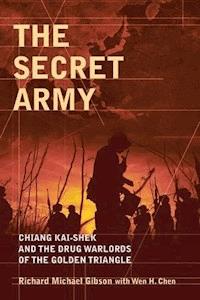
The incredible story of how Chiang Kai-shek's defeated army came to dominate the Asian drug trade After their defeat in China's civil war, remnants of Chiang Kai-shek's armies took refuge in Burma before being driven into Thailand and Laos. Based on recently declassified government documents, The Secret Army: Chiang Kai-shek and the Drug Warlords of the Golden Triangle reveals the shocking true story of what happened after the Chinese Nationalists lost the revolution. Supported by Taiwan, the CIA, and the Thai government, this former army reinvented itself as an anti-communist mercenary force, fighting into the 1980s, before eventually becoming the drug lords who made the Golden Triangle a household name. Offering a previously unseen look inside the post-war workings of the Kuomintang army, historians Richard Gibson and Wen-hua Chen explore how this fallen military group dominated the drug trade in Southeast Asia for more than three decades. * Based on recently released, previously classified government documents * Draws on interviews with active participants, as well as a variety of Chinese, Thai, and Burmese written sources * Includes unique insights drawn from author Richard Gibson's personal experiences with anti-narcotics trafficking efforts in the Golden Triangle A fascinating look at an untold piece of Chinese--and drug-running--history, The Secret Army offers a revealing look into the history of one of the most infamous drug cartels in Asia.
Sie lesen das E-Book in den Legimi-Apps auf:
Seitenzahl: 646
Veröffentlichungsjahr: 2011
Ähnliche




















Table of Contents
Introduction: Two Young Chinese Soldiers
Glossary of Key Players
List of Abbreviations
Chapter 1: Retreat from Yunnan
Collapsing Nationalist Armies
The Kunming Incident
Refuge in Burma’s Shan State
Birth of the Restoration Army
Notes
Chapter 2: Sorting Things Out in Tachilek
Kengtung State—Backwater Flashpoint
Li Kuo-hui Refuses to Leave Kengtung
The Battle of Tachilek
The Americans Reluctantly Get Involved
Notes
Chapter 3: Lieutenant General Li Mi
The Huaihai Campaign
Li Mi Initiates His Enterprise
Seeking American Help
Li Mi Wins Command and Moves to Bangkok
Thai Friends
Finding Troops and Weapons
Notes
Chapter 4: Li Mi and His American Friends
Möng Hsat
Some Perspective in Retrospect
American Cold Warriors
Civil Air Transport, the CIA’s Airline in East Asia
The CIA in Thailand
Notes
Chapter 5: Li Mi’s Yunnan Anticommunist National Salvation Army
Thai and American Help
Secrets, Evasions, and Operation Paper
Li Mi’s Initial Weapons Deliveries
Rallying the Troops at Möng Hsat
Li Mi’s Diverse Army
Notes
Chapter 6: Attacking Yunnan
The Operations Plan
Moving to the Frontier
An Open Secret
Americans Deliver the Goods
The Airfield at Mengsa
The PLA Counterattack
Back in Burma
Notes
Chapter 7: Washington Opts Out
London Gets the Goods on Washington
Washington Decides to Cut Its Losses
UK-US Démarche Fiasco
More Failed Diplomacy
Notes
Chapter 8: Li Mi’s Army Settles into Burma
Yunnan Anticommunist University
Taiwan to Möng Hsat Air Bridge
Allying With Burma’s Karens
Li Mi’s International Press
Stirrings at the United Nations
The Shan Opium Trade
The KMT’s Opium Business
Thai Opium Laws and Practices
Notes
Chapter 9: Washington Cuts Its Losses
Backing Away from Li Mi
The US Defense Department Cuts Funding
Pressuring Chiang Kai-shek to Remove His Army
Notes
Chapter 10: Southern Strategy and Karen Allies
YANSA—KNDO Cooperation
Operation Earth
The SS Haitien Debacle
What Went Wrong?
Notes
Chapter 11: The Road to the United Nations
Operation Maha and Battle of Wn Hsa-la
Washington Pressures Taipei
The Burmese Go to the United Nations
Notes
Chapter 12: The United Nations vs. KMT Duplicity
An Intransigent Li Mi
Operation Heaven
The Joint Military Committee Stalls
Burma Quits the Joint Military Committee
Chiang Kai-shek Grudgingly Acquiesces
Notes
Chapter 13: First Evacuation from Burma
Evacuation: Phase I
Evacuation Phase II
Evacuation Phase III
Ending the Evacuation
Notes
Chapter 14: Liu Yuan-lin’s Yunnan Anticommunist Volunteer Army
Burma’s Yangyiaung Offensive
Liu Yuan-lin and Taiwan’s Intelligence Services
Liu Yuan-lin Organizes His Army
A KMT-Burmese Truce
Tang-or Headquarters
Changes in Bangkok Affect the KMT
Notes
Chapter 15: A Resurgent KMT
Strengthening Liu Yuan-lin’s Army
An Ineffectual KMT Party 2nd Section
KMT-Laos Cooperation
Settling the Yunnan-Burma Border
Notes
Chapter 16: Operation Mekong: Sino-Burmese Forces Rout the KMT
Sino-Burmese Planning to Oust the KMT
Initial PLA Operations
Liu Yuan-lin and YAVA Regroup
Laos and KMT Aerial Supply Lines
Burmese Operations
The PLA Re-enter the Fight
Notes
Chapter 17: Air Battle Over Burma and American Weapons
The KMT’s American Weapons
Rangoon Protests, Washington Whitewashes
Notes
Chapter 18: The Second KMT Evacuation
Taipei-Vientiane Cooperation in Laos
Chiang Kai-shek Backs Down
Dealing with Complications
Withdrawing Taipei’s Troops
Notes
Chapter 19: Removing KMT Remnants from Laos
Vientiane Recruits the KMT
Stranded KMT Remnants in Laos
The KMT Finally Leave Laos
Notes
Chapter 20: Nationalist Chinese Armies in Thailand
Li Wen-huan’s Third Army
Tuan Hsi-wen’s Fifth Army
An Early Resettlement Effort
The KMT Fend for Themselves
KMT’s 2nd Section
Intelligence Bureau of the Ministry of National Defense
Notes
Chapter 21: Thailand’s Troublesome Guests
Moving the KMT Off the Laos Border
Thailand’s Troubled Borders
The 1967 Opium War
What to Do With the KMT in Thailand?
Notes
Chapter 22: Intelligence Bureau of the Ministry of National Defense
Ma Chün-kuo’s Interim IBMND Presence
IBMND Zone 1920 Takes Shape
A More Aggressive Zone 1920
IBMND Narcotics Trafficking
Shuttering the KMT Party 2nd Section
Disbanding IBMND Zone 1920
Notes
Chapter 23: Resettlement in Thailand
Negotiating Resettlement
Securing New Settlements
Opium for Resettlement
Notes
Chapter 24: Soldiering on for Thailand
Guarding The Roads
A Last Hurrah at Khao Ya
Notes
Chapter 25: Postscript
Notes
Bibliography
Index
Inserts
Copyright © 2011 by John Wiley & Sons (Asia)
Published in 2011 by John Wiley & Sons (Asia) Pte. Ltd.
1 Fusionopolis Walk, #07–01 Solaris, South Tower Singapore 138628
All rights reserved.
No part of this publication may be reproduced, stored in a retrieval system, or transmitted in any form or by any means, electronic, mechanical, photocopying, recording, scanning, or otherwise, except as expressly permitted by law, without either the prior written permission of the Publisher, or authorization through payment of the appropriate photocopy fee to the Copyright Clearance Center. Requests for permission should be addressed to the Publisher, John Wiley & Sons (Asia) Pte. Ltd., 1 Fusionopolis Walk, #07–01 Solaris, South Tower Singapore 138628, Tel: 65-6643-8000, Fax: 65-6643-8008, e-mail: [email protected].
This publication is designed to provide accurate and authoritative information in regards to the subject matter covered. It is sold with the understanding that the publisher is not engaged in rendering professional services. If professional advice or other expert assistance is required, the services of a competent professional person should be sought.
Neither the authors nor the publisher are liable for any actions prompted or caused by the information presented in this book. Any views expressed herein are those of the authors and do not represent the views of the organizations they work for.
Other Wiley Editorial Offices
John Wiley & Sons, 111 River Street, Hoboken, NJ 07030, USA
John Wiley & Sons, The Atrium, Southern Gate, Chichester, West Sussex, P019 8SQ, United Kingdom
John Wiley & Sons (Canada) Ltd., 5353 Dundas Street West, Suite 400, Toronto, Ontario, M9B 6HB, Canada
John Wiley & Sons Australia Ltd, 42 McDougall Street, Milton, Queensland 4064, Australia
Wiley-VCH, Boschstrasse 12, D-69469 Weinheim, Germany
Library of Congress Cataloging-in-Publication Data
ISBN 978–0–470–83018–5 (paperback)
ISBN 978–0–470–83020–8 (ePDF)
ISBN 978–0–470–83019–2 (Mobi)
ISBN 978–0–470–83021–5 (ePub)
Introduction
Two Young Chinese Soldiers
The origins of this book date from January 1990, when I was the American Consul General in Chiang Mai, Thailand. A colleague and I were travelling a recently graded, little used road along Thailand’s northern border with Burma. The road runs immediately adjacent to the border until a few kilometers west of Doi1 Mae Salong and then continues eastward as the border curves to the north. The cool air carried sound easily and we could hear distant explosions of mortar rounds from Burma. The ongoing battle was between two drug trafficking armies contesting control of that portion of the border and its smuggling routes. The United Wa State Army (UWSA), then loosely allied with the Burmese armed forces, or Tatmadaw, was at war with the Shan United Army (SUA) of Sino-Shan drug kingpin Chiang Ch’i-fu, better known by his Shan nom de guerre Khun Sa. We had driven to the border to gather information and report on that fight.
We reached the mountaintop village of Ban Mae Salong,2 originally established by remnants of Chiang Kai-shek’s Kuomintang (KMT) army that retreated into Burma and Thailand following the communist victory on the Chinese Mainland. On a wooded slope near the mountain’s peak, we stopped for lunch at the Sakura Hotel, a ramshackle collection of bungalows and a restaurant owned by Lei Yu-tien. After Tuan Hsiwen’s death in 1980, Lei Yu-tien assumed leadership of the remnants of his KMT Fifth Army.3 Our lunch finished, we returned to our vehicle and continued along a winding road through wooded countryside en route to Chiang Rai city.
Descending the mountain, we passed a security post manned by khaki-uniformed, armed members of Lei Yu-tien’s private militia. Despite diplomatic license plates and a prominent whip radio antenna, our large Toyota Land Cruiser prompted only passing interest from the young men on duty. Armed with shotguns, Lei Yu-tien’s militiamen could be seen patrolling the village and environs much as Thailand’s national police do in other rural communities. Ban Mae Salong, however, was not a usual Thai community. Although officially administered by Thailand’s Ministry of Interior (MOI), there were no Thai officials to be seen.
Descending through well-tended orchards interspersed among the forest and underbrush, we passed a group of soldiers in olive green battle dress and old-fashioned canvas sneakers. The young men were armed with American-manufactured M-1 carbines from the Korean War-era and carried ammunition bandoleers slung over their shoulders. Our immediate thought was that they might be from one of the drug trafficking armies fighting just across the nearby border, as the Wa and Khun Sa’s men wore similar Chinese-style uniforms and neither were strangers to Thailand. I had previously encountered armed units of both groups using convenient roads inside Thailand to avoid the Burma Army and rival drug gangs when moving between locations within Burma. The UWSA and the SUA purchased most of their supplies from local merchants and Thai civilian hospitals frequently treated sick and wounded. Thai authorities tolerated such activities as long as the visitors did not cause trouble inside Thailand.
Near the base of Doi Mae Salong, we stopped at a Thai police checkpoint and reported our sighting of armed troops along the road. The police appeared unconcerned, saying we had seen “Chinese soldiers” from Ban Mae Salong that often patrolled the area. Reassured, we drove back up the road to get a closer look at the soldiers. The patrol had dispersed, but my colleague and I stopped and spoke with two young men resting in an orchard along the road. Both were 19 years of age and appeared physically fit. They identified themselves as “Chinese soldiers” and pointed to the cherry blossom, or sakura,4 emblem on their uniform caps. Although their first language was Chinese, the young men had attended Thai schools and spoke clear, standard Bangkok Thai. Both were born of former Nationalist Chinese soldiers and, respectively, Akha and Shan hilltribe mothers.5
The soldiers explained, that they, like other young Sino-Thai men in the surrounding area, had been conscripted into Mae Salong’s local militia. They received lodging, two meals daily, and a modest salary equivalent to about 25 dollars monthly. After two years of active duty, the soldiers would continue as reservists for an unspecified number of years. Their carbines appeared clean and in good working order, ammunition pouches were full, and their rifles were loaded. When I observed that nearby UWSA and SUA forces were armed with more modern rifles, the young men replied that their unit kept M-16s and other modern infantry weapons in an armory for unspecified “special” missions. Their attitude was matter-of-fact as they described their role in a private army known for its involvement in narcotics trafficking and other illegal activities.
The two soldiers said their primary mission was to maintain security around Ban Mae Salong. They recounted an incident some weeks previously in which local Akha hill tribesmen had held up some automobiles on the road from Ban Tha Ton that we had traveled earlier that day. One of the victims had used a “Polaroid” camera to secretly photograph the armed bandit that took money from those in his automobile. When the traveler reached Ban Mae Salong, he reported the incident to KMT militiamen. With photo in hand, the young soldiers said, their colleagues were able to track down the holdup man at a local village. When asked, one replied simply that the militia shot him dead. Tourism was important to Mae Salong.
The soldiers explained that the Thai government had granted them citizenship because of military service by close family members against Communist Party of Thailand (CPT) insurgents during the 1970s and early 1980s. The father of one of the young men had been killed fighting under Royal Thai Army (RTA) command. The other’s older brother had lost a leg to a mine during the 1981 Khao Ya battle that effectively ended the communist insurgency in North and Northeast Thailand. Eventually the two young men became ill at ease talking to us. Sensing that our conversation had ended, my colleague and I took our leave and continued on to Chiang Rai city.
By the time of that January 1990 encounter, I had served in Thailand and Burma with the US Department of State for nearly seven years and knew something of the history surrounding the KMT in Southeast Asia’s “Golden Triangle.” Well into the 1990s, veterans of Chiang Kai-shek’s armies remained heavily engaged in the narcotics trade and consequent drug wars in the border regions. Reporting on their activities, one of my office’s responsibilities, spurred my interest in one day telling the story of those former Nationalist Chinese soldiers. After retiring from the State Department, I returned on multiple visits to Thailand, Burma, and Laos gathering material for this book, including interviews with Thai officials and KMT veterans that had settled in North Thailand. Handicapped by ignorance of the Chinese language and inability to access Republic of China historical documents, I made only modest progress.
Several years later, Bertil Lintner, a friend, well-known author, and recognized authority on Southeast Asian insurgency and drug trafficking, introduced me to Wenhua Chen. Wenhua had recently retired from a career with the United Nations and had authored in Chinese a book about Khun Sa and other “Golden Triangle” drug traffickers. Over lunch in New York City, Wenhua and I shook hands and agreed to collaborate on a history of the Kuomintang army in Burma, Thailand, and Laos. Our research led us to government archives and documents, published works in several languages, and interviews with participants in the events of the time.
Wenhua and I have used the traditional Wade-Giles Romanization system for Chinese names despite the newer pinyin system’s predominance outside of Taiwan. That choice does not imply judgment as to the relative merits of the two systems. We chose the Wade-Giles system out of convenience and because the story told takes place during a period when that system was the more widely used. Moreover, historical documents from the period uniformly used the older Wade-Giles system.
Dr. Chin Yee Huei, a former teenaged KMT soldier in Burma, provided us with invaluable assistance. After his military service in Taiwan, Dr. Chin earned a doctorate degree in England and went on to write extensively in Chinese about the history of KMT armies in the Southeast Asia. Wenhua and I could not have written this book without Dr. Chin’s generous assistance and friendship. We are grateful for both. We also owe a debt of thanks to Burritt Sabin, a 20-year friend from my years in Japan, for his valuable advice as we put together our manuscript.
Special appreciation goes to my wife of 45 years Patricia for her patience and understanding as I pursued this book project over the years. She has been a supportive sounding board, a proofreader/editor, and an invaluable contributor to the book. Had she been otherwise, the book would not have come to fruition.
On behalf of the team that put this book together, I should mention that the opinions and characterizations in it are those of the authors and do not necessarily represent official positions of the United States Government or any other entity.
Richard M. Gibson
Notes
1.Doi means mountain in the language spoken in North Thailand.
2.Ban is a Thai word for village. Mae Salong is now known officially as Santi Khiri. It is, however, commonly known by its traditional name.
3. While officially designated by the Thai government as Chinese Irregular Forces (CIF), the Fifth Army and other Nationalist Chinese military remnants in Southeast Asia are referred to almost universally as the Kuomintang, or simply by the acronym KMT. For convenience, the authors have followed that custom.
4. The Fifth Army used a cherry blossom, complete with its Japanese name sakura, as its symbol.
5. Two of the many ethnic minorities common to the Thai-Burma border region.
Glossary of Key Players
Ai Hsiao-shihLeader of the Wa National Army and Zone 1920 recruitAung GyiA senior general staff officer and Chief Burmese representative in the JMCBoun OumLaos Prime Minister following the 1960 coup d’etatCh’en Ch’engROC Prime Minister (1950)Ch’en Cheng-hsiUnprincipled ROC military attaché in BangkokCh’ien Po-yingYANSA Chief of StaffChang Ch’i-fu(Alias Khun Sa) leader of the Shan United ArmyChatchai ChunhawanBangkok representative to the JMC and Thailand’s Prime Minister (1988–1991)Cheng Kai-minNationalist Chinese intelligence chiefChiang Ching-kuoChiang Kai-shek’s son, responsible for ROC guerrilla operations on the MainlandChiang Kai-shekPresident of the Republic of ChinaChou Chih-jouROC Chief of StaffDavid McKendree KeyAmerican Ambassador to RangoonDean AchesonSecretary of State during the Truman administrationDean RuskAssistant Secretary of State for Far Eastern AffairsE. F. DrumrightAmerican Ambassador to Taipei during the Privateer investigationsEdwin F. StantonAmerican Ambassador in BangkokFu Ching-yunEighth army division commanderG. S. BajpaiIndian Foreign MinisterGeorge K. C. YehTaipei Foreign MinisterHarvey ToyFuhsing Airline’s Vice PresidentHkun HkioBurmese foreign ministerHuang ChiehLieutenant General interned with his army in IndochinaHuang Teh-meiTaiwan’s National Security Bureau intelligence chiefI Fu-deTaipei representative to the JMC, secretary to armed forces Chief of Staff Chou Chih-jou, and the MND’s action officer for Li Mi’s army.I Fu-enChief of CNAF intelligence and commander of its 34th Special Operations SquadronKarl L. RankinAmerican Chargé d’affaires in TaipeiKriangsak ChomananRTARF Supreme Command Chief of Staff and eventual Prime Minister of Thailand (1977–1980).Ku Chu-t’ungRepublic of China Chief of Staff during the Kunming incidentKyaw NyeinActing Burmese Prime Minister during 1953 UN negotiationsLai Ming-t’angVice Chief of Staff and organizer of Operation Spring MorningLei Yu-t’ienYAVA lead negotiator and leader of the Fifth ArmyLi Fu-iFriend and confidant of Li Mi and Yunnanese recruiterLi Hsien-kengYunnan Province Office Secretary General, Party 2nd Section intelligence officerLi Kuo-hui(Alias Li Chung) Eighth Army regiment commander and de facto commander of the Restoration ArmyLi MiNationalist General and Eighth Army Commander, later Yunnan Pacification Commissioner.Li Pin-puYAVA commanderLi Tse-fenLi Mi’s senior Möng Hsat deputy and a staunch opponent of evacuation.Li Wen-huanEffective Third Army commanderLi Wen-pinDeputy to Li Mi and member of ROC delegation during JMC talks.Liu Shao-t’angLeader of the 14th divisionLiu Yuan-linDeputy Eighth Army commander and eventual YAVA commanderLo KengGuerrilla chiefLo Shih-p’uKMT Secretary General under Liu Yuan-linLu HanYunnan governor and military leader who defected to the communists in YunnanLü Kuo-chüanUnpopular 93rd division commander and Deputy Yunnan Pacification Commissioner.Lü Wei-yingCorrupt CNA commander under YAVAMa Chün-kuoLiu Yuan-lin’s chief of staff at Kng Lap, leader of the West Yunnan Action ColumnNe WinBurmese armed forces commanderOuan RathikounLaos Military Region I commander and eventual ANL Chief of StaffPatrick Pichi SunROC Chargé d’affairesPhao SiyanonThailand’s police chiefPhibun SongkhramThai Prime MinisterPhin ChunhawanCorrupt RTA Commander-in-Chief and Phao’s father-in-law, leader of the “Coup Group”Phoumi NosavanDefense Minister in Laos following the coup d’etat.Raymond D. PalmerArmy Attaché and JMC chairmanSarit ThanaratThai prime minister 1957–1963T’ang YaoCNA Lieutenant GeneralTai An-kuoCo-founder of Fuhsing AirlinesT. F. TsiangTaipei’s representative during 1953 UN negotiationsThanom KittikachonLeader of Thailand’s military government in the 1960s and 1970sTing Chung-ch’iangJournalist and Li Mi supporterTing Tsou-shaoLaw professor who stayed with Li Kuo-hui following the Kunming incidentTuan Hsi-wenSenior CNA officer at YAVA’s creation and rival to Liu Yuan-linU Hla MaungRangoon’s ambassador in BangkokU NuBurma’s prime ministerWalter Bedell SmithUnder Secretary of State, formerly Director of Central IntelligenceWellington KooTaipei’s Ambassador in WashingtonWilliam P. SnowAmerican Ambassador during the Privateer investigationsYeh Chih-nanMajor General in the Twenty-sixth army, promoted to deputy Twenty-sixth Army commanderYeh Hsiang-chihHead of the Intelligence Bureau of the Ministry of National DefenseYu Ch’eng-wanLeader of Twenty-sixth Army who, after attempting to make a deal with Lu Han, moved to Hong Kong and entered the business sectorList of Abbreviations
APAssociated PressANLArmée Nationale LaotienneBNDDBureau of Narcotics and Dangerous DrugsBPPBorder Patrol PoliceBSBatallion SpécialeBSMBritish Services MissionBVBatallion VolontaireCATCivil Air TransportCIACentral Intelligence AgencyCIDCriminal Intelligence DivisionCIFChinese Independent ForcesCINCPACCommander-in-Chief, Pacific CommandCNAChinese National ArmyCNAFChinese National Air ForceCPBCommunist Party of BurmaCPMCommunist Party of MalayaCPTCommunist Party of ThailandCSOCCommunist Suppression Operations CommandFARForces Armées RoyalesFOForeign OfficeFRUSForeign Relations of the United StatesGUBGovernment of the Union of BurmaIBMNDIntelligence Bureau of the Ministry of National DefenseICCInternational Control CommissionJMCJoint Military CommitteeKKYKa Kwe YeKMTKuomintangKNDOKaren National Defense OrganizationMAAGMilitary Assistance Advisory GroupMAPMilitary Assistance ProgramMFAMinistry of Foreign AffairsMODMainland Operations DepartmentMOIMinistry of InteriorMNDMinistry of National DefenseMNDOMon National Defense OrganizationNCNANew China News Agency (PRC)NECNortheast CommandNIENational Intelligence EstimateNSBNational Security BureauNSCNational Security CouncilOPCOffice of Policy CoordinationOSSOffice of Strategic ServicesPEOProgram Evaluation OfficePLAPeoples Liberation ArmyPRCPeoples Republic of ChinaPROPublic Records OfficePSBPsychological Strategy BoardRGRecord GroupRLAFRoyal Lao Air ForceRLGRoyal Lao GovernmentROCRepublic of ChinaRTARoyal Thai ArmyRTAFRoyal Thai Air ForceRTGRoyal Thai GovernmentRTARFRoyal Thai Armed ForcesSEATOSoutheast Asia Treaty OrganizationSCHQSupreme Command HeadquartersSOSSpecial Operations SquadronSPBSecrets Preservation BureauSUAShan United ArmyTHBThai BahtTNPDThai National Police DepartmentUBAUnion of Burma ArmyUBAFUnion of Burma Air ForceUNUnited NationsUNGAUnited Nations General AssemblyUSUnited StatesUSAIDUS Agency for International DevelopmentUSALOUnited States Army Liaison OfficeUSDUnited States DollarsUSGUnited States GovernmentUWSAUnited Wa State ArmyWNAWa National ArmyWEIWestern Enterprises, IncorporatedYANSAYunnan Anticommunist National Salvation ArmyYAVAYunnan Anticommunist Volunteer ArmyChapter 1
Retreat from Yunnan
By January 1950, most of Mainland China had fallen to Mao Tse-tung’s Communist armies after a long, bitter civil war. One of the rapidly shrinking enclaves still held by Chiang Kai-shek’s defeated Nationalists was the southern Yunnan city of Mengtze (Mengzi), some 40 miles north of where the Red River entered Tonkin, French Indochina. At Mengtze’s small airfield, under a chilly, gray winter sky, Chinese National Army (CNA) Lieutenant General (Lt. Gen.) T’ang Yao pondered his dwindling options. He knew there was little chance of holding off People’s Liberation Army (PLA) formations closing in on what remained of his defeated army. Most of T’ang Yao’s 30,000 troops would within a matter of weeks desert, surrender, or fall to pursuing PLA formations. Some 3,900 would reach the safety of internment in French Indochina and eventual repatriation to Taiwan. Another 1,500 of those defeated soldiers would make their way into a remote corner of northeastern Burma’s Shan State.
Those that reached Burma would become the nucleus of a secret Cold War army popularly known as the Kuomintang, or simply by its KMT1 acronym. That army would in 1951 unsuccessfully invade Yunnan, only to thrown back into Burma. There they would remain until coordinated Sino-Burmese military operations in 1960–1961 drove thousands of them into neighboring Laos and Thailand. In Laos, they fought briefly as mercenaries for rightist forces in that country’s civil war. In Thailand, they served alongside government forces to suppress communist insurgents during the 1970s and early 1980s, for which their contributions were rewarded with permanent residence and, for most, Thai citizenship.
Over their years in the “Golden Triangle,” supported to varying degrees by Chiang Kai-shek’s Republic of China (ROC) and, briefly, by the American Central Intelligence Agency (CIA), those KMT remnants brought chaos to large swathes of Burma. By allying themselves with a kaleidoscopic collection of anti-Rangoon insurgents and drug trafficking groups, they helped prevent the newly created Union of Burma from consolidating political control over much of its territory, thereby impeding the economic and social development essential to nation building. An unintended consequence of American support for that KMT army, both directly and indirectly as Chiang Kai-shek’s primary patron, was a prolonged legacy of mistrust in US-Burma relations.
Lesen Sie weiter in der vollständigen Ausgabe!
Lesen Sie weiter in der vollständigen Ausgabe!
Lesen Sie weiter in der vollständigen Ausgabe!
Lesen Sie weiter in der vollständigen Ausgabe!
Lesen Sie weiter in der vollständigen Ausgabe!
Lesen Sie weiter in der vollständigen Ausgabe!
Lesen Sie weiter in der vollständigen Ausgabe!
Lesen Sie weiter in der vollständigen Ausgabe!
Lesen Sie weiter in der vollständigen Ausgabe!
Lesen Sie weiter in der vollständigen Ausgabe!
Lesen Sie weiter in der vollständigen Ausgabe!
Lesen Sie weiter in der vollständigen Ausgabe!
Lesen Sie weiter in der vollständigen Ausgabe!
Lesen Sie weiter in der vollständigen Ausgabe!
Lesen Sie weiter in der vollständigen Ausgabe!
Lesen Sie weiter in der vollständigen Ausgabe!
Lesen Sie weiter in der vollständigen Ausgabe!
Lesen Sie weiter in der vollständigen Ausgabe!
Lesen Sie weiter in der vollständigen Ausgabe!
Lesen Sie weiter in der vollständigen Ausgabe!
Lesen Sie weiter in der vollständigen Ausgabe!
Lesen Sie weiter in der vollständigen Ausgabe!
Lesen Sie weiter in der vollständigen Ausgabe!
Lesen Sie weiter in der vollständigen Ausgabe!
Lesen Sie weiter in der vollständigen Ausgabe!
Lesen Sie weiter in der vollständigen Ausgabe!
Lesen Sie weiter in der vollständigen Ausgabe!




