



4,99 €
Mehr erfahren.
- Herausgeber: AIBooks
- Kategorie: Fachliteratur
- Sprache: Englisch
"The Secrets to Earning with ChatGpt: Unleashing the Power of Conversational AI for Business Success" is a comprehensive guide that explores the potential of ChatGpt and its transformative impact on businesses. Through a series of insightful chapters, this book takes readers on a journey to understand the basics of ChatGpt, its practical applications, and its immense potential in various business domains.
Starting with an introduction to ChatGpt and its potential, the book sets the stage for readers to grasp the fundamental concepts and capabilities of this powerful conversational AI technology. It then delves into the ways businesses can harness the power of ChatGpt, showcasing its applications for customer support, sales and marketing, and enhancing overall user experience.
The book goes beyond business applications and explores how ChatGpt can be leveraged for personal branding and influencer marketing, providing invaluable insights into monetizing ChatGpt in the dynamic digital landscape. It also addresses the challenges and limitations of ChatGpt, offering practical strategies to overcome them and navigate the ethical considerations associated with its applications.
With an eye towards the future, the book examines the role of ChatGpt in shaping the future of artificial intelligence and highlights advancements and innovations in the field. It presents compelling case studies that demonstrate the success stories of organizations that have implemented ChatGpt, providing real-world examples and inspiration.
To equip readers with practical guidance, the book offers tips and tricks for effective ChatGpt conversations, along with best practices for training and fine-tuning the system. It concludes by exploring the exciting road ahead, where advancements and innovations in ChatGpt promise to revolutionize the way we interact with AI.
"The Secrets to Earning with ChatGpt" is an essential resource for entrepreneurs, business leaders, and AI enthusiasts who seek to unlock the potential of conversational AI for business success. Through its comprehensive insights and actionable strategies, this book empowers readers to maximize the benefits of ChatGpt and stay at the forefront of the AI revolution.
Das E-Book können Sie in Legimi-Apps oder einer beliebigen App lesen, die das folgende Format unterstützen:
Veröffentlichungsjahr: 2023
Ähnliche
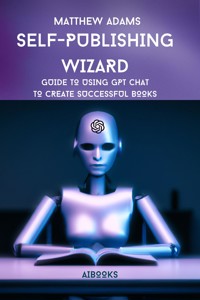


















Matthew Adams
The secrets to earning with chatgpt
Unleashing the Power of Conversational AI for Business Success
"The Secrets to Earning with ChatGpt "
Unleashing the Power of Conversational AI for Business Success
Author: Matthew Adams
Publisher: AIbooks
ISBN: 978-88-3295-575-0
© 2023 Matthew Adams
© 2023 AIbooks
First digital edition: July 2023
Cover design: Mattia Menghini
Layout and typesetting: Mattia Menghini
AiBooks
Roma - Buenos Aires
www.aibooks.it
All rights reserved. No part of this book may be reproduced or transmitted in any form or by any means without the written permission of the publisher, except for brief quotations used in reviews.
This colophon certifies that this book has been published by AIbooks and represents a quality production made with care and dedication. We are committed to promoting the dissemination of knowledge and culture through our publications.
For information about other titles published by AIbooks, please visit our website or contact us directly at the email addre ss provided above.
Thank you for choosing AIbooks. Enjoy your reading!
Index
Book Introduction:
Chapter 1: Introduction to ChatGpt and its Potential
Chapter 2: Understanding the Basics of ChatGpt
Chapter 3: Harnessing the Power of ChatGpt in Business
Chapter 4: Implementing ChatGpt for Customer Support
Chapter 5: Leveraging ChatGpt for Sales and Marketing
Chapter 6: Enhancing User Experience with ChatGpt
Chapter 7: ChatGpt for Personal Branding and Influencer Marketing
Chapter 8: Monetizing ChatGpt in the Digital Landscape
Chapter 9: Overcoming Challenges and Limitations of ChatGpt
Chapter 10: Ethical Considerations in ChatGpt Applications
Chapter 11: ChatGpt and the Future of Artificial Intelligence
Chapter 12: Case Studies: Success Stories with ChatGpt
Chapter 13: Tips and Tricks for Effective ChatGpt Conversations
Chapter 14: Best Practices for Training and Fine-tuning ChatGpt
Chapter 15: The Road Ahead: Advancements and Innovations in ChatGpt
Book Introduction:
In "The Secrets to Earning with ChatGpt: Unleashing the Power of Conversational AI for Business Success", we delve into the revolutionary world of ChatGpt and its immense potential in the realm of business and communication. This book is your comprehensive guide to understanding, implementing, and capitalizing on the power of ChatGpt for profit and success.
Artificial Intelligence has transformed various industries, and the rise of ChatGpt has opened up new avenues for businesses and individuals alike. Through this book, you will explore the intricacies of ChatGpt and discover how it can revolutionize customer support, sales, marketing, personal branding, and more.
With detailed explanations, practical examples, and actionable insights, each chapter provides you with the tools and knowledge needed to leverage ChatGpt effectively. Whether you are an entrepreneur, marketer, customer support professional, or simply curious about AI technology, this book will equip you with the secrets to thrive in the world of ChatGpt.
So, embark on this transformative journey and unlock the secrets to earning with ChatGpt. Let's dive into the first chapter and discover the foundations of this powerful tool.
Chapter 1: Introduction to ChatGpt and its Potential
Welcome to the world of ChatGpt! In this chapter, we will explore the basics of ChatGpt, its underlying technology, and the immense potential it holds for businesses and individuals. Let's begin by understanding what ChatGpt all is about.
1.1 What is ChatGpt?
ChatGpt, short for "Chat-based GPT" or "Chat Generative Pre-trained Transformer," is an advanced artificial intelligence (AI) model developed by OpenAI. It belongs to the GPT (Generative Pre-trained Transformer) family of models, which are designed to generate human-like text based on the provided prompts.
ChatGpt has been trained on a massive amount of diverse text data from the internet, allowing it to understand and generate natural language responses in a conversational manner. It leverages the power of deep learning and natural language processing techniques to engage in interactive and dynamic conversations with users.
The primary goal of ChatGpt is to provide users with a virtual conversational partner that can understand their queries, respond in a contextually relevant manner, and simulate human-like interactions. It can handle a wide range of conversational tasks, such as answering questions, providing recommendations, offering explanations, and engaging in dialogue on various topics.
ChatGpt has been widely used in customer support systems, virtual assistants, content generation, language translation, and many other applications that require human-like conversational abilities. It enables businesses and individuals to enhance user experiences, automate repetitive tasks, and deliver personalized interactions at scale.
It is important to note that while ChatGpt exhibits impressive language capabilities, it is still an AI model and has limitations. It may occasionally produce inaccurate or nonsensical responses and can be sensitive to input phrasing. OpenAI continues to refine and improve ChatGpt's performance through iterative training and user feedback, striving to create a more reliable and useful conversational AI.
Overall, ChatGpt represents a significant advancement in the field of natural language processing and opens up exciting possibilities for human-AI interactions, fostering new opportunities for communication, collaboration, and innovation.
1.2 The Power of ChatGpt
The power of ChatGpt lies in its ability to revolutionize human-AI interactions and enable dynamic, intelligent conversations. It brings forth several key strengths that make it a remarkable tool in various domains:
Natural Language Understanding: ChatGpt has been trained on a vast corpus of text, allowing it to understand and interpret human language with remarkable accuracy. It can comprehend diverse queries, extract meaning from context, and generate contextually relevant responses.
Contextual Adaptability: One of ChatGpt's notable strengths is its contextual adaptability. It can maintain context over extended conversations, understand nuanced references, and provide coherent and meaningful replies. This enables more engaging and interactive exchanges with users.
Versatile Applications: ChatGpt can be applied across a wide range of domains and use cases. It can provide customer support, assist with sales and marketing, enhance user experiences, aid in content generation, facilitate personal branding, and more. Its versatility makes it an asset in multiple industries.
Language Generation: With its language generation capabilities, ChatGpt can produce human-like text that is coherent, fluent, and contextually appropriate. It can generate informative responses, creative suggestions, and compelling narratives, making it a useful tool for content creators and writers.
Personalization and Adaptation: ChatGpt can be customized and personalized to suit individual preferences and requirements. Through fine-tuning and user feedback, it can adapt its responses, tone, and style to align with specific users or brands. This personalization fosters more tailored and tailored interactions.
Continuous Learning: ChatGpt benefits from continuous learning and improvement. User feedback and iterative training allow it to enhance its performance, address biases, and refine its responses over time. This iterative learning process contributes to ChatGpt's ongoing development and ensures a better user experience.
Scalability and Availability: ChatGpt's capabilities can be deployed at scale, making it accessible to a wide range of users and businesses. Its availability as an API allows integration into various applications, platforms, and devices, enabling seamless access to its conversational abilities.
As ChatGpt continues to evolve, its power will only grow stronger. Advancements in areas like contextual understanding, multimodal capabilities, and explainability will further enhance its utility and reliability. ChatGpt has the potential to transform customer interactions, improve productivity, and unlock new opportunities for innovation and creativity in countless fields.
It is important, however, to approach ChatGpt's power with responsibility and ethical considerations. Ensuring fairness, addressing biases, and fostering transparency in AI systems are crucial aspects of leveraging ChatGpt's power for positive and inclusive outcomes.
The power of ChatGpt is a testament to the remarkable progress in AI and natural language processing, and it offers an exciting glimpse into the future of human-AI collaboration and communication.
1.3 Applications of ChatGpt
ChatGpt, with its remarkable language generation and conversational abilities, finds applications in various domains. Here are some key areas where ChatGpt can be leveraged:
Customer Support: ChatGpt can be employed as a virtual customer support representative, providing instant responses to customer inquiries, troubleshooting common issues, and offering personalized assistance. It enhances customer experiences by providing timely and accurate support around the clock.
Virtual Assistants: ChatGpt can serve as a virtual assistant, helping users with tasks such as scheduling appointments, setting reminders, providing weather updates, answering general knowledge questions, and more. Its natural language understanding enables seamless and intuitive interactions.
Content Generation: ChatGpt can aid in content generation by assisting writers, bloggers, and marketers in brainstorming ideas, providing suggestions, and even generating initial drafts. It helps streamline the content creation process and enhances productivity.
Language Translation: ChatGpt's language capabilities can be utilized for language translation tasks. By understanding input text in one language and generating output text in another, ChatGpt can facilitate communication between individuals who speak different languages.
Sales and Marketing: ChatGpt can be integrated into sales and marketing strategies to engage potential customers, answer product-related queries, provide personalized recommendations, and assist in lead generation. Its conversational abilities make customer interactions more dynamic and persuasive.
User Experience Enhancement: ChatGpt can enhance user experiences in various applications and platforms. By providing intuitive and interactive interfaces, it enables users to navigate complex systems, find relevant information, and receive personalized recommendations in a conversational manner.
Personal Branding and Influencer Marketing: ChatGpt can assist individuals in developing their personal brand and engaging with their audience. It can generate social media posts, suggest content ideas, and provide conversational support for influencers to maintain active and authentic interactions with their followers.
Creative Writing and Storytelling: ChatGpt's language generation capabilities make it a valuable tool for creative writing and storytelling. It can help writers generate plot ideas, develop compelling characters, and even co-author narratives by collaborating with human writers.
Educational Assistance: ChatGpt can be utilized in educational settings to provide personalized tutoring, answer students' questions, and assist in self-paced learning. It can offer explanations, provide examples, and facilitate interactive learning experiences.
Research and Knowledge Exploration: ChatGpt can assist researchers and knowledge seekers in exploring vast amounts of information, summarizing research papers, suggesting relevant resources, and engaging in discussions on specific topics.
These are just a few examples of how ChatGpt can be applied across different industries and domains. Its versatility and adaptability make it a powerful tool for automating tasks, enhancing user interactions, and augmenting human capabilities in numerous applications. As ChatGpt continues to advance, its potential for innovation and impact will expand even further.
1.4 Benefits and Challenges
Enhanced Customer Experience: ChatGpt enables businesses to provide prompt and personalized customer support, leading to improved customer satisfaction and loyalty.
Scalability: ChatGpt can handle a large volume of inquiries simultaneously, ensuring efficient customer service and reducing wait times.
24/7 Availability: ChatGpt can operate round the clock, providing assistance to customers in different time zones and accommodating their needs at any hour.
Cost Efficiency: By automating customer support and reducing the need for human agents, ChatGpt can help businesses save on labor costs.
Productivity Boost: ChatGpt can handle repetitive and mundane tasks, freeing up human agents to focus on more complex and strategic responsibilities.
Language Support: ChatGpt can support multiple languages, allowing businesses to engage with a diverse customer base and expand their global reach.
Personalization: Through customization and fine-tuning, ChatGpt can be tailored to provide personalized responses, creating more engaging interactions with users.
Challenges of ChatGpt:
Accuracy and Reliability: While ChatGpt has impressive language abilities, it can still generate inaccurate or nonsensical responses. Ensuring reliable and trustworthy outputs remains a challenge.
Ethical Concerns: ChatGpt can produce biased or inappropriate content if not professionally trained or supervised. Addressing biases and ensuring ethical use are ongoing challenges.
Contextual Understanding: ChatGpt may struggle with understanding complex or nuanced context, leading to responses that are out of context or lacking in relevance.
Lack of Common Sense: ChatGpt may not possess a comprehensive understanding of the world, leading to responses that lack common sense or fail to grasp real-world implications.
Security and Privacy: The handling of sensitive information in chat interactions raises concerns about data privacy and security. Safeguarding user data is crucial when using ChatGpt.
User Dependency: Overreliance on ChatGpt without human oversight may result in users trusting and relying on potentially incorrect or misleading information.
Long Conversations: As chat interactions extend over multiple exchanges, maintaining coherence and context throughout lengthy conversations can be challenging for ChatGpt.
Addressing these challenges requires ongoing research, development, and responsible deployment of ChatGpt. OpenAI and the AI community are actively working to mitigate these issues and improve the technology's capabilities.
Understanding the benefits and challenges of ChatGpt is crucial for utilizing this technology effectively and responsibly, ensuring that its potential is harnessed while minimizing any adverse impacts.
1.5 The Journey Ahead
The journey ahead for ChatGpt is one filled with exciting possibilities and important considerations. As the technology continues to evolve, several key aspects will shape its future trajectory:
Advancements in Language Understanding: ChatGpt will continue to benefit from advancements in natural language understanding, enabling it to grasp context, nuances, and complex queries with even greater accuracy. Ongoing research and development will enhance its ability to generate meaningful and contextually relevant responses.
Multimodal Capabilities: Integrating ChatGpt with other modalities, such as images and videos, will enrich its understanding and response generation. The ability to interpret and generate text in conjunction with visual and auditory inputs will open up new avenues for interactive and immersive conversational experiences.
Explainability and Transparency: Addressing the need for explainability in AI systems will be a significant focus. Efforts will be made to enhance ChatGpt's transparency, allowing users to understand how and why it generates specific responses. This will foster trust, accountability, and responsible use of the technology.
Collaboration and Hybrid Approaches: Combining the strengths of human intelligence with AI capabilities will lead to hybrid approaches in which ChatGpt acts as a collaborative tool rather than a standalone solution. Humans and AI will work together, leveraging their respective strengths to achieve optimal outcomes.
Ethical and Responsible Use: The ethical implications of ChatGpt and its responsible deployment will remain paramount. Stricter guidelines, regulations, and ethical frameworks will be established to ensure the technology's positive impact, mitigate biases, and address concerns surrounding privacy, fairness, and accountability.
User Feedback and Iterative Improvements: User feedback will continue to play a crucial role in the development of ChatGpt. OpenAI's iterative deployment approach, gathering insights from users and learning from their experiences, will result in continuous improvements, refining the technology's capabilities and addressing limitations.
Customization and Adaptability: ChatGpt will become more customizable and adaptable to meet specific user or business requirements. Fine-tuning and personalization will allow ChatGpt to align with individual preferences, brand voices, and industry-specific contexts, making interactions more tailored and meaningful.
Collaboration within the AI Community: Collaboration and knowledge sharing among researchers, developers, and practitioners in the AI community will drive collective advancements in ChatGpt. Shared research, benchmarks, and best practices will accelerate progress and foster a community-driven approach to innovation.
As ChatGpt journeys into the future, it will continue to transform the way we interact with AI systems, enabling more natural, engaging, and productive conversations. Balancing technological advancements with ethical considerations and user-centric design will be crucial for harnessing the full potential of ChatGpt while ensuring its responsible and beneficial integration into our lives.
The road ahead is filled with challenges, opportunities, and discoveries, and it is through ongoing collaboration, responsible development, and user-centric approaches that ChatGpt will continue to pave the way for a future where human and AI interactions seamlessly coexist and thrive.
Chapter 2: Understanding the Basics of ChatGpt
In this chapter, we will delve into the foundational aspects of ChatGpt and gain a comprehensive understanding of how it works. By exploring the underlying technology and architecture, we will uncover the magic behind ChatGpt's ability to generate human-like responses. Let's begin our journey into the basics of ChatGpt.
2.1 Neural Networks and Transformers
Neural networks and transformers play fundamental roles in the architecture and functioning of ChatGpt. Let's explore their significance in ChatGpt:
Neural Networks:
Neural networks are the backbone of ChatGpt's ability to process and analyze data. They consist of interconnected layers of artificial neurons that simulate the behavior of the human brain. In ChatGpt, neural networks enable the model to learn patterns, extract features, and make predictions based on the input it receives.
Training: ChatGpt's neural networks are trained on vast amounts of text data to learn the underlying patterns and relationships in language. This training process involves feeding the network with input sequences and adjusting the weights of its connections iteratively to minimize the error in predicting the next word or sequence of words.
Hidden Layers: Neural networks in ChatGpt contain hidden layers that enable the model to capture increasingly complex representations of language. These layers learn to encode contextual information and extract meaningful features from the input text, allowing ChatGpt to generate coherent and contextually appropriate responses.
Transformers:
Transformers are a specific type of neural network architecture that revolutionized natural language processing tasks, including ChatGpt. They introduced the concept of self-attention mechanisms, enabling the model to weigh the importance of different words and better understand the relationships between them.
Self-Attention: Self-attention is a mechanism in transformers that allows the model to focus on different parts of the input text when generating responses. It enables ChatGpt to consider the context and dependencies between words and generate more accurate and contextually relevant outputs.
Encoder-Decoder Structure: Transformers employ an encoder-decoder architecture, where the encoder processes the input text and captures its contextual information, while the decoder generates the output text based on that context. This structure allows ChatGpt to maintain coherence and relevance throughout the conversation.
Multi-Head Attention: Transformers utilize multi-head attention, where multiple attention heads operate in parallel, attending to different parts of the input text. This allows the model to capture different types of relationships and dependencies, enhancing its understanding and response generation capabilities.
The combination of neural networks and transformers in ChatGpt has revolutionized the field of natural language processing. By leveraging the power of deep learning and attention mechanisms, ChatGpt can understand context, generate coherent responses, and engage in dynamic and interactive conversations.
These architectural components provide the foundation for ChatGpt's ability to process and generate human-like text, making it a powerful tool for various applications such as customer support, content generation, and personal assistance. Continued research and advancements in neural networks and transformers will further enhance ChatGpt's capabilities and drive the future of AI-powered conversational systems.
2.2 Pre-training and Fine-tuning
Pre-training and fine-tuning are crucial stages in the development of ChatGpt, contributing to its language understanding and generation capabilities. Let's explore these two processes:
Pre-training:
During pre-training, ChatGpt is exposed to a large corpus of publicly available text data from the internet. The model learns by predicting the next word in a sequence of sentences. By doing so, it develops a general understanding of grammar, syntax, and contextual relationships between words.
Key aspects of pre-training in ChatGpt include:
Masked Language Modeling (MLM): ChatGpt randomly masks certain words in the input text and the model is trained to predict the masked words based on the surrounding context. This process helps the model grasp semantic relationships and learn to generate coherent and contextually appropriate responses.
Self-Supervised Learning: ChatGpt's pre-training is self-supervised, meaning it doesn't require explicit labels or human-generated responses during this phase. Instead, the model learns from the patterns and structures inherent in the training data.
Fine-tuning:
After pre-training, ChatGpt undergoes a fine-tuning process to adapt its general language understanding to specific tasks or domains. Fine-tuning involves training the model on a narrower dataset, often generated with the help of human reviewers who follow guidelines provided by the development team. The reviewers provide ratings and feedback on possible model outputs to refine its behavior.
Important aspects of fine-tuning in ChatGpt include:
Customization for Specific Tasks: Fine-tuning allows ChatGpt to specialize in various applications such as customer support, content generation, or personal assistance. By training on task-specific data, the model learns to generate responses that are tailored to the desired context and user requirements.
Addressing Biases and Ethical Considerations: Fine-tuning also involves guidelines and instructions for human reviewers to ensure that the model adheres to ethical considerations and avoids biased or harmful outputs. Reviewer feedback and continuous iterations help in refining the model's behavior over time.
The pre-training and fine-tuning processes are iterative, with models being refined and updated based on user feedback, research advancements, and ethical considerations. This ongoing refinement aims to improve the quality, safety, and reliability of ChatGpt's responses while addressing limitations and challenges.
By combining pre-training with large-scale language modeling and fine-tuning with task-specific data and human review, ChatGpt can achieve a balance between general language understanding and specialized performance, making it a versatile and powerful tool for various conversational applications.
2.3 Context Window and Attention Mechanism
Context Window and Attention Mechanism are important components of ChatGpt that contribute to its ability to understand and generate contextually relevant responses. Let's explore these concepts:
Context Window:
The context window in ChatGpt refers to the sequence of previous words or tokens that the model considers when generating a response. It provides the necessary context for the model to understand the user's query or statement and generate a coherent and relevant reply.
Fixed Context Window: In some implementations of ChatGpt, there is a fixed maximum length for the context window. This means that only a certain number of previous words or tokens are taken into account, and older tokens are truncated or excluded.
Dynamic Context Window: In other cases, ChatGpt uses a dynamic context window that adapts based on the conversation flow. It considers the most recent context while allowing some influence from earlier tokens. This approach enables the model to have a broader understanding of the conversation history.
The context window plays a vital role in shaping the model's responses, as it helps ChatGpt to comprehend the user's intent, maintain conversation coherence, and generate appropriate replies based on the given context.
Attention Mechanism:
The attention mechanism is a crucial component of ChatGpt's architecture that allows the model to focus on relevant parts of the input sequence when generating a response. It helps the model to assign different weights or importance to different words or tokens based on their relevance to the current context.
a. Self-Attention: ChatGpt employs self-attention, also known as intra-attention or scaled dot-product attention. It enables the model to attend to different words within the context window and capture the dependencies and relationships between them.
b. Multi-Head Attention: ChatGpt often utilizes multi-head attention, where multiple attention heads work in parallel to capture different types of relationships and dependencies. This enhances the model's ability to understand complex contextual cues and generate more accurate and contextually relevant responses.
The attention mechanism allows ChatGpt to dynamically assign higher importance to specific words or tokens in the context window, enabling the model to focus on the most relevant information for generating a response. It helps in maintaining coherence, understanding long-range dependencies, and attending to critical details within the conversation history.
By utilizing the context window and attention mechanism, ChatGpt can leverage the contextual cues and relationships within the conversation to generate more accurate, meaningful, and contextually appropriate responses. These components contribute to the model's ability to engage in interactive and dynamic conversations with users.
2.4 Decoding Strategies
Decoding strategies in ChatGpt refer to the methods employed to generate coherent and contextually appropriate responses based on the model's trained knowledge. Let's explore some common decoding strategies used in ChatGpt:
Greedy Decoding:
Greedy decoding is a straightforward strategy where the model selects the word with the highest probability at each step during response generation. It chooses the most probable word without considering the impact of subsequent words. While this strategy is efficient, it may lead to locally optimal choices that do not necessarily result in the best overall response.
Beam Search:
Beam search is a more sophisticated decoding strategy that explores multiple possibilities during response generation. It maintains a set of top-k candidate responses and expands them by considering multiple alternative words at each step. The model assigns probabilities to each candidate, and the candidates with the highest probabilities are retained. Beam search promotes diversity in generated responses and helps to overcome the limitations of greedy decoding.
Top-p (Nucleus) Sampling:
Top-p sampling, also known as nucleus sampling, addresses the issue of generating more diverse and creative responses. Instead of considering all possible words, this strategy samples from the most probable subset of words that collectively surpass a predefined probability threshold (e.g., 0.9). It allows for more varied responses and avoids excessively repetitive or generic outputs.
Temperature Scaling:
Temperature scaling is a technique used during decoding to control the randomness and creativity of the generated responses. By adjusting the temperature parameter, the model's softmax function distributes probabilities differently. Higher temperatures (e.g., 1.0) increase randomness, leading to more exploratory and diverse responses, while lower temperatures (e.g., 0.8) prioritize high probability choices, resulting in more focused and conservative responses.
Length Control:
To ensure the generated responses have desired lengths, length control techniques can be applied during decoding. This involves scaling the probabilities associated with the end-of-sentence token, encouraging the model to generate responses of desired lengths. Length control helps to avoid excessively short or long responses and ensures a better conversational experience.
Decoding strategies play a crucial role in shaping the output of ChatGpt during response generation. Different strategies offer trade-offs between coherence, diversity, and appropriateness of responses. Choosing the appropriate decoding strategy depends on the specific requirements of the application and the desired balance between generating novel responses and adhering to user expectations.
Developers and researchers continue to explore and refine decoding strategies to enhance the quality and diversity of ChatGpt's generated responses, providing users with more engaging and contextually relevant conversational experiences.
2.5 Limitations and Biases
ChatGpt, like any language model, has certain limitations and potential biases that are important to be aware of. Let's discuss some of these limitations and biases:
Lack of Real-world Understanding:
While ChatGpt can generate coherent and contextually relevant responses, it lacks real-world understanding and common-sense reasoning. It primarily relies on patterns and associations learned from the training data, which can sometimes lead to incorrect or nonsensical answers. ChatGpt may struggle with complex tasks that require deep understanding of the world or specific domain knowledge.
Sensitivity to Input Phrasing:
ChatGpt can be sensitive to slight variations in input phrasing, leading to inconsistent responses. For example, rephrasing a question or statement might result in different answers. This sensitivity stems from the model's training on diverse data sources, which may have introduced subtle biases or inconsistencies.
Propensity to Generate Plausible but Incorrect Answers:
In some cases, ChatGpt may generate responses that sound plausible but are factually incorrect. The model's training on large-scale datasets exposes it to both accurate and inaccurate information, making it susceptible to generating responses that align with the training data but may not be factually reliable.
Amplification of Biases:
Language models like ChatGpt can inadvertently amplify existing biases present in the training data. If the training data contains biased or unbalanced information, the model may generate responses that reflect those biases. Developers and researchers strive to address and mitigate biases, but complete elimination of biases remains a challenging task.
Inappropriate or Offensive Responses:
ChatGpt may occasionally generate inappropriate, offensive, or biased responses. Despite efforts to enforce ethical guidelines and provide clearer instructions to human reviewers during fine-tuning, there is still a possibility of the model generating undesirable outputs. Continual refinement and user feedback help in identifying and addressing such issues.
Limited Context and Lack of Memory:
ChatGpt has a limited context window and does not possess memory of past interactions. It treats each user turn as an isolated input, which can sometimes result in less coherent or inconsistent responses across longer conversations. Maintaining context and coherence in extended interactions remains a challenge.
Addressing these limitations and biases is an ongoing research area. Developers and researchers actively work on improving the training process, fine-tuning guidelines, and implementing techniques to mitigate biases, enhance factuality, and promote responsible AI development.
Users and developers are encouraged to provide feedback on problematic outputs, biases, or limitations encountered during interactions with ChatGpt. By collecting and analyzing user feedback, AI developers can iteratively improve the model, enhance its performance, and ensure it aligns with societal values and expectations.
Chapter 3: Harnessing the Power of ChatGpt in Business
In this chapter, we will explore how businesses can leverage the power of ChatGpt to transform their operations, enhance customer experiences, and achieve their strategic goals. From customer support to sales and marketing, ChatGpt offers a myriad of applications that can revolutionize the way businesses interact with their audience. Let's delve into the possibilities of ChatGpt in the business landscape.
3.1 Transforming Customer Support
ChatGpt has the potential to revolutionize customer support by providing efficient and personalized assistance to customers. Here's how ChatGpt can transform customer support:
Instant and Scalable Support:




