


88,99 €
Mehr erfahren.
- Herausgeber: John Wiley & Sons
- Kategorie: Geisteswissenschaft
- Sprache: Englisch
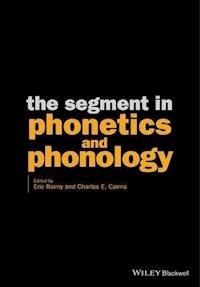
The Segment in Phonetics and Phonology unravels exactly what the segment is and on what levels it exists, approaching the study of the segment with theoretical, empirical, and methodological heterogeneity as its guiding principle.
- A deliberately eclectic approach to the study of the segment that investigates exactly what the segment is and on what level it exists
- Includes new research data from a diverse range of fields such as experimental psycholinguistics, language acquisition, and mathematical theories of communication
- Represents the major theoretical models of phonology, including Articulatory Phonology, Optimality Theory, Laboratory Phonology and Generative Phonology
- Examines both well-studied languages like English, Chinese, and Japanese and under-studied languages such as Southern Sierra Miwok, Päri, and American Sign Language
Sie lesen das E-Book in den Legimi-Apps auf:
Seitenzahl: 722
Veröffentlichungsjahr: 2015
Ähnliche




















CONTENTS
Cover
Title page
Notes on Contributors
1 Introduction
1 Scope and background
2 A short history of the segment
3 Contemporary issues concerning the segment
4 The contents of this volume
Acknowledgments
References
Part I: Is Segmentation Real?
2 The Segment in Articulatory Phonology
1 Introduction
2 Why should a phonology be articulatory?
3 Articulatory phonology
4 Gestural scores
5 Does it matter that segments do not emerge transparently in articulatory phonology?
6 Arguments for segments and articulatory phonology
7 Duality patterning and the particulate principle
8 Spontaneous errors of speech production
9 The alphabetic principle
10 Languages are not tidy
11 Coupling relations among gestures in articulatory phonology
12 Coupling strength
13 Hidden gestures?
14 Concluding remarks
Acknowledgments
References
3 Beyond the Segment
1 Introduction
2 Binary and ternary systems of length
3 English paves the way for Estonian
4. The fortis/lenis hypothesis
5 Estonian meets English
6 Bisyllabic words
7 When morphology intervenes
8 Conclusion
References
4 A Prosodic Theory of Vocalic Contrasts
1 Introduction
2 Complex margins are vocalically simple
3 No conflicting vocalic contrasts within a margin
4 No pre/post contrasts within a margin
5 No segment/cluster contrasts within a margin
6 Problematic contrasts in Russian
7 Assimilation
8 Implications: from segments to seglets
Acknowledgments
References
5 Segmentation and Pinky Extension in ASL Fingerspelling
1 Introduction
2 Pinky extension coarticulation
3 Segmentation
4 Conclusions
Appendix: regression model of pinky extension coarticulation
Acknowledgments
References
6 Categorical Segments, Probabilistic Models
1 Introduction
2 Gradience and categoricality
3 A probabilistic approach to phonological relationships
4 Conclusions
Acknowledgments
References
Part II: What Are the Roles of Segments in Phonology?
7 The Opponent Principle in RcvP
1 Introduction
2 A very brief history of Element Theory (ET)
3 Radical CV Phonology
4 The 3/4 problem
5 Wood’s system of articulatory features
6 Articulatory and acoustic correlates of elements
7 The 2/3 problem
8 Conclusions
Acknowledgments
References
8 Why the Palatal Glide Is Not a Consonant in Japanese
1 Introduction
2 The segment in phonology
3 The palatal glide
j
in Japanese
4 Representing the Palatal glide
j
5 Conclusion
Acknowledgments
References
9 Determining Cross-Linguistic Phonological Similarity Between Segments
1 Introduction
2 Components of phonological similarity and their interaction
3 Phonemic similarity in cross-linguistic research
4 Discussion
5 Conclusion
Acknowledgments
References
10 Contrast and Vowel Features
1 Introduction
2 Method
3 Result
4 A close look at vowel height
5 Concluding remarks
Acknowledgments
References
11 The Phonetics and Phonology of Segment Classification
1 Introduction
2 Phonological classification of /v/
3 Acoustic study of /v/
4 Conclusion
Acknowledgments
References
Part III: Case Studies
12 The Perception of Vowel Quality and Quantity by Turkish Learners of German as a Foreign Language
1 Introduction
2 L2 vowel perception
3 The German and Turkish vowel systems
4 Research questions and method
5 Results
6 Conclusion
Acknowledgments
References
13 Compensatory Lengthening in Hungarian VnC Sequences
1 Introduction
2 Data
3 Subjects, material, method
4 Results
5 Discussion
6 Conclusion
Acknowledgments
References
14 Päri Consonant Mutation as Defective Root Node Affixation
1 Introduction
2 Analysis
3 Discussion/alternatives
4 Summary
Acknowledgments
References
15 Templates as Affixation of Segment-sized Units
1 Introduction
2 The data: LH templates in Southern Sierra Miwok
3 Analysis for the three LH templates
4 Discussion: the nature of the underspecified segments
5 Conclusion
Acknowledgements
References
Subject and Author Index
Language Index
End User License Agreement
List of Tables
Chapter 05
Table 5.1 Counts for expected and observed pinky extension: where the columns are handshapes with and without pinky extension, and the rows are hand configurations with and without pinky extension. The shaded cells are those where the pinky extension in the hand configuration matches the handshape specification. Here we are using the familiar terminology observed and expected. We use the terms
observed
and
expected
, even though our hypothesis is that there is coarticulation. In other words, we are using these labels in the naïve way that we do not expect any apogee that does not (phonologically) have pinky extension in its handshape, to have it (phonetically) in its hand configuration. This set excludes 216 apogees for which there were an equal number of annotations for extended and flexed.
Table 5.2 Mixed effects logistic regression coefficient estimates and standard errors.
Chapter 11
Table 11.1 Typology of the phonological status of /v/.
Table 11.2 Consonant inventory of Greek.
Table 11.3 Consonant inventory of Serbian.
Table 11.4 Consonant inventory of Russian.
Table 11.5 Word list.
Table 11.6 Featural specifications of approximants, from Padgett (2002).
Chapter 13
Table 13.1 Word list examples.
Table 13.2 VnC sequences: the duration of
n
.
Table 13.3 Vowel durations in possible vs. impossible CL contexts.
Table 13.4 Duration values of vowels preceding /n/ depending on gender and context.
Table 13.5 VnC sequences: the duration of V + n.
List of Illustrations
Chapter 02
Figure 2.1 X ray tracings of the vocal tract (sagittal view) during oral constriction for /d/ in /da/ and /di/.
Figure 2.2 Gestural score for the word
palm.
Figure 2.3 Gestural scores for
pod, sod,
and
spod
.
Figure 2.4 Gestural score and coupling graph for
spot
.
Figure 2.5
Kiss Ted
produced at progressively faster speaking rates. Waveform and glottal openings and closings are depicted.
Chapter 05
Figure 5.1
fs
-letters for ASL fingerspelling.
Figure 5.2 Apogees from (a)
d-i-n-o-s-a-u-r
and (b)
c-h-r-i-s
.
Figure 5.3 Apogees from
(
a
) e-v-e-r-g-l-a-d-e-s, (
b
) z-d-r-o-q-i-e, (
c
) z-a-c-k,
and (d
) e-x-p-e-c-t-a-t-i-o-n.
Figure 5.4 A plot showing the percent of apogees with hand configurations that have pinky extension, despite their handshapes not specifying pinky extension, based on surrounding handshapes. Darker colors represent a higher percentage of pinky extension.
Figure 5.5 A plot showing the effect of conditioning apogees (-i-, -j-, and -y-) on the probability of pinky extension at mean transition times for both previous and following. Dots are model predictions for an apogee with a conditioning apogee in the previous position, following position, both, or neither. The lines are two standard deviations on either side. The order of the fs-letters is based on the overall amount of pinky extension.
Figure 5.6 A plot showing the effect of conditioning apogees (-b-, -c-, and -f-) on the probability of pinky extension at mean transition times for both previous and following. Dots are model predictions for an apogee with a conditioning apogee in the previous position, following position, both, or neither. The lines are two standard deviations on either side. This is the same style of plot as Figure 5.5, with the only difference being that the conditioning handshape here is a -b-, -c-, or -f-.
Figure 5.7 A plot showing the effect of conditioning apogees (-i-, -j-, and -y-) on the probability of pinky extension for the fs-letter -l- only, faceted by previous and following transition time (z-scores of the log transform, where smaller values are shorter transitions). The fs-letter -l- was chosen because it is a common letter (with 259 occurrences), and is representative of the fs-letters that show coarticulation.
Figure 5.8 Handshape portion from the Prosodic Model
Figure 5.9 A plot showing the effect of conditioning apogees (-i-, -j-, and -y-) on the probability of pinky extension at mean transition times for both previous and following. Dots are model predictions for an apogee with a conditioning apogee in the previous position, following position, both, or neither. The lines are two standard deviations on either side. The order of the fs-letters is based on the overall amount of pinky extension (same as Figure 5.5).
Figure 5.10 Still images at apogees for
o-i-l.
Figure 5.11 Articulator trajectories for
o-i-l
. Gray boxes represent periods of hand configuration stability, thick lines represent observed extension (visually estimated), and the thin lines represent articulator trajectories if each apogee’s hand configuration were canonical, with smooth transitions.
Figure 5.12 Still images at apogees for
b-u-i-l-d-i-n-g
.
Figure 5.13 Articulator trajectories for
b-u-i-l-d-i-n-g
. Similar to Figure 5.11.
Figure 5.14 Still images at apogees for
a-c-t-i-v-i-t-y
.
Figure 5.15 Articulator trajectories for
a-c-t-i-v-i-t-y
. Similar to Figure 5.11, the only exception is that the light gray associated with the second -i-, is placed halfway between the -v- and -ti- apogees in order to show the trajectories expected for canonical realization.
Chapter 06
Figure 6.1 Continuum of predictability of distribution from allophony on the left to contrast on the right.
Figure 6.2 Relation between degree of uncertainty (environment-specific contrastiveness) and perceived similarity for the pair [s] / [
ʃ
] in German. “More similar” is toward the top of the graph.
Figure 6.3 Systemic contrastiveness values for each of 20 Gujarati speakers in Thakur (2011). The broken line shows her division of the group into speakers with perfect or near-perfect contrast and those with partial contrast.
Chapter 11
Figure 11.1 Relative centroid of [v] tokens in Greek, Russian, and Serbian.
Figure 11.2 Relative skewness of [v] tokens in Greek, Russian, and Serbian.
Chapter 12
Figure 12.1 German (left) (Kohler 1999: 86) and Turkish (right) (Zimmer and Orgun 1999: 154) vowel systems as depicted in the Handbook of the IPA. Vowels of interest to the study have been circled.
Figure 12.2 Acoustic data of German and Turkish point vowels. Mean formant values for three different one-syllable German/Turkish words (three repetitions). Four male speakers per language group.
Figure 12.3 Correct responses of the German native speakers versus the Turkish GFL learners for the three different vowel groups and experimental conditions in percent. Error bars show two standard errors.
Chapter 13
Figure 13.1 /n/ realization before non-continuants, latin csoda [l
ɒ
tin
ʧ
od
ɒ
] “Latin miracle.”
Figure 13.2 /n/ realization before continuants: transitioning CL, nagyon szalad [n
ɒ
ɟ
õ
ː
s
ɒ
l
ɒ
d] “runs fast.”
Figure 13.3 /n/ realization before continuants: non-transitioning CL, istenség [i
ʃ
t
ː
ʃ
e
ː
g] “deity.”
Figure 13.4 /n/ realization before continuants: no CL, latinság [l
ɒ
tin
ʃ
ɑ
ː
g] “the Latin people.”
Figure 13.5 /n/ realization before continuants: /n/ drop, olyan zöld [oj
ɒ
z
ø
ld] “so green.”
Figure 13.6 The first two formants of [õ
ː
] and [o].
Figure 13.7 VnC sequences: Medians and ranges of the duration of
n.
Figure 13.8 Vowel duration values in possible (DUR[+CL]) vs. impossible (DUR[-CL]) CL contexts.
Figure 13.9 Regression analysis results of vowel durations in CL contexts.
Figure 13.10 Regression analysis results of vowel durations in CL contexts vs. non-CL contexts.
Figure 13.11 Vowel duration values of females and males in possible vs. impossible CL contexts (F = female; M = male; DUR = duration).
Guide
Cover
Table of Contents
Begin Reading
Pages
iv
vii
viii
ix
x
1
2
3
4
5
6
7
8
9
10
11
12
13
14
15
16
17
18
19
20
21
23
25
26
27
28
29
30
31
32
33
34
35
36
37
38
39
40
41
42
43
44
45
46
47
48
49
50
51
52
53
54
55
56
57
58
59
60
63
64
61
62
65
66
67
68
69
70
71
72
73
74
75
76
77
78
79
80
81
82
83
84
85
86
87
88
89
90
91
92
93
94
95
96
97
100
101
102
98
99
103
104
105
106
107
108
109
110
111
112
113
114
115
116
117
118
119
120
121
122
123
124
125
127
128
126
129
130
131
132
133
134
135
136
137
138
139
140
141
142
143
144
145
147
149
150
151
152
153
154
155
156
157
158
159
160
161
162
163
164
165
166
167
168
169
170
171
176
177
178
179
172
173
174
175
180
181
182
183
184
185
186
187
188
189
190
191
192
193
194
195
197
198
196
199
200
201
202
203
204
205
206
207
208
209
210
211
212
214
215
216
217
213
218
219
220
221
222
223
224
225
226
227
228
229
230
231
232
233
234
235
236
237
238
239
240
241
242
243
244
245
246
247
248
249
250
251
253
254
255
256
257
258
259
260
261
262
263
265
266
264
267
268
269
270
271
272
273
274
275
276
277
278
279
280
282
281
283
284
285
286
287
288
289
290
291
292
293
294
295
296
297
298
299
300
301
302
303
304
305
306
307
308
309
310
311
312
313
314
315
316
317
318
319
320
321
322
323
324
325
326
327
328
329
330
331
332
334
335
336
333
337
338
339
340
341
342
343
344
345
346
347
348
The Segment in Phonetics and Phonology
Edited by
Eric Raimy and Charles E. Cairns
This edition first published 2015© 2015 John Wiley & Sons, Inc.
Registered OfficeJohn Wiley & Sons, Ltd, The Atrium, Southern Gate, Chichester, West Sussex, PO19 8SQ, UK
Editorial Offices350 Main Street, Malden, MA 02148-5020, USA 9600 Garsington Road, Oxford, OX4 2DQ, UK The Atrium, Southern Gate, Chichester, West Sussex, PO19 8SQ, UK
For details of our global editorial offices, for customer services, and for information about how to apply for permission to reuse the copyright material in this book please see our website at www.wiley.com/wiley-blackwell.
The right of Eric Raimy and Charles E. Cairns to be identified as the author(s) of the editorial material in this work has been asserted in accordance with the UK Copyright, Designs and Patents Act 1988.
All rights reserved. No part of this publication may be reproduced, stored in a retrieval system, or transmitted, in any form or by any means, electronic, mechanical, photocopying, recording or otherwise, except as permitted by the UK Copyright, Designs and Patents Act 1988, without the prior permission of the publisher.
Wiley also publishes its books in a variety of electronic formats. Some content that appears in print may not be available in electronic books.
Designations used by companies to distinguish their products are often claimed as trademarks. All brand names and product names used in this book are trade names, service marks, trademarks or registered trademarks of their respective owners. The publisher is not associated with any product or vendor mentioned in this book.
Limit of Liability/Disclaimer of Warranty: While the publisher and authors have used their best efforts in preparing this book, they make no representations or warranties with respect to the accuracy or completeness of the contents of this book and specifically disclaim any implied warranties of merchantability or fitness for a particular purpose. It is sold on the understanding that the publisher is not engaged in rendering professional services and neither the publisher nor the author shall be liable for damages arising herefrom. If professional advice or other expert assistance is required, the services of a competent professional should be sought.
Library of Congress Cataloging-in-Publication Data applied for
9781118555408 (hardback)
9781118555385 (ePDF)
9781118555347 (epub)
9781118555491 (obook)
A catalogue record for this book is available from the British Library.
Notes on Contributors
Christina Bjorndahl is a doctoral candidate in Linguistics at Cornell University. Her dissertation research comprises a cross-linguistic phonetic and phonological study of the class of voiced, non-strident fricatives, with special attention on the segment transcribed as /v/.
Diane Brentari is Professor of Linguistics at the University of Chicago. Her current research interests include phonology, morphology, and sign languages, particularly as they relate to issues of typology, language emergence, and prosody. She has also developed a model of phonological structure of sign, called the Prosodic Model, and she has also worked on the architecture of the sign language lexicon.
Charles E. Cairns is Professor Emeritus of Linguistics at Queens College and the Graduate Center of the City University of New York. His research is in the general area of phonological theory. He is founder and, with Eric Raimy, co-organizer of the CUNY Phonology Forum, which has organized ten conferences since his retirement in 2003. Raimy and Cairns edited , published by MIT Press in 2009. He and Professor Raimy also edited the , published by Brill in 2011; they also co-authored “Precedence relations in phonology,” which appeared in in 2011.
Lesen Sie weiter in der vollständigen Ausgabe!
Lesen Sie weiter in der vollständigen Ausgabe!
Lesen Sie weiter in der vollständigen Ausgabe!
Lesen Sie weiter in der vollständigen Ausgabe!
Lesen Sie weiter in der vollständigen Ausgabe!
Lesen Sie weiter in der vollständigen Ausgabe!
Lesen Sie weiter in der vollständigen Ausgabe!
Lesen Sie weiter in der vollständigen Ausgabe!
Lesen Sie weiter in der vollständigen Ausgabe!
Lesen Sie weiter in der vollständigen Ausgabe!
Lesen Sie weiter in der vollständigen Ausgabe!
Lesen Sie weiter in der vollständigen Ausgabe!
Lesen Sie weiter in der vollständigen Ausgabe!
Lesen Sie weiter in der vollständigen Ausgabe!
Lesen Sie weiter in der vollständigen Ausgabe!
Lesen Sie weiter in der vollständigen Ausgabe!
Lesen Sie weiter in der vollständigen Ausgabe!
Lesen Sie weiter in der vollständigen Ausgabe!
Lesen Sie weiter in der vollständigen Ausgabe!
Lesen Sie weiter in der vollständigen Ausgabe!
Lesen Sie weiter in der vollständigen Ausgabe!




