


26,99 €
Mehr erfahren.
- Herausgeber: John Wiley & Sons
- Kategorie: Fachliteratur
- Sprache: Englisch
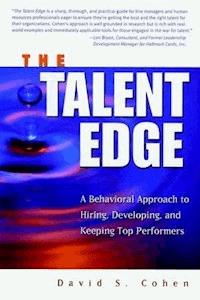
A practical step-by-step approach to hiring the right person. Every hiring manager knows that the traditional hiring and interviewing process is a poor tool for predicting organizational fit and future on-the-job success. Behavioral interviewing can improve your chances of picking the right candidate two to five times over traditional processes. It focuses on how the candidate works rather than on skills, qualifications, and impressions. The Talent Edge shows how you can develop a concrete understanding of what your own top performers do differently than the majority of their peers, and how to translate that knowledge into a better hiring system. While using case studies from organizations that have successfully transformed their hiring practices, the book articulates the business case for a Behavioral Interviewing system, and provides a roadmap for implementing it. Comprehensive coverage includes: how to write job profiles and translate them into questions and answers that can be used in the interview; how to prepare for the interview, ask questions, and probe for the right information. The book also offers advice on how behaviors that are defined and proven to be useful in the hiring process can be incorporated into performance management, career development, and succession planning.
Sie lesen das E-Book in den Legimi-Apps auf:
Seitenzahl: 338
Veröffentlichungsjahr: 2009
Ähnliche


















Table of Contents
Series
Title
Copyright
Acknowledgements
INTRODUCTION: Leaders Needed
CHAPTER 1: Value Beyond the Balance Sheet: The Right People
Are Your People Really Your Competitive Advantage?
The Traditional Interview: Rolling the Dice
The Hiring Manager
The Human Resources Professional
Behavioral Interviewing: Examining the Past to Predict the Future
Not a Cookie-Cutter Approach
Case Study Profiles That Lead the Way
A Vision of Organizational Clarity
CHAPTER 2: Making the Business Case for Behavioral Interviewing
Competing for the Best
Why Hiring Decisions Fail
The Job Description
The Résumé
Technical Credentials
Experience
Hypothetical Situations and Opinions
Behavioral Information
Comparing Types of Information
The Interviewing Skills of the Candidate
The Time It Takes for a Decision
Reference Checks
Structured and Unstructured Interviews
The Odds and the Options
Determining the Economic Value-Added
Getting Buy-In From the Organization
Case Studies: Two Approaches to Behavioral Interviewing
Summary
CHAPTER 3: The Organization, the Job, and the Candidate: The Right Fit
Understanding What to Look For
Employees Success and Failure
The Importance of Defining Fit
Organizational Values
Organizational Culture
Organizational Vision
Corporate Mission, Strategy, and Objectives
Linking Values to Behaviors
The What and How of a Job
Technical Knock-Out Factors
Can-Do and Will-Do Factors
Behavioral Competencies
Transferability: The Hierarchy of Behaviors
Developing Behavioral Competencies in Your Unique Organization
A Road Map for Success
Working With Values: Case Study Examples
Summary
CHAPTER 4: Developing Behavioral Profiles that Benchmark Top Performance
Identifying, Examining, and Describing Top Performance
Critical Incidents
A Critical Incident: An Example
Breaking Down the Incident
The Right Critical Incident and Behaviors
Critical Incidents and Behavioral Interviewing
Focus Groups
Identifying Must-Have and Preferred Behavioral Competencies
Writing the Behavioral Profile
Sample Behavioral Profile
Case Study Profiles
Summary
CHAPTER 5: Writing Behavioral Questions that Elicit High-Yield Information
Behavioral Questions
Key Words
Sample Behavioral Questions
The Interview Guide
Summary
CHAPTER 6: Interviewing to Select and Sell the Best
Laying the Groundwork
How Much Structure?
Time Allocation
How Many Interviews?
Note Taking: Recording Behavioral Information
Preparing for the Interview
Opening the Interview
The Agenda-Setting Statement
Open-Ended and Closed-Ended Questions
Listening
Probing
Getting Behavioral Answers
Selling Your Organization
Closing the Interview
Behavioral Reference Checks
Post-Interview Debriefings
Ensuring the Fit of Your Selection
Training Hiring Managers to do Behavioral Interviewing
Case Study Profiles
Summary
CHAPTER 7: Doing the Numbers: The Right Decision
Suspending Judgement and Developing a Common Language of Assessment
The Process
Determining Evidence of Behaviors
Scoring Responses: Using the Anchored Rating Scale
Anchored Rating System
Case Study Profiles
Sample Response Rating
Common Rating and Profile Assessment Errors
The Decision
Making the Offer
CHAPTER 8: Aligning Organizational Values, Strategy and People: A Common Language of Success
The Hub of the Wheel
Michelin North America
HMV North America
Calgary Police Service
Abbott Labs
Thomas Cook
Starbucks
Sprint Canada
A Final Thought: Championing a Behavioral Approach
Afterword: Hiring in a Dot-Com Start-Up: The Tug of War Between Growth and Time
Does Hiring Right Work When You’re Hiring Fast?
An All-Out Hiring Blitz
First Steps: Easing in a Behavioral Approach
Seizing the Opportunity to Spread the Word
Adaptions to the Behavioral Interviewing Workshop
Benefits to the Organization: Adapting to Change, Choosing the Right Competencies and Building a Global Culture
How Hiring Managers and Senior Executives Have Embraced the Process
Conclusion: A Step-by-Step Approach
Index
List of Illustrations
CHAPTER 3: The Organization, the Job, and the Candidate: The Right Fit
Consistency Between Word and Action
CHAPTER 8: Aligning Organizational Values, Strategy and People: A Common Language of Successt
An Integrated Approach to the Human Resource Planning Process
Guide
Cover
Table of Contents
Begin Reading
Pages
Cover
Contents
Page i
Page ii
Page v
Page vi
Page xiii
Page xiv
Page xix
Page xv
Page xvi
Page xvii
Page xviii
Page xx
Page 1
Page 2
Page 3
Page 4
Page 5
Page 6
Page 7
Page 8
Page 9
Page 10
Page 11
Page 12
Page 13
Page 14
Page 15
Page 16
Page 17
Page 18
Page 19
Page 20
Page 21
Page 22
Page 23
Page 24
Page 25
Page 26
Page 27
Page 28
Page 29
Page 30
Page 31
Page 32
Page 33
Page 34
Page 35
Page 36
Page 37
Page 38
Page 39
Page 40
Page 41
Page 42
Page 43
Page 44
Page 45
Page 46
Page 47
Page 48
Page 49
Page 50
Page 51
Page 52
Page 53
Page 54
Page 55
Page 56
Page 57
Page 58
Page 59
Page 60
Page 61
Page 62
Page 63
Page 64
Page 65
Page 66
Page 67
Page 68
Page 69
Page 70
Page 71
Page 72
Page 73
Page 74
Page 75
Page 76
Page 77
Page 78
Page 79
Page 80
Page 81
Page 82
Page 83
Page 84
Page 85
Page 86
Page 87
Page 88
Page 89
Page 90
Page 91
Page 92
Page 93
Page 94
Page 95
Page 96
Page 97
Page 98
Page 99
Page 100
Page 101
Page 102
Page 103
Page 104
Page 105
Page 106
Page 107
Page 108
Page 109
Page 110
Page 111
Page 112
Page 113
Page 114
Page 115
Page 116
Page 117
Page 118
Page 119
Page 120
Page 121
Page 122
Page 123
Page 124
Page 125
Page 126
Page 127
Page 128
Page 129
Page 130
Page 131
Page 132
Page 133
Page 134
Page 135
Page 136
Page 137
Page 138
Page 139
Page 140
Page 141
Page 142
Page 143
Page 144
Page 145
Page 146
Page 147
Page 148
Page 149
Page 150
Page 151
Page 152
Page 153
Page 154
Page 155
Page 156
Page 157
Page 158
Page 159
Page 160
Page 161
Page 162
Page 163
Page 164
Page 165
Page 166
Page 167
Page 168
Page 169
Page 170
Page 171
Page 172
Page 173
Page 174
Page 175
Page 176
Page 177
Page 178
Page 179
Page 180
Page 181
Page 182
Page 183
Page 184
Page 185
Page 186
Page 187
Page 188
Page 189
Page 190
Page 191
Page 192
Page 193
Page 194
Page 195
Page 196
Page 197
Page 198
Page 199
Page 200
Page 201
Page 202
Page 203
Page 204
Page 205
Page 206
Page 207
Page 208
Page 209
Page 210
Page 211
Page 212
More Praise forThe Talent Edge
“A clear, concise approach to unlocking the secret of competitive advantage in business. The Talent Edge taps into individual unique capabilities to maximize business results. David Cohen does a wonderful job of making the business connection—it is all about having the right people in the right jobs at the right time—and how to do it. Great insight!”
— Grace M. Palombo, Vice President Human Resources,General Counsel and Corporate Secretary, Union Gas Ltd., a Westcoast Energy Company
“Selecting and retaining the best people is (still) critical to any organization’s growth and progress. Here is a practical roadmap to help ensure success.”
— Bernadette Kenny, Executive Vice President,Chief Global Sales and Marketing Officer, Lee Hecht Harrison
“An experience-based, practical guide to building organizational capability. David Cohen shares his considerable knowledge into talent development and your enterprise will benefit greatly from his insight!”
— David Rathbun, Chief Human Resources Officer, Aliant
THE TALENT EDGE
A Behavioral Approach to Hiring, Developing, and Keeping Top Performers
David S. Cohen
Toronto • New York • Chichester • Weinheim • Brisbane • Singapore
Copyright © 2001 by David S. Cohen
All rights reserved. No part of this work covered by the copyrights herein may be reproduced or used in any form or by any means — graphic, electronic or mechanical — without the prior written permission of the publisher. Any request for photocopying, recording, taping or information storage and retrieval systems of any part of this book shall be directed in writing to CANCOPY, One Yonge Street, Suite 1900, Toronto, Ontario, M5E 1E5.
Care has been taken to trace ownership of copyright material contained in this text. The publishers will gladly receive any information that will enable them to rectify any reference or credit line in subsequent editions.
John Wiley & Sons Canada Limited22 Worcester RoadEtobicoke, OntarioM9W 1L1
National Library of Canada Cataloguing in Publication Data
Cohen, David S., 1947-
The talent edge : a behavioral approach to hiring, developing and keeping top performers
Includes index.ISBN 0-471-64643-1
1. Employment interviewing. 2. Employee selection. 3. Employee selection—Case studies. 4. Behavioral assessment. I. Title.
HF5549.5.I6C63 2001 658.3’112 C2001-901567-4
ACKNOWLEDGEMENTS
This work represents 15 years of learning and understanding how people in organizations behave and how their behavior impacts the organization. While based on my experience, this work is not an individual effort. There are many shared insights and emotions that have nurtured this work on its way to becoming accepted as an achievement that will assist others in building and strengthening their organizations by hiring right and creating the talent edge.
I would like to offer a special thanks to the many colleagues who, when others felt that behaviors and corporate results were not linked, boldly and passionately embraced these ideas. A special thanks to Jim Meek, Paul Frederick, and Milan Mizerovsky. They were the few who, many years ago, offered me an opportunity to begin the journey.
I would also like to acknowledge the support and encouragement of a number of individuals whose work in their respective organizations forms the backbone of the case studies. They took the time to be interviewed and to relive some of their early experiences. Without their support, advice, encouragement and sense of humor, this book would not have been written. Thanks to: Christine Deputy, Marnie Falkiner, Andrée Charbonneau, Dale Burn, Victoria Walker, Milan Mizerovsky, and Fran Crisman, as well as the numerous others whose efforts to help their respective companies hire right the first time became proving testimonies for this book. Thank you to Karen Jackson and Wendy Bircher for their support. I would also like to thank two individuals who, while we did not always agree, were always supportive and provided their keenest insights through many challenges: Randy Garrett and Suzanne Nault.
There were many times during the development and writing of this book that I was convinced it would not become a reality. That it has made the transition from my mind to the page is due to the efforts of many people. I would like to thank my editor, Karen Milner, for her support and passion to get this book out and also Elizabeth McCurdy and Abigail Brown who were patient with slightly missed deadlines and provided encouragement and support throughout the final stages of the book. I wish to thank Nancy Carroll for her critical eye, constructive suggestions and insight as she provided a fresh perspective to get us over the top. I would like to thank Liora Meister for her focus and dedication in making sure the process was completed on time by bringing together many diverse suggestions and helping to finalize the project. I would also like to thank Shira Balaban for her support and encouragement.
Of all those involved in this project, one person shared the vision and maintained the direction throughout. I extend a special thank-you to Keith Hollihan. He provided support and energy, always digging deep to find enthusiasm to bring this project to the next level. His critical eye for finding the right words, analyzing each idea, and rewriting provided a focus that is greatly appreciated. During the chaotic and hectic travel schedules he always found me, and provided encouragement.
This book is dedicated with a special expression of thanks, insufficient in words, to my family—Naomi, Ari, and Gil. My two boys, Ari, and Gil, provided patience and perspective. My wife Naomi, has displayed sensitivity and drive which, coupled with her sense of humor, made it possible to find time to complete this work. Most of all, the three of them helped to keep me focused on what is really important.
Finally to my parents, who have encouraged me and stuck with me during the early years of my education. Without their uncompromised support and belief that I could succeed academically and in life this book would not have been possible. As a result, they are simply excited about this book.
Lesen Sie weiter in der vollständigen Ausgabe!
Lesen Sie weiter in der vollständigen Ausgabe!
Lesen Sie weiter in der vollständigen Ausgabe!
Lesen Sie weiter in der vollständigen Ausgabe!
Lesen Sie weiter in der vollständigen Ausgabe!
Lesen Sie weiter in der vollständigen Ausgabe!
Lesen Sie weiter in der vollständigen Ausgabe!
Lesen Sie weiter in der vollständigen Ausgabe!
Lesen Sie weiter in der vollständigen Ausgabe!
Lesen Sie weiter in der vollständigen Ausgabe!
Lesen Sie weiter in der vollständigen Ausgabe!
Lesen Sie weiter in der vollständigen Ausgabe!




