


11,49 €
Mehr erfahren.
- Herausgeber: Atlantic Books
- Kategorie: Fachliteratur
- Sprache: Englisch
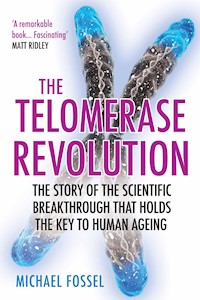
Science is on the cusp of a revolutionary breakthrough. We now understand more about ageing - and how to prevent and reverse it - than ever before. In The Telomerase Revolution, Dr Michael Fossel, who has been at the cutting edge of ageing research for decades, describes how telomerase will soon be used as a powerful therapeutic tool, with the potential to intervene in age-related disease, dramatically extend life spans and even reverse human ageing. Telomerase-based treatments are already on offer, and have shown early promise, but much more potent treatments will become available over the next decade. This is the definitive work on the latest science of human ageing, covering both the theory and the clinical implications, taking readers to the forefront of one of the most remarkable advances in human medicine.
Das E-Book können Sie in Legimi-Apps oder einer beliebigen App lesen, die das folgende Format unterstützen:
Veröffentlichungsjahr: 2015
Ähnliche



















Praise for The Telomerase Revolution
“The Telomerase Revolution is a remarkable book, telling a fascinating story that pulls together at last a single coherent theory of how and why growing old leads to so many different forms of illness. It also offers a tantalizing promise that we might soon know not only how to cure and prevent age-related diseases, but how to reset the aging process itself. Michael Fossel is a radical optimist.”
—Matt Ridley, author of Genome and The Rational Optimist
“The Telomerase Revolution breaks down centuries of human thought on aging and uproots outdated ideologies that have led to nothing but worthless snake oil products. Dr. Fossel’s exciting book is opening doors to extended healthspan that can change human history, and it’s all grounded in solid scientific research.”
—Noel Patton, founder and chairman of T.A. Sciences
“Michael Fossel’s compelling argument for the telomere approach to reversing aging isn’t just worth a look—it’s like reading the words of Virgil as he leads us along the mysteries of aging.”
—Alexey Olovnikov, PhD, Institute of Biochemical Physics and Russian Academy of Sciences
“Dr. Fossel has made a superb case for his belief that telomeres and telomerase play an essential role in the biology of aging both in humans and in other animals. His views were once in the minority, but more recent advances in how these molecules work have made his present book a valuable contribution to our understanding of the fundamental biology of aging. Adding to its value is that it is clearly written and well organized.”
—Leonard Hayflick, PhD, Professor of Anatomy, University of California, San Francisco
“Aging is not an irreversible degenerative process, but an epigenetically determined physiological mechanism, which must not be confused with age-related diseases caused by lifestyle choices. Here, we have an effective and clear guide to understanding how we get old and how to tame aging in a few years.”
—Giacinto Libertini, MD, member of the Italian Society of Evolutionary Biology
To those with minds open to logic and eyes open to data: May others be as open to you as you are to the world around you.
To those who, aging and suffering,
Contents
TELOMERE THEORY OF AGING TIMELINE
INTRODUCTION
CHAPTER 1 Theories of Aging
The hoaxes, the myths, and the scientific theories that don’t quite account for everything
CHAPTER 2 The Telomere Theory of Aging
An introduction to the theory of aging this book proposes and its historical development, including a discussion of misconceptions about the theory
CHAPTER 3 Why We Age
A short scientific detour into the evolutionary reasons why we age rather than live indefinitely like the hydra
CHAPTER 4 The Search for Immortality
Applying telomere theory to clinical problems
CHAPTER 5 Direct Aging: Avalanche Effects
How aging cells cause disease in similar cells and tissues around them
CHAPTER 6 Indirect Aging: Innocent Bystanders
How aging cells cause disease in different kinds of cells and tissues
CHAPTER 7 Slowing Aging
What people can do now to optimize health and lifespan
CHAPTER 8 Reversing Aging
It’s coming soon, and it will change human lives and society in astounding ways
AFTERWORD
GLOSSARY
INDEX
ACKNOWLEDGMENTS
ABOUT THE AUTHOR
Telomere Theory of Aging Timeline
1665:
Robert Hooke discovers that organisms are made up of cells.
1889:
Charles-Édouard Brown-Séquard, a pioneer in endocrinology, claims that injected extracts of animal testis tissue (guinea pigs, dogs, monkeys) rejuvenates humans and prolongs life.
1917:
Alexis Carrel begins thirty-four-year in vitro experiment with chicken-heart cells, apparently showing that individual cells are immortal. Carrel’s research becomes a scientific paradigm until it is disproven in 1961.
1930s:
Serge Voronoff implants testes and ovaries of chimpanzees and monkeys in humans as anti-aging therapy.
1934:
Mary Crowell and Clive McCay of Cornell University double the life expectancy of laboratory rats through severe calorie restriction. To date, this has not been definitively duplicated in humans or other primates.
1938:
Hermann Muller discovers the telomere, a structure at the ends of chromosomes.
1940:
Barbara McClintock describes telomeres’ function as protecting the ends of chromosomes. She later wins the Nobel Prize.
1961:
Leonard Hayflick exposes the procedural error in Carrel’s experiment and introduces the concept of the Hayflick Limit, which shows that the cells of any given multicellular species divide a limited number of times before they become aged and dysfunctional (e.g., forty times in human fibroblasts).
1971:
Russian scientist Alexey Olovnikov publishes a hypothesis that telomere shortening is the mechanism responsible for the Hayflick Limit.
1972:
Denham Harmon publishes mitochondrial free-radical theory of aging.
1990:
Michael West founds Geron Corporation with the initial goal of finding a way to intervene in the aging process based on telomere research.
1992:
Calvin Harley and his colleagues discover that patients with Hutchinson-Gilford progeria, a genetic disease in which children die of “old age” by the age of 13, are born with short telomeres.
1993:
Michael Fossel begins work, based on Geron’s research, on the first book about the developing understanding of how and why aging occurs. Reversing Human Aging is published in 1996.
1997–1998:
First peer-reviewed articles appear in the Journal of the American Medical Association suggesting that telomerase might be used to treat age-related diseases, authored by Michael Fossel.
1999:
Geron demonstrates that telomere shortening is not only related to cell aging but causes it, and that re-lengthening telomeres resets aging in cells.
2000:
Geron patents the use of astragalosides for use as telomerase activators.
Early 2000s:
Geron and other research laboratories show that lengthening telomeres reverses aging not only in cells but in human tissues. Rita Effros conducts research at UCLA on immune aging and telomerase activators.
2002:
Geron shelves pharmaceutical development of telomerase activators to concentrate on cancer therapies, sells nutriceutical rights for astragalosides to TA Sciences.
2003:
Sierra Sciences founded, begins research on screening potential telomerase activators.
2004:
Oxford University Press publishes the textbook Cells, Aging, and Human Disease by Michael Fossel.
2005:
Phoenix Biomolecular begins research on a new technology to deliver telomerase directly to cells. Insufficient funding brings the project to a premature end.
2006:
TA Sciences markets first nutriceutical telomerase activator, TA-65, derived from the plant Astragalus membranaceus.
2007:
First human trials of a telomerase activator begin, as TA Sciences begins to collect data on users of TA-65.
2009:
Nobel Prize awarded to Elizabeth Blackburn, Carol Greider, and Jack Szostak for their academic research on telomerase.
Early 2010s:
First companies founded to assess aging and the risk of disease by measuring telomere lengths: Telomere Diagnostics (founded by Cal Harley, formerly of Geron, in Menlo Park, California) and Life Length (founded by Maria Blasco in Madrid, Spain).
2011:
Ron DePinho, then at Harvard, shows that aging can be reversed in certain genetically modified animals.
2011:
Geron sells rights to all their telomerase activators to TA Sciences.
2012:
Maria Blasco at the Spanish National Cancer Research Centre in Madrid reverses many aspects of aging in several animal species.
2015:
Telocyte, the first biotech company dedicated to using telomerase genes to cure Alzheimer’s disease, founded.
Introduction
In recent years, scientists have made extraordinary progress in understanding human aging. This research now brings us to the cusp of a real medical breakthrough—the ability to slow and even reverse the aging process and to cure a wide variety of age-related diseases.
You are right to be skeptical. Charlatans and dreamers—not to mention cosmetics companies—have been promising a cure for aging for centuries. The challenge is enormous, of course, and we are still just at the beginning.
But we now have a fairly clear understanding of the basis of human aging, which we’ll explore in detail in this book. Based on that understanding, we also have some early therapies that have shown some modest results in changing the aging process. And we are close to human testing of therapies with considerably more promise.
Much of this research has gone unnoticed by the general public. In this book, I’ll lay out the incredible breakthroughs that have been achieved so far and what we are on the verge of accomplishing. This has required a paradigm shift in the way aging is understood. As always, old paradigms die slowly, often frustratingly so.
As a doctor, my emphasis has always been on clinical results. Understanding the nature of aging is essential, of course. But the goal isn’t simply to achieve understanding. The goal is to develop techniques to extend lives, cure diseases, and reduce suffering.
To accomplish this requires not just fundamental research, but the will of corporate boards who control the funding required for drug development and testing. I’ll also share with you some of the inside stories of the often challenging process of making progress in a field with shifting corporate priorities and outdated paradigms.
I have been involved in the field of aging for more than thirty years, both as a clinician and as a scientific researcher. I’ve devoted my career to understanding the underlying causes of aging and developing therapies that have the potential to change the aging process. I’ve also devoted considerable time to getting my scientific peers to understand the latest developments in the field, both as editor of the Journal of Anti-Aging Medicine and as author of the textbook Cells, Aging, and Human Disease (Oxford University Press).
This book is my attempt to bring the latest research on aging to the general public. I think you’ll find it enlightening, surprising, and ultimately quite hopeful.
CHAPTER ONE
Theories of Aging
I don’t want to achieve immortality through my work. I want to achieve it through not dying.
—Woody Allen
A round 70,000 years ago, the first human beings—our direct ancestors—faced competition from Neanderthals and Homo erectus. These competitors were strong, intelligent, and fully capable of both language and tool-making. We were relatively slight and had little to recommend us as survivors as we moved into direct rivalry with earlier hominids. Our single major advantage was an odd one, an advantage that at first sight might seem to be a disadvantage. We were able to think and talk about things that don’t actually exist.
This made all the difference.
These were abstractions like tomorrow, god, art, science, dreams, and compassion. You can’t throw a spear at these things or eat them, steal them, break them, or destroy them. Yet these things not only made us human, but, oddly enough, made us far better survivors. Not only could we discuss intangible things that were necessary to social organization—like loyalty, cooperation, and strategy—but we could imagine things that that could be made—like weapons, tools, agriculture, and laws.
These abilities—abstract thought and imagination—are the foundation of our ability to create. Humans create not only art and tools, but also theories—religious and scientific explanations of how the world works—which ultimately allow us to change our own reality. Scientific advancement directly depends on this skill. We construct a vision of how reality works, we test our explanation, and then we use it to improve reality. A scientific theory is just that: a vision of reality that we can test and then use to improve our world. We cure disease, we grow food, and we gradually make human life easier and safer.
Man is the only creature that can do this. This ability to work with abstract concepts is lacking in other animals, even our closest relatives, chimpanzees and gorillas.
The key to using a theory to improve human life—or turning a dream into reality—is to have the right tools and the knowledge to use them. I often think of it as having a ship and a map.
Lesen Sie weiter in der vollständigen Ausgabe!
Lesen Sie weiter in der vollständigen Ausgabe!
Lesen Sie weiter in der vollständigen Ausgabe!
Lesen Sie weiter in der vollständigen Ausgabe!
Lesen Sie weiter in der vollständigen Ausgabe!
Lesen Sie weiter in der vollständigen Ausgabe!
Lesen Sie weiter in der vollständigen Ausgabe!
Lesen Sie weiter in der vollständigen Ausgabe!
Lesen Sie weiter in der vollständigen Ausgabe!
Lesen Sie weiter in der vollständigen Ausgabe!
Lesen Sie weiter in der vollständigen Ausgabe!
Lesen Sie weiter in der vollständigen Ausgabe!
Lesen Sie weiter in der vollständigen Ausgabe!




