


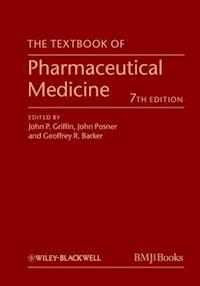
The Textbook of Pharmaceutical Medicine E-Book
224,99 €
Mehr erfahren.
- Herausgeber: John Wiley & Sons
- Kategorie: Fachliteratur
- Sprache: Englisch
The Textbook of Pharmaceutical Medicine is the standard reference for everyone working and learning in pharmaceutical medicine. It is a comprehensive resource covering the processes and practices by which medicines are developed, tested and approved, and the recognised text for the Diploma in Pharmaceutical Medicine from the Faculty of Pharmaceutical Medicine.
This fully revised Seventh Edition, which includes two new Editors, encompasses current developments within pharmaceutical medicine with new chapters on biological therapeutics, pharmacovigilance, vaccines, drugs for cancer, drug development in paediatrics and neonatalogy, the clinical trials directive, life cycle management of medicines, counterfeit medicines and medical marketing. Also included for easy reference, and referred to throughout the text, are the Declaration of Helsinki, Guidelines and Documentation for Implementation of Clinical Trials, relevant European Directives and the Syllabus for Pharmaceutical Medicine.
Written by an international team of leading academics, medical directors and lawyers, The Textbook of Pharmaceutical Medicine, Seventh Edition meets the needs of both those working in pharmaceutical medicine and preparing for the Diploma in Pharmaceutical Medicine.
The text breaks down into three core sections:
Part I: Research and Development
Part II: Regulation
Part III: Healthcare marketplace
View Table of Contents in detail
Sie lesen das E-Book in den Legimi-Apps auf:
Seitenzahl: 2729
Veröffentlichungsjahr: 2013
Ähnliche




















Table of Contents
Title page
Copyright page
Contributors
The editors
Acknowledgements
List of abbreviations
Preface
Part I: Research and development
1 Discovery of new medicines
Introduction
Medicines marketed in the years 2008–2011
Impact of high throughput screening in drug discovery
Impact of combinatorial chemistry on drug discovery
Fragment-based design
Examples in drug discovery
Oligonucleotide-based therapeutics
Recent drug discovery strategies to improve success
Drug repositioning
The new role of academia in pharmaceuticals
Conclusions
2 Pharmaceutical development
Introduction
Drug delivery
Product formulation types
Quality by Design
Drug substance properties at the preclinical testing stage
Principles of pharmaceutical development
Oral solid dosage form development
Sterile products
Conclusions
3 Preclinical safety testing
Introduction
Preclinical safety pharmacology
Single-dose studies
Repeat-dose studies
Carcinogenicity studies
Reproductive toxicology
Genotoxicity testing
Irritation and sensitisation testing
Specific considerations for biologicals
Animal numbers, costs and ethics
4 Exploratory development
Introduction
Planning exploratory development
Requirements for administration of an NME to humans
Preparation for the first administration to humans
Studies in healthy volunteers
Objectives of first-in-human studies
Design of the first-in-human study
Minimising risk
Subsequent studies in exploratory development
Outcomes of ED
5 Clinical pharmacokinetics
Introduction
Basic concepts
Bioavailability and bioequivalence
Drug interactions
The elderly
Renal impairment
Liver disease
Disposition, rates and routes of elimination of radiolabelled drug
Pharmacokinetic–pharmacodynamic modelling
Population analysis
The rest of the typical clinical pharmacokinetics package
The ideal drug from the point of view of pharmacokinetics
Role of pharmacokinetic properties in determining a dosage regimen
Conclusions
6 Biological therapeutics
Introduction – the history of biologics development
Differences between ‘chemical’ and ‘biological’ molecules
Immunogenicity
First-in-human dose selection for a biologic
Conclusions
7 Objectives and design of clinical trials
History of the controlled clinical trial
Objectives of clinical trials in drug development
Design of controlled clinical trials
Analysis of controlled clinical trials
Final word
8 Conduct of clinical trials: Good Clinical Practice
Introduction
Good Clinical Practice
Preparation of documentation for the clinical trial
The IMP and its documents
Running the clinical trial
Preparation of the clinical report
Quality management
Conclusions
9 Medical statistics
Introduction
Probability
Scales of measurement and clinical endpoints
Basic statistical principles
Issues in design
Meta-analysis and summaries
10 Development of medicines: full development
Introduction
Taking products into later development phase
Preparing the plan
The detailed clinical development plan
Executing the plan
Acknowledgements
11 Pharmacovigilance
Introduction
Legislation and the regulatory authorities
Safety governance
Case handling, expedited and periodic reporting
Signal detection and signal evaluation
Benefit–risk evaluation
Labelling and risk management planning
12 Vaccines
Vaccines: history, controversies and public health issues
Vaccine clinical trials
Vaccine safety monitoring
Vaccinology ethics
Importance of vaccine manufacturing and supply
The future of vaccinology
13 Drugs for cancer
Introduction
Biology of cancer
Rationally designed therapies
Pharmacogenetics, pharmacogenomics and patient selection for treatment
Resistance mechanisms
Cancer drug discovery and preclinical development
Clinical trials in oncology
Current issues in oncology clinical drug development
Conclusions and future perspectives
14 Ethics of human experimentation
Introduction
Principles of ethical biomedical research
History
Informed consent
Children in research
Adults unable to give consent
Who should seek consent?
Research Ethics Committees
Assessment of risk
Conclusions
15 Drug development in paediatrics and neonatology
History and milestones of paediatric drug development
Need for clinical drug studies in paediatrics
Developmental pharmacology – differences between adults, children and neonates and implications for research
Difficulties of performing clinical trials in children
Ethical considerations for paediatric clinical drug trials
Regulatory requirements
Conclusions
16 Due diligence and the role of the pharmaceutical physician
Introduction
Role of the pharmaceutical physician
Scope of due diligence
Process of due diligence
Writing and assembling the due diligence report
Due diligence in private equity and life science transactions
Conclusions
Part II: Regulation
17 A history of drug regulation in the UK
Introduction
The thalidomide disaster and its immediate aftermath
Voluntary controls in the UK (1963–1971)
Voluntary adverse reaction reporting system: Yellow Card scheme
Manufacturers’ licences and Good Manufacturing Practice
Wholesale dealers’ licences
General safety measures
Scrutiny of functioning of the Medicines Division and the establishment of the Medicines Control Agency
Medicines and Healthcare products Regulatory Agency
European dimensions
International dimensions
Conclusions
Update
18 The Clinical Trials Directive
Introduction
History of the Clinical Trials Directive
Scope and content of the clinical trials and GCP Directives
Protection of vulnerable subjects in clinical trials
Clinical trials guidelines
EU databases
Clinical trials and marketing authorisations
Inspections of clinical trials
Clinical Trials Facilitation Group
Revision of the clinical trials legislation
19 Human medicinal products in the European Union: Regulations, Directives and structures
Introduction
Overview of the European Union
European pharmaceutical legislation
European Medicines Agency
International harmonisation
20 Human medicinal products in the European Union: Procedures
Applications for marketing authorisations
Centralised applications
National applications
Application for change in classification of supply
Application for orphan medicine designation
Application for Paediatric Investigation Plan or waiver
Applications for scientific advice and protocol assistance
Application for registration of herbal medicinal products
Applications for clinical trials authorisation
Post-approval variations to marketing authorisations
European Union referrals to CHMP
Product literature, promotion and advertising
Pharmacovigilance
Wholesale distribution, pricing and reimbursement
21 European regulation of medical devices
Introduction
Law on specific devices
Resolution of uncertainties
Competent authorities and notified bodies
What is a medical device?
The drug–device borderline
Drug–device combinations
Classification of devices
Conformity assessment procedures and CE marking
Registration
Harmonised standards
Custom-made devices
Systems and procedure packs
Reprocessing
Essential requirements
Information supplied by the manufacturer
Who is a manufacturer?
Manufacturers outside the EEA
‘Placing on the market’ and ‘putting into service’
Clinical investigation
In vitro diagnostics
Advanced therapy medicinal products
Adverse event reporting: vigilance
General product safety Directive
Recall
Enforcement and sanctions
22 Paediatric regulation
Introduction
Case study
Paediatric population in the European Union
New paediatric medicines Regulation
Aims and objectives of the Regulation
Other tasks of the European Medicines Agency
Ethical aspects of studies in children
Summary and outlook
23 Technical requirements for registration of pharmaceuticals for human use: The ICH process
Introduction
ICH organisation (1990–2003)
The ICH process
ICH 5 Meeting Report
The CTD post-ICH 5
ICH 6: November 2003, Osaka
ICH organisation (2003–2007)
ICH organisation: (2007–2011) and press releases
Revised ICH Terms of Reference [16]
Conclusions to date
24 The regulation of drug products by the US Food and Drug Administration
Introduction
Regulatory framework
FDA history
Historical overview of drug regulation statutes
Other pharmaceutical products
Two classes of drug products
Regulation of non-prescription drugs
Regulation of prescription drugs
Biological drugs
Enforcement
Conclusions
25 The US FDA in the drug development, evaluation and approval process
Introduction
Investigational new drug application
New drug application (NDA or BLA)
Conclusions
26 Future prospects of the pharmaceutical industry and its regulation in the USA
Introduction
Wider aspects of the evolution of the FDA and the pharmaceutical industry from 1962 to 2012
Summary of changing environment and impact on industry
Improvements needed for the future
Conclusions
27 Regulatory and clinical trial systems in Japan
Introduction
Governing law
The Japanese regulatory system
Clinical trial systems
Conclusions
28 The regulation of therapeutic products in Australia
Introduction
History of prescription medicine regulation
TGA registration
Listing on the pharmaceutical benefits scheme – the ‘fourth hurdle’
Access to medicines not registered or listed on the ARTG
Presentation
Patents
Non-prescription medicines and complementary medicines
Medical devices
Part III: Health care marketplace
29 An Introduction to life cycle management of medicines
Introduction
The life cycle management team and the importance of value
Life cycle strategies
Second generation or reformulation of products
Fixed-dose combinations
Indication expansion
Generic investment
Prescription to over-the-counter products
Divestiture
Conclusions
30 Availability of medicines online and counterfeit medicines
Introduction
Definitions of counterfeit, illegally diverted, falsified and substandard drugs
History
Scale of the problem
Three study cases
Actions undertaken to counteract counterfeit drugs
31 The supply of unlicensed medicines for individual patient use
Introduction
EU law
UK law
Particular issues relating to supply of unlicensed medicines
Product liability issues
Professional guidance
Review of the regulatory framework by the MHRA
Conclusions
32 Legal and ethical issues relating to medicinal products
Introduction
Chronology of production, development and marketing
Contractual arrangements in clinical research
Post-authorisation – controls and protection of investment
33 Medical marketing
Introduction
Pharmaceutical market
Strategic planning
Customers
Market research and market intelligence
Promotion
Medical information
Brands
Patients
Franchises
Patent expiry and generics
Demonstrating the benefits of medicine
National Institute for Health and Clinical Excellence
Conclusions
34 Information and promotion
Introduction
Legislation, controls and codes and their enforcement
The Medicines Regulations
Other relevant legislation
Vetting
Monitoring of published advertising material
Handling of complaints
Enforcement
Marketing, advertising and promotion of prescription medicines
Information
Procedural aspects relating to information and promotion
Editorial note
35 Economics of health care
Introduction
Economics of the National Health Service
Measuring the value
Compulsory economic evaluation: the ultimate measure
Conclusions
36 Controls on NHS medicines prescribing and expenditure in the UK (a historical perspective) with some international comparisons
Introduction
NHS and Community Care Act 1990
Problem of the rising NHS medicines bill
Prescription charges for NHS medicines
Pharmaceutical Price Regulation Scheme
Office of Fair Trading report on PPRS and its consequences
2009 Pharmaceutical Price Regulation Scheme
Value-based pricing and the future of PPRS
The Drug Tariff and reference pricing
Contract purchase of medicines from cheap sources
The MacGregor Committee
Generic substitution
Enforced price reductions
Limited or selected lists
Indicative prescribing scheme and GP fundholding
Development of primary care groups
Changing the legal status of medicines from prescription only to over-the-counter availability
Encouragement to prescribe generically
National Institute for Health and Clinical Excellence
European Transparency Directive
Supply of controlled drugs
British National Formulary
International comparisons
Conclusions and future steps within the UK NHS
37 Pharmaceutical medicine in the emerging markets
Introduction
What are ‘emerging markets’?
The pharmaceutical market
Changing patterns of pharmaceutical medicine
Late clinical development
Regulations
Commercialisation of medicines
Development of medicines for the diseases of the developing world
The future: re-engineering R&D through emerging markets
Acknowledgement
38 Biosimilars
Introduction
Biosimilars in Europe
Biosimilars in the USA
Biosimilars in other regions
The future
Appendix 1 Declaration of Helsinki
World Medical Association Declaration of Helsinki
Appendix 2 Agreements and Guidelines for Implementation of Clinical Trials
2.1 Clinical trial agreement for pharmaceutical industry sponsored research in NHS Trusts
1 Definitions
2 Site Principal Investigator
3 Clinical Trial Governance
4 Obligations of the Parties
5 Liabilities and indemnity
6 Confidentiality
7 Publicity
8 Publication
9 Intellectual Property
10 Financial arrangements
11 Term
12 Early termination
13 Relationship between the Parties
14 Agreement and modification
15 Force majeure
16 Notices
17 Rights of Third Parties
18 Waiver
19 Dispute resolution
20 Governing law
2.2 ABPI form of Indemnity for Clinical Studies
2.3 ABPI Guideline on Advertising for Subjects for Clinical Trials
1 Essential Information for an Advertisement
2 Additional Permitted Content
3 Statements That Should Not Be Used
2.4 Guidelines for company-sponsored Safety Assessment of Marketed Medicines (SAMM)
Introduction
Scope of guidelines
1 Definition of Safety Assessment of Marketed Medicines
2 Scope and objectives of SAMM
3 Design of studies
4 Conduct of studies
5 Liaison with regulatory authorities
6 Promotion of medicines
7 Doctor participation
8 Ethical issues
9 Procedure for complaints
10 Review of Guidelines
Appendix 3 Directive 2001/20/EC of the European Parliament and of the Council of 4 April 2001
The European Parliament and the Council of the European Union
Have adopted this directive
Appendix 4 PharmaTrain Syllabus 2010
1 Discovery of Medicines
2 Development of Medicines: Planning
3 Non-Clinical Testing
4 Pharmaceutical Development
5 Exploratory Development (Molecule to Proof-of-Concept)
6 Confirmatory Development: Strategies
7 Clinical Trials
8 Ethics and Legal Issues
9 Data Management and Statistics
10 Regulatory Affairs
11 Drug Safety, Pharmacovigilance and Pharmaco-epidemiology
12 Information, Promotion and Education
13 Economics of Health Care
14 Therapeutics
Index
This edition first published 2013, © 2013 by John Wiley & Sons, Ltd; 1993, 1994, 1998 © The Queen’s University Belfast; 2002, 2006, 2009 © Blackwell Publishing Ltd
BMJ Books is an imprint of BMJ Publishing Group Limited, used under licence by Blackwell Publishing which was acquired by John Wiley & Sons in February 2007. Blackwell’s publishing programme has been merged with Wiley’s global Scientific, Technical and Medical business to form Wiley-Blackwell.
Registered office: John Wiley & Sons, Ltd, The Atrium, Southern Gate, Chichester, West Sussex, PO19 8SQ, UK
Editorial offices: 9600 Garsington Road, Oxford, OX4 2DQ, UK
The Atrium, Southern Gate, Chichester, West Sussex, PO19 8SQ, UK
111 River Street, Hoboken, NJ 07030-5774, USA
For details of our global editorial offices, for customer services and for information about how to apply for permission to reuse the copyright material in this book please see our website at www.wiley.com/wiley-blackwell
The right of the authors to be identified as the authors of this work has been asserted in accordance with the UK Copyright, Designs and Patents Act 1988.
All rights reserved. No part of this publication may be reproduced, stored in a retrieval system, or transmitted, in any form or by any means, electronic, mechanical, photocopying, recording or otherwise, except as permitted by the UK Copyright, Designs and Patents Act 1988, without the prior permission of the publisher.
Designations used by companies to distinguish their products are often claimed as trademarks. All brand names and product names used in this book are trade names, service marks, trademarks or registered trademarks of their respective owners. The publisher is not associated with any product or vendor mentioned in this book. This publication is designed to provide accurate and authoritative information in regard to the subject matter covered. It is sold on the understanding that the publisher is not engaged in rendering professional services. If professional advice or other expert assistance is required, the services of a competent professional should be sought.
The contents of this work are intended to further general scientific research, understanding, and discussion only and are not intended and should not be relied upon as recommending or promoting a specific method, diagnosis, or treatment by physicians for any particular patient. The publisher and the author make no representations or warranties with respect to the accuracy or completeness of the contents of this work and specifically disclaim all warranties, including without limitation any implied warranties of fitness for a particular purpose. In view of ongoing research, equipment modifications, changes in governmental regulations, and the constant flow of information relating to the use of medicines, equipment, and devices, the reader is urged to review and evaluate the information provided in the package insert or instructions for each medicine, equipment, or device for, among other things, any changes in the instructions or indication of usage and for added warnings and precautions. Readers should consult with a specialist where appropriate. The fact that an organization or Website is referred to in this work as a citation and/or a potential source of further information does not mean that the author or the publisher endorses the information the organization or Website may provide or recommendations it may make. Further, readers should be aware that Internet Websites listed in this work may have changed or disappeared between when this work was written and when it is read. No warranty may be created or extended by any promotional statements for this work. Neither the publisher nor the author shall be liable for any damages arising herefrom.
Library of Congress Cataloging-in-Publication Data
The textbook of pharmaceutical medicine / edited by John P. Griffin, John Posner, Geoffrey R. Barker. – 7th ed.
p. ; cm.
Includes bibliographical references and index.
ISBN 978-0-470-65987-8 (cloth : alk. paper)
I. Griffin, J. P. (John Parry) II. Posner, John. III. Barker, Geoffrey R.
[DNLM: 1. Drug Approval. 2. Clinical Trials as Topic. 3. Pharmacology. QV 771]
615.1–dc23
2012037180
A catalogue record for this book is available from the British Library.
Wiley also publishes its books in a variety of electronic formats. Some content that appears in print may not be available in electronic books.
Cover design by Sarah Dickinson
Contributors
Denis V. Azzopardi, F MedSciProfessor of Neonatal MedicineInstitute of Clinical SciencesImperial College LondonLondon, UK
Geoffrey R. Barker, TD, BSc, MSc, MBBS, FDSRCS, FRCS, FFPMIndependent Consultant in Pharmaceutical MedicineLimited Partner, Pappas Ventures, NC, USA;Board Member, Trustee and Registrar Faculty of Pharmaceutical Medicine of The Royal Colleges of Physicians UKFormer Adj. Professor Immunology, Duke University Medical Center, NC, USAFormerly Chief Medical and Scientific Officer, Quintiles Transnational Corp, NC, USA
Jane Barrett, MBBS, FFPM, LLMThe Barrett ConsultancyGawsworth, Cheshire, UK
John Beadle, MBBCh, MBAChief Executive Officer,PsiOxus Therapeutics LimitedAbingdon, Oxfordshire, UK
Nick Beckett, BSc (Hons)Partner, CMS Cameron McKenna LLPLondon, UK
Carole A. Bradley, MScBoehringer Ingelheim Canada LtdBurlington, ON, Canada
Paul Cummings, BSc(Hons), CBiol, FSB, EurProBiol, FRIDirector of Pharmaceutical DevelopmentPharmaceutical Development Services Ltd Nottingham, UK
Kate L.R. Darwin, BA, DPhil, MRQA, MICR, CSciHammersmith Medicines Research LtdLondon, UK
Johann De Bono, MBChB, MSc, PhD, FRCP, FMedSciProfessor of Experimental Cancer MedicineDrug Development UnitInstitute of Cancer Research;Honorary Consultant Medical OncologistRoyal Marsden NHS Foundation TrustSutton, UK
Elizabeth de Somer, BN, MMedScDirector, Health Policy & ResearchMedicines AustraliaDeakin, ACT, Australia
Charles De Wet, MBChB, MPharMed, FFPM, FIoDMedical DirectorUK and IrelandBoehringer Ingelheim LtdBracknell, UK
Ruth Diazaraque, MD, PhD, MBA, MSc Research Method, MSc Pharm MedSr Director Medical AffairsGilead Sciences LtdUxbridge, UK
Ian Dodds-Smith, MA (Cantab)Partner, Arnold & Porter (UK) LLPLondon, UK
David B. Galloway, MB, ChB, DRCOG, FRCP, FRCPE, FFPMMedical & Scientific DirectorCytosystems LtdAberdeen, Scotland
Michael Gamlen, BSc, PhD, MRPharmS, FRSCManaging DirectorPharmaceutical Development Services LtdNottingham, UK
David Gillen, BSc, MRCGP, FFPMSenior DirectorHead of Medical AffairsCelgene UK and IrelandLondon, UK
Andrew P. Grieve, BSc, MSc, PhD, DScSenior Vice President Clinical Trials MethodologyAptiv Solutions GmbHCologne, Germany
Jane R. Griffin, BA(Hons), MScDirector, Market Access, Pricing and Outcomes ResearchBoehringer Ingelheim LtdBracknell, Berkshire, UK
John P. Griffin, BSc, PhD, MBBS, FRCP, FRCPath, FFPMDirector, Asklepieion Consultancy Ltd;Visiting Professor, University of Surrey Postgraduate Medical School;Former Director, ABPI;Formerly Professional Head of the Medicines Division, DOH (now MHRA), London, UK
Sarah Hanson, MAPartner, CMS Cameron McKenna LLPLondon, UK
Dean W.G. Harron, PhD, FRPharmS, MPSNISchool of PharmacyQueens UniversityBelfast, Northern Ireland
Judith Hirshorn, BSc (Hons), PhD, FAICDConsultantRose BayNSW, Australia
Stephen F. Hobbiger, BSc, FRCP(E), FFPMVice President and European Qualified Person for PharmacovigilanceGlaxoSmithKline R&DStockley ParkUxbridge, UK
Natsuko HosodaMedical & Regulatory AffairsQuintiles Transnational Japan KKTokyo, Japan
Raymond A. Huml, MS, DVM, RACQuintilesDurham, NC, USA
Anthony J. Humphreys, BSc (Pharm), MSc (Pharmaceutics), MPSIHead of Regulatory, Procedural and Committee SupportPatient Health ProtectionEuropean Medicines AgencyLondon, UK
Elisabeth Husar, DVM, MAS (Toxicology)Head Toxicology Project LeadsF. Hoffmann-La Roche LtdBasel, Switzerland
Peter Barton Hutt, LLB, LLMSenior Counsel, Covington & Burling;Lecturer on Food and Drug Law, Harvard Law School;Former Chief Counsel, US Food and Drug AdministrationWashington, DC, USA
Judith K. Jones, MD, PhD, FISPEPresident, The Degge Group, Ltd.President, The Pharmaceutical Education & Research Institute, Inc.& Adjunct Professor of Pharmacology, Georgetown University School of Medicineand University of Michigan School of Public HealthArlington, VA, USA
Peter Lloyd, BSc, PhDExecutive Director; Head PKPD Biologics Safety and Disposition, NovartisNovartis Institutes for Biomedical ResearchHorsham, UK
Shuna Mason, BA (Hons)Solicitor, Head of RegulatoryCMS Cameron McKenna LLPLondon, UK
Nazakat M. Merchant, MBBS, CFM, DCH, MRCPCHAcademic Clinical Lecturer, NeonatologyCentre for the Developing BrainPerinatal Imaging and HealthKing’s CollegeSt Thomas’ HospitalLondon, UK
Valéria Molnár, MScPharmDirectorClinical Pharmacology Consulting LtdBeaumont, Australia
Deborah Monk, BPharm, Dep Hosp BAInnovation and Industry PolicyMedicines AustraliaDeakin, ACT, Australia
Lutz Müller, PhDLead Late Stage Projects ToxicologyF. Hoffmann-La Roche LtdBasel, Switzerland
Richard B. Nieman, MB BS, FRCPVice President and Head of Medical Affairs, AsiaBayer Healthcare PharmaceuticalsBeijing, China
Bina Patel, BSc (Hons)Director, International Safety Affiliates (EEMEA)AmgenUxbridge, UK
John Posner, BSc, PhD, MBBS, FRCP, FFPMIndependent Consultant in Pharmaceutical MedicineJohn Posner ConsultingBeckenham, Kent, UK;Visiting Professor, School of Biomedical Sciences, King’s College London, UK
Heike Rabe, MD, PhD, FRCPCHSenior Clinical LecturerBrighton and Sussex Medical School;Honarary Consultant NeonatologistBrighton and Sussex University Hospitals NHS TrustBrighton, UK
Yves J. Ribeill, PhD, CChem, MRSCPresident and CEOSCYNEXIS, Inc.Research Triangle Park, NC, USA
Paul Rolan, MB, BS, MD, FRACP, FFPM, DCPSAProfessor of Clinical and Experimental PharmacologyMedical SchoolUniversity of AdelaideAdelaide, Australia
Agnès Saint Raymond, MDHead of Human Medicines Special AreasMember of the UN Commission on Life-Saving Commodities for Women and ChildrenHuman Medicines Development and EvaluationEuropean Medicines AgencyLondon, UK
Mamiko SatakeCorporate DevelopmentQuintiles Transnational Japan KKTokyo, Japan
Jennifer Sims, BSc, PhDIntegrated Biologix GmbHBasel, Switzerland
James Spicer, MA, FRCP, PhDReader in Experimental Oncology and Consultant in Medical OncologyCancer Early Phase Trials UnitKing’s Health Partners at Guy’s HospitalLondon, UK
Richard N. Spivey, PharmD, PhDSenior Vice PresidentGlobal Regulatory AffairsAllerganIrvine, CA, USA
Nadarajah Sreeharan, MD, PhD, FRCP, FACP, FFPMSenior Partner, Transcrip-Partners LLPVisiting Professor, King’s College London, London, UKSenior Visiting Professor, UITM Medical School, Malaysia
Peter D. Stonier, MBChB, BSc, PhD, FRCP, FFPMVisiting Professor of Pharmaceutical MedicineSchool of Biomedical SciencesKing’s College LondonLondon, UK
Elizabeth Swain, MRPharm.SDirector Pharmacovigilance Advocacy and PolicyGlaxoSmithKline R&DStevenage, UK
Fergus Sweeney, PhDHead of Compliance and InspectionPatient Health ProtectionEuropean Medicines AgencyLondon, UK
Jennie A. Sykes, MBChB, MRCP, FFPMVice President, Global Medical Centre of ExcellenceHead, GSK Academy of Pharmaceutical MedicineGlaxoSmithKlineLondon, UK
Bensita M.V. Thottakam, B Pharm, M Pharm, MscClinical Research ScientistDepartment of Research and DevelopmentCytosystems LtdAberdeen, Scotland
Ewan Townsend, MA (Cantab)Arnold & Porter (UK) LLPLondon, UK
William W. Vodra, JDSenior Partner (Retired), Arnold & Porter LLPWashington, DC, USA
William Wardell, MA (Oxon), MD, PhDPresident, Wardell Associates InternationalPonte Vedra, FL, USA
Steve Warrington, MA, MD, FRCP, FFPMConsultant, Hammersmith Medicines Research LtdLondon, UK
The Editors
Professor John P. Griffin, BSc, PhD, MBBS, FRCP, FRCPath, FFPM graduated in medicine at the Royal London Hospital, where he was also in clinical practice. He was a lecturer in Physiology at King’s College, London and held the post of Head of Clinical Research at Riker Laboratories from 1967 to 1971. Professor Griffin joined the then Medicines Division of the Department of Health, now Medicines Healthcare Agency (MHRA) London, as a Senior Medical Officer, in 1971, and was subsequently appointed Medical Assessor to the Committee on Safety of Medicines. From 1977 to 1984, Professor Griffin was Senior Principal Medical Officer and Professional Head of Medicines Division in addition to being Medical Assessor to the Medicines Commission. As the Professional Head of Medicines Division he also attended the Scientific Sub-Committee of the Veterinary Products Committee of the Ministry of Agriculture, Food and Fisheries. During this time he was a member of the EC committee on Proprietary Medicinal Products and Chairman of the CPMP’s Working Party on Safety Requirements.
From 1976 to 1984 John P. Griffin served on the Joint Formulary Committee of the British National Formulary, during which period the first eight issues of the current format were produced.
John P. Griffin was the director of the Association of the British Pharmaceutical Industry from 1984 to 1994. During this time he was a member of the Executive Board of the European Federation of the Pharmaceutical Industries’ Associations and IFPMA. He chaired the ICH Safety Working Group from 1988 to 1994 and presented papers at ICH1 and ICH2 in the plenary sessions.
In 1992 he was invited to deliver the Thomas Young Lecture and was awarded the Thomas Young Gold Medal at St George’s Hospital Medical School, University of London.
Since June 1994, John P. Griffin has run his own independent consultancy company, which has provided independent and impartial advice to governments on the development of a pharmaceutical policy, and to national trade associations and individual companies. John P. Griffin was Visiting Professor in Pharmaceutical Medicine at the University of Surrey for 6 years and was also Honorary Consultant Clinical Pharmacologist at the Lister Hospital in Hertfordshire, UK.
Professor Griffin was on the Board of the Faculty of Pharmaceutical Medicine for 12 years, was Chairman of the Board of Examiners of the Faculty of Pharmaceutical Medicine of the Royal College of Physicians for 7 years, and was Academic Registrar and served on the Task Force on Specialist Medical Training in Pharmaceutical Medicine. He has served on a number of Royal College of Physicians, London Working Parties including that on the ‘Development of Clinical Pharmacology and Therapeutics in a Changing World’.
Professor Griffin is the author and co-author of over 250 publications on adverse drug reactions and iatrogenic disease, aspects of neurophysiology and clinical pharmacology and toxicology and drug regulation. Notable among his publications are the following four standard texts:
Iatrogenic Diseases
. Oxford University Press, 1st edn 1972, 3rd edn 1986; jointly with Professor P.F. D’Arcy.
A Manual of Adverse Drug Interactions
. John Wright, Bristol, 1st edn 1975; Elsevier Press, Amsterdam, 5th edn. 1997; jointly with Professor P.F. D’Arcy.
The Textbook of Pharmaceutical Medicine
. The Queen’s University of Belfast Press, 1st edn 1993, 2nd edn 1994, 3rd edn 1998, 4th edn 2002 published by the BMJ Publishing Group in 2002, 5th edn 2006 and 6th edn 2009, Blackwell.
Medicines, Research, Regulation and Risk
. The Queen’s University of Belfast Press, 1st edn 1989, 2nd edn 1992.
From 1991 to 2003 he served as Editor in Chief of Adverse Drug Reactions and Toxicological Reviews, a peer-reviewed journal produced quarterly by Oxford University Press.
In 2005 he was awarded the Faculty of Pharmaceutical Medicines Commemorative Medal for outstanding services to the Faculty.
Professor John Posner, BSc PhD MBBS FRCP FFPM gained a BSc and PhD in pharmacology at King’s College London and qualified in medicine at King’s College Hospital in 1974. After holding various medical posts in London, he completed a residency in Internal Medicine at the Soroka Medical Centre in Beer Sheva, Israel. He subsequently worked as an Attending Physician at Soroka and Lecturer at Ben Gurion University of the Negev.
With the desire to spend more time in clinical drug research, John returned to the UK in 1982, joining the Wellcome Research Laboratories. He developed and validated models of analgesia in healthy volunteers and applied these to the evaluation of novel, peripherally acting opioids. He also used a variety of pharmacodynamic tests in the evaluation of drugs for epilepsy, stroke and migraine. Other areas of investigation included drugs for allergy, asthma depression and anti-infectives. Studies in patients included investigation of a novel agent for sickle cell disease and one of the first biologics for lymphoma.
In 1986, John was appointed Head of Clinical Pharmacology at Wellcome, becoming responsible for the evaluation of all new molecular entities emanating from Wellcome’s discovery research in the UK. He negotiated the design and build of a new clinical research facility at King’s College Hospital Medical School, where his department subsequently conducted their phase I studies. He continued to practise medicine and teach students on a part-time basis as Honorary Senior Lecturer in Medicine at King’s. With the acquisition of Wellcome by Glaxo in 1995, John was appointed an International Director of Clinical Pharmacology at GlaxoWellcome.
After a period with a consultancy and contract research organisation, John started working as an independent consultant in 1999. He continues to work in a wide range of therapeutic areas, assisting companies with their strategic planning, design, conduct and reporting of exploratory studies of novel compounds from ‘first-in-human’ to ‘proof of concept’. His work also includes preparation of clinical overviews, summaries and briefing documents for regulatory submissions worldwide, serving on data monitoring and governance committees and advising on licensing opportunities.
John has extensive postgraduate teaching commitments, organising and participating in courses for physicians and scientists in pharmaceutical companies and academia. He has been a long-standing, active member of the Board of Examiners of the Faculty of Pharmaceutical Medicine of the Royal College of Physicians and served as its Chair for a period of 3 years. John established a Diploma and Certificate in Human Pharmacology for the Faculty; the Diploma is now a recognised qualification for Principal Investigators. He continues to serve as Director of these programmes and has responsibility for a number of MSc modules at King’s College, London, where he is a Visiting Professor in the School of Biomedical Sciences. John has published extensively and is an Executive Editor of the British Journal of Clinical Pharmacology.
Professor Geoffrey R. Barker, TD, BSc, MSc, FDSRCS, FRCS, FFPM graduated from Guy’s Hospital Dental and Medical Schools with a 1st class honours degree in physiology, a distinction and honours in dental surgery and MBBS medicine in 1973. He held assistant lecturer posts in Dental anatomy, Physiology and Restorative Dentistry at Guy’s Hospital Medical and Dental Schools and subsequently completed his training to become a Principal in Medical Practice. Over the next several years Professor Barker continued to pursue his interests in clinical research, medical and surgical practice and gained a Masters in Medicine from Manchester University and Fellowships in London (FDSRCS) and Edinburgh (FRCS).
In 1987 he was awarded the Chair in Oral Surgery Medicine and Pathology for the University of Wales. In this role Professor Barker specialised in major reconstructive surgery, cleft lip and palate surgery, and the clinical development of osseo-integration for the replacement of lost bone with titanium implants. By application of oral pathology he also advanced the understanding of oral manifestations of underlying systemic diseases and their management.
In 1990, his continued interest in the translation of new treatment concepts from the laboratory bench into clinical practice resulted in the opportunity to join the pharmaceutical industry while continuing to hold a position as a consultant surgeon. As Medical Director for Astra Pharmaceuticals UK, Professor Barker played a key part in the development of acid proton pump inhibitors to treat and prevent gastroesophageal reflux disease and peptic ulceration and was able to advance the use of once-daily inhaled steroids for respiratory disease and new management regimens for cardiovascular disease.
In 1997 Professor Barker joined the Medicines Control Agency working with product licensing. In 1999 he was appointed Global Head of Medical Affairs at Actelion Pharmaceuticals and, as a member of the senior management team, successfully steered the company through its IPO and the launch and marketing of its new treatment for pulmonary hypertension.
In 2001 Professor Barker moved to North Carolina to serve as Chief Medical and Scientific Officer for Quintiles Translational Corp, overseeing worldwide clinical trials and the continued development of new medicines. In 2004 he was appointed Adjunct Professor in Immunology at Duke University Medical Center, North Carolina. On retiring from Quintiles, Professor Barker joined Pappas Ventures, a leading health care venture capital fund investing in the development of new medicines and he continues to consult for several venture capital and pharmaceutical companies
Professor Barker became a Member of the Faculty of Pharmaceutical Medicine in 1995 and Fellow in 1998 and was elected Registrar and a Member and Trustee of the Board of the Faculty in 2009.
Acknowledgements
This is the 7th edition of The Textbook of Pharmaceutical Medicine in the 20 years since its first publication. The size of the book has progressively increased and, with it, the breadth of expertise of its contributors. For example, there were 22 contributors to the 1st edition; 44 to the 6th edition and 54 to the current edition. The increase in expertise that this represents has changed the Textbook from being a good book targeted at pharmaceutical physicians to a one-stop shop and the outstanding information source in this field of medicine.
The success of a book depends on the quality of contributors and the editors would like to thank all of them for their delivery of high quality manuscripts. In particular we wish to acknowledge the diligence of those contributors who have contributed to all seven editions.
We would also like to thank those who have generously given permission to reproduce figures and documents; this is acknowledged in the appropriate places in the Textbook.
It is fitting to pay tribute to Professor John O’Grady, co-editor of the first five editions of the Textbook, who died in 2011. His expertise will be missed greatly.
It is fitting to thank our publishers, Wiley-Blackwell, for their exceptional continuing support over many years, particularly Adam Gilbert, Elisabeth Dodds and Rebecca Huxley, whose patience, courtesy and expertise have been outstanding. We are grateful to Aileen Castell for the invaluable help she provided during the production stage of this edition. We would like to thank Jan East for her exemplary copyediting skills on this and the 6th edition. We also wish to thank Mary Banks, who retired in September 2011 but was a pillar of strength in preparing previous editions and in the early stages of the current edition.
Finally, thanks are due to the World Medical Association (WMA) and the European Medicines Agency (EMA) for permission to publish key documents as Appendices. Others have allowed us to quote or use their material and this generosity is acknowledged in the text; however, a general thanks is appropriate at this point.
List of Abbreviations
ABPI
Association of the British Pharmaceutical Industry
ACE
angiotensin converting enzyme
AChE
acetylcholinesterase
ACPM
Advisory Committee on Prescription Medicines
AD
Alzheimer’s disease
ADA
antidrug antibody
ADEC
Australian Drug Evaluation Committee
ADME
absorption, distribution, metabolism and elimination
ADMET
absorption, distribution, metabolism, excretion and toxicological properties
ADR
adverse drug reaction
AEFI
adverse event following immunisation
AF
atrial fibrillation
AFR
annual financial return
AHEC
Australian Health Ethics Committee
AHMAC
Australian Health Ministers’ Advisory Council
AIMD
active implantable medical device
AMWG
Access to Medicines Working Group
ANCOVA
analysis of covariance
ANDA
abbreviated New Drug Application
ANVISA
Brazil’s National Health Surveillance Agency
Lesen Sie weiter in der vollständigen Ausgabe!
Lesen Sie weiter in der vollständigen Ausgabe!
Lesen Sie weiter in der vollständigen Ausgabe!
Lesen Sie weiter in der vollständigen Ausgabe!
Lesen Sie weiter in der vollständigen Ausgabe!
Lesen Sie weiter in der vollständigen Ausgabe!
Lesen Sie weiter in der vollständigen Ausgabe!
Lesen Sie weiter in der vollständigen Ausgabe!
Lesen Sie weiter in der vollständigen Ausgabe!
Lesen Sie weiter in der vollständigen Ausgabe!
Lesen Sie weiter in der vollständigen Ausgabe!
Lesen Sie weiter in der vollständigen Ausgabe!
Lesen Sie weiter in der vollständigen Ausgabe!
Lesen Sie weiter in der vollständigen Ausgabe!
Lesen Sie weiter in der vollständigen Ausgabe!
Lesen Sie weiter in der vollständigen Ausgabe!
Lesen Sie weiter in der vollständigen Ausgabe!
Lesen Sie weiter in der vollständigen Ausgabe!
Lesen Sie weiter in der vollständigen Ausgabe!
Lesen Sie weiter in der vollständigen Ausgabe!
Lesen Sie weiter in der vollständigen Ausgabe!
Lesen Sie weiter in der vollständigen Ausgabe!
Lesen Sie weiter in der vollständigen Ausgabe!
Lesen Sie weiter in der vollständigen Ausgabe!
Lesen Sie weiter in der vollständigen Ausgabe!
Lesen Sie weiter in der vollständigen Ausgabe!
Lesen Sie weiter in der vollständigen Ausgabe!
Lesen Sie weiter in der vollständigen Ausgabe!
Lesen Sie weiter in der vollständigen Ausgabe!
Lesen Sie weiter in der vollständigen Ausgabe!
Lesen Sie weiter in der vollständigen Ausgabe!
Lesen Sie weiter in der vollständigen Ausgabe!
Lesen Sie weiter in der vollständigen Ausgabe!
Lesen Sie weiter in der vollständigen Ausgabe!
Lesen Sie weiter in der vollständigen Ausgabe!
Lesen Sie weiter in der vollständigen Ausgabe!
Lesen Sie weiter in der vollständigen Ausgabe!
Lesen Sie weiter in der vollständigen Ausgabe!
Lesen Sie weiter in der vollständigen Ausgabe!
Lesen Sie weiter in der vollständigen Ausgabe!
Lesen Sie weiter in der vollständigen Ausgabe!
Lesen Sie weiter in der vollständigen Ausgabe!
Lesen Sie weiter in der vollständigen Ausgabe!
Lesen Sie weiter in der vollständigen Ausgabe!
Lesen Sie weiter in der vollständigen Ausgabe!
Lesen Sie weiter in der vollständigen Ausgabe!
Lesen Sie weiter in der vollständigen Ausgabe!




