


25,99 €
Mehr erfahren.
- Herausgeber: John Wiley & Sons
- Kategorie: Fachliteratur
- Sprache: Englisch
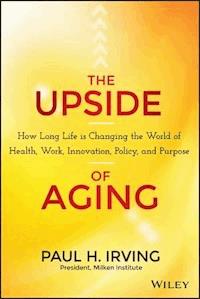
The Upside of Aging: How Long Life Is Changing the World of Health, Work, Innovation, Policy and Purpose explores a titanic shift that will alter every aspect of human existence, from the jobs we hold to the products we buy to the medical care we receive - an aging revolution underway across America and the world. Moving beyond the stereotypes of dependency and decline that have defined older age, The Upside of Aging reveals the vast opportunity and potential of this aging phenomenon, despite significant policy and societal challenges that must be addressed. The book's chapter authors, all prominent thought-leaders, point to a reinvention and reimagination of our older years that have critical implications for people of all ages. With a positive call to action, the book illuminates the upside for health and wellness, work and volunteerism, economic growth, innovation and education. The authors, like the baby boom generation itself, posit new ways of thinking about aging, as longevity and declining birthrates put the world on track for a mature population of unprecedented size and significance. Among topics they examine are: * The emotional intelligence and qualities of the aging brain that science is uncovering, "senior moments" notwithstanding. * The new worlds of genomics, medicine and technology that are revolutionizing health care and wellness. * The aging population's massive impact on global markets, with enormous profit potential from an explosion in products and services geared toward mature consumers. * New education paradigms to meet the needs and aspirations of older people, and to capitalize on their talents. * The benefits that aging workers and entrepreneurs bring to companies, and the crucial role of older people in philanthropy and society. * Tools and policies to facilitate financial security for longer and more purposeful lives. * Infrastructure and housing changes to create livable cities for all ages, enabling "aging in place" and continuing civic contribution from millions of older adults. * The opportunities and potential for intergenerational engagement and collaboration. The Upside of Aging defines a future that differs profoundly from the retirement dreams of our parents and grandparents, one that holds promise and power and bears the stamp of a generation that has changed every stage of life through which it has moved.
Sie lesen das E-Book in den Legimi-Apps auf:
Seitenzahl: 445
Veröffentlichungsjahr: 2014
Ähnliche



















ADDITIONAL PRAISE FOR THE UPSIDE OF AGING
“Paul Irving has gathered some of the smartest, most thoughtful minds for a wide ranging discussion of the challenging, the good, and the hopeful parts of the aging phenomenon.”
Donna Shalala, president, University of Miami; former U. S. Secretary of Health and Human Services
“This extraordinary book is profoundly optimistic, enlightening, and empowering. Our aging population presents unprecedented opportunities for enhancing health, transformation, and success across virtually all disciplines. If you read only one book this year on aging, this is it.”
Dean Ornish, M.D., founder and president, Preventive Medicine Research Institute; clinical professor of Medicine, UC, San Francisco; author, The Spectrum
“It's time that all of us, young and old, talk about aging in the 21st century and how we can tap into the wisdom and experience we gain to create stronger communities. This compelling book redefines aging: Getting older isn't about declining abilities; it's about increasing opportunities. It's recognition that aging doesn't limit the possibilities in front of us; it grows them.”
Kathy Calvin, president and CEO, United Nations Foundation
“Paul Irving brings together extraordinary thinkers who explain why we must transform our approach to aging from one that assumes dependency and disability to one of engagement, productivity and potential. They make a compelling case that we cannot afford to do otherwise.”
Dr. John Beard, director, Department of Ageing and Life Course, World Health Organization
“This is the moment for creating the opportunities of our now-longer lives. This book offers the optimistic and innovative lens and path forward we need, for society, for leaders and for our communities. Brought to us by energized, expert and thoughtful voices, it is a critical conversation changer for our future.”
Linda P. Fried, MD, MPH, dean, Mailman School of Public Health, Columbia University
The Upside of Aging
How Long Life Is Changing the World of Health, Work, Innovation, Policy, and Purpose
Edited by
Paul H. Irving
with Rita Beamish
Cover Design: Wiley Cover Illustration: © iStockphoto.com / Kotkoa
Copyright © 2014 by the Milken Institute. All rights reserved.
Published by John Wiley & Sons, Inc., Hoboken, New Jersey. Published simultaneously in Canada.
No part of this publication may be reproduced, stored in a retrieval system, or transmitted in any form or by any means, electronic, mechanical, photocopying, recording, scanning, or otherwise, except as permitted under Section 107 or 108 of the 1976 United States Copyright Act, without either the prior written permission of the Publisher, or authorization through payment of the appropriate per-copy fee to the Copyright Clearance Center, Inc., 222 Rosewood Drive, Danvers, MA 01923, (978) 750-8400, fax (978) 646-8600, or on the Web at www.copyright.com. Requests to the Publisher for permission should be addressed to the Permissions Department, John Wiley & Sons, Inc., 111 River Street, Hoboken, NJ 07030, (201) 748-6011, fax (201) 748-6008, or online at http://www.wiley.com/go/permissions.
Limit of Liability/Disclaimer of Warranty: While the publisher and author have used their best efforts in preparing this book, they make no representations or warranties with respect to the accuracy or completeness of the contents of this book and specifically disclaim any implied warranties of merchantability or fitness for a particular purpose. No warranty may be created or extended by sales representatives or written sales materials. The advice and strategies contained herein may not be suitable for your situation. You should consult with a professional where appropriate. Neither the publisher nor author shall be liable for any loss of profit or any other commercial damages, including but not limited to special, incidental, consequential, or other damages.
For general information on our other products and services or for technical support, please contact our Customer Care Department within the United States at (800) 762-2974, outside the United States at (317) 572-3993 or fax (317) 572-4002.
Wiley publishes in a variety of print and electronic formats and by print-on-demand. Some material included with standard print versions of this book may not be included in e-books or in print-on-demand. If this book refers to media such as a CD or DVD that is not included in the version you purchased, you may download this material at http://booksupport.wiley.com. For more information about Wiley products, visit www.wiley.com.
ISBN 978-1-118-69203-5 (Hardcover) ISBN 978-1-118-69190-8 (ePDF) ISBN 978-1-118-69191-5 (Mobi)
CONTENTS
Foreword
The Greatest Achievement in Human History
“What a Drag Thrill It Is Getting Old”
The Long View: Never Underestimate Human Ingenuity
More than Just a Number
Preface
Acknowledgments
Introduction
The Longevity Century
Longevity and Birth Rates
The 65-Plus Group
The Costs of Aging
Mature Workers and Entrepreneurs—Resource for Economic Growth
Mature Consumers—The Emergence of the Longevity Economy
Focus on the Upside
Part One Opportunities and Innovations
Chapter 1 Our Aging Population—It May Just Save Us All
Longevity Is Here to Stay
The Future of Aging Societies
Senior Moments
The Power of the Aging Brain
Motivation, the Aging Brain’s Secret Weapon
Tapping a Rich Resource
Notes
Chapter 2 Personalized Aging: One Size Doesn’t Fit All
Personalizing Medicine
Genomics: Sci-Fi No Longer
Nutrition and Genes
To Diet or Not?
A Field in Its Infancy
Let’s Prove It
To Run or Walk?
Supplemental Jury Out
Looking Good, Feeling Good
Conclusion
Notes
Chapter 3 The Bold New World of Healthy Aging
The Mother of All Confluences
A Data and Diagnosis Revolution
Our New Guardian Angels
A Golden Age of Medicines
The New World of Vaccines
Never Too Old—For Surgery
Is That My Liver on the Printer?
The Wild Card: Tackling Alzheimer’s
We Have Met the Solution, and It Is Us
Eight Days a Week—Only the Start
Notes
Chapter 4 Disruptive Demography: The New Business of Old Age
Demographic Transition and the New Face of Old Age
Mapping New Markets in an Aging Society
Supporting People as They Age
Enabling Independence
New Lifestyles of the Mature Adult
The Boomers’ Social Impact
Conclusion
Notes
Chapter 5 A Longevity Market Emerges
The Age Wave Marketplace
What, Me—Old?
I Am Not My Age
Targeting Self-Perception
Show Them Something New
The New Look of Longevity
Aging and Experiences: Doing, Not Owning
Comfort Matters
The Psychology of Security and Safety
Accommodating the Aging Body
The Age Wave Marketplace: What’s Next?
Fitting the New Form
Notes
Chapter 6 The New Global Economy, through an Aging Lens
Peril or Promise?
Global Strides Toward Aging’s Upside
It’s Just Good Business
Creating Age-Friendly Workplaces
Embracing the Window of Opportunity
Notes
Part Two A Changing Landscape
Chapter 7 Encore: Mapping the Route to Second Acts
Rethinking the Patio Life
A New Stage of Life
A Gap Year for Grown-Ups
Highest Education
Paying for the Encore
The Freedom to Work
Capitalizing on the Upside
Notes
Chapter 8 The Mature Workforce: Profiting from All Abilities
A Shaky Foundation
Revisiting Perceptions and Biases
Deflating Age Discrimination
Laying the Foundation
Reaping the Economic Gains
A Zero-Sum Game or an Intergenerational Win?
A Rejuvenated Workforce
The Space-Program Effect
Notes
Chapter 9 Boomer Philanthropists: A Golden Age of Civil Society
Philanthropy as Leadership
Older and Kinder
A Golden Age of Civil Society
The Rising Role of Women
Philanthropy and Ethnicity
Reinforcing the Golden Age
Conclusion
Notes
Chapter 10 A City for All Ages
Demography and Urban Destiny
Aging in America’s Cities
Aging and the Living Environment
Fostering Independent Urban Lives
Building the City for All Ages
A Strategy for Human Service Needs
Conclusion
Notes
Chapter 11 Aging and Learning: The Future University
Universities in the New World of Aging
The Study of Aging
Back to School
Learning from Older Teachers and Scholars
Conclusion
Notes
Part Three Perspectives and Possibilities
Chapter 12 Aging in a Majority–Minority Nation
The Great Challenge
The Political Tempest
A Journey of Ethnicity and Aging
Boomers and Latinos—Demographic Destiny
A Symbiotic Convergence
The Common Ground
Shifting Political Winds and Alliances
Notes
Chapter 13 Healthy Ageing and Well-Being in Britain and the World
Ageing in Britain
Increased Pressure on a Fragile NHS
Conquering Alzheimer’s Disease
Advancing Age-Friendly Environments
Eliminating Ageism
Conclusion
Notes
Chapter 14 Financial Security: Longevity Changes Everything
The New Retirement
Off Track
A Foundation for Success
The Way Forward
The Final Challenge
Notes
Chapter 15 New Transitions: A Changing Journey of Life and Health
The Life Continuum
Knowing When to Change
Timing a Transition
Health Opens Options
Contemplating Transformation
A New Kind of Sabbatical
Reaching for the Upside
Notes
Chapter 16 Life Reimagined: The Second Aging Revolution
The Changes behind the Change
The First Aging Revolution
Redefining the “Golden Years”
Reimagining Life
What Is Next?
Notes
Epigraph
About the Editor
About the Authors
Index
End User License Agreement
List of Tables
Chapter 10
Table 10.1
Table 10.2
List of Illustrations
Introduction
Global Life Expectancy
* Projected. SOURCES: United Nations; Milken Institute.
U.S. Life Expectancy at Birth
* Projected. SOURCES: United Nations; Milken Institute.
Birthrates, per 1,000 People: 1960, 2010
SOURCES: World Bank; Milken Institute.
Aging of the World Population
* Projected. SOURCES: U.S. Census Bureau; Milken Institute.
U.S. Over-65 Population, 1950–2030
* Projected. SOURCES: U.S. Census Bureau; Milken Institute.
U.S. Population by Age 2010–2030
* Projected. SOURCES: Census Bureau; Milken Institute.
Alzheimer’s and Dementia by the Numbers
* Projected. SOURCES: Alzheimer’s Association; Alzheimer’s Disease International; Milken Institute.
Number of People 65+ Per 100 Working-Age People, 2010, 2030**
* Projected. **Number of 65+ for every 100 people (15–64 years). SOURCES: U.S. Census Bureau; Milken Institute.
Rise in the Percentage of Workforce Age 65+
* Projected. SOURCES: Bureau of Labor Statistics; Milken Institute.
Percentage of New Entrepreneurs, by Age Group
SOURCES: Kauff man Foundation; Milken Institute.
Percent of People Age 50+ Using the Internet
SOURCES: The Nielsen Company; Milken Institute.
Chapter 1
Figure 1.1
World Population by Age and Sex: 1950, 2050 (Projected)
Figure 1.2
Decline in Cognition in People with and without Dementia
Figure 1.3
Crossword Puzzle Performance by Age
Chapter 4
Figure 4.1
Mapping Innovation Markets in an Aging Society
Chapter 5
Figure 5.1
Cyclic Lifeplan
Figure 5.2
Increase in Plastic Surgery Procedures 2000–2012
Figure 5.3
Leading Health Problems, Age 50+
Figure 5.4
Top Ten Relocation States for Older Americans
Chapter 9
Figure 9.1
First Professional Degrees Awarded, by Gender
Figure 9.2
MA Degrees Awarded, by Gender
Figure 9.3
Issues Selected as “Very Important” by High-Net-Worth Individuals in Their Philanthropy (by Age Group)
Chapter 12
Figure 12.1
Increase in Hispanic Population, 1980–2050
Figure 12.2
Older Population by Race and Ethnicity
Figure 12.3
A Confluence of Two Populations: The “Hidden Boomers”
Chapter 14
Figure 14.1
The Retirement Ecosystem
Figure 14.2
Rethinking Portfolio Construction
Guide
Cover
Table of Contents
Foreword
Preface
Introduction
Part
Chapter
Pages
xi
xii
xiii
xiv
xv
xvi
xvii
xix
xx
xxi
xxii
xxiii
xxiv
xxv
xxvi
xxvii
xxviii
xxix
xxx
xxxi
xxxii
1
3
4
5
6
7
8
9
10
11
12
13
14
15
16
17
18
19
20
21
22
23
24
25
26
27
28
29
30
31
32
33
35
36
37
38
39
40
41
42
43
44
45
46
47
48
49
51
52
53
54
55
56
57
58
59
60
61
62
63
64
65
66
67
68
69
70
71
72
73
74
75
76
77
78
79
80
81
83
84
85
86
87
88
89
90
91
92
93
94
95
97
99
100
101
102
103
104
105
106
107
108
109
110
111
113
114
115
116
117
118
119
120
121
122
123
124
125
126
127
128
129
130
131
132
133
134
135
136
137
138
139
140
141
142
143
144
145
146
147
148
149
150
151
152
153
154
155
156
157
158
159
160
161
162
163
164
165
166
167
168
169
170
171
172
173
174
175
176
177
179
180
181
182
183
184
185
186
187
188
189
190
191
192
193
195
196
197
198
199
200
201
202
203
204
205
206
207
209
210
211
212
213
214
215
216
217
218
219
220
221
222
223
224
225
226
227
228
229
230
231
232
233
234
235
236
237
238
239
240
241
242
243
244
245
246
247
248
249
251
253
254
255
256
257
258
259
260
261
262
263
265
266
267
268
269
270
Foreword
The economic benefits far outweigh the challenges that come with an aging society. The extension of life, and the extension of healthy life, are positive developments to be celebrated, not feared. Their impact will be an economic boon, not a drag.
What does it mean to be old? We each have our own definition, but we probably agree that the chronological ages that used to define “elderly” are increasingly irrelevant. I’ve had many friends and colleagues who did their most important work in their eighties and nineties. Unfortunately, I’ve also lost far too many family members and dear friends to disease before they had a chance to experience full lives.
When my father was diagnosed and treated for melanoma in the mid-1970s, the doctors thought they had caught the cancer before it spread. A few years later, however, the disease recurred, and by the time it was discovered, the prognosis was terminal. I took Dad to cancer centers around the country and consulted with leading physicians and researchers before it became frustratingly clear that medical science didn’t have a solution. So I moved my family from the East Coast back to California to give my kids and their grandfather a chance to know each other. Dad passed away 10 months later.
Lesen Sie weiter in der vollständigen Ausgabe!
Lesen Sie weiter in der vollständigen Ausgabe!
Lesen Sie weiter in der vollständigen Ausgabe!
Lesen Sie weiter in der vollständigen Ausgabe!
Lesen Sie weiter in der vollständigen Ausgabe!
Lesen Sie weiter in der vollständigen Ausgabe!
Lesen Sie weiter in der vollständigen Ausgabe!
Lesen Sie weiter in der vollständigen Ausgabe!
Lesen Sie weiter in der vollständigen Ausgabe!
Lesen Sie weiter in der vollständigen Ausgabe!
Lesen Sie weiter in der vollständigen Ausgabe!
Lesen Sie weiter in der vollständigen Ausgabe!
Lesen Sie weiter in der vollständigen Ausgabe!
Lesen Sie weiter in der vollständigen Ausgabe!
Lesen Sie weiter in der vollständigen Ausgabe!
Lesen Sie weiter in der vollständigen Ausgabe!
Lesen Sie weiter in der vollständigen Ausgabe!
Lesen Sie weiter in der vollständigen Ausgabe!
Lesen Sie weiter in der vollständigen Ausgabe!
Lesen Sie weiter in der vollständigen Ausgabe!
Lesen Sie weiter in der vollständigen Ausgabe!
Lesen Sie weiter in der vollständigen Ausgabe!
Lesen Sie weiter in der vollständigen Ausgabe!
Lesen Sie weiter in der vollständigen Ausgabe!
Lesen Sie weiter in der vollständigen Ausgabe!
Lesen Sie weiter in der vollständigen Ausgabe!
Lesen Sie weiter in der vollständigen Ausgabe!




