


22,99 €
Mehr erfahren.
- Herausgeber: John Wiley & Sons
- Kategorie: Geisteswissenschaft
- Sprache: Englisch
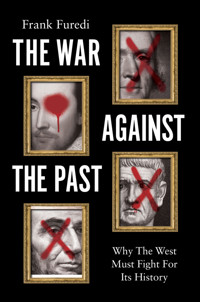
A war is being waged against the Past. Whether it's toppling statues, decolonising the curriculum or erasing terms from our vocabulary, a cultural crusade is underway designed to render the past toxic. It is condemned as enemy territory and has become the target of venomous hate. What is at stake in provoking such a strong sense of societal shame towards Western history?
In this book, Frank Furedi mounts a fierce defence of the past and calls for a fight back against the delegitimization of its ideals and accomplishments. Casting the past as a story of shame has become a taken-for granted outlook permeating the educational and cultural life of western society from the top down. Its advocates may see it as a cultural imperative, but society that loses touch with its past will face a permanent crisis of identity. Squandering the wisdom provided by our historical inheritance means betraying humanity's positive achievements. Challenging this great betrayal, Furedi argues, is one of the most important battles of our time.
Sie lesen das E-Book in den Legimi-Apps auf:
Seitenzahl: 476
Veröffentlichungsjahr: 2024
Ähnliche




















Table of Contents
Cover
Title Page
Copyright Page
Preface
Acknowledgements
Introduction
What is the War Against the Past?
The key themes in the War Against the Past
Why does all this matter?
Notes
1 What Is the Past?
The past in history
Historia magistra vitae
Reflections on the loss of the authority of the past
Notes
2 The War’s Long Gestation
The intensification of the consciousness of change
The First World War and the rupture of cultural continuity
The historical phases in the evolution of society’s estrangement from the past
Phase one: The past as no longer relevant
Phase two: The past as an obstacle to progress
Phase three: The past as principally malevolent
Phase four: The past as a clear and present danger!
Final reflections: Readjusting the past
Notes
3 The Ideology of Year Zero
What is distinct about 21st-century Year Zero ideology?
The curse of continuity
When does history begin?
Conclusion
Notes
4 The Present Eternalized
Anachronism
Presentism
The dramatization of change
The erosion of temporal boundaries
The politicization of presentism
Presentism fuels Cancel Culture
Exacting vengeance on the past
Notes
5 Identity and the Past
The politicization of identity
Homelessness
Using history to invalidate competing identities
Spoiling white identity
Validating identity
In the heart of darkness
Notes
6 The Struggle to Control Language
The moral pathology of the outdated
Outdating: The project of nullifying the past
The re-engineering of language
Inducing social amnesia
Notes
7 Disinheriting the Young from Their Past
The war fought out in the classroom
History rendered contemporary
The Black Armband view of history
The darkening of history
Notes
Conclusion
Notes
References
Index
End User License Agreement
Guide
Cover
Table of Contents
Begin Reading
Pages
iii
iv
vi
vii
viii
1
2
3
4
5
6
7
8
9
10
11
12
13
14
15
16
17
18
19
20
21
22
23
24
25
26
27
28
29
30
31
32
33
34
35
36
37
38
39
40
41
42
43
44
45
46
47
48
49
50
51
52
53
54
55
56
57
58
59
60
61
62
63
64
65
66
67
68
69
70
71
72
73
74
75
76
77
78
79
80
81
82
83
84
85
86
87
88
89
90
91
92
93
94
95
96
97
98
99
100
101
102
103
104
105
106
107
108
109
110
111
112
113
114
115
116
117
118
119
120
121
122
123
124
125
126
127
128
129
130
131
132
133
134
135
136
137
138
139
140
141
142
143
144
145
146
147
148
149
150
151
152
153
154
155
156
157
158
159
160
161
162
163
164
165
166
167
168
169
170
171
172
173
174
175
176
177
178
179
180
181
182
183
184
185
186
187
188
189
190
191
192
193
194
195
196
197
198
199
200
201
202
203
204
205
206
207
208
209
210
211
212
213
214
215
216
217
218
240
241
242
243
244
245
246
247
248
249
250
251
252
253
254
255
256
257
258
259
260
261
The War Against the Past
Why the West Must Fight for Its History
Frank Furedi
polity
Copyright Page
Copyright © Frank Furedi 2024
The right of Frank Furedi to be identified as Author of this Work has been asserted in accordance with the UK Copyright, Designs and Patents Act 1988.
First published in 2024 by Polity Press
Polity Press
65 Bridge Street
Cambridge CB2 1UR, UK
Polity Press
101 Station Landing
Suite 300
Medford, MA 02155, USA
All rights reserved. Except for the quotation of short passages for the purpose of criticism and review, no part of this publication may be reproduced, stored in a retrieval system or transmitted, in any form or by any means, electronic, mechanical, photocopying, recording or otherwise, without the prior permission of the publisher.
ISBN-13: 978-1-5095-61254
A catalogue record for this book is available from the British Library.
Library of Congress Control Number: 2024930231
by Fakenham Prepress Solutions, Fakenham, Norfolk NR21 8NL
The publisher has used its best endeavours to ensure that the URLs for external websites referred to in this book are correct and active at the time of going to press. However, the publisher has no responsibility for the websites and can make no guarantee that a site will remain live or that the content is or will remain appropriate.
Every effort has been made to trace all copyright holders, but if any have been overlooked the publisher will be pleased to include any necessary credits in any subsequent reprint or edition.
For further information on Polity, visit our website: politybooks.com
Preface
This book was born in October 2020, on a street thousands of miles from where I live. It was almost 9 p.m. in Portland, Oregon, when the city’s police department tweeted that a mass gathering had formed on the corner of Southwest Park Avenue and Southwest Madison Street. ‘Some are trying to pull down a statue with a chain,’ they warned. Within the hour, Abraham Lincoln had been pulled from his plinth, assassinated for the second time. Images were swiftly shared online and found their way to my computer in England.
The rioters who were responsible for this act of mindless vandalism reminded me of a lynch mob, albeit one with a difference. Their target was an inanimate statue of someone who had died more than a century ago. It was as if they had invaded the past to exact revenge on the present.
And yet it seemed to me that this outburst was merely the culmination of a new form of iconoclasm – one that is far more ominous than the tearing down of important symbols of the past. As I explain in this book, the entire historical legacy of Western civilization has been turned into a battlefield. The defiling of Lincoln was just one flashpoint.
The chapters that follow argue that the stakes in this conflict could not be higher. For when the past is contaminated, it becomes near impossible to endow people’s life with meaning in the present. The aim of this book is to explain why the War Against the Past must be defeated.
Acknowledgements
Over the past year and more, I have been the beneficiary of intelligent and probing criticism from friends and comrades involved with the charity Ideas Matter, and the organizers of the Battle of Ideas conference. My colleagues at MCC Brussels have provided a stimulating environment for the conduct of my research and I have gained important insights in engaging with their views. A noble Norman Lewis read and critiqued the draft chapters, while my son Jacob and wife Ann offered invaluable advice about how to improve their arguments.
This book is dedicated to the formidable fighter Claire Fox, known to many as Baroness Fox of Buckley.
Introduction
There was no formal declaration of war. No gunshots rang out. It didn’t even make the local news. But, sure enough, at some point at the turn of the 21st century, a war against the past was launched.
Who were the culprits? They are hard to pin down. The partisans supporting the assault on the legacy of European civilization are not members of a party. They have not issued any war aims and have never formulated an explicit strategic vision. They are also a heterogeneous bunch, a coalition of disparate interests and movements.
In an earlier era, the 1990s, when the first wave of mobilization was taking shape, the English historian J.C.D. Clark warned against representing the promotion of this conflict as the ‘outcome of a grand conspiracy’. He wrote that it was ‘the result of a thousand separate, distantly related acts, the promptings of widely absorbed assumptions’. Nevertheless, argued Clark, despite its diverse and uncoordinated prompting, it amounted to a ‘distinct enterprise of historical disinheritance’.1
As I shall argue in the chapters to follow, hostility towards the past evolved slowly, and then all at once, its intensification occurring haphazardly without any serious long-term thought. The use of the term ‘war’ to account for the systematic pursuit of historical disinheritance is not simply metaphorical. In effect, this war leads to the diminishing of the authority of the past, to the discrediting of its legacy, and to the killing of the soul of communities whose way of life remains underpinned by European culture.
This book’s principal argument is that the main driver of the Culture Wars is an undeclared War Against the Past. At times, supporters of these Culture Wars against Western civilization behave as if this perilous territory continues to represent a menace to the contemporary world. Their constant targeting of the legacy of the past – its physical symbols, values, and achievements – resembles a frenetic moral crusade seeking to make people feel ashamed about their origins and who they are. Culture warriors have, in effect, opened up a second front to gain mastery over how the past is viewed.
The goal of cancelling the legacy of Western civilization is pursued through reorganizing society’s historical memory and disputing and delegitimizing its ideals and achievement. Activists seek to erase the temporal distinction between the present and the past to achieve this objective. There has never been a time in living memory when so much energy has been devoted to readjusting the past and questioning and criticizing historical figures and institutions. At times, it seems as if the boundary between the present and the past has disappeared as activists casually cross over it and seek to fix contemporary problems through readjusting what has already occurred.
The crusade against the past has proven remarkably successful in alienating society from its history. Public and private institutions ceaselessly paint their communities’ past in the darkest colours. There is no longer any need to prompt institutions of education and culture to apologize for just about everything that occurred in the past. Even the spectacular achievements of human civilization, from Greek philosophy to the intellectual revolution of the Enlightenment to the scientific inventions of modernity, are now regularly indicted for their supposed association with exploitation and oppression. The representation of the past through a narrative that highlights its malevolent, oppressive, exploitative, and abusive dimension is not confined to a small number of headline-seeking historians. The frequency with which history is told as a tale of human degradation indicates that in popular culture the past now possesses the status of the ‘Bad Old Days’.
Anyone visiting a gallery or a museum will soon be confronted with troubling reminders regarding the malevolent influence of the past. There is a veritable army of grievance archaeologists whose role is to indict the objects on display with some kind of offence. Any painting or object created in the 18th or 19th century has a good chance of being directly or indirectly linked to colonialism or the slave trade. Glasgow’s Burrell Collection features the most bizarre reminders of the misdeeds of history. A note attached to a bronze bust of a young Roman man, 100 bc–ad 100, states: ‘Roman artists copied Greek sculptors, who used mathematical formulas to work out what they thought were people’s perfect proportions. This has been wrongly used to promote racist ideas about the ideal proportions of faces.’ The absurd attribution of racist motives to the sculpting of facial proportions in ancient times speaks to a veritable cultural addiction to shaming the achievements of the past. In its own terms, a condescending comment about a bronze bust of a young Roman man does not signify very much. But when similar reminders of historical injustices are attached to numerous other objects on display in a museum, viewers are left with a very clear and negative story of the past.
As we note in later chapters, even some of the most inspiring contributions to human history have been targeted by mean-spirited activists determined to empty the past of any redeeming features. Practitioners of accusatory history are committed to poisoning the reputation of the Enlightenment by claiming that it was ‘from the outset a racist endeavour’.2 The targeting of the past has proved to be remarkably successful. Historical dramas and films invariably represent the legacy of Western civilization, particularly its Anglo-American component, in an unfavourable light. The past is anachronistically rewritten in accordance with the playbook of contemporary identity politics.
Public and private institutions have uncritically embraced the cause of decolonization and revel in discovering their own ‘shameful’ past. The embrace of decolonization now works as a performance of virtue and has become an obligatory ritual for any institution that wishes to demonstrate that it is of the time. All that the crusade against the past lacks is the addition of the word ‘holy’. Consider the statement ‘Supporting Decolonisation in Museums’ issued by the UK’s Museums Association. It notes that ‘at a time’ when ‘history is under more scrutiny than ever, it is vital that that museums engage’ in ‘discussions and reappraise their own historical role in empire’. It adds that ‘we will continue to work with museums to support them on this journey’.3
One of the aims of this book is to explain why ‘history is under more scrutiny than ever’. There is no doubt that, at least outwardly, this is the case, However, on closer inspection, it becomes evident that ‘scrutiny’ is the wrong term to describe the current project of rewriting the past. The Oxford English Dictionary defines scrutiny as investigation and critical inquiry.4 There is, however, little genuine investigation and certainly nothing critical about the obsessive attempt to seek revenge on the past. The English social historian E.P. Thompson’s phrase the ‘immense condescension of posterity’ is far better than ‘scrutiny’ as a way to describe the current project of delegitimizing the past.5
In the chapters that follow, I refer to the current obsession with scrutinizing the past as the practice of grievance archaeology. Outwardly, grievance archaeology is committed to uncovering historical injustices and misdeeds that require the atonement of institutions and actors in the here and now. Culture warriors justify their project on the grounds that the past injustices they unearth are consequential for the lives of numerous identity groups today. Grievance archaeology, however, is not simply about excavating hitherto unknown facts or events. It is principally about repackaging the past in accordance with the values and objectives of present-day identity politics. Through reading history backwards, the behaviour and actions of individuals and groups who inhabited the world hundreds and even thousands of years ago are cast in the role of an offender of present-day sensibilities. In this way, key historical figures are effectively cancelled from the canon of the greats.
Consider the case of Immanuel Kant, one of the most influential philosophers of the modern era. If the grievance archaeologists associated with the decolonization movement are to be believed, Kant is just another common-or-garden racist. Moreover, almost every major philosopher of the 17th- and 18th-century Enlightenment has been cast into this role. According to the cultural warriors’ judgement, Locke, Hume, Hegel, and Kant are all deemed guilty. No doubt, these individuals shared many of the prejudices of 18th-century society. But they also developed the universalistic outlook that led them to give meaning to the ideal of human equality. Kant, for one, was unequivocally opposed to colonialism and the behaviour of the conquering European powers, warning that they ‘oppress the natives, excite widespread wars among the various states, spread famine, rebellion, perfidy, and the whole litany of evils which afflict mankind’.6 But for the grievance archaeologists, it does not matter that Kant’s ethics offers a precious resource for upholding the moral dignity and worth of all humans. What matters is that his language, attitude, and behaviour violate the recently cobbled-together norms codified in the virtue-seeking language guides of 21st-century Anglo-American institutions.
Still, the War Against the Past is not simply a conflict involving words. It also involves the physical act of removing symbols of the past. The Guardian refers to this development as ‘The Statue Wars’, yet it is not only statues that are pulled down, disfigured, or removed. As discussed in chapter 4, troublesome books are hidden from the public in libraries and, in some cases, destroyed. Even the burning of books has made an unwelcome return.7 Precious and historically significant objects are rendered ‘troublesome’ and presented to the public with a note of disparagement. The world-famous British Museum is so worried about the impact of its ‘troublesome’ collection that it has decided to give ‘emotional support’ to its staff and help them add trigger warnings to its archive.8
Children and young people are the main target audience for the representation of the past as a story of shame. From a very young age, they are exposed to a form of education that aims to morally distance them from their cultural legacy and deprive them of a sense of pride in their past. In the UK, primary schoolchildren as young as five are offered US-style lessons about ‘white privilege’.9 Teachers are instructed to avoid teaching ‘white saviour narratives’ during lessons on slavery by de-emphasizing the role of white abolitionists such as William Wilberforce.
Such successes are not due to the crusade’s supporters’ intellectual coherence and effective organization. Of course, movements such as Black Lives Matter contributed to this feverish ahistoricism. But their success was, to a considerable extent, underwritten by a pre-existing cultural climate favourable to their objective. One of the most striking and fascinating features of the War Against the Past is the relative lack of resistance to it. In the UK over the last couple of decades, successive regimes – the majority of them Conservative – have refused to respond to the assault on Britain’s heritage. This reluctance to fight for our history constitutes a veritable act of cultural betrayal.
An important reason why the War Against the Past has successfully influenced the current zeitgeist is the defensive stance assumed by those charged with upholding and transmitting the legacy of Western civilization. In retrospect, it is evident that sections of the cultural and political establishment have, for some time, become estranged from their society’s tradition and historical legacy. By the late 20th century, numerous observers drew attention to the uneasy relationship Western culture had developed with its historical legacy. As I explained over 30 years ago, in Mythical Past, Elusive Future: History and Society in anAnxious Age, Western societies’ cultural and political establishments had already become all too aware that they had lost touch with their past. The realization that there was no longer a commonly accepted version of the past was widely echoed by leading commentators in the 1970s. Society’s estrangement from the past was a symptom of an all-pervasive moral drift afflicting society in that decade.10 This sentiment was captured by the transatlantic thinker Stanley Hoffman in 1979, who, in his discussion on the ‘demise of the past’, warned that ‘through speed and the savagery of history, we have not simply lost touch with the world that is behind us; it also appears that this world said many things that turned out to be false and thus has nothing more to say to the average European’.11 Numerous observers echoed Hoffman’s conviction that the leaders of Western society had become estranged from their own cultural traditions.
When Hoffman mused ‘is there a Europe, was there a past, and will there be a future?’,12 he voiced a concern deeply felt by leading thinkers across the political mainstream. An awareness that Europe had lost touch with its past and was therefore disoriented about its place in the world led to what proved to be half-hearted attempts to reaffirm its cultural traditions. As it turned out, this was the last time that the Western European mainstream political establishment – Christian Democrats, Conservatives, and Liberals – seriously tried to ‘go back to basics’ and revive and act by the tradition bequeathed by history. From its inception, British Prime Minister John Major’s ‘Back to Basics’ campaign of 1993 was an object of ridicule. The swiftness of its embarrassing demise indicated that there were no ‘basics’ to return to.
Small groups of conservative intellectuals sought to fight a rear-guard action against their society’s alienation from its historical past. The American conservative sociologist Robert Nisbet’s History of the Idea of Progress (1980) highlighted what he saw as the tragic consequence of a society that had become physically and morally detached from its past. He presented a bleak historical vision in Manichean terms: ‘In no period of Western history, not even the Dark Ages, has alienation from, lack of confidence in, and hostility toward fundamental institutions been as deep and widespread as in this final part of the twentieth century in the West,’ he warned.13 On the other side of the Atlantic, the soon-to-be prime minister of the UK, Margaret Thatcher, also sounded the alarm.
We are witnessing a deliberate attack on those who wish to promote merit and excellence, a deliberate attack on our heritage and our past, and there are those who gnaw away at our national self-respect, rewriting British history as centuries of unrelieved doom, oppression and failure – as days of hopelessness, not days of hope.14
Nisbet’s and Thatcher’s diagnosis of the threat facing the historical traditions of their societies was well observed. Yet the threat they faced was far less serious and omnipresent than today. Were they alive now, both would genuinely be shocked by the depth of the animosity directed at the past.
By the time the Culture Wars erupted in the 1980s, the intellectual and cultural defenders of the past were fast becoming an endangered species within society’s key institutions. Oddly, during the Reagan and Thatcher era of the 1980s, the moral devaluation of Western culture and its past gained great momentum. Oddly, because at least outwardly, the Reagan–Thatcher years were associated with the triumph of conservatism. However, the ideological triumph of Reagonomics and the formidable support that it enjoyed were not matched in the sphere of culture. Indeed, in the cultural domain, traditional conservative ideals regarding tradition, the family, sexuality, morality, and the past were on the defensive. It was precisely during this decade that cultural norms calling into question the traditional values of the West gained rapid ascendancy. What American conservatives had previously characterized as ‘adversary culture’ was fast acquiring hegemonic influence. The verdict of the American sociologist Alan Wolfe on these key developments in this era is pertinent to this day. He noted that ‘the right won the economic war, the left won the cultural war, and the center won the political war’.15 Wolfe’s assessment was echoed by Gertrude Himmelfarb, a leading American conservative thinker, who concluded that ‘having been spared the class revolution that Marx predicted, we have succumbed to the cultural revolution’.16
The opposition to the newly emergent crusade against the past crumbled with remarkable ease. At the time, the import of this development was obscured by the appearance of triumphalism surrounding the Reagan–Thatcher Revolution. What was overlooked in the 1980s and the decades to follow was that mainstream conservatism had more or less given up on the past. Society’s estrangement from its past led to a situation where its traditions meant little for the conduct of everyday life. The growth of this sense of estrangement was steady but very gradual. It was underpinned by a loss of confidence and a sense of exhaustion. Hoffman captured well this slow unravelling of confidence in the past when he wrote;
The disappearance of the past is partly a disappointment with that past – with what history and human action have wrought – thus it is very different from that deliberate historical break that revolutionaries intent on building a new order and creating a new man provoked in 1792, or in 1917, or in 1949 in China. It means exhaustion, not energy; drainage, not arson. In turn, the lack of a sense of the future has further depressed, devalued, and discoloured the past; when one does not know where one is going, when there seems to be nowhere to go and nothing new and better to accomplish, what is the point of retracing one’s steps? It takes a combination of faith in, ideas about, and will to build one’s future to keep an interest in the past from becoming mere scholarship or leisure.17
Hoffman’s emphasis on the motif of exhaustion and disappointment as key factors in the de-authorization of the past helps explain the undramatic quiet retreat of supporters of traditionalism from the battleground of ideas. At the turn of the 1980s, there was no dramatic historical break with the past, just a sense of defeatism brought on by a loss of confidence in the legacy of European civilization.
What is the War Against the Past?
Outwardly, the Culture Wars present themselves as mainly about conflicts over moral values touching on sex, abortion, gender and cultural identity, sovereignty, and race. Disputes about freedom of speech, language use, and the different dimensions of human communication often target what they dismiss as outdated norms and ideals. Always lurking behind these conflicts are competing attitudes towards the past. As the chapters that follow suggest, the territory of the past is the most important site on which the Culture Wars are fought. The underlying impulse driving these wars is the aspiration to replace the norms and attitudes rooted in the past with ones that validate the outlook of the various present-day groups and individuals associated with identity politics. Though the promoters of the different versions of identity politics are not always conscious of their objectives, their energies always work towards the same purpose: the de-authorization of the civilizational accomplishments associated with the West.
The noisy protesters demanding the pulling down of statues or the decolonization of education are by no means the only parties targeting the past. Modernizing technocrats, profit-seeking corporates, and flashy, modish cultural entrepreneurs in Hollywood, New York, London, and Paris often communicate an attitude of disrespect towards the legacy of the past. Business publications such as The Harvard Business Review frequently warn about the risk of outdated company practices. They often declare that ‘there’s no need to dwell on the past; what matters is the future’. The flourishing of change management in business and educational fads in school represents a compulsive desire to leave the past behind. Overall, the cumulative outcome of these disparate influences is to encourage a perspective that regards the past as morally inferior to the ways of the present.
The stamping of moral inferiority on the past is habitually, almost thoughtlessly, practised by Western elites. Their practice is motivated by an aspiration for securing legitimation. Since the dominant narratives used to interpret political and socio-economic developments lost much of their authority, the political and cultural establishments have been confronted with the problem of legitimacy. One response to this problem has been an attempt to attain authority by favourably contrasting the present-day sensibilities of an ‘aware’ elite to a dark, morally inferior past. At a time when a mood of political exhaustion has led to the decline of future-oriented projects, elite culture frequently finds refuge in advertising its superiority over the supposedly unenlightened traditional practices of previous generations.
This complacent, presentist approach relies on continually reminding the world of its superior ways. It constantly compares itself to historical protagonists and finds them wanting. The term ‘moral anachronism’ best captures the ritual of humbling characters from the past. By treating individuals and events in the past as having to account for themselves in relation to the standards of the present, moral anachronism effectively erodes the temporal distinction between the present and the past, assessing historical figures as if they are our peers. And so the likes of Aristotle, Chaucer, Shakespeare, Hume, and Kant are frequently hauled before the contemporary court of public opinion and charged with various recently formulated cultural crimes. Ostensibly, these rituals aim to ‘raise awareness’ about past injustices. But at times, it appears that the ritualistic thrashing of the reputation of historically significant figures is also designed to re-educate the dead. In this way, the present is projected backwards so that our ancestors are forced to account for themselves in accordance with the spirit of our time.
Regardless of their philosophical or political differences, until recently, most serious thinkers believed that important lessons could be learned from history. Those disposed towards a conservative outlook went so far as to claim that the traditions of the past could convey transcendental truths relevant to people at all times. Others drew different lessons and regarded history as an inspiration for showing the possibility of progressive change. Today’s presentist zeitgeist encourages a very different approach. It dispossesses the past of its claim to truth. At best, the past is indicted as irrelevant; at worst, it is charged with causing harm to the generations that have followed.
By the turn of the 21st century, the outlook of Western elites had become thoroughly imbued with the essence of presentism. They concluded that they inhabited a world where the rate of change was so rapid that just about everything from the past had turned obsolete and was irrelevant to their lives.18 Moreover, they had become disenchanted with the value of their historical inheritance. In particular, they regarded many of the values transmitted by previous generations as no longer appropriate for the conduct of life. Upholding the traditions of the past was not a cause they were prepared to defend. Within institutions of culture and education, the past was often represented as an alien, if not hostile, territory. Consequently, decades before the explosion of support for the decolonization of society, the prevailing cultural norms were frequently antithetical to those of the past. Once these attitudes were in place, society’s estrangement from its history became susceptible to politicization. At this point, the crusade against the past gained momentum and erupted into what I characterize as a War Against the Past.
The Culture Wars have always exuded hostility towards the past. Their frequent rhetorical reference to outdated language, behaviour, and attitudes convey a tone of disparagement towards history. When TV channels warn about ‘outdated attitudes and language’, their message regarding established ways is clear.19 They frame the past in the language of harm to deprive its influence of positive content. The ritual of issuing a warning about the outdated already conveys an implicit call to treat it with suspicion.
Numerous interpretations of the Culture Wars represent their agents as external to the mainstream of Western societies. Often, modern ‘radicals’ are assigned responsibility for attempting to dethrone the authority of the West’s normative outlook. No doubt, the activists associated with these movements have played an important role in this conflict. Yet their remarkable success was made possible by the complicity of sections of the Western political and cultural establishment. Since this establishment had lost enthusiasm for its historical legacy, it did little to oppose the cultural warriors assembling at its gates. On the contrary, in many institutions, those formally charged with their defence left the gates wide open. Like those Romans who stopped believing in their way of life and lost the will to fight, the elites of Western society did little to uphold and protect its historical legacy.
Unlike the Romans, however, the elites of Western societies did not merely stop at giving up their traditional values and way of life, they also sought to actively negate it. That is why they are often in the vanguard of an army determined to attack the cultural legacy of their society. In his characterization of this development, the commentator Paul Kingsnorth claimed that we are passing through a culture of inversion phase.20 He noted that,
The West’s ongoing decline has caused its elites to lose faith in their cultural inheritance, and this loss of faith has now reached pathological proportions. As a result, the leading lights in Western society – the cultural elites, and sometimes the political and economic elites too – are dedicated not to upholding the cultural forms they inherited, but to turning them on their heads, or erasing them entirely.
In their subconscious, this loss of faith is expressed through a sensibility that strives to dispossess society of its cultural inheritance and history.
The key themes in the War Against the Past
The dominant impulse driving the assault on the past is the aspiration to detach society from its influence. In the Western world, cultural continuity was long maintained through the absorption of custom into law and the continuous modification and development of tradition. Despite the frequent outbreak of conflicts over values throughout history, the different protagonists understood the necessity for retaining this continuity. This was the case even after the decline of religion and the emergence of secularism and the spirit of science. During the 18th and 19th centuries, neither side sought to abolish the continuity of culture but offered different interpretations of how to relate to the legacy of human civilization.
There were, naturally, historical moments – such as the First World War – when cultural continuity was threatened and severely undermined by serious disruptions. ‘Old authority and traditional values no longer had credibility,’ wrote Modris Eksteins in his Rites of Spring: The Great War and the Birth of the Modern. Yet ‘no new authority and no new values had emerged in their stead’.21
Until the late 1960s, the distancing of society from its past was gradual – occasionally punctuated by calls to bring back tradition or religion. As noted previously, such calls were confined to small groups of conservative thinkers by the 1970s. From the late 1970s onwards, we see not simply the continuous weakening of cultural continuity but much more explicit attacks against it. At this point, the Culture Wars started to kick in, and it was only a matter of time before their adversarial sensibility became crystallized into what would become a veritable crusade against the past. Their target was not certain aspects of the West, but the entirety of its cultural legacy.
To this end, their supporters strive to attain widespread support for a Year Zero ideology. In previous times, the evocation of a Year Zero was heralded by radical and revolutionary movements who sought to represent the world they were building as fundamentally different to the evil days of the past. This sentiment was most systematically expressed in recent decades during the Khmer Rouge takeover of Cambodia in the mid-1970s (which it renamed Kampuchea). Advocates of establishing Year Zero claimed that the evil traditions of the past had to be destroyed, old ideas had to be purged, and society needed to start again from scratch.
The mutation of hostility towards the past in Western societies into a veritable ideology offers a moderate version of this Year Zero outlook. Today, its main emphasis is on enforcing a moral quarantine between the present and the past and seeking to wreak vengeance on the latter’s legacy. Through highlighting the present’s moral superiority over the past, it attempts to wrest authority to influence contemporary affairs.
At first sight, there appears to be an irresolvable contradiction between the outlook of Year Zero ideology and the outlook of presentism. Year Zero ideology is fervently devoted to the policing of temporal boundaries. It wishes to throw a quarantine around the past and declare it to be a no-go zone. This is an ideology which appears wholeheartedly committed to the eradication of the past. In contrast to the dictates of Year Zero ideology, presentism promotes a very different agenda of rejecting the boundary that separates its world from the past. It promotes a worldview that invites people to cross this important temporal boundary to fix the problems of the past. One manifestation of this trend is the emergence of a form of cultural politics which seems more interested in solving past problems than in engaging with those rooted in the present era. The ever-expanding activism of grievance archaeology serves as testimony to the growing interest in seeking retribution for misdeeds going as far back as ancient times.
The politicization of identity has radicalized presentism. Identity politics has encouraged presentism to become increasingly obsessive about its orientation towards the past. Those with politicized identities regard the past as a fertile terrain for historical validation. They achieve this objective by denouncing the past for failing to acknowledge that they have always been around but hidden from view. The Burrell Collection, mentioned previously, offers an exemplary presentation of politicized presentism in action. Next to the porcelain figure of Guanyin made during the Qing Dynasty in China, a note states, ‘Trans people have always existed and are rooted in history.’ It asserts that the figure of Guanyin ‘reflects this, showing that gender and identity are not always fixed’. Almost effortlessly, this note jumps back into the age of the Qing Dynasty (1662–1722) and unilaterally declares that Guanyin, the Chinese Goddess of mercy, is trans! Without any regard or sensitivity to historical context, it projects the current concern with trans identity and gender into an era where it could not have possessed any cultural relevance.
The curators at the Burrell Collection wish to insert the 21st-century politics of inclusion into the lifeworld of the Qing Dynasty. The absurdity of this exercise in moral anachronism is overlooked by presumably intelligent museologists ideologically committed to validating recently invented identities through sighting them in 17th- and 18th-century China. The politicization of presentism is used to both validate and invalidate present-day concerns. In the following chapters, this apparent contradiction between using the past to validate and invalidate and between Year Zero ideology and presentism is referred to as the paradox of the past. The paradox of the past draws attention to the shifting and, at times, uneasy relationship between these two outwardly contradictory themes in the crusade against the past.
In practice, the coexistence of hatred towards the past and an obsessive impulse to change it are reconciled through a revengeful and accusatory approach towards it. The paradoxical relationship between demanding a break with the past and exacting revenge on it is mediated through the politicization of presentism. Once the boundary between the present and past is rendered porous, political conflicts become detached from the restraints of temporality. In this way, the past can be represented as a dark place where human degradation, abuse, victimization, and genocide were the normal features of daily life. One purpose of this sanctimonious spiteful history is to create a moral distance between the present and the legacy of the past. The other is to convert the injustices of the past into a moral currency that can be used as a resource for claiming attention, respect, and authority in the here and now.
It is tempting to interpret the crusade against the past as merely the latest chapter in the centuries-long conflict between different interpretations of history. To be sure, the War Against the Past has unleashed an intensely polarized debate about the facts of history and their interpretation. Arguments about the history of Anglo-American societies are often conveyed in a tone of venom and hate. ‘Whitewashing US history with “patriotic education”,’ declared The Guardian.22The Independent attacked what it described as Trump’s insidious attempt to rewrite history.23 ‘We must clear away the twisted web of lies in our schools and classrooms and teach our children the magnificent truth about our country,’ replied Trump.24
Heated exchanges about historical facts are an acceptable feature of democratic public life. It is entirely legitimate to adopt a questioning approach towards studying history. In my Colonial Wars and the Politics of Third World Nationalism (1994), I dealt at length with the imperial powers’ attempt to gain control of decolonization to render it harmless, calling into question the representation of the anti-colonial movements by the apologists of colonial domination. As someone who has published several historical books offering a radical critique of imperialism, colonialism, and racism, I remain sympathetic to continuing the debate of these global issues.25
However, the present-day representation of decolonization has little to do with a commitment to set straight the historical record. As the American philosopher Olúfẹ́mi Táíwò observed, the current version of decolonization constitutes the ‘absolutization of colonialism’.26 Decolonization today is no longer about gaining freedom and independence from the influence of colonial power. It is a movement that has voluntarily adopted the role of the historical victim and whose identity is entirely dependent on living in the past. Advocates of the contemporary reinterpretation of decolonization cannot let go of the past since so much of their identity depends on its perpetuation.
The crusade against the past today differs greatly from previous attempts to rewrite history. During the 20th century, the project of rewriting or reinterpreting history was mainly motivated by the determination of the Left and the Right to elaborate a version of the past that could provide legitimation for their political projects. The historians of the Right were drawn towards the objective of revitalizing and defending the past’s apparently irrelevant tradition and legacy. In particular, they were interested in the rehabilitation of national histories. Historians on the Left, meanwhile, were devoted to developing a sense of the past that recognized the role of working people and oppressed and marginalized minorities. Theirs was an ‘underdog history’ that sought to supplement the narrative of different identity groups with greater coherence and meaning. Until recently, these histories were far more devoted to validating and glorifying their constituent’s past than detaching society from it.
The War Against the Past only superficially resembles the classical project of rewriting history. Though it can be mistakenly perceived as a conflict between contrasting views of history, it is much more than that: it is about dispossessing the past of any redeeming features.
Why does all this matter?
Society’s relation to its past and how it views and understands it has profound implications for everyday life. ‘When hegemonic ideas capture our understandings of the past, they capture the present too, and what we can make out of it,’ observed the sociologist David Inglis.27 Should the negative and destructive narrative of the past consolidate its growing authority, it will succeed in undermining people’s confidence in themselves, their communities, and their capacity to confront the challenges posed in the future. Once the past is cast in an entirely negative light, there is little possibility of cultivating a sense of hope for the future. In such circumstances, the past ceases to provide any guidance. The continuous serving up of the horrors of the past has the effect of lowering human ambition.
A pathologized history calls into question the capacity of humanity to change for the better and improve its circumstances. A preoccupation with reinterpreting the past as a story of human abuse, atrocity, genocide, ethnic cleansing, slavery, and Holocausts coexists with the tendency of society to regard itself as the object rather than the subject of historical change. A morose fascination with human evil threatens to overwhelm our capacity to imagine an individual’s potential for altruism, heroism, or simply doing good.
In its place, humankind is condemned to a world whose history is endlessly recycled as a cautionary tale against the aspiration to exercise human subjectivity. In its most extreme form, humanity’s historical role becomes a self-loathing story of ecocide, with humans as the destroyers of all things good. This teleology of evil transmits the message that there is very little that people can do to influence their future: we have created a Hell that cannot be escaped.
Yet, if we are to avoid the genuine mistakes of the past and correct its injustices, society needs to believe in its ability to do good so as to cultivate a politics of hope. This is the paradox of the War Against the Past: those who are waging it are, inadvertently, denying themselves the capacity to win. For if your past is evil, if your centuries-old story is defined by bitterness and bad faith, how can you possibly hope to redeem yourself?
But what is the past that has now become the target of so much concern and conflict? In the chapter to follow, we will explore the meaning of this term and outline how ideas about the past have evolved and changed over the centuries. Its focus is on the emergence of a sensibility that differentiated between the present and the past. Once this distinction became entrenched in the cultural imagination, then the relationship between the present and the past could become a subject of discussion and debate. Throughout most of history, the past possessed authority and was often perceived as an important resource that could be used to guide society’s journey towards its future. The gradual erosion of the authority of the past created the precondition for the crystallization of negative narratives towards it. This chapter outlines the different stages of modern society’s estrangement from the past and explains how the loss of its authority has led to a dramatic revision of its cultural status.
The aim of chapter 2 is to outline the slow emergence of the War Against the Past by looking at the historical phases that led up to it. The goal of this chapter is to explain what is distinct about contemporary society’s attitude and relation to its past. Chapter 3 is devoted to a discussion of the Ideology of Year Zero. The powerful influence of this ideology legitimates the demand for breaking with the past and starting the world anew. Year Zero ideology justifies this rupture on the grounds that the influence of the past is toxic and that therefore society needs to liberate itself from its influence. It draws a moral contrast between two temporal states, one that demonizes the past. This ideology encourages society to feel a sense of shame about its past and fosters a cultural climate hospitable to estranging people from their origins.
Year Zero’s demotion of the past is sustained by a zeitgeist that is obsessively focused on the present. This development has led to ascendancy of the outlook of presentism, which is the subject of chapter 4. Having left the past behind, contemporary Western society has opted to inhabit an endless present. Presentism has encouraged a loss of historical sensibility, and, as a result, everything that precedes it is looked upon as merely an earlier version of itself. Presentism promotes an anachronistic orientation towards the different stages of history to the point that it treats individuals who lived thousands of years ago as if they are our contemporaries. One of the most important consequences of the ascendancy of presentism is the erosion of temporal boundaries. This chapter argues that the influence of presentism has led to the contemporary Culture Wars being fought out on the terrain of the past.
Chapter 5 moves the discussion forwards by investigating the way in which the politicization of identity interacts with the War Against the Past. It suggests that the very rise of identity politics is a by-product of society’s detachment from its past. In turn, the politicization of identity has run in parallel with the invention of a negative narrative of never-ending oppression in the past. Since the injustices of the past serve as a resource for establishing the moral authority of identity groups, grievance archaeologists are incentivized to constantly provide material for a gloomy version of history.
Chapter 6 explains how the War Against the Past directs so much of its energy towards gaining control over everyday vocabulary. Through the promotion of linguistic engineering, it seeks to displace traditional vocabulary on the grounds that its words are outdated and offend minorities and identity groups. New words are constantly invented, and through the policing of language, people face pressure to alter their vocabulary. The project of dispossessing people of their language is one of the most insidious manifestations of the War Against the Past. From the standpoint of culture warriors, the taking of control over language serves as a prelude to controlling the way we think.
Chapter 7 draws attention to an extremely disturbing development, which is the disruption of the kind of generational transaction necessary for the socialization of young people. The War Against the Past directs its energies towards the objective of disconnecting the young from the experience and achievement of their ancestors. It seeks to undermine the intergenerational transmission of the values and ideals that are rooted in the past. Consequently, young people’s understanding of who they are and where they come from is compromised. This chapter argues that young people’s loss of connection with the legacy of the past has created the condition for the flourishing of a crisis of identity. The difficulty that the young have in resolving this crisis has ensured that identity has become a permanent issue in society.
Finally, the book’s Conclusion puts forward the case for a nuanced and responsible orientation to the past. It suggests that the defence of the past and learning from its legacy is the precondition for possessing a capacity to face the future.
Notes
1
Clark (2004), pp. 27–8.
2
https://www.theguardian.com/books/2021/feb/02/the-new-age-of-empire-by-kehinde-andrews-empireland-by-sathnam-sanghera-review
.
3
https://www.museumsassociation.org/campaigns/decolonising-museums/supporting-decolonisation-in-museums/#
.
4
https://www.oed.com/search/advanced/Meanings?textTermText0=scrutiny&textTermOpt0=WordPhrase
.
5
See Thompson (1963), p. 12.
6
Kant (2005 [1795]), p. 92.
7
https://www.telegraph.co.uk/books/authors/eradicating-bad-stuff-unwelcome-return-book-burning/?WT.mc_id=tmgoff_psc_ppc_performancemax_dynamiclandingpages&gclid=Cj0KCQjwoK2mBhDzARIsADGbjeqeq7WUk3MIRUZ-peWSarxnSOuovw2q2TNnwHhDFZFhkGNQ0eHnT1gaAvGLEALw_wcB
.
8
https://www.telegraph.co.uk/news/2023/04/08/british-library-emotional-support-trigger-warnings-blm-woke/
.
9
https://www.thetimes.co.uk/article/critical-race-theory-uk-schools-scmnfddnm
.
10
Furedi (1992).
11
Hoffman (1979), p. 9.
12
Ibid.
13
Nisbet (1980), pp. 332–3.
14
Thatcher (1977), p. 29.
15
Cited in
https://www.cultureontheoffensive.com/leftist-critique-of-the-left/
.
16
Himmelfarb (2001), p. 118.
17
Hoffman (1979), p. 25.
18
For a 1970s version of this argument, see Keniston (1970). He wrote of ‘a rate of social change so rapid that it threatens to make obsolete all institutions, values, methodologies and technologies within the lifetime of each generation’ (p. 633).
19
https://www.irishexaminer.com/lifestyle/celebrity/arid-31006230.html
.
20
https://unherd.com/2022/07/the-west-needs-to-grow-up/
.
21
Eksteins (1989), p. 291.
22
https://www.theguardian.com/us-news/2020/sep/18/first-thing-whitewashing-us-history-with-patriotic-education
.
23
https://www.independent.co.uk/voices/trump-speech-1619-project-critical-race-theory-b473614.html
.
24
https://trumpwhitehouse.archives.gov/briefings-statements/remarks-president-trump-white-house-conference-american-history/
.
25
See Furedi (1989b, 1994a, 1994b, 1998).
26
Táíwò (2022), p. 8.
27
Inglis (2014), p. 113.
1What Is the Past?
Before exploring how the past became a battleground, it is necessary to review the evolution of society’s sense of the past. Our present attitude towards the past is paradoxical. Strident calls to break with history coexist with an obsessive desire to settle the score with it. As I shall argue in this and the following chapters, the outcome of this contradictory approach to the past is to erode the boundary that separates it from present times.
Consider how events that occurred centuries ago are often treated by sections of the media as current events. The Guardian, for instance, copying a previous endeavour by The New York Times, has commissioned academics to write a report about its founding in 1821 and the newspaper’s owners’ relation to the slave trade.1 Elsewhere, institutions such as the Church of England appear to feel more comfortable about accounting for their behaviour two centuries ago than with confronting the challenges of our time. In setting aside a fund to investigate the C of E’s links with slavery, Archbishop Justin Welby claimed that he was motivated by ‘the presence of the risen Christ alive in the church’.2
Since, as the American historian David Lowenthal reminds us, ‘the past is everywhere’, we tend to take its meaning for granted. ‘Noticed or ignored, cherished or spurned, the past is omnipresent,’ he wrote in his The Past Is a Foreign Country (1985) – its title a reference to the widely cited observation of L.P. Hartley in his novel The Go-Between (1953): ‘The past is a foreign country … they do things differently there.’3 In its most literal sense, the past refers to what has preceded our moment. According to the common-sense definition offered by Wikipedia, the past refers to ‘the set of all events that occurred before a given point in time’ and ‘the past denotes a period of time that has already happened, in contrast to the present and the future’.4 According to The Oxford English Dictionary, the past ‘is the time that has gone by’; it ‘existed or occurred prior to the current time’.5
In reality, the past does not simply refer to events that occurred before the current moment. It is also a distinct temporal realm that is perceived in the contemporary world as different from the present and the future. Nor does the past simply refer to the domain of temporality. Our consciousness of the past is principally a cultural accomplishment. It is strongly shaped by people’s perception of their predicament in the present. Although societies possess a collective memory or sense of the past, different groups and individuals may experience them dissimilarly. The past can incite a wide range of emotions.
Watch, for example, any of those ancestry programmes in which experts ‘dig up’ documents and records of some celebrity’s forebears. You may see some individuals react with pride and pleasure to the discovery that one of their ancestors was a notable historical character; for others the past brings tears to their eyes, when they realise that one of their relatives had a hard life and experienced the most trying of social conditions. The past, like the present, can elicit the full range of human emotions.6
Individuals may only sometimes be aware of their consciousness of the past but the relationship that they have to it is constitutive of who they are. Whether or not individuals are interested in studying their history and finding out about the life of their ancestors, they are inescapably the products of a community that preceded their existence. As the historian Eric Hobsbawm argued, ‘For where we stand in regard to the past, what the relationships are between past, present and future are not only matters of vital interest to all: they are quite indispensable.’ He added, ‘We cannot help situating ourselves in the continuum of our own life, of the family and group to which we belong.’7
Society’s perception of bygone days is best captured by the term the sense of the past. The literary critic Lionel Trilling has persuasively argued that possessing a sense of the past is an ‘actual faculty of the mind, a “sixth sense”’, through which we become conscious of history and our place in it.8 From this perspective, the working of this faculty is informed by how people position themselves in relation to the past. There are a range of possible reactions, from nostalgia towards the past to the impulse to leave it behind. However, in all modern societies, all human beings are conscious of history’s existence. As Hobsbawm noted:
To be a member of any human community is to situate oneself with regard to one’s (its) past, if only by rejecting it. The past is therefore a permanent dimension of the human consciousness, an inevitable component of the institutions, values and other patterns of human society. The problem for historians is to analyse the nature of this ‘sense of the past’ in society and to trace its changes and transformations.9




