


Erhalten Sie Zugang zu diesem und mehr als 300000 Büchern ab EUR 5,99 monatlich.
- Herausgeber: The Lilliput Press
- Kategorie: Geisteswissenschaft
- Sprache: Englisch
In January1940, shortly after the outbreak of the Second World War, the novelist Francis Stuart (1902-2000) moved from County Wicklow to Berlin, where he had accepted a university lecturing position. Stuart remained in he Third Reich for the duration of the war, and between 1942 and 1944 he made over one hundred broadcasts on German radio to Ireland. The German sojourn and the broadcasts have been at the heart of the long-running controversy over Stuart, and yet remarkably little is known about them. Herein are published the complete surviving transcripts of Stuart's broadcasts, which represent between two thirds and three quarters of his total output. While Stuart often referred to himself as a 'neutral' uninterested in making propaganda, the talks were consistent with the broad thrust of German wartime propaganda to Ireland, and took an often fiercely anti-Allied line. Stuart spoke repeatedly of the necessity of a united Ireland, and suggested that a German victory could bring this about. He spoke warmly of his admiration for the German people and for Hitler. The editor's extensive introduction shows that Stuart's pre-war political interests and commitments were consistent and often passionately held – from a 1924 essay in wich he compared Ireland's struggle against Britain to Austria's against the Jews, to a 1938 letter to the Irish Times opposing plans to receive refugees fleeing Hitler – and intimately tied up with his creative work. (Stuart more than once stressed to his listeners the continuity between what he had tried to express in his fiction – for example, the pro-brownshirt 'sympathies' of a 1933 novel, Try the Sky – and the message of his broadcasts.) The introduction also gives an account of Start's involvement in collaboration between the IRA and the Germans during the war, and suggests that his achievement as a writer can never be adequately assessed until the nature of the relationship between his novels, his politics and his life is confronted squarely.
Sie lesen das E-Book in den Legimi-Apps auf:
Seitenzahl: 416
Veröffentlichungsjahr: 2015
Das E-Book (TTS) können Sie hören im Abo „Legimi Premium” in Legimi-Apps auf:
Ähnliche



















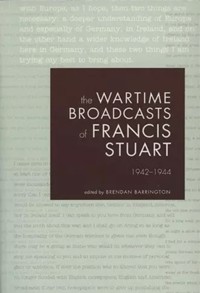
The Wartime Broadcasts of Francis Stuart1942–1944
Edited by Brendan Barrington
THE LILLIPUT PRESS
Contents
Introduction
In March 1924, Sinn Féin published a sixteen-page pamphlet entitled LectureonNationalityandCulture.1 Its author was a young man named Francis Stuart. Although not quite twenty-two years old, Stuart was a man of experience. He had been married for nearly four years to Iseult Gonne, daughter of Maud Gonne; he had fought on the anti-Treaty side in the Irish civil war and been interned by the Free State; and his poems had been awarded the Young Poet’s Prize of the distinguished American magazine Poetry.2
In the Lecture, Stuart wrote bitterly of the physical reconstruction of Dublin then taking place:
Under this Free State we are watching contractors raise from the ruins a Dublin that will be an exact replica of an average English city. Personal and national needs and tastes are not consulted. The plans are designed in English or Anglo-Irish offices without the slightest knowledge or thought of what they are building in France, in Germany, in Russia: it’s a case of ‘England is good enough for us!’
England may be good enough for the English, and English cities may be suitable to a money-mad, sterile civilization; but will it do for us? We want to know about the cities of France, of Germany, of Europe in fact.3
Stuart also wrote of the influence of the mass media on national consciousness, expressing concern at the dominance of British radio – its music and its ‘censored news’ – in Ireland. He added: ‘I don’t for a moment want to condemn the wireless; I think, on the contrary, that it is one of the few achievements of this century of which mankind can be proud’.4
He went on to declare that if Ireland were to fall ‘short of a Republic by one slight word or one inch of ground, our struggle would be useless’5 – an orthodox anti-Treaty stance that would have been consistent with the views of his Sinn Féin audience. Then he turned again to the Continent, comparing Ireland’s situation with that of Austria – a country ‘of which I myself had personal experience’:
Austria, in 1921, had been ruined by the war, and was far, far poorer than Ireland is to-day, for besides having no money she was overburdened with innumerable debts. At that time Vienna was full of Jews, who controlled the banks and factories and even a large part of the government; the Austrians themselves seemed about to be driven out of their own city.
Stuart stated that the Austrians, ‘determined … not to lose Austria’, had used their strength in local government (‘the only administrative organisations that were, at least to a large extent, composed of Austrians’) to create a building society and other such communitarian bodies.6 Just as Austria had overcome the Jewish influence, Stuart suggested, Ireland must overcome a lingering British influence.
It was a strikingly premonitory piece of writing. Stuart couldn’t have known, as he wrote of buildings rising from the ‘ruins’ of Dublin and of the need to emulate continental architecture, that one of the dominant images of his later novels would be the toppled masonry of wartime and post-war Germany. He couldn’t have known, as he praised the wireless but deplored the effects of British radio in Ireland, that he would earn notoriety for making broadcasts from the Third Reich to neutral Ireland during the Second World War – seeking, among other aims, to counteract the ‘censored news’ of British wartime radio. And he couldn’t have known, as he attributed the former ills of Austria to the influence of the Jews, that three quarters of a century later, long after the near-total destruction of European Jewry, he would be in the dock of public opinion in Ireland, accused of making an anti-Semitic remark on a television documentary.
The LectureonNationalityandCulture is the earliest published evidence of the range and intensity of Stuart’s political beliefs. It is not a part of the established narrative of Stuart’s career, which defines his artistic achievement in terms of a handful of post-war novels and views his pre-war and wartime writings and activities strictly within the terms established by the post-war books. If the ideas expressed within the Lecture had never resurfaced in Stuart’s writing, we might sensibly write it off as a youthful anomaly. In fact, the Lecture adumbrates a number of themes that would recur consistently in his work. Along with various writings of the 1930s, it helps to make explicable what might have seemed inexplicable: Stuart’s decision to move in 1940 from neutral Ireland to Nazi Germany, where he had been offered a position at Berlin University; his decision to work in German radio propaganda translating news bulletins and writing scripts for William Joyce (‘Lord Haw-Haw’); and his decision to broadcast his own talks to Ireland.
1
The present volume brings to light Francis Stuart’s most significant unpublished work: some forty-five thousand words spoken into the microphones of the Irland-Redaktion, the Third Reich’s radio propaganda service for Ireland, between March 1942 and February 1944, and transcribed by Irish military intelligence and BBC monitors.7 The surviving transcripts represent between two thirds and three quarters of Stuart’s talks.8 Anyone who has read Stuart’s fiction will recognize the voice: its tone, diction and rhythm are unmistakable. It is, moreover, unmistakably the same voice as that of the young pamphleteer of 1924, with some of the same preoccupations: the importance of true and total Irish independence from Britain and closer engagement with the culture of continental Europe; the perils of the ‘money-mad, sterile civilization’ he saw ascending. One element of the 1924 argument that does not figure in the surviving Irish and British transcripts is the characterization of Jews as a malign force: these transcripts contain not a single explicit reference to Jews.9 The significance of this silence will be discussed in some detail below; for the moment, it is enough to observe that whereas what we might politely call the ‘debate’ over Francis Stuart has tended to fixate on the question of his attitude to Jews, the broadcasts published herein shed little light on the question, but suggest that anti-Semitism was not at the core of Stuart’s enthusiasm for Hitler and the National Socialist project.
The most notable aspect of the 1924 Lecture is its essentially political character. This is notable because Stuart’s allegiances to the anti-Treaty side in the Irish civil war and to the Third Reich in the Second World War have usually been explained as arising from non-political forces in his psyche: a sense of adventure, a compulsion to betray, a mystical desire to suffer.10 These forces were undoubtedly present, but they existed alongside a political consciousness that was far more highly developed, and also rather more discriminating and conventional, than has generally been recognized. The wartime broadcasts – which, contrary to a strangely durable myth, touch hardly at all on literary matters – are concerned primarily with politics, and could not have been written by someone as politically naïve, or gormless, or blindly revolutionary as Stuart has usually been depicted as being.
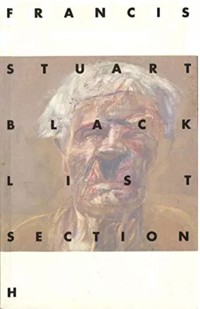
Stuart’s participation in the Irish civil war – as a gun-runner and then as an armed fighter – has frequently been described as an apolitical adventure, or as one in which an initial enthusiasm for the republican cause quickly gave way to intense disillusionment with it.11 This view of Stuart’s attitude, so difficult to square with the uncompromising opinions expressed in the Sinn Féin pamphlet which appeared mere months after the defeat of the Irregulars, takes its cue (as do most of the prevailing views of Stuart’s attitudes) from his autobiographical novel BlackList,SectionH:
The civil war created doubt and confusion, and thus a climate in which the poet could breathe more easily. Instead of uniting in a conformity of outlook that had to appeal to dull-witted idealists as well as those with intelligence, it divided people. And once the process of division had started, H foresaw it continuing, and subdivisions taking place, especially on the Republican side, perhaps creating small enclaves of what he looked on as true revolutionaries whose aim had less to do with Irish independence than in casting doubt on traditional values and judgments.
He was spending a lot of time at the bedside of a Republican officer who’d been wounded in an attempt, with some of his men, to join up with the Four Courts garrison at the start of the fighting. This was because H sensed in him a mode of consciousness closer to his own than that of the few members of that I.R.A. he’d met at his mother-in-law’s. Theirs, as hers, he’d had the feeling, was a one-track, political approach to something that for him had other more complex aspects. He realized how little politics could ever concern him with their large-scale, impersonal values.12
Can the character being described here be the young man who, within two years, would declare that if Ireland fell ‘short of a Republic by one slight word or one inch of ground, our struggle would be useless’? Who would call for ‘a constructive and national distribution of products based upon a universal plan of organisation of production’ as the only way to ‘save the country’?13 Who would compare Ireland’s struggle with England to Austria’s struggle, carried out by means of ‘administrative organisations’, against the perceived dominance of the Jews? Clearly not; and what is striking is not the disparity between what Stuart said in 1924 and what he wrote several decades later in BlackList, but the degree to which a work of fiction has been taken as a reliable guide to the young Stuart’s state of mind and political beliefs.
The question of Stuart’s politics is not merely a detail of literary biography, as it would be for many writers. The widespread view of Stuart as a poet-adventurer of no fixed political abode, a view deriving largely from BlackList, has obscured the fact that many of his writings are filled with politics, and that the political vision they communicate is highly consistent. One need only read these works to see that this is so; but in case there are any doubts about the intentions and implications of texts that frequently defy straightforward interpretation, we have Stuart’s own words to guide us. In his broadcast of 13 November 1943, to take the starkest instance, Stuart said that some of his pre-war books ‘were primarily political, and I only mention them now because I want those of you who listen to me to be sure that what I say now is, in different words, what I said then’.
To which of the pre-war books might he have been referring? Stuart’s second novel, PigeonIrish, published in 1932, imagines a future world war in which Ireland is the last outpost of Western civilization and its spiritual values. This chimes with comments in his wartime broadcasts depicting Ireland as such an outpost, though he also decried the perceived assault on continental civilization by the Anglo-American forces. In his talk of 13 January 1943, Stuart said:
Over ten years ago I wrote a book called PigeonIrish in which I foresaw the coming war and the part we [i.e.Ireland] would have to play in it, and although a few of the outward facts are different I still see our part very much as I saw it then. It is to keep to true and lasting values in the face of the war hysteria and diversion of truth and hypocrisy all around us.
The comment that ‘a few of the outward facts are different’ is an understatement: although Stuart does not go into much detail about the nature of the war taking place on the Continent in PigeonIrish, it is clear that Ireland is not neutral in the war, but allied to a number of liberal states including Britain and the US, against an enemy that seems to be a version of the USSR. Otherwise, though, the reference is apt: in the novel, as in his comments about the actual war a decade later, Stuart envisaged Ireland as a refuge of spirituality and truth.
TheColouredDome, also published in 1932, depicts an Ireland not radically different from the actual Ireland Stuart inhabited in the early thirties, in which a bookmaker’s clerk achieves a spiritual apotheosis by volunteering to martyr himself to the republican cause. As in PigeonIrish, in which Ireland has achieved the status of a republic but is led by men who betray the nation’s revolutionary vision, the country’s political leaders in TheColouredDome (here obviously ‘Free Staters’) are depicted as spiritually lacking. In these novels, politics and war are means to spiritual or mystical ends; but the political scenery is not merely incidental. Stuart’s characters feel themselves alienated in the face of modernity as represented by the enemy power in PigeonIrish, and by the compromised mediocrity of the Irish state in both novels. Their struggles are inseparable from these political contexts.
Stuart’s two novels of 1933 evoke the political crisis that was brewing in Europe at the time. In TrytheSky, Stuart’s characters, travelling across the Continent, find themselves in the midst of a riot by brownshirts in Munich. Stuart referred to this scene in his broadcast of 13 November 1943, saying that in the novel he had ‘described a clash between brownshirts and government forces in Munich, in which I did not hide my sympathies for the revolutionaries, as they then were’.14 In the aftermath of the fighting, the four main characters befriend one Dr Graf, a Nazi who has built a mysterious aircraft. Dr Graf promises that the maiden flight of this craft will have revolutionary implications. The plane, flying west, makes a rather mundane refuelling stop in Ireland, where the Stuart-like character and his girlfriend gratefully disembark. The allegorical implications of the book are not easily discerned, and certainly TrytheSky is not Nazi agitprop.15 But Stuart’s comment to his listeners in 1943 that the book expressed his pro-brownshirt ‘sympathies’ – in the same broadcast Stuart said he ‘admired Hitler from the first days of power in Germany’ – indicates that the book’s political dimension is not simply a matter of local colour.
Stuart’s next novel, Glory, is an astonishingly bizarre book with a plot even more curious and complicated than that of TrytheSky. A company called Trans-Continental Aero-Routes builds an aerodrome on land purchased from a County Galway farmer, Mike O’Byrne. O’Byrne’s teenage daughter, Mairead, befriends one of the company’s top men, a General Porteous, and soon learns that his intentions for the company are more than purely commercial. Porteous tells Mairead of his vision of the future:
‘It [the world] is going to become more and more self-complacent, more and more standardised, more and more benevolent on a large material scale. But cold and ruthless to those who outrage its conventions. To those who threaten its order and organisation. And it will be ruled by a Company. And a student of history might have foreseen it,’ he added. ‘That is the logical conclusion of all the observable tendencies in the last few centuries.’
‘By what sort of Company?’ Mairead asked.
‘By this Company. By Trans-Continental Aero-Routes,’ he said.16
Porteous goes on to tell Mairead: ‘I want to shatter the smugness of the world. All the cold smugness that believes in humanity, that believes in itself. All the pride and self-complacency that it has sunk into. And I will use their own tools to do it. Their own machines.’
Mairead is bewitched by Porteous’s vision, viewing him as ‘one of those lonely figures feared and despised by the world he hated so much’.17 It is agreed that she will accompany him on his mission, to places and towards ends still unknown to her. Mairead knows only that ‘I want to be on the winning side’.18 Porteous is similarly sanguine:
‘I’ve the brain,’ he said, ‘and you’ve the desire, the passion. That’s the combination that wins great victories.’
Yes, yes, that is what she wanted. To ride in triumph by his side. That desire might be mad, preposterous in the eyes of a civilised world. But did not all desire cut across civilisation and society? There were two madnesses, the conqueror’s and the saint’s. They should have died with the past, with all the discarded outworn glamour of the past. But they had not died. […] And the drab world would look up from its money-making, shocked and startled, and hear of them again.19
En route to eastern China, base of operations for the Company’s ‘campaign in the East’, Porteous and Mairead stop in London. Stuart describes Mairead in her hotel room:
While she sat on the bed, half undressed, waiting for the dresses to arrive, she felt that desire, vague and yet poignant, kindle in her again. A thirst for triumph […]
Mairead got up and walked across the room, paused a moment at the window and then stepped out upon the little balcony. She leant with her hands on the balustrade. She smiled with that frank spontaneous joy of a child when he first sees, say, the tree on Christmas morning. Then she straightened herself and raised a bare arm in a little arrogant gesture to a world whose crowds already, in her imagination, were shouting to her from below.20
Shortly after they reach China, Mairead realizes that Porteous is armed with poison gas. He leaves her behind for his first campaign, telling her: ‘I want you to have the fruit but not to see the gathering.’21 Left to the pleasure of a local warlord who is allied to Porteous, she begins to be disillusioned:
She began to see that the true arrogance lay in being quite alone. Unknown to the world and to glory. That was the height after which the noble soul must strive—a deep aloneness. To leave all the fussiness, the pettiness, the gregariousness of the world and be alone. Not to try to conquer it or triumph over it. To desire nothing from it. To be alone.22
Porteous, rampaging murderously across Asia, becomes an international hate-figure, known as the Butcher of Benares; as the Chinese warlord’s consort, Mairead is the subject of lurid press coverage as well. When Porteous finally returns, he declares that the whole experience has made a woman of Mairead, and suggests that this was the point of the exercise. She is sceptical:
‘But do you think a god would upset a world and kill thousands for the sake of making one vain, silly little girl into a woman with a little wisdom and a little humility?’
‘It has been done like that before,’ he said. ‘The gods have their own ways. They will change history by the fall of an acorn or the cackle of a bird and uproot a whole civilisation to mould one little life. But perhaps I am the first person who had ever been allowed to see them at work. Usually no one knows anything about it until afterwards, or not at all.’
‘But why should I be chosen for such a lesson, to be so moulded?’
‘I will tell you what I think,’ he said. ‘You have had the world shocked at you and jeer at you and be afraid of you, and you’ve learnt not to care. Not merely to exult in its hostility, but just not to care. You’ve learnt to be an outcast, as your generation must learn, and when I say “generation,” it may only be a handful, because it is a handful in every generation who mould thought, as they say. They will be outcast from the smug, the self-complacent, from the vast societies of organised benevolence, from the capitalists and the communists. And you shall be the first of these outcasts, the first of the tragic generation.’23
Porteous has his hands cut off by the Chinese warlord and dies of his wounds; Mairead retaliates by killing the warlord, then travels home to Galway. There she finds that an anti-Porteous faction in the Company is sitting in judgment on the others, with whom Mairead allies herself. They receive her as a saviour:
‘But I have nothing,’ she said, ‘and I am an outcast.’
‘A girl shall lead them,’ he said, repeating the words he had spoken the last night she had seen him.
‘Where?’ she asked. ‘To death and torture and disaster. That’s all I’m good for.’
‘They have no one else,’ he said. ‘This generation is full of outcasts searching for they don’t know what. No hero, or conqueror or saint could lead them because they have lost belief in heroism and in sanctity. There has been too much wasted heroism and too much mock sanctity.’ […]
‘Take us where you will,’ Maklakov said. ‘Out of this hell, this futility.’ He spoke as though, not only for himself, but for others as well. For many others.24
The saviour, predictably enough, is found guilty and executed, following a bombastic summation by the prosecutor accusing her of various crimes against civilization.
As is often the case in his novels of the 1930s, Stuart manages in Glory to be at once didactic and puzzling. Like TrytheSky,Glory is allegorical but rather incoherently so. It is possible to read the novel as a study in the value of aloneness and suffering, and in the folly of lusting for power, fame and victory. But Stuart’s vision is defined by the fact that, although these two sides of life are in tension throughout the book – initially in the narrator’s consciousness, and eventually in Mairead’s – he does not present it as a matter of either-or. Glory and suffering are sides of the same coin, linked by common enemies: respectability, sham ‘benevolence’, ‘self-complacency’. While General Porteous represents one side of this coin, and the O’Byrnes’ mystic hermit neighbour Frank de Lacy the other, Mairead fuses both within herself. As he made clear in his next book, ThingstoLiveFor, Stuart believed that to be fully human one must attempt to achieve such a fusion of extremes, and that all else was mediocrity and deadness.25
In ThingstoLiveFor (1934), a volume of autobiography and philosophical musing, Stuart paints himself as a fighter and adventurer who is all at sea in polite society:
I crouch in my dugout under the barrage, cutting a sorry figure, I dare say, but all the same a less sorry one I hope in the eyes of God than the staff colonels strutting at the base who have never been under fire. Living in bombarded dugouts does not fit one for shining in society. […]
How often have I felt that anger in drawing rooms, at cocktail parties, at luncheon parties. Oh God, their chatter, their gossip, their nonsense, and I with an aching heart because of the damned awfulness of things, and if it was my own fault what the hell consolation is that? Take the soldier from the line that was broken after a day-long attack. Dizzy and defeated and tired to death, put him down amongst the intellectuals or the social Moguls. He’ll cut a pretty poor figure all right.26
Much later, Stuart returns to the image of himself as soldier:
I have learnt to glory in the knowledge that there is nothing between me and the enemy, nothing but my own will that will not allow me to surrender. That is the greatest pride of all, the pride of the soldier, gripping a useless rifle, covered with mud, deafened and dizzy, a sorry figure, and yet deep down with that little spark still glowing white that can never be put out and is the most precious thing in the world. Blind faith it has been called. It is at those moments that one gives that yea to life in all its fullness.27
Stuart’s 1921/2 visit to Austria, which gave rise to his remarks on that country in the 1924 Lecture, is remembered in ThingstoLiveFor, as, in rather different form, is the political climate of Vienna at that time. Interestingly, from one who had spoken of ‘Austrians’ being in danger of being driven out of Vienna by Jews, Stuart here writes of befriending a Jewish fur-dealer:
The Jew was also interested in diamonds. I used to go round the shops with him looking at stones. In those days one got thousands of kronen to the pound. If I had been shrewder I would have bought a diamond, but I bought a motor car instead. The fact is I have never been very shrewd in money matters. All the same, we had fun driving outside Vienna in the snow, Iseult, a German girl called Paula, and myself. Once I had the car I did not see so much of the Jew, who was quietly making a fortune smuggling the diamonds out to England. He gave up his fur-dealing because of his fear of anthrax. He was a timid individual. One night when there was an anti-Jewish demonstration in the streets I found him locked in his room in the hotel.
‘Have they passed? Have they gone?’ he asked trembling.
‘They aren’t touching anyone. Only breaking windows.’
‘Ach, how terrible.’
‘My God,’ I said, ‘it’s a pity they don’t break your head.’
I was suddenly angry with him, because there he was making money and I was only wasting it. The car I had bought had broken into pieces. Part of it blew off one wild morning into the Donau Canal.28
It is important to remember that ThingsToLiveFor is a pre-Kristallnacht and pre-Holocaust book: we cannot tax Stuart with our knowledge of what the broken windows were leading to. Even so, Stuart’s cavalier attitude to organized racism is startling. He admits the petty origin of his anger, but this cannot obscure the contrast, from one chapter to the next, between his attitude to himself – ‘in the dugout’, gripping his ‘useless rifle’, heroically weathering the slings and arrows of ‘the intellectuals or the social Moguls’ – and his attitude to the Jew in Vienna, cowering from what Stuart decorously calls a ‘demonstration’. (The ‘demonstration’ itself receives no further comment.) The gulf between the drama Stuart can wring from his own social awkwardness and the matter-of-factness with which he evokes an anti-Semitic riot might seem inexplicable if we didn’t know, from his own words of 1943, about his ‘sympathies’.29
In ThingstoLiveFor Stuart also makes an extended attack on democracy:
Once Dublin was a city of adventure and romance. […] Those days are over and Dublin has become drab, respectable and dead. […] I walk through those streets that I once fought to defend, feeling a little like a stranger. And it was this spirit of smugness and deadness that we fought against and were defeated by. The spirit of liberal democracy. We fought to stop Ireland falling into the hands of publicans and shop-keepers, and she has fallen into their hands. […]
[…] Democracy is the ideal of those whose lives as individuals are failures and who, feeling their own futility, take refuge in the mass and become arrogant in the herd. The productive worker, who takes pride in his work and exults in it, is never democratic because he feels no need for this refuge. He stands alone. He does not believe in the rule of the majority because he does not feel himself to be one of the majority.30
A glimpse at another dimension of Stuart’s political thought is provided by an essay on Eamon de Valera, published in 1935 as part of a book called GreatContemporaries. This is an admiring portrait of a man Stuart terms a ‘democratic genius’ – although Stuart’s endorsement of de Valera’s method of looking into his heart to know what the Irish people wanted suggests that it is this rather undemocratic tendency, and the Chief’s obeisance to the dead generations, that Stuart particularly admired.31
According to Stuart, de Valera ‘has attempted as a political leader to live for his people as a father and a shepherd, taking his inspiration from saints rather than from statesmen’. Stuart speculates that the success of such an attempt ‘might be the one effective answer that has yet been given to such impersonal systems as Communism and Fascism’. He endorses de Valera’s opposition to the Treaty, and writes that during the civil war ‘He was no longer the leader and protector and father of his people, but an outcast, a fanatic, an embittered extremist in the eyes of the majority of them.’32 For Stuart, ‘outcast’ and ‘fanatic’ are terms of praise, and the beliefs of the ‘majority’ are to be viewed with extreme mistrust.
Had de Valera accepted the treaty he would doubtless be where Cosgrave and the others of the pro-treaty party are today, completely and, I think, finally discredited. As it is, he is still the strongest force in Ireland because he has shown himself in 1916 and in 1922 capable of going his own way towards the goal that he sees, whether the people whom he loves follow him or not.33
Stuart concluded his essay with a dark suggestion that de Valera was becoming too much the democrat:
Already there are signs that he has finally bowed to the wishes of the people whose servant he considers himself, has finally renounced those flashes of undemocratic fire that led him into the 1916 rebellion and into the civil war of 1922. If that is so there can be only one end. The people for whom he has sacrificed himself will finally throw him over. Because, in their hearts, although it may take a long time for those hearts to realize it, they will only follow, year in, year out, a leader who dares to lead them to the heights; to those heights of national aspiration which it is so hard for anyone outside Ireland to understand.34
Stuart’s hostility to democracy, his sympathy for the brown-shirts and nonchalance towards anti-Semitism in Vienna, and the implicit politics of several of his novels of the 1930s collectively raise the spectre of fascism. Was Stuart a fascist at this time? It is an obvious question, but perhaps not a terribly useful one. During the 1920s and 1930s, fascism was many things to many people; and it exercised a particularly plastic fascination on writers and intellectuals. There is little evidence that Stuart was interested in fascism perse. Italian fascism, upon which W.B. Yeats cast an intermittently indulgent eye over the years between Mussolini’s rise and his own death, figures not at all in Stuart’s pre-war writings, and Italy is invoked only fleetingly in the wartime broadcasts. There does not appear to be a single reference to the Spanish civil war in Stuart’s writings of the 1930s; this silence may have had something to do with the political orientation of Franco’s Irish supporters.35 Irish civil-war politics would also have ensured that Ireland’s only indigenous fascist movement, the Blueshirts, held no appeal for Stuart.
In the 1935 essay Stuart suggested that de Valera’s political persona as ‘a father and a shepherd’ ‘might be the one effective answer that has yet been given to such impersonal systems as Communism and Fascism’; and in ThingstoLiveFor he went so far as to claim that ‘I know little of politics and, for an Irishman, I have little interest in them’. But a declared lack of interest in fascism as a ‘system’, and in politics generally, does not end the discussion. One of the attractions of fascism, particularly to artists, was its claim to be above politics: it drew upon aesthetics and appealed to spiritual rather than strictly political sensibilities. As Walter Benjamin famously had it, ‘The logical result of Fascism is the introduction of aesthetics into political life.’36 It follows from this that those of an aesthetic disposition – particularly in faraway lands – might be peculiarly inclined to embace the aesthetics of fascism without fully realizing that they were adopting a politics as well.
What Stuart had in common with the famous writers of this era whom we associate with fascism – Yeats, Pound, Céline, Wyndham Lewis, and many others – was a hostility to democracy, rationalism, materialism and modernity (not to be confused with Modernism). Beyond these things, it is difficult to generalize about a literary tendency that has proved far easier to identify than to define; and it is correspondingly difficult to locate meaningful parallels or divergences between Stuart and the famous ‘literary fascists’. It might be useful to observe that whereas these writers were broadly linked by what they were against, they took very different paths in terms of what they were for, and these paths tended to be defined by personal circumstances. Just as friendship with Pound coloured Yeats’s attitude to Italian fascism, so Stuart’s travels in Germany and Austria in 1921/2, and his sympathy for an uncompromising Irish republican element that was willing to collaborate with the Nazis, helped to provide the spiritual and practical foundations for the non-literary activities to which his own fascist leanings eventually led him.
The question of literary anti-Semitism is cognate to that of fascism, but not identical with it. Yeats was sympathetic to fascism, and late in his life wrote a pamphlet called OntheBoiler in which he advanced a hair-raising defence of eugenics and looked forward to the coming of war with something approaching glee; but he was not, so far as we know, an anti-Semite. T.S. Eliot was an anti-Semite, and he felt some of the ‘cultural despair’ (Fritz Stern’s term) that characterized the literary fascists, but his politics were not fascist in any meaningful sense.37 The same could be said of said of several other anti-Semitic writers of the age. In the case of Stuart, evidence of anti-Semitism – in his 1924 account of 1921 Vienna – predates published evidence of a specifically fascistic politics; but it may be that the anti-Jewish riot Stuart seems to have witnessed in Vienna at the age of nineteen was a seminal event with regard to both strains in his thought. The degree to which Stuart might have absorbed anti-Semitism from his family and from the Irish republican movement – to say nothing of Irish society generally – must remain a matter of conjecture, not least because in his writings and interviews Stuart projected the persona of a man radically alienated from such everyday influences.
Jewish characters figure in several of Stuart’s novels of the 1930s. In his first novel, WomenandGod (1931), there is a lunch scene in Paris during which a Russian character called Laura speaks and thinks anti-Semitic thoughts about a fellow Russian called Madame de Solanges (‘Russian – hell. She’s a Jewess. A Russian Jew.’). There is nothing ambiguous about Laura’s anti-Semitism, but the import of the scene as a whole is difficult to discern. Laura is a sympathetically drawn character, but her behaviour in this scene is out of character, probably because her husband has just left her. To complicate matters further, Laura’s anti-Jewish outburst is preceded by a conversation between the lunching group and a black man called Paul, whom Laura knows and views with disgust. Paul, sensing her hostility, speaks his piece:
‘Where do I belong? I live here in Paris. I was born here. Where should I go? Into the jungle, you think? Back to the jungle. Ah, you too despise us niggers. We are worse than the Jews. They have a bad time too.’
This exchange seems to feed Laura’s rising anger:
She felt over-taut. At a white heat. And cold at the same time. Her breasts were paining. She felt their points press against her dress. She put her hand to her left breast. Touching it with her hand made her tremble. She had to talk. She had to say something to take her mind off the way she was. If only that Jewess weren’t sitting staring at her. God! What a woman to be with! To be with, and to be feeling like she felt!38
The lunch scene in WomenandGod does not admit of any unquestionable interpretation; but it might be read as a study in the way private pain can give way to public expressions of latent bigotry, rather than an exercise in such bigotry itself: it seems to take anti-black and anti-Jewish feeling as its subject rather than its purpose. Madame de Solanges, though a complicated and not wholly sympathetic character, is not depicted stereotypically or with particular hostility.
Of the six novels Stuart published between 1935 and 1939, three have important Jewish characters. While Stuart attributes to these characters traits that are wholly consistent with anti-Semitic stereotypes, as well as traits that most people would find repellent, Stuart himself, in two of the three cases, attaches positive value to these traits and paints the Jewish characters in a mostly sympathetic light. Máire Mhac an tSaoi has argued that this is ‘a common and not very subtle form of deniable racism’:
Mr Stuart professes to like Jews; his works tell you why. He has an affection for them because they are pimps, smugglers, even quasi-collaborators; he likes them, as an old-time Southern colonel liked blacks, for their defects.39
Mac an tSaoi is justified in seeing Stuart’s apparent affection for roguish Jews as problematic, but she fails to notice that Stuart’s novels are filled with sympathetically drawn characters who possess such ‘defects’, and that these characters are usually not Jews. If there is anti-Semitism in any of these books, it does not reside in the fact that some of the criminals and rogues who inhabit Stuart’s pages happen to be Jews.
Stuart’s three major Jewish characters of the 1930s are the film producer Sam Salmon in InSearchofLove, the penniless South African teenager turned corrupt London fire assessor Ben Goldberg in Julie, and the Liverpool workhouse orphan turned successful Dublin banker Ike Salaman in TheGreatSquire. Sam Salmon, unlike the other two, is depicted in a wholly negative light: he is an unscrupulous manipulator who exploits those around him and makes fatuous speeches about being a common man. (This is in sharp contrast to Ben Goldberg and Ike Salaman, who are resolutely plain-spoken.) It is not impossible to imagine a character of Salmon’s traits being depicted in a positive light in a Stuart novel; but in fact Salmon is a pure stereotype, and in portraying him Stuart neither questions nor transcends, but simply replicates, the garden-variety anti-Semitism of the day.40
Ben Goldberg and Ike Salaman are more difficult to assess as Jewish characters, because in creating them Stuart does a number of seemingly conflicting things: he perpetuates stereotypes; he calls attention to the anti-Semitism of other characters; and he comes close to inverting the value system from which the stereotypes derive their hateful power. Goldberg, a South African teenager on the make in London, sets up as a fire assessor and quickly decides that in order to get ahead he will have to collude in arson. The novel’s central character, Julie Harben, idealizes Goldberg, telling him that he could ‘be something grand’:
‘Not me, Julie. Not grand; that’s not my line.’
‘Yes, it is,’ she answered stubbornly. She was regarding him with serious brown, wide-apart eyes and out-thrust underlip.
Goldberg laughed. He had no illusions about himself.
‘What else is there but to make money?’ he asked.
‘Lots of things,’ she said.
‘Not for a fellow like me. That’s the only way I have of being somebody, see? I don’t want to remain just a third-rate little Jewboy all my life.’41
Goldberg’s obsession with making money chimes, of course, with anti-Semitic stereotype and is inimical to Stuart’s hatred of materialism, a hatred that is voiced by Julie. Yet Julie loves Goldberg, and her scruples about his scam are balanced by a sympathetic understanding of his rationalization for what he does:
You think because I’m a fire-raiser I’m the lowest of crooks, an enemy of society, eh? […] But I’ll tell you something. I’m a benefactor of society compared to most factory owners, big store owners. I don’t defraud the poor and squeeze the last ounce out of them. I go for the rich, Julie; for the Insurance companies and for the banks.42
This couldn’t be further from the anti-Semitic lie that Jews are the controlling conspirators in a rapacious global financial system; Goldberg’s few co-conspirators are not, to judge by their names, Jewish, and his enemies are, as he says, the big banks and insurance companies. There is, of course, a large dollop of casuistry and bad economics in Goldberg’s rationalization – banks and insurance companies will always simply pass on the costs of fraud to their customers – but Stuart clearly means it to be taken seriously.
Stuart describes Goldberg working at a fire scene:
There he was, playing this game with the actual pieces in his hands. Not doing it in a remote way only, with figures, watching tape-machines. He had to have something solid he could handle or at least kick over with his feet. Such abstractions as ‘Pig iron steady’ or ‘Industrials easier’ would have meant little to him. But when it came to the real stuff of the big-town game behind these symbols, then he was in his element, then his genius got to work. His small blue eyes had only to glance at a bit of cloth, a piece of furniture, a fragment of china, and he knew all about it, that is, all he needed to know about it. Its value to a shilling.43
Here, again, Stuart attributes to Goldberg a stereotypically Jewish trait: a belief that the monetary value of an object was ‘all he needed to know about it’, and a ‘genius’ for reckoning that value. As against this, though, Goldberg is unable to relate to the ‘abstractions’ of international finance. Most importantly, perhaps, Julie sticks by Goldberg, even when he is sent to jail, and the book ends with Julie dreaming of being reunited with him and going back into business. The whole logic of the book depends on the reader feeling sympathy for Goldberg; and if Stuart’s intent had been anti-Semitic the book would have had to end differently.
Ike Salaman, the Jewish character in TheGreatSquire, is in several respects very similar to Goldberg. He is even more fanatically obsessed with making money:
His keen swarthy face glowed with the cold passion that consumed him as he bent over the grey parchment. Figures. How secretly beautiful they were! What delight in getting them to dance to one’s own tune! Ah, that was the real happiness: this secret mathematical dance of figures, in rows, in spidery waltzes, in formal gavottes, to that thin maddening tune that he had long dreamt of but only heard for the first time to-day, the clink and clank of a great number of sovereigns.44
As with Goldberg, this obsession with money appears to arise primarily, if not wholly, from the fact that Ike Salaman is a Jew; and in this, Stuart is guilty at the very least of a sort of abdication of the fiction-writer’s duty to create fully human characters, and at worst of perpetuating a stereotype that, in 1939, the year of the novel’s publication, was being used to frightful ends in Europe. At the same time, as in Julie, the whole logic of the novel depends on the reader feeling an essential sympathy for this roguish Jew, and Stuart goes to some lengths to engender such sympathy. If Salaman’s almost mystical love of money appears to be attributed to his ‘race’, his desire for success has roots in terrible memories of the orphanage from which he escaped:
He thought of the two little boys murdered in the outhouse of the Galilee Home. That sobered him. It was his sign, his secret banner; for it he was ready to suffer and to make suffer. They had been tortured to death because they had been born into the world paupers. There had been seared into his mind the terrible injustice of society. He accepted it; he had nothing of the reformer in him, no urge to alter it. But he would, accepting the rules, see if he could play the game better than almost any one else. In that queer way he also felt that he was revenging those two innocent victims whom he had sworn never to forget.45
The reasoning here may seem incoherent, but it is consistent with that of other sympathetic characters in Stuart novels, most obviously General Porteous and Mairead O’Byrne, who wish to ‘shatter the smugness of the world’ using its own tools. And just as Julie ends with an invocation of the fruitful reunion of its spiritual female protagonist and a materialistic Jew, so TheGreatSquire ends with its spiritual female protagonist going to a ball on the arm of Ike Salaman.
It is perhaps impossible to arrive at any ironclad reading of the three major Jewish characters in Stuart’s novels of the 1930s. Stuart unquestionably traded in stereotypes, and Anthony Cronin’s claim that ‘there are in fact no anti-Semitic sentiments expressed anywhere in all the millions of words’ Stuart wrote is unsustainable, even if we restrict ourselves to the fiction.46 The history of anti-Semitism is, among many other things, the history of a demonization that has often gone hand-in-hand with an idealization: the Old Testament image of a spiritual people is held up against the perceived decadence of modern Jews. With Ben Goldberg and Ike Salaman, Stuart might have been trying, however unconsciously and problematically, to dissolve this fictive binary by imagining a spirituality of materialism. (In some of his postwar novels, however – most notably VictorsandVanquished (1958) – the binary is intact. Stuart’s use of ‘spiritual’ Jewish characters to mouth a critique of modern Jewry seems enormously presumptuous in a way that the pre-war novels never are, and is unconvincing as either social commentary or fiction.47)
It is natural that post-war readers, knowing of Stuart’s collaboration with the Third Reich, would look with a sharp eye at Stuart’s depiction of Jews in his pre-war novels. If they expect to find a degree of anti-Semitism commensurate with that of the Nazi state, they will be disappointed – but they should not be surprised. As that state has come to be identified, understandably, with its greatest crime above all its other deeds, so we expect those non-Germans who supported that state to have been motivated primarily by hatred of Jews, and we may be predisposed to detect murderous implications in milder anti-Semitism. This expectation overlooks the degree to which anti-Semitism was a widespread and even respectable form of prejudice in Ireland and in Europe generally during the 1930s,48 and also ignores the much broader appeal exercised by fascism upon many artists and intellectuals in that decade.
There is no evidence that anti-Semitism was a motivating force in Francis Stuart’s decision to live, teach and broadcast in Nazi Germany. At the same time, it is difficult to avoid the conclusion that some strain of anti-Semitism was a necessary enabling factor in that decision. We know that Stuart was willing to write in the mid-thirties of how unmoved he had been by an anti-Semitic riot in Vienna. And we know that in the late thirties Stuart was reading the papers, which were increasingly filled with accounts of the persecution of the Jews by the Third Reich. On 9 December 1938, a month after Kristallnacht, Stuart wrote the following letter to TheIrishTimes, which published it on 13 December:
Sir,—For some months past there have appeared in the European situation features that may gravely affect us in Ireland. I am going to take up a little of your space in the belief that a recognition of these is a matter of considerable importance.
First, there has been a widespread tendency to identify religion with democracy. Without going into the relative merits of varying forms of government and social organisations (a thing, however, that badly needs doing), it must be remembered that no Church can, by its nature, affiliate itself to any social ideology. It is true that its individual members, not excluding the Pope, may do so.
It was a very remarkable fact, and one responsible for not a few converts to Catholicism, that the Vatican remained completely independent of, and unswayed by, the new scientific theories of the last century, many of which were later jettisoned. It would be all the greater pity if it were to show any tendency to be influenced by one of the several sociological theories of the present age.
Whenever this has happened before, as in the case of the Divine Right of Kings, a later age has found such advocacy unjustifiable. So I am certain that a time will come when any too whole-hearted advocacy of democracy (as experimentally practised in the English-speaking countries) on the part of the Vatican or any large portion of the Hierarchy will seem to future Catholics equally strange.
My second point (there are others which I must forego for the present) is in connection with the Irish plans to aid refugees published in to-day’s papers. This has a direct bearing on what I have already written. With slums such as we have in our large towns, with nearly one hundred thousand unemployed, with many of our fellow-countrymen living on, and even over, the border line of starvation, such an appeal for funds must seem ironical to an unprejudiced observer. I suggest that those most closely connected with the scheme are not unprejudiced. It seems to me that this plan is calculated to prove the humanitarianism of the democracies compared with certain countries where such an idea does not prevail. True charity begins at home. In the parable of the Good Samaritan we learn that our neighbour is he who is nearest at hand. Thus I cannot help feeling that until democracy has proved its humanitarianism more thoroughly in the spirit of the Gospel it scarcely enhances its appeal by these gestures on behalf of suffering foreigners.
It is worth pointing out, once more, the divergence between the tone and mode of thought of this letter, and the disengaged consciousness described in BlackList,SectionH: this letter alone should be enough to put an end to the oddly persistent tendency among Stuart commentators to explain his German sojourn in the terms established by that novel. More surprising is the divergence between Stuart’s view of Ireland as a sort of haven, or ark, in a chaotic world, as expressed in WomenandGod and PigeonIrish (and also in the wartime broadcasts), on the one hand, and his opposition to a modest plan for receiving refugees in Ireland on the other.49 Perhaps most disorienting, for anyone who has read Stuart’s meditations on suffering and pity, is that in 1938 Stuart opposed letting refugees into Éire because such a scheme wouldmakedemocracylookgood.




