


Erhalten Sie Zugang zu diesem und mehr als 300000 Büchern ab EUR 5,99 monatlich.
- Herausgeber: Birlinn
- Kategorie: Geisteswissenschaft
- Sprache: Englisch
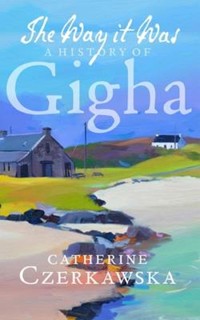
The island of Gigha is a small gem, the most southerly of the true Hebridean islands, lying just off Tayinloan on Scotland's Kintyre peninsula. Gigha's good harbours, fertile land, mild climate and strategically useful position have given it a fascinating history. Catherine Czerkawska relates the sometimes turbulent story of the people of Gigha, from the settlers of prehistoric times, through successive incomers including the Celts, the Vikings, and the McNeill lords of this island. A few years ago Gigha was the subject of the largest community buyout in British history, and she brings the story up to date, in examining the relationship between a contemporary island community and its own rich past. The author, like so many people, fell helplessly in love at first sight with Gigha and returns to it time and again. This book explores just what it is that makes the island such an enchanting place.
Sie lesen das E-Book in den Legimi-Apps auf:
Seitenzahl: 486
Veröffentlichungsjahr: 2016
Das E-Book (TTS) können Sie hören im Abo „Legimi Premium” in Legimi-Apps auf:
Ähnliche




















THE WAY IT WAS
This edition published in 2016
by Birlinn Limited
West Newington House
10 Newington Road
Edinburgh
EH9 1QS
www.birlinn.co.uk
Copyright © Catherine Czerkawska 2006, 2016
First published as
God’s Islanders: A History of the People of Gigha in 2006
The moral right of Catherine Czerkawska to be identified as the author of this work has been asserted by her in accordance with the Copyright, Designs and Patents Act 1988
All rights reserved. No part of this publication may be reproduced, stored or transmitted in any form without the express written permission of the publisher.
ISBN 978 178027 385 3eISBN 978 085790 920 6
British Library Cataloguing-in-Publication Data
A catalogue record for this book is available from the British Library
Typeset by Initial Typesetting Services, Edinburgh Printed and bound by Grafica Venetawww.graficaveneta.com
There’s such a lot that needs to be done. We have a million pounds to return to the Land Fund. It’s a lot of money. But we’re out here in the Western Isles where hardy men survive and I think we’ll do it. There is no doubt in my mind at all that each and every person here will do their very best to see that it is paid back, because a Highlander is always known for his straightness and honesty. We’re helped by a lot of professionals. Many a thing I’ve done in sixty-six year, but I’ve never bought an island.
Willie McSporran MBE, discussing the state of Gigha and repayment of the £1 million loan that helped the islanders to buy their home in 2002
*
Contents
List of illustrations
Acknowledgements
Maps
1. The Road to Gallochoille
2. Sailing to an Island
3. The Lost Language of Stones
4. The People of the Horse
5. The Well of the Winds
6. Leim
7. The Magical Galbraiths
8. Kilchattan
9. The Norseman’s Scales
10. The Lords of the Isle
11. The Kirk and the People
12. Farmers and Fishermen
13. Achamore
14. The Keeper of the Purse
15. Faith, Hope, Charity . . . and Harmony
16. Postscript: A Pilgrimage Rewarded
Appendices
1. From The Book of the Dean of Lismore
2. Eighteenth- and Nineteenth-century Population Returns for Gigha and Cara
3. The Road to the Isles
4. Transcriptions of a Series of Conversations with Willie McSporran
Notes
Select Bibliography
Index
Illustrations
List of Illustrations
Waiting for the ferry at the Gigha pier
MV Lochshiel approaching the pier
The pier with small steamer leaving
The steamer Lochiel, leaving West Loch Tarbert, Argyll
Young Willie McSporran
The Arran, which took over from the Lochiel
The Bodach and the Cailleach at the south of the island
Islay Allan on the pier
Carraig an Tairbeart, the so-called Druid’s Stone, at Tarbert
Kilchattan – the remains of the old church dedicated to St Cathan
Malcolm McNeill’s grave at Kilchattan
South Ardminish Farm and the Gigha Hotel
Corn stacks at South Ardminish
Another view of the orderly South Ardminish land
Duncan McNeill
Sandy Orr’s Shop in Ardminish Village
The Rev. Kenneth MacLeod, minister of Gigha from 1923–1948
Malcolm Allan, head gardener at Achamore, with Kitty Lloyd Jones
Malcolm Allan with Peter McCallum and Donnie McNeill
Katie Wilkieson, Helen Allan, Angus Wilkieson and Mary McSporran
A three-horse yoke
Carting in the old way at Ardlamey Farm
Building a stack at Ardlamey Farm
Old Mill Wheel at Ardailly
Waiting for the steamer
Waiting for the ferry
Mr Sinclair of Ardlamey, transporting his sheep
Harvest time at Ardlamey
Donald and George Allan
Malcolm Allan and companions at North Drumachro
Angus and Hugh McVean, Helen Allan and Mary McSporran
A shipment of sheep awaiting the ferry
Seumas McSporran and sheep on the pier
Tarbert Farm
John Martin rediscovering The Great Well
The Holy Stone at Cnoc Largie, near Tarbert Farm.
Typical Gigha landscape, looking east towards Kintyre
Summer pastimes
The Lochiel, coming into the pier on a fine calm day
From Ardlamey
Willie McSporran, aged 30
Tigh Mor, 2010
Willie McSporran, the author and her son, 1993
Acknowledgements
Thanks are due to:
The Isle of Gigha Heritage Trust
Willie and Ann McSporran, for many years of friendship, for so much invaluable information and for lending me their photographs
John Martin, for showing me the great well and the holy stone and for lots of other information besides
Rona Allan, for answering all my questions with kindness and patience
Lorna and Archie McAlister, for their help and hospitality (and for the tows, twice in thirty years isn’t bad!)
The late Angus McAlister, whose presence is much missed
The late Vie Tulloch, for her enthusiasm and knowledge
Kenny and Malcolm McNeill and the late Betty McNeill
Kenny and Betty Robison of Springbank
Freddy and Val Gillies
Russell and Caroline Town
Andy and Viv Oliver
And everyone else from the island who has shown us so much kindness over the years
Also to:
Angus and Kenneth Allan for the loan of photographs, and for all the detailed accompanying information about them
Seamus McSporran of Gigha and Ardrishaig (the man of the fourteen hats)
Glasgow University Hunterian Museum, Paisley University Library, the National Library of Scotland and The Scots Magazine
Angus Martin and the Kintyre Antiquarian and Natural History Society for their excellent online resource, the Kintyremag, which so often lead me back to primary sources
The Scottish Arts Council for the bursary that made this project possible and which came at exactly the right time; to the Authors’ foundation, for their invaluable help towards initial research; and to the Royal Literary Fund
Finally, as always, thanks to my husband Alan and son Charles as well as family and friends for their help and support
From J. Blaeu, Theatrum Orbis Terrarum Sive Atlas Novus, vol. 5.Reproduced by permission of the Trustees of theNational Library of Scotland.
1
The Road to Gallochoille
There is an old saying that when the gorse is in bloom, kissing’s in season, the reason being that there is some kind of gorse, or whin as it is called in Scotland, in bloom, just about all year long. Even midwinter sees a scattering of yellow flowers, but in spring, on the Isle of Gigha, a glittering surfeit of yellow dazzles your eyes to the point of pain.
At the heart of the island, across from the main gates of Achamore House, you will find the road to Gallochoille, a narrow rutted track, leading towards the sheltered east coast, a typical Gigha track, with gorse flowering on either side. Driving or walking, the effect of these high banks is uncomfortably intense. On a sunny day, and the island has many sunny days, when clouds leap over this sliver of land to shed their rain on Kintyre, the scent is an intense coconut. I always find myself wondering what people equated it with before they had ever smelled coconut oil and whether anyone, travelling to foreign parts, exclaimed that the coconut smelled exactly like the whins back home in Scotland.
At the end of the road to Gallochoille is a sheltered harbour, one of so many, where old creels lie heaped together, incongruous splashes of blue and orange twine on the grass. A pair of big grey mullet are often to be seen, winding their way sinuously along the sandy bottom. These fish are practically uncatchable. They will come up and nose at the bait but never take it if there is a hook attached. Like the wise fish of Celtic legend, they seem to have some sixth sense that protects them. Up on the rise, to the right of the harbour, are the remains of an old dun, or hill fort.
Between the jetty, home to a few small boats, and the dun, a couple of houses lie huddled away from the worst of the weather. These buildings are some 200 years old, but there is evidence that Gallochoille was once the site of a much older laird’s house, although I have never seen anything to indicate its location.
The smaller of the cottages at Gallochoille used to be the home of the late and much missed Vie Tulloch, until she moved to one of the newly built houses in Ardminish village. She lived with a whippet called Jazz, as slender, elegant and full of character as she was herself. The unrenovated cottage was simply furnished, homely, comfortable and crammed with books and paintings. Down there, Vie created many beautiful woodcarvings, usually working to commission and often using found woods from the shores of the island, with wildlife as her inspiration.
Long before we were married, my husband and his brother-in-law were running their own small diving business in Scottish waters. They were fishing for clams in the perilous Sound of Gigha when the engine of Striker, their small boat, broke down. Some local fishermen came to their rescue, among whom was a certain Willie McSporran and a very young Archie McAlister, but as well as towing ropes, they threw a six-pack of beer aboard which greatly impressed the weary divers. Alan and David spent some time on Gigha while the engine was being repaired, mostly with spare parts, cannibalised from an elderly vehicle, by that same Willie McSporran.
Cue forward some years to the birth of our son in 1986. My husband had been talking about Gigha for as long as I had known him. It was his talisman, an iconic place, which had somehow lodged itself in his mind. Whenever it was in the news, usually because the whole island was on the market yet again, like a house where nobody can quite settle, he would say ‘One day I’ll take you to Gigha.’ Sometimes he would vary it with, ‘If I was a multi-millionaire, I’d buy Gigha.’
By that time, he was working as a yacht skipper, for a small Clyde-based company, so – although there was little chance of him ever becoming a millionaire – the island was a regular stopping-off place for him, the first port of call after a yacht rounded the Mull of Kintyre, on its way north and west. But I had never been there, although I had heard plenty about it.
When our son was old enough to appreciate beaches and paddling and fishing, the time suddenly seemed ripe and we booked a holiday, staying in the post office, which also houses the island’s only shop, and which was then run by Seamus and Margaret McSporran, brother and sister-in-law of the redoubtable Willie. Seamus, incidentally, was the legendary man with all the jobs. Various newspapers would photograph him, wearing his many hats: shopkeeper, hotelier, taxi driver, undertaker, part-time policeman, sub-postmaster, fireman, ambulance driver. He had a total of fourteen different occupations at one time, and I’ve often wondered if the Dennis Lawson role in Local Hero – charming hotelier, accountant, general Mr Fix-it – wasn’t modelled to some extent on Seamus.
I found myself enchanted by Gigha. It is hard to analyse why such a small place should be so magical. Partly it is the landscape itself, which is varied and peculiarly pleasing: an island some seven miles long by a mile and a half broad, and yet with twenty-five miles of coastline. There are white sandy beaches and bays, rocks and islets in plenty. Moreover, the interior of the island is as complex as the coastline, full of hidden valleys and large numbers of archaeological remains, testament to a long history as a place of human habitation. Partly it is the people, who are friendly and welcoming. And partly it is something else, some quality that is still hard for me to define.
Like Prospero’s Isle, Gigha seems to me to be an enchanted place, one which contains within a relatively small area hundreds of reminders of the past. It is a peculiarly resonant place, where many layers of history and tradition are overlain, one on top of another. Nothing is lost, and everything, in some sense, remains. It is a place where the islanders walk a tightrope between history and hope for the future, and so far seem to be doing it with a great deal of grace. Over successive visits, I found myself fascinated by the relationship between the complex landscape of the island and the equally complicated history of the islanders. Then, some years ago, I was commissioned to write this new history of the people of the island.
Several excellent books have already been written by Gigha devotees and it was to these, as well as to primary sources, that I turned for my first overview of island history. Anderson’s The Antiquities of Gigha, first published in 1939, is a detailed account of the archaeology of the island as precisely observed and recorded by the Revd R.S.G. Anderson. Most of Anderson’s archaeological work was concerned with Galloway, which seems to have been where he was based, but he made an exception for Gigha. His descriptions of the archaeology of the island are most valuable because he made accurate observations and measurements at a time when the landscape had changed very little and his book, small enough to slide into a pocket, accompanied me on many an island foray.
Kathleen Philip’s paperback, The Story of Gigha: The Flourishing Island, published by the author, in Ayrshire, in 1979, is an astute piece of research into island history, particularly that of the McNeills. Life on God’s Island by Freddy Gillies is a highly readable account of everyday life on the island within living memory. Freddy also writes about the fishing industry of Kintyre from direct personal experience, while Vie Tulloch researched and wrote about the flora and fauna of the island over many years.1 Social historian Angus Martin has written extensively about the folk history of Kintyre itself and the fishing industry in Argyll and the islands, with plenty of references to Gigha, and his recent book Kintyre Country Life has been a helpful resource for me. There are also several accounts of the island from travellers in preceding centuries, not least an early mention from Martin Martin in his Description of the Western Isles of Scotland Circa 1695 as well as Captain T.P. White’s Archaeological Sketches in Scotland, which has a whole chapter devoted to Gigha in the nineteenth century, with particular references to the carved stones at Kilchattan.
What emerged very clearly from all these texts was that those who write about the island do so with the affection that seems to strike everyone who visits or who lives there. However, I still felt that there was a great deal that I would like to explore, and so much that could be deduced about the history of the island, not just from documentary evidence, but from the landscape itself. I researched my book over a period of years, but work was slow and the demands of earning a living kept intervening. Then a grant from the Authors’ Foundation, and a generous bursary from the Scottish Arts Council allowed me to devote much more time to writing the book. The Way it Was is the result.
This is an account of the island and the people who inhabited it, broadly covering the years from prehistoric times to the present day and organised as much by place as by chronology. I hope that it covers some territory not addressed before, as well as analysing certain factors of island history in a new way. With a Master’s in Folk Life Studies from Leeds University, I have always had an interest in place names and their origins, and even in my plays and my fiction, I have found myself turning to social history and prehistory for my themes and stories. Consequently, this is very much a personal exploration, a writer’s account of a much-loved place, as well.
I set out to explore the history of Gigha through the people who lived there and the places where they lived. Not unexpectedly, I found that the changing settlement patterns of the island, where and how people lived, reflected the changes in the nature of the successive people who had made Gigha their home. As well as drawing on the work of others, I have made my own investigations, and have compared events on Gigha with happenings in the wider Scottish world. But invariably, I have gone back to the island, time and time again, because it is there, among the islanders now, and among the remnants in stone of those who have gone before, that I have found the most convincing answers to some of my questions. Gradually a picture has emerged that involves the fascinating warp and weft of a small community evolving and changing over the many hundreds of years of human occupation, a community moreover that seems to me like a microcosm for developments within a wider Scotland.
Gigha has always had a certain strategic importance. When, during the first millennium, Gaelic-speaking émigrés from Ireland established their kingdom of Dalriada, with Dunadd, near Lochgilphead, at its heart, the Kintyre peninsula was a significant area of settlement, and Gigha, with its excellent, sheltered harbours, was seen as a pearl of great price for more than one group of warrior-bearing ships. This geographical accident has been its blessing and its curse throughout its long history and this is still, to some extent, true, although for different reasons. For much of the second half of the twentieth century, the island was perceived to be ‘unspoiled’, a remote and beautiful paradise island for a string of more or less suitable owners. Then, with the new millennium came another profound change. Over the past few years, for better or for worse, Gigha has often been in the news as the place where the islanders have at last contrived to buy their own island. We have seen Gigha, along with a handful of small Scottish communities, leading the way, showing us just how our perceptions of land use and community ownership in Scotland might develop, so that our small, vulnerable settlements can remain not just viable, but thriving monuments to co-operative living. None of this has been easy, and there have been teething troubles. But it seems to me that it is better than the alternative.
This book is dedicated to so many people who have been helpful to me over all this time, and they are named and credited in the acknowledgements. But some of them deserve a more special mention. The first is the late Vie Tulloch herself, who on one of our sporadic visits to the cottage at Gallochoille, showed my son the wings of the birds of Gigha. By that time my husband was also working as woodcarver, so visits to Vie were full of conversations about the properties of different woods and the advantages or otherwise of power carving tools. On one memorable afternoon in her sheltered garden, within tantalising sound of the sea, she brought out a plastic bag and shook it onto her table. We were astonished to see that it contained dozens of wings, of many species, some of them feathered, most of them tiny configurations of bones, and a few avian skulls as well. She told our fascinated son that she had picked most of them up on the beach. The birds were long dead, and had been washed ashore. As a sculptor she needed to know exactly ‘what lay beneath’ and how it all worked. It struck me then that, as a writer of fiction, I too needed to know what lay beneath. In researching and writing this book about Gigha, I think that the same desire applies. It is an attempt to find out what lies beneath, how it is constructed, the pattern of it, and how it all fits together, how it all works.
My second invaluable helper was a man I met late in the day, but I had seen him on television, talking about the island at the time of the community buyout. John Martin had been the estate joiner and carpenter on Gigha for many years and consequently is familiar with every inch of the place. I found him to be a man after my own heart in his appreciation of the landscape and history, his sense of what is precious about the island and his vision for its future.
‘When the idea that we could buy the place ourselves was first mooted,’ he says, ‘some were for it, and some were not. There were those who were afraid. It was rocking the boat in a big way. But I thought why not? What could possibly be worse than what we have now, with all its uncertainty? We have to go for it.’ John Martin showed me parts of the island that I would never otherwise have discovered, and for that I am extremely grateful. Besides these, Rona Allan, who worked for the Gigha Heritage Trust has answered my many email questions with kindness and patience and has always done her best to answer them as fully as possible.
Finally, profound thanks must go to Willie McSporran MBE and his wife Ann. Without Willie’s invaluable input and help, so much would simply not have been possible. I feel privileged to count him among my friends. If Gigha is sometimes called God’s Island, Willie is certainly one of God’s islanders and of him it can truly be said that – like his island – when God made him, he threw the mould away.
2
Sailing to an Island
For all that the little island of Gigha lies only a few miles west of the Scottish mainland, for all that it lies slightly to the south of the city of Glasgow, there is a sense of otherness about it, a truly Hebridean air. A ferry trip of some twenty minutes will carry you from Tayinloan on the mainland to Ardminish on Gigha, but that mainland is the Kintyre peninsula, which in itself has many of the qualities of an island. In the late eleventh century, Norse king Magnus Barelegs, so called because he dressed in the Scottish way, agreed with King Malcolm of the Scots that he could have sovereignty over all the islands around which he could sail. Magnus ordered his men to carry his longship across the isthmus at Tarbert so that he could lay claim to it. As Magnus’s own saga says ‘the king himself sat in the boat and took control of the helm and so he got possession of all the coasts’.
The perception of the casual visitor is that Gigha is a remote place. Scotland’s geography constantly cheats the unwary. Distances that look easy on a map, turn out to be difficult in reality, even given the benefit of new and better roads. A surprisingly large number of Scots may have heard of the island, but have no idea where it is, and many of them don’t even equate the spelling with the pronunciation of the name itself.1
Even from the central belt of Scotland, the journey to Argyll entails a long drive, always heading north and west. The long haul of busy Loch Lomondside and the aptly named Rest and Be Thankful can be circumvented by taking the car ferry from Gourock to Dunoon and driving up the side of Loch Eck, but even so it is a long way. In the process, you will pass a succession of sea lochs, with picturesque shorefront roads switchbacking past snug, white or grey stone cottages, most with Gaelic names and well-tended hillside gardens. There are guesthouses and craft shops selling small souvenirs of Scotland. It is a picturesque drive on a fine day, and a dreich one when the clouds tumble down the hills and envelop the view in drizzle.
Inverary is pretty, but faintly anomalous, in its worn elegance. Perhaps because it was such a stronghold of the much-favoured Clan Campbell, the town has a self-possessed and prosperous air, although nowadays that prosperity is due to the fact that it is awash with tourists visiting its museums and the castle. For many years Gigha was strategically important because it was poised between Argyll and the rest of the Isles, and was torn between Campbell and Macdonald interests, with the McNeills of the island struggling to maintain their own position between two more powerful neighbours, always an unenviable position.
Tarbert is the last real stopping-off place of any size on the way to Gigha, a busy, bracing little port that clambers up a hill, with a handful of fishing boats still doggedly pursuing the diminishing resources of these waters and Italian fish and chip shops where the young man behind the counter is as likely to be a visiting cousin from Naples as a local lad. The Traditional Boat Festival attracts many visitors.
Tarbert is where you suddenly scent the western sea, and know that you are within striking distance of Gigha. Tarbert is the place where (as well as Campbeltown) the farmers of Gigha used to bring their animals to be sold at market. It is also the occasional resort of those islanders and visitors alike who miss the last ferry to the island, or who are stranded on the mainland on those occasions when the ferry is storm-bound.
Beyond Tarbert the road negotiates the exhilarating switchback of the Kintyre peninsula until at last it begins to offer you tantalising glimpses of Gigha, long and low on the horizon, ‘like some mysterious hump-backed animal’ as I wrote in my novel. The island is small and on all but the clearest of days is a mysterious and misty smudge that somehow belies its comparative closeness to the mainland.
At Tayinloan there is a right turn, down to the ferry, past several newly built houses, one knock-on effect of the recent community buyout on Gigha. The way is long and straight, and the lozenge of the Gigha ferry, with its bright CalMac colours, can be seen all the way across, as it heads for the terminal, its progress slightly erratic, as the skipper avoids the submerged rocks beneath. At the terminal is the Ferry Farm B & B and a welcome tearoom. The roll-on roll-off ferry Lochranza was built at Hessle near Hull in 1987 and is a flat-bottomed Loch Class boat, specially designed for these short crossings. Gigha is only some three miles from the Kintyre mainland but all the same, the Loch Class isn’t a particularly easy craft to manage in the high winds or powerful tides that beset these waters and just occasionally sailings have to be cancelled.
Freddy Gillies, writing about Gigha as seen from the inside, describes the potential problems. ‘Sometimes, on the weather shore, conditions appear to be fine, with the wind blowing off the land, and little in the way of motion to be seen. However, it can be so very different, three miles across the Sound, on the lee shore.’2
Ferries (for at one time there were several serving the island) have always been very important to the economy and sustainability of Gigha, as they have been for all our Scottish islands. As far back as the eighteenth century, small ferries (wooden rowing boats or clinker-built sailing boats or a combination of both) ran from the mainland to Caolas Gigalum, the sheltered strait running between Gigha itself and the tiny islet of Gigalum at the south end of the island, though not, of course, on the Sabbath. Old records tell us that occasionally the rules were broken, much to the chagrin of the church authorities, but they were still slow to blame the ferryman himself, being content to censure those who had persuaded him to take out his boat on a Sunday, for whatever reason. It is hard to decide whether this was in recognition of the difficulty of his position, or because antagonising somebody so important to the smooth running of the community might be inadvisable, even for the elders of the kirk.3
The first ferries on Gigha must have been purely for the practical use of the islanders in their interactions with the mainland and with the neighbouring islands of Jura and Islay. Visitors would not have been of much importance, although a handful would have toured for map-making purposes, or purely out of personal interest. Among them was one Martin Martin, who styled himself a ‘gentleman’. A native of Skye, he spent his later years in London, but visited the Western Isles, including Gigha, in 1695 and wrote a fascinating account of them.4 His book ‘a very imperfect performance’ according to a scathing Boswell, was nevertheless one of the inspirations behind Dr Johnson’s 1773 tour of the Hebrides.
The Reverend James Curdie, minister of Gigha for some fifty years, gives us an inkling of affairs with regard to ferries, in his account of the state of his parish, written in the 1840s. ‘Between Gigalum and Gigha, there is a sound which affords good anchorage for large vessels and is frequented by Her Majesty’s Cutters and by vessels going to and from England and Ireland. There is a ferry from each of the properties to Tayinloan on the mainland.’ Two ferrymen, one from each major estate on the island, plied their boats between the island and the mainland, one from Gallochoille, and one from Achnaha, which was the name of the old Ferry House and Croft, Achadh na h-Atha, the field of the kiln.5 He continues, ‘A steamer which plies between West Loch Tarbert and Islay passes the north end of Gigha thrice a week in the summer and once a week in winter and a boat attends for the purpose of landing passengers.’6
Curdie, for all that he is describing a time some 150 years distant, still manages to conjure up a picture of an island in the thick of things, a busy place, with good harbours and useful anchorages. The Gigha of history was just such a place. Even so, these craft were generally visiting the island for practical purposes and the islanders had little thought of encouraging visitors, who might be coming purely for pleasure, or of taking economic advantage of them if they did venture across the sound. The concept of mass tourism was one which would arrive not just with the industrialisation of the central belt of Scotland, but only when people had the financial resources to make such excursions feasible. It was in the late 1800s and throughout the 1900s, that Clyde steamers began to call at the island, bringing with them, as to the whole of the Clyde, an influx of tourists.
The little 1812 Comet – to be seen in Port Glasgow to this very day, albeit sadly grounded in the town centre – ushered in the age of steam and steamers to the Clyde, soon to be followed by the spring and summer exodus ‘doon the watter’ for working people anxious to escape the confines of the city, in search of a breath of clean sea air. The first steamer that we know for sure called at Gigha was MacBrayne’s Lochiel, in 1877. The Glencoe swiftly succeeded her, and the paddle steamer Pioneer began visiting the island in 1905. In 1895 the pier at Caolas Gigalum was reconstructed, so there must have been enough maritime traffic by this time to make this a feasible proposition.
Kathleen Philip, writing about the island in 1979, gives us an account of Willie Orr, who became official ferryman to the island in 1871.7 She describes an oil painting dated 1880, which shows the large open boat which Willie was accustomed to row, ‘with its huge oars, and a dozen or so passengers, wet, windblown and anxious at the prospect of scrambling up onto a larger vessel, or at the equally alarming prospect of clambering ashore over slippery, weed-glazed rocks on Gigha.’ William Orr died in 1895 at the age of sixty-six and is buried in the old graveyard at Kilchattan on the island.
Then, in 1885, island owner Captain W.J. Scarlett appointed one John Wotherspoon as ferryman. His duties were onerous, or they seem so to us today. He was to carry ‘the proprietor and his family, friends and servants, and such tradesmen and others that may be employed on the proprietor’s affairs.’8 At certain times of the year, he had, as well as having to work on his own croft (a fairly full-time job in itself), to be available to work on the estate if his services were needed. If he went any further from the island than Tayinloan, on the mainland side, he had to provide a substitute ferryman out of his own pocket. He was responsible, moreover, for ‘such boats as Captain Scarlett may happen to have on Gigha at any one time, whether for fishing or any other purpose’, so he must have had shipwrighting skills. He had to give a month’s notice if he wished to leave his position, but for his part, the more fortunate Captain Scarlett could dismiss him out of hand, if he chose to do so.
John Wotherspoon’s remuneration for all this was the tenancy of the Ferry Croft, a house that lies down on the shore at Ardminish Bay and which is now a self-catering holiday house, in the ownership of the Gigha Heritage Trust. At the time Wotherspoon was allocated the tenancy of the croft ‘except that piece surrounding the house of Mrs McNeill, which she rents’ and the ‘ferry dues’.
The Ferry Crofts, incidentally, sit atop a rather interesting mound, opposite the site of the old kilns (probably used for kelp burning) to which the old place name Achadh na h-Atha refers. Here, in the spring of the year, before the vegetation has grown too high, it is possible to see the distinct remains of an old causeway leading up from the shore and straight onto the flattish top of the hillock on which the two houses stand. It is well away from the present entrance to the site, although whether this was for the purposes of dragging a small boat within the precincts of the croft, or an even older entrance to some dun that may have been sited here, it would be impossible to say without excavation.
The ferry dues, which John Wotherspoon collected, probably made the whole enterprise worthwhile, and they are set out in some detail in Curdie’s account. They make fascinating reading, not just for the wealth of detail, but in the pictures they conjure up of the actual journeys that must have been undertaken. One passenger travelling alone would be charged two shillings, but where more than six passengers voyaged together, the trip cost them only sixpence each. It was therefore better to go in a group, if possible and this is exactly what must have happened on many occasions. A horse cost a fairly hefty four shillings – there would have been a great many horses on the island at this time – with every additional horse costing two shillings, although one wonders exactly how many horses the ferry could have transported at any one time. A cow cost only two shillings with every additional cow costing a shilling but it is pretty certain these were the small, hardy, native cattle of Kintyre, and not the larger beasts of today. Sheep were much less expensive at threepence per head, whereas a pig cost two shillings. If there were more than four pigs, John Wotherspoon could only charge four pence each.
One wonders whether fellow travellers might have been wise to avoid the pig days altogether, particularly in view of the fact that these same animals are perceived to be notoriously unlucky at sea, to the extent that, even nowadays, a fisherman is reluctant to name them on board a boat. To embark with them must have seemed a peculiarly risky business to an islander born and bred. Bulls and stallions, which (perhaps fortunately) only occasionally had to be transported, cost double fare. The problems of transporting bulls to and from the island continued over many years, as we shall hear in a later chapter.9 Two one-year-old stirks10 were equal in price to one cow. Barley was sixpence a quarter to transport and a telegram, which usually brought bad news, and was therefore a permissible expense, even in days when every penny counted, cost two shillings. John Wotherspoon must have been a hard-working and obliging man, because he was employed as ferryman for Captain Scarlett for many years, until the outbreak of the First World War, when a man named Archibald McCougan took over.
Kathleen Philip observes that the people of Gigha could readily access the ‘labour hungry mainland and the Clyde estuary’ as well as having the means to travel much further afield in search of a new life.11 Although we perceive the island to be remote, for the islanders themselves, of course, this has never been the case and there has always been interaction, not just with the mainland and with neighbouring islands, but with Ireland too.
Particularly during and after the famine years, 1845–8, there was a great demand in Ireland for seed potatoes, and we know that Gigha was a source of excellent potatoes, grown in the sandy fields beside the shore. We know too that Irish merchants came specifically to buy them. Stories are told that these merchants would occasionally use the good Gigha crop to place on the top of sacks of potatoes of inferior quality, to attract buyers.
There seems to have been a fairly regular trade between Ireland and Gigha, on the part of potato merchants and fishermen, and there are intriguing stories of the visiting Irish quite deliberately setting out to make pilgrimages to various ancient sites on the island. These Irish, whose relationship with the West of Scotland was of ancient standing, seem to have had specific knowledge of the sacred sites of Gigha, persisting well into more modern times.
As Anderson points out ‘The Irish who visited Gigha in great numbers for trade up to the last century . . . seem to have had a much deeper interest in the tales and folklore of the island than the islanders themselves’.12
As we shall see, the relationship between the old religion and Celtic Christianity was a curiously tolerant one, and remained so in Ireland, long after religious changes in Scotland, with a concomitant stern impulse to sweep away ‘superstition’, resulted in the destruction at worst, and the desertion at best, of many ancient sites and their related customs and beliefs, not to mention a wealth of songs and stories.
We can deduce therefore, that there was a constant to-ing and fro-ing between Gigha and the mainland, between Gigha and the nearer Scottish islands, between Gigha and Ireland. In the twentieth century, puffers, like the Vital Spark13 of literary and later television fame, came to and from the island, bringing coal, gravel, fertilisers, animal feedstuffs and various other supplies for the use of the islanders. Besides this, islanders would have travelled to and from the great herring fisheries of Loch Fyne, the Clyde and Kilbrannan Sound, as well as further afield, but the ‘silver darlings’ that came to these waters in such profusion are long gone and will never come again.
In addition to this day-to-day traffic, larger ferries plied the Islay and Jura route and called at Gigha on the way. Freddy Gillies mentions a paddle steamer called The Pioneer, which visited the island from 1905 until 1939. Then came the Lochiel and another Pioneer, which visited the island in the 1970s. Before the reconstruction of the pier at Caolas Gigalum, visitors would have been intrepidly transferred from ship to shore in rowing boats, and one wonders not just what they made of Gigha, but what Gigha made of them.
The story of the dedicated Gigha ferries themselves, as opposed to sporadic visiting vessels, is one of gradually increasing size. A nineteen-foot sailing boat called the Broad Arrow gave place to the slightly bigger Village Belle and Jamie Boy, both with that splendid and reliable Kelvin petrol paraffin engine beloved of all West Coast fishermen, and much preferred by them to the East Coast Gardner. Later came the Shuna, and the Cara Lass, and then in 1979 Caledonian MacBrayne began to run a car ferry from Gigha to Kennacraig, using the Island Class ferry the Bruernish. Before the slipways were constructed vehicles had to be craned (‘worryingly’, somebody told me ‘especially when you loved your car’) on and off the Bruernish at the south end of the island.
Nowadays, the ferry brings the bin lorry, various forms of fuel including oil, the daily papers, deliveries for the shop, and the tourists, including coach parties, who come in large numbers to visit the famous gardens at Achamore. Islanders go on shopping trips to Campbeltown, Oban or Glasgow. The island fire engine goes to the mainland, for maintenance. The ferry also brings the children to and from school each day. Some years ago, the secondary school children spent their weeks in Campbeltown and only came home at weekends. There was no ferry early enough to get them to school on time. This meant that they had to stay with friends and relatives or, less satisfactorily, in mainland hostels, and – so islanders said – mentally, they had already left the island by the time they had left school.
This situation was perceived by many as a deterrent to families wishing to settle on Gigha, because so many parents were wary of sending their children away from home at such a young age, particularly where incoming families had no convenient mainland relatives to provide accommodation and support. Now, however, there is an extra, early morning ferry during term time, courtesy of the Scottish Executive, a gift to mark the community buyout by the islanders, back in 2002. Cynics might wonder if the ever-increasing risks and costs associated with keeping children away from home for weeks at a time, in an ever more litigious age, might have outweighed the costs of laying on an extra ferry, but whatever the truth of the matter, the ferry has given another much-needed boost to the island’s younger population.
Travelling to Gigha is always an exciting business. No matter how many times I visit this island, I always feel the same thrill of anticipation on boarding. The ferry takes its slightly erratic path across the Sound of Gigha, avoiding the many submerged rocks, and docks at the tiny terminal, at one arm of Ardminish Bay. From there, the road skirts the seashore and then slopes gently up towards Ardminish village with its shop and its hotel. In my mind’s eye, I always associate Gigha with a certain vivid palette of spring and summer colours, by no means as subtle as might be expected. Autumn and winter are darker, and bleaker and more bracing, although the spring comes early to Gigha, here on the western edge of the country.
Sailing to the island, as so many have done before me, as so many will do after me, never fails to excite me. There is something about the white sand that worms its way into every crevice of your life and you know instinctively that those Irish fishermen and merchants were right in their determination to visit and revisit the ancient holy sites of this place. In quiet moments, the island is a small, insistent presence at the back of your mind and you think that this was how it was for them, too. They would come to work, and stay to worship, or simply to commemorate a long-standing relationship.
Few places are as you expect them to be. But I still remember my first sight of Gigha, that magical moment when the island resolved itself from a nebulous, misty mass on the horizon to a real landscape. And yes, it felt familiar. It was as though I had seen the place before. Disembarking from the ferry felt like a homecoming. All these years later, sailing to this island still feels like coming home.
3
The Lost Language of Stones
The prehistory of Argyll in general, and Gigha in particular, is a pattern of migration and consequent interaction between indigenous people and incomers, all contained within a small geographical area. Although Argyll itself was once – and for a very long time remained – a place of political significance for the rest of Scotland, it is now an area that tends to be dismissed as marginal. This may be due in part to its complicated geography – an intricate network of sea lochs, peninsulas and islands – but it means that there has been relatively little formal exploration of the prehistory of this place, and the research that has been done seems to throw up many disagreements and anomalies.
The island of Gigha had its own part to play, perhaps because it was so perfectly poised between the mainland and the more remote isles. It was a place of sheltered and accessible harbours and anchorages, a fertile island where successive invaders or peaceful settlers – from mainland Scotland, from Ireland or from Scandinavia (what the Gaels, in ancient song and story used to call the Kingdom of Lochlin) – might pause, draw breath, take sustenance and occasionally think again.
It may be useful, at this point, to summarise the prehistory of this area with Gigha at its heart. Some five or six thousand years ago, when the Mesopotamians were inventing the written word, Kintyre and its nearby islands, including Gigha, were inhabited by a Mesolithic, or Middle Stone Age, people about whom very little is known, except that they were hunter-gatherers who moved from place to place with the changing seasons. Scattered archaeological finds paint a picture of self-sufficient communities that nevertheless traded in raw materials such as flint (hard to come by in Scotland, except for the occasional piece washed ashore by wind and tide), which they needed for making tools and beautifully crafted arrowheads. Arrow and axe heads have been discovered by farmers throughout Gigha, and are probably preserved in many an old farmhouse kitchen or dresser drawer. From discoveries elsewhere, we know that the dug-out canoe was used throughout prehistory and we can assume with some confidence that such boats were in use on islands such as Gigha which were, after all, well within sight of the mainland, and other islands such as Jura and Islay. The plentiful fish and shellfish of these waters would have been the dietary mainstay of these communities.
The time spans are so great that we can’t say with any certainty when people began to congregate in more settled communities or whether – as seems likely – this process had begun even before the introduction of agriculture as a way of life. Characteristic of various West Coast settlements are the ‘huge accumulated middens of discarded shells of over two dozen species of mollusc’ described by Stuart Piggott.1 These shell middens seem to have been deliberately allowed to build up around the dwellings, and, however unpleasant in modern terms, when our sense of smell is, if not keener, then more discriminating, would have provided a certain amount of insulation from wintry weather. These people were not so very different from us in their need for shelter, warmth and a place to call home.
People hunted with bows and arrows, spears and harpoons. They fished and they made basketwork lobster pots. They slept on beds of heather, possibly with skin canopies, to keep out the rain, which must have dripped from inadequate roofs. They would have constructed recognisable ‘dressers’ from wood or stone, as storage for food, and also as places where treasured pieces of pottery might be displayed. They built (and almost certainly maintained, day and night) fires in the middle of their huts and, like the inhabitants of these islands (Gigha included) at a much later date, would have simply allowed the smoke to find its way out as best it could. Piggott goes on to observe, however, that the agriculture, which had brought a more settled way of life, had come about not as an intrinsic development, but because of ‘actual immigration of farming communities who brought with them . . . the practical means of setting up a farm in new territory.’
Little remains on Gigha of the settlements of these earliest Scottish farmers. They would have come in small numbers, by boat, from the mainland, bringing sheep, cattle, perhaps goats as well, with them. The progression may well have been from Ayrshire to Arran, from Arran to Kintyre, and from Kintyre to the near western islands, including Islay, Jura and Gigha. Certainly it would have been a short hop from mainland Kintyre to Gigha, which would have been an enticement on the horizon to these early settlers, and a fertile discovery when first they pulled their canoes onto its white sands.
We know that they buried their dead in chambered tombs, circular or oblong (long chambered tombs seem to have been favoured in the Western Isles) collective graves, built above ground, with stone-roofed passages and a covering mound. Often, however, these burial sites were used over long periods of time, and by later peoples, who treated their dead differently, so the sites themselves can be confusing. There is some evidence that, in general, they constructed their houses in timber where possible, but for religious or ceremonial purposes, they would build in stone: tombs, individual standing stones, pairs or circles of stone.
The language of these stones is lost to us and although all kinds of meanings, from repositories of hidden energies, to Stone Age observatories, have been posited for them, we have no real key to deciphering them. We know these people by their monuments, but very little about their domestic lives. One possible reason for this may be that present-day settlements, villages, houses have overlain all evidence of past habitations. What suits a settled and agricultural people now may well have suited a reasonably settled and agricultural people all those years ago, in the form of the availability of fresh water, fertile land and a sheltered setting. It is quite likely that some of the current Gigha farmhouses are situated on top of much older settlements.
One thing we can say with any certainty is that the northern part of the island was as important as the south, if not more so. There are burial cairns, standing stones, cists and cup-and-ring-marked stones in plenty, beyond the bays at Tarbert, where the island narrows to a small isthmus, a natural boundary, and it seems no accident that the settlement of this northern part of the island was continued into historic times, so that Pont’s early map of the island, published by Blaeu in 1654, finds the largest dwelling or settlement on the island situated up there: Balmoir, meaning the large town or Tigh Mor, as Willie McSporran describes it, meaning the large croft. Just after the community buyout, when some of the older houses on the island were undergoing renovation, a curious carved stone was discovered, being used as the lintel stone of a fireplace in an old cottage up at the north end. A few years ago it was still on the island, under cover in joiner John Martin’s workshop, a broad, flattish stone with such a miscellany of carvings that it seems well-nigh impossible to place it to any one period. There are very ancient symbols: a sun wheel, a cup-and-ring mark; there is what looks like a quatrefoil cross, and something that echoes another symbol found elsewhere on the island, at the so-called Holy Stone at the base of Cnoc Largie, in the shape of a symbol that Anderson calls ‘a short sword with a looped handle’2 but John Martin describes much more credibly, as a stylised depiction of a whale. The stone has a hunting scene – a deer, with just possibly a dog coming after – which seems later than the sun symbols, as well as some much later lettering, with the names of the people who incorporated it into their house, above their hearth, perhaps in the belief that the stone itself had some power to bring luck and protection. I can’t help feeling that this unique and interesting artefact might have been better left in situ since there is not yet an island museum to house such relics safely.
Moving on from these earliest agriculturalists, we find that some 4,000 years ago the people of Kintyre were beginning to explore the uses of metal to construct not just practical tools, but ceremonial and artistic pieces as well. It may be more accurate to say that people were arriving whose knowledge of metalworking gave them a distinct advantage over those whose whole technology involved stone. Deposits of copper were found nearby at Crinan and Loch Fyne. Gold was present (albeit in very small quantities) in Scotland, but like the rest of Britain, these early Scottish metalworkers would eventually have to look to Cornwall or Europe for supplies of tin, without which bronze could not have been made. It was therefore essential to establish and maintain trade routes since the sourcing of materials would have gone hand in hand with the need to pass skills and knowledge to each new generation.
Early in the second millennium BC, we can detect the influence of incomers, both in the type of pottery recovered (drinking vessels known as beakers) and in burial customs, which began to involve individual burials in a single grave or cist. These incoming people were archers, and sometimes flint-tipped arrows are found in burials, presumably in case they were needed in the next life. They were also farmers, who cultivated the land and grew cereals. They buried their dead in a crouching foetal position, knees drawn up to chin, and sometimes buried their pottery beaker vessels along with the deceased, perhaps containing drink for the journey to the afterlife, as well as weapons. There is evidence of this kind of burial from all over Gigha, as well as on the whole of Kintyre but because so many graves have been destroyed over the years and their stones have been removed for agricultural purposes, it can now be difficult to decide whether certain burials were chambered cairns, later, individual cists or combinations of both, where an old grave has been used for new purposes.
Carn Ban, or the white cairn, half a mile south of Port Righ, in the far north of the island, is probably an example of a chambered cairn. The site is a few yards from the beach, about thirty feet above sea level. Anderson tells us that ‘In 1792 the cairn was denuded of almost all its stone by dykebuilders, who were unaware of its purpose until they laid bare the internal chambers. They told how when they opened these, they were greeted with an intolerable stench which obliged them to drink spirits and keep on the windward side, and when they omitted these precautions, they had violent headaches’, which suggests some build up of toxins in the air of the tomb.3
The central cairn contained four chambers, grouped in pairs, two lying parallel, and two more placed less regularly, and covered over with slabs. One of these was found to contain a complete skeleton but at the time when Anderson was describing it, only a few bones remained, which were reported to have belonged to a young adult. The cornerstone of one of the cists had grooves cut in the surface, which Anderson describes in some detail, obviously wondering whether they were intended as an inscription of some sort. It was customary for these people to decorate the stones of their graves (sometimes even those stones which were never intended to see the light of day) so the grooves may have been intentional.
The original account of the opening of the cairn at Carn Ban also states that urns were found when the grave was opened. One of them is described as being just over five inches high by five inches in diameter at the mouth, narrowing to two inches at the bottom, and made of fired clay. Anderson also points out that to the north of the group are the remains of three short cists ‘evidently a secondary burial’ which may, of course, be a much later use of what was perceived even then to be a sacred site.
Near Tarbert Bay, where the island narrows, and to the left of the current road to the north of the island, there is the Uaigh Na Cailleach or Old Wife’s Grave, which is a burial cairn of some sort. As we shall see, the Cailleach, or old woman seems to have some deep significance for the island. Tradition has it that this particular old woman is an Egyptian, by which may be meant a gypsy, or traveller. On the other hand, some versions of the tale have it that this is the grave of a nun. All versions agree that the lady will object strongly to being disturbed (a not uncommon belief).
Cailleach mi as Innis Tuirc
Mo chorp aig Cachaleith nan Draodh
Mur tog sibh bhur n-eallaich dhiom
Fagaidh mi bhur cin air raon.
I am an old woman from Innis Tuirc.4
My body lies at the gateway of the Druids.
If you do not lift your burdens off me
I will leave your heads on the field.5
But which came first, the burial mound or the tradition of the Old Wife, would be hard to decide. What is perhaps most striking about this grave is the firmly held belief that a woman of some importance is buried here.
On the west side of the island, just inland from Port a Chleirich (Port of the Cleric, now named as Port a Chleire on the Ordnance Survey Pathfinder Map6), which lies between Kinererach and Tarbert, Anderson reports another large stone cist, covered by a cairn with other possible cist burials in the vicinity. North of Highfield Farm on the lower slopes of Cnoc Largie, is a field called Achadh nan Caranan, or cairn field, where a single cairn is now located on the map, but which Anderson reports as being the site of three cairns and which from personal observation also seems to me to be a threesome.7




