


Erhalten Sie Zugang zu diesem und mehr als 300000 Büchern ab EUR 5,99 monatlich.
- Herausgeber: Paraclete Press
- Kategorie: Religion und Spiritualität
- Serie: Paraclete Essentials
- Sprache: Englisch
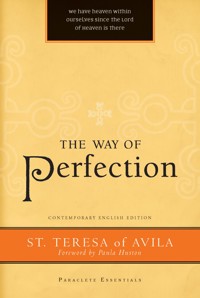
God will always give us more than we ask for Millions have read and benefited from this book since it was first written nearly 500 years ago. St. Teresa's message of humility, simplicity, persistence, and faith is replete with language that is at times earthy, and full of self deprecating humor. Rendered here into contemporary English, St. Teresa's words, with their warm-hearted approach to Christian transformation, will help you look deeply into what it really means, sometimes in the smallest of details, to have a relationship with Jesus. "Teresa lays out the time-tested path of Christian tranformation and union with God for those of us who will never be monastics, much less desert-dwelling hermits. Who among us does not need to know how to turn trouble into spiritual good, how to lovingly bear minor slights and major wounds, how to forgive and offer compassion?" Paula Huston, from the Foreword
Sie lesen das E-Book in den Legimi-Apps auf:
Seitenzahl: 272
Veröffentlichungsjahr: 2012
Das E-Book (TTS) können Sie hören im Abo „Legimi Premium” in Legimi-Apps auf:
Ähnliche
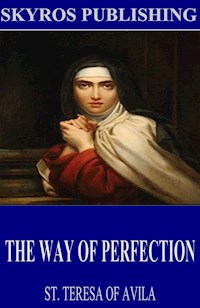












THE WAY OF PERFECTION
ST. TERESA of AVILA
Foreword by Paula Huston
CONTEMPORARY ENGLISH VERSION BY HENRY L. CARRIGAN, JR.
PARACLETE PRESS
BREWSTER, MASSACHUSETTS
The Way of Perfection
2009 First Printing
Copyright © 2009 by Paraclete Press, Inc.
ISBN 978-1-55725-641-6
Library of Congress Cataloging-in-Publication Data
Teresa, of Avila, Saint, 1515-1582.
The way of perfection / Teresa of Avila ; Contemporary English Version by Henry L. Carrigan, Jr.
p. cm. -- (Paraclete essentials)
ISBN 978-1-55725-641-6
1. Perfection—Religious aspects—Catholic Church. 2. God (Christianity)—Worship and love. I. Carrigan, Henry L., 1954- II. Title. BX2179.T4C32 2008
248.8’943—dc22
2008048997
10 9 8 7 6 5 4 3 2 1
All rights reserved. No portion of this book may be reproduced, stored in an electronic retrieval system, or transmitted in any form or by any means—electronic, mechanical, photocopy, recording, or any other—except for brief quotations in printed reviews, without the prior permission of the publisher.
Published by Paraclete PressBrewster, Massachusettswww.paracletepress.comPrinted in the United States of America
CONTENTS
FOREWORD by Paula Huston
INTRODUCTION
BOOK CALLEDTHE WAY OF PERFECTION
1 Why I Founded This Convent and Established Such Strict Rules
2 Why We Should Ignore the Body’s Necessities and the Good that Comes from Poverty
4 The Three Things that Are Important for the Spiritual Life. Appeal to Love One’s Neighbor and a Warning About the Harm Done by Individual Friendships
6 Perfect Love
7 Spiritual Love and Some Advice on How to Achieve It
8 The Benefits of Detachment from all Earthly Things
9 Why We Must Avoid Our Families and How We Can Find Our True Spiritual Friends
10 How to Attain the Virtue of Self-Detachment and Humility
11 On Self-Sacrifice and How to Attain It Even in Times of Sickness
12 Why the True Lover of God Must Not Care About Life and Honor
13 How True Wisdom Can Be Attained by Sacrifice and Renunciation of the World’s Standards of Wisdom
14 Why We Should Not Bear Witness to Any Spirit That Is Not God’s Spirit
15 Why We Are Not Exempt from Unjust Accusations and the Gains Such Accusations Bring
16 The Difference Between Perfect Contemplation and Mental Prayer
17 Why All People Are Not Destined to Be Contemplatives and the Long Road to Contemplation
18 Why the Trials of Contemplatives Are Greater than Those of Others
19 On Prayer
20 Why We Always Have Consolation on the Road of Prayer
21 Why It Is So Important to Have Great Determination in the Practice of Prayer
22 Mental Prayer
23 Why It Is Important to Continue Along the Road of Prayer and Not Turn Back
24 Vocal Prayer
25 The Great Blessings of Practicing Vocal Prayer Perfectly
26 The Great Blessings of the Practice of Vocal Prayer
27 The First Words of the Our Father and God’s Great Love
28 The Prayer of Recollection and the Ways We Can Make It a Habit
29 The Prayer of Recollection
30 The Words in the Our Father: “Hallowed be your Name, your kingdom come”
31 The Prayer of Quiet
32 The Words of the Our Father: “Your will be done on earth as it is in heaven”
33 The Words of the Our Father: “Give us this day our daily bread”
34 The Words of the Our Father: “Give us this day our daily bread,” and Why These Words are Perfect for Reading after the Reception of the Most Holy Sacrament
35 The Recollection that We Should Practice after Communion
36 The Words of the Our Father: “Forgive us our debts”
37 The Excellence of the Our Father
38 The Words of the Our Father: “Do not lead us into temptation, but deliver us from evil”
39 Different Temptations and How We May Be Freed from Them
40 Why We Should Always Walk in God’s Love to Avoid Temptations
41 The Fear of God and Why We Must Avoid Venial Sins
42 The Last Words of the Our Father: “Deliver us from evil”
FOREWORD
I first came into contact with the Way of Perfection during a class taught by a local monk who was kind enough to travel to our house each Tuesday evening. The students were few—me, and five or six others who had been in the habit of meditating together in the top of our unheated, batinhabited barn for some years. Though by now we were no longer beginners, we were still miles from being what Teresa might have called “spiritual adepts,” so we were always on the lookout for good guides.
Thus, when Brother Steve offered to lead us through a yearlong study of Teresa’s great treatise on the levels of mystical prayer, the Interior Castle, we eagerly signed up. Other texts included the Way of Perfection, which he considered to be more user-friendly than the Castle, and which he often juxtaposed against the Castle’s more difficult passages as a way of grounding that lofty work.
What emerged from the Way was first of all a personality—Teresa’s forceful, funny, passionate self. She is original: “The presumption I would like to see present in this house, for it always makes humility grow, is to have a holy daring.” And she is democratic: “Now, since He didn’t stop me when I started along this path, nor order me to be thrown into the abyss, surely He excludes no one.” But she can also be tough: “Oh, what a great act of charity and what a great service to God a nun would perform if when she sees she cannot follow the customs of this house she would recognize the fact and leave!”
Captivated by her charm and style, I almost missed the riches of her wisdom. Yet here at long last was the guide we’d been seeking, we who met weekly in that cavernous barn, our determined silence punctuated by the scrabblings of rodents and sudden, cacophonous outbursts from the neighborhood dogs. For Teresa is a bridge between the world of the great desert contemplatives a thousand years before her, and postmodern Christian meditators like us. She is a link between the once-enchanted universe and our own technologically astounding but spiritually limited era.
In the Way, she lays out in her inimitable fashion the time-tested path of Christian transformation and union with God—detachment, humility, and love—for those of us who will never be monastics, much less desert-dwelling hermits. Yet who among us does not need to know how to turn trouble into spiritual good, how to lovingly bear minor slights and major wounds, how to forgive and offer compassion? And who among us does not long to meet God at a far deeper level than we’ve ever met him before?
In the 500-year-old Way of Perfection, we find a soul friend who knows what we need and can lead us to the peace we seek.
—Paula Huston
INTRODUCTION
In our times, the spiritual writings of Teresa of Avila are very popular. People searching for a spirituality that can be folded into their everyday lives have returned over and over again to Teresa’s writings because of their power and their simplicity. Teresa is a steadfast lover of tradition, and her writings often begin by exhorting her readers to pray for the leaders of the Church, for they are the ones who have been instrumental in teaching the doctrines and principles followed by the convents. Her own love of the Church is manifest in her obedience not only to God but to her confessor and to the monastic rules established by earlier reform movements. Although Teresa fashioned these rules to fit her own community, she stressed obedience to the vows of poverty, solitude, and mutual love that were part of her religious community. People seeking simple spiritual answers will not find them in Teresa, but those who are committed to seeking God through a life of prayer and regular spiritual discipline will be delighted with her.
Teresa’s greatest virtue is that she acknowledges our humanity and her own. She knows that we yearn to lead spiritual lives but that we often do not have the will or the courage to discipline ourselves to be spiritual. In The Way of Perfection, she offers a path that she believes can offer us a way to incorporate our yearning to be spiritual into our everyday lives. If we were to use her exposition of the Lord’s Prayer as our devotional material even for six weeks, we would find ourselves immeasurably enriched, and we would probably feel closer to God than we have ever felt. Long before the popular spirituality of today’s writers, Teresa showed readers how to make the spiritual part of the everyday.
BIOGRAPHY
Although there are several biographies of Teresa, she provides the details of her young life in her autobiography, The Life of Saint Teresa of Avila By Herself. We know from this writing that she loved and respected her father a great deal, that she and her brother were spiritually precocious youngsters who once ran away from home with the hopes of being martyred in Morocco, and that her mother died when she was fourteen. Teresa also provides a detailed overview of her journey from spiritual novitiate at an Augustinian convent, through several illnesses, to her attainment of perfect contemplation and her establishment of the Order of Discalced (Reformed, barefoot) Carmelites. Teresa also describes in visceral language the visions and raptures that accompanied her experience of inner contemplation.
On March 28, 1515, Teresa Sánchez de Cepeda y Ahumada was born to her father’s second wife in the little Castilian town of Avila. Although her family was Christian, her grandfather, Juan Sánchez, of Toledo, was Jewish. She was educated as a young woman of her social rank. Teresa’s mother taught her at home in the subjects with which she herself was familiar, but this did not include instruction in Latin or the religious classics. In addition to running away with her brother in hopes of attaining martyrdom, she often built little hermitages as a young girl.
When Teresa was fourteen, and her mother died, her reaction was to become enamored of chivalric romances and to immerse herself in worldly things. Her father sent her to a school run by Augustinian nuns when she was sixteen. When she was almost eighteen, Teresa became ill, and her father took her out of the school. Recovering from this illness, she experienced the first step on the way to becoming a Carmelite nun, for she read the letters of Jerome, the fourth-century monk who translated the Bible into Latin (the Vulgate) so that ordinary people could have access to it. After reading these letters, she decided to become a nun. At first, her father refused to let her join the convent, but he eventually consented, and, when she was twenty or twenty-one, Teresa entered the Carmelite convent of the Incarnation of Avila.
A year after entering the convent, Teresa became ill again. She experienced symptoms that in our time would be associated with an “anxiety attack.” She was afflicted with violent attacks of vomiting, heart palpitations, cramps, and partial paralysis. Some interpreters have suspected that these problems were more mental than physical, for during this year Teresa was working hard to achieve perfect contemplation. Others have called Teresa’s illness a malignant malaria. Whatever its cause, Teresa left the convent to be treated by her family doctors.
After three years she returned to the Carmelite convent, where she resumed her search for perfect contemplation. The convent itself was very large, with an estimated 140 nuns, and was somewhat relaxed in its adherence to and practice of its rules. Wealthy visitors from the town often visited the convent’s parlor, and the nuns were free to leave the convent on a regular basis. During these years, Teresa first practiced the mental prayer that became the foundation of her own spiritual life and her teachings about prayer. Although she at first gave up this practice, she resumed it after her father’s death in 1543, and did not give it up again. Between her entrance into the convent at twenty and her inner conversion in 1555 at age forty, Teresa writes that she was “engaged in strife and contention between converse with God and the society of the world.”
When she was forty, she first read Augustine’s Confessions. Though she had been educated briefly by Augustinian nuns as a young girl, she had not before been bathed in the waters of Augustine’s piety. Her picking up of Augustine coincided with an inner conversion that had occurred as a result of her continuing practice of prayer. In her autobiography, she describes the effect that Augustine had upon her:
O my Lord, I am amazed that my soul was so stubborn when you had helped me so much. I am frightened by how little I could do by myself and of those attachments that were obstacles to my determination to give myself entirely to God. When I began to read the Confessions, I saw myself portrayed there, and I began to commend myself frequently to that glorious saint. When I came to the tale of his conversion, and read how he heard the voice in the garden, it seemed as if the Lord had spoken to me. I felt this way in my heart. For some time, I was dissolved in tears, in great inward affliction and distress. The soul suffers so much, O Lord, when it loses its freedom. It was once its own mistress, but now it endures great torments. I am amazed today that I was ever able to live under such torture. May God, who gave me life to escape from such death, be praised.
After her conversion, Teresa became increasingly dissatisfied with the convent at Avila. Teresa was concerned mainly that the Avila convent did not encourage or honor solitude or poverty, two characteristics that she thought absolutely essential to the lives of those seeking perfect contemplation and union with God. Thus, around 1560, she sought to establish a religious community that would be governed by strict adherence to the rules of solitude and poverty. Although both civil and ecclesiastical authorities opposed her plan, she in 1562 founded the convent of St. Joseph of Avila, which became the model for at least sixteen other houses of the same type. There were thirteen nuns who took vows of poverty and solitude, and they were known by the coarse brown wool habits and leather sandals that they wore as they practiced their rule. The convent’s income was provided by monetary offerings and by a program of manual work. The rules of the convent encouraged simple living, including abstinence from meat, and the convent building provided whatever essentials satisfied the basic needs of the sisters. Although Teresa thought of herself as a contemplative, she was as active as any other nun in caring for the convent, taking her turn at sweeping or other manual tasks. When she sought candidates for entrance into the convent, she looked for women who were intelligent and who had good judgment, for she thought that intelligent people could see their shortcomings and be taught ways to overcome them, while narrow-minded people are often so arrogant that they would never see their imperfections.
In the later half of the 1560s, Teresa’s pupil John of the Cross pushed for a reform of Carmelite monasteries along the same lines that Teresa had pursued with her convent. These Discalced Carmelite friars often provided spiritual direction to the nuns. Teresa died on October 4, 1582, in Alba de Tormes, as she returned from establishing a convent in Burgos. She was buried in Alba de Tormes. In 1622, she was canonized, and in 1970 she became the first woman saint to be declared a Doctor of the Church.
THE WAY OF PERFECTION
Teresa wrote The Way of Perfection in 1565–1566 to provide instruction in the life of prayer to the sisters of St. Joseph’s convent. The book had another purpose as well, though.
Teresa had written her autobiography three years prior to The Way of Perfection. Many of the nuns at St. Joseph’s probably knew that Teresa had written this earlier book, and although not many had read it, they knew it offered a great deal of insight into the life of prayer and contemplation. However, because the autobiography contained material that in the eyes of the Church’s censors and Teresa’s confessors was objectionable, they did not want the sisters of St. Joseph to read it. Thus, in her prologue she writes, “A few days ago I was commanded to write an account of my life in which I also dealt with certain matters concerning prayer. It may be that my confessor will not wish you to see that book, so I set down here some of the things that I said in that book as well as other things that seem necessary to me.” The Way of Perfection incorporates some of Teresa’s autobiography, but its primary focus is on the various practices of prayer that lead to perfect contemplation.
In the opening chapter, Teresa provides her reasons for founding the convent of St. Joseph of Avila. She writes that she wants to establish a house where the vows of simplicity, poverty, and solitude will help the sisters achieve union with God. As she looks around her, she sees that what she calls the excesses of the Protestant Reformation are encouraging a new kind of freedom from God’s rule for the soul. Teresa condemns the Lutherans as traitors who “send Christ to the cross again.” Teresa also instructs her sisters in this first chapter to seek poverty and “not to pray for worldly things.” She contends that she has brought them together in this house so that they may seek God together through their common dedication to the vows they have taken.
The overall structure of the book is fairly simple, but Teresa’s exhortation to the life of prayer builds in intensity as the book progresses. Chapters 1–3 discuss the role of the Church in the sisters’ education. After her indictment of the Lutherans, she encourages her followers to pray for the theologians and priests of the Church who have done so much in establishing the principles and rules the sisters are following. In chapters 4–15, Teresa discusses the ways that her nuns can prepare themselves fully for a life of perfect contemplation. According to Teresa, the three virtues that will prepare the nuns to achieve this state are love for each other; detachment from one’s self, family, and world; and humility. Chapters 16–26 amplify these ideas. Teresa argues that perfect union with the Beloved cannot be attained without constant self-sacrifice. The mystical state that contemplatives achieve is only transitory, and these states simply make the contemplative want to be more virtuous and strive for union in a more fervent way. In these chapters Teresa also discusses other questions such as “Is it possible for all souls to attain contemplation?” and “How can a person reach perfection without the experience of contemplation?” She also discusses the various practices of prayer—vocal and mental—and exhorts her followers to imagine Jesus as living in their hearts and as always walking beside them.
In chapters 27–42, Teresa offers her well-known exposition of the Our Father, the Lord’s Prayer. She examines each section, or petition, of the prayer individually and concludes that this prayer provides the way to the fountain of eternal water that she has encouraged her followers to seek. During her examination of the Our Father, Teresa continues to encourage her sisters to practice the virtues of humility, detachment, and love for one another. There is an extended discussion on the nature of temptations and how we succumb to them, and she exhorts her sisters to love and fear God if they wish to avoid temptation. Finally, she prays that God will protect his followers from the sins of this world as they seek the peace and joy of God’s eternal kingdom.
Teresa teaches her followers in a simple language that they can understand. Although her theological discussions are founded on complex ideas, she is careful always to use images drawn from everyday life so that the sisters can understand the difficult concepts through Teresa’s analogies. She uses a colloquial style to describe not only her own intense mystical experiences but also the life of perfect union that her sisters can expect if they follow her advice. She draws much of her imagery from the relationship between lover and beloved, and she also portrays many of her ecstatic experiences in physical, bodily, and sensual terms. In addition, she is often self-effacing in her remarks. She continually contends that she knows very little about a certain form of prayer, or that she is sure that the Lord must have overcome a good deal of repulsion to use her in the glorious way he is doing as an instrument to teach others. Teresa emphasizes her own unworthiness as she teaches about the way that God has taught her the path of perfection. She often emphasizes her personal experience as an example of the way to pursue perfect union. Above all, the qualities of Teresa’s intense love and devotion, and the ways that the life of prayer brings one into a closer, more loving and intimate relationship with God, burst forth from The Way of Perfection.
A WORD ABOUT THE TEXT
I have used E. Allison Peers’ translation of The Way of Perfection. This translation appears in St. Teresa’s Complete Works: Volume II, London: Sheed and Ward, 1946. Peers is the most respected of Teresa scholars, and I have benefited enormously from this translation, for Peers includes references to all the textual variants of the extant manuscripts of The Way of Perfection. Peers’ use of both the major extant versions of Teresa’s great work offers insight not only into her life and work as a writer but also into the elements of the writing style that so well characterizes Teresa’s writing.
Since Teresa wrote this book for her nuns at the community at St. Joseph’s in Avila, there are passages that refer specifically to explicit rules of their convent. I have thus eliminated two chapters—Chapter 3 and Chapter 5—that deal so directly with issues of living in a religious order that they are not broadly appealing. In addition, I have often deleted references to “my sisters” where Teresa is addressing her convent but where her words have a broad meaning and application. For the most part I have also deleted Teresa’s references to Lutherans as heretics and ungodly people as well as her references to women as being particularly wicked and weak creatures incapable of reform.
Although I have deleted two chapters, I have retained the original numbers of each chapter. Each chapter opens with a brief description of its contents.
I have remained true to the spirit of the text, even where I have mildly modernized it. Mostly, my modernizations have come in three areas. First, I have replaced archaic words and forms of address with more modern ones. Thus, “thou” and its related pronoun forms becomes “you” and its related forms, throughout. Second, I have attempted to use inclusive language in this edition, but I have retained the masculine pronouns for God so as not to be anachronistic. Finally, I have altered Teresa’s syntax and sentence structure to make it livelier and more appealing to a contemporary audience. Most often this simply means casting sentences in the active rather than the passive voice.
I hope that Teresa’s words will speak to you today even as they spoke to her sisters over 500 years ago.
—Henry L. Carrigan, Jr.
BOOK CALLEDTHE WAY OF PERFECTION
GENERAL ARGUMENT OF THIS BOOK
This book discusses maxims and counsels that Teresa of Jesus gives to her daughters and sisters in religion, who belong to the Convents that, with the favor of Our Lord and the glorious Virgin, Mother of God, she has founded. She addresses the book especially to the sisters of the Convent of St. Joseph of Avila, the first Convent, where she was prioress when she wrote this book.
PROTESTATION
I submit all that I set in this book to the teachings of Our Mother, the Holy Roman Church. If there is anything in this book contrary to these teachings, I am unaware of it. For the love of Our Lord, I ask the scholars who revise the book to read it carefully and correct any faults of this kind and any others they may find. If there is anything good in this book, let this be to God’s honor and glory and in the service of his most sacred Mother, our Patroness and Lady, whose habit I unworthily wear.
PROLOGUE
Knowing that I have permission from my confessor Father Presentado Fray Domingo Banes to write certain things about prayer, the sisters of this Convent of St. Joseph have, out of their great love for me, earnestly appealed to me to say something to them about this subject. Since it seems that I will be successful in discussing this matter because of my acquaintance with many holy and spiritual persons, I have resolved to obey the sisters’ wishes. I realize that their great love for me may render the imperfection and poverty of my style more acceptable than other books that are more ably written by those who know their subjects. I depend upon their prayers, by means of which the Lord might give me the insight and strength to say something concerning the way and method of life that this community should practice. If I do not succeed in doing this, Father Presentado, who will be the first to read what I have written, will either correct it or burn it. I shall have lost nothing by obeying my sisters, and they will see how useless I am when His Majesty does not help me.
I intend to suggest a few remedies for a number of small temptations that come from the devil which, because they are so slight, may pass unnoticed. I will also write about other things as the Lord reveals them to me and as they come to my mind. Since I don’t know what I am going to say I can’t set it down in a suitable order. I think it is better for me not to do so anyway, since it is quite unsuitable for me to be writing in this way at all. May the Lord lay his hand on all that I do so that it may be in accordance with his holy will. This is always my desire, although my actions may be as imperfect as I am.
I know I lack neither the love nor the desire to do all I can to help the souls of my sisters make great progress in the Lord’s service. It may be that this love, combined with my years and my experience with a number of convents, will make me more successful than scholars in writing about small matters. I will not speak about anything I have not experienced myself, either in my own life or in observing others, or which the Lord has not taught me in prayer.
A few days ago I was commanded to write an account of my life in which I also discussed certain matters about prayer. My confessor may not wish you to see this writing, so I have set down in this book some of the things I said in that one as well as others that seem to me necessary. May the Lord direct this, as I have implored him to do, and order it for his greater glory. Amen.
CHAPTER 1
Why I Founded This Convent and Established Such Strict Rules
When this convent was originally founded, I had not intended for there to be so much severity in external matters nor that there should be no regular income. Instead, I hoped that there would be no possibility of want. I acted, in short, like the weak and wretched woman I am, although I did so with good intentions and not out of consideration for my own comfort.
At about this same time, I noticed the harm and havoc that the Lutherans were wreaking in France and the way that their unhappy sect was growing. This development troubled me very much, and I wept before the Lord and begged him to remedy this great evil. I would have laid down a thousand lives to save a single one of all the souls being lost there. Even though I am a woman and a sinner, incapable of doing all I would like to do in God’s service, my whole desire is to do the little that is in me, especially since he has so many enemies and so few friends that his friends should be trusted ones. Therefore, I strove to follow the evangelical counsels as perfectly as I could and to see that these few nuns here should do the same, confiding in God’s great goodness, for he never fails to help those who decide to forsake everything for his sake. As these nuns are all I have ever imagined them to be, I hoped that their virtues would more than counteract my defects, and I should be able to give the Lord some pleasure. By busying ourselves in prayer for those who are defenders of the Church, all of us would do everything we could to aid my Lord. He is so oppressed by those to whom he has shown so much good that it appears that these traitors would send him to the cross again and that he would have nowhere to lay his head.
Oh, my Redeemer, my heart cannot imagine this without being sorely distressed. What has become of Christians now? Must those who owe you the most always be those who distress you most? Those to whom you do the greatest kindnesses, whom you choose for your friends, among whom you move, communicating yourself to them through the Sacraments? Do they not think, Lord of my soul, that they have made you endure more than sufficient torments?
Certainly, my Lord, in these days withdrawal from the world means no sacrifice at all. Since worldly people have so little respect for you, what can we expect them to have for us? Can it be that we deserve that they should treat us any better than they have treated you? Have we done more for them than you have done that they should be friendly to us? What then? What can we expect, then, we who, because of God’s goodness, are free from that pestilential infection and do not belong to the devil? They have won severe punishment at his hands, and their pleasures have richly earned them eternal fire. So to eternal fire they will have to go. Nonetheless, it breaks my heart to see so many souls traveling to perdition. I wish the evil were not so great and I did not see more being lost every day.
Oh, my sisters in Christ, help me to petition this of the Lord, who has brought you together here for that very purpose. This is your calling; it must be your business; these must be your desires, your tears, your petitions. Let us not pray for worldly things, my sisters. It makes me laugh, yet makes me sad, when I hear of the things that people have come here to beg us to pray to God for. We are to ask the Lord for money and to provide them with incomes; I wish some of these people would petition God to enable them to trample all such things beneath their feet. Their intentions are quite good, and I do as they ask because I see they are really devout people. But I do not believe God ever hears me when I pray for such things. The world is on fire. People try to condemn Christ once again, for they bring a thousand false witnesses against him. They would burn his Church to the ground, and we are to waste our time on things, that, if God were to grant, would bring one less soul to heaven? No, my sisters, this is no time to pray for things of little importance.
If it weren’t necessary to consider human frailty, which is satisfied with every kind of help, I would want it to be understood that God should not be entreated with such anxiousness for things like these.
CHAPTER 2
Why We Should Ignore the Body’s Necessities and the Good that Comes from Poverty




