


Erhalten Sie Zugang zu diesem und mehr als 300000 Büchern ab EUR 5,99 monatlich.
- Herausgeber: The Lilliput Press
- Kategorie: Geisteswissenschaft
- Sprache: Englisch
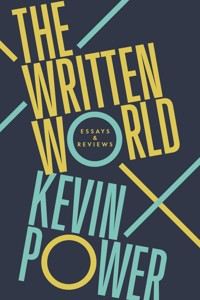
Art honours the world, and criticism honours art, even – perhaps especially – when the critic sets out to destroy. The bad review is hardly ever written out of mere spite. In most cases, the motivation is disappointed idealism. Critics are people who love art and who hate to see it traduced. Hence the critic's sempiternal cry: You're doing it wrong. What the critic wants is for you to do it better. Since 2008, acclaimed novelist Kevin Power has reviewed almost three hundred and fifty books. Power declares, 'Even now, cracking open a brand-new hardback with my pencil in my hand, I feel the same pleasure, and the same hope. That's the great secret: every critic is an optimist at heart.' Art that thinks and feels at the same time – 'good art' – requires explication. The writing of criticism in response to such art is an activity that has taken place since Aristotle first sat down to figure out what made tragedy work. It is in the pursuit of this question – what makes good art 'good' – that Kevin Power found his vocation. During a ten-year stint as a regular freelance reviewer for the Sunday Business Post, Power fell in love with the writing of criticism, and with the reading of it, too, particularly by talented novelists who review books on the side. His conclusion is that criticism is absolutely an art. But it is never more so than when practiced by an actual artist. These pieces, ranging from reviews of Susan Sontag to the meaning of Greta Thunberg, apocalyptic politics, and literary theory, represent a decade's worth of thinking about books; a record of the author's attempts to honour art, and through art, the world. In The Written World, Power explains how he became a critic and what he thinks criticism is. It begins and ends with a long personal essays, 'The Lost Decade', written especially for this collection, about his mental and writing block after publishing Bad Day in Blackrock and his decade-long journey to White City. The pieces gathered by Power are connected by a theme – this is a book about writing, seen from various positions, and about growth as an artist and a critic.
Sie lesen das E-Book in den Legimi-Apps auf:
Seitenzahl: 374
Veröffentlichungsjahr: 2022
Das E-Book (TTS) können Sie hören im Abo „Legimi Premium” in Legimi-Apps auf:
Ähnliche




















To Jamie, with all my love
First published 2022 by
THE LILLIPUT PRESS
62–63 Sitric Road, Arbour Hill
Dublin 7, Ireland
www.lilliputpress.ie
Copyright © 2022 Kevin Power
Paperback ISBN 9781843518327
eISBN 9781843518433
All rights reserved. No part of this publication may be reproduced in any form or by any means without the prior permission of the publisher.
A CIP record for this title is available from The British Library.
10 9 8 7 6 5 4 3 2 1
The Lilliput Press gratefully acknowledges the financial support of the Arts Council/An Chomhairle Ealaíon.
Set by Iota Books (www.iota-books.ie) in 11pt on 14.8pt Minion with Dunbar titling
Printed in Poland by Drukarnia Skleniarz
Contents
Note & Acknowledgments
Briefly Personal
THE LOST DECADE
Books/Life
A PERISHABLE ART
DIFFERENT CLASS: On Ross O’Carroll-Kelly
PRETENTIOUSLY OPAQUE
Contemporaries and Otherwise
MARTIN AMIS: Wilde at Heart
HATING JONATHAN FRANZEN
SUSAN SONTAG’S WILL
ON JOHN GRAY
ZADIE SMITH’S UNCERTAINTY
NORMAN MAILER: The Almighty
Crisis Chatter
APOCALYPSE NO
THE MEANING OF GRETA THUNBERG
JORDAN PETERSON’S ‘JORDAN PETERSON’
Short Takes
WILL SELF: Umbrella
HOWARD JACOBSON: Zoo Time
ALAN SHATTER: Laura
DAVID MITCHELL: The Bone Clocks
MICHEL FABER: The Book of Strange New Things
MARILYNNE ROBINSON: Lila
WILLIAM GIBSON: The Peripheral
DOUGLAS CORLEONE:Robert Ludlum’s The Janson Equation
ARIANNA HUFFINGTON: The Sleep Revolution: Transforming Your Life, One Night at a Time
ANNIE PROULX: Barkskins
IAN MCEWAN: Nutshell
PAUL AUSTER: 4 3 2 1
MOHSIN HAMID: Exit West
JAMES WOOD: Upstate
JAMES PATTERSON AND BILL CLINTON: The President Is Missing
MARLON JAMES: Black Leopard, Red Wolf
MICHEL HOUELLEBECQ: Serotonin
NEW YORK TIMES EDITORS: The Decameron Project
ROISIN KIBERD: The Disconnect: A Personal Journey Through the Internet
SALLY ROONEY: Beautiful World, Where Are You
COLSON WHITEHEAD: Harlem Shuffle
Envoi
CLIVE JAMES (1939–2019)
Note & Acknowledgments
Herein, you will find ten years’ worth of thinking about books, offered as a partial account of how I spent my time in the decade-plus gap between my first novel and my second (a more specific account of these years can be found in the first piece collected here). All of these pieces were written quickly, and the collection is therefore offered with all due modesty, not to say humility. In my defence, I would suggest that thinking about books is one way of thinking about life, and that thinking on the fly can be as useful in its way as the slower kind of thinking – but then, I would say that, wouldn’t I? I’ll take this opportunity to pay homage to some wonderful editors. To Nadine O’Regan, Thomas Morris, Jon Smith, Martin Doyle, and Tom Fleming: all my gratitude. And a particular thank you to Enda O’Doherty at the Dublin Review of Books, where most of the longer essays first appeared; in the most literal sense, this book would not exist without him. One last note: ‘Apocalypse No’ was delivered as the 2020 Nora Niland Lecture for the Yeats Society of Ireland; thanks to Susan O’Keefe for thinking of me.
Briefly Personal
THE LOST DECADE
I published my first novel in October 2008. At the time I was on the dole, trying and failing to get various jobs. I had spent three years studying for a PhD in American Literature that was nowhere near being finished. I owed money to my parents and to my landlord. My book had earned me precisely €4,000 – this was the advance paid by my Irish publisher.
A month after the book was published in Ireland, my agent sold the reprint rights in a two-book deal to a UK publisher for more money than I had ever made in my life. (Given that I had never earned more than €16,000 a year, this should not be taken for a particularly startling metric.) Then she sold the film rights. Then she sold foreign rights, to Spain, Italy, Germany, Slovenia, Brazil.
The success of Bad Day in Blackrock allowed me to become that superficially glamourous thing, a full-time professional writer. I moved into an apartment in the centre of Dublin with bookshelves lining the hallway. The apartment overlooked the courtyard of a busy hotel, which meant that every morning at 6 am I was awoken by the sound of glass bottles crashing into the recycling bin directly below my window.
On any given day, I did not have to write, if I didn’t want to. And, more often than not, I found that didn’t. Instead I engaged in what I thought of as writing-adjacent (and therefore justifiable) activities: reading, writing book reviews, re-watching all seven seasons of The Sopranos on DVD, keeping a journal, rearranging my books, watching the 24-hour news channels (since a writer needed to keep up with the news), scrolling through my Facebook newsfeed, smoking, entering into various ill-advised romantic relationships whose ups and downs could plausibly be rationalised as the sort of ‘experiences’ a novelist might draw on when he did, at last, sit down to write, drinking in immodest quantities, taking drugs in modest quantities, and so on.
What I found, when I did at last sit back down to write, was that I was not a professional writer at all. I was still an apprentice – despite the fact that I had published a first novel, despite the fact that I was contributing regularly to various newspapers, despite the fact that people occasionally called me up and asked me to read at literary festivals, or to travel on promotional junkets to Italy, Serbia, Paris (where I smoked too much and drank too much and viewed other writers with a mixture of curiosity and scorn: who were these frauds, anyway?). It dawned on me only belatedly, but it was a devastating realization when it finally struck. My apprenticeship had not ended with the publication of Bad Day in Blackrock. It had barely begun. This was my peculiar fate: to find myself ‘a writer’ while I was still unformed, unknown to myself, and lacking utterly in the kind of discipline that a sustained career in writing requires.
Perhaps a version of the crisis that followed happens to every writer who publishes a first novel in their twenties – and years later, I was to come across Virginia Woolf ’s epistolary advice to a young poet, and nod savagely in assent: ‘For heaven’s sake, publish nothing before you are thirty.’ Or perhaps it was mine uniquely. Dazzled by the sheer unlikelihood of what I had accomplished – by the fact that, as Nathan Zuckerman puts it in Philip Roth’s The Ghost Writer (1979), ‘I had miraculously made it from my unliterary origins to here,’ to being a writer – I had blithely assumed that my apprentice years were over, that I would now simply write more books, in a kind of foreordained pattern of achievement that would lead me inevitably to the sense of repose that accompanies, or so I imagined, a serene and established literary middle age.
In fact, I was condemned to serve out those arduous years with a published novel already behind me. It is an open question whether those years were made easier by the fact of Bad Day’s existence – no, scratch that: they certainly were made easier, in some respects. I was freer than I might otherwise have been. I could get jobs teaching creative writing, an activity about which I quickly became passionate. I was invited to write short stories for anthologies, articles for newspapers. Not every apprentice enjoys such advantages, and I was very lucky to have them. Even so, those were the years I spent failing where, I imagined, it counted most: at the desk, on the page.
For years I had shaped my inner world around a single project (learn to be a writer), and I regarded anything that was not directly related to, or could not be rhetorically aligned with, this project as an imposition, a burden, an error. As defence mechanisms go, this is a luxury model. It keeps you safe from a thousand natural shocks, at least for a while.
I’ve never really suffered from ‘writer’s block’, as that predicament is generally conceived. I have never opened up a Word document and found that I had no words to type. The problem, during my years of crisis, was that the words I did type, whenever I tried to write fiction, were worthless – what an avalanche of dismal prose I produced, during those years – and, more to the point, that I couldn’t finish anything.
If my problem had been as simple as writer’s block, I might, after a while, have abandoned my desk altogether. I might have gone off and done something else. And as it happened, I did, for a year, go off and do something else: in 2012, operating under stern instructions from various mentors, I finished my PhD thesis, working in terror right up to the deadline, writing all night, drinking cup after cup of coffee and chain-smoking Marlboro Lights, producing twenty or thirty pages a day in a state of reckless agitation indistinguishable from despair. I was able to write my thesis, I see now, because it wasn’t fiction, and therefore I did not expect it to redeem my sufferings. I had not, after all, staked my entire sense of self-worth on writing academic literary criticism. And no publisher was waiting (that accursed two-book deal!) for my in-depth analysis of politics in the fiction and non-fiction of Norman Mailer. There was no pressure from the world; merely from myself. Why had I not finished my thesis in the first place? Because I didn’t think I needed to bother. I was in the process of becoming a writer. We make the same mistakes over and over, until we see them for what they are.
2010: I wrote most of a play about the Irish financial crisis. (It ended, or was supposed to end, with Brian Cowen and Enda Kenny dancing a waltz across the stage to the tune of ‘The Offaly Rover’. Oh, dear.) 2011: I tried to write a novel about the family of a disgraced banker. 2012: I cranked out two hundred crazed pages about a South Dublin rugby schoolboy on a business junket to Serbia (where I had spent a weird week promoting my book a few years previously). 2013: I wrote most of a novel loosely based on the murder of Meredith Kercher (an attempt, hideously misguided, to recapture whatever magic had animated Bad Day). All of these projects consumed endless hours of my time and remained unfinished, unreadable, hopeless, dead.
Now, of course, I can see what all of these projects had in common, which is that they were impersonal, written not out of an honest attempt to understand my own experiences and to communicate that understanding to others, but out of ambition, undiluted: the ambition to be a writer. I was unable to write about the things that had happened to me (growing up; falling in love; flailing around in college and after: all the stuff that is usually taken by young novelists as their material) because I never thought about the things that had happened to me. I was too busy trying to be a writer.
Late in 2013, my confidence collapsed. There was no single cause. Rather, there were many causes. My agent had politely returned fifty pages of my Meredith Kercher manuscript along with a note, the unmistakable implication of which was that my novel was not good and that I should write something else. But I had no further ideas for novels. My contractual deadline was three years past. Examining my progress, I could no longer sustain the illusion that ‘a writer’ was what I was. Writers wrote books. I did not know how to write books. Ergo, I was not a writer. Worse, I was a fraud. A loser. A fool. I was also broke. I had been watching the not-that-large-in-the-first-place amount of money that Bad Day had produced dwindle steadily away for four years, consumed by rent, food, booze, books – and I had done nothing to arrest its outward flow, nor to procure another source of income. I had been operating on the assumption that I would somehow get my second novel written just in time to shore up the looming hole in my finances. Now this assumption stood revealed as the delusion it had always been. I had no second novel and no money.
I was prescribed Xanax for anxiety. I was prescribed Lexapro for depression. I took jobs in call centres, staffing the phones. My chief memory of this period – late 2013 – involves cycling along the Dodder (I was then living with my future wife in Ringsend), pushing the pedals as if against lead weights, and feeling as if my whole life was an overcast day: low grey cloud, empty streets, a dull, even pressure flattening everything, and no particular joy or hope to be found anywhere.
It took me a long time to climb out of my despair. Astonishingly (at least, it astonishes me now), I did not stop writing, even when things were at their bleakest – even during those long periods when I would feel the twist of rancour in my heart whenever I heard about another writer’s success, or on those afternoons when my sense of despair and hopelessness was such that I could not bestir myself to get up from the couch. Failure forces you to see clearly – this is the one thing that can be said in its favour. Slowly, I came to see that, in trying to ‘be a writer’, I had been trying not to be a human being, that bleeding, undefended thing. I had been trying to avoid making what I saw, in my stupidity, as the various boring or distressing compromises that, properly understood, make up the substance of an actual life.
Stripped of its function as the thing that held my personality upright, writing gradually became a way of making objects to put in the world – a process that required the acquisition of certain skills, and therefore (what a thought!) a certain humility. The first step was to admit that I knew nothing – that I was still an apprentice, and that I should therefore act like one.
I started small. Doggedly, I completed the exercises prescribed in John Gardner’s instructional handbook The Art of Fiction (1983). Then I tried a short story, salvaged from the ruins of my banker novel. I took my time. I wrote each paragraph carefully, walking a high wire of tension until the thing was, after two weeks, finished. It seemed good. It had its own integrity, I thought. I had made it, but that fact said nothing particular about me, beyond the fact that I was a man who had written a story.
I tried another story. It gave out. I tried another. I joined a writer’s group, and submitted work. I began to write literary essays – long book reviews, really, but satisfying to do, and people seemed to like them. I came off Xanax, I came off Lexapro (I didn’t miss the trembling legs, the nightmares, the overcast interior weather). I had no hopes of writing a novel. I began to think about my past, and about the ways in which I had used the idea of being a writer to cushion myself against uncertainty, and doubt, and fear. I began to admit to myself that I was angry, and that the source of my anger was, in large part, the success of Bad Day in Blackrock and its bewildering aftermath.
Publishing that book, I had been foolish, and young, and inexperienced. I had been completely unprepared for any kind of success – for the collision with a world that I did not understand and couldn’t control. I was angry at myself for my failure to cope. And I was angry at the world for not being softer, kinder, less mercenary. (Naivety dies hard.) One day – this was in late 2015 – my wife and I went Christmas shopping in Blackrock. I was thinking about my anger. Half-quoting Dostoevsky’s Notes from Underground, I thought to myself: I am a sick man, I am an angry man. I wondered if this might become the opening sentence of something: a short story, or a novel. A novel, perhaps, that might serve as an analogue for some of the things that had happened to me. And just a novel. Not a means of redeeming my life. More like: something to work on, while I lived.
An analogue for some of the things that had happened to me. A gallingly simple insight. But there it is.
Two years later, I finished the first full draft of White City. It was 2017. Things had changed. When I sat down at my desk and opened my laptop, I no longer imagined that the meaning of life was at stake. In fact, I began to feel that when I sat down at my desk, nothing much was really at stake at all. Just this sentence. And the next one. And the next one after that.
In my late thirties, I had started to grow up a bit, at last.
The Irish Times, 28 April 2021
Books/Life
A PERISHABLE ART
Okay, we’re going to try an informal experiment here. This piece was originally intended as a more or less straightforward review of Megan Nolan’s debut novel Acts of Desperation – the usual 1500-odd words on the book’s merits and demerits (mainly merits, in this case), its contexts, its nature. I would locate the book, I airily told my editor, in the context of the Female Millennial Novel: Sally Rooney, Louise O’Neill, Louise Nealon, Lauren Oyler, Ottessa Moshfegh, Naoise Dolan, Ling Ma et al. But things went awry. Delays occurred. Suddenly it was June. Acts of Desperation was three months old. It had already been assessed – summarized, dissected, praised – in almost every possible venue. A straightforward review, my editor agreed, now seemed sort of pointless.
Hence, our experiment: not merely to review the novel, but to review, in a sense, both the novel and its reviews – to widen the context of our reflections, if possible. What are reviews of novels for? What is the state of contemporary book reviewing? These are largish questions, which I hope to answer in suggestive, rather than definitive, ways. Let’s not wade out into unmanageably deep waters here. This is not so much a review, then, as a metareview: a review of reviews. A review of reviewing itself.
Credentials: I’ve been a working book reviewer for thirteen years, during which time I have assessed in print, at a rough count, 350 books. Like Orwell’s hack – Orwell did not approve of vocational book reviewing – I have been pouring my immortal spirit down the drain, half a pint at a time, since 2008. I’ve also been on the other side of this particular transaction, having published two novels that were reasonably widely reviewed. I have reviewed and I have been reviewed. One you have control over. One you do not. Guess which I prefer?
Context: perennial worry about the decline of the book review. Its latest incarnation: a widely circulated article by the Canadian critic Steven Beattie called ‘What We Lose When Literary Criticism Ends’ (The Walrus, 21 May 2021). ‘These days,’ according to Beattie, ‘the status of the professional critic – that is, someone who can earn a living writing criticism for the general public – has largely been subordinated to enthusiastic amateurs giving thumbnail reactions.’ In Canada, Beattie says, there is now ‘hardly any’ mainstream books coverage. No longer is it possible to make a living through criticism. This is a disaster, because, Beattie insists, ‘serious works of literature require a response that is more nuanced, calculated, and considered than the rapid-fire rating system offered on user-generated sites such as Goodreads’.
An old complaint revisited, in part (it is possible, actually, to find nuanced responses on Goodreads, in amongst the rapid-fire ratings and the amusing misinterpretations of literary classics). For the apocalypse-minded, mainstream books coverage, like the novel itself, is always on the brink of death. But it is, I think, idle to assert that there is no longer a thriving literary-critical culture in the West. That culture exists: it has merely been, as the businesspeople say, ‘siloed’.
You are interested in books. You find your way to certain online venues; you subscribe to certain journals (let’s say, those occupying the London Review of Books-to-New Left Review spectrum). You read excellent criticism – in fact, you have a hard time keeping up with all the excellent criticism. It is clear to you as you read, however, that what you are doing is pursuing a niche interest. It is also clear that this niche interest is largely insulated from other niche interests and from whatever may be said to constitute ‘mainstream culture’.
It is also clear to you that the critics whose work you are reading are not critics tout court. They do not earn their living exclusively from writing criticism. They have day jobs, side gigs, private incomes. They are often novelists themselves. In fact, book reviewing is pretty much the only sphere of cultural endeavour in which practitioners assess one another’s work in public. Directors do not review each other’s films. Billie Eilish does not rate albums for Pitchfork. The effect is often to alienate the general audience even further. Novelist-reviewers, people say, cannot be trusted, especially if they have a new book out. Allow me to say, in defence of novelist-reviewers, that we are generally scrupulous about not reviewing books by our friends. The blurb economy, of course, is another story.
Bearing all of this in mind: what we are looking at, just now, is a literary-critical culture practised as a vocation by a largely self-selecting but nonetheless hermetic elite. Or, as Zadie Smith remarked in a recent interview, ‘Bottom line? Most people don’t read.’
But this has always been the case. Complaints about the decline of book reviewing resemble other persistent narratives of cultural decay. Once there was a Golden Age, now everything is tarnished. This narrative is as true as you want it to be. At a guess, I’d say book reviewing right now is about as healthy – or unhealthy – as it ever was. Most reviews are bland: blandly written, offering bland appraisals. Some are memorably caustic. A small handful qualify as genuine criticism, reflecting on values. Lauren Oyler on Jia Tolentino, Leo Robson on Joyce Carol Oates, James Wood on almost anyone. I scroll through the book’s pages hurriedly, looking for evidence of decline, finding the usual hopeless mixture. On the other hand, I may have a partial view.
When you do something professionally for thirteen years, you sooner or later stop asking theoretical questions about it. Rushing to meet this week’s deadline, you seldom stop to ponder the nature and purpose of book reviewing. You file the piece, and crack open the next Advance Reading Copy (BOUND PROOF – NOT FOR QUOTATION OR RESALE). You are a conveyor belt of opinions. Good! Bad! Could be better! Could be worse! A certain deadening of the responsive faculties must inevitably occur. Most of the time, you have 800 words or fewer in which to say what, if anything, you think. For some books, 800 words is far too little. For most books, 800 words is far too much.
This is because most books are bad. We all know this, but we seldom say it. We could certainly stand to say it more. On the other hand, perhaps only the professional book reviewer, grimly digesting each season’s fresh crop, really knows how bad most books are. Renata Adler, in her great 1980 essay on Pauline Kael: ‘Normally, no art can support for long the play of a major intelligence, working flat out, on a quotidian basis. No serious critic can devote himself, frequently, exclusively, and indefinitely, to reviewing works most of which inevitably cannot bear, would even be misrepresented by, review in depth.’
Adler knew whereof she spoke. In 1968–9 she spent a year as the daily movie critic for The New York Times. The book that collects her reviews (A Year in the Dark, 1969) provokes, as it was surely intended to, the reflection that in any given year, most movies (most books, most TV shows, most operas or ballets or plays) are trash. The flattening of the faculties, across a lengthy stint of quotidian reviewing, is partly a consequence of exposure to instance after instance of subpar art.
Most art sucks. This is why critics get grumpy, develop crotchets, become impossible to please. Certainly I went through a crotchety phase – one suspiciously co-synchronous, I now see, with the prolonged struggle to finish my second novel. On the other hand, a bad review is hardly ever written out of mere spite. In most cases, the motivation for a hatchet job is disappointed idealism. Real critics are people who love art, and who hate to see it traduced. Hence the critic’s sempiternal cry: You’re doing it wrong! What the critic wants is for you to do it better.
Yes – oh dear me, yes: most art sucks. On the other hand, most art gets pretty good reviews. You can choose your own preferred recent literary example – I am not about to invoke the online Furies by naming Last Year’s Most Overrated Novel According to Me. (Hint: it was shortlisted for the Booker Prize.) Has nothing changed since 1959, when Elizabeth Hardwick observed that ‘sweet, bland commendations fall everywhere upon the scene; a universal if somewhat lobotomized accommodation reigns’?
Of course, it’s generally true that, no matter how bad the art, somebody somewhere will like it. I like the music of Styx, for example, even though I know that by any reasonable standard of taste, Styx suck. We have observed this phenomenon recently on a large scale: lots of people liked Game of Thrones, even though, by any reasonable standard, etc.
However, the whole point of a professional reviewer is that he or she is supposed to speak on behalf of a reasonable standard of taste – not merely to express an ill-argued subjective preference, and not merely to go with the crowd (though as Norman Mailer noted years ago, ‘very few people in the literary world have any taste – they are much too tense with fashion’). When we turn to professional reviewers, we do so in the expectation that they will do more than simply vent their hatred or their joy.
This brings us to what is, by tacit consensus, one of the main functions of book reviewing. In the same way that news reporting is supposed to be the first draft of history, periodical book reviewing is supposed to be the first draft of ‘the canon’, that evolving constellation of acknowledged achievement that exists not just for purely ideological reasons but because we seem to need it as a cultural heuristic (this is who/what we are). In practical terms, what this means is that the professional book reviewer should ideally demonstrate: 1) an awareness of technical considerations: prose style, focalization, structure, etc; 2) some sense of the history of the art form in question: is this new novel in dialogue with previous novels?; 3) some knowledge of the history of taste: people used to value certain books; now they value different ones, for different reasons, et cetera; 4) a high degree of emotional sophistication, aka sanity; 5) wide-ranging general knowledge.
It’s a lot to ask of someone bound by the 800-word limit. But deprived of this equipment, the periodical book reviewer is reduced to providing a consumer information report. Thumbs up. Thumbs down. Five stars. None. If you liked that, try this. We have algorithms that can do this for us, now. The book review operates in the cash nexus, like any other piece of commercial copy. But unlike most pieces of commercial copy, the book review offers an opportunity to talk about questions of value. Most book reviewers fail to take this opportunity. We honour the ones who do take it by calling them critics.
The critic is engaged in the analysis of values, using this week’s work of art as his or her pretext. If art, and particularly literature, is a kind of ongoing conversation, then criticism is the arena in which much of that conversation takes place; the critic, in offering his or her response to the work of art, is an answering voice, provoking, ideally, yet more questions, yet more answers, in the form of another work of art, another critical piece. Criticism needs art: this is obvious to say. Less obvious: art needs criticism. Writers learn from their reviews, especially from the bad ones. And readers glean access to elements of the artwork that they might otherwise have over-looked. Something like this, I think, is what we mean when we say that literary criticism is, or has the potential to be, an art unto itself.
A perishable art. But this is the point. The critic speaks to his or her contemporaries, not to posterity. Most reviewers are conscious that they are operating on a provisional basis. They are ready to be wrong about the book at hand. I gave Marilynne Robinson’s Lila a stinker of a review ten years ago. Then I read more Marilynne Robinson, and then I read more criticism of Marilynne Robinson’s work, and I learned that the critical tools I had brought to bear on her work (a snooty preference for the high style in prose; a putatively urbane condescension to novels that are unapologetically about religious belief) were risibly insufficient. But reviewers must be ready to look foolish. The reviewer for the London Athenaeum in 1851 called Moby-Dick ‘so much trash belonging to the worst school of Bedlam literature’. Oh, dear.
Book reviewing – the front line of evaluative criticism – deals in superlatives. An instant classic! The worst novel ever written! Superlatives lose their cogency quickly; hence book reviews age quickly, especially if they consist of nothing but superlatives. Perishability is built into the form. Criticism is a form of journalism: day-writing. You have a deadline, a word limit. What you hope to produce is a stylish, accurate, informed report on a book that you have read. There is a remote hope that you will be able to articulate an idea – that is, give your readers a new thought. Of course this presupposes that you are capable of having a new thought in the first place. And you aren’t, always. A happy consonance of novel and reviewer will tend to produce ideas; an unhappy consonance, quite the reverse. The empty mind reaches for clichés. A tour de force. Unreadable. Lyrical.
Reading reviews of your own work – tracking the clichés – you try to bear all of this in mind. The reviews of my own work that I find most valuable are those that have shown me a fault in that work that I couldn’t have figured out on my own. But such reviews are rare – as rare, I like to think, as faults in my work. I try also to bear in mind the advice of Edmund Wilson, who, in ‘The Literary Worker’s Polonius’, a now largely forgotten essay published in The Atlantic in June 1935, explained that
for an author, the reading of his reviews, whether favorable or unfavorable, is one of the most disappointing experiences in life. He has been laboring for months or for years to focus some comprehensive vision or to make out some compelling case, and then finds his book discussed by persons who not only have not understood it, but do not even in some instances appear to have read it.
Wilson advised the writer to understand his or her reviews as ‘a collection of opinions by persons of various degrees of intelligence who have happened to have some contact with his book’. What a sane thing to say. On the other hand, what you look for, in a review of your own work, is some engagement with technique, and some engagement with values. A rave is nice, but it teaches you nothing. A critique just might help you grow.
Keeping this experiment vaguely in mind, I avoided reading reviews of Acts of Desperation, so that, when I began the novel, all I knew was that it was about a toxic relationship. What would I make of it? How would it be reviewed? Would anyone articulate a useful idea? Reflect on values? Would the usual clichés appear? Compulsive. A page-turner. Taut. Relevant. Would it be called, as all novels by young women are now called, ‘whip-smart’? (Yep: Sarah Gilmartin in the Irish Times.) We complain about book-reviewing clichés. But reviewing books is an adjectival business. Try reviewing a book without adjectives, and see how far you get. The trick is to find less careworn adjectives – to expunge cliché, to the extent that this is possible. What’s a synonym for ‘compulsive’? Uncontrollable, says Google. This uncontrollable novel …
Actually, uncontrollable wouldn’t be the worst adjective to apply to Acts of Desperation. Frame it like this: Acts of Desperation is a tightly controlled novel about uncontrollable compulsions and desires. It’s harrowing, brutal, unblinking. Adjectives! But it is. Setting: bourgeois-bohemian Dublin, 2012–14. Our unnamed narrator, age twenty-five, meets Ciaran, an art critic. They fuck. They move in together. Chapters are short. Paragraphs are short. The narrator and Ciaran: two emotionally maimed people who try desperately (see title) to extract from one another the meaning that their own lives seem to them so signally to lack. The narrator is profoundly self-knowing; also profoundly self-hating. The point is intensity. The relationship is intense, so the book is intense. All those short chapters and short paragraphs mean that the crushing weight of the book’s intensity is evenly distributed. The principle is the same one that allows the mystic to lie down on a bed of nails. Interchapters, headed ‘Athens 2019’, offer perspective; these, too, are short, diaristic, intense.
This is yet another novel – why not say it? – by a millennial woman about having a horrible relationship with a complete bastard. Often I find the bastards in these books rather spectral – not fully realized. Possible PhD thesis: ‘Spectral Bastards: Representations of Men in the Millennial Novel’. Examples, from two excellent books: Julian, the banker in Naoise Dolan’s Exciting Times; Trevor, the banker in Ottessa Moshfegh’s My Year of Rest and Relaxation. (Not all bankers? Maybe all bankers.) This is a neat reversal, I assume, of how women feel, reading novels by men about the bad relationships they have had with women. In other words: fair enough, although I might gently suggest that two aesthetic wrongs don’t make an aesthetic right. In any event, I did not have this feeling as I read Acts of Desperation. Ciaran is extremely well-rendered, extremely believable. A visit to his grotesque father is one of many small points that explicate his unconscious misogyny. I know bastards like Ciaran. He feels real, as many of his counterparts do not, quite.
So. The largest context for this book is the fundamental crisis of modernity: what Max Weber called ‘the disenchantment of the world’, the supposed loss of wholeness or security engendered by the displacement of religion by secular science and industry. The unnamed narrator of Acts of Desperation recognizes that her addiction to obsessive love – her belief in the potential of obsessive love to abnegate the self in the name of something larger and more sacred – is essentially religious in nature. ‘There was no religion in my life after early childhood,’ she tells us, ‘and a great faith in love was what I had cultivated instead.’ Viewed from this angle, Acts of Desperation – note the echo of Acts of the Apostles – is a kind of parable about the void of meaning that faith leaves behind it when it goes. It’s a serious book. Humour does not really feature. But my sense of it is that Nolan is trying to tunnel her way beneath irony, beneath humour, beneath wit. The medieval penitent did not pause between self-imposed lashes of the scourge to make quips.
Nina Renata Aron, reviewing the novel for the Los Angeles Times (3 March 2021), noted the religious language: ‘Our narrator is lost to a devotion that borders on the religious. Here, Nolan often slips into cliché, drawing analogies to redemption or purification through love. Ciaran’s body is a “site of prayer” and love a “force which would clean me”.’ Calling attention to clichés is one of the most devastating weapons in the reviewer’s arsenal. But it often misfires. Nolan knows that her narrator’s religious language is clichéd. Her narrator knows it, too. She says: ‘Oh, don’t laugh at me for this, for being a woman who says this to you. I hear myself speak.’ Chapter 4 ends with a quotation from Romans (7:15-25): ‘I do not understand what I do; for I don’t do what I would like to, but instead do what I hate.’ It is, as Marxists say, no accident that a quotation from St Paul, that great self-scourger in prose (and that exemplary misogynist) appears in this novel about a contemporary penitent (and a contemporary misogynist).
Immediately following the quotation from Romans is this: ‘That night after meeting Ciaran I drank until I vomited and blood vessels beneath and above my eyes burst, and I traced them gently in the mirror, knowing they would be markers of a beginning.’ The shift in registers tells us what this book is doing. The intensity is religious; the mode is contemporary-confessional, with an emphasis on the body. In other words, the mode of the book is that of the personal essay.
Nolan made her reputation with personal essays. What distinguishes her from the average personal essayist is not just her intensity of focus but the depth of her self-knowledge. Most confessions confess more than they mean to; most personal essays contain revelations that their authors did not intend. It is difficult to imagine Megan Nolan confessing anything accidentally. One of the best reviews of Acts of Desperation took the form of a longish piece by Lamorna Ash for Sidecar, the blog of the New Left Review. Ash describes Nolan’s ‘writerly procedure’: ‘An event […] prompts her to focus in on an aspect of her life she considers shameful.’ This is, we reflect, also the method of Acts of Desperation. It anatomizes shame – its erotic power, its capacity to change us, and to change us back, afterwards.
Ash’s review is one of the very few that express reservations about Nolan’s novel. Most of the shorter pieces, published in newspapers, were raves: ‘fierce’, ‘brave’, ‘fearless’, ‘real’, ‘poignant’, ‘extremely strong’. Adjectives! But the work of criticism, as opposed to the mere consumer notice, seeks the values beneath the adjectives, and lays them bare. Ash notes that Acts of Desperation can be read as occupying the same aesthetic continuum as Nolan’s personal essays; however, for Ash, Nolan hasn’t made the leap to novelistic expansiveness. Calling our attention to the ‘Athens 2019’ chapters, Ash points out that ‘tonally, despite the intervening years there is no shift from the voice of the Dublin chapters, nor a convincing change in psychological distance from the relationship. This is a novelistic requirement, different in kind to that demanded by the essay.’
This is sharp, and tells us something about why the sort of intensity that animates personal essays may not necessarily work in a mixed form like the novel – tells us, in fact, that novels do not really work by intensity alone. For the novelist, modulation is all. And the problem with intensity, as an aesthetic principle, is that it doesn’t do modulation; it makes something last that perhaps shouldn’t. Life, after all, is nothing but modulation. Intensity, in life, doesn’t last. Is it a worthwhile experiment, to write novels in the mode of the personal essay? Isn’t that sometimes what we mean by autofiction? Often, in autofictional novels, the lack of modulation becomes wearying. Too much self and not enough other. Not enough world. It makes you – it makes me – nostalgic for the traditional social novel.
Also sharp is Philippa Snow in The New Republic. Her review of Acts begins thusly:
The film critic Nicole Brenez once described Philippe Grandrieux’s 2002 film La Vie Nouvelle, with its raw style and frightening plot and reddish-purple, bruise-like palette, as having the air of something made ‘inside the human body, not only physiologically, but also in the sense of showing everything that dwells within us’. The same might be said of Acts of Desperation, which is tonally and thematically bodily and alive – hot as viscera, inward-looking, dark and soft.
This struck me, because the textural word I had found myself applying to Acts of Desperation was not soft but hard. This is what led me to that bed-of-nails formulation above. The difference in responses might make us wonder about the utility of these textural words, applied to something textual. They are metaphors, of course, referring to style, and therefore to ideas about human character: some people are ‘hard’, some are ‘soft’. What did I mean by ‘hard’? Perhaps I meant that in my view it took hardness to write such a novel – to stare unblinkingly at mess, squalor, degradation, need, and to write it all down in crisp epigrammatic prose. But Snow’s description of the novel as ‘soft’ is, I think, equally applicable: it is a novel about softness – the softness of bodies, but also the softness of selves, their porousness, their violability by the world, by other people; the softness that love both requires and provides.
This might be as good a point as any to note that all of the reviews I have been quoting from so far were written by women – meaning that the piece you are reading right now is a sort of rara avis, the only review of Acts of Desperation written by a man. No, wait: a review did appear in the Boston journal ArtsFuse, by a chap named Drew Hart. He refers to the narrator of Acts of Desperation as ‘our lass’. I seem to have avoided doing anything quite this crass. Hooray for me? And wait again: Tadhg Hoey reviewed Acts for the Dublin Review of Books. His approach – an honourable one – is to proceed by careful description of what the novel is doing, step by step, while keeping critical commentary (on values, say) to a minimum. This kind of careful paraphrase is designed to render the book’s subjects and methods transparent to us, and works, here, extremely well, though some ideas might have been more fruitfully developed. When Hoey writes, ‘While this is undoubtedly a book about a uniquely female kind of suffering, Nolan has sublimated it so that it is neither cheap nor generic,’ we might legitimately ask for a bit more rumination on the idea of ‘a uniquely female kind of suffering’, especially as seen through the eyes of a male reviewer.
There has, I think, lately been a certain overcorrection at work, in the assigning of reviews. Literary editors have been giving novels by women almost exclusively to female reviewers. In an actuarial sense, at least, this is a near-necessity. As Anne Enright observed in her 2017 Fiction Laureate lecture, the vast majority of book reviews have historically been written by and about men, and even recent efforts to redress the balance have tended to see women writers writing about women writers, while the men keep reviewing each other – a practice that merely reinforces ‘the old authoritarian style which liked to keep men and women separate’.
This is true. Replacing one monoculture with two – men reviewing men; women reviewing women – may redress the actuarial balance. But it impoverishes our conversation about books, and forecloses one of literature’s utopian possibilities. Gender may be a social construct, but it has, of course, extremely real effects, and one of those effects is that men and women end up experiencing the world differently. If one of our hopes for literary fiction is that it might critique that difference and finally even, perhaps, transcend it, then the school-discoing of the book’s pages – boys on one side of the dance floor, girls on the other, with occasional awkward clinches in the middle – will tend to undermine that hope.
There is no doubt that Acts of Desperation is a novel written self-consciously in response to recent feminist arguments about female agency and female victimhood. Hephzibah Anderson, writing in the Guardian, noted that ‘this is a book with plenty to say about victimhood and sexual violence, about the way women censor their own needs and ironise or eroticise their abasement’. This is true. Nolan’s narrator: ‘Female suffering is cheap and is used cheaply by dishonest women who are looking only for attention – and of all our cardinal sins, seeking attention must surely be up there.’ Aesthetically, the effect is to introduce a new and agonizing wrinkle into the narrator’s self-consciousness: in telling her story of suffering, is she merely contributing to a long-established and corrupt tradition of female attention-seeking? Is it permissible, in 2021, to call attention to this corrupt tradition? Can the narrator be ironic about it? Can she be both ironic about her suffering, and earnest about it, too? Can she legitimately ask for attention for her pain, knowing that to do so risks confirming a poisonous stereotype?
A majority of the better reviews of Acts of Desperation makes a point of saying that Nolan has negotiated this labyrinth honestly and well. Philippa Snow, for instance, suggests that Nolan’s narrator is ‘cognizant enough of the absurdity of caring as much as she does about her body to lament it, and aware in equal measure of the gendered inevitability of her obsession’.




