



0,49 €
Mehr erfahren.
- Herausgeber: CLXBX
- Kategorie: Gesellschafts- und Liebesromane
- Sprache: Englisch
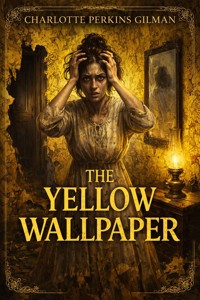
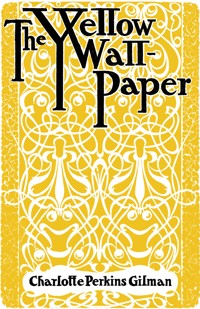
The Yellow Wallpaper is a powerful and deeply unsettling short story that explores the complexities of the human mind, the constraints of societal expectations, and the consequences of enforced isolation. Written by Charlotte Perkins Gilman, this classic work of psychological fiction remains one of the most influential and widely studied pieces of American literature. The narrative is presented through the private journal of a woman undergoing a "rest cure" prescribed for her nervous condition. Confined to a secluded room in a country house, she is forbidden from engaging in intellectual or creative activity, including writing—an outlet she secretly continues in defiance of her treatment. As days pass in enforced idleness, her thoughts begin to shift, and her attention becomes increasingly fixated on the room's disturbing yellow wallpaper. What begins as a mild irritation soon evolves into a consuming obsession. The wallpaper's chaotic patterns seem to move and change, revealing shapes and figures that blur the line between imagination and reality. As the narrator's mental state deteriorates, the wallpaper becomes a symbol of her confinement, both physical and psychological. Gilman masterfully captures the gradual descent into instability through an intimate and unreliable narrative voice. The story's strength lies in its subtlety—horror emerges not through external threats, but through the unraveling of the narrator's perception and identity. The reader is drawn into her inner world, experiencing the tension between what is seen, what is felt, and what may be real. Beyond its psychological depth, The Yellow Wallpaper offers a sharp critique of 19th-century attitudes toward women's health and autonomy. The narrator's lack of agency, enforced by both her physician and her husband, reflects broader societal limitations placed on women, particularly in matters of intellect, creativity, and self-expression. Themes of control, repression, identity, and freedom run throughout the story, making it both a compelling narrative and a significant social commentary. The wallpaper itself becomes a powerful metaphor, representing the structures that confine and silence, as well as the desperate struggle to break free from them. Short yet profoundly impactful, The Yellow Wallpaper continues to resonate with readers for its emotional intensity and its exploration of mental health and individuality. It is a haunting and thought-provoking work that lingers long after it is read, challenging perceptions and illuminating the fragile boundaries of the human mind.
Das E-Book können Sie in Legimi-Apps oder einer beliebigen App lesen, die das folgende Format unterstützen:
Seitenzahl: 31
Veröffentlichungsjahr: 2026
Ähnliche







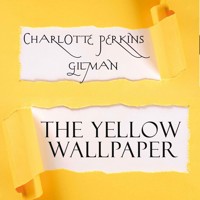




The Yellow Wallpaper
Charlotte Perkins Gilman
Copyright © 2026 by Charlotte Perkins Gilman
All rights reserved.
No part of this book may be reproduced in any form or by any electronic or mechanical means, including information storage and retrieval systems, without written permission from the author, except for the use of brief quotations in a book review.
Contents
Chapter 1
Chapter1
IT is very seldom that mere ordinary people like John and myself secure ancestral halls for the summer.
A colonial mansion, a hereditary estate, I would say a haunted house, and reach the height of romantic felicity,—but that would be asking too much of fate!
Still I will proudly declare that there is something queer about it.
Else, why should it be let so cheaply? And why have stood so long untenanted?
John laughs at me, of course, but one expects that in marriage.
John is practical in the extreme. He has no patience with faith, an intense horror of superstition, and he scoffs openly at any talk of things not to be felt and seen and put down in figures.
John is a physician, and perhaps—(I would not say it to a living soul, of course, but this is dead paper and a great relief to my mind)—perhaps that is one reason I do not get well faster.
You see, he does not believe I am sick!
And what can one do?
If a physician of high standing, and one's own husband, assures friends and relatives that there is really nothing the matter with one but temporary nervous depression,—a slight hysterical tendency,—what is one to do?
My brother is also a physician, and also of high standing, and he says the same thing.
So I take phosphates or phosphites,—whichever it is,—and tonics, and journeys, and air, and exercise, and am absolutely forbidden to "work" until I am well again.
Personally I disagree with their ideas.
Personally I believe that congenial work, with excitement and change, would do me good.
But what is one to do?
I did write for a while in spite of them; but it does exhaust me a good deal—having to be so sly about it, or else meet with heavy opposition.
I sometimes fancy that in my condition if I had less opposition and more society and stimulus—but John says the very worst thing I can do is to think about my condition, and I confess it always makes me feel bad.
So I will let it alone and talk about the house.
The most beautiful place! It is quite alone, standing well back from the road, quite three miles from the village. It makes me think of English places that you read about, for there are hedges and walls and gates that lock, and lots of separate little houses for the gardeners and people.
There is a delicious garden! I never saw such a garden—large and shady, full of box-bordered paths, and lined with long grape-covered arbors with seats under them.
There were greenhouses, too, but they are all broken now.
There was some legal trouble, I believe, something about the heirs and co-heirs; anyhow, the place has been empty for years.
That spoils my ghostliness, I am afraid; but I don't care—there is something strange about the house—I can feel it.
I even said so to John one moonlight evening, but he said what I felt was a draught, and shut the window.
I get unreasonably angry with John sometimes. I'm sure I never used to be so sensitive. I think it is due to this nervous condition.
But John says if I feel so I shall neglect proper self-control; so I take pains to control myself,—before him, at least,—and that makes me very tired.




