


1,99 €
Mehr erfahren.
- Herausgeber: Publisher s13381
- Kategorie: Geisteswissenschaft
- Sprache: Englisch
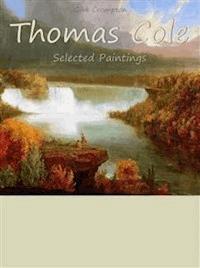
Thomas Cole (1801 - 1848) was an American artist. He is regarded as the founder of the Hudson River School, an American art movement that flourished in the mid-19th century. Cole's Hudson River School, as well as his own work, was known for its realistic and detailed portrayal of American landscape and wilderness, which feature themes of romanticism and naturalism.
Das E-Book können Sie in Legimi-Apps oder einer beliebigen App lesen, die das folgende Format unterstützen:
Veröffentlichungsjahr: 2017
Ähnliche




















Thomas Cole
Selected Paintings
By Gibb Crompton
––––––––
First Edition
*****
Copyright © 2017 by Gibb Crompton
Table of Contents
Title Page
Copyright Page
Foreword
Paintings
Contents
Foreword
THOMAS COLE (1801 - 1848) was an American artist. He is regarded as the founder of the Hudson River School, an American art movement that flourished in the mid-19th century. Cole's Hudson River School, as well as his own work, was known for its realistic and detailed portrayal of American landscape and wilderness, which feature themes of romanticism and naturalism.
He was born in Bolton, Lancashire, England. In 1818 his family immigrated to the United States, settling in Steubenville, Ohio, where Cole learned the rudiments of his profession from a wandering portrait painter named Stein. However, he had little success painting portraits, and his interest shifted to landscape. Moving to Pittsburgh in 1823 and then to Philadelphia in 1824, where he drew from casts at the Pennsylvania Academy of the Fine Arts, he rejoined his parents and sister in New York City early in 1825.
In New York Cole sold five paintings to George W. Bruen, who financed a summer trip to the Hudson Valley where the artist produced two Views of Coldspring, the Catskill Mountain House and painted famous Kaaterskill Falls and the ruins of Fort Putnam. Returning to New York, he displayed five landscapes in the window of William Coleman's bookstore; according to the New York Evening Post Two Views of Coldspring were purchased by Mr. A. Seton, who lent them to the American Academy of the Fine Arts annual exhibition in 1826. This garnered Cole the attention of John Trumbull, Asher B. Durand, and William Dunlap. Among the paintings was a landscape called "View of Fort Ticonderoga from Gelyna". Trumbull was especially impressed with the work of the young artist and sought him out, bought one of his paintings, and put him into contact with a number of his wealthy friends including Robert Gilmor of Baltimore and Daniel Wadsworth of Hartford, who became important patrons of the artist.
Cole was primarily a painter of landscapes, but he also painted allegorical works. The most famous of these are the five-part series, The Course of Empire, which depict the same landscape over generations-from a near state of nature to consummation of empire, and then decline and desolation-now in the collection of the New York Historical Society and the four-part The Voyage of Life. There are two versions of the latter, one at the National Gallery in Washington, D.C., the other at the Munson-Williams-Proctor Arts Institute in Utica, New York. Among Cole's other famous works are the Oxbow (1836), the Notch of the White Mountains, Daniel Boone at His cabin at the Great Osage Lake, and Lake with Dead Trees (1825). He also painted The Garden of Eden (1828), with lavish detail of Adam and Eve living amid waterfalls, vivid plants, and deer.
In 1842, Cole embarked on a Grand Tour of Europe in an effort to study in the style of the Old Masters and to paint its scenery. Most striking to Cole was Europe's tallest active volcano, Mount Etna. Cole was so moved by the volcano's beauty that he produced several sketches and at least six paintings of it. The most famous of these works is A View from Mount Etna from Taormina. Cole also produced a highly detailed sketch of it, entitled View of Mount Etna which shows a panoramic view of the volcano with the crumbling walls of the ancient Greek theatre of Taormina on the far right.
Cole influenced his artistic peers, especially Asher B. Durand and Frederic Edwin Church, who studied with Cole from 1844 to 1846.
Thomas Cole died at Catskill on February 11, 1848. The fourth highest peak in the Catskills is named Thomas Cole Mountain in his honor.




