


0,49 €
Mehr erfahren.
- Herausgeber: DigiCat
- Kategorie: Geisteswissenschaft
- Sprache: Englisch
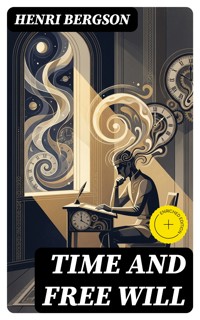
In "Time and Free Will," Henri Bergson presents a groundbreaking exploration of the concept of time and its implications for human freedom. Written during the early 20th century, this philosophical text challenges the conventional, mechanistic understanding of time as a mere quantitative measure, instead positing that time is qualitative and experienced subjectively. Bergson employs a lyrical and nuanced style, intertwining insights from philosophy, psychology, and metaphysics to articulate his notion of "duration," which emphasizes the fluidity and richness of lived experience over the static, fragmented time of clocks. This work not only critiques determinism but invites readers to consider how free will can coexist with the continuity of time. Henri Bergson, a prominent French philosopher and Nobel laureate, emerged in a period marked by rapid scientific progress and a growing interest in existential questions. His background in mathematics and his keen interest in the intuitive understanding of reality informed his philosophical inquiries. "Time and Free Will" reflects his belief that human consciousness must be understood through introspection and lived experience, pushing against the boundaries set by positivism. This seminal work is essential for anyone interested in philosophy, psychology, or the nature of consciousness. Bergson's profound insights challenge our perceptions of time and freedom, making this book a compelling read for scholars and general readers alike keen to explore the depths of human experience. In this enriched edition, we have carefully created added value for your reading experience: - A succinct Introduction situates the work's timeless appeal and themes. - The Synopsis outlines the central plot, highlighting key developments without spoiling critical twists. - A detailed Historical Context immerses you in the era's events and influences that shaped the writing. - An Author Biography reveals milestones in the author's life, illuminating the personal insights behind the text. - A thorough Analysis dissects symbols, motifs, and character arcs to unearth underlying meanings. - Reflection questions prompt you to engage personally with the work's messages, connecting them to modern life. - Hand‐picked Memorable Quotes shine a spotlight on moments of literary brilliance. - Interactive footnotes clarify unusual references, historical allusions, and archaic phrases for an effortless, more informed read.
Das E-Book können Sie in Legimi-Apps oder einer beliebigen App lesen, die das folgende Format unterstützen:
Veröffentlichungsjahr: 2022
Ähnliche





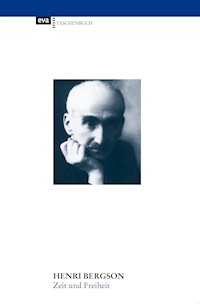


Time and Free Will
Table of Contents
Introduction
Time as we live it slips past the clock’s grid, and upon that difference our freedom depends. Henri Bergson’s Time and Free Will invites readers to sense this rift between measured sequences and the felt continuity of inner life. The book opens not with technicalities, but with a challenge to everyday habits of thinking: we confuse what can be counted with what can only be experienced. From that confusion, he argues, arise many puzzles about choice, character, and responsibility. The promise of the work is simple yet daring: to recover the immediacy of consciousness and to clarify freedom by rethinking what time truly is.
First published in 1889 as Bergson’s doctoral thesis under the French title Essai sur les données immédiates de la conscience, this work marks the debut of a voice that would reshape twentieth-century thought. Composed in late nineteenth-century France, amid debates in psychology and philosophy of mind, the essay reflects a period curious about measurement, mechanism, and the status of introspection. Bergson, a French philosopher educated in the rigorous traditions of the École Normale Supérieure and the University of Paris, sets out to examine how our inner experience discloses data that resist quantification, especially when we speak of choice, effort, or the intensity of feeling.
The central premise is clear. When we import the spatial habits of counting and measuring into the domain of conscious life, we distort what is most distinctive about it. Bergson contrasts the homogenous units of clock time with a qualitative duration, a living flow whose moments interpenetrate and shade into one another. In that medium, the self is not a sum of states placed side by side, but a developing whole that endures. Questions of free will, he suggests, should be approached within this experiential continuity, not in terms borrowed from mechanics or arithmetic. The argument proceeds by patient analysis rather than polemical assertion.
Time and Free Will holds classic status for more than its philosophical claims; it also demonstrates a rare literary clarity. Bergson’s prose renders subtle distinctions vivid, moving from everyday examples to profound implications with graceful control. His corpus would later be recognized with the Nobel Prize in Literature in 1927, an unusual honor for a philosopher and a testament to the stylistic power that already animates this early book. The result is a text that can be read for its ideas and for the precision of its language, which carves intuition into concepts without sacrificing the texture of lived experience.
The book arises from, and reacts to, a moment when scientific psychology was seeking laws of sensation and behavior through experiment and measurement. Thinkers in psychophysics had proposed methods to quantify intensities of perception and feeling. Bergson does not deny the value of empirical inquiry; rather, he argues that certain aspects of consciousness resist such treatment, and that forcing them into numerical molds yields pseudo-problems. The free-will controversy, he maintains, has been exacerbated by this confusion of categories. By refusing to let spatial metaphors dominate, the essay reopens the question on terrain where it can be genuinely assessed.
At stake is the meaning of causation and novelty in human life. If conscious states are not discrete items aligned like points on a line, then the passage from one state to another may involve genuine transformation, not mere succession. Bergson encourages a method attuned to the qualitative transitions of attention, emotion, and decision. The issue of responsibility, then, is addressed within the continuity of a self that grows. Without presupposing any conclusion, he prepares the reader to consider whether freedom should be defined not as the interruption of causality, but as expression of a personality formed in duration.
The reach of the book extends far beyond academic philosophy. In literary modernism, explorations of memory, stream of consciousness, and the felt elasticity of time resonate with Bergson’s distinctions. Writers such as Marcel Proust developed narratives that dwell on the layering of moments and the recovery of the past in the present, a sensibility many readers hear in dialogue with Bergsonian insights. Across European letters, attention to inner temporality—how a day can dilate, how a second can weigh heavily—found new resources in this rethinking of time. The book thus helped set terms for a century of artistic experiment with consciousness.
Philosophically, the work influenced debates in pragmatism, phenomenology, and later continental thought. William James praised Bergson’s emphasis on experience and continuity, finding common cause in an anti-reductionist approach to mind. In the mid-twentieth century, thinkers revisited Bergson’s notions of duration and multiplicity to reconsider perception, creativity, and novelty; Gilles Deleuze, for instance, developed a sustained engagement that renewed Bergson’s relevance. Even fields such as aesthetics and film theory drew on his temporal insights to analyze movement and image. The breadth of this reception underscores how a precise conceptual shift can radiate across disciplines.
Key concepts gradually take shape. Duration names the living flow of consciousness in which moments are not juxtaposed but interwoven. A distinction emerges between quantitative multiplicity, suited to counting, and qualitative multiplicity, which describes interpenetrating states. Bergson advances the claim that analysis must be supplemented by an intuitive grasp of the whole, if we are to do justice to inner life. These ideas are introduced by way of careful examples and counterexamples, avoiding grand proclamations. The reader is invited to test them against experience, to notice how attention changes a feeling, or how an intention gathers force across a span that eludes measurement.
The book’s architecture reflects this movement from description to consequence. It begins by questioning whether the intensity of psychic states can be represented numerically, proceeds to a study of different kinds of multiplicity and the idea of duration, and only then addresses the problem of free will in light of those distinctions. This progression allows Bergson to reframe the issue rather than inherit it uncritically. Without preempting the conclusions he draws, it can be said that the argument depends on showing that many apparent necessities dissolve once we stop spatializing time and begin to think in terms of the continuity of consciousness.
Time and Free Will endures because it reshapes questions we still ask: What counts as evidence about inner life? How do scientific models and lived realities intersect without one being reduced to the other? The classic status of the book rests on its methodological audacity and its rhetorical poise, but also on its capacity to generate productive disagreements. Readers come away with concepts they can apply beyond the text—tools for thinking about agency, character, and change—without feeling that the complexities of experience have been simplified or domesticated by a theory.
In an age obsessed with metrics—productivity dashboards, biometric trackers, and split-second data streams—Bergson’s distinction between measured time and lived duration feels newly urgent. The book offers a vocabulary for articulating why certain decisions, emotions, and creative acts cannot be compressed into graphs, even as we value empirical knowledge. Its lasting appeal lies in showing how careful attention to consciousness can clarify freedom without mystification. To read Time and Free Will today is to be reminded that philosophy begins from experience, and that the ways we carve time shape the possibilities we grant ourselves as agents in a shared world.
Synopsis
Henri Bergson’s Time and Free Will, first published in 1889, examines the immediate data of consciousness to rethink how we experience time and how freedom can be understood. Originally issued in French as Essai sur les données immédiates de la conscience, it begins not from abstract metaphysics or physical science but from a descriptive analysis of inner life. Bergson argues that many philosophical problems about will and determinism arise from confusing lived experience with the spatial, quantitative models used in measurement. The book isolates key phenomena—intensity of feelings, multiplicity of conscious states, and the nature of duration—to separate genuine inner experience from conceptual habits imported from mathematics and the natural sciences.
The opening analysis considers the intensity of psychological states. Bergson questions whether feelings and sensations truly admit of numerical measurement, as was increasingly assumed in experimental psychology. He suggests that when we speak of a stronger or weaker emotion, we do not add units to a fixed magnitude. Instead, the state is modified qualitatively, permeating consciousness more deeply or differently. By scrutinizing examples from ordinary experience, he maintains that the vocabulary of quantity fits external stimuli or bodily responses better than it fits the inner feel of a state. This reframing prepares the way for his broader critique of spatialized models of mind.
Extending this critique, the book examines attempts to correlate subjective experience with measurable variations in stimulus. For Bergson, such correlations concern peripheral conditions and motor adaptations, not the intrinsic quality of feeling itself. Apparent success in scaling sensations reflects how behavior and attention adjust to differences, while the inner state remains an indivisible whole at each moment. He argues that by mistaking practical indices for the experience they accompany, psychology risks misdescribing consciousness. The upshot is not a denial of experiment, but a restriction: quantitative methods illuminate relations between causes and reactions, whereas the essence of a felt state resists numerical representation.
With this groundwork, Bergson turns to the multiplicity of conscious states. He distinguishes between a numerical multiplicity, composed of discrete, externally juxtaposed units, and a qualitative multiplicity, in which elements interpenetrate and cannot be neatly counted. Inner life, he claims, exemplifies the latter: memories shade into perceptions, and the past survives within the present as an ongoing influence, not as stored, isolable items. When we treat experience as a series of separate states, we impose a spatial scheme upon what is in fact a flowing continuity. Recognizing this difference is crucial to understanding how consciousness changes without being decomposed into independent parts.
From this distinction arises Bergson’s central concept of duration. Duration is not a succession of identical instants lined up like points in space; it is a continuous, heterogeneous becoming in which states merge and transform. Scientific time, expressed through clocks and numbers, projects succession onto a homogeneous medium that permits measurement and comparison. Lived time, by contrast, is qualitative and cannot be divided without altering its nature. When we count or slice time, we substitute a practical image for the experience itself. Bergson argues that philosophy must take duration as its primary datum if it is to describe consciousness faithfully and avoid misleading abstractions.
This analysis extends to the operations of language and intellect. Because everyday reasoning favors clarity through separation, it tends to spatialize what it names, translating fluid processes into fixed terms and discrete units. Bergson contends that many classic antinomies—such as those pitting freedom against necessity—arise when the moving continuity of inner life is recast as a chain of juxtaposed states governed by external relations. By returning to duration, these oppositions can be reframed: change is not an addition to inert elements, but the very texture of consciousness. The challenge is methodological, urging attention to the immediate flow rather than to its convenient, schematic substitutes.
In the light of duration, the problem of free will is reconsidered. Freedom does not mean randomness or caprice; nor is it reducible to a calculable resultant of prior, separable causes. A genuinely free act, on Bergson’s account, expresses the whole person as it has been gradually formed in lived time. When action issues from this deep continuity, it is neither externally compelled nor artificially indeterminate. Conversely, when life is fragmented into habits, routines, or roles, choices may appear predetermined because we have already substituted a simplified self for the richer one presented in duration. The analysis thus ties freedom to the qualitative history of the self.
The argument carries implications for psychology and metaphysics. For psychology, it recommends methods that describe the qualitative unfolding of states and the persistence of memory, rather than exclusively seeking numerical scales for inner experience. For metaphysics, it cautions against deriving conclusions about mind from models devised for matter in space. Bergson does not reject practical measurement; he assigns it to the domain where spatial comparison is appropriate. But when addressing consciousness, he urges a return to immediate experience, where change is creative and indivisible. This perspective reframes debates about determinism, responsibility, and character formation, emphasizing how decisions condense a duration in which the past is conserved and transformed.
Time and Free Will thus offers a reorientation rather than a catalogue of theses. By distinguishing lived duration from homogeneous time, and qualitative multiplicity from numerical aggregation, it aims to dissolve confusions that obscure the nature of freedom. The book’s enduring significance lies in its methodological proposal: to attend to the fluid continuity of inner life before importing the tools of measurement. This approach has influenced later discussions of consciousness and agency across philosophy and related fields. Without settling every dispute, Bergson shows how a shift in perspective can reopen familiar problems, inviting renewed inquiry into what it means to experience time and to act.
Historical Context
Henri Bergson’s Time and Free Will appeared in Paris in 1889, within the institutions of the French Third Republic that had stabilized after the Franco-Prussian War. The Republic’s centralized school system, secular universities, and elite normal schools shaped the intellectual climate. Philosophy was a state profession, forming teachers and examiners under rigorous competitive exams. Paris anchored the republic of letters through journals, salons, and university chairs, while provincial lycées trained cohorts in standardized curricula. Against this backdrop, the book entered a culture that valorized science, administrative order, and pedagogy, yet also tolerated bold philosophical interventions that questioned prevailing models of mind, time, and human action.
Bergson had been educated at the École Normale Supérieure and passed the agrégation in philosophy in 1881, a gateway to the lycée professorships that structured French intellectual careers. He taught in provincial schools, notably at Clermont-Ferrand, while developing his doctoral research on the immediate data of consciousness. In 1889 he defended two theses at the University of Paris: the main thesis published as Essai sur les données immédiates de la conscience (Time and Free Will), and a Latin thesis on Aristotle’s concept of place. The book was issued in Paris that year, gaining circulation through a leading philosophical publisher active in academic networks.
French philosophy in the late nineteenth century was marked by a dialogue between positivism and spiritualism. Auguste Comte’s heirs promoted a science-first program, often joined by literary determinism associated with Hippolyte Taine. In contrast, a spiritualist line—exemplified by Félix Ravaisson, Jules Lachelier, and Émile Boutroux—defended irreducible features of consciousness and freedom. Bergson inherited this debate. Time and Free Will enters it as a critique of mechanistic psychology and reductive determinisms. Without rejecting science, the book insists on an inner, qualitative time that escapes the quantitative schemas favored by positivist philosophies, thus aligning with but also renewing the spiritualist defense of lived experience.
Experimental psychology rose swiftly in the 1870s and 1880s. Wilhelm Wundt had founded his Leipzig laboratory in 1879; in France, Théodule Ribot created institutional footholds, including the first chair of Experimental and Comparative Psychology at the Collège de France in 1888. Ribot’s Revue philosophique (founded 1876) disseminated empirical studies of memory, attention, and emotion. Alfred Binet and colleagues were institutionalizing laboratory practices in Paris. Time and Free Will addresses this milieu critically, engaging with psychological methods that measured sensations and reaction times, yet arguing that consciousness’s temporal flow—duration—cannot be fully captured by the laboratory’s units and chronometers.
Psychophysics provided a model for quantifying mind, through Ernst Weber’s discrimination thresholds and Gustav Fechner’s law (1860) relating stimulus and sensation. Helmholtz’s work on nerve conduction and F. C. Donders’s reaction-time experiments (1868) promised a physiology of mental processes. French readers followed these developments closely. Bergson’s book directly confronts such quantification, contending that to treat inner life as a series of discrete, countable states is to mistake its nature. By contrasting measurable intervals with lived continuity, the book positions itself within a broader debate on whether mind can be mapped by scales and stopwatches, or whether it eludes such mappings.
Concurrently, French medicine and psychiatry were redefining the boundaries of will and automatism. At the Salpêtrière, Jean-Martin Charcot’s studies of hysteria and hypnosis, and the Nancy school’s emphasis on suggestion (Hippolyte Bernheim), fueled arguments about conscious control. Cases of automatism and double consciousness raised legal and moral questions about responsibility. Time and Free Will belongs to this context: its defense of free action within a qualitative duration opposes interpretations that reduce conduct to reflexes or pathological sequences. The book neither denies pathology nor clinical insight; it resists their elevation into a general psychology of the normal subject’s supposedly mechanical behavior.
Mathematics and physics supplied another horizon. The prevailing mechanics inherited from Newton treated time as homogeneous and measurable. Meanwhile, work on continuity and number—by Richard Dedekind and Georg Cantor in the 1870s and 1880s—sharpened concepts of the continuum, while Riemann’s earlier ideas on manifolds expanded spatial imagination. Non-Euclidean geometries were discussed by French mathematicians, and Henri Poincaré would soon articulate conventionalism. Bergson’s language of multiplicity and continuity reflects awareness of these currents while criticizing the “spatialization” of time. He distinguishes a living, heterogeneous duration from the homogeneous parameter deployed by mathematics and physics, without denying the latter’s utility in their domains.
Industrial capitalism also reframed daily experience of time. Railways, telegraphy, and expanding factory regimes synchronized work and communication across regions. The International Meridian Conference (1884) promoted global standard time; France retained Paris mean time into the early twentieth century but participated in the broader trend of temporal coordination. The Exposition Universelle in Paris in 1889, crowned by the Eiffel Tower, exhibited electricity, precision instruments, and modern communications. Time and Free Will appears amid this celebration of measurable, networked time. By insisting on the primacy of lived, qualitative duration, it acts as a counterpoint to the clock-discipline shaping urban life and industrial schedules.
The Third Republic’s school reforms, including the Ferry laws of 1881–1882 establishing free, compulsory, secular primary education, enlarged the reading public and reinforced philosophy’s civic mission in secondary schools. Textbooks and journals circulated widely among teachers and students. Publishing houses such as Félix Alcan’s fostered a national philosophical conversation through collections devoted to contemporary thought. New journals—soon including the Revue de métaphysique et de morale (founded 1893)—created forums for debate. Bergson’s book entered this ecosystem, addressed to trained philosophers and teachers but accessible enough to influence discussions about psychology, ethics, and the pedagogy of introspection.
Politics pressed upon intellectual life. The Boulangist crisis (1887–1889) exposed vulnerabilities in parliamentary institutions just as Bergson’s thesis appeared. Republican elites defended rational administration and civic education as bulwarks against authoritarian populism. In the social sciences, Adolphe Quetelet’s “average man” and moral statistics encouraged viewing conduct as a product of regularities. Time and Free Will resists this drift toward statistical personhood. Its defense of freedom, anchored in a non-quantitative conception of inner time, counters attempts to subsume individual decision under social averages and deterministic causal nets pervasive in policy talk and popular science.
Evolutionary theory and its social interpretations formed a further background. Since 1859, Darwin’s account of natural selection and Herbert Spencer’s evolutionary philosophy had been widely debated in France. Mechanistic and adaptationist explanations spread across biology and sociology, sometimes shading into social Darwinism. Although Bergson would later develop a philosophy of life in Creative Evolution (1907), Time and Free Will already challenges explanations that treat mental life as a chain of adaptive mechanisms. It is not anti-scientific; rather, it circumscribes the reach of evolutionary and mechanistic models when speaking of the qualitative continuity of conscious experience and choice.
Law and criminology also invigorated discussions of responsibility. Cesare Lombroso’s criminal anthropology (from 1876) suggested innate determinants of deviance, influencing forensic debates in Europe. French jurists and psychiatrists wrestled with questions of diminished responsibility, insanity defenses, and the weight of expert testimony. Against this determinizm-leaning climate, a philosophical account affirming authentic choice had cultural resonance. Time and Free Will supplies a conceptual vocabulary—duration, qualitative multiplicity, creative decision—that could be mobilized to preserve a space for agency amid expanding medico-legal classifications, even if the book itself remained a work of pure philosophy.
Institutional reforms in higher education framed Bergson’s career path. The state standardized examinations, incorporated research into university degrees, and, with the 1896 law, granted universities legal personality. Doctoral candidates in philosophy prepared a principal thesis and a Latin complementary thesis, defended publicly. Bergson’s trajectory—from the École Normale to provincial lycées to Paris—was typical for ambitious philosophers. The lycée syllabus emphasized psychology and logic, often via introspection and analysis of consciousness, which gave a ready audience to his inquiry into immediate experience. The book’s success reflects how institutional structures could both discipline and incubate philosophical innovation.
International exchange strengthened the book’s reach. German laboratories set methodological standards; British empiricism and associationism (Hume, J. S. Mill) were common targets in French debates; American psychology, notably William James’s Principles of Psychology (1890), emphasized the fluid “stream of consciousness.” Early readers recognized affinities and divergences between Bergson’s duration and James’s stream. In the 1890s and early 1900s, translations, lectures, and reviews circulated across languages. These crosscurrents did not determine the book’s arguments, but they amplified its relevance by situating it within a transnational reevaluation of how to describe and know inner life.
The arts provided parallel explorations of subjectivity. French symbolism in the 1880s and 1890s sought to evoke states of mind rather than depict external realities. Writers and critics probed memory, sensation, and temporal nuance. Although Bergson worked within academic philosophy, his emphasis on lived time and the interpenetration of moments resonated with broader aesthetic experiments that privileged inwardness over external description. This shared cultural interest helped his ideas find audiences beyond classrooms, influencing, in later decades, literary treatments of memory and temporality, even as Time and Free Will remains a technical intervention in debates about psychology and metaphysics.
Subsequent scientific revolutions reshaped how readers contextualized the book. Special relativity (1905) and debates about simultaneity transformed physics’ time, leading Bergson to engage publicly with Einstein decades later. Yet Time and Free Will predates these developments; it addresses a pre-relativistic landscape dominated by Newtonian mechanics and psychophysical measurement. The book’s core distinction between lived duration and homogeneous, measurable time already formulated a critique of conflating physical and psychological temporalities. Later controversies would not retroactively ground the 1889 text but would highlight the foresight of its central claim: that different domains require different conceptions and measures of time.
The year 1889 itself symbolized modernity in Paris. The Exposition Universelle showcased electricity, steel, organized spectacle, and technologies of synchronization—an urban choreography governed by timetables, displays, and standardized intervals. Higher civil service and educational bureaucracies extended schedules and examinations across the Republic. In this milieu, Time and Free Will functioned as an intellectual counterpoint. While acknowledging the practical power of measurement, it insisted that human interiority unfolds in a qualitative continuity irreducible to spatialized units. Its argument thus mirrored, and quietly resisted, the broader cultural elevation of precision, coordination, and quantification in public life and industry.
Author Biography
Henri Bergson (1859–1941) was a French philosopher whose work reshaped debates about time, consciousness, creativity, and the limits of scientific explanation. Writing at the turn of the twentieth century, he became one of Europe’s best-known public intellectuals, combining rigorous analysis with a literary style that reached broad audiences. Bergson advanced a philosophy of duration (durée) emphasizing lived, qualitative time over quantitative, spatialized measures, and he reoriented metaphysics around notions of intuition, novelty, and freedom. His books, from early studies of memory to later reflections on evolution and morality, influenced philosophers, psychologists, theologians, and artists, and earned him the 1927 Nobel Prize in Literature.
Educated in Paris, Bergson attended the Lycée Condorcet before entering the École Normale Supérieure in the late 1870s, where he completed advanced training in philosophy. He absorbed and debated ideas associated with spiritualist and idealist currents in French thought, studying figures such as Félix Ravaisson, Jules Lachelier, and Émile Boutroux. Classical studies informed his method as much as contemporary science, and he engaged critically with British empiricism and evolutionary speculation then in vogue. After passing the agrégation in philosophy, he began a teaching career while preparing scholarly work that joined close textual analysis, psychological observation, and a systematic rethinking of metaphysical problems.
During years teaching in secondary schools, including posts outside Paris, Bergson developed the arguments that became his doctoral thesis, Time and Free Will (1889), accompanied by a Latin dissertation on Aristotle’s concept of place. Time and Free Will framed his central distinction between measurable clock-time and the fluid, interpenetrating continuity of inner duration. The book’s defense of freedom against determinism relied on careful descriptions of consciousness rather than abstract constructions. It brought him recognition in academic circles and marked the emergence of a distinctive method of intuition, not as mere feeling but as disciplined entry into processes that analytic concepts often distort.
With Matter and Memory (1896), Bergson offered a new account of perception, body, and memory, arguing that memory is not stored as fixed images alone but operates as selection and contraction oriented to action. The study bridged philosophy and the psychology of his day without reducing mind to mechanism. In 1900 he released Laughter: An Essay on the Meaning of the Comic, a stylistically striking inquiry into social life and automatism. Around the same time he began teaching at the Collège de France, where his public lectures drew large audiences. Introduction to Metaphysics (1903) consolidated his method and broadened his readership.
Creative Evolution (1907) made Bergson internationally famous. There he proposed a dynamic, non-mechanistic reading of life and novelty, introducing the controversial notion of élan vital to capture the creative thrust of evolution and experience. The book sparked discussion across philosophy, biology, and theology, and it cemented his reputation as a critic of reductive materialism. In the following decade his influence extended beyond academia; he was elected to the Académie française in 1914. During the First World War he undertook cultural and diplomatic missions for France, contributing to efforts to articulate the intellectual stakes of the conflict to foreign audiences.
In the early 1920s Bergson engaged publicly with the philosophical implications of relativity theory, culminating in Duration and Simultaneity (1922) and a widely noted exchange with Albert Einstein in Paris. While accepting the physics, he challenged interpretations that, in his view, erased lived temporality. Honored across Europe and North America, he received the 1927 Nobel Prize in Literature for the clarity and vitality of his ideas. He continued to write on ethics and religion, publishing The Two Sources of Morality and Religion (1932). He also served on the International Committee on Intellectual Cooperation, a League of Nations body fostering scholarly exchange.
Bergson’s final years were marked by declining health and diminished public activity. He remained attentive to moral and religious questions and, in late writings, expressed solidarity with Judaism while maintaining a philosophical openness to Catholic thought without formal conversion. He died in Paris in 1941. His legacy endures in multiple fields: phenomenology and process-oriented metaphysics, twentieth-century French philosophy (including later reinterpretations by Gilles Deleuze), and modernist literature, which drew on his analyses of time, memory, and perception. Contemporary debates in cognitive science and the philosophy of mind continue to revisit his insights into consciousness, embodiment, and creative emergence.




