


24,99 €
Mehr erfahren.
- Herausgeber: John Wiley & Sons
- Kategorie: Fachliteratur
- Sprache: Englisch
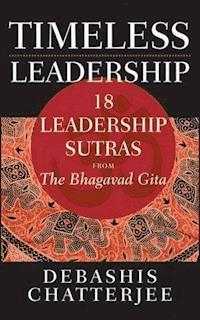
The timeless leadership wisdom of the Bhagavad Gita explained Although it was written well over two thousand years ago, the Bhagavad Gita ("Song of God"), a revered Hindu religious text, contains an immense wealth of ageless wisdom that speaks directly to the needs of today's business leaders. Timeless Leadership takes this unlikely resource and teases out important lessons on 18 aspects of leadership, from commercial vision to motivation, decision-making, and planning. Looking in detail at what the Gita has to say about these and other issues of interest to business professionals, Timeless Leadership focuses on one central point: that once the basic thought process of man is improved, the quality of his actions will improve as well, leading to better results. * Uses an ancient religious text to highlight and explain key Western management concepts * Explores the leadership ideas in the Bhagavad Gita and helps managers and leaders apply them to modern business life * Weaves together the threads of wisdom from the Gita to shed light on issues and challenges for leaders at all levels Covering teachings and ideas that have only got better with time, Timeless Leadership adapts the wisdom of millennia past for today's business leaders.
Sie lesen das E-Book in den Legimi-Apps auf:
Seitenzahl: 319
Veröffentlichungsjahr: 2012
Ähnliche



















CONTENTS
A Note about the Text
Acknowledgments
Introduction: The Context of the Gita
Sutra 1: The Warrior’s Journey
All Wars Are First Fought in the Mind
The Mind is a Mob
The Ego is a Disposable Idea
Leaders Embrace Discontinuity by Dispossessing the Ego
The Secret of Invincibility: The Conquest of the Binary Mind
Self is the Cause; Self is the Effect
Hunting for the I
Sutra 2: Invincible Wisdom
Grief, Pity, and Shame: The Mind’s GPS System
Creating Alternative Reality
Motivation and the Monkey Mind
The Leader’s Inspiration Comes from Unselfish Work
Unselfish Work Leads to Evenness of Mind
Applying Invincible Wisdom: Powered by the Intellect and Driven by Unselfishness
Sutra 3: Karma Yoga
Arjuna’s Dilemma: The Warrior as Worrier
Work and Its Secret: Action, Inaction, and Effortless Action
Karma Yoga: Work as Worship
The Yajna Spirit: Discovering the Timeless Cycle of Work
Swadharma: The Case for Righteous Action
Work as a Means of Realizing Who We Are
Sutra 4: Timeless Leaders Pursue Purpose as the Source of Supreme Power
Rajarshi: The Leader as Sage
The Many Faces of the Supreme Power
Twenty-Four-Hour Leadership
The Return of the Rishi
Sutra 5: Leadership is the Art of Undoing
How Anchors of the Past Hinder Performance
The Art of Detached Involvement
Evolving to the Equality of Vision
The Art of Undoing
Sutra 6: Leaders Are Masters of Their Minds
Separating the Self Image from the Real Self
Mastery of the Mind
Disciplines of Mastery: Concentration, Detachment, and Transcendence
The Power of Stillness
Sutra 7: Leaders Are Integrators
Context
Arjuna’s Journey from Ignorance to Wisdom
Timeless Leaders Integrate People and Processes
The Leader’s World: A Reflection of Unmanifest Dharma
From Ego-Centered to Spirit-Centered Leadership
Leaders Liberate Themselves and Others from Suffering
Sutra 8: Timeless Leadership
Timeless Leaders Explore the Ultimate Meaning of Life
The Multidimensional Meaning of Life
Creation is Sacrificing the Smaller for the Sake of the Greater
The Real Meaning of Life is Contained in Life Itself
Meaningful Work: A Synthesis of Reflection and Action
Sutra 9: The Sovereign Secret
Sovereign Self and the Path of Unity
The Governance of the Ego: The Path of Disintegration
Self-Organization: When Organization Becomes Community
The Law of Giving: Being and Becoming
Sutra 10: Leadership is an Adventure of Consciousness
Leading Consciously
Silence: The Language of Timeless Leadership
The Dynamism of Indivisibility
The Pursuit of Excellence
Sutra 11: Timeless Leaders Have Integral Vision
Integral Vision
Sight and Insight
The Pangs of Plurality
The Leader as Servant: Being an Instrument of the Whole
Sutra 12: Love is the Leader’s Essence; Love is the Leader’s Presence
Leadership is Love Made Visible
Devotion: The Art and Practice of Leadership
Attributes of the Leader as Devotee
Sutra 13: Leaders Command Their Field with the Eye of Wisdom
The Leader as a Knower in the Field of Knowledge
The Dimensions of the Field and the Knower of the Field
Seeing with the Eye of Wisdom
Sutra 14: Leaders Harness the Dynamic Forces of Nature
Nature’s Manuscript: The Three Forces
How Leaders Harness the Three Forces of Nature
Transcending the Dynamics of Nature
Sutra 15: Timeless Leaders Discover Their Invisible Source
The Tree of Life
The Invisible Leader
From the Perishable to the Imperishable: Quest for the Supreme Self
Sutra 16: Leaders Negotiate the Crossroads
The Crossroads of Leadership: The Divine and the Devilish
Toxic Leadership
The Return Journey
Sutra 17: Leaders Follow Their Faith
Faith: The Deep Structure of Leadership
Three Kinds of Faith
The Art and Science of Self-Giving
Sutra 18: Leadership is Transcendence
The Source and Resource
The Algebra of Attachment
Renunciation and Regeneration of the Leader
The Path of Transcendence
The Unity of Two Wills: The Fighter and the Warrior
Conclusion
References
About the Author
Index
Additional Praise for Timeless Leadership
“Timeless Leadership is an invaluable contribution to the literature on leadership. In his inimitable style and with an extraordinary gift for compelling metaphors, Debashis Chatterjee brings the eternal truths of the Bhagavad Gita to fresh and vibrant life, ready to be absorbed and applied by leaders of all types of organizations. Prof. Chatterjee has arrived at the ‘simplicity on the other side of complexity,’ the mark of true mastery of his subject. This book is a treasure, a must read for any one aspiring to be a conscious business leader and a fully realized human being.”
—Rajendra Sisodia, Professor of Marketing, Bentley University
“What can ancient Indian mythology teach today’s global leaders? A great deal, according to this engaging analysis by Debashis Chatterjee, who considers leadership through the lens of the Bhagavad Gita. Readers will benefit from Chatterjee’s close reading of the Gita, as he traces the leadership journey of a classic hero, Arjuna. We learn that leaders reach their full potential only if they overcome the limitations of their ego. They do this by cultivating a mentality that sees reality clearly, not through the faulty perceptions of a mind unsettled by a ‘mob’ of emotion and conditioned impulses. Chatterjee’s leader is courageous but also humbled by the quest for profound self-knowledge that leads to truth and the ability to work with the devotion of ‘love made visible.’ Anyone seeking clarity about leadership’s ultimate foundation will embrace this book.”
—Dipak C. Jain, Dean, INSEAD
Copyright © 2012 John Wiley & Sons Singapore Pte. Ltd.
Published in 2012 by John Wiley & Sons Singapore Pte. Ltd., 1 Fusionopolis Walk, #07-01, Solaris South Tower, Singapore 138628
All rights reserved. No part of this publication may be reproduced, stored in a retrieval system, or transmitted in any form or by any means, electronic, mechanical, photocopying, recording, scanning, or otherwise, except as expressly permitted by law, without either the prior written permission of the Publisher, or authorization through payment of the appropriate photocopy fee to the Copyright Clearance Center. Requests for permission should be addressed to the Publisher, John Wiley & Sons Singapore Pte. Ltd., 1 Fusionopolis Walk, #07-01, Solaris South Tower, Singapore 138628, tel: 65–6643–8000, fax: 65–6643–8008, e-mail: [email protected].
This publication is designed to provide accurate and authoritative information in regard to the subject matter covered. It is sold with the understanding that the Publisher is not engaged in rendering professional services. If professional advice or other expert assistance is required, the services of a competent professional person should be sought. Neither the author nor the Publisher is liable for any actions prompted or caused by the information presented in this book. Any views expressed herein are those of the author and do not represent the views of the organizations he works for.
Other Wiley Editorial Offices
John Wiley & Sons, 111 River Street, Hoboken, NJ 07030, USA
John Wiley & Sons, The Atrium, Southern Gate, Chichester, West Sussex, P019 8SQ, United Kingdom
John Wiley & Sons (Canada) Ltd., 5353 Dundas Street West, Suite 400, Toronto, Ontario, M9B 6HB, Canada
John Wiley & Sons (Australia) Ltd., 42 McDougall Street, Milton, Queensland 4064, Australia
Wiley-VCH, Boschstrasse 12, D-69469 Weinheim, Germany
ISBN 978-0-470-82427-6 (cloth)
ISBN 978-0-470-82925-7 (ePDF)
ISBN 978-0-470-82924-0 (Mobi)
ISBN 978-0-470-82926-4 (ePub)
This work is dedicated to Narayandas Chatterjee, who now resides in the timeless.
A NOTE ABOUT THE TEXT
The Bhagavad Gita is a timeless text of about 700 verses. It is a spiritual classic that originated in India many years before Christ was born. The book appeared as an episode in the battle of Kurukshetra in Northern India. The Bhagavad Gita takes the form of a conversation between Krishna and Arjuna. The themes of the conversation range from the vast Cosmos to the innermost soul of a human being, often referred to as the Self.
Timeless Leadership weaves this battlefield conversation into a narrative on the problems faced by leaders such as Arjuna and the solution provided by Krishna from a perspective that is both compelling and contemporary. This conversation between Arjuna and Krishna is narrated by Sanjaya to the blind king Dhritarashtra, who is eager to know the outcome of the battle; thus the book is a narrative within a narrative.
The Dean of the Harvard Business School, Professor Nitin Nohria, in an informal conversation, described to me the relevance and message of the Gita in a way that cleared any doubt I had about the contemporary relevance of this text. He said, “What Emerson is to America and Confucius is to China, Krishna is to India.” I have known several Indian CEOs who have made it to the Fortune 100 list to echo the same feeling about Krishna’s teachings to Arjuna. I trust this work is relevant for leaders around the world. I hope Krishna inspires leaders of all kinds to lead in their world in a way that makes the world a happier and a safer place for new generations.
This book is the result of a decade-long attempt to transcreate rather than translate the Gita for insights in leadership. The Gita’s unrivalled status as a spiritual classic rendered in Sanskrit made this trans-creation a formidable task. A literal translation of the ancient text would create insurmountable roadblocks for today’s readers. I have read through more than 200 interpretations of the Gita, ranging from people well-known in the western world, such as Gandhi, Emerson, and Thoreau, to revered authors from the Indian tradition, such as Swami Vivekananda, founder of the Ramakrishna Mission, and Swami Chinmayananda, founder of the Chinmaya Mission, and a wide variety of more contemporary authors.
From my research I have presented 18 sutras from the Gita. Each sutra serves as a cognitive unit or a chapter title that compresses the message of the whole chapter. The word sutra literally means a thread (as in a thread that weaves the beads of a necklace together) that combines different subthemes of a chapter as a unified whole. In well-known Indian texts such as the Yoga Sutra of Patanjali or Vatsayana’s Kama Sutra, the word sutra denotes a short aphoristic statement that holds the attention of the reader or listener to the essence of the text’s message. In Buddhist texts, the oral teachings of the Buddha were recorded in the form of sutras. This served as a device for the reader to memorize the text with greater ease.
The Sanskrit word sukta, which means “well spoken” or “good news,” according to some scholars has the same meaning conveyed by the word sutra. This has the same import as the word Gospel, which refers to Christ’s teachings. I have done the best I could to present the good news that Krishna delivers to Arjuna in the midst of the battlefield. I have taken the liberty to recreate the message of the Gita so as to make it more communicative to contemporary audiences around the world. In this, I believe, I have been able to glean 18 key messages of the Gita without diluting the core of its status as a sacred text. In short, I have not traded reverence for relevance.
The 18 sutras of the Bhagavad Gita have deep philosophical as well as practical implications for leaders of the third millennium. In this book, Krishna literally guides Arjuna and indeed all leaders like Arjuna through the ABCs of leadership. Here, A represents Authenticity or truth, which is the core value of leaders; B stands for Being, which is the raw material for becoming a leader; and C stands for Convergence, which a leader achieves between his current reality and his goal, or between a problem and its solution. Indeed, as a text, the Bhagavad Gita does not separate the problem from the solution. Arjuna, a leader-in-the-making, discovers the breakthrough solution to life’s most persistent problems in the midst of the battlefield. Corporate warriors and leaders who see themselves in this millennial march of evolution of humankind and human-centered organizations may find the message of the Gita truly life-changing.
Timeless Leadership will have served its purpose if the readers of this book find something of relevance to their life and work that is for them both timeless and timely.
ACKNOWLEDGMENTS
This work is the outcome of diligent study and conversations on the Bhagavad Gita with many masters for over 10 years. It is impossible for anyone to read or write on the Gita without living some of it. The Gita is a timeless manual for the art of living. My father, Narayandas Chatterjee, was making some personal notes on his understanding of the Gita when he passed away in September 2009. It was a timeless aspiration that he nurtured in his heart and that even his death could not interrupt. Therefore, I lovingly dedicate this work to the son of my grandfather, Jatindramohan Chatterjee.
I wish to acknowledge my debt of gratitude to C.J. Hwu, Nick Melchior, and my editor, Emilie Herman, of Wiley, for their extraordinary patience in waiting for the manuscript, and to Professor Ted Malloch of Yale University, world-renowned author Professor Jagdish Sheth, Professor Raj Sisodia, Mr. N.R. Narayanamurthy of Infosys—for their encouraging comments. My heartfelt thanks to Mr. Nitish Jain for sending me on a paid sabbatical visit to Rishikesh to study with the ancient gurus who lived the Gita. I remember with love the contribution made by G Narayana, who initiated me into those austerities of life that helped me understand the Gita more than all the hundred-odd commentaries I read on the sacred text. I acknowledge my debt to my friend for many years, Prasad Kaipa, for finding a new interpretation for the acronym GPS in the mental and spiritual context; to Dr. Srikumar Rao, internationally known author and friend, for painstakingly reading the manuscript as well as introducing the notion of alternative reality into my mindspace. Special thanks to my executive assistant Mr. Sojan George and my research assistant Ramya, and to my colleagues and students in IIM, Kozhikode, for allowing me precious time off from my role as director of this great institution to find time for this book. Many of the ideas in the Gita have shaped my thoughts and our collective vision for the Institute.
My gratitude is also due to Swami Tejomayananda and Acharya Soumendranath for sharing their beings with me. To those countless sages and saints of India and the larger world, on whose lives and wisdom I have based my understanding of Krishna’s message to Arjuna, I bow my head in love and reverence.
As for Aditi, Shrishti, and Siddharth—extensions of my life—you will share more of my heart and mind now that the writing of this book is finally over.
INTRODUCTION
THE CONTEXT OF THE GITA
Suspended in the middle of a battle, Arjuna, the leader-warrior, refuses to fight. The epic battle between the Kauravas and the Pandavas comes to a standstill.
The Bhagavad Gita zooms in on many moments of truth with an imminent battle in the backdrop: the fierce blowing of conch shells like lions roaring; massive movements of soldiers; neighing horses; battle banners fluttering on both sides. Arjuna, the greatest warrior of his time, is driven in a magnificent chariot by his friend, mentor, and divine guide, Krishna. Arjuna is leading the battle on behalf of the Pandavas, who have lost their kingdom to their own kin, the Kauravas. In a wicked plot, the Kauravas have unjustly dethroned the Pandavas. This is a battle for a just cause—a battle of redemption. Arjuna says to Krishna: “Let me have a look at my enemies before I fight them.” Krishna drives the glittering chariot, pulled by four white horses, right into midfield between the two warring camps. Arjuna eyes his enemies: his former friends, his great teachers, and his revered uncles. He is in deep sorrow. He wonders before Krishna how he can kill his own people, who are supposed to be loved and respected. Wouldn’t a battle lead to the destruction of society? Wouldn’t that lead to the breakdown of established institutions of caste and tribe? Wouldn’t this war lead to the disintegration of family and ancestral virtues? Arjuna slumps down in his chariot in anguished indecision. His hands begin to shake and he lays down his bow and arrow. In a dramatic turn of events, Arjuna seems completely lost in despair. He urges Krishna to show him the way.
SUTRA 1
THE WARRIOR’S JOURNEY
Leaders Embrace Discontinuity and Death
Death is very likely the single best invention of Life. It is Life’s change agent. It clears out the old to make way for the new. Right now the new is you, but someday not too long from now, you will gradually become the old and be cleared away. Sorry to be so dramatic, but it is quite true.
Lesen Sie weiter in der vollständigen Ausgabe!
Lesen Sie weiter in der vollständigen Ausgabe!
Lesen Sie weiter in der vollständigen Ausgabe!
Lesen Sie weiter in der vollständigen Ausgabe!
Lesen Sie weiter in der vollständigen Ausgabe!
Lesen Sie weiter in der vollständigen Ausgabe!
Lesen Sie weiter in der vollständigen Ausgabe!
Lesen Sie weiter in der vollständigen Ausgabe!
Lesen Sie weiter in der vollständigen Ausgabe!
Lesen Sie weiter in der vollständigen Ausgabe!
Lesen Sie weiter in der vollständigen Ausgabe!
Lesen Sie weiter in der vollständigen Ausgabe!
Lesen Sie weiter in der vollständigen Ausgabe!
Lesen Sie weiter in der vollständigen Ausgabe!
Lesen Sie weiter in der vollständigen Ausgabe!
Lesen Sie weiter in der vollständigen Ausgabe!
Lesen Sie weiter in der vollständigen Ausgabe!
Lesen Sie weiter in der vollständigen Ausgabe!
Lesen Sie weiter in der vollständigen Ausgabe!
Lesen Sie weiter in der vollständigen Ausgabe!
Lesen Sie weiter in der vollständigen Ausgabe!




