


65,99 €
Mehr erfahren.
- Herausgeber: John Wiley & Sons
- Kategorie: Fachliteratur
- Sprache: Englisch
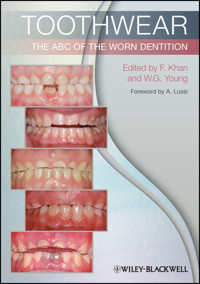
This is one of the first books to provide a clinically focussed account of the diagnosis, prevention and treatment of all forms of toothwear. Bringing together the latest research, it is compiled by international leaders in the field to create an essential clinical guide for dental practitioners. The book covers all forms of toothwear and dental erosion, and is presented in a practical format that allows for ease of reference and helps assimilate clinical information quickly. It defines the stages of toothwear, provides schematic approaches to allow better understanding of the key role that saliva plays, and highlights the differences between acid erosion and dental caries. Importantly for clinicians, it provides a framework for developing best practice management strategies by discussing diagnostic skills, treatment planning and therapeutic modalities. An essential resource based on a solid research platform, this book will provide dental clinical professionals with the missing links they seek to diagnose, prevent, manage, restore and rehabilitate the worn dentition more confidently. It will be of value to dentists, dental therapists, dental hygienists, and students in these areas. KEY FEATURES * Covers all forms of toothwear and dental erosion across all age-groups * Includes discussion of best practice management strategies * Discusses aetiology, diagnosis, prevention and treatment in a clinical context * Contains many full colour clinical illustrations and schematic conceptualisations * Brings together the latest clinical views and research with a wide range of international contributors
Sie lesen das E-Book in den Legimi-Apps auf:
Seitenzahl: 436
Veröffentlichungsjahr: 2011
Ähnliche



















Contents
Cover
Title Page
Copyright
Contributors
Foreword
Chapter 1: The multifactorial nature of toothwear
TOOTHWEAR PROCESSES
SALIVA PROTECTION
INTRINSIC AND EXTRINSIC ACIDS
EXAMINATION OF FACIAL, EXTRAORAL AND INTRAORAL SOFT TISSUES
TOOTHWEAR IN CHILDREN
TOOTHWEAR AND DENTAL CARIES
TOOTHWEAR – A MULTIFACTORIAL PROCESS
Chapter 2: Diagnosis and management of toothwear in children
CLINICAL PRESENTATIONS OF TOOTHWEAR IN CHILDREN
HISTORY-TAKING, ASSESSMENT AND DIAGNOSIS
CHILDREN AT INCREASED RISK FOR TOOTHWEAR
MANAGEMENT OF TOOTHWEAR IN CHILDREN
THE GLOBAL PERSPECTIVE
Chapter 3: Childhood diet and dental erosion
DENTAL EROSION IN CHILDREN, ADOLESCENTS AND TEENAGERS
CONCERNS OF PATIENTS AND PARENTS
CLINICAL APPEARANCE OF DENTAL EROSION
DIETARY FINDINGS IN DENTAL EROSION
DENTAL EROSION AS A LIFESTYLE ISSUE
RECOMMENDATIONS FOR PATIENTS TO REDUCE EROSION
DENTAL EROSION AND DENTAL CARIES COMPARED
DIETARY COUNSELLING FOR CHILDREN AND ADOLESCENTS
THE KEY MESSAGES
Chapter 4: The oral presentation of toothwear in adults
DIAGNOSTIC MODALITIES
SURFACE SUSCEPTIBILITY OF TOOTHWEAR AND SITE SPECIFICITY OF DENTAL CARIES
THE CLINICAL PRESENTATION OF TOOTHWEAR
CHARTING TOOTHWEAR
APPLICATION OF THE STAGES OF WEAR TO DIAGNOSING TOOTHWEAR
UTILISING THE CHARTED ODONTOGRAM TO ASSESS PATIENT RISK
SUMMARY
Chapter 5: Salivary protection against toothwear and dental caries
FACTORS CAUSING TOOTHWEAR
FACTORS CAUSING DENTAL CARIES
WHY DOES A TOOTH DISSOLVE IN ACID?
SOURCES AND COMPONENTS OF SALIVA RELEVANT TO TOOTHWEAR AND CARIES
CONCLUSIONS
Chapter 6: Dental diagnosis and the oral medicine of toothwear
THE APPROACH
MILD, MODERATE OR SEVERE TOOTHWEAR
COMPLAINT/DISCOVERY
DEVELOPMENT
ATTRITION
ABRASION
TOOTHBRUSHING
ORAL HYGIENE
DIET EROSION
GASTRIC EROSION
SPORTS AND SOCIAL
MEDICAL
ADDICTIONS, FIXATIONS AND CONFIDENTIALITY
THE CASES
SUMMARY
Chapter 7: Preventive and management strategies against toothwear
AIMING PREVENTION AT ALL AGES
LIFESTYLE, HEALTH AND ENVIRONMENTAL RISK FACTORS
THE WATCH STRATEGY
ADJUNCTIVE PRODUCTS
DIET DIARIES AND REVIEW
PATIENT'S REPORTING SENSITIVITY
TREATMENT PLANNING
THE REVIEW APPOINTMENT
SUMMARY
Chapter 8: Measurement of severity and progression of toothwear
NON-PARAMETRIC OR SEMI-PARAMETRIC APPROACHES
PARAMETRIC MEASUREMENT OF TOOTHWEAR
REPORTING TOOTHWEAR
THE CASES
Chapter 9: Biomaterials
INTRODUCTION
OVERVIEW OF BIOMATERIALS WEAR
CLINICAL WEAR PERFORMANCE OF BIOMATERIALS
COMMENTS ON SPECIAL WEAR SITUATIONS
Chapter 10: The role of toothwear in occlusion
DEVELOPMENT OF OCCLUSION
PATTERNS OF TOOTHWEAR ON ANTERIOR PALATAL AND POSTERIOR OCCLUSAL SURFACES AND ANGLE'S CLASSIFICATION
CONCLUSION
Chapter 11: Restoration of the worn dentition
TO RESTORE OR NOT TO RESTORE IS A CENTRAL QUESTION
PRE-RESTORATIVE TREATMENT – PREPARATION AND PLANNING
RESTORATIVE CHALLENGES
RESTORING THE STAGES OF WEAR
PATIENT DEMANDS, ASPIRATIONS, AESTHETICS AND CASE SELECTION
CONSERVATIVE RESTORATIVE OPTIONS FOR PARTIAL OR FULL-MOUTH OCCLUSAL RECONSTRUCTION
SUMMARY
Chapter 12: Rehabilitation of the worn dentition
PRINCIPLES AND STRATEGIES FOR REHABILITATING WORN DENTITIONS
CONCLUSION
Index
This edition first published 2011 by John Wiley & Sons Ltd © 2011 John Wiley & Sons Ltd
Wiley-Blackwell is an imprint of John Wiley & Sons, formed by the merger of Wiley’s global Scientific, Technical and Medical business with Blackwell Publishing.
Registered office: John Wiley & Sons Ltd, The Atrium, Southern Gate, Chichester, West Sussex, PO19 8SQ, UK
Editorial offices: 9600 Garsington Road, Oxford, OX4 2DQ, UK The Atrium, Southern Gate, Chichester, West Sussex, PO19 8SQ, UK 2121 State Avenue, Ames, Iowa 50014-8300, USA
For details of our global editorial offices, for customer services and for information about how to apply for permission to reuse the copyright material in this book please see our website at www.wiley.com/wiley-blackwell.
The right of the author to be identified as the author of this work has been asserted in accordance with the UK Copyright, Designs and Patents Act 1988.
All rights reserved. No part of this publication may be reproduced, stored in a retrieval system, or transmitted, in any form or by any means, electronic, mechanical, photocopying, recording or otherwise, except as permitted by the UK Copyright, Designs and Patents Act 1988, without the prior permission of the publisher.
Designations used by companies to distinguish their products are often claimed as trademarks. All brand names and product names used in this book are trade names, service marks, trademarks or registered trademarks of their respective owners. The publisher is not associated with any product or vendor mentioned in this book. This publication is designed to provide accurate and authoritative information in regard to the subject matter covered. It is sold on the understanding that the publisher is not engaged in rendering professional services. If professional advice or other expert assistance is required, the services of a competent professional should be sought.
Library of Congress Cataloging-in-Publication Data
Toothwear : The ABC of the worn dentition / edited by Dr Farid Khan and Professor William George Young. p. ; cm. Includes bibliographical references and index. ISBN 978-1-4443-3655-9 (paperback : alk. paper) 1. Teeth–Abrasion. I. Khan, Farid, editor. II. Young, William George, 1939- editor. [DNLM: 1. Tooth Wear–diagnosis. 2. Dental Restoration, Permanent–methods. 3. Tooth Wear–prevention & control. 4. Tooth Wear–rehabilitation. WU 210] RK307.T66 2011 617.6′075–dc22 2010047726
A catalogue record for this book is available from the British Library.
This book is published in the following electronic formats: ePDF 9781444341119; ePub 9781444341126; Mobi 9781444341133
Contributors
Stephen C. Bayne Professor and Chair Cariology, Restorative Sciences, and Endodontics School of Dentistry University of Michigan Ann Arbor, MI, USA
Gunnar E. Carlsson Emeritus Professor Department of Prosthetic Dentistry Institute of Odontology The Sahlgrenska Academy University of Gothenburg Göteborg, SE, Sweden
Colin Dawes Emeritus Professor Department of Oral Biology Faculty of Dentistry University of Manitoba Winnipeg, MB, Canada
William H. Douglas Emeritus Professor School of Dentistry University of Minnesota Minneapolis, MN, USA
Anders Johansson Professor Department of Clinical Dentistry – Prosthodontics Faculty of Medicine and Dentistry University of Bergen Bergen, Norway
Ann-Katrin Johansson Associate Professor Specialist in Pediatric Dentistry Chairman Department of Clinical Dentistry – Cariology Faculty of Medicine and Dentistry University of Bergen Bergen, Norway
Farid Khan Director Queensland Dental Group™ Indooroopilly Brisbane, Queensland, Australia
Adrian Lussi Professor Director Department of Preventive, Restorative, and Pediatric Dentistry University of Bern Freiburgstrasse, Bern, Switzerland
Louise Brearley Messer Emeritus Professor Paediatric Dentistry Melbourne Dental School University of Melbourne Victoria, Australia
Ian Meyers Professor School of Dentistry University of Queensland Brisbane, Queensland, Australia
Ridwaan Omar Professor Department of Restorative Sciences Head of Prosthodontics Faculty of Dentistry Kuwait University Safat, Kuwait
W. Kim Seow Professor Director Centre for Paediatric Dentistry Research and Training School of Dentistry University of Queensland Brisbane, Queensland, Australia
Sue Taji Specialist in Paediatric Dentistry Brisbane, Queensland, Australia
William G. Young Associate Professor Oral Pathologist Brisbane, Queensland, Australia
Foreword
In recent decades there has been a remarkable caries decline in developed countries. This is mainly due to improved oral hygiene and fluorides. During the same period, people with high awareness of health have changed their dietary habits. Nowadays, more acidic drinks and juices are consumed compared with a few decades ago. These changes and other factors have led to an increased loss of dental hard tissue such as toothwear.
Toothwear is a multifactorial condition of growing concern to the clinician. Only a few books have been published, collecting comprehensive knowledge about this subject. The present book is one of them.
The 12 chapters of the book cover important aspects of toothwear, from childhood to adults. It covers not only the multifactorial nature of toothwear but also the diagnosis and prevention of it. Four chapters are dedicated to restorative aspects, dental materials, occlusal problems and rehabilitation procedures.
The task of bringing together the current knowledge of toothwear is not easy, but has been perfectly accomplished in this book. It gives guidelines to practitioners, dental students and teachers.
Professor Adrian Lussi University of Bern Switzerland
1
The multifactorial nature of toothwear
Farid Khan and William G. Young
TOOTHWEAR PROCESSES
Attrition, erosion and abrasion describe wear processes (Fig. 1.1). Attrition involves two-surface (tooth-to-tooth) wear. Erosion, less commonly referred to as corrosion, results from acidic dissolution of mineralised tooth structure. Abrasion on a surface comprises wear from externally applied particles or objects.
When a patient presents with a heavily worn dentition (Fig. 1.2), the clinician considers whether the toothwear processes have involved elements of attrition, erosion or abrasion. Whilst the wear facets identified on the lower anterior teeth suggest attrition, numerous high margins on restorations point to involvement of erosion, removing tooth structure adjacent to these restorations. Demineralisation of tooth structure further predisposes to abrasion as evident in cervical regions, many of which have previously been restored. Since placement of these restorations, toothwear processes have continued. This case highlights that interrelationships exist between toothwear processes which potentiate one another.
Although the processes of attrition, erosion and abrasion can be simulated under laboratory conditions, clinically these processes do not occur independently (Fig. 1.3). The coarse particles of foods in primitive diets potentiated the wear facets (Young 1998) of attrition by abrasion (Fig. 1.3a). Modern diets lack such abrasives; however, oral acids that cause erosion demineralise enamel and dentine, potentiating attrition and abrasion (Figs. 1.3b & c). A recent literature review on erosion noted that dietary acids are considered by many researchers probably to be the most common cause of acid erosion (Bartlett 2009). Exaggerated wear facets are the first sign of erosion-potentiated attrition in young adults’ permanent teeth. Toothbrush and toothpaste combinations are important considerations, particularly in patients in whom dental erosion has also been identified, for abrasiveness becomes potentiated when tooth structure is demineralised. A combination of these two processes can lead to severe toothwear (Fig. 1.4). When used on demineralised tooth structure, abrasion from routine use of standard toothbrushes and toothpaste formulations is significant, whilst in the absence of erosion, it is considered to be minimal (Addy 2005). Attritional facets and cuspal-cupped lesions can be found on the same tooth (Fig. 1.5). This suggests that the wear facet worn by the mesiobuccal cusp of the upper first molar has been potentiated or exaggerated by occlusal erosion that has produced the cuspal-cupped lesions. Moreover, erosion has produced the shallow cervical lesion on the buccal surface of this tooth possibly potentiated by toothbrush abrasion.
Figure 1.1 The processes of attrition, erosion and abrasion: (a) Attrition is wear between two tooth surfaces. (b) Erosion is tooth surface loss from acids. (c) Abrasion is loss of tooth surface from a foreign body.
Lesen Sie weiter in der vollständigen Ausgabe!
Lesen Sie weiter in der vollständigen Ausgabe!
Lesen Sie weiter in der vollständigen Ausgabe!
Lesen Sie weiter in der vollständigen Ausgabe!
Lesen Sie weiter in der vollständigen Ausgabe!
Lesen Sie weiter in der vollständigen Ausgabe!
Lesen Sie weiter in der vollständigen Ausgabe!
Lesen Sie weiter in der vollständigen Ausgabe!
Lesen Sie weiter in der vollständigen Ausgabe!
Lesen Sie weiter in der vollständigen Ausgabe!
Lesen Sie weiter in der vollständigen Ausgabe!
Lesen Sie weiter in der vollständigen Ausgabe!




