


61,99 €
Mehr erfahren.
- Herausgeber: John Wiley & Sons
- Kategorie: Fachliteratur
- Serie: Bloomberg Professional
- Sprache: Englisch
A clear and practical guide to using binary options to speculate, hedge, and trade
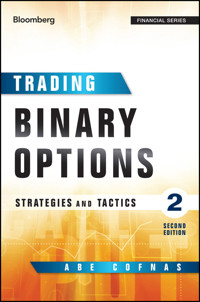
Trading Binary Options is a strategic primer on effectively navigating this fast-growing segment. With clear explanations and a practical perspective, this authoritative guide shows you how binaries work, the strategies that bring out their strengths, how to integrate them into your current strategies, and much more. This updated second edition includes new coverage of Cantor-Fitzgerald binaries, New York Stock Exchange binaries, and how to use binaries to hedge trading, along with expert insight on the markets in which binaries are available. Independent traders and investors will find useful guidance on speculating on price movements or hedging their stock portfolios using these simple, less complex options with potentially substantial impact.
Binary options provide either a fixed payout or nothing at all. While it sounds simple enough, using them effectively requires a more nuanced understanding of how, where, and why they work. This book provides the critical knowledge you need to utilize binary options to optimal effect.
- Learn hedging and trading strategies specific to binaries
- Choose the markets with best liquidity and lowest expenses
- Find the right broker for your particular binary options strategy
- Utilize binaries in conjunction with other strategies
Popular in the over-the-counter market, binary options are frequently used to hedge or speculate on commodities, currencies, interest rates, and stock indices. They have become available to retail traders through the Chicago Board Options Exchange and the American Stock Exchange, as well as various online platforms, allowing you the opportunity to add yet another tool to your investing arsenal. Trading Binary Options is the essential resource for traders seeking clear guidance on these appealing options.
Sie lesen das E-Book in den Legimi-Apps auf:
Seitenzahl: 309
Veröffentlichungsjahr: 2016
Ähnliche
















The Bloomberg Financial Series provides both core reference knowledge and actionable information for financial professionals. The books are written by experts familiar with the work flows, challenges, and demands of investment professionals who trade the markets, manage money, and analyze investments in their capacity of growing and protecting wealth, hedging risk, and generating revenue.
Since 1996, Bloomberg Press has published books for financial professionals on investing, economics, and policy affecting investors. Titles are written by leading practitioners and authorities, and have been translated into more than 20 languages.
For a list of available titles, please visit our website at www.wiley.com/go/bloombergpress.
TRADING BINARY OPTIONS
Strategies and Tactics
Second Edition
Abe Cofnas
Cover image: © styleTTT/istockphoto Cover design: Wiley
Copyright © 2016 by Abe Cofnas. All rights reserved.
Published by John Wiley & Sons, Inc., Hoboken, New Jersey.
The first edition was published by John Wiley & Sons, Inc. in November 2011.
Published simultaneously in Canada.
No part of this publication may be reproduced, stored in a retrieval system, or transmitted in any form or by any means, electronic, mechanical, photocopying, recording, scanning, or otherwise, except as permitted under Section 107 or 108 of the 1976 United States Copyright Act, without either the prior written permission of the Publisher, or authorization through payment of the appropriate per-copy fee to the Copyright Clearance Center, Inc., 222 Rosewood Drive, Danvers, MA 01923, (978) 750-8400, fax (978) 646-8600, or on the Web at www.copyright.com. Requests to the Publisher for permission should be addressed to the Permissions Department, John Wiley & Sons, Inc., 111 River Street, Hoboken, NJ 07030, (201) 748-6011, fax (201) 748-6008, or online at www.wiley.com/go/permissions.
Limit of Liability/Disclaimer of Warranty: While the publisher and author have used their best efforts in preparing this book, they make no representations or warranties with respect to the accuracy or completeness of the contents of this book and specifically disclaim any implied warranties of merchantability or fitness for a particular purpose. No warranty may be created or extended by sales representatives or written sales materials. The advice and strategies contained herein may not be suitable for your situation. You should consult with a professional where appropriate. Neither the publisher nor author shall be liable for any loss of profit or any other commercial damages, including but not limited to special, incidental, consequential, or other damages.
For general information on our other products and services or for technical support, please contact our Customer Care Department within the United States at (800) 762-2974, outside the United States at (317) 572-3993, or fax (317) 572-4002.
Wiley publishes in a variety of print and electronic formats and by print-on-demand. Some material included with standard print versions of this book may not be included in e-books or in print-on-demand. If this book refers to media such as a CD or DVD that is not included in the version you purchased, you may download this material at http://booksupport.wiley.com. For more information about Wiley products, visit www.wiley.com.
Library of Congress Cataloging-in-Publication Data:
Names: Cofnas, Abe, 1950- author. Title: Trading binary options : strategies and tactics / Abe Cofnas. Description: Second edition. | Hoboken, New Jersey : John Wiley & Sons, 2016. | Includes index. Identifiers: LCCN 2016014537| ISBN 978-1-119-19417-0 (cloth) | ISBN 978-1-119-19419-4 (epub) | ISBN 978-1-119-19418-7 (ePDF) Subjects: LCSH: Options (Finance) | Prices—Forecasting. Classification: LCC HG6024.A3 C635 2016 | DDC 332.64/53—dc23 LC record available at https://lccn.loc.gov/2016014537
Contents
Preface
Acknowledgments
About the Author
INTRODUCTION: What Are Binary Options and Why Are They Important?
Nadex versus CBOT Binaries
Reference
CHAPTER 1 Key Features of Binary Option Types
Defining the Key Features
Strike Price versus Underlying Market Price
Currency Pairs as an Underlying Market
Moneyness
Moneyness and Trader Direction
The Role of a Market Maker
Are Premiums Fairly Priced?
Binary Option Non-Laddered Trading
CHAPTER 2 Identifying Profit Return Potential in Binary Option Trading
Expected Probabilities
Winning Occurrence Analysis
Identifying Potential Profits in High-Low Binaries
CHAPTER 3 Sentiment Analysis: New Predictive Tools
Defining Sentiment
Text Mining Mood on the U.S. Dollar
Applying Your Own Sentiment Detection When Trading Binaries
References
CHAPTER 4 Tracking Fundamental Forces That Impact Markets: A Primer for Binary Traders
The Fundamental Forces
Correlations and Co-Movement Useful for Trading Binary Markets
Fear of Deflation/Inflation
Foreign Ownership of U.S. Treasuries
Crude Oil and the Historic Oil Price Plunge
The EUR/USD for Binary Trading
Carry Trade and Interest Rate Differentials
Central Bankers Move the Markets
Checklist for Currency Pairs
Bitcoin as a Binary
Using an Economic Calendar as Trading Tool
CHAPTER 5 Basic Technical Analysis
Key Candlestick Patterns
Trend Lines
Support and Resistance
Confirming Strength with Price Break Charts
Key Patterns for Trading Analysis
Fibonacci Resistance Lines
References
CHAPTER 6 Advanced Technical Analysis: Volatility Tools
Defining Volatility
Bollinger Bands
VIX: The Fear Index
Option Volatility and Sentiment: Put/Call Ratios
Volatility Smiles
Fear of Recession
Tracking Money Supply as an Indicator of Growth
Reviewing the Tools
Reference
CHAPTER 7 Binary Option Trading Strategies
The Core Strategies
Range Traders
Breakout Trades
World Events and Binary Trades
Russia Invades Ukraine
Combination Strategies
Part 1, Fundamental Analysis
Selecting the Right Underlying Market: Leaderboard Selection Strategies
References
CHAPTER 8 Analyzing NFP Data for Binary Trading
Key Steps Before Trading Nonfarm Payroll and Job Claims Binaries
Tactics for Trading NFP Report in Binaries
Strategy 2A: Trade at Data Release in a Bullish Direction
Strategy 2B: Sell Trade at Data Release
Strategy 3A: (Buy) Trade at Fibonacci Points
Strategy 3B: (Sell) Trade at Fibonacci Points
Timing and Managing Trades During the Week
Using Binaries with Forex Trading
A Word on Intraday and Intra-Hour Strategies
References
CHAPTER 9 Risk Management in Theory and Practice
Deal or No Deal?
The Confidence Index
Lot Size Management
Offsetting Trades: Failing Forward
Leverage and Margin
References
CHAPTER 10 Metrics for Improving Binary Trading Performance
Key Performance Metrics
Strategy Scorecard
Performance Challenges
Performance Challenges for Trading High-Low Binaries
Analytical Challenges
Know Your Trading Personality
Targeting Total Returns
CHAPTER 11 Performance Tools and Training for Improving Binary Option Trading
Algorithmic Trading: Is It for You?
Advantages and Disadvantages of Automated Trading
Developing a Trading System
Evolving Your Approach
Using Alerts
Afterword
Appendix A: Test Your Knowledge
Appendix B: More Training Tools and Tests
Index
EULA
List of Tables
Chapter 1
Table 1.1
Table 1.2
Table 1.3
Table 1.4
Table 1.5
Chapter 2
Table 2.1
Table 2.2
Table 2.3
Table 2.4
Table 2.5
Chapter 4
Table 4.1
Table 4.2
Table 4.3
Chapter 5
Table 5.1
Chapter 6
Table 6.1
Table 6.2
Table 6.3
Chapter 7
Table 7.1
Table 7.2
Table 7.3
Table 7.4
Table 7.5
Table 7.6
Table 7.7
Table 7.8
Chapter 8
Table 8.1
Table 8.2
Table 8.3
Table 8.4
Table 8.5
Table 8.6
Table 8.7
Chapter 10
Table 10.1
Table 10.2
Chapter 11
Table 11.1
List of Illustrations
Chapter 3
Figure 3.1
U.S. Dollar Index versus Sentiment Score
Figure 3.2
Negative and Positive Sentiment and Crude Oil Prices
Figure 3.3
Risk Appetite/Risk Aversion Search Phases
Figure 3.4
Impact of High Growth
Figure 3.5
Impacts of Slow Growth or Recession
Figure 3.6
Gold Rises on S&P Ratings Headline
Figure 3.7
U.S. Dollar Word Group
Figure 3.8
Word Cloud of FOMC Dec 16, 2015 Statement
Chapter 4
Figure 4.1
China Growth Expectations Affect Aussie and Copper Markets
Figure 4.2
Shanghai Index Sell-Off and Fear Spreads to S&P 500
Figure 4.3A
Global Growth Fundamental Factors
Figure 4.3B
Global Slowdown Fundamental Factors
Figure 4.4
Collapse of Oil
Figure 4.5
Shanghai Sell Off in August 2015
Figure 4.6
Copper and the Aussie
Figure 4.7
Gold Rises in Response to Paris Terror Attacks
Figure 4.8
Gold Bullish after Weak January 10 NFP Report
Figure 4.9
Word Cloud of FOMC Dec 16 Statement
Figure 4.10
U.S. Dollar Index Against Gold Spot Price
Figure 4.11
USD/CHF and USD Index
Figure 4.12
USD Index and ETF, UUP
Figure 4.13
U.S. Dollar and S&P Correlation Rate
Figure 4.14
Impacts of Increased Sovereign Debt on Currency Risk
Figure 4.15
Two-Year Bond Yields: Germany versus Greece
Figure 4.16
U.S. Financial Conditions Index
Figure 4.17
Brent Crude Oil and WTI
Figure 4.18
Crude and U.S. Dollar Index
Figure 4.19
Crude Oil Plunge
Figure 4.20
Monthly EUR/USD Chart
Chapter 5
Figure 5.1
Key Parts of Candlesticks
Figure 5.2
Hammer—Bullish
Figure 5.3
Dojis
Figure 5.4
Doji Followed by Reversal
Figure 5.5
Spinning Tops—Indecision
Figure 5.6
Engulfing Candles
Figure 5.7
Tweezers
Figure 5.8
Drawing a Downtrend Line
Figure 5.9
Drawing an Uptrend Line
Figure 5.10
Incorrectly Drawn Trend Line
Figure 5.11
Outer and Inner Trend Lines
Figure 5.12
Trend Conditions Checklist
Figure 5.13
Basic Support and Resistance Lines
Figure 5.14
How Support and Resistance Lines Form
Figure 5.15
Resistance Becomes Support
Figure 5.16
Support Transforms to Resistance
Figure 5.17
Support and Resistance Checklist
Figure 5.18
Three-Line Break Chart Showing Bullish Reversal
Figure 5.19
Three-Line Break Chart Showing Bearish Reversal
Figure 5.20
Small Block Reveals Tired Trend
Figure 5.21
Three-Line Break Charts and Fibonacci
Figure 5.22
AUD/USD Three-Line Break Chart
Figure 5.23
West Texas Crude Three-Line Break Chart
Figure 5.24
GBP/JPY Three-Line Break Chart
Figure 5.25
USD/JPY Three-Line Break Chart
Figure 5.26
Symmetrical, Descending, and Ascending Triangles
Figure 5.27
Doji Candle Types
Figure 5.28
Doji Shows Hesitation
Figure 5.29
Channels
Figure 5.30
Parabolic Pattern
Figure 5.31
Fibonacci Lines and Binary Option Strike Price Location
Chapter 6
Figure 6.1
Basic Features of Bollinger Bands
Figure 6.2
Bollinger Bands with Support and Resistance Lines
Figure 6.3
Bollinger Bands and Trend Lines
Figure 6.4
Price Action on the Lower Bollinger Band
Figure 6.5
Buy and Sell Signals with Extended Bollinger Bands
Figure 6.6
Technical Analysis Process Leading to Binary Option Trades
Figure 6.7
Key Markets to Scan
Figure 6.8
VIX Movements and the S&P 500
Figure 6.9
Crude Oil and Its Volatility Index (OVX)
Figure 6.10
West Texas Oil and Its Volatility Index (OIV)
Figure 6.11
Gold Spot and Its Volatility Index (GVZ)
Figure 6.12
Silver Spot and Its Volatility Index (VXSLV)
Figure 6.13
FTSE and Its Volatility Index (VFTSE)
Figure 6.14
The DAX 30 and Its Volatility Index (VDAX)
Figure 6.15
Hang Seng Index and the Volatility Index (CHIX)
Figure 6.16
Gold ETF
Figure 6.17
USO ETF
Figure 6.18
EUR/USD One-Week versus Three-Month Volatility Smiles
Figure 6.19
AUD/USD Three-Month Volatility Smile
Figure 6.20
GBP/USD Three-Month Volatility Smile
Figure 6.21
USD/CHF Three-Month Volatility Smile
Figure 6.22
USD/CAD Volatility Smile
Figure 6.23
USD/JPY Volatility Smile
Figure 6.24
GBP/JPY Volatility Smile
Figure 6.25
S&P 500 Cycle
Figure 6.26
EUR/USD Cycle
Figure 6.27
M4 Money Supply
Chapter 7
Figure 7.1
Model of Buying a Deep-in-the-Money Binary Option
Figure 7.2
Model of Selling a Deep-in-the-Money Binary Option
Figure 7.3
Deep-Out-of-the-Money Binary Trade
Figure 7.4
Binary Option Range Trade
Figure 7.5
Breakout Trade
Figure 7.6
Summary of Trading Strategy and Market Conditions
Figure 7.7
Hour Gold Spot Price During Greek Crisis from April 18 to April 23, 2011
Figure 7.8
Germany versus Greek Bond Yields
Figure 7.9
Gold in Response to Paris Attacks
Figure 7.10
EUR/USD Price Action May 20 to May 26, 2011
Figure 7.11
DAX 30 Reacts to Greek Crisis Week of June 27
Figure 7.12
West Texas Oil from January 1 to March 1, 2011
Figure 7.13
West Texas Oil During Week of January 30 to February 5, 2011
Figure 7.14
EUR/USD Sells Off in Reaction to Trichet Remarks
Figure 7.15
GBP/USD Stable in August 2014 Reflecting Expectations of a No Vote on Independence
Figure 7.16
GBP/USD Selloff in Fear of Scottish Independence Vote
Figure 7.17
S&P 500 Soars in Response to Greek Vote
Figure 7.18
USD/JPY Dives 7 Percent in Reaction to Earthquake
Figure 7.18
Nikkei and S&P 500 Co-Movement in Reaction to Earthquake
Figure 7.19
Shanghai Selloff on Black Monday
Figure 7.20
Shanghai Selloff on Black Monday
Figure 7.21
USD/CHF and U.S. Dollar Index
Figure 7.22
USD/CHF Sideways Pattern
Figure 7.23
S&P in Sideways Range before November 2010 Elections
Figure 7.24
Market Conditions and Binary Option Trading Strategies
Chapter 8
Figure 8.1
NFP Results
Figure 8.2
Anxious Index Correlates Negatively with Recessions
Figure 8.3
Anxious Index and the Financial Collapse
Figure 8.4
Anticipate Data Release Strategy
Figure 8.5
Bull Trading NFP at Data Release
Figure 8.6
Bear Trading NFP at Data Release
Figure 8.7
Using Fibonacci Strategy for Buying after Data Release
Figure 8.8
Bear Trading NPF Using Fibonacci Strategy
Chapter 10
Figure 10.1
Trades to Break Even
Figure 10.2
Simulated 1 Percent 1 Total Return in Week
Guide
Cover
Table of Contents
Preface
Pages
vii
viii
ix
xi
1
2
3
4
5
7
8
9
10
11
12
13
14
15
16
17
18
19
20
21
22
23
24
25
27
28
29
30
31
32
33
34
35
36
37
38
39
40
41
42
43
44
46
47
48
50
51
52
53
54
56
57
58
59
60
61
63
64
65
66
67
69
70
71
73
74
75
76
77
79
80
81
82
83
84
85
86
88
89
90
91
92
93
94
95
96
97
98
99
100
101
102
103
104
105
107
108
109
110
111
113
114
115
116
117
118
119
123
124
125
126
127
128
129
130
131
132
133
134
135
136
137
138
139
140
141
142
143
144
145
146
147
148
150
151
152
153
154
155
156
157
158
159
160
161
162
163
164
165
166
167
168
169
170
171
172
173
174
175
176
177
179
180
181
182
183
185
186
187
188
189
190
191
192
193
194
195
196
197
199
200
201
202
203
204
205
207
208
209
210
211
212
213
214
215
216
217
218
219
220
221
222
223
224
225
226
227
228
Preface
Are you interested in trading, but don’t like to wait weeks and months for a return? Are you following news events and want to financially benefit from your knowledge? Are you new to trading and want to participate but avoid the long learning curve for mastering trading skills? If these questions are on your mind, this book is for you.
Binary option trading provides excitement and opportunity for achieving unusually large returns in less than a week! While there are many variations to this type of trading, this book focuses on the regulatory-approved weekly binary option trades of the North American Derivative Exchange (Nadex). Trades have limited risk to the cost of a position. There is no margin. The trade is a bet on the direction of a market by the end of the week. If the trade is correct, the payoff is $100 per lot. If it is wrong, the payoff is $0. Simply put, it’s a yes-or-no proposition. One can open an account with as little as $100 and start trading. This simple structure allows anyone to trade in over 20 different underlying markets, from currencies to indexes to commodities.
This book takes the reader through the basic features of the binary option instrument. But it does more. It provides a detailed review of fundamental and technical analysis useful to making trading decisions. Beginners, as well as more experienced traders, will be able to build upon their core trading knowledge. More importantly, new online tools and techniques for detecting market sentiment are presented, because trading can no longer be separated from the Internet and the social media it has generated. The web itself is a force on trading decisions and outcomes, as emotions are propagated through the web. This phenomenon has made sentiment analysis a major challenge for traders. For the binary option trader who is shaping a decision for a weekly outcome, or even an intraday outcome, the critical factor will be the actionable knowledge that is applied.
This book provides real-world examples of how to scan the political and economic news and formulate appropriate binary option trading strategies. Key trading strategies are reviewed with examples. These include: at-the-money; out-of-the-money; in-the-money; deep-in-the-money; and deep-out-of-the-money. Also reviewed are case studies of binary option trading in relationship to key news events that we have lived through. These include: The U.S. congressional elections; the Greek sovereign risk crises; turmoil in the Middle East; and the Japanese earthquake. The reader will see exactly how these events shaped trading strategies that worked.
This book is also designed to provide a self-directed performance audit capability to the trader. Specific training challenges are provided, including a test of your knowledge (see Appendix A).
No other book provides a comprehensive get-started approach to trading binary options. It is my hope that Trading Binary Options: Strategies and Tactics makes a difference and improves your ability to get started in binary option trading, but most importantly, to do it the right way!
Acknowledgments
This book would not have been possible without the support of many people. First, I want to thank Agora Financial Inc., and, in particular, Addison Wiggin, for his support in my development of binary options analysis and alerts for the Binary Dimensions newsletter. The experience of a weekly provision of real-time alerts and analysis of binary options has provided an invaluable base of knowledge that made this book possible. Joseph Shriefer and Rick Barnard of the Agora Financial team have also provided valuable input on my analyses. The North American Derivative Exchange (Nadex) has been of great assistance in providing access to technical information and data used in this book. None of the opinions or alerts in this book has been subject to any prior review or approval by Agora Financial Inc. or Nadex. Dean Reese, Bryant Lie, Zach Tyvand, and Bill Egan provided important research support. Finally, thanks go to my wife, Paula, who provided the support and goodwill at home that sustained me during the intense writing period.
A.C.
About the Author
Abe Cofnas is considered a leader in the field of currency trading, analysis, and training. He founded learn4x.com (www.learn4x.com) in 2001 as one of the first online training programs for currency trading. He has been the Forex trader columnist for Modern Trader magazine since 2001, writing over 100 columns on Forex events.
He has authored three previous books on trading: The Forex Trading Course: A Self-Study Guide to Becoming a Successful Currency Trader (now in its second edition); The Forex Options Course: A Self-Study Guide to Trading Currency Options; and Sentiment Indicators—Renko, Price Break, Kagi, Point and Figure: What They Are and How to Use Them to Trade. He is also the editor of Binary Dimensions newsletter, which specializes in binary option alerts.
He brings extensive understanding of trading from all perspectives, including advanced fundamental and political analysis. Cofnas holds two master’s degrees from the University of California at Berkeley—a master’s in political science and a master’s in public policy analysis. He is Senior Fundamental Strategist for the Market Trader’s Institute.
Cofnas can be reached at [email protected].
INTRODUCTIONWhat Are Binary Options and Why Are They Important?
Let’s get right to the point and answer the question: What are binary options? Binary options are a type of option instrument that provide a fixed deadline for expiration, with a fixed payout. Basically, it is a yes or no bet. Specifically, the bet is on whether a settled price of an underlying market will be at, above, or below a target strike barrier, by a defined future time. For example, on a Monday morning, the trader is trying to answer the question: Will the S&P be at 1350 by Friday at 4 P.M.? If the trader anticipated this outcome, and turned out to be right, the payoff using the North American Derivatives Exchange (Nadex) binary options would be $100 per unit. If another index—the S&P 500, for example—did not reach this level, the payoff would be zero dollars. If the trader is correct, the return can approach extraordinary levels of 500 percent and more for only five days of play. This book will show you how it is possible for the average person to achieve extraordinary profits with binary option trading.
The binary option is called binary because it fits the condition of being either right or wrong—all or nothing. Binary option trading fits right into the digital era, which is based on binary logic. In fact, the binary options offered by Nadex can be considered to be part of a type of option classified as European Digital Options. But the question arises: Why are binary options important? There are many reasons that come to mind. Binary options are important, but not simply because they are a relatively new trading instrument. In fact, they are not really new. They have been used for decades at institutional levels as an over-the-counter instrument but, most significantly, traders in the United States have used them since 2008 when they became approved by the Commodity Futures Trading Commission (CFTC) and regulated through the Nadex. They are often called rebate options because of their use to generate a payment as a form of insurance when damage occurs. But let’s get back to the question. Binary options are important because they offer to the trader, in one instrument, the ability to succeed at many levels that go beyond simply obtaining a winning trade.
Binary options are an ideal trading instrument for new traders to test their skills because at a core level, binary option trading starts with anticipating direction. Being right on direction is one of the most important skills relevant to trading any market. In fact, being wrong on direction accounts for a majority of the losses occurred in any trading. Another key skill important for mastering binary option trading is risk management. A binary option trade is not necessarily a set-and-let decision. This kind of strategy is followed when a position is put on and thereafter the trader watches the screen and sees what happens at the end of the week. Set-and-let trading does not involve managing the trade during its duration. Sometimes this is an effective strategy. However, trading binary options requires a sharp sense of timing. It’s important for the trader to know when conditions are ripe for entry as well as when market conditions have changed enough to justify getting out of the way. Honing entry and exit skills in binary option trading can be transferred to other markets.
Binary options are also important because they offer a level playing field. Anyone can trade the binaries and at very low costs ranging from $5 to $90 per lot at any moment. Because the time frame is at most one week, binary option trading counters the observed tendency of traders to hold losers too long and sell winners too soon (Odean 1998).
But there are even more reasons that contribute to the value of binary option trading. Binary options offer beginning traders the ability to explore over 20 different markets. In a sense, binary option trading presents a discount tour of global markets. Perhaps one of the most important reasons of all is that binary options are regulated (through the Nadex) and offer price transparency. In this post-Madoff era of scrutiny and skepticism, trading binary options that are regulated becomes more and more salient to traders. That is why this book focuses on the regulated binary options offered at the Nadex exchange. For those who want to trade the binary option instruments that are over the counter, the skills built in trading the Nadex instruments will apply.
Binary options are an exciting product. In fact, traders in the United States have responded by participating at increased volume levels of around 30 to 50 percent per month! At this pace of volume growth, binary trading can one day become as big as forex trading, which is now approaching $5 trillion per day. In an email exchange with John Austin, the CEO of IG Markets Group North America, and a key player in creating the binary option product, he says: “There is really no competing product. I feel quite strongly that for smaller retail traders, the capped-risk nature of binaries is hugely important. Nadex’s contracts allow traders to speculate on global financial markets while using only a limited amount of risk capital and without leaving themselves open to catastrophic losses in the event of unexpected market volatility. For this reason, I believe they may become the product of choice for those who are just starting out in trading. In addition, I think their small size and self-contained nature will mean they will become the default choice for more experienced traders looking for a cheap real-money way to test out new technical analysis-based trading systems, as well as being an additional toolkit used by conventional futures and FX traders alongside their more conventional trading.”
Let’s delve a bit into the psycho-dynamic aspects of binary option trading, because, as you will see later in this book, trading binary options is not only a fundamental and technical analysis endeavor, but it is also concomitantly a psychological behavioral experience. This points to another reason that binary options are exciting: their similarity to gambling. A binary option trade has been often viewed or referred to as a bet. This is metaphorically true, but not in fact correct. Betting in gambling is quite different from a binary option bet. In gambling, the bettors face the same fixed odds and cannot affect the probability of winning. A bet in a gambling activity is indeed a passive ride. Whether it’s the roll of the dice, or the drawing of a card in a game of poker, the gambler is riding a probability wave. Finally, a gambling bet is associated with a probability about what proportion of time an outcome should occur. A binary option bet is quite different. It cannot be associated with a statistically predictable outcome.
The binary option trade is certainly a ride, but on a sentiment wave. It is also not a passive experience, and it is one that demands attention because the odds of winning are not a function of statistics. Instead, and in direct contradiction to the gambling situation, the odds of winning are determined by the skills of the trader in assessing market conditions and managing risk. In a roll of the dice, the next outcome is independent of the previous roll. In contrast, in binary trades, the next trade outcome is linked to the market behavior during the previous outcome! In gambling, the prevailing law is the law of large numbers in which, eventually, winning and losing streaks offset each other. In binary option trading, winning and losing streaks are not statistical outcomes.
Binary option trading is a prime example of the value of actionable knowledge. The binary option trader is participating in an imperfect-information game, where it’s never possible to have all the information necessary to win. It clearly takes a certain level of knowledge to play this game well. We will explore what kind of fundamental and technical skills are necessary to develop oneself into a binary option trader in greater detail in later chapters.
Nadex versus CBOT Binaries
In any case, Nadex binary options are important because they are the fastest growing segment of exchange-listed binary options. But it is important to point out that the Chicago Board of Trade (CBOT) does offer binary options on event risks. These include the CME Hurricane Index, the Snowfall Index, and the Target Fed Funds. However, the CBOT binary options remain very small in volume, are highly illiquid, and are really tailored for institutions like insurance companies (see www.cboe.com/products/indexopts/bsz_spec.aspx for a list of CBOE binary options).
There are several differences between the CBOE and the Nadex binaries that should be clarified. First, the CBOE binary options use the cash index as the underlying market for the contract. In contrast, the Nadex binaries (except for currencies as the underlying market) use the futures index. More important, the CBOE binaries have a much wider bid-offer spread. Remember that buyers pay the ask price, and sellers pay the bid price. This creates a spread, which generates money to the firm. It is also important to note that the CBOE binaries have a much lower liquidity than Nadex binaries. It also appears that the CBOE volume is constantly very low, in the range of a few hundred contracts per month. In contrast, the Nadex sees volumes in excess of 100,000 lots per month. During the important May 2 week when huge sell-offs occurred in the markets, CBOE’s S&P binary option volume was close to zero, while Nadex had a volume of 38,682 lots on all U.S. indexes.
The differences in the duration of the binary options are also important to note. CBOE binary options have expirations of a variety of months: one-month, two-month, and three-month expiration. The Nadex expirations are much shorter in duration. They are intraday, daily, and weekly. This means that by Friday at 4:15 P.M., all binary option contracts expire, giving the trader a fresh, new start every week. These differences point to Nadex as having a significant advantage for traders who want to experience market action. High volume fuels the power of options and is a critical condition for traders—the Nadex fulfills that need. Lastly, Nadex binaries offer a logical place to start. The skills acquired for trading in Nadex can help prepare you for trading options in other markets.
In the near future, however, the popularity of Nadex options will surely spur other imitators. There are many binary option over-the-counter firms worldwide that provide different forms of binary options. These include, but are not limited to one-touch and no-touch options, as well as range options. One-touch options are trades in which a win occurs if the price touches a certain point. In these options, the trader is betting that either a resistance point or a support point will be touched by the price by a certain time. A no-touch option is a bet that the particular price point will not be touched by a certain time. A range option presents the bet that the price will stay in between two strike prices, or go through one of them by a certain time. Some of these innovative binary trades are very short, with expiration time frames of minutes. Also, in some overseas firms, the trader determines the size of the payout! In principle, the skills developed trading the Nadex options can enable effective trading of binary options, and other, perhaps more complex and sophisticated, options. So let’s explore the key features of Nadex binary options in greater detail.
Reference
Odean, T. 1998. “Are Investors Reluctant to Realize Their Losses?”
Journal of Finance
53
: 1775–1798.
CHAPTER 1Key Features of Binary Option Types
This chapter covers the key features of a binary option contract available globally and in the United States. There are two basic types of binary option trades. The first is the laddered binary options offered at the Nadex Exchange, part of the IG Markets, the Cantor Exchange, the CBOE, the CBOT, and the NYSE binaries, also known as Byrds. The NYSE binaries launched in 2016 and offer binaries on equities. The NYSE entry into binaries allows traders to trade weekly binaries on major equities. The CBOE offers binaries on the VIX and announced binaries on the China A50 index. These are potential game changers for traders who look to use binaries as part of their total trading toolbox.
Nadex and the Cantor Exchange are CFTC approved. Nadex is owned by IG Markets. The Cantor Exchange, owned by Cantor Fitzgerald, is a true exchange and does not make a market in the binaries. In other words, they don’t take the other side of a trade placed by a customer. Instead, liquidity is supplied by independent market makers. The second type of binary option trades is the non-laddered platform, simply offering the opportunity to bet on the whether the price will be higher or lower at expiration. These are not currently allowed in the United States, but are popular around the world.
Later in the chapter, I also discuss the four basic strategies of trading— at-the-money, in-the-money, out-of-the-money, and deep-in/out-the-money— as well as the role of the market maker in the process. The chapter will end with a sample bid/ask scenario.
Defining the Key Features
Let’s start by defining the features that shape most of the laddered binary option selection and trading. These terms will be used time and again throughout this book, so commit these definitions to memory. You’ll come to know them well.
Expiration date:
The time that the option expires.
Settlement value:
The value of the option on expiration. It will be $0 or a $100-fixed payout.
Underlying market price:
This is the actual real-time market price of the underlying contract.
Contract:
This is the basic unit of a trade of one lot. The value of a lot varies among firms. For example, one lot at Cantor is $1. One lot at Nadex is $100. At IG, 0.01 lots is $100.
Bid:
The premium price that a trader receives for opening to sell a contract.
Buy:
This refers to betting the underlying market will go up. A trader opens a trade and pays the ask price associated with a strike price. If the price settles above the strike price, then the trader wins the $100 ask price.
Sell:
This refers to betting the underlying market will go down. A trader puts on an open sell order. The trader pays for an open sell order ($100 – bid). It is $100 – (bid). This is equal to putting on a position, anticipating a decrease in the price of the underlying market. It is also the premium price that a trade pays for closing a position that was bought. The sell is also labeled as the put tab at the Cantor Exchange
Spread:
The difference between the bid and the ask. With any new market, the spread will tend to be narrow as more volume increases.
Bid size/offer size:
This is the number of positions being bought or sold. You will find that the bid and offer size is not useful as an indicator of sentiment.
Commission fee:
The trader may pay a commission fee per transaction. Nadex charges $1 per transaction. Firms offering Nadex binaries may be offering different commissions.
Start time




