


48,99 €
Mehr erfahren.
- Herausgeber: John Wiley & Sons
- Kategorie: Fachliteratur
- Serie: Bloomberg Professional
- Sprache: Englisch
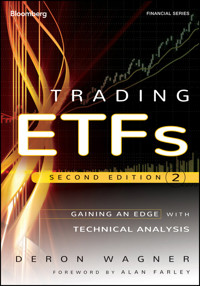
A comprehensive catalog of exchange-traded funds and insights into successful trading techniques This Second Edition of the bestselling Trading ETFs offers an updated version of the definitive guide to this vital part of the capital markets. It contains numerous new examples of the techniques that author Deron Wagner uses in selecting the most timely ETFs to trade and underscores the core insights of his trading discipline "trade what you see, not what you think." Written for professionals who are using, or should be using, ETFs as an asset class within their portfolios, as well as the individual investor who wants exposure to wider sectors and geographical regions than those available elsewhere. * This revised edition of the classic resource focuses on the pros, cons, and potential pitfalls of trading the latest class of ETFs * Includes inversely correlated and leveraged ETFs and the dangers, risks, and benefits associated with each new class of ETF * Contains a refresher on the initial concept of ETF selection and new case studies on ideal entry and exit points as well as examples of real trades This thoroughly revised and updated edition offers a "go-to" reference for understanding exchange-traded funds.
Sie lesen das E-Book in den Legimi-Apps auf:
Seitenzahl: 349
Veröffentlichungsjahr: 2011
Ähnliche

















Since 1996, Bloomberg Press has published books for financial professionals on investing, economics, and policy affecting investors. Titles are written by leading practitioners and authorities, and have been translated into more than 20 languages.
The Bloomberg Financial Series provides both core reference knowledge and actionable information for financial professionals. The books are written by experts familiar with the work flows, challenges, and demands of investment professionals who trade the markets, manage money, and analyze investments in their capacity of growing and protecting wealth, hedging risk, and generating revenue.
For a list of available titles, please visit our web site at www.wiley.com/go/bloombergpress.
Copyright © 2012 by Deron Wagner. All rights reserved.
The first edition of this book was published in 2008 by Bloomberg Press.
Published by John Wiley & Sons, Inc., Hoboken, New Jersey.
Published simultaneously in Canada.
No part of this publication may be reproduced, stored in a retrieval system, or transmitted in any form or by any means, electronic, mechanical, photocopying, recording, scanning, or otherwise, except as permitted under Section 107 or 108 of the 1976 United States Copyright Act, without either the prior written permission of the Publisher, or authorization through payment of the appropriate per-copy fee to the Copyright Clearance Center, Inc., 222 Rosewood Drive, Danvers, MA 01923, (978) 750-8400, fax (978) 646-8600, or on the Web at www.copyright.com. Requests to the Publisher for permission should be addressed to the Permissions Department, John Wiley & Sons, Inc., 111 River Street, Hoboken, NJ 07030, (201) 748-6011, fax (201) 748-6008, or online at http://www.wiley.com/go/permissions.
Limit of Liability/Disclaimer of Warranty: While the publisher and author have used their best efforts in preparing this book, they make no representations or warranties with respect to the accuracy or completeness of the contents of this book and specifically disclaim any implied warranties of merchantability or fitness for a particular purpose. No warranty may be created or extended by sales representatives or written sales materials. The advice and strategies contained herein may not be suitable for your situation. You should consult with a professional where appropriate. Neither the publisher nor author shall be liable for any loss of profit or any other commercial damages, including but not limited to special, incidental, consequential, or other damages.
For general information on our other products and services or for technical support, please contact our Customer Care Department within the United States at (800) 762-2974, outside the United States at (317) 572-3993, or fax (317) 572-4002.
Wiley also publishes its books in a variety of electronic formats. Some content that appears in print may not be available in electronic books. For more information about Wiley products, visit our web site at www.wiley.com.
ISBN 978-1-118-10913-7 (cloth); ISBN 978-1-118-21775-7 (ebk); ISBN 978-1-118-21776-4 (ebk); ISBN 978-1-118-21777-1 (ebk)
For my lovely wife and children—Bee, Ben, and Ocean.
Thanks for the positive mental attitude and for always
giving me the inspiration to be the best I can be.
Foreword
Top traders rarely call attention to their many accomplishments, content to execute and perfect their own market views, free from self-promotion and outside noise. Deron Wagner is that type of rare individual, a two-decade trader and long-time fund manager, with unique market insights that are simple, profound, and highly actionable. For that reason, I’m pleased to introduce readers to the second edition of his book Trading ETFs: Gaining an Edge with Technical Analysis.
I first met Deron just outside a lecture hall in Dallas, TX back in the year 2000, right after the Internet bubble burst. He had just released his first book, at the same time that my first book, The Master Swing Trader, was set to hit the financial bookshelves. That brief meeting and industry chit chat fostered a mutual respect and partnership that has endured for the last twelve years.
For a good part of the last decade, I’ve been fortunate enough to publish Deron’s daily market insights at my web site, “Hard Right Edge.” It’s been the site’s most popular column throughout its tenure, hands down, but I’m not surprised because his technical proficiency reflects a depth of knowledge and confidence that inspires traders at all experience levels to return on a daily basis. Clearly it’s become an invaluable tool in their trading methodologies.
In addition, Deron’s long-time focus on exchange-traded funds (ETFs) has honed a market strategy perfectly in tune with today’s fast paced derivative-driven electronic market environment. For that reason alone, I expect that readers of Trading ETFs: Gaining an Edge with Technical Analysis will gain valuable insights that are unavailable through any other market source, online or in print.
Don’t be fooled by the apparent simplicity of Deron’s systematic approach. Under the hood, he presents a powerful trading system based on classic market principles that work in euphoric bull markets as well as gut-wrenching bear markets. More importantly, these reliable strategies are unaffected by the computer-driven program algorithms we’ve come to know as high-frequency trading (HFT).
This is an amazing accomplishment in a challenging environment that’s forced all types of market players to reassess the positive expectancy of their trading edges. This resilience offers another advantage in reading this excellent book. Simply stated, it will help your own strategies to overcome the dominance of lighting fast computer trading in the day to day price action.
So, whether you’re a new trader just starting out on your journey, or a seasoned veteran looking for new insights and a stimulating read to get your performance back on the fast track, I’m proud to recommend this outstanding book.
Alan Farley
November 2011
Acknowledgments
I would like to express special gratitude to the following people, each of whom ultimately contributed to the outcome of this book in a big way, whether they realize it or not:
Evan Burton—For his persistence and efforts in getting this project launched.
Meg Freeborn—For doing a fantastic job with the editing.
Ed Balog—For his excellent efforts in contributing to this book and our trading operations.
Mo Correa—For all her hard work, dedication, and assistance in a variety of ways.
Mike Sincere—For helping me get started in the publishing world.
Barry Dorfman—For his assistance in getting me started in the trading business.
Oded Daniel—For being my entrepreneurial mentor and business partner.
Toby McIntosh—For the ongoing inspiration and ideas.
Rick Pedicelli—For being my right-hand man in the trading business, through both thick and thin.
Rose Harman—For her awesome, incomparable administrative skills, hard work, and loyalty over the years.
Chris Chang—For the dedication and effort he has shown through his contributions.
My mother and father—Without them, I guarantee this book never would have been possible!
I also wish to express my sincere appreciation for the support of all subscribers to my daily ETF newsletter, The Wagner Daily. It’s your ongoing enthusiasm that keeps me excited to share my knowledge.
I would also like to thank the following people:
Marvin Appel, Paul Bahder, Steve Bell, Jack Burgoyne, Victor Butko, Greg Capra, Mark Cole, Murray Coleman, Carlos Correa, Nick Cosma, Zishan Danish, Jeffrey Doan, the Dolbin family, the Doncaster family, Sandy and Zendy Edge, Alan Farley, Brandon Fredrickson, the Getsri family, Sherrie Hale, Toni Hansen, Don Helton, Dwin Horne, Arlene Hurtzel (my awesome grandmother), Uffe Kristiansen, John and Carmen Lakatis, Phillip-Michael “Ted” Lee, Rickard Lilliestierna, Steve and Jean Moss, Dennis Ramm, Jason Rivas, Don Rubin, Kristopher Sarosiek, David Segarra, Kate Sosnoff, Tom Sosnoff, Lennon Tam, Joel Townsend, Robb Vaughn, Christoph Votruba, Matthew Wagner, Roger and Hazel Wagner, Jeff Williams, and Bo Yoder.
Finally, thanks to the entire team at Wiley for working hard to pull this all together!
PART I
ETF Overview and Selection
CHAPTER 1
Why Use Technical Analysis with ETFs?
Unlike most books on exchange-traded funds (ETFs), this one offers you strategies based on technical analysis, not fundamental analysis. When I began trading professionally in 1999, before ETFs took the market by storm, people tried to convince me of the merits of studying fundamental factors, such as price-to-earnings (P/E) ratios, balance sheets, earnings growth, and news events. I’ve always believed that a deep knowledge of these items is theoretically important, but fundamentals seem to have a direct impact only on the long-term direction of a stock. In the short to intermediate term, the correlation between the actual price action of an ETF and its fundamentals is rarely significant. Technical analysis, however, tells me everything I need to know about the odds of a trade continuing in the current direction or reversing.
Because an ETF consists of a diverse plethora of individual stocks, using fundamental analysis of the underlying stocks to predict the price movement of the actual ETF brings less than satisfactory results. The only way to have a greater than 50–50 chance of predicting the short- and intermediate-term trends of ETFs is through sound technical analysis. This is why my hedge fund, Morpheus Capital LP, is one of the few professional hedge funds that primarily bases its investment and trading decisions on the technical analysis strategies I share with you in this book, rather than more traditional fundamental analysis and “long-term” investing. Although the techniques presented here are designed to work ideally with ETFs, individual stock traders can successfully apply the same techniques.
To understand the problems with a fundamentals-based system of analysis, consider the effect news events such as earnings reports often have on stocks and ETFs. How many times has a company reported what is perceived as a strong earnings report, only to see the stock price go down several points the next day? A positive price reaction to a poor earnings report is equally common. The increase or decrease in the price of the stock that can occur in anticipation of a positive or negative earnings report is one of the reasons these inverse price reactions occur. With technical analysis, however, news events are irrelevant to your analysis. The price and volume of the stock or ETF already tells you everything you need to know. If the equity has been trending higher for quite some time, odds are favorable that it will continue to do so. Likewise, a stock or ETF stuck in a protracted downtrend will remain that way until the chart pattern proves otherwise.
I have designed this book to provide a logical, step-by-step process that enables you to easily master ETF trading using technical analysis. Whether you’re a professional, full-time investor or someone who wishes to learn new techniques for actively managing his personal portfolio, you will benefit from the strategies.
In Part I, the first chapter provides you with a brief history of the growth of ETFs, which has made my strategies possible, as well as my thoughts on some of the advantages of investing and trading in ETFs instead of individual stocks. Chapter 2 describes the numerous fund families from which you can choose ETF products, as well as the unique types of ETFs that began coming to market around 2005. In addition to the popular ETFs composed simply of individual stocks, ETF offerings on the market now include currency, commodity, fixed-income, inversely correlated “short ETFs,” leveraged ETFs, and even ETFs that are both inversely correlated and leveraged. There are also ETNs (exchange-traded notes), which are structured as financial instruments, similar to bonds but possessing credit risk.
In Part II, I dive into the “meat and potatoes of the strategy by showing you specifically how technical analysis is used to trade ETFs. Chapter 3 details my top-down strategy of ETF trading, which always improves your odds of success by identifying the overall trend of the broad market, determining which sector indexes are showing the most relative strength compared to the overall stock market, and then selecting the specific ETF family with the most relative strength compared to the corresponding sector index. Chapter 4 details the method of finding the sector indexes with the most relative strength. Chapter 5 drills down to the specific ETF families with the most relative strength, and Chapter 6 provides supplemental technical indicators and chart patterns.
After learning how to select the best ETFs for trading and investing, the next step is figuring out the proper timing for entries and exits into those positions. This is covered extensively in Part III. Chapter 7 provides strategies for determining ideal entry points, and Chapter 8 shows you when to exit your positions. Chapters 9 and 10 put it all together by graphically walking you through actual trades I have made using the strategies offered in the first eight chapters. The actual outcome of the trades, using real capital, is also presented. Chapter 9 discusses 10 actual ETFs I bought long. Chapter 10 discusses 10 ETFs I sold short. Many nuances of the entire technical analysis strategy can be gleaned from these two chapters, as they are real-life situations, not merely the theory behind the strategy.
In Part IV, I provide you with a host of pointers to help fine-tune your strategy after you put it into action. Topics such as position sizing, getting efficient ETF executions, and identifying relative strength intraday are all covered in Chapter 11. Chapter 12 provides some final thoughts and pointers to “take along with you.” I encourage you to take your time reading the material, unlike a novel you might breeze through, so that you can fully digest the concepts presented. You may realize the greatest benefit through first reading the book cover to cover, and then going back and reviewing the more detailed sections to ensure you have a thorough understanding of the key points.
History and Growth of ETFs
Although you probably already have a basic understanding of ETFs, it’s important to understand just how many options you have when selecting potential ETF trades. The astonishing growth both in the quantity and types of ETFs may surprise you.
An exchange-traded fund is a basket of stocks that trades on an exchange with the same simplicity and liquidity of an individual stock. Traders and investors can buy or sell shares in the collective performance of an entire stock, bond, commodity, or even currency portfolio by buying or selling a single security. ETFs add the flexibility, ease, volatility, and liquidity of stock trading to the benefits of traditional index-fund investing. The American Stock Exchange (Amex) launched the first U.S.-based ETF in 1993 as a simple way for more aggressive retail investors to buy the entire realm of stocks that made up the Standard & Poor’s 500 Index. Trading under the ticker symbol SPY, the Standard and Poor’s Depositary Receipt (SPDR) was born. The Amex devised the ETF because it wanted to attract stock market investors who had become more interested in trading and investing in individual stocks than mutual funds. Although many investors enjoyed the high rates of return that individual stocks provided throughout the 1990s, many people still preferred the perceived “safety” that traditional mutual funds offered. Hence, the ETF was introduced as a way for investors to combine the potentially high returns of individual stock trading with the benefits of diversification that mutual funds provided.
In February 1994, one year after its official launch, SPY was trading an average daily volume of only 250,000 shares. Its popularity quickly spread, and the average daily volume of SPY increased more than 12 times to over 3 million shares per day by the beginning of 1998, five years after its launch. Although such a large initial increase in volume may seem impressive, it was only the beginning for the popularity of SPY. The absolute lows of last decade’s equity bear market, which were set in October 2002, marked the largest percentage increase in the average daily volume of SPY. In October 2002, the 50-day average daily volume of SPY was 48 million shares per day. By mid-2007, SPY was already clocking in at more than 200 million shares trading hands on an average day. That represented an astronomical increase in daily trading activity of approximately 80,000 percent in 13 years.
The bear market of 2000 to 2002 was partially responsible for generating interest in SPY and other ETFs as investors grew tired of attempting to pick individual winning stocks during such adverse conditions and found it easier to simply choose an ETF that suited their goals. SPY and other major ETFs have seen a remarkable increase in turnover, which began accelerating parabolically in the years 2000 through 2006. To grasp the astonishing growth of the first domestic ETF, look at the volume bars on the monthly chart of SPY in Figure 1.1.
FIGURE 1.1 S&P 500 SPDR (SPY) Monthly Volume Chart from 1993 to 2006
Source: TradeStation
Thanks to SPY, the concept of having transparent exposure to an entire broad-based index through the simplicity of buying an individual stock caught on quickly. This popularity rapidly spurred demand for the launch of more diverse ETF offerings. A second domestic ETF was launched in 1995, and the rest is history. By 2003, just 10 years after the introduction of SPY, the number of domestic ETF offerings had grown to 119. Four short years later, by 2007, the number of ETFs traded on the U.S. exchanges had increased fivefold to more than 600. As of the end of 2010, the number of ETFs had swollen to nearly 1,000. Now, as of July 2011, there are more than 1,000 ETFs. Figure 1.2 shows how rapidly the total number of ETFs has multiplied since SPY was launched in 1993.
FIGURE 1.2 Annual Growth in Number of ETFs since 1993
Data: Investment Company Institute (ici.org)
But it’s not only the number of ETFs that has increased dramatically: The total asset growth of ETFs has been equally impressive. Figure 1.3 illustrates the total combined asset growth of ETFs since 1993.
FIGURE 1.3 Total Combined Asset Growth of ETFs since 1993
Data: Investment Company Institute (ici.org)
From 1994 to 2000, total assets in ETFs doubled every year. Since 2000, the growth has obviously slowed a bit, but combined assets are still increasing at nearly 50 percent per year. The only year with declining asset growth was in 2008, which was probably attributed to a sharp decline in global equity markets that year.
Considering that the birth of these innovative instruments began with a single ETF just 18 years ago, the growth is astounding. With no signs of waning interest, the asset growth shown in the preceding figure indicates that there is enough sustainable demand to continue meeting the constantly expanding number of ETF offerings.
The diverse mix of ETFs provides technical traders with more opportunities than ever. While you are probably familiar with the commonplace ETFs that track major indexes such as the S&P 500, the Dow, or the Nasdaq, it’s important to understand the full range of instruments in your ETF trading arsenal. The next chapter looks at each of the major types of ETFs, as well as at the popular ETF families that constitute each type.
Trading ETFs versus Individual Stocks
Although I invest in and trade both individual stocks and exchange-traded funds, ETFs have some unique benefits over stocks. The following are the reasons I initially became attracted to trading ETFs as a great alternative to trading individual stocks:
Safety through diversification. Do you ever wonder if you are going to wake up in the morning and find out your stock dropped 50 percent because the CEO was caught with his hands in the cookie jar? This is never an issue with ETFs because they automatically diversify equities and usually have minimal exposure to any one individual stock.
Consider, for example, the PowerShares Dynamic Semiconductors Fund (PSI), the composition of which is shown in Table 1.1. As of July 2011, a total of 30 stocks represented the underlying portfolio of PSI. Of those, the largest percentage weighting of any individual stock was only 5.19 percent. Even if that company (QUALCOMM Inc.) had bad news that caused its stock to plummet overnight, the net effect on the price of the ETF would be minimal. By trading ETFs, you are automatically reducing your risk of damaging losses from overnight gaps (sessions in which the opening price of an ETF significantly varies from the previous day’s closing price). (See Chapter 7 for a full discussion of overnight gaps.)
TABLE 1.1 Composition of PowerShares Dynamic Semiconductors Fund (PSI)
Source: PowerShares.com
% of FundQCOMQUALCOMM Inc.5.19ALTRAltera Corp.5.16KLACKLA-Tencor Corp.5.10ADIAnalog Devices Inc.5.06TXNTexas Instruments Inc.4.96ATMLAtmel Corp.4.95NVDANVIDIA Corp.4.28MUMicron Technology Inc.3.91ENTGEntegris Inc.3.25ESIOElectro Scientific Industries Inc.3.13CYMICymer Inc.3.08OVTIOmniVision Technologies Inc.3.00MKSIMKS Instruments Inc.2.94NVLSNovellus Systems Inc.2.88FEICFEI Co.2.83BRKSBrooks Automation Inc.2.83IRFInternational Rectifier Corp.2.79LTXCLTX-Credence Corp.2.78SMTCSemtech Corp.2.77UTEKUltratech Inc.2.76LRCXLam Research Corp.2.75KLICKulicke & Soffa Industries Inc.2.75TERTeradyne Inc.2.71RTECRudolph Technologies Inc.2.66FCSFairchild Semiconductor International Inc.2.66CYCypress Semiconductor Corp.2.59PLABPhotronics Inc.2.58SWKSSkyworks Solutions Inc.2.58CEVACEVA Inc.2.54VECOVeeco Instruments Inc.2.51Access to more markets. Through exchange-traded funds, retail investors and traders now have access to markets that were previously difficult and expensive to participate in. Treasury bonds, international markets, commodities, and even currency ETFs can all be traded with the same ease and low commission of an individual stock. With new ETFs constantly being created, the realm of trading opportunities is boundless.
Liquidity is never an issue. Unlike individual stocks, in which liquidity can greatly affect how a stock trades, all ETFs are synthetic instruments. As such, the average daily volume that an ETF trades is largely irrelevant. Even if a low-volume ETF had no buyers or sellers for several hours, the bid and ask prices would continue to move in correlation with the fair market value that is derived from the prices of the underlying stocks. Because all ETFs are linked to an index, and the intraday fair market value moves in line with the underlying index, specialists can easily provide continuous pricing. If a large institutional buy or sell order suddenly arrived on an ETF with low average daily volume, the price would not jump, as it would with an illiquid stock.
Unlike stocks, ETFs are not traded on an auction system. Instead, demand is automatically met through computerized algorithms that allow specialists to create and redeem shares in an ETF at its net asset value (NAV). This is done in large blocks of shares that represent creation or redemption baskets. Once created, these new shares can then be traded in the secondary market.
An ETF with a low average daily volume may sometimes have slightly wider spreads between the bid and ask prices than an ETF with a high average daily volume, but you can simply use limit orders (a specified maximum price you are willing to pay for the position) instead of market orders if this is the case. Moreover, if you’re trading for multiple points, paying a few cents more on occasion should not be a big deal.
Lower trading commissions. Prior to the inception of ETFs, traders were forced to pay a separate commission for each individual stock if they wanted to buy a basket of stocks within a particular industry sector. However, through trading in sector-specific ETFs, traders pay only one commission to buy or sell short an entire group of stocks within an industry.
Better odds of follow-through. Has this ever happened to you? You have identified a particular sector you would like to be in, you place the trade to buy a stock, and then you watch every single stock in that industry move higher except the one you are in. With ETFs, you are at less risk of buying or selling short the wrong stock because you are participating in an entire group of stocks within a sector. If you buy the iShares Nasdaq Biotechnology Index Fund (IBB), it does not matter much if Morgan Stanley has a big sell order on Amgen stock, because you also have exposure to many other stocks within the Biotechnology Index.
Chances are you’re already familiar with ETFs and perhaps already invest in them. Nevertheless, I am confident you will appreciate and profit from the concise and simple manner of applying technical analysis to short-, intermediate-, and long-term ETF investing presented in the upcoming chapters. Whether you exclusively invest in ETFs or merely supplement your portfolio with them, the methods are equally effective. Approach the strategy with an open mind, and by the conclusion of the book you will have a paradigm shift in your thought process.
CHAPTER 2
Major Types and Families of ETFs
The most popular and well-known exchange-traded funds (ETFs) are those that track the major stock market indexes such as the S&P 500, the Dow, and the Nasdaq 100 Index. Other broad-based ETFs mirror more specific indexes such as the small-cap Russell 2000 and the S&P MidCap 400.
Within the arena of broad-based ETFs, there are also more specialized “market segment” ETFs that break down the main stock market indexes according to focus: growth, value, or dividend. When the entire stock market is overly bullish, there may not be much of an advantage to trading in the market segment ETFs. Nevertheless, during periods of range-bound trading, when most of the main indexes are stagnant, you will often find that certain segments, such as value-focused or dividend-focused, outperform significantly. This is because mutual funds, hedge funds, and other institutions continually rotate their massive buying power into specific industry sectors that have a greater chance of returning a profit than the main stock market indexes, especially in range-bound periods.
Because they are tied to well-known indexes and their composition is easy to understand, broad-based ETFs, such as the Dow Diamonds (DIA) or the Standard and Poor’s Depositary Receipt (SPDR), which trades under SPY, are understandably popular with the masses. But the growing popularity of ETFs in general has spawned many interesting and unique types of such funds. The following is an overview of each major type of ETF on the market in mid-2011.
Industry Sector ETFs
I most frequently trade ETFs that are correlated to specific industry sectors such as semiconductor, biotechnology, or utilities. This is because, no matter what the overall market is doing at any given moment, I can always find an industry that is seeing positive money flow and showing strength relative to the main indexes.
In the late 1990s, the selection of sector-specific ETFs was rather limited. Because of this, the only way to gain exposure to a particular market sector was through trading a basket of individual stocks. Although this was a profitable strategy, it was often challenging to manage a vast array of open positions. Because of excessive brokerage commissions, it also became expensive. Fortunately, the advent of sector ETFs simplified business and also increased profitability. With ETFs that track specific sectors, traders can speculate on the direction of any number of industries with the same ease and cost-effectiveness of buying or selling only a single position.
The first, once the most popular family of sector ETFs, is the holding company depositary receipts (HOLDRs; pronounced holders), which was brought to market by Merrill Lynch and Co. Inc. in 2000. There are 17 HOLDRs, each of which represents ownership in the common stock or American depositary receipts (ADRs) of specified companies in a particular industry or sector. Each HOLDR was created to have exactly 20 underlying stocks that are never rotated or changed, except through acquisitions. The most popular HOLDRs are as follows: the Semiconductor HOLDR (SMH), the Oil Services HOLDR (OIH), and the Biotechnology HOLDR (BBH). Like the broad-based ETFs, the average daily volume of most HOLDRs has grown steadily since their launch in 2000.
When traders and investors caught on to the benefits of trading a basket of stocks with the simplicity of trading an individual stock, trading activity in the HOLDRs shot through the roof. However, competing fund families hit the markets about five years later, causing the popularity of the HOLDRs to generally peak around 2007 (based on the trend of the average daily trading volume).
Though they may have been first to market, the HOLDRs are definitely no longer the only game in town. The iShares family of ETFs, from Barclays Global Investors, NA, also offers a diverse group of sector-specific ETFs, including many sectors not covered by the HOLDR. Basic materials (IYM), consumer cyclical (IYC), and transportation (IYT) are just three of the newer sector ETFs. Within the iShares family are more than 200 ETFs, but not all of them are sector specific. The iShares funds also consist of many other types of ETFs, and they will be covered later in this chapter.
In 2002, Barclays’ iShares, Select Sector’s SPDRs, and Merrill Lynch’s HOLDR were the only major families of ETFs that covered a wide array of industry sectors. Since then, the amazing popularity of ETFs has prompted numerous firms to bring new families of ETFs to the marketplace. Many of these new fund families are still flying under the radar, but one group that attracted much attention in 2006–2007 is the PowerShares Capital Management LLC family of ETFs.
If you visit the PowerShares web site and browse its investment products, you will see that the offerings are unique in several ways. First, the site has a handful of sector ETFs that are not represented by any of the other families. Cleantech (PZD), Water Resources (PHO), Aerospace & Defense (PPA), and Dynamic Food & Beverage (PBJ) are just a few of the interesting sector ETFs not yet found anywhere else. Although the iShares family of funds offers an international ETF that tracks the Chinese Xinhua 25 market (FXI), the PowerShares China ETF (PGJ) tracks a diverse mix of sectors within mainland China, rather than just one index. In addition to more unusual sectors, the PowerShares family of ETFs also covers mainstream sectors such as semiconductors (PSI), oil and gas (PXJ), and biotechnology (PBE).
Along with covering sectors that are overlooked by other ETF families, another advantage of the PowerShares ETFs is the diversity of the underlying stocks within each sector. Unlike the HOLDR, in which two or three stocks often represent 30 to 50 percent of the ETF’s value and only 20 stocks make up the entire value of the ETF, the PowerShares ETFs are represented by a large number of stocks. Further, because PowerShares is able to change the selection of stocks within each sector ETF, these ETFs are diversified, unlike the HOLDR in which the same companies have been represented since they were launched.
The average daily volume of many PowerShares ETFs may be lower than the equivalent sector ETFs in the iShares or HOLDR families. However, it is important to remember that the average daily volume level in an ETF is much less significant than the average volume of an individual stock.
Most large investment firms would never consider trading a stock with an average daily volume of fewer than 100,000 shares because the demand may not be present when it comes time to sell the shares. But with an ETF, that is never a problem. Remember that the bid/ask prices of an ETF will change throughout the day, mirroring the formulated prices of the underlying stocks, regardless of whether any buyers or sellers are present. As such, there will always be a market when you want to trade in an ETF. Actual liquidity is not a factor with ETFs, even if they trade fewer than 100,000 shares per day, but the spreads may sometimes be more than a few pennies wide. If this occurs, using a limit order instead of a market order will easily solve the problem.
Fixed-Income ETFs
A fixed-income ETF consists of various fixed-income instruments, most commonly bonds, rather than a group of underlying individual stocks. It enables investors to participate in various bond markets with the same ease and simplicity of investing in the stock market. Although initially designed for investors looking for easy access to long-term investing in bonds, the fixed-income ETFs are excellent vehicles for short-term traders as well.
Launched in July 2002, the iShares family of fixed-income ETFs was brought to market by Barclays Global Investors. Prior to the creation of these ETFs, it was difficult for individual investors and traders to have transparency with regard to individual bond prices, making it challenging to verify prices paid to brokerage firms for bond transactions. Liquidity was also a concern at times. Fixed-income mutual funds were a viable alternative to individual bonds, but they are priced only once per day, at the close of trading. Capitalizing on intraday movements in bond prices was not possible with bond mutual funds.
Thanks to the introduction of the iShares fixed-income ETFs, investors and traders now have easy access to real-time intraday pricing of various bond indexes and have the ability to easily buy or sell the ETFs intraday. Like bond mutual funds, fixed-income ETFs don’t mature but instead consist of a portfolio that reflects the underlying bond index’s target maturity date. As with individual stocks, fixed-income ETFs can also be sold short and traded on margin, allowing for interesting possibilities. Fixed-income ETFs also provide monthly dividend distributions, as do individual bonds.
Participating in the Treasury, corporate bond, and other fixed-income markets is now as simple as placing an order to buy or sell a common ETF or individual stock. Investors also save a lot of money they would spend on transaction costs in actual bonds because commission fees for fixed-income ETFs are the same as those of any other individual stock trade. This pioneering effort by iShares to launch the first group of fixed-income ETFs in 2002 initially consisted of the six fixed-income funds listed in Table 2.1.
TABLE 2.1 iShares First Group of Fixed-Income ETFs
Data: ishares.com
TickerDescriptionSHYiShares Lehman 1–3 Year Treasury Bond FundIEFiShares Lehman 7–10 Year Treasury Bond FundTLTiShares Lehman 20+ Year Treasury Bond FundAGGiShares Lehman Aggregate Bond FundTIPiShares Lehman TIPS Bond FundLQDiShares Goldman Sachs InvesTop Corporate Bond FundBecause total asset growth in fixed-income ETFs swelled from $3.9 billion in 2002 to more than $20 billion by the end of 2006, iShares decided to expand its range of fixed-income ETFs. By 2007, 17 fixed-income products were available. ETFs correlated to government credit, corporate bonds, mortgage bonds, and municipal bonds round out the latest offerings. In mid-2007, both Vanguard Group and State Street Global Advisors (SSGA) launched small families of fixed-income ETFs, but the iShares group remains the most popular.
International ETFs
Because the international markets have followed suit with the bullishness in the U.S. markets in recent years, ETFs composed of country- or region-specific stocks and ADRs have gained in popularity.
The first international ETFs to be traded on the domestic markets were launched in 1996. Assets of those first 17 international ETFs totaled just $266 million at the end of the first year. Fifteen years later, the number of international ETFs has surged to 298. Combined asset growth in these 298 ETFs was more than $276 billion as of the end of 2010. Clearly, an increasing percentage of American investors and traders appreciate the ability to speculate in foreign countries. International ETFs make that possible, without the need to invest directly in foreign markets.
The market offers a diverse mix of international ETFs, covering both individual countries and general regions. The astounding growth of several Asian markets, for example, led to massive asset growth in ETFs such as the iShares FTSE/Xinhua China 25 Index (FXI), the iShares MSCI Hong Kong Index Fund (EWH), and iShares Singapore (EWS). International ETFs are available from several ETF families, but the most diverse offering comes from iShares.
The iShares family includes more than 100 country- and region-specific ETFs. The impressive growth of the iShares MSCI Japan Index Fund (EWJ) illustrates just how popular international ETFs have become. Between the end of 2000 and mid-2011, the average daily volume in EWJ increased by nearly 6,000 percent, from a half million shares traded per day to 29 million shares per day. The average daily volume of the Hong Kong and China ETFs similarly grew at an amazing speed.
Though a newer player than iShares, the PowerShares family of more than 20 international ETFs has also developed a loyal following. This is partially because it fills the niche of regions not covered by the iShares funds. There are also 14 popular international ETFs in the Van Eck Market Vectors family of ETFs.
Commodity ETFs
Although commodity trading once required a specialized knowledge of the futures markets, it can now be done as simply as investing in stocks. Rather than messing with the leverage and detailed execution details required for futures trading, investors can now profit from movements in a variety of commodities by buying the corresponding commodity ETFs.
The first commodity-based ETF to hit the U.S. markets was the StreetTRACKS Gold Trust (GLD). Launched in November 2004, GLD was designed as a way for investors to gain exposure to the price of the spot gold commodity, but without the inconvenience of storing physical bars. Though the Australian Stock Exchange was the first market to launch a gold commodity ETF, legal questions over taxation delayed a similar U.S. product from coming to market. Because futures commodities are taxed differently from stocks and ETFs, the question was which asset class GLD belonged to. Although a few subtle nuances are involved, GLD is basically taxed as a stock.
Some commodity ETFs are composed of a basket of underlying commodities futures contracts, while others actually hold the physical commodity. In the case of GLD, each share is backed by actual gold reserves.
The transparency of commodity ETFs varies, depending on the actual commodity being tracked. The share prices of some ETFs can be easily derived because they mirror the actual price of a commodity. Such is the case with GLD, whose share price is equal to one-tenth the price of one ounce of spot gold, less small expenses for the trust. The PowerShares DB Agricultural Fund (DBA), on the other hand, is composed of futures contracts that include corn, wheat, soybeans, and sugar. Each contract expires in a specific month and on a specific exchange. As such, trading DBA is not as cut-and-dried as knowing that the price of GLD, for example, will always trade at roughly one-tenth the price of spot gold.




