


35,99 €
Mehr erfahren.
- Herausgeber: John Wiley & Sons
- Kategorie: Geisteswissenschaft
- Serie: New Directions in Ethnography
- Sprache: Englisch
Transcultural Teens provides readers with a window onto the cultural and linguistic creativity of the housing projects, or cité, that ring Paris, showing how young people of Algerian Arab origins play with language in fascinating ways that subvert commonly held notions of intercultural animosity. * Provides solid, real-world evidence in the often abstracted theoretical debate on globalization and transnationalism * Offers detailed data on linguistic practices that is more focused than generalized anthropological studies * Includes the experiences of French-Algerian adolescent girls who remain largely absent from academic and popular discourse * Reveals the cultural richness and diversity of a population that is stigmatized and marginalized in a national context
Sie lesen das E-Book in den Legimi-Apps auf:
Seitenzahl: 448
Veröffentlichungsjahr: 2015
Ähnliche




















CONTENTS
Cover
Series page
Title page
Copyright page
Acknowledgments
Introduction: Performing Transcultural Youth Identities
Chapter 1: Ethnography in
les Cités
Stigmatizing Labels: ZEP, HLM, and
Cité
After-Party—Spatialized Conflicts within the
Cité
Theorizing Style and Stigma through
Transculturality
Historical Contexts: Colonial to Post-colonial
Ethnographic Contexts: Marsh to
Cité
My Own Transcultural Journey
Chapter 2: Speech in
the Cité
: Style and Stigma
Embodied Stylistic Practices: Global Meets Local
Language Styles in Establishing Insider and Outsider Categories
Uses of Arabic Loan Words as Emblematic Identity Work
Chapter 3:
“Sans Problème”
or
“Cent Problèmes”
? Revoicing Stereotypes about
les Arabes
“Arabs Got Nothing”: Recycling Stereotypes for Interactional Goals
“A Scene of Racism”
Le Bled
: Racializing Spaces and Spacializing “Race” through Pan-Southern Immigrant Heritage
Cultural Puns and Racializing Play
Chapter 4:
La Racaille
and
Le Respect
Linguistic and Social Meanings of
La Racaille
La Racaille
within the Parallel Economies of
Les Cités
Le Respect
, Cultural Change, and Gender
Adolescent Girls’ Discursive and Moral Positioning toward
La Racaille
Chapter 5: “You Call That a Girl?”: Gender Crossing and Borderwork
Le Respect
, Gender, and Space
Gender and Generation in Gatherings at Local Associations
“My Name Is Cécile”: (Re)Voicing Gender Identities
Chapter 6: Parental Name-Calling
“My Name Is Fatma”
Ethnographic Contexts for Parental Name-Calling
Le Respect
and
Le Foulard
(“Headscarf”)
Giving Voice to Parents, Symbolically Pointing at Peers
“My Name Is Yassina Bendjedid”
Knowledge about Parents as Symbolic Capital among Teenaged Peers
“Omar Number Two”
Chapter 7: Crossing Registers: Voicing the French TV Host
Afficher
(“to Display”): Interactional Contexts for the TV Host Register
Linguistic Features of the TV Host Register: Game Show and Interview Formats
Performance of the TV Host Register in Game Show Format
Performance of the TV Host Register in Interview Show Format
Conclusion
Head of a “Pen,” Hurts It’s So Ugly
References
Index
End User License Agreement
Guide
Cover
Table of Contents
Begin Reading
Pages
ii
iii
iv
vi
vii
1
2
3
4
5
6
7
8
9
10
11
12
13
14
15
16
17
18
19
20
21
22
23
24
25
26
27
28
29
30
31
32
33
34
35
36
37
38
39
40
41
42
43
44
45
46
47
48
49
50
51
52
53
54
55
56
57
58
59
60
61
62
63
64
65
66
67
68
69
70
71
72
73
74
75
76
77
78
79
80
81
82
83
84
85
86
87
88
89
90
91
92
93
94
95
96
97
98
99
100
101
102
103
104
105
106
107
108
109
110
111
112
113
114
115
116
117
118
119
120
121
122
123
124
125
126
127
128
129
130
131
132
133
134
135
136
137
138
139
140
141
142
143
144
145
146
147
148
149
150
151
152
153
154
155
156
157
158
159
160
161
162
163
164
165
166
167
168
169
170
171
172
173
174
175
176
177
178
179
180
181
182
183
184
185
186
187
188
189
190
191
192
193
194
195
196
197
198
199
200
201
202
203
204
205
206
207
208
209
210
211
212
213
214
215
216
217
218
219
New Directions in Ethnography is a series of contemporary, original works. Each title has been selected and developed to meet the needs of readers seeking finely grained ethnographies that treat key areas of anthropological study. What sets these books apart from other ethnographies is their form and style. They have been written with care to allow both specialists and non-specialists to delve into theoretically sophisticated work. This objective is achieved by structuring each book so that one portion of the text is ethnographic narrative while another portion unpacks the theoretical arguments and offers some basic intellectual genealogy for the theories underpinning the work.
Each volume in New Directions in Ethnography aims to immerse readers in fundamental anthropological ideas, as well as to illuminate and engage more advanced concepts. Inasmuch, these volumes are designed to serve not only as scholarly texts, but also as teaching tools and as vibrant, innovative ethnographies that showcase some of the best that contemporary anthropology has to offer.
Published Volumes
1. Turf Wars: Discourse, Diversity, and the Politics of PlaceBy Gabriella Gahlia Modan
2. Homegirls: Language and Cultural Practice among Latina Youth GangsBy Norma Mendoza-Denton
3. Allah Made Us: Sexual Outlaws in an Islamic African CityBy Rudolf Pell Gaudio
4. Political Oratory and Cartooning: An Ethnography of Democratic Processes in MadagascarBy Jennifer Jackson
5. Transcultural Teens: Performing Youth Identities in French CitésBy Chantal Tetreault
TRANSCULTURAL TEENS
Performing Youth Identities in French Cités
Chantal Tetreault
This edition first published 2015© 2015 John Wiley & Sons, Inc.
Registered OfficeJohn Wiley & Sons, Ltd, The Atrium, Southern Gate, Chichester, West Sussex, PO19 8SQ, UK
Editorial Offices350 Main Street, Malden, MA 02148-5020, USA9600 Garsington Road, Oxford, OX4 2DQ, UKThe Atrium, Southern Gate, Chichester, West Sussex, PO19 8SQ, UK
For details of our global editorial offices, for customer services, and for information about how to apply for permission to reuse the copyright material in this book, please see our website at www.wiley.com/wiley-blackwell.
The right of Chantal Tetreault to be identified as the author of this work has been asserted in accordance with the UK Copyright, Designs and Patents Act 1988.
All rights reserved. No part of this publication may be reproduced, stored in a retrieval system, or transmitted, in any form or by any means, electronic, mechanical, photocopying, recording or otherwise, except as permitted by the UK Copyright, Designs and Patents Act 1988, without the prior permission of the publisher.
Wiley also publishes its books in a variety of electronic formats. Some content that appears in print may not be available in electronic books.
Designations used by companies to distinguish their products are often claimed as trademarks. All brand names and product names used in this book are trade names, service marks, trademarks or registered trademarks of their respective owners. The publisher is not associated with any product or vendor mentioned in this book.
Limit of Liability/Disclaimer of Warranty: While the publisher and author have used their best efforts in preparing this book, they make no representations or warranties with respect to the accuracy or completeness of the contents of this book and specifically disclaim any implied warranties of merchantability or fitness for a particular purpose. It is sold on the understanding that the publisher is not engaged in rendering professional services and neither the publisher nor the author shall be liable for damages arising herefrom. If professional advice or other expert assistance is required, the services of a competent professional should be sought.
Library of Congress Cataloging-in-Publication data applied for.
Hardback 9781118388112Paperback 9781119044154
A catalogue record for this book is available from the British Library.
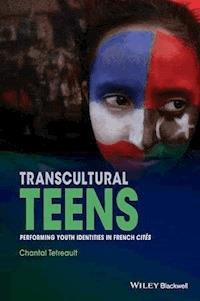
Cover image: French and Libyan flags painted on the face of a protester during a demonstration in support of coalition air strikes in Libya, Benghazi, March 2011. © SUHAIB SALEM/Reuters/Corbis
Acknowledgments
This book would not exist without the help of many others, for which I am very grateful.
My thanks first go to the teens, parents, and tutors in Chemin de l’Ile who generously let me into their lives and who were so patient with my many questions. Thank you. I hope that I have done justice to your words, stories, and experiences.
My family has been a constant source of emotional, intellectual, and economic support over the many years that I have worked on this project—thank you so much, Elijah, Stuart, Mary Kay, and Marc.
I have been lucky to have many teachers who have believed in this project and in me. My heartfelt thanks go to my advisors, Elizabeth Keating and Joel Sherzer, and to Bob Fernea, Deborah Kapchan, Pauline Turner-Strong, and Keith Walters.
To my editors and series editors at Wiley-Blackwell, Norma Mendoza-Denton and Galey Modan, as well as the anonymous reviewers of the manuscript—I am so fortunate to have worked with you. Your suggestions and generous contributions have very much improved this book.
The list of colleagues who have supported me throughout this process is long. Thank you for help in conceptualizing, writing, and revising this work: Azouz Begag, Brahim Chakrani, Elaine Chun, Susan Frekko, Pilar Garcés-Conejos Blitvich, Erika Hoffmann-Dilloway, Tony Jackson, Michèle Koven, Elizabeth R. Miller, Mindy Morgan, Valentina Pagliai, Jennifer Reynolds, Paul Silverstein, Gregg Starrett, and the Working Group on Gender and Childhood at the Rutgers Center for Historical Analysis.
I also owe thanks to the various institutions and entities that have funded my research and writing: the Chateaubriand Fellowship Program, Michigan State University, Rutgers Center for Historical Analysis, University of North Carolina at Charlotte, and the University of Texas at Austin.
To my dear friends who sustained me over many years intellectually, emotionally, and, perhaps most important, gastronomically, I send my love and gratitude: Vânia Cardoso, Scott Head, Liz Lilliott, Dana Maya, Erica Windler, and Elana Zilberg.
Thank you! I could not have done this without you!
The author gratefully acknowledges that permission was granted to include portions of the following journal articles:
Tetreault, Chantal. 2013. Cultural Citizenship in France and le Bled among Teens of Pan-southern Immigrant Heritage. Language and Communication. Volume 33, pp. 532–543.
Tetreault, Chantal. 2010. Collaborative Conflicts: Teens Performing Aggression and Intimacy in a French Cité. Journal of Linguistic Anthropology. Volume 20, Number 1, pp. 72–86.
Tetreault, Chantal. 2009. Cité Teens Entextualizing French TV Host Register: Crossing, Voicing, and Participation Frameworks. Language in Society. Volume 38, Issue 2, pp. 201–231.
Tetreault, Chantal. 2009. Reflecting Respect: Transcultural Communicative Practices of Muslim French Youth. Pragmatics. Volume 19, Issue 1, pp. 65–83.
Tetreault, Chantal. 2008. La Racaille: Figuring Gender, Generation, and Stigmatized Space in a French Cité. Gender and Language. Volume 2, Issue 2, pp. 141–170.
Introduction: Performing Transcultural Youth Identities
miriam
1
:
Ḥ
ashak!
mohammad:
Star Trek!
miriam:
Double-échec!
(epic failure, literally “double failure”)
mohammad:
Bifteck!
(steak)
miriam:
Toulouse-Lautrec!
(Miriam, a female teenager, and her 20-something male tutor, Mohammad, break into laughter.)
In the preceding exchange, Miriam and Mohammad, both young French citizens of North African descent, play a word game that is always initiated with the word ḥashak,2 an Arabic politeness formula. Normally used to create deference in North African Arabic, here the term is used to initiate a stream of spontaneously uttered non-sequiturs, ranging from “steak” (bifteck) to the Post-Impressionist French artist Toulouse-Lautrec. Participants play by pairing the word’s Arabic phonology with terms that share the same distinctive sound which is quite rare in French: an ending that sounds to American ears like “ek.” By stringing together odd-sounding terms to rhyme with ḥashak, opponents create a fun, bizarre-sounding blitz of nonsense; the person uttering the last word ending in “ek” wins the round. The fun of the game lies in its absurdity, in the incongruity of multiple cultural and linguistic references from North Africa, France, and the United States.
Other than the rhyming endings, what do the American TV show Star Trek, the French Post-Impressionist painter Toulouse-Lautrec, and the Arabic politeness formula ḥashak have in common? They are all points of reference that are meaningful to these speakers, who share the cultural attachments that they represent. As with the other participants in my study, Miriam and Mohammad share a connection to North African culture and language, especially the rituals of politeness such as ḥashak that are so important in diaspora. Within Chemin de l’Ile, the largely North African community located 15 kilometers west of Paris where I conducted my research, young people might not actually speak Arabic, but will know the formulaic language of greetings, well-wishing, and politeness, including the usage of . Furthermore, participants in the study were French-born and attending middle school, and thus not only fluent in the French language but also —general European culture that encompasses the Post-Impressionist artist Toulouse-Lautrec. In addition, they are young and intimately familiar with American popular culture, including , because they watch TV and movies imported from , as they call it.
Lesen Sie weiter in der vollständigen Ausgabe!
Lesen Sie weiter in der vollständigen Ausgabe!
Lesen Sie weiter in der vollständigen Ausgabe!
Lesen Sie weiter in der vollständigen Ausgabe!
Lesen Sie weiter in der vollständigen Ausgabe!
Lesen Sie weiter in der vollständigen Ausgabe!
Lesen Sie weiter in der vollständigen Ausgabe!
Lesen Sie weiter in der vollständigen Ausgabe!
Lesen Sie weiter in der vollständigen Ausgabe!
Lesen Sie weiter in der vollständigen Ausgabe!
Lesen Sie weiter in der vollständigen Ausgabe!




