


80,99 €
Mehr erfahren.
- Herausgeber: John Wiley & Sons
- Kategorie: Fachliteratur
- Sprache: Englisch
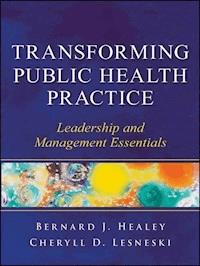
This text provides students a foundation in public health practice and management, focusing on developing the knowledge and skills required by the real world of public health. The authors of Transforming Public Health Practice explain the drivers of change in public health practice, key success factors for public health programs, dealing with the chronic disease burden, the impact of national health policy on public health practice, and tools for understanding and managing population health.
Transforming Public Health Practice covers core leadership and management skills, covering areas such as politics, workforce, partnership and collaboration, change management, outcomes orientation, opportunities for improvement, health equity, and future challenges. Case studies highlight innovations in health education, working with people with disabilities, partnerships in response to disease outbreaks, and health programs. Learning objectives, chapter summaries, key terms, and discussion questions enhance each chapter. A downloadable instructors' supplement is available on the companion Web site for the book.
Sie lesen das E-Book in den Legimi-Apps auf:
Seitenzahl: 721
Veröffentlichungsjahr: 2011
Ähnliche
















Table of Contents
Title Page
Copyright
Dedication
Introduction
Improvement of the Health of the Population
Opportunities for Public Health Departments
Acknowledgments
The Authors
The Contributors
Part One: Issues and Methods of Public Health Practice
Chapter 1: The Need for Change in the Practice of Public Health
Mission and Services of Public Health
Public Health's History and Its Impact on Current Services
Gap Between Mission and Current Public Health Practice
Summary
Key Terms
Discussion Questions
Chapter 2: The Success of Public Health Programs: Critical Factors
Definition of Public Health
Public Health Systems
Community Health Workers
Population-Based Medicine
Problems in Our Health Care System
The Need for Improved Accountability of Public Health Professionals
Local Health Departments
Epidemic of Chronic Diseases
Information Management
Expansion of Health Education Programs
Public Health and the Legacy Concept
The Need for Leadership Development in Public Health
Summary
Key Terms
Discussion Questions
Chapter 3: Critical Issues for the Future of Health Care in the United States
Why We Are Failing in Our Health Care Reform Efforts
Root Causes of the Failures of the Health Care System
Other Problem Areas
Solution to the Problems in Our Health Care System
New Model of Health Care Delivery
Public Health as a Potential Solution to the Health Care Crisis in America
Summary
Key Terms
Discussion Questions
Chapter 4: Application of Epidemiological Concepts to Health Care Delivery
Descriptive Epidemiology
Epidemiology of Communicable Diseases
Epidemiology of Emerging Infections
Analytical Epidemiology
Epidemiology and the Centers for Disease Control and Prevention
Data Management
Surveillance Systems
Managerial Epidemiology
Application of Epidemiological Concepts to Health Care
Summary
Key Terms
Discussion Questions
Chapter 5: Shifting the Focus from Communicable to Chronic Diseases
Communicable Disease Threat
The Challenge of Chronic Diseases
The Need for Investment in Preventing Chronic Diseases
Health Education
The Need for Partnerships to Combat Chronic Diseases
Opportunity to Improve the Way Health Care Is Delivered
Summary
Key Terms
Discussion Questions
Part Two: Issues and Methods of Public Health Leadership and Management
Chapter 6: Leadership and Politics in Public Health
Development of Power in Health Care Delivery
Leadership and Politics in Health Care Delivery
Public Health Leadership Styles
Transformational Leadership and Public Health
Public Health as a Change Agent
Public Health Leaders and Power
Public Health Leaders and Conflict Management
Can Political Appointees Lead Public Health Departments?
Communication Skills of the Leader
Leadership Development in Public Health
Culture of Public Health Workers
Public Health Leaders and Innovation
Summary
Key Terms
Discussion Questions
Chapter 7: Empowering Public Health Workers
Leadership and Quality Improvement
The Public Health Employee
Transformational Leadership, Worker Empowerment, and Self-Managed Work Teams in Public Health
The Role of Culture
Culture and Change
Empowerment of Workers in Public Health
Disappearance of the Public Health Worker
Summary
Key Terms
Discussion Questions
Chapter 8: Partnerships to Improve the Public's Health
Public Health Partners
Value of Partnerships for Public Health Organizations
Building Community-Wide Partnerships Using an Ecological Model of Health
Successful Partnerships
Assessing the Role of Partnerships in Improving Community Health
Summary
Key Terms
Discussion Questions
Chapter 9: Leading and Managing Change in Public Health Organizations
Public Health and the Urgent Need for Change
Challenges Facing Local Public Health Leaders
Millennium Development Goals
Urgent Need for System Change
Visioning the New Public Health
Leadership for the New Public Health
Changing the Public Health System for the Future
Managing Change
Summary
Key Terms
Discussion Questions
Chapter 10: Developing an Outcomes Orientation in Public Health Organizations
Quality Nexus of Public Health and Health Care
Focusing on Core Functions and Essential Public Health Services
Current Quality Improvement Efforts in Public Health Organizations
Gaps in the Quality of Public Health Services
Federal Leadership of Quality Improvement in Public Health
Road Map to Improve Public Health Outcomes
Summary
Key Terms
Discussion Questions
Chapter 11: Opportunities for Improvement in Public Health Practice
Disruption and Change in Public Health
Public Health Education and Health Promotion Programs
The Need for a Chronic Care Model
Minimal Political Appreciation of Public Health Activities
Use of Technology in Risk Communication
Public Health Leadership Required
Value of Prevention Programs
The Process of Innovation
Summary
Key Terms
Discussion Questions
Chapter 12: Local Solutions to Reduce Inequities in Health and Safety
Key Terms
Discussion Questions
Chapter 13: Challenges in the New World of Public Health Practice
Determinants of Health
Obesity Epidemic
Climate Change
War and Armed Conflicts
Summary
Key Terms
Discussion Questions
Case Studies
Case Study 1: Innovation in Health Education Programs
Financing Health Promotion Programs
Internal Revenue Service—Community Benefit Standard
Discussion Questions
Case Study 2: Disabilities
Case Study (Student Version)
Case Study (Teacher Version)
Discussion Questions
Case Study 3: Formation of Community Partnerships to Prepare for H1N1
Discussion Questions
Case Study 4: Municipal Health Department Leadership Inside Out
Discussion Questions
Case Study 5: The Power of Data
MAPP as the Catalyst
Improving Access to Care
Measuring Outcomes
The Way to Get Things Done
Discussion Questions
Case Study 6: Using MAPP to Get Up & Go! in St. Clair County
A New Way of Doing Business
From Planning to Action
Getting Active and Getting Healthy Together
Moving Forward
Discussion Questions
Case Study 7: Partnering for Improved Infant Health in Stanislaus County
Trendsetting in Central California
A New Community Anchor
Improving Birth Outcomes
Looking Back and Moving Forward
Discussion Questions
Case Study 8: Innovation in Colorectal Cancer Education Programs
Program 1
Program 2
Conclusion
Discussion Questions
References
Index
Copyright © 2011 by John Wiley & Sons, Inc. All rights reserved.
Published by Jossey-Bass
A Wiley Imprint
989 Market Street, San Francisco, CA 94103-1741—www.josseybass.com
No part of this publication may be reproduced, stored in a retrieval system, or transmitted in any form or by any means, electronic, mechanical, photocopying, recording, scanning, or otherwise, except as permitted under Section 107 or 108 of the 1976 United States Copyright Act, without either the prior written permission of the publisher, or authorization through payment of the appropriate per-copy fee to the Copyright Clearance Center, Inc., 222 Rosewood Drive, Danvers, MA 01923, 978-750-8400, fax 978-646-8600, or on the Web at www.copyright.com. Requests to the publisher for permission should be addressed to the Permissions Department, John Wiley & Sons, Inc., 111 River Street, Hoboken, NJ 07030, 201-748-6011, fax 201-748-6008, or online at www.wiley.com/go/permissions.
Limit of Liability/Disclaimer of Warranty: While the publisher and author have used their best efforts in preparing this book, they make no representations or warranties with respect to the accuracy or completeness of the contents of this book and specifically disclaim any implied warranties of merchantability or fitness for a particular purpose. No warranty may be created or extended by sales representatives or written sales materials. The advice and strategies contained herein may not be suitable for your situation. You should consult with a professional where appropriate. Neither the publisher nor author shall be liable for any loss of profit or any other commercial damages, including but not limited to special, incidental, consequential, or other damages. Readers should be aware that Internet Web sites offered as citations and/or sources for further information may have changed or disappeared between the time this was written and when it is read.
Jossey-Bass books and products are available through most bookstores. To contact Jossey-Bass directly call our Customer Care Department within the U.S. at 800-956-7739, outside the U.S. at 317-572-3986, or fax 317-572-4002.
Wiley also publishes its books in a variety of electronic formats and by print-on-demand. Not all content that is available in standard print versions of this book may appear or be packaged in all book formats. If you have purchased a version of this book that did not include media that is referenced by or accompanies a standard print version, you may request this media by visiting http://booksupport.wiley.com. For more information about Wiley products, visit us at www.wiley.com.
Library of Congress Cataloging-in-Publication Data
Healey, Bernard J., 1947–
Transforming public health practice : leadership and management essentials / Bernard J. Healey, Cheryll D. Lesneski.—1st ed.
p. cm.
Includes bibliographical references and index.
ISBN 978-0-470-50895-4 (pbk.); 978-1-118-08993-4 (ebk.); 978-1-118-08994-1 (ebk.); 978-1-118-08995-8 (ebk.)
1. Public health administration. I. Lesneski, Cheryll D., 1949– II. Title.
RA425H383 2011
362.1–dc23
2011021315
To Kathy, my wife of forty years, my two wonderful children, Alison and Bryan, and my two-year-old grandson, John.
Bernard J. Healey
To the memory of my parents, Melton Harold and Clara Eva Smith, for their wonderful love and support for me throughout our lives together.
Cheryll D. Lesneski
Introduction
In the early years of the last century the life expectancy of most Americans was approximately forty-five years of age. The length of life has increased for men and women in this country by over thirty years since then. A large portion of this longevity is the direct result of public health activities associated with immunizations, health education programs, and various prevention programs developed by state and local public health departments. This represents a success story for public health in the United States.
The activities of public health departments, which focus on the prevention of health problems before they occur, make up one of the most important components for achieving better population health in every community in the United States. If we are ever to improve the health of the population, there is a very real need for public health interventions within every community population. This will not happen until the public health system's infrastructure is rebuilt, an endeavor that must include leadership training for those placed in charge of this area of health care services delivery in our country.
Improvement of the Health of the Population
When we think about the U.S. health care system, the process of curing and treating diseases is usually the only idea that pervades our thought process. Turnock (2009) points out that activities dedicated to maintaining and promoting health are not usually considered health services by our current medical care system, which has always left the prevention and promotion of health to public health agencies primarily funded by the government. Over time, however, the interest in and funding for these public health activities have been reduced, and it seems that public health activities only become visible in times of crisis.
According to Mays et al. (2004), the public health system in the United States has been receiving growing attention because of emerging health dangers, trends in health policy, and developments in the health care marketplace. In recent years, primarily due to threats of bioterrorism, the epidemic of obesity, and type 2 diabetes, a great deal of attention has been given to the role of prevention in our health care system. The new health care reform bill, signed by President Obama in April 2010, mentions the need to prevent chronic diseases and their complications. Prevention is the major responsibility of public health departments, so a great deal of attention has recently been given to the potential role of public health as our health care system is being reformed.
According to the April 2010 issue of the Nation's Health (“Q&A with Surgeon General Benjamin”), the eighteenth surgeon general of the United States, Regina Benjamin, wants to “transform our sick care system into a wellness system.” Benjamin believes that although the public health system is the cornerstone of the U.S. population's health, it has not received the resources that it deserves. She advocates reversing this trend, pointing out that Congress has appropriated $1 billion for prevention and wellness programs as part of the American Recovery and Reinvestment Act. This money will be used to increase the number of public health workers and continue the expansion of prevention and wellness efforts in U.S. communities.
The increase in life expectancy in the United States can in large part be directly attributed to the many public health accomplishments that were made possible by dedicated workers. Work directed toward reduction of tobacco use, efforts to encourage better nutrition and more physical activity, proper immunizations, and health education programs are just a few of the services that public health departments developed and implemented during the last twenty years. These accomplishments in the area of preventive health care occurred despite the depleted public health infrastructure.
Chronic diseases—such as heart disease, cancer, and diabetes—are the leading causes of death and disability in the United States. As the burden of chronic diseases in the United States continues to increase, public health departments should make greater efforts to identify and implement interventions that successfully reduce disease risk, especially in the workplace. According to the Florida Department of Health (2011), these diseases account for seven of every ten deaths and affect the quality of life of ninety million Americans. Although chronic diseases are among the most common and costly health problems, however, they are also among the most preventable.
The public health challenge has moved way beyond defeating organisms that cause communicable diseases and into the new world of preventing community populations from developing chronic diseases that cannot be cured. These chronic diseases are caused by high-risk health behaviors that result from lifestyle choices that can be changed. Altering lifestyle behaviors may very well serve to increase longevity as well as quality of life in older years. In order to meet this challenge, public health departments need strong leadership and empowered followership to unite the community.
Opportunities for Public Health Departments
The primary role of public health is to prevent illness or disease from ever occurring. Because practitioners in this field prevent things from happening, public health has never been given the respect that it deserves—we are often unable to understand the value of something that did not happen. Because most of medical care encompasses very visible efforts to cure disease, most of the credit for medicine success usually is reserved for the medical care system. This is unfortunate because the increase in the length of life since the early 1900s resulted from such public health services as immunizations and health education programs.
Hemenway (2010) argues that public health is constantly underfunded due to the fact that the benefits of public health activities usually show visible results in the future rather than the present. Unfortunately, most people do not seek medical care until they have become very ill, whereas public health is performing its magic before illness occurs. This is the main reason why the leaders of public health departments need to spend more time communicating what they do and why they do it. Public health has always been one of the best-kept secrets of our health care system. It is time for public health leaders to spend less of their time fighting undeserved budget cuts and more time publicizing their success stories. It is time to raise public health to the stature that it has earned with its various triumphs over the years.
Health care services delivery in this country is undergoing rapid change in structure, process, and required outcomes. The recently enacted health care reform bill has included $500 million a year to be allocated to “comparative effectiveness research,” which is designed to reduce the cost of health care by requiring the health care system to become more efficient in its use of resources. It is becoming the norm to compare various treatment options in order to ascertain the least expensive method of producing the required outcome without sacrificing quality. It is indeed a time of change for the delivery of health care in the United States.
This change will also produce great opportunities for the improvement of Americans' health, as the nation slowly begins to realize the necessity of preventing very expensive health problems from occurring in the first place. This reform in our health care system is producing a great opportunity for public health departments to increase their relevancy in the delivery of health care services to millions of Americans. According to Beerel (2009), relevancy is engaged power that can be used to achieve goals. This is clearly the opportunity that has presented itself to public health departments in our country. Americans are starting to realize the relevancy of population-based medicine, health promotion, and disease prevention—especially in relation to the current epidemic of chronic diseases.
Even though they have high costs at the start, chronic disease and injury prevention programs do very well when cost-benefit analysis is applied to the outcomes associated with their implementation. Public health departments need to expand their success with identifying the causes of chronic diseases into an effort to prevent the occurrence of these diseases or, at the very least, to postpone the onset of their complications until later in life.
We wrote this book in order to discuss the need for new skill development for our public health workforce, leadership training for those responsible for public health programs, along with empowerment of public health employees to expand prevention efforts for the population. Among the skills that public health workers require are change management and conflict management techniques, culture-building abilities, quality improvement skills, communication skills, and team-building and collaboration skills.
There is no question that developing a strong public health infrastructure is one of the most important things we can do to improve the health of our population. It is also critical to note that this infrastructure needs strong leaders dedicated to the achievement of public health goals, which must focus on pursuing outcomes rather than activities that are not producing measurable results. This is going to require profound change in the way public health departments are organized and led.
Acknowledgments
We would like to begin by acknowledging the dedicated people who work in public health and who, despite limited resources, have accomplished so much in making the United States a better place to lead a healthy life. This is really a book about how to help public health departments achieve even greater success stories in the future through better leadership. Those who work in public health departments throughout this country have so much more to contribute if only allowed to do their work. This can only be accomplished through leadership, worker empowerment, and increased resources.
During the process of writing this book we met many dedicated people who demanded professionalism in everything they tried to accomplish. A number of individuals, to whom we are truly indebted, helped us with the writing of particular chapters. They are the wonderful individuals who work at Prevention Institute, a nonprofit national center dedicated to improving community health and equity through effective primary prevention: Larry Cohen, Rachel Davis, Anthony Iton, and Sharon Murriguez.
A number of additional individuals contributed case studies in public health, including Julia Joh Elligers and Lisa Jacobs from the National Association of County and City Health Officials; Ted Kross from the Wilkes-Barre City Health Department; Jill D. Morrow-Gorton, who is a developmental pediatrician serving as the medical director of the Office of Developmental Programs in the Commonwealth of Pennsylvania's Department of Public Welfare; and Marc C. Marchese, a professor at King's College in Wilkes-Barre, Pennsylvania.
Three more individuals to whom we are truly indebted helped us with the review of this new public health text. They are Celeste Torio, Michele Shade and Helda Pinzon Perez. They helped us sharpen our ideas to make this book a much better addition to the literature concerning public health practice.
During the entire research and writing process for this book we were surrounded by intelligent, caring individuals who cared only about making our ideas better. We are very fortunate individuals to have had the opportunity to write a book for a national publisher, but we are equally fortunate to have been able to work with such talent.
The Authors
Bernard J. Healey is a professor of health care administration at King's College in Wilkes-Barre, Pennsylvania, and is currently the director of the King's College graduate program in health care administration. He began his career in 1971 as an epidemiologist for the Pennsylvania Department of Health, retiring from that position in 1995. During his tenure with the government he completed advanced degrees in business administration and public administration, and in 1990 he finished his doctoral work at the University of Pennsylvania. Dr. Healey has been teaching undergraduate and graduate courses in business, public health, and health care administration at several colleges since 1974.
Dr. Healey has published over one hundred articles about public health, health policy, leadership, marketing, and health care partnerships. He has also written and published two books, one about health promotion and one about occupational safety and health in public health practice.
Dr. Healey is a member of the American Association of Public Health and the Association of University Programs in Health Care Administration. He is also a part-time consultant in epidemiology for the Wilkes-Barre City Health Department and a consultant for numerous public health projects in Pennsylvania.
Cheryll D. Lesneski teaches courses in public health practice and community health improvement as an assistant professor in the Public Health Leadership Program at the University of North Carolina at Chapel Hill's Gillings School of Global Public Health. She also works for the U.S. Department of Health and Human Services, promoting sound financial management of public health organizations within a continuous quality improvement framework. In 2005 Dr. Lesneski received a doctorate in public health in the Department of Health Policy and Administration at the Gillings School. Her dissertation, Developing Performance Measurement Systems for Local Public Health Agencies Using the Balanced Scorecard, was published by VDM in 2009. Dr. Lesneski has been a public health practitioner for over twenty years, serving as a local public health agency director for ten years in the Florida Department of Health. She continues to work with the Florida Department of Health to promote continuous quality improvement techniques in learning collaborative settings. Dr. Lesneski also served as an improvement adviser and evaluator with the North Carolina Center for Children's Healthcare Improvement and the National Initiative for Children's Healthcare Quality.
The Contributors
Larry Cohen MSW, is founder and executive director of Prevention Institute, a nonprofit national center dedicated to improving community health and equity through effective primary prevention—taking action to build resilience and to prevent illness and injury before they occur. With an emphasis on health equity, Mr. Cohen has led many successful public health efforts at the local, state, and federal levels concerning injury and violence prevention, mental health, transportation and health, and chronic disease prevention as it relates to diet and physical activity. Mr. Cohen has advanced a deeper understanding of how social determinants shape health outcomes, and Prevention Institute provides resources, conceptual frameworks, and tools to help communities address the underlying causes of health inequities. Prevention Institute has also successfully led state and national efforts to incorporate a focus on and investment in primary prevention as a significant part of health care reform and stimulus funding for communities.
Rachel Davis MSW, is managing director at Prevention Institute. Mrs. Davis oversees Prevention Institute's work in the areas of health equity, community health, violence prevention, mental health, and children and youth. She develops tools for advancing primary prevention, provides consulting and training for various community and government organizations, and advances the conceptual work of the organization. With funding from the federal Office of Minority Health (OMH), Mrs. Davis developed and piloted THRIVE (Tool for Health and Resilience in Vulnerable Environments), a community resilience assessment tool that helps communities bolster factors that will improve health outcomes and reduce disparities experienced by racial and ethnic minorities. An article written by Mrs. Davis on the tool and its initial pilot testing was published in the American Journal of Public Health. She is currently overseeing an OMH-funded project to disseminate THRIVE.
Anthony Iton MD, JD, MPH, was in October 2009 appointed as senior vice president of healthy communities at The California Endowment. Prior to his appointment, Dr. Iton served from 2003 as both the director and county health officer for the Alameda County Public Health Department. In that role he oversaw the creation of an innovative public health practice designed to eliminate health disparities by tackling the root causes of poor health that limit quality of life and life span in many of California's low-income communities. Dr. Iton, who has been published in numerous public health and medical publications, is a regular public health lecturer and keynote speaker at conferences across the nation. He earned his BS in neurophysiology, with honors, from McGill University, in Montreal, Quebec; his JD and MPH at the University of California, Berkeley; and his MD from Johns Hopkins University School of Medicine. Dr. Iton has served on the Board of Directors of Prevention Institute.
Lisa M. Jacobs is currently a full-time MSW candidate at the University of Pennsylvania in Philadelphia. Prior to beginning her graduate studies, Ms. Jacobs served as the Mobilizing for Action through Planning and Partnerships (MAPP) Program Associate at the National Association of County and City Health Officials (NACCHO) in Washington DC. As program associate, Ms. Jacobs supported the MAPP program and National Public Health Performance Standards Program (NPHPSP) by developing and posting Web content, communicating with local health department staff in regard to MAPP and NPHPSP activities, developing fact sheets and guidance documents, and planning and cofacilitating MAPP trainings in communities throughout the United States. While at NACCHO, Ms. Jacobs also served as a member of several organization-wide initiatives including the Health Equity and Social Justice Team. Prior to joining NACCHO, Ms. Jacobs participated in the National Women's Health Network's Helen Rodriguez-Trias Women's Health Leadership Internship. Ms. Jacobs received her BA from Scripps College of the Claremont Colleges Consortium in Claremont, California.
Julia Joh Elligers, MPH, is a senior analyst at NACCHO. She provides technical assistance and training to local communities, implementing a strategic planning process for community health improvement called Mobilizing for Action through Planning and Partnerships (MAPP). She also provides assistance to communities using the National Public Health Performance Standards (NPHPS); NPHPS helps local public health systems assess their capacity to deliver the ten essential public health services.
Ted Kross is director of the Wilkes-Barre City Health Department. He graduated from Pittston Hospital School of Nursing (as a registered nurse with a diploma in nursing) in spring 1982. He was hired as a staff nurse at the NPW Medical Center in 1982 with an interest in critical care nursing. He began working in emergency medicine in 1983 and continued in various leadership positions at several different institutions through 2008. In 1995 he graduated from King's College in Wilkes-Barre, Pennsylvania, with a BS in health care administration (HCA), and he continued in school at King's College and graduated with honors in 2005 with an MS in HCA. He managed the emergency department from 1997 through 2007 at Geisinger Wyoming Valley Medical Center in Wilkes-Barre, and has worked as a prehospital registered nurse (health professional) on life flight interfacility transfers and emergency medical services (EMS) on several ground advance life support (ALS) units up to the present. He wanted to expand his professional career and pursued a director position at Calvert Memorial Hospital just south of Washington DC in 2007. He has been married to a registered nurse for twenty-three years with four children ages thirteen to twenty.
Marc C. Marchese, PhD, received his doctoral degree in industrial-organizational psychology from Iowa State University in 1992. For the past seventeen years he has been a faculty member at King's College in Wilkes-Barre, Pennsylvania. He is currently a professor of human resources management and health care administration. He has also published numerous articles in academic journals. Some recent examples include “Tobacco: The Trigger to Other High Risk Health Behaviors” in the Academy of Health Care Management Journal; “Mentor and Protégé Predictors and Outcomes in a Formal Mentoring Program” in the Journal of Vocational Behavior; and “The Use of Marketing Tools to Increase Participation in Worksite Wellness Programs” in the Academy of Health Care Management Journal.
Jill D. Morrow-Gorton, MD, MBA, is a developmental pediatrician serving as the medical director of the Office of Developmental Programs in the Commonwealth of Pennsylvania's Department of Public Welfare. She graduated from the University of Pennsylvania School of Medicine and did her pediatric internship and residency at Tufts New England Medical Center at the Boston Floating Hospital. She completed a developmental pediatric fellowship at St. Louis University at the Knights of Columbus Developmental Center at Cardinal Glennon Children's Hospital. She is board certified in both pediatrics and developmental and behavioral pediatrics. In 2004 she completed an MBA at Lebanon Valley Hospital in Annville, Pennsylvania.
Sharon Murriguez (formerly Sharon Rodriquez), BA, worked as a program assistant at Prevention Institute from 2007 to 2009. While at Prevention Institute, Mrs. Murriguez focused her efforts on developing training tools and strategies aimed at eliminating health disparities and promoting health equity and community health. She was instrumental in designing and delivering a health disparities training series for grantees of The California Endowment. She also worked on Advancing Public Health Advocacy to Eliminate Health Disparities, a national effort funded by the Robert Wood Johnson Foundation to strengthen public health capacity through policy. A key component of this effort was to develop, pilot, and disseminate a Web-based tool to provide policy and prevention training to assist public health professionals and local elected and appointed officials in eliminating health disparities and improving health outcomes within their communities.
Part One
Issues and Methods of Public Health Practice
Chapter 1
The Need for Change in the Practice of Public Health
Learning Objectives
Explain the primary mission of public healthDefine healthDefine primary preventionDescribe population healthDiscuss the history of public health and its impact on current public health servicesIdentify the characteristics of quality in the field of public healthMission and Services of Public Health
Public health organizations, particularly government agencies, are pulled in many directions, and have had difficulty in both addressing the multiple determinants of health and providing population-centered services to improve community health outcomes. Determinants of health are the factors in the personal, social, economic, and environmental areas of life that affect the health status of individuals and populations.
The challenges facing modern-day societies require interventions and services that move beyond the traditional local public health offerings of personal health care, communicable disease control, and enforcement of environmental health laws. Public health organizations are now expected to understand and address the many factors affecting health produced by the environment, social relationships, communities, and institutions—while in the process forming multiple partnerships to improve health around the globe.
Mission of Public Health
The definition of mission of public health has undergone transformation over time. The earliest mission of public health involved the control of communicable diseases, such as cholera, smallpox, tuberculosis, and yellow fever, that inevitably led to epidemics. The most recent definition originated from the Institute of Medicine (IOM) in 2002 and is much broader. The IOM declared that the new mission of public health encompasses the organized efforts of society toward assuring conditions in which people can be healthy. Society has a dual interest in reducing communities' exposure to risk factors known to negatively affect health and in promoting healthy conditions that create and sustain health in the social and environmental spheres of everyday life.
Society's interest stems from the concept of health as a primary public good that promotes the many goals of a society, including the ability of humans to work, to enter into social relationships, and to participate in a political process. As a result of this broad interest, public health practitioners are expected to focus primarily on the health of community populations as opposed to expending their resources on the treatment of individuals for health problems that are usually addressed by physicians or hospitals providing medical services.
Lesen Sie weiter in der vollständigen Ausgabe!
Lesen Sie weiter in der vollständigen Ausgabe!
Lesen Sie weiter in der vollständigen Ausgabe!
Lesen Sie weiter in der vollständigen Ausgabe!
Lesen Sie weiter in der vollständigen Ausgabe!
Lesen Sie weiter in der vollständigen Ausgabe!
Lesen Sie weiter in der vollständigen Ausgabe!
Lesen Sie weiter in der vollständigen Ausgabe!
Lesen Sie weiter in der vollständigen Ausgabe!
Lesen Sie weiter in der vollständigen Ausgabe!
Lesen Sie weiter in der vollständigen Ausgabe!
Lesen Sie weiter in der vollständigen Ausgabe!
Lesen Sie weiter in der vollständigen Ausgabe!
Lesen Sie weiter in der vollständigen Ausgabe!
Lesen Sie weiter in der vollständigen Ausgabe!
Lesen Sie weiter in der vollständigen Ausgabe!
Lesen Sie weiter in der vollständigen Ausgabe!
Lesen Sie weiter in der vollständigen Ausgabe!
Lesen Sie weiter in der vollständigen Ausgabe!
Lesen Sie weiter in der vollständigen Ausgabe!
Lesen Sie weiter in der vollständigen Ausgabe!
Lesen Sie weiter in der vollständigen Ausgabe!
Lesen Sie weiter in der vollständigen Ausgabe!
Lesen Sie weiter in der vollständigen Ausgabe!




