


137,99 €
Mehr erfahren.
- Herausgeber: John Wiley & Sons
- Kategorie: Fachliteratur
- Sprache: Englisch
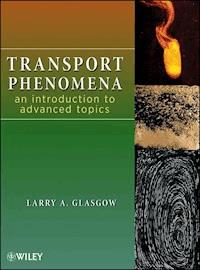
Enables readers to apply transport phenomena principles to solve advanced problems in all areas of engineering and science
This book helps readers elevate their understanding of, and their ability to apply, transport phenomena by introducing a broad range of advanced topics as well as analytical and numerical solution techniques. Readers gain the ability to solve complex problems generally not addressed in undergraduate-level courses, including nonlinear, multidimensional transport, and transient molecular and convective transport scenarios.
Avoiding rote memorization, the author emphasizes a dual approach to learning in which physical understanding and problem-solving capability are developed simultaneously. Moreover, the author builds both readers' interest and knowledge by:
-
Demonstrating that transport phenomena are pervasive, affecting every aspect of life
-
Offering historical perspectives to enhance readers' understanding of current theory and methods
-
Providing numerous examples drawn from a broad range of fields in the physical and life sciences and engineering
-
Contextualizing problems in scenarios so that their rationale and significance are clear
This text generally avoids the use of commercial software for problem solutions, helping readers cultivate a deeper understanding of how solutions are developed. References throughout the text promote further study and encourage the student to contemplate additional topics in transport phenomena.
Transport Phenomena is written for advanced undergraduates and graduate students in chemical and mechanical engineering. Upon mastering the principles and techniques presented in this text, all readers will be better able to critically evaluate a broad range of physical phenomena, processes, and systems across many disciplines.
Sie lesen das E-Book in den Legimi-Apps auf:
Seitenzahl: 712
Veröffentlichungsjahr: 2010
Ähnliche


















Copyright © 2010 by John Wiley & Sons, Inc. All rights reserved.
Published by John Wiley & Sons, Inc., Hoboken, New Jersey.
Published simultaneously in Canada.
No part of this publication may be reproduced, stored in a retrieval system, or transmitted in any form or by any means, electronic, mechanical, photocopying, recording, scanning, or otherwise, except as permitted under Section 107 or 108 of the 1976 United States Copyright Act, without either the prior written permission of the Publisher, or authorization through payment of the appropriate per-copy fee to the Copyright Clearance Center, Inc., 222 Rosewood Drive, Danvers, MA 01923, (978) 750-8400, fax (978) 750-4470, or on the web at www.copyright.com. Requests to the Publisher for permission should be addressed to the Permissions Department, John Wiley & Sons, Inc., 111 River Street, Hoboken, NJ 07030, (201) 748-6011, fax (201) 748-6008, or online at http://www.wiley.com/go/permission.
Limit of Liability/Disclaimer of Warranty: While the publisher, the editors, and the authors have used their best efforts in preparing this book, they make no representations or warranties with respect to the accuracy or completeness of the contents of this book and specifically disclaim any implied warranties of merchantability or fitness for a particular purpose. No warranty may be created or extended by sales representatives or written sales materials. The advice and strategies contained herein may not be suitable for your situation. You should consult with a professional where appropriate. Neither the publisher nor author shall be liable for any loss of profit or any other commercial damages, including but not limited to special, incidental, consequential, or other damages.
For general information on our other products and services or for technical support, please contact our Customer Care Department within the United States at (800) 762-2974, outside the United States at (317) 572-3993 or fax (317) 572-4002.
Wiley also publishes its books in a variety of electronic formats. Some content that appears in print may not be available in electronic formats. For more information about Wiley products, visit our web site at www.wiley.com.
Library of Congress Cataloging-in-Publication Data
Glasgow, Larry A., 1950-
Transport phenomena : an introduction to advanced topics / Larry A. Glasgow.
p. cm.
Includes index.
ISBN 978-0-470-38174-8 (cloth)
1. Transport theory–Mathematics. I. Title.
TP156.T7G55 2010
530.4'75–dc22
2009052127
Preface
This book is intended for advanced undergraduates and first-year graduate students in chemical and mechanical engineering. Prior formal exposure to transport phenomena or to separate courses in fluid flow and heat transfer is assumed. Our objectives are twofold: to learn to apply the principles of transport phenomena to unfamiliar problems, and to improve our methods of attack upon such problems. This book is suitable for both formal coursework and self-study.
In recent years, much attention has been directed toward the perceived “paradigm shift” in chemical engineering education. Some believe we are leaving the era of engineering science that blossomed in the 1960s and are entering the age of molecular biology. Proponents of this viewpoint argue that dramatic changes in engineering education are needed. I suspect that the real defining issues of the next 25–50 years are not yet clear. It may turn out that the transformation from petroleum-based fuels and economy to perhaps a hydrogen-based economy will require application of engineering skills and talent at an unprecedented intensity. Alternatively, we may have to marshal our technically trained professionals to stave off disaster from global climate change, or to combat a viral pandemic. What may happen is murky, at best. However, I do expect the engineering sciences to be absolutely crucial to whatever technological crises emerge.
Problem solving in transport phenomena has consumed much of my professional life. The beauty of the field is that it matters little whether the focal point is tissue engineering, chemical vapor deposition, or merely the production of gasoline; the principles of transport phenomena apply equally to all. The subject is absolutely central to the formal study of chemical and mechanical engineering. Moreover, transport phenomena are ubiquitous—all aspects of life, commerce, and production are touched by this engineering science. I can only hope that you enjoy the study of this material as much as I have.
It is impossible to express what is owed to Linda, Andrew, and Hillary, each of whom enriched my life beyond measure. And many of the best features of the person I am are due to the formative influences of my mother Betty J. (McQuilkin) Glasgow, father Loren G. Glasgow, and sister Barbara J. (Glasgow) Barrett.
Larry A. Glasgow
Department of Chemical Engineering, Kansas State University, Manhattan, KS
Chapter 1
Introduction and Some Useful Review
1.1 A Message for the Student
This is an advanced-level book based on a course sequence taught by the author for more than 20 years. Prior exposure to transport phenomena is assumed and familiarity with the classic, Transport Phenomena, 2nd edition, by R. B. Bird, W. E. Stewart, and E. N. Lightfoot (BS&L), will prove particularly advantageous because the notation adopted here is mainly consistent with BS&L.
There are many well-written and useful texts and monographs that treat aspects of transport phenomena. A few of the books that I have found to be especially valuable for engineering problem solving are listed here:
Transport Phenomena, 2nd edition, Bird, Stewart, and Lightfoot.
An Introduction to Fluid Dynamics and An Introduction to Mass and Heat Transfer, Middleman.
Elements of Transport Phenomena, Sissom and Pitts.
Transport Analysis, Hershey.
Analysis of Transport Phenomena, Deen.
Transport Phenomena Fundamentals, Plawsky.
Advanced Transport Phenomena, Slattery.
Advanced Transport Phenomena: Fluid Mechanics and Convective Transport Processes, Leal.
The Phenomena of Fluid Motions, Brodkey.
Fundamentals of Heat and Mass Transfer, Incropera and De Witt.
Fluid Dynamics and Heat Transfer, Knudsen and Katz.
Fundamentals of Momentum, Heat, and Mass Transfer, 4th edition, Welty, Wicks, Wilson, and Rorrer.
Fluid Mechanics for Chemical Engineers, 2nd edition, Wilkes.
Vectors, Tensors, and the Basic Equations of Fluid Mechanics, Aris.
In addition, there are many other more specialized works that treat or touch upon some facet of transport phenomena. These books can be very useful in proper circumstances and they will be clearly indicated in portions of this book to follow. In view of this sea of information, what is the point of yet another book? Let me try to provide my rationale below.
I taught transport phenomena for the first time in 1977–1978. In the 30 years that have passed, I have taught our graduate course sequence, Advanced Transport Phenomena 1 and 2, more than 20 times. These experiences have convinced me that no suitable single text exists in this niche, hence, this book.
So, the course of study you are about to begin here is the course sequence I provide for our first-year graduate students. It is important to note that for many of our students, formal exposure to fluid mechanics and heat transfer ends with this course sequence. It is imperative that such students leave the experience with, at the very least, some cognizance of the breadth of transport phenomena. Of course, this reality has profoundly influenced this text.
In 1982, I purchased my first IBM PC (personal computer); by today's standards it was a kludge with a very low clock rate, just 64K memory, and 5.25″ (160K) floppy drives. The high-level language available at that time was interpreted BASIC that had severe limits of its own with respect to execution speed and array size. Nevertheless, it was immediately apparent that the decentralization of computing power would spur a revolution in engineering problem solving. By necessity I became fairly adept at BASIC programming, first using the interpreter and later using various BASIC compilers. Since 1982, the increases in PC capability and the decreases in cost have been astonishing; it now appears that Moore's “law” (the number of transistors on an integrated circuit yielding minimum component cost doubles every 24 months) may continue to hold true through several more generations of chip development. In addition, PC hard-drive capacity has exhibited exponential growth over that time frame and the estimated cost per G-FLOP has decreased by a factor of about 3 every year for the past decade.
It is not an exaggeration to say that a cheap desktop PC in 2009 has much more computing power than a typical university mainframe computer of 1970. As a consequence, problems that were pedagogically impractical are now routine. This computational revolution has changed the way I approach instruction in transport phenomena and it has made it possible to assign more complex exercises, even embracing nonlinear problems, and still maintain expectations of timely turnaround of student work. It was my intent that this computational revolution be reflected in this text and in some of the problems that accompany it. However, I have avoided significant use of commercial software for problem solutions.
Many engineering educators have come to the realization that computers (and the microelectronics revolution in general) are changing the way students learn. The ease with which complicated information can be obtained and difficult problems can be solved has led to a physical disconnect; students have far fewer opportunities to develop somatic comprehension of problems and problem solving in this new environment. The reduced opportunity to experience has led to a reduced ability to perceive, and with dreadful consequence. Recently, Haim Baruh (2001) observed that the computer revolution has led young people to “think, learn and visualize differently…. Because information can be found so easily and quickly, students often skip over the basics. For the most part, abstract concepts that require deeper thought aren't part of the equation. I am concerned that unless we use computers wisely, the decline in student performance will continue.”
Lesen Sie weiter in der vollständigen Ausgabe!
Lesen Sie weiter in der vollständigen Ausgabe!
Lesen Sie weiter in der vollständigen Ausgabe!
Lesen Sie weiter in der vollständigen Ausgabe!
Lesen Sie weiter in der vollständigen Ausgabe!
Lesen Sie weiter in der vollständigen Ausgabe!
Lesen Sie weiter in der vollständigen Ausgabe!
Lesen Sie weiter in der vollständigen Ausgabe!
Lesen Sie weiter in der vollständigen Ausgabe!
Lesen Sie weiter in der vollständigen Ausgabe!
Lesen Sie weiter in der vollständigen Ausgabe!
Lesen Sie weiter in der vollständigen Ausgabe!
Lesen Sie weiter in der vollständigen Ausgabe!
Lesen Sie weiter in der vollständigen Ausgabe!
Lesen Sie weiter in der vollständigen Ausgabe!
Lesen Sie weiter in der vollständigen Ausgabe!
Lesen Sie weiter in der vollständigen Ausgabe!
Lesen Sie weiter in der vollständigen Ausgabe!
Lesen Sie weiter in der vollständigen Ausgabe!
Lesen Sie weiter in der vollständigen Ausgabe!




