


53,99 €
Mehr erfahren.
- Herausgeber: John Wiley & Sons
- Kategorie: Fachliteratur
- Sprache: Englisch
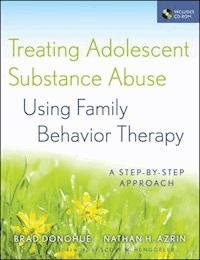
Praise for Treating Adolescent Substance Abuse Using Family Behavior Therapy "This is an extremely positive and strength-focused text that provides therapists with a structure and the tools to implement interventions that have a long history of promoting the types of clinical changes desired by family members and community stakeholders."--From the Foreword by Scott W. Henggeler, PhD, Professor, Department of Psychiatry and Behavioral Sciences, and Director, Family Services Research Center, Medical University of South Carolina "Kudos to Donohue and Azrin for writing a book that includes all the materials needed to implement FBT with adolescents, including prompting checklists, handouts, and worksheets."--Karol Kumpfer, PhD, Professor, Health Promotion & Education, and Chair, International Study Abroad Committee, College of Health, University of Utah, and former director, SAMHSA's Center for Substance Abuse Prevention "Treating Adolescent Substance Abuse Using Family Behavior Therapy is an important resource for those who wish to provide an empirically supported, strengths-based, behavioral treatment for adolescents with substance-use problems and their parents." --Susan Harrington Godley, RhD, Senior Research Scientist and EBT Coordinating Center Director, and Mark D. Godley, PhD, Director, Research & Development, Chestnut Health Systems "In my practice with adolescents, FBT has proven exceptionally effective in drawing families closer together and yielding improved outcomes. This remarkably supportive approach helps young people develop critical skills necessary to live a fulfilling and drug-free lifestyle. This book clearly illustrates how to implement the interventions with ease and exemplifies the deeply gratifying experience of FBT."--Stephen A. Culp, MEd, NCC, LPCC, Addiction Services Therapist, Comprehend, Inc., Maysville, KY Listed in multiple national clearinghouses, including SAMHSA's National Registry of Evidence-based Programs and Practices and the CEBC, Family Behavior Therapy (FBT) is a scientifically supported treatment for adolescent substance abuse and its many associated problems. Written by Brad Donohue and Nathan Azrin--the premier researchers and practitioners of FBT--Treating Adolescent Substance Abuse Using Family Behavior Therapy is the first book of its kind to provide mental health professionals with the practical, step-by-step guidance needed to use this evidence-based treatment. Filled with case studies, checklists, worksheets, and handouts, this essential guide features: * Strategies to assist in effective goal-setting, treatment plans, and family management * Motivational enhancement exercises to encourage youth into a problem-free lifestyle * Methods to effectively address contextual issues such as noncompliance and culture * Standardized treatments to assist in eliminating problems that coexist with substance abuse, including unemployment, depression, behavioral misconduct, and family dysfunction * An accompanying CD-ROM contains all the book's record-keeping forms, checklists, assignments, progress notes, agendas, and worksheets in a customizable format.
Sie lesen das E-Book in den Legimi-Apps auf:
Seitenzahl: 338
Veröffentlichungsjahr: 2011
Ähnliche


















Contents
Foreword
Preface
Acknowledgements
Chapter 1: Introduction to Family Behavior Therapy
Overview
Chapter at a Glance
Historical and Theoretical Background
Empirical Background
Appropriate Intervention Settings and Referrals
General Approach and Structure to Treatment
Concluding Remarks
Supporting Materials for Chapter 1: Introduction to Family Behavior Therapy
Chapter 2: Infrastructure
Overview
Infrastructure and Quality Assurance
Concluding Remarks
Supporting Materials for Chapter 2: Infrastructure
Chapter 3: Therapeutic Style, Techniques, and Implementation Strategies
Overview
Chapter at a Glance
Therapeutic Style and Approach
Organization of Treatment Materials
Concluding Remarks
Chapter 4: Establishing Effective Agendas for Treatment Sessions
Overview
Goals for Intervention
Materials Needed
Procedural Steps for Implementation
Concluding Remarks
Supporting Materials for Chapter 4: Establishing Effective Agendas for Treatment Sessions
Chapter 5: Probing Negative and Positive Consequences to Determine Core Motivation
Goals for Intervention
Materials Needed
Procedural Steps for Implementation
Concluding Remarks
Supporting Materials for Chapter 5: Probing Negative and Positive Consequences to Determine Core Motivation
Chapter 6: Establishing and Rewarding Goal Attainment With Family Support
Overview
Goal for Intervention
Materials Needed
Procedural Steps for Implementation
Concluding Remarks
Supporting Materials for Chapter 6: Establishing and Rewarding Goal Attainment With Family Support
Chapter 7: Developing a Successful Treatment Plan
Overview
Goal for Intervention
Materials Needed
Procedural Steps for Implementation
Concluding Remarks
Supporting Materials for Chapter 7: Developing a Successful Treatment Plan
Chapter 8: Reviewing Past Appreciations to Improve Current Relationships
Overview
Supporting Materials for Chapter 8: Reviewing Past Appreciations to Improve Current Relationships
Chapter 9: Improving Communication With Positive Requests
Overview
Concluding Remarks
Supporting Materials for Chapter 9: Improving Communication With Positive Requests
Chapter 10: Restructuring the Environment to Facilitate a Drug-Free Lifestyle
Overview
Goals for Intervention
Materials Required
Procedural Steps for Treatment Implementation
Concluding Remarks
Supporting Materials for Chapter 10: Restructuring the Environment to Facilitate a Drug-Free Lifestyle
Chapter 11: Using Self-Control to Manage Negative Behaviors, Thoughts, and Feelings
Overview
Goals for Intervention
Materials Required
Procedural Steps for Treatment Implementation
Concluding Remarks
Supporting Material for Chapter 11: Using Self-Control to Manage Negative Behaviors, Thoughts, and Feelings
Chapter 12: Gaining Employment
Overview
Goals for Intervention
Materials Required
Procedural Steps for Implementation
Concluding Remarks
Supporting Material for Chapter 12: Gaining Employment
Chapter 13: Concluding Treatment and Planning for Success
Overview
Goals for Intervention
Materials Required
Procedural Steps for Treatment Implementation
Concluding Remarks
References
About the Authors
Author Index
Subject Index
About the CD-ROM
Copyright © 2012 by John Wiley & Sons, Inc. All rights reserved.
Published by John Wiley & Sons, Inc., Hoboken, New Jersey.
Published simultaneously in Canada.
No part of this publication may be reproduced, stored in a retrieval system, or transmitted in any form or by any means, electronic, mechanical, photocopying, recording, scanning, or otherwise, except as permitted under Section 107 or 108 of the 1976 United States Copyright Act, without either the prior written permission of the Publisher, or authorization through payment of the appropriate per-copy fee to the Copyright Clearance Center, Inc., 222 Rosewood Drive, Danvers, MA 01923, (978) 750-8400, fax (978) 646-8600, or on the web at www.copyright.com. Requests to the Publisher for permission should be addressed to the Permissions Department, John Wiley & Sons, Inc., 111 River Street, Hoboken, NJ 07030, (201) 748-6011, fax (201) 748-6008.
Limit of Liability/Disclaimer of Warranty: While the publisher and author have used their best efforts in preparing this book, they make no representations or warranties with respect to the accuracy or completeness of the contents of this book and specifically disclaim any implied warranties of merchantability or fitness for a particular purpose. No warranty may be created or extended by sales representatives or written sales materials. The advice and strategies contained herein may not be suitable for your situation. You should consult with a professional where appropriate. Neither the publisher nor author shall be liable for any loss of profit or any other commercial damages, including but not limited to special, incidental, consequential, or other damages.
This publication is designed to provide accurate and authoritative information in regard to the subject matter covered. It is sold with the understanding that the publisher is not engaged in rendering professional services. If legal, accounting, medical, psychological or any other expert assistance is required, the services of a competent professional person should be sought.
Designations used by companies to distinguish their products are often claimed as trademarks. In all instances where John Wiley & Sons, Inc. is aware of a claim, the product names appear in initial capital or all capital letters. Readers, however, should contact the appropriate companies for more complete information regarding trademarks and registration.
For general information on our other products and services please contact our Customer Care Department within the United States at (800) 762-2974, outside the United States at (317) 572-3993 or fax (317) 572-4002.
Wiley publishes in a variety of print and electronic formats and by print-on-demand. Some material included with standard print versions of this book may not be included in e-books or in print-on-demand. If this book refers to media such as a CD or DVD that is not included in the version you purchased, you may download this material at http://booksupport.wiley.com. For more information about Wiley products, visit www.wiley.com.
Library of Congress Cataloging-in-Publication Data:
Donohue, Brad.
Treating adolescent substance abuse using family behavior therapy : A step-by-step approach / Brad Donohue, Nathan Azrin.
p. ; cm.
Includes bibliographical references and index.
ISBN 978-0-470-62192-9 (alk. paper : paper/cd-rom); 978-1-118-16395-5 (eMobi); 978-1-118-16394-8 (ePub); 978-1-118-16393-1 (ePDF)
1. Teenagers—Substance use—Treatment. 2. Substance abuse—Treatment. 3. Family psychotherapy. 4. Behavior therapy. I. Azrin, Nathan H., 1930- II. Title.
[DNLM: 1. Adolescent. 2. Substance-Related Disorders—therapy. 3. Behavior Therapy. 4. Family Therapy. WM 270]
RJ506.D78D66 2012
362.29'18—dc23 2011025465
Foreword
This comprehensive clinical specification of Family Behavior Therapy (FBT) for substance-abusing adolescents has the potential to make a substantive contribution to the public health and has been long awaited. Adolescent substance abuse leads to many serious short- and long-term deleterious outcomes for the youths, their families, and society. Although federal entities such as the National Institute on Drug Abuse have devoted considerable resources to the development and validation of effective treatments for adolescent substance abuse, the gap between science and practice remains very wide.
The most promising treatments for adolescent substance abuse have not been widely transported among substance abuse treatment providers, and the vast majority of substance abuse treatment services provided in community settings have not demonstrated effectiveness. Thus, a clear need exists for greater availability of effective substance abuse treatments to community providers.
FBT is as an efficient option for treating adolescent substance abuse. In part, this prospective is based on the promising results from FBT clinical trials and the demonstrated effectiveness of the adult counterpart on which FBT is derived (i.e., the Community Reinforcement Approach). The potential, however, is also based on the intensive emphasis that FBT devotes to engaging caregivers in the treatment of their adolescents. Decades of correlational, longitudinal, and experimental (i.e., clinical trials) research have shown the central roles that caregivers play in the development, maintenance, and attenuation of serious antisocial behavior in adolescents; and FBT leverages this knowledge throughout its intervention protocols.
Perhaps the clearest way to substantiate my very favorable view of FBT is to enumerate the many strengths of the model as presented in this book:
The authors intentionally specified FBT in ways that should make it relatively easy to learn and implement. For example, session guidelines, therapist checklists, and useful forms are provided to guide implementation.Multiple options are available for training in FBT, including self-instruction, workshops provided by FBT experts, and ongoing clinical consultation.The intervention protocols draw on the long and successful traditions of the behavioral therapies (e.g., contingency management) and cognitive behavioral therapies (e.g., problem-solving skill training, communication training).Research has shown that high treatment fidelity is often essential to achieving favorable clinical outcomes in the implementation of evidence-based treatments. This book provides session checklists that enable therapists to assess their fidelity to FBT implementation standards after every session.The authors encourage and provide methods for assessing consumer satisfaction, a rarity in even the evidence-based practice community.The authors also encourage the assessment of key clinical outcomes, using validated self-report and biological (i.e., urine drug screens) measures. Such outcome monitoring can verify the direction of treatment or suggest that other strategies used in FBT be considered.The clinical style of FBT is extremely positive and strength focused, with a clear emphasis on engaging youths and caregivers in treatment. For example, strategies are provided for changing in-session conflict into constructive problem solving, and each session is structured to positive aspects of family relations and treatment progress.Therapists are given pragmatic, easy-to-understand tools to address treatment noncompliance, in-session conflict, and lack of productivity. Such problems emerge in almost every clinical case and can derail treatment gains if not addressed satisfactorily.The proscribed interventions are direct and efficient, yet very positive. Moreover, motivational interviewing-like strategies are specified to address issues that might not respond to more directive efforts. In short, the book provides an engaging balance of approaches that provide the flexibility needed to address a range of presenting problems, challenges, and family contexts.The contingency management intervention described in the book is especially well conceived—evidence of the extensive experience that the authors have in implementing this approach with families and teaching the model to clinicians.Importantly, to promote sustainability and ecological validity, the family generates and provides the contingencies for the adolescent in the FBT contingency management intervention. This approach contrasts favorably with many other contingency management interventions in the field where contingencies (e.g., vouchers) are provided by the treatment program.The structure of the FBT program is logical and flexible. Certain universal interventions are provided to all youths and families (e.g., motivational interventions), but the sequence of subsequent interventions is determined by family members. Such flexibility is consistent with family empowerment.It bears repeating: FBT promotes positive interactions among family members and between the clinician and family members from beginning (e.g., every session starts by reviewing positive outcomes) to end (e.g., the final session celebrates clinical progress).In conclusion, Drs. Donohue and Azrin have done an outstanding job of putting onto paper the intricacies of their exemplary FBT approach. As noted earlier, this is an extremely positive and strength-focused text that provides therapists with a structure and the tools to implement interventions that have a long history of promoting the types of clinical changes desired by family members and community stakeholders.
Scott W. Henggeler, PhD
Professor, Department of Psychiatry and Behavioral Sciences
Director, Family Services Research Center
Medical University of South Carolina
April 29, 2011
Preface
In 2006, the Program Review Manager for the Substance Abuse and Mental Health Services Administration’s (SAMHSA’s) National Registry of Evidence-Based Programs and Practices (NREPP), Stephen Gardner, invited Nate and me to complete an application to have FBT listed as an evidence-based treatment (EBT) in their newly formulated National Registry of Evidence-Based Programs and Practices (NREPP). Stephen explained that community agencies were experiencing difficulties adopting EBTs, and NREPP was being developed to assist in identifying best programs and practices. After our application was successfully reviewed, we were immediately inundated with calls and emails from mental health administrators who were interested in FBT training. Many queried if we had developed self-study methods to assist them in affordably learning the nuts and bolts of FBT. At that time we didn’t have much in the way of dissemination materials such as books, videos depicting FBT implementation, interactive web sites, and so on. We did, however, have carefully developed prompting checklists depicting the step-by-step procedures involved in conducting FBT (i.e., “cheat sheets”). Our treatment providers (TPs) had used these checklists during therapy sessions in our clinical trials to prompt specific intervention procedures. We were initially hesitant to introduce them to TPs in the community because our research team hadn’t tested our checklists in these settings. However, we were ultimately encouraged to do so after Scott Henggeler and his colleagues scientifically demonstrated the utility of this approach in TPs who had learned to implement contingency management within multisytemic therapy (MST). In disseminating FBT, we experienced overwhelming positive feedback from TPs about the prompting checklists. However, our checklists lacked appropriate context (e.g., sufficient rationales, implementation examples, cultural adaptations), which led TPs to be overly dependent on FBT trainers.
One of the persons who helped us initially disseminate FBT into community settings was a coinvestigator on a clinical trial involving FBT, Dan Allen. With Nate’s support, Dan agreed to assist in writing the first book about FBT based on the aforementioned prompting checklists (i.e., Treating Adult Substance Abuse Using Family Behavior Therapy). Now, several months later, we are excited to have completed Treating Adolescent Substance Abuse Using Family Behavior Therapy. Similar to the first book, this treatment manual was developed to flexibly and effectively address substance abuse utilizing a straightforward and theoretically sound behavioral intervention that is family based. Importantly, the intervention includes multiple components that are each capable of treating a wide range of problem behaviors in youth, such as illicit drug and alcohol abuse, family discord, school/work attendance, and conduct and mood disorders. Each component is organized into a series of therapeutic instructions, with each instruction building upon the next. TPs are free to exercise their own positive style when implementing each step, and they often integrate information between steps to assist in clarification, engagement, and so on. Other innovative features of FBT include its tight integration of (a) standardized and time-efficient goal-setting procedures that are tied to specific drug use triggers and competing rewards; (b) pragmatic methods to assist TPs in assessing their own estimates of treatment integrity; (c) ongoing standardized methods of assessing the extent to which clients participate and are satisfied in therapy; (d) standardized client record-keeping procedures and accompanying quality assurance system; and (e) strong evidence base in treating drug abuse and other associated problem behaviors. Each of these factors is very important to treatment delivery, although very few programs do so reliably.
This book, therefore, reviews procedures involved in the implementation of FBT as applied to the very distinctive and difficult-to-treat adolescent substance abuse population. FBT for adolescents involves the administration of validated assessment methods and well-established behavioral intervention components (i.e., Consequence Review, Level System, Treatment Planning, Reciprocity Awareness, Positive Request, Environmental/Stimulus Control, Self-Control, Job-Getting Skills Training). Each intervention component is systematically described in Chapters 5 through 12. Each intervention component includes an overview of the intervention approach, rationale for the intervention, required materials, and detailed description of the intervention procedures (including implementation dialogue between TP and client/family). Within each chapter, case examples and completed worksheets assist in bringing the interventions to life. This systematic organization permits readers to quickly identify and skim through parts of each chapter that may be particularly relevant. For instance, if a TP is about to implement the Self-Control intervention, and is not confident in how to initiate a practice trial, the TP can quickly review dialogue in the respective section where these instructions are detailed within the text. All necessary materials that will be required to implement FBT are listed in the back of each chapter, including the prompting checklists, handouts, and worksheets. At the back of the book there is a quiz that may be completed after the book is read to assist in gaining continuing education units (CEUs) that are required by most major TP licensing boards.
This book is primarily intended for TPs and instructors who teach substance abuse treatment in their courses. Indeed, there is ample information available to suggest that students who go on to become TPs need intensive training in evidence-based therapies, such as FBT, and that these interventions should be integrated within their class curriculums. Along these lines, we have developed a course format that is consistent with this book and freely available to instructors who are interested in teaching FBT. Relevant to this FBT class curriculum, each chapter represents an intervention component (e.g., Self-Control) that may be taught during an academic week. We hope you find the book rewarding and the interventions exciting to implement.
Brad Donohue
Nathan Azrin
Acknowledgments
We would like to acknowledge our families for their encouragement in writing this book, as well as our colleagues and students for their assistance in developing this Family Behavior Therapy approach. We are especially grateful for the continued support of the National Institute on Drug Abuse, as well as the National Institute of Mental Health in permitting us to evaluate the efficacy of FBT in randomized controlled trials. We are indebted to the folks at John Wiley & Sons, particularly Rachel Livsey, Amanda Orenstein, and Kim Nir for their professional perspective, unrivaled assistance, and aptitude throughout the publication process. We also would like to thank the following colleagues who reviewed this book and provided valuable feedback: C. Aaron McNeece, Professor Emeritus, Florida State University; Ken Winters, Professor, University of Minnesota; Lin Fang, Assistant Professor, University of Toronto; Eric Wagner, Professor, Florida International University; and David Springer, Professor, University of Texas, Austin.
CHAPTER 1
Introduction to Family Behavior Therapy
Overview
This chapter provides an overview of the application of Family Behavior Therapy (FBT) as applied to adolescents. First, the historical, theoretical, and empirical underpinnings of FBT are reviewed to assist in understanding its conceptualization and development during the past 20 years. We then describe youth and their families who are most likely to benefit from FBT, and offer recommendations in determining a method of assessment to assist in treatment planning. Although content of each of the FBT intervention components is extensively reviewed in Chapters 4 through 13, a summary of each intervention component is provided in this chapter. The method of using our relatively novel prompting checklists to guide treatment providers (TPs) in intervention implementation is reviewed, and procedures involved in the assessment of treatment integrity are underscored.
Lesen Sie weiter in der vollständigen Ausgabe!
Lesen Sie weiter in der vollständigen Ausgabe!
Lesen Sie weiter in der vollständigen Ausgabe!
Lesen Sie weiter in der vollständigen Ausgabe!
Lesen Sie weiter in der vollständigen Ausgabe!
Lesen Sie weiter in der vollständigen Ausgabe!
Lesen Sie weiter in der vollständigen Ausgabe!
Lesen Sie weiter in der vollständigen Ausgabe!
Lesen Sie weiter in der vollständigen Ausgabe!
Lesen Sie weiter in der vollständigen Ausgabe!
Lesen Sie weiter in der vollständigen Ausgabe!
Lesen Sie weiter in der vollständigen Ausgabe!
Lesen Sie weiter in der vollständigen Ausgabe!
Lesen Sie weiter in der vollständigen Ausgabe!
Lesen Sie weiter in der vollständigen Ausgabe!
Lesen Sie weiter in der vollständigen Ausgabe!
Lesen Sie weiter in der vollständigen Ausgabe!




