


71,99 €
Mehr erfahren.
- Herausgeber: John Wiley & Sons
- Kategorie: Fachliteratur
- Sprache: Englisch
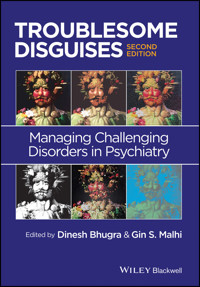
Troublesome Disguises examines psychiatric conditions which are not necessarily uncommon, rare or exotic but are challenging for the clinician who may struggle to reach a diagnosis and to set up management strategies.
However, with familiarity, these conditions can and should be recognised. This new edition is an exercise in consciousness-raising as well as a warning to beware of diagnostic systems which, despite their many virtues, may become too influential and may perpetuate errors which are to the detriment of patients.
For the clinician struggling to understand and treat patients who fail to fit the usual diagnostic categories, Troublesome Disguises provides wise instruction in the virtue of entertaining doubts, as well as practical advice for the assessment and management of atypical cases.
Sie lesen das E-Book in den Legimi-Apps auf:
Seitenzahl: 579
Veröffentlichungsjahr: 2014
Ähnliche



















CONTENTS
Cover
Title page
Copyright page
Contributors
Preface
Part I: Challenging psychiatric conditions
Chapter 1: Shared pathologies
Definition
History
Clinical phenomena
Epistemology
Conclusion
References
Chapter 2: Paraphrenia
Introduction
Kraepelin’s paraphrenia
Paraphrenia revisited
Discussion
References
Chapter 3: Brief reactive psychoses
Introduction
Classification
Epidemiology
Treatment
Conclusion
References
Chapter 4: Cycloid psychoses
Historical aspects
Incidence
Symptoms and course of the group of disorders
Classification in ICD-10, DSM-IV, and DSM-V
Etiology and neurobiology
Therapy
Conclusion
References
Chapter 5: Borderline personality disorder
Phenomenology
Neurobiology
DSM-5 alternative model
Conclusion
References
Chapter 6: Recurrent self-harm
What is self-harm?
Prevalence and correlates of self-harm in the general population
Why do people engage in recurrent self-harm?
Clinicians’ attitudes toward self-harm
Economic costs
Treatments
Psychological interventions
Treatment in people with borderline personality disorder
Conclusion
References
Chapter 7: Finding the truth in the lies
Introduction
Current conceptualization of malingering
Alternative models of malingering
Symptom presentation and record review: Feigning of psychiatric symptoms
Objective personality measures
Conclusion
References
Chapter 8: Recurrent brief depression
Introduction
Development of the concept of recurrent brief depression
Recurrent brief depression in clinical studies
Underlying causes
Could RBD be treatable with psychotropic drugs?
Could RBD be treatable with psychological interventions?
Conclusion
Acknowledgments
References
Chapter 9: Conversion disorders
Introduction
Historical aspects
Epidemiology: Where are the conversion disorders of yesteryear?
Terminology: There’s a lot in a name!
Difficulties in diagnosing conversion disorders
Difficulty in understanding conversion disorders
Diagnosing conversion disorders
Nosological issues
Challenges in management and outcome
Conclusion
References
Chapter 10: ADHD controversies
Introduction
Genetic influences
Classification issues and ADHD: DSM-IV versus DSM5
Gender differences in ADHD
Comorbidity and ADHD
ADHD and bipolar disorder
Learning problems and ADHD
Inattentive ADHD
Conclusion
References
Chapter 11: Post-traumatic stress disorder
Introduction
History of PTSD
DSM and PTSD
Impact of DSM-5
Heterogeneity of PTSD
Role of impairment
The issue of caseness
Compensation and PTSD
Biological dysfunction or social construction?
References
Chapter 12: Bipolar disorder
Introduction
Manic-depressive illness
Bipolar disorder
Conclusion
Acknowledgments
References
Part II: Rare psychotic disorders
Chapter 13: Misidentification delusions
Introduction
Variety of misidentification delusions
Occurrence of misidentification delusions
Theoretical explanations
Conclusion
References
Chapter 14: Delirium
Introduction
Phenomenology
Etiology
Approach to diagnosis
Differential diagnosis
Conclusion
Case study
References
Chapter 15: Paraphilias and culture
Introduction
Definitions
Paraphilic disorder
Culture and the individual
Prevalence of paraphilias
Culture and the pedophilic disorder
Fetishistic disorder
Procreation or pleasure
Cultural behaviour or paraphilia?
Sexual masochism disorder
The biology of sexual behaviours
Conclusion
References
Chapter 16: Pseudodementia
Dementia
Pseudodementia
Neuropsychology, brain imaging, and other investigations
Conclusion
Acknowledgments
References
Chapter 17: Culture-bound syndromes
Introduction
Society and illness
Culture-bound syndromes in the diagnostic manuals (DSM and ICD)
Characteristics of culture-bound syndromes [10]
Specific culture-bound syndromes
The future of culture-bound syndromes
Conclusion
Acknowledgments
References
Chapter 18: Delusional infestations
Introduction
Historical context
Case presentation
Clinical features
Management problems and potential solutions
Conclusions
References
Chapter 19: Baffling clinical encounters
A puzzling encounter
The two solitudes
Bridging the two solitudes
Final remarks
References
Index
End User License Agreement
List of Tables
Chapter 03
Table 3.1 History of the concept of brief reactive psychosis and classification of brief reactive psychoses.
Chapter 05
Table 5.1 DSM-IV diagnosis of borderline personality disorder (at least 5 must be present).
Chapter 08
Table 8.1 Diagnostic criteria for “major” depressive disorders.
Table 8.2 Recurrent brief depression: the Zurich study criteria (from Angst and Dobler-Mikola [16]).
Table 8.3 Recurrent brief depression in ICD-10 and DSM-5.
Table 8.4 Proposed criteria for efficacy studies in recurrent brief depression (from Montgomery et al. [27]).
Chapter 09
Table 9.1 Clinical subtypes of conversion disorders.
Chapter 13
Table 13.1 Common misidentification delusions.
Table 13.2 Hypothesised deficits responsible for delusions.
Chapter 14
Table 14.1 Etiology of delirium: I WATCH DEATH.
Table 14.2 Risk factors for delirium.
Chapter 15
Table 15.1 Specific paraphilic disorders.
Table 15.2 Types of deviance and cultural-biological influences.
Table 15.3 Interaction between individuals and cultures.
Chapter 17
Table 17.1 Various culture-bound syndromes.
Table 17.2 Nosological interplay between psychiatric disorders and culture-bound syndromes [14].
Table 17.3 Findings of studies conducted in clinical settings (originally published in
Textbook of Cultural Psychiatry,
Bhugra D, Bhui K (eds.) [14]).
Chapter 18
Table 18.1 Minimal criteria for DI.
Table 18.2 Main differential diagnosis of DI.
Table 18.3 Some suggestions for approaching a patient with DI.
Chapter 19
Table 19.1 Psychiatric diagnoses (more than one diagnosis per patient),
N
=50.
Table 19.2 Pain somatic symptoms detected during the medical interview (more than one diagnosis per patient),
N
=50.
List of Illustrations
Chapter 03
Figure 3.1 Proposal for the revision of the classification of acute and transient psychotic disorders in ICD-11 [18]. The proposal mainly suggests subdividing the ICD-10 group of “acute and transient psychotic disorders” into a group of polymorphic brief psychotic disorders with symptoms of schizophrenia (ICD-11 B05), with primary delusional symptoms (ICD-11 B04) and in those without symptoms of schizophrenia (ICD-11 B02).
Figure 3.2 Temporal relationship between traumatic life events and psychotic disorders. Arrows indicate the occurrence of a catastrophic stressor. In the upper panel, psychotic symptoms occur immediately and with a rapid progression to a full psychotic clinical picture within a very short time (at most several days). Symptoms subside over weeks or months and full recovery is attained. Relapses (usually without a second stressor) may occur (indicated by the dotted line). In the lower panel, a traumatic event has no immediate temporal relationship with the psychotic symptoms, but may raise the susceptibility to subsequent stressors, which may not even reach the intensity of the first stressor (second stressor indicated by the dotted arrow).
Chapter 05
Figure 5.1 Sequential theoretical model of BPD pathogenesis.
Figure 5.2 Theoretical model of BPD symptom expression.
Chapter 17
Figure 17.1 Nosological timeline.
Figure 17.2 Number of publications on Brain Fag citations.
Chapter 18
Figure 18.1 Multiple excoriations and ulcers widely distributed in patient’s back.
Figure 18.2 Appearance of cutaneous lesions after healing.
Guide
Cover
Table of Contents
Begin Reading
Pages
iii
iv
vii
viii
ix
x
xi
xii
1
3
4
5
6
7
8
9
10
11
12
13
14
15
16
17
18
19
20
21
22
23
24
25
26
27
28
30
31
32
33
34
35
36
37
38
39
40
41
42
43
44
45
46
47
48
49
50
51
52
53
54
55
56
57
58
59
60
61
62
63
64
65
66
67
68
69
70
71
72
73
74
75
76
77
78
79
80
81
82
83
84
85
86
87
88
89
90
91
92
93
94
95
96
97
98
99
100
101
102
103
104
105
106
107
108
109
110
111
112
113
114
115
116
117
118
119
120
121
122
123
124
125
126
127
128
129
130
131
132
133
134
135
136
137
138
139
140
141
142
143
144
145
146
147
148
149
150
151
152
153
154
155
156
157
158
159
160
161
162
163
164
165
167
169
170
171
172
173
174
175
176
177
178
179
180
181
182
183
184
185
186
187
188
189
190
191
192
193
194
195
196
197
198
199
200
201
202
203
204
205
206
207
208
209
210
211
212
213
214
215
216
217
218
219
220
221
222
223
224
225
226
227
228
229
230
231
232
233
234
235
236
237
240
238
239
241
242
243
244
245
246
247
248
250
251
252
253
254
255
256
257
258
259
260
261
262
263
264
265
266
267
268
269
270
271
272
273
274
275
277
276
278
279
280
281
282
283
284
285
Troublesome disguises
Managing challenging disorders in psychiatry
EDITED BY
Dinesh Bhugra
Professor of Mental Health and Cultural Diversity
Institute of Psychiatry, King’s College London
London, UK
Gin S. Malhi
Professor and Chair
Department of Psychiatry
Sydney Medical School
University of Sydney
Sydney, Australia
SECOND EDITION
This edition first published 1997 © 2015 by John Wiley & Sons, Ltd.
Registered OfficeJohn Wiley & Sons, Ltd, The Atrium, Southern Gate, Chichester, West Sussex, PO19 8SQ, UK
Editorial Offices9600 Garsington Road, Oxford, OX4 2DQ, UKThe Atrium, Southern Gate, Chichester, West Sussex, PO19 8SQ, UK1606 Golden Aspen Drive, Suites 103 and 104, Ames, Iowa 50010, USA
For details of our global editorial offices, for customer services and for information about how to apply for permission to reuse the copyright material in this book please see our website at www.wiley.com/wiley-blackwell
The right of the author to be identified as the author of this work has been asserted in accordance with the UK Copyright, Designs and Patents Act 1988.
All rights reserved. No part of this publication may be reproduced, stored in a retrieval system, or transmitted, in any form or by any means, electronic, mechanical, photocopying, recording or otherwise, except as permitted by the UK Copyright, Designs and Patents Act 1988, without the prior permission of the publisher.
Designations used by companies to distinguish their products are often claimed as trademarks. All brand names and product names used in this book are trade names, service marks, trademarks or registered trademarks of their respective owners. The publisher is not associated with any product or vendor mentioned in this book. It is sold on the understanding that the publisher is not engaged in rendering professional services. If professional advice or other expert assistance is required, the services of a competent professional should be sought.
The contents of this work are intended to further general scientific research, understanding, and discussion only and are not intended and should not be relied upon as recommending or promoting a specific method, diagnosis, or treatment by health science practitioners for any particular patient. The publisher and the author make no representations or warranties with respect to the accuracy or completeness of the contents of this work and specifically disclaim all warranties, including without limitation any implied warranties of fitness for a particular purpose. In view of ongoing research, equipment modifications, changes in governmental regulations, and the constant flow of information relating to the use of medicines, equipment, and devices, the reader is urged to review and evaluate the information provided in the package insert or instructions for each medicine, equipment, or device for, among other things, any changes in the instructions or indication of usage and for added warnings and precautions. Readers should consult with a specialist where appropriate. The fact that an organization or Website is referred to in this work as a citation and/or a potential source of further information does not mean that the author or the publisher endorses the information the organization or Website may provide or recommendations it may make. Further, readers should be aware that Internet Websites listed in this work may have changed or disappeared between when this work was written and when it is read. No warranty may be created or extended by any promotional statements for this work. Neither the publisher nor the author shall be liable for any damages arising herefrom.
Library of Congress Cataloging-in-Publication Data
Troublesome disguises : managing challenging disorders in psychiatry / edited by Dinesh Bhugra, Gin S. Malhi. – Second edition. p. ; cm. Includes bibliographical references and index.
ISBN 978-1-119-99314-8 (cloth)I. Bhugra, Dinesh, editor. II. Malhi, Gin S., editor.[DNLM: 1. Mental Disorders–diagnosis. WM 141] RC469 616.89′075–dc23
2014029376
A catalogue record for this book is available from the British Library.
Wiley also publishes its books in a variety of electronic formats. Some content that appears in print may not be available in electronic books.
Cover image: Giuseppe Arcimboldo [Public domain], via Wikimedia Commons
Contributors
Richard AtkinsonConsultant Old Age Psychiatrist, Lancashire Care NHS Foundation Trust, Preston, UK
Oyedeji AyonrindeConsultant Psychiatrist, South London and Maudsley NHS Foundation Trust,London, UK
David S. BaldwinProfessor of Psychiatry and Head of Mental Health Group,Clinical and Experimental Sciences Academic Unit, Faculty of Medicine,University of Southampton, UK
Michael BerkIMPACT Strategic Research Centre, Deakin University, Department of Psychiatry,Orygen Research Centre, and The Florey Institute for Neuroscience and Mental Health, University of Melbourne, Australia
German E. BerriosEmeritus Chair of the Epistemology of Psychiatry, Emeritus Consultant Neuropsychiatrist, Department of Psychiatry, University of Cambridge,Cambridge, UK
Dinesh BhugraProfessor of Mental Health and Cultural Diversity, Institute of Psychiatry,King’s College London, London, UK
Rohan BorschmannClinical Psychologist, Institute of Psychiatry, King’s College London, London, UK
Lise BouchardDirector of Research, Runajambi Institute for the Study of Quichua Culture and Health, Otavalo, Ecuador
Richard A. BryantSchool of Psychology, University of New South Wales, Sydney, Australia
Alistair BurnsProfessor of Old Age Psychiatry, Vice Dean for the Faculty of Medical and Human Sciences, National Clinical Director for Dementia in England,University of Manchester, Manchester, UK
Santosh K. ChaturvediDepartment of Psychiatry, National Institute of Mental Health and Neurosciences, Bangalore, India
Max ColtheartARC Centre of Excellence in Cognition and Its Disorders, and Department of Cognitive Science, Macquarie University, Sydney, Australia
Michael H. ConnorsDementia Collaborative Research Centre, School of Psychiatry, University of New South Wales, Sydney, Australia
Peter FalkaiDepartment of Psychiatry and Psychotherapy, Ludwig-Maximilians-University, Munich, Germany
Wolfgang GaebelDepartment of Psychiatry and Psychotherapy, Medical Faculty, Heinrich Heine University, LVR-Clinics Düsseldorf, Düsseldorf, Germany
Alkomiet HasanDepartment of Psychiatry and Psychotherapy, Ludwig-Maximilians-University,Munich, Germany
Sean P. HeffernanSchweizer Fellow in Affective Disorders, Johns Hopkins Hospital, Baltimore, Maryland, U.S.
Mario IncayawarDirector, Runajambi Institute for the Study of Quichua Culture and Health,Otavalo, Ecuador
David JolleyHonorary Reader in Psychiatry of Old Age, Personal Social Services Research Unit,University of Manchester, UK
Robyn LangdonARC Centre of Excellence in Cognition and Its Disorders, and Department of Cognitive Science, Macquarie University, Sydney, Australia
Florence LevySchool of Psychiatry, University of New South Wales and Prince of Wales Hospital, Sydney, Australia
Constantine LyketsosElizabeth Plank Althouse Professor and Chair of Psychiatry, Johns Hopkins Bayview Professor of Psychiatry and Behavioral Sciences, Baltimore, Maryland, U.S.
Berend MalchowDepartment of Psychiatry and Psychotherapy, Ludwig-Maximilians-University,Munich, Germany
Sioui Maldonado-BouchardResearch Associate, Runajambi Institute for the Study of Quichua Culture and Health, Otavalo, Ecuador
Gin S. MalhiProfessor and Chair, Department of Psychiatry, Sydney Medical School,University of Sydney, Sydney, Australia
Ivana S. MarkováReader/Honorary Consultant in Psychiatry, Centre for Health and Population Sciences, Hull York Medical School, University of Hull, Hull, UK
Paul MoranReader/Honorary Consultant Psychiatrist, Institute of Psychiatry, King’s CollegeLondon, London, UK
Karin NeufeldClinical Director of Psychiatry, Johns Hopkins Bayview Associate Professor of Psychiatry and Behavioral Science, Baltimore, Maryland, U.S.
Esther OhAssistant Professor, Division of Geriatric Medicine and Gerontology, Johns Hopkins School of Medicine, Associate Director, the Johns Hopkins Memory and Alzheimer’s Treatment Center, Baltimore, Maryland, U.S.
John M. OldhamSenior Vice President and Chief of Staff, The Menninger Clinic,Barbara and Corbin Robertson Jr. Endowed Chair for Personality Disorders,Professor and Executive Vice Chair, Menninger Department of Psychiatry and Behavioral Sciences, Baylor College of Medicine, Houston, Texas, U.S.
Soumya ParameshwaranDepartment of Psychiatry, Kasturba Medical College, Mangalore, India
Andrea SchmittDepartment of Psychiatry and Psychotherapy, Ludwig-Maximilians-University,Munich, Germany
Julia M. SinclairSenior Lecturer in Psychiatry, Clinical and Experimental Sciences Academic Unit,Faculty of Medicine, University of Southampton, UK
Holly TabernikDepartment of Psychiatry and Health Behavior, Georgia Regents University, Augusta, Georgia, U.S.
Julio ToralesProfessor of Psychiatry and Medical Psychology and Head of the Psychodermatology Unit, Department of Psychiatry, School of Medical Sciences,National University of Asunción, Paraguay
Michael J. VitaccoDepartment of Psychiatry and Health Behavior, Georgia Regents University, Augusta, Georgia, U.S.
Jüergen ZielasekDepartment of Psychiatry and Psychotherapy, Medical Faculty, Heinrich Heine University, LVR-Clinics Düsseldorf, Düsseldorf, Germany
Preface
As a profession, psychiatry is often seen as a specialty where the classification of symptoms into syndromes is both arbitrary and varied. This perception belies the fact that clinical diagnosis is difficult per se, and especially so when considering perturbations of the mind. With an increased demand for services for people with mental health problems, and ever increasing numbers of diagnoses and subtypes, it is inevitable that clinicians may find the process challenging and may sometimes struggle to assign diagnoses with precision. Consequently, many psychiatric illnesses remain underdiagnosed, whereas others are overdiagnosed or misdiagnosed altogether. As with all rare diagnoses in medicine, unusual psychiatric illnesses remain rare, which makes them not only exotic but much more difficult to recognise. But these are not solely taxonomic or epidemiological considerations. They exact a considerable clinical cost: following misdiagnosis or missed diagnosis, patients, their families, and their caregivers continue to suffer, and the burden of disease continues to mount. Clinical experience has shown quite clearly that the longer a diagnosis is missed and remains inadequately treated, the greater the likelihood that the condition will become refractory and cause ongoing distress to those affected. The diagnosis of disease is the responsibility of physicians, whereas patients want treatment for their ailments and illnesses and lessening of their suffering. Hence there is an inherent tension within the therapeutic encounter and alliance, a theme revisited in many of the chapters in this book.
The first edition of this volume, with Professor Alistair Munro as co-editor, appeared in 1997. In the intervening period, psychiatry as a profession as well as psychiatric diagnoses have evolved considerably, highlighted most notably perhaps by the recent publication of DSM-5 and the impending arrival of ICD-11. This second edition is testament to the success of the first edition but at the same time has been completely rewritten so as to detail further some of the older conditions and provide important updates; in addition, it includes many new conditions that appear for the first time. The rates of these psychiatric diagnoses range from commonplace to rare, but all are essential knowledge for practising clinicians, who need to be aware of both frequent and extraordinary conditions that pose diagnostic conundrums and can be difficult to define. We hope that this combination of theoretical and practical considerations of various psychiatric conditions will prove useful to clinicians and researchers alike, and hence many of the clinical conditions described herein are not unusual, but are simply conditions that are often overlooked or difficult to delineate.
We envisage that readers will benefit by using the contributions to enhance their clinical awareness of these potentially troublesome diagnoses and exercise caution in blindly following any classificatory system and its unsophisticated application across populations, contexts, and cultures. In practice, the errors both of commission and omission need to be revisited on a regular basis and we hope that this volume will facilitate critical consideration of diagnosis and thereby diminish the likelihood of misdiagnosis and missed diagnoses.
We are indebted to the many contributors who have selflessly shared their expertise, experience, knowledge, and skills. In addition to thanking them, we would also like to express our gratitude to Dr Joan Marsh, formerly at Wiley-Blackwell, and her team. Finally, our thanks would not be complete without acknowledging the sterling efforts of Andrea Livingstone, who guided this project with sage diplomacy and delightful spirit.
Dinesh Bhugra and Gin S. Malhi
Part IChallenging psychiatric conditions
Chapter 1Shared pathologies
German E. Berrios1 and Ivana S. Marková2
1Emeritus Chair of the Epistemology of Psychiatry, Emeritus Consultant Neuropsychiatrist, Department of Psychiatry, University of Cambridge, Cambridge, UK
2Reader/Honorary Consultant in Psychiatry, Centre for Health and Population Sciences, Hull York Medical School, University of Hull, Hull, UK
Definition
Until recently “Shared Pathologies” was the official DSM-IV-T [1] name for clinical phenomena having in common the fact that persons, through their socio-emotional relationships, may share mental symptoms or disorders similar in form and/or content. Such temporal concurrence has led clinicians to calling such complaints shared, communicated, transferred, or passed on. Although the A + B combination (folie à deux) is the commonest form of the disorder, this can also occur in families (folie à famille) or even larger social groups (schools or other institutions). This, together with the fact that the terms shared and communicated are (covertly) explanatory, has impeded the formulation of an adequate operational definition.
Lesen Sie weiter in der vollständigen Ausgabe!
Lesen Sie weiter in der vollständigen Ausgabe!
Lesen Sie weiter in der vollständigen Ausgabe!
Lesen Sie weiter in der vollständigen Ausgabe!
Lesen Sie weiter in der vollständigen Ausgabe!
Lesen Sie weiter in der vollständigen Ausgabe!
Lesen Sie weiter in der vollständigen Ausgabe!
Lesen Sie weiter in der vollständigen Ausgabe!
Lesen Sie weiter in der vollständigen Ausgabe!
Lesen Sie weiter in der vollständigen Ausgabe!
Lesen Sie weiter in der vollständigen Ausgabe!
Lesen Sie weiter in der vollständigen Ausgabe!
Lesen Sie weiter in der vollständigen Ausgabe!
Lesen Sie weiter in der vollständigen Ausgabe!
Lesen Sie weiter in der vollständigen Ausgabe!
Lesen Sie weiter in der vollständigen Ausgabe!
Lesen Sie weiter in der vollständigen Ausgabe!
Lesen Sie weiter in der vollständigen Ausgabe!
Lesen Sie weiter in der vollständigen Ausgabe!
Lesen Sie weiter in der vollständigen Ausgabe!
Lesen Sie weiter in der vollständigen Ausgabe!




