


0,99 €
Mehr erfahren.
- Herausgeber: Elizabeth Macdonald
- Kategorie: Geisteswissenschaft
- Sprache: Englisch
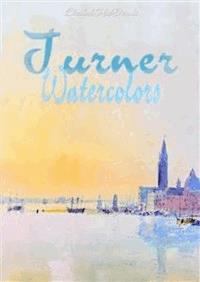
"My job is to draw what I see, not what I know." - J. M. W. Turner Joseph Mallord William Turner was English artist, one of the greatest and most imaginative painters who put on a pedestal landscape painting. Although renowned for his oils, he is as well one of the masters of British watercolor landscape painting. Having been skilled academically, Turner seemed to spend the rest of his life developing an ever more loose style. He uncompromisingly studied nature and light. He had a extraordinary production of drawings and paintings; upon his death, he left nearly 30,000 pieces of his art work. He is usually known as "the painter of light" and his work is considered as a Romantic prelude to Impressionism.
Das E-Book können Sie in Legimi-Apps oder einer beliebigen App lesen, die das folgende Format unterstützen:
Veröffentlichungsjahr: 2015
Ähnliche


















Turner: Watercolors
ByElizabeth MacDonald
First Edition
Copyright © 2015 byElizabeth MacDonald
*****
Turner: Watercolors
*****
Foreword
Joseph Mallord William Turner was English painter, one of the greatest and most original of all landscape painters. His family called him Bill or William, but he is now invariably known by his initials. Precociously gifted, he became a student at the Royal Academy Schools in 1789 and first exhibited a watercolor at the Academy in 1790, when he was only 15. He studied at the Academy for four years, and during this time also had lessons from Thomas Malton, a topographical watercolorist who specialized in neat and detailed town views. From 1791 Turner began making regular sketching tours, producing many drawings of picturesque views and architectural subjects that he later sold to engravers or worked up into watercolors. At this time his work was more polished but less inventive than that of his friend Girtin. Initially he painted only in watercolor, but in 1796 he first exhibited oil at the Academy, Fishermen at Sea (Tate Gallery, London), a work showing his admiration for 17th-century Dutch marine painting. Only three years later, in 1799, he was elected an Associate of the Royal Academy at the youngest permitted age (24), and in 1802 he became the youngest ever full Academician. His career flourished in terms of money as well as prestige, for he was hardworking, a good businessman, and economical by nature (he lived rather squalidly, but he was not miserly or ungenerous, as is sometimes maintained).
The Dutch influence in Turner's work soon gave way to that of Claude and Wilson, but already in the early 1800s it was recognized that he was introducing a new and revolutionary approach to landscape, his painting becoming increasingly Romantic in its dramatic subject-matter and sense of movement, as in the powerful Shipwreck (Tate Gallery, London, 1805). During these years, however, he continued exhibiting pictures in a more conventional manner and still worked for engravers (his most ambitious engraving project was his Liber Studiorum, conceived in emulation of Claude's Liber Veritatis and intended to show the range of his own work; between 1807 and 1819 he issued 71 of a projected 100 plates).
Turner made his first journey to the Continent in 1802, during a temporary peace in the war with France, visiting Paris like so many other artists to see pictures looted by Napoleon, which were then on exhibition. From Paris he traveled on to Switzerland. The resumption of war made Continental travel impossible for more than a decade, and Turner did not go abroad again until 1817, when he visited Belgium, Holland and the Rhine. He first visited Italy two years later, and from then until 1845 made fairly regular journeys abroad (including three more to Italy, the last in 1840). Unlike his contemporary Constable, who concentrated on painting the places he knew best, Turner was inspired to a great extent by what he saw on his travels (he lived in London all his life, but the city appears fairly infrequently in his paintings). The mountains and lakes of Switzerland and the haunting beauty of Venice, in particular, provided him with an enduring fond of subjects. On his journeys he was in the habit of making rapid pencil jottings, which he used later as reminders for imaginative compositions. He was inspired by history (especially ancient history) and literature as well as nature. Many of the paintings he exhibited at the Royal Academy were accompanied by verses printed in the catalogue, and from 1800 he added lines he had composed himself.
From the 1830s Turner's painting became increasingly free, with detail subordinated to general effects of color and light. His work was often attacked by critics, one of his most celebrated pictures - Snow Storm: Steam-Boat off a Harbour's Mouth (Tate Gallery, London, 1842) - being dismissed as 'soapsuds and whitewash'. However, he also had many admirers, including some who regarded him as the outstanding genius of the day. His most important patron was the third Earl of Egremont, who was unusual among collectors of the time in buying contemporary British art (sculpture as well as painting) on a large scale. Turner had a studio at Petworth, Egremont's country house in Sussex, and several of his paintings are still to be seen there. Turner's other great champion was the young Ruskin, who discovered his work in the 1830s and wrote eloquently of him in the first volume of Modern Painters, published in 1843. By this time Turner's brushwork had become breathtakingly free and some of his compositions were almost abstract, the forms dissolved in a haze of light and color: 'He seems to paint with tinted steam, so evanescent and so airy', wrote Constable. Turner's originality lay not only in such handling of color and light - in which he anticipated Impressionism - but also in his use of the power, beauty, and mystery of nature to express deep human concerns. For example, The Fighting Temeraire (National Gallery, London, 1839), showing a ship that had fought at Trafalgar being towed to the breaker's yard, is a poignant elegy for a passing era.
Turner always led a fairly solitary existence and late in life he became more and more of an outsider, sometimes calling himself Mr Booth (assuming the name of his mistress Sophia Booth). After his death, Ruskin destroyed many erotic drawings that he found among his works, thinking that they tainted his hero's memory. In his will Turner left plans for disposing of his considerable fortune (he wanted to found an almshouse for 'poor and decayed male artists') and for the creation of a special gallery at the National Gallery to display certain of his paintings (he had a huge stock of his work, including not only pictures that had never been sold, but also favorite paintings that he had bought back at auction). Long-forgotten relatives contested the will and won the money in 1856; at the same time the Court of Chancery awarded all the works remaining in his possession at his death to the National Gallery - about 300 oils and 19,000 drawings and watercolors.
Turner was considered a controversial figure in his day, but is now regarded as the artist who elevated landscape painting to an eminence rivalling history painting. Although renowned for his oil paintings, Turner is also one of the greatest masters of British watercolor landscape painting. He is commonly known as "the painter of light" and his work is regarded as a Romantic preface to Impressionism.




