


9,99 €
Mehr erfahren.
- Herausgeber: 50Minutes.com
- Kategorie: Religion und Spiritualität
- Serie: History
- Sprache: Englisch
Keen to learn but short on time? Get to grips with the life and legacy of Tutankhamun in next to no time with this concise guide.
50Minutes.com provides a clear and engaging analysis of the life and legacy of Tutankhamun, Egypt’s boy pharaoh. In spite of a brief reign that was cut short when the young sovereign died at the age of just 20, Tutankhamun is now one of the most famous pharaohs of all time and has captivated the popular imagination. His enduring impact stems from the discovery of his tomb and the opulent treasure within by the Egyptologist Howard Carter in 1922, as well as from the mysterious curse that allegedly resulted in the untimely deaths of several members of the expedition. Modern scientific techniques have allowed researchers to piece together information about his life and death, giving us a better understanding than ever before of this ancient Egyptian sovereign.
In just 50 minutes you will:
• Learn about Tutankhamun’s main actions during his brief reign and their impact
• Find out about the discovery of his tomb in 1922 and the information it has given us about ancient Egypt
• Understand the mysterious deaths linked to Tutankhamun’s tomb and the science behind them
ABOUT 50MINUTES.COM | History & Culture
50MINUTES.COM will enable you to quickly understand the main events, people, conflicts and discoveries from world history that have shaped the world we live in today. Our publications present the key information on a wide variety of topics in a quick and accessible way that is guaranteed to save you time on your journey of discovery.
Das E-Book können Sie in Legimi-Apps oder einer beliebigen App lesen, die das folgende Format unterstützen:
Seitenzahl: 33
Veröffentlichungsjahr: 2018
Ähnliche
















Tutankhamun
Key information
Born: between 1346 and 1332 BCE in Akhetaton, Egypt.Died: between 1325 and 1313 BCE in Thebes, Egypt.Main achievements: the restoration of polytheism in Egypt after the monotheistic regime of his father.Introduction
Tutankhamun is one of the best-known pharaohs of ancient Egypt, and for good reason: when his tomb was discovered by the British archaeologist Howard Carter (1874-1939) on 4 November 1922, it was still intact and perfectly preserved after almost 3000 years. The priceless treasure within inspired both awe and fear due to the legend that Tutankhamun’s tomb is cursed. Indeed, several members of the team studying the tomb died suddenly and in unexplained circumstances after it was discovered.
Because of the treasure that filled his tomb, the Tutankhamun of the popular imagination is a majestic pharaoh, but the realities of this young sovereign’s life remain virtually unknown. In this guide, we will explore the struggles that marked his life, the way he lived, the cause of his death and the true story behind the mythical curse in order to gain a real insight into the life of this mysterious pharaoh.
Biography
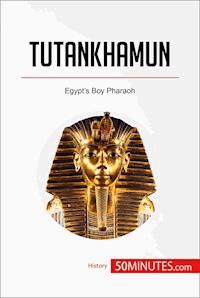
Gilded wooden bust of Tutankhamun discovered by Howard Carter in 1922.
Royal birth and childhood
Prince Tutankhamun was born in the royal palace in Tell el-Amarna, Upper Egypt, between 1346 and 1332 BCE. He was the son of the pharaoh Akhenaton (date of birth unknown, date of death c. 1338/37 BCE) and an anonymous woman whose mummy is known as the Younger Lady to differentiate her from the bodies of a very young boy and an older woman which were found in her tomb. The Younger Lady is probably an unknown sister of Akhenaton, or his cousin and principal wife Nefertiti (c. 1370-c. 1333 BCE).
Consanguineous marriage in ancient Egypt
Carrying out genetic identification on mummies from this period is often difficult because of the prevalence of consanguineous marriage (marriage between blood relatives) during the 18th Dynasty in order to avoid diluting the royal bloodline.
Tutankhamun was born between the 12th and the 14th year of his father’s reign and had an uneventful childhood, either in the royal palace in Tell el-Amarna with his parents or in the cities of Thebes and Memphis, where he was raised by his wet nurse or by tutors. However, few documents about Tutankhamun’s life prior to his accession to the throne have survived, so we do not have many exact details about the young prince’s childhood.
Accession to the throne
Tutankhamun came to the throne around 1340 BCE, after the short reign of his elder sister Meritaten (c. 1350-c. 1336/35 BCE), although some believe that the queen at this time was Nefertiti. In any case, she only ruled over Egypt for a few years. When she died (it is unclear whether she died of natural causes or was murdered), Tutankhamun acceded to the throne, although he was only six or eight years old, to become the 11th pharaoh of the 18th Dynasty of Egypt (mid-16th century BCE-late 13th century BCE). His reign marked the high-water mark of this ancient civilisation and the beginning of the New Kingdom of Egypt (1500-1000 BCE).
From Tutankhaten to Tutankhamun
When Tutankhamun was born, he was known as Tutankhaten, which means “the living image of Aten” in homage to the only god his father worshiped. When the young prince came to the throne, the god Amun and his priests were restored to their preeminent place after the reign of Akhenaton and his monotheistic worship of Aten. He also changed his name to Tutankhamun, meaning “the living image of Amun”. In doing so, he mirrored his father, who had been known as Amenhotep IV before changing his name to Akhenaton.




