


30,99 €
Mehr erfahren.
- Herausgeber: John Wiley & Sons
- Kategorie: Geisteswissenschaft
- Sprache: Englisch
Awarded 2013 PROSE Honorable Mention in Media & Cultural Studies
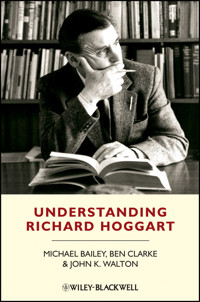
With the resurgent interest in his work today, this is a timely reevaluation of this foundational figure in Cultural Studies, a critical but friendly review of both Hoggart's work and reputation.
- Re-examines the reputation of one of the ‘inventors’ of Cultural Studies
- Uses new archival sources to critically evaluate Hoggart's contribution and influence, set his work in context, and determine its current relevance
- Addresses detractors and their positions of Hoggart, delineating long-term ideological battles within academia
- Brings cultural studies, literary criticism, and social history to bear on this figure whose interests spread across disciplines, to create a text which blends many threads into a coherent whole
Sie lesen das E-Book in den Legimi-Apps auf:
Seitenzahl: 438
Veröffentlichungsjahr: 2011
Ähnliche




















Contents
Cover
Series Page
Title Page
Copyright
Dedication
Foreword
Acknowledgements
Introduction
Chapter 1: Literature, Language, and Politics
The Uses of Literature
Hoggart in Context: Post-war Britain and the Leavises
The Language of ‘Theory’
The Common Reader
Democratic Criticism
Chapter 2: The Politics of Autobiography
Cultural Studies and Autobiography
Generic Conventions
Representing Working-Class Lives
Situating the Critic
Chapter 3: Working-Class Intellectuals and Democratic Scholarship
Scholarship Boy
University Adult Education and the Varieties of Learning
The Grammar School and Working-Class Education
‘Working-Class Intellectuals’ and the ‘Great Tradition’
Chapter 4: Cultural Studies and the Uses of History
History and Cultural Studies
Locating Richard Hoggart
Richard Hoggart and the Emergence of Social History
Historians and Richard Hoggart
‘Nostalgia’, ‘Romanticism’, and ‘Sentimentality’: Recuperating Hoggart
Chapter 5: Media, Culture, and Society
The BBC and Society
The Emergence of Commercial Broadcasting and Pilkington
Diversity, Authority, and Quality
The Limits and Possibilities of Broadcasting in the Twenty-First Century
Chapter 6: Policy, Pedagogy, and Intellectuals
An International Servant
The Idea of University Adult Education
The Role of the Intellectual
Index
Come, my friends, ‘Tis not too late to seek a newer world. Push off, and sitting well in order smite The sounding furrows; for my purpose holds To sail beyond the sunset, and the baths Of all the western stars, until I die. It may be that the gulfs will wash us down: It may be we shall touch the Happy Isles, And see the great Achilles, whom we knew. Though much is taken, much abides; and though We are not now that strength which in old days Moved earth and heaven; that which we are, we are; One equal temper of heroic hearts, Made weak by time and fate, but strong in will To strive, to seek, to find, and not to yield.
(Alfred, Lord Tennyson, Ulysses, 1833)
This edition first published 2012
© 2012 Blackwell Publishing Ltd
Blackwell Publishing was acquired by John Wiley & Sons in February 2007.
Blackwell's publishing program has been merged with Wiley's global Scientific,
Technical, and Medical business to form Wiley-Blackwell.
Registered Office
John Wiley & Sons Ltd, The Atrium, Southern Gate, Chichester, West Sussex, PO19 8SQ, UK
Editorial Offices
350 Main Street, Malden, MA 02148-5020, USA
9600 Garsington Road, Oxford, OX4 2DQ, UK
The Atrium, Southern Gate, Chichester, West Sussex, PO19 8SQ, UK
For details of our global editorial offices, for customer services, and for information about how to apply for permission to reuse the copyright material in this book please see our website at www.wiley.com/wiley-blackwell.
The right of Michael Bailey, Ben Clarke, and John K. Walton to be identified as the authors of this work has been asserted in accordance with the UK Copyright, Designs and Patents Act 1988.
All rights reserved. No part of this publication may be reproduced, stored in a retrieval system, or transmitted, in any form or by any means, electronic, mechanical, photocopying, recording or otherwise, except as permitted by the UK Copyright, Designs and Patents Act 1988, without the prior permission of the publisher.
Wiley also publishes its books in a variety of electronic formats. Some content that appears in print may not be available in electronic books.
Designations used by companies to distinguish their products are often claimed as trademarks. All brand names and product names used in this book are trade names, service marks, trademarks or registered trademarks of their respective owners. The publisher is not associated with any product or vendor mentioned in this book. This publication is designed to provide accurate and authoritative information in regard to the subject matter covered. It is sold on the understanding that the publisher is not engaged in rendering professional services. If professional advice or other expert assistance is required, the services of a competent professional should be sought.
Library of Congress Cataloging-in-Publication data is available for this title.
ISBN (HB) 9781405193023
ISBN (PB) 9781405194945
A catalogue record for this book is available from the British Library.
This book is published in the following electronic formats: ePDF 9781444346541; Wiley Online Library 9781444346572; ePub 9781444346558; MobiPocket 9781444346565
For all those who still value the idea of public cultureand democratic criticism and aspire to a fuller intellectualand cultural way of life
Foreword
I am glad to be able to write a foreword to this illuminating book. Its authors rightly insist on the continuing relevance of Richard's work, which has covered aspects of life that have always interested me. He used the phrase ‘aspects of working class life’ as part of the title of The Uses of Literacy, published in 1957, and it was that book which first brought us together.
It would be a cliché to say that since then our paths have often crossed. Particular aspects of our two lives have often differed, and our paths have sometimes diverged, but we have had common experiences which undoubtedly turn us into contemporaries. The title of another book of Richard's, a collection of essays, Speaking to Each Other, would be an appropriate title for any account of our long relationship, provided that it incorporated the notion of speaking to others too. We have both had a strong sense of the public, and we do not merely want to observe it.
Three years younger than Richard, I was Professor of Modern History at Leeds, his home city and his first university, in 1956 when he was writing The Uses of Literacy while he was an extramural lecturer in Hull. We were fellow Yorkshiremen, although he had been brought up in surroundings different from mine. Keighley, a small town, contrasted with Hunslet, a distinctive part of a large city, which as Richard showed, had internal contrasts of its own.
It was not propinquity that brought us together, however, but extramural education. I was then deputy president of the Workers' Education Association. It was because of that link that I enjoyed discussing Richard's forthcoming book with him in detail and in depth. His first manuscript was too long, and he faced problems of copyright with many of his quotations. I was equally excited by his themes and his insights. We were on the same wavelength.
That was a fitting metaphor for both of us. In the year that Richard published The Uses of Literacy I started work on my history of broadcasting. And there were to be further conjunctions in lives that were to be far longer than we expected. Thus, when he went to the University of Birmingham as founding director of the Centre for Contemporary Cultural Studies in 1964 he was moving to a city which, curiously, I knew far better than Leeds. I had published the second volume of The History of Birmingham in 1952. It stopped in 1938, and in 1962 Birmingham had already changed far more than Leeds since 1938. It has been difficult to keep up with more fundamental changes. Richard's interests in cultural studies were not local, however, but general. So were mine! I was a strong supporter of the Centre while Richard was there and after he left it in 1970. That too changed.
Ten years earlier Richard had been the most articulate member of the Pilkington Committee on Broadcasting between 1960 and 1962. This was the most uneasy period in my relationship with him. I was not happy either when he became Assistant Director-General of UNESCO in 1971. Nor was he happy while working there. There was much ‘speaking to each other’ around this time, and with the help of the Leverhulme Trust I gave him temporary refuge in Sussex University when he left Paris in 1975. A new story opened up for him a year later when he became Warden of Goldsmiths College, London, a story which I know little about.
As Richard grew older he became more and more – and perhaps too – autobiographical, and it seems fitting again that the second chapter in this book should be called the politics of autobiography and should end with a section called ‘situating the critic’. I welcome the renaissance in critical studies of Richard's work which straddle disciplines and consider his influence on others and his legacy.
It was in a Yorkshire city with a history very different from that of Leeds, Sheffield, that a landmark conference called The Uses of Richard Hoggart was held in 2006 in a university with which he was never directly associated. This book continues the work of the conference, but it also looks to the future. I think that Richard would approve of its subtitle A Pedagogy of Hope, for there can be no acceptable future without hope. This is a book which avoids nostalgia and which will appeal, I am sure, not only to his few surviving contemporaries but to a readership of people of all ages situated, if not always firmly, in their own times.
Asa Briggs Lewes, February 2011
Acknowledgements
The authors would like to express their gratitude to those individuals who helped with the preparation of this book. First of all, our thanks to colleagues for many different kinds of encouragement and help: Peter Bailey, Tony Bennett, Franco Bianchini, Lord Asa Briggs, Ros Brunt, Matthew Caygill, Rinella Cere, Claire Chambers, Sue Chaplin, Stefan Collini, John Corner, Nick Cox, Chas Critcher, James Curran, Mary Eagleton, Des Freedman, Juan Gracia, Simon Gunn, Audrey Guinchard, Ilan Gur-Ze'ev, Sir Martin Harris, Sylvia Harvey, Tom Herron, Dave Hesmondhalgh, Mike Kenny, Martin Jordan, Andrew Lawson, Jonathan Long, Phil Long, Stephen Mosley, Sean Nixon, Tom O'Malley, Sue Owen, Chris Pawling, Julian Petley, Stuart Rawnsley, Ruth Robbins, Dave Russell, Steve Sayers, Sheila Scraton, Jeremy Seabrook, Heather Shore, Laurajane Smith, Gareth Stanton, Lisa Taylor, Dorothy Thompson, Paul Thompson, Neil Washbourne, and Susan Watkins. We are grateful to Jacky Hodgson, Head of Special Collections, the University of Sheffield Library, for making available all the relevant documents within the Richard Hoggart archive. And we would also like to thank Jayne Fargnoli and Felicity Marsh at Wiley-Blackwell for their invaluable support and patience. Last, but by no means least, we wish to express our love and appreciation to Fran, Abe, Thomas, Helena, Hugh, Gillian, Christine, and Lydia.
Introduction
Since the publication of The Uses of Literacy in 1957, Richard Hoggart has been one of Britain's foremost public intellectuals and cultural commentators. A literary critic by training, his work has repeatedly traversed entrenched disciplinary and social boundaries, addressing a wide range of subject areas, including literature, popular culture and the development of public policy. His reputation as both a critical and practical intellectual reflects his tireless work inside and outside the academy throughout his career. He was an extramural lecturer at the University of Hull (1946–1959), Senior Lecturer in English at the University of Leicester (1959–1962), Professor of English and founding Director for the Centre for Contemporary Cultural Studies at the University of Birmingham (1964–1973), Assistant Director-General of UNESCO (1971–1975), and Warden of Goldsmiths College, University of London (1976–1984). He has also been a key member of numerous public bodies and committees, including the Albemarle Committee on Youth Services (1958–1960), the Pilkington Committee on Broadcasting (1960–1962), the Arts Council of Great Britain (1976–1981), the Royal Shakespeare Theatre (1962–1988), the Advisory Council for Adult and Continuing Education (1977–1983), and the Broadcasting Research Unit (1981–1991). During this time he has published over thirty books and contributed to numerous policy documents, the sum of which represents an extensive and consistent engagement with normative questions and public discourses that continue to inform contemporary debates on subjects including culture, literacy, educated citizenship, and social democracy.
There is currently no critical introduction to Hoggart's work that does justice to its complexity and diversity, to the range of his interests, scholarship, and public service. Understanding Richard Hoggart addresses this need. Its authors' expertise in literature, history, and cultural sociology have enabled them to work across disciplinary boundaries and to explore the network of principles, ideas, and analytical methods that underpins Hoggart's oeuvre from his first book, a critical study of Auden, to his autobiographical later writing and engagement with public bodies and institutions. The text is intended to be more than a bloodless introduction or biographical study, content to provide a kind of annotated catalogue of his work. As well as critically evaluating Hoggart's work, it seeks to refresh and renew his methods in relation to contemporary issues, to consider the ways in which his ideas might be used to intervene in current debates on subjects including class and culture, education and the arts. It concentrates on insights and methodologies that provide a foundation for what might be termed ‘Hoggartian’ criticism, rather than attempting a comprehensive survey of his life and writing. It does not suggest a simple ‘return’ to his conclusions, but explores the ways in which his strategies and concerns might resonate within new social and cultural contexts. The recognition that Hoggart produced his work under specific conditions, and that it reflects and responds to particular narratives and pressures, demands an analysis of the personal and historical positions from which he writes.
Born in Leeds in 1918, Herbert Richard Hoggart was orphaned at the age of eight and subsequently raised as an only child by five adult relatives (his grandmother, two aunts, an uncle, and an older cousin) in a terraced back-to-back in Hunslet. This was not an ordinary terraced house: because back-to-backs had no back door, no through ventilation and limited space they were a stigmatized housing type in most of industrial England, although they remained common in Leeds in the late twentieth century, the last ones having been built as recently as Hoggart's own childhood.1 Once a thriving working-class neighbourhood located just south of the city centre, the local habitation of Hunslet was to profoundly influence Hoggart's later interest in working-class cultural habits, social rituals, and changing attitudes. His childhood was also to shape his enduring attachment to working-class cultural ideals and social practices and his emphasis on communal values and neighbourliness. Like the lives of many working-class people who grew up in the urban north of England during the interwar period, Hoggart's childhood was characterized by economic hardship and ‘having to make do’, an austere way of life that often depended on unofficial acts of charity, goodwill, and fellowship. As Hoggart himself has noted more than once in his writings, ‘you had to stick together’. To fail to help one's neighbours in times of need could result in their suffering and public humiliation, which could, in turn, all too easily befall one's own family. Hence Hoggart's oft-cited admiration for the friendly society tradition, a nineteenth-century, working-class mutual insurance institution built upon common need, public trust, mutual honesty, and social responsibility, in short, an individual and collective willingness to ‘improve each other's lot’.2
Figure 1 ‘My Grandma & Grandad (Hoggart) in front of their terrace house (before I arrived at Newport St.)’. N.d. Photograph courtesy of the University of Sheffield Library
Hoggart's childhood also explains his commitment to ‘the sense of family attachment’. His own family history was complex, as he and his siblings were orphaned at an early age and sent to live with different relatives. Despite the emotional upheaval and the isolation from his older brother and younger sister, Hoggart recalls the relief he felt when it was decided that he and his siblings would be cared for by the extended family rather than being sent to an orphanage: ‘We were “family” and we stayed family.’3 Not surprisingly, this sense of ‘belonging to somebody’ resonates strongly in Hoggart's writings. Time and again, we hear him eulogizing the family as a place in which we learn to love others, and not just to love ourselves. A family ‘can give us unique access to our own emotions, can constantly open the heart; if we will let it’.4 In other words, like neighbourliness, family life teaches us to be empathetic; in so doing, it broadens and enriches our social being and interpersonal connectedness. The allegiance to family members is not simply a matter of rational self-interest and need not even be reciprocal. This was lived experience that Hoggart took for granted, but it was to be challenged in the 1970s by academic sociologists who based an interpretation of family ‘structure’ in the Industrial Revolution on the assumption that industrialization brought a transition from ‘normative’ to ‘calculative’ modes of working-class behaviour, only to be convincingly contradicted in their turn by the pioneer oral historian Elizabeth Roberts, whose research vindicated Hoggart's ‘inherited’ knowledge.5 Family life, as Hoggart understood, thus provides a basis for a form of social responsibility that extends beyond contractual rights and obligations to a sense of shared moral and affective commitments, of feeling ‘members one of another’.6
If ‘hearth and home’ was instrumental in shaping Hoggart's deep-rooted sense of communitas, the world of ‘education and learning’ was to prove equally important in terms of his future commitment to critical discrimination in social and cultural matters. Despite failing the eleven plus examination he was educated at the local grammar school, thanks to a headmaster who thought Hoggart had ‘talent’ and insisted the Local Education Authority (LEA) admit him to Cockburn High School. Financial assistance from the local Board of Guardians provided him with the opportunity to continue studying for his Higher School Certificate, a prerequisite qualification for entrance into university. Further assistance in the form of an LEA scholarship enabled him to take up a place in the English Department at Leeds University, where he was taught by Bonamy Dobrée.
Under the tutelage of Dobrée, Hoggart extended and refined his literary and analytical skills. Dobrée also introduced Hoggart to different forms of social conduct and manners, many of which would have been unfamiliar to someone from a working-class background. The combination of cultural development and changing social habitus was to fill Hoggart with a deep ambivalence and uncertainty. On the one hand, education (meant here in the broadest possible sense) provided him with unimagined opportunities for learning and upward social mobility. On the other, education exacerbated his self-consciousness about class, not least his self-confessed obsession with his own cultural proficiency compared to that of his peers, many of whom were solidly middle class.
The experience of being betwixt and between two social classes, the consequent sense of loss and self-doubt, left Hoggart feeling extremely ‘anxious’ and ‘uprooted’. This sense of unease and dissatisfaction was present throughout his childhood (a result of being ‘marked out’ among his peers from an early age), but it was accentuated as he became progressively detached from the vitality of his working-class past. Not unlike one of Matthew Arnold's ‘aliens’, he was no longer one of ‘us’, but nor did he feel himself to be one of ‘them’, something he was to reflect upon when writing about his experience of being a ‘scholarship boy’:
Almost every working-class boy [sic, but expressive of contemporary assumptions about gender] who goes through the process of further education by scholarships finds himself chafing against his environment during adolescence. He is at the friction-point of two cultures . . . As childhood gives way to adolescence and that to manhood this kind of boy tends to be progressively cut off from the ordinary life of his group . . . He has left his class, at least in spirit, by being in certain ways unusual; and he is still unusual in another class, too tense and over-wound . . . He is sad and also solitary; he finds it difficult to establish contact even with others in his condition.7
This deep-rooted sense of alienation led Hoggart to transcend some of the ideas, customs, and habits both of the class to which he nominally belonged as a child, and the professional class he was to later join as an adult; he chose instead, adopting Arnold's example, to be led ‘by a general humane spirit, by the love of human perfection’, to perfect one's ‘best self’ not only for oneself, but also for the greater good. This also explains Hoggart's refusal to follow any form of Marxism, despite his obvious socialist leanings: his version of socialism was ethical, rather than materialist, driven by a sense of fairness and shared entitlement, perhaps a secularized form of Christian Socialism. Though driven by a profound sense of belonging to and a responsibility for others, Hoggart was nevertheless suspicious of communitarianism, which he always thought ‘levelling’ and ‘centralizing’.
After completing his undergraduate studies (and a rushed MA thesis on Jonathan Swift) Hoggart embarked on five years active service in wartime North Africa and Italy. Towards the end of the war he became involved in adult education, which also served as an opportunity to rekindle his three main intellectual interests: politics, documentary, and literature. His initial exposure to the world of adult learning was through the Army Education Corps and the Army Bureau of Current Affairs. It was here that Hoggart first witnessed the liberating experience of uneducated adults giving meaning to their lives in and through the pursuit of knowledge and understanding.8 As it was for many of his contemporaries who had a strong moral sense of social purpose (e.g. Raymond Williams, E.P. Thompson, Roy Shaw, S.G. Raybould, Asa Briggs, to name but a few), the ‘Great Tradition’ was as much ‘a calling’ as it was a career. This was especially so in the late 1940s when non-vocational education for adult learners, especially returning servicemen, was widely promoted as an essential part of the post-war reconstruction effort to foster an ‘educated democracy’, a political project that was evident in the Beveridge Report (1942), Butler's Education Act (1944), and the concomitant growth in university extramural departments up and down the country, including the University College of Hull, where Hoggart worked as an extra-mural lecturer from 1946–1959.
Not surprisingly, much of Hoggart's writing during the immediate post-war period was for adult education journals, such as The Tutor's Bulletin, Adult Education, and The Highway. Many of the articles were simply about ‘aims’, ‘first principles’, and ‘methods of teaching’.9 However, literature (poetry in particular) remained his ‘main love’.10 Apart from the writings of William Shakespeare, William Blake, Mathew Arnold, Thomas Hardy, Henry James, Herbert Spencer, George Orwell, Ezra Pound, D.H. Lawrence, Graham Greene, and even the supposedly more ‘middlebrow J.B. Priestley,11 Hoggart was greatly influenced by a handful of living poets, among them T.S. Eliot, Dylan Thomas, Cecil Day Lewis, Stephen Spender, and Louis MacNeice. Foremost amongst these was W.H. Auden, whose work Hoggart had first encountered in the 1930s. Although Auden's reputation was waning by the late 1940s, his poetry continued to captivate Hoggart, who began writing a study of his work. The resulting book was published by Chatto & Windus in 1951.
Auden: An Introductory Essay was not only Hoggart's first monograph but also the first book-length analysis of the poet's work. It marked the beginning of Hoggart's career as a public intellectual. Following some good reviews in literary journals and newspapers, Hoggart started to receive invitations to contribute to edited publications and to speak at conferences. He was even asked to broadcast a programme about Auden for the BBC. Despite the success of this first substantial venture into literary criticism, or what F.R. Leavis once referred to as the ‘common pursuit of true judgement', Hoggart's approach to his subject was to change radically over the next few years. Partly as a result of his own intellectual restlessness and isolation from the mainstream but also because of his experience of teaching adult learners who readily challenged received wisdoms and pedagogic conventions, Hoggart began to rethink the importance of literature (or, more precisely, literacy), particularly in relation to the rapidly changing milieu of popular culture (or what he was to famously call ‘the newer mass art') in what is undoubtedly his most celebrated and important publication, The Uses of Literacy.
Originally entitled The Abuses of Literacy, the book started out as a series of related essays and lectures about changes in working-class culture, especially in relation to publications aimed at a ‘mass' market (e.g. newspapers, magazines, sex and violence paperbacks, etc). Unlike many of his academic colleagues, who dismissed all forms of popular literature and art as vulgar and corrupting, Hoggart argued that it was important for literary critics and educationalists to base their judgements about the likely effects of such cultural forms on a more detailed understanding about ‘what people might make of that material'.12 Even those colleagues whom Hoggart admired, and who had written extensively on popular art (the Leavises for example), failed to understand the changing relationship between literature and society, because of their elitism and misplaced nostalgia for a mythical ‘organic' pre-industrial culture.
Along with the advances that, despite the widespread industrial depression and unemployment of the 1930s, had undoubtedly enhanced the overall quality of working-class life during the first half of the twentieth century – improved living and working conditions, better health provision, and greater educational opportunities – Hoggart saw a simultaneous undermining of traditional working-class attitudes and social practices, a worsening of a certain valuable ‘way of life' that genuinely concerned him. He much preferred what he famously referred to as an urban culture ‘of the people' to the ‘culturally classless society' that he describes as emerging from the 1940s onwards. Notwithstanding these concerns, Hoggart did not lament the complete decline or disappearance of an older working class, consistently maintaining that working-class people ‘still possess some of the older and inner resistances'. In The Uses of Literacy he insisted
My argument is not that there was . . . an urban culture still very much ‘of the people' and that now there is only a mass urban culture. It is rather that the appeals made by the mass publicists are for a great number of reasons made more insistently, effectively, and in a more comprehensive and centralized form today than they were earlier; that we are moving towards the creation of a mass culture; that the remnants of what was at least in parts an urban culture ‘of the people' are being destroyed; and that the new mass culture is in some ways less healthy than the often crude culture it is replacing.13
An effective response to this process demanded the development of a set of analytical tools that would enable critics to interpret new technologies, media, and forms of social organization, and Hoggart argued that ‘the methods of literary criticism and analysis' ought to be made ‘relevant to the better understanding of all levels of writing and much else in popular culture, and of the way people responded to them'. His objective was not merely to identify or even explain contemporary cultural practices, though, but to discriminate between them, to distinguish the ‘healthy' and ‘less healthy', and his work upheld the Arnoldian belief that people ought to have access to the ‘best'.14The Uses of Literacy was not the clarion call for cultural populism (much less relativism) that some of his critics (or indeed supporters) would have us believe. Nor was it a nostalgic retreat to an imagined golden age. Rather, it was part of an emerging educational argument that popular cultural forms could be understood both as a lived experience and as texts that could be analysed and evaluated using literary critical skills, an argument that resulted in the eventual formation and subsequent development of cultural studies as an academic discipline.
After a brief spell at Leicester University, Hoggart was offered a chair at the University of Birmingham. It was here that he established the Centre for Contemporary Cultural Studies (CCCS) in 1964, an interdisciplinary postgraduate research centre that sought to synthesize literary studies with sociological ideas and analytical methods. Though Hoggart's personal instinct was to teach students a literary approach to understanding popular cultural texts (written and visual) the Centre soon established a reputation as a hotbed for critical theory, sustaining active, sometimes volatile, debates on Marxism, feminism, post-colonialism, and other politically engaged methods of analysis. The work of Stuart Hall was exemplary in this respect, and though he and Hoggart's different approaches to popular culture complemented one another, and it was Hoggart who had recruited Hall, the latter's influence on the Centre was to take it in a very different direction to that originally envisaged by Hoggart, who, by the 1970s, had in any case become increasingly occupied with cultural policy, administration, and direct engagement in the wider public sphere. This transition was furthered by Hoggart's eventual departure from the Centre and the resignation of his Birmingham chair in 1970 to enable him to take up the post of Assistant Director-General of UNESCO, an appointment that was to remove Hoggart from the academy for five years.
Though officially retired from academic and public life for over a quarter of a century (his final academic post was as Warden of Goldsmiths College which he left in 1984) Hoggart has continued to write and publish from his home in Farnham, Surrey. During this time he has written several books, including a three-volume autobiography (collectively entitled Life and Times), which has been widely celebrated as a rich account of English life in the twentieth century. In it, he discusses the particular value and functions of the arts, the cultural expression of ‘Englishness', and the ideas and aspirations of his generation, who witnessed unprecedented politico-economic turmoil and socio-cultural change. The three volumes have established Hoggart's reputation as an exceptional autobiographer and social chronicler who uses his own life to analyse the experienced complexity of wide-ranging processes of cultural change. Similarly, though increasingly preoccupied with the uncertainties of old age and thoughts of death, his most recent publications can be read as a critical commentary on the condition of England and a call to keep ‘going on going on', with ‘hope', with ‘love' and with ‘charity'.15
Hoggart's early influence waned with the arrival of continental critical theory in the late 1960s; just as Hoggart and his contemporaries had reacted against the elitism of their forbearers, so Hoggart's successors reacted against his analytical methods, producing texts that were more theoretical and politically orientated. However, a new generation of readers is beginning to reappraise his work, taking inspiration from older colleagues who have remained committed to the kind of cultural politics he practised and advocated. This reassessment has been strengthened by a revival in ideas commonly associated with liberal humanism and social democracy, which were widely vilified by cultural theorists in the 1970s/1980s as ruling-class ideologies and betrayals of 1960s radicalism.
This renaissance is evident in the flurry of recent and forthcoming academic work that seeks to rethink Hoggart's continuing usefulness. The Uses of Richard Hoggart, a conference hosted by the Department of English Literature at the University of Sheffield, between 3 and 5 April 2006, was instrumental in bringing together scholars from across disciplinary boundaries to explore Hoggart's legacy. It also marked the inauguration of a special collection of Hoggart's papers held by Sheffield University Library, an invaluable resource for anybody wanting to gain new insights into Hoggart's life and work. A number of academics, including the present authors, also organized an international conference at Leeds Metropolitan University, 10–11 July 2009. This in turn lead to a special edition of Thinking Allowed (BBC Radio 4), in which discussants were invited to consider the continuing influence of Hoggart's life and work.
Recent collections of essays include the March 2007 issue of the International Journal of Cultural Studies, Re-reading Richard Hoggart (Cambridge Scholars, 2007); and Richard Hoggart and Cultural Studies (Palgrave, 2008), all of which were edited by Sue Owen, who also organized the Sheffield conference. Forthcoming publications include Richard Hoggart: Culture & Critique (edited by Michael Bailey and Mary Eagleton, Critical, Cultural and Communications Press, 2011) and a special issue of the Chinese journal Differences (edited by Michael Bailey and Huimin Jin, 2011). The recent republication of The Uses of Literacy (Penguin, 2009) is further testament to Hoggart's importance as a seminal cultural commentator. The edition was instigated and introduced by Lynsey Hanley, a lively commentator on contemporary social issues whose upbringing on a post-war Birmingham council estate parallels, in some respects at least, Hoggart's childhood in Hunslet. It demonstrates the continuing importance of his texts for a new generation of writers whose work engages with questions of class, culture, and the arts, and who use personal experience as a critical resource.
Understanding Richard Hoggart makes a wide-ranging contribution to this active, ongoing discussion of Hoggart's work, and draws on the full breadth of its authors' expertise in order to analyse the complexities of his writing and public service. Chapter 1 explores the ways in which Hoggart's commitment to literature and training in literary studies shape his critical practice as a whole. It examines his argument that literature offers particular insights into the experiential density of individual lives and thereby into the broader cultural values that structure them. It also considers his application of techniques developed for the analysis of canonical works to a wide variety of other ‘expressive phenomena', from popular fiction to fashion and etiquette.16 This project demanded a critical response to the work of F.R. and Q.D. Leavis that drew on their concern with the social significance of literature but challenged their elitism and disregard for the experience of ‘mass' audiences. The chapter argues that, in both instances, Hoggart's work practices a democratic politics, founded on the notion that all signifying practices merit careful, critical analysis, even though not all offer the same insights. The same democratic principles underpin his writing on language and his accessible, conspicuously literary style, which constructs his arguments as a series of interventions in open debates rather than final, authoritative statements. The chapter explores the implications of his prose through an analysis of his writing on the language of academic ‘theory'. It argues that Hoggart's style enacts, rather than simply describes, his political commitments, and in so doing demands a new focus on the rhetorical strategies criticism employs, the audience it assumes, and its relation to dominant intellectual and educational structures.
Chapter 2 analyses the critical function of Hoggart's life writing. Hoggart has produced a number of explicitly autobiographical books and essays, including his three-volume Life and Times. His reflections on his own experience are not confined to such texts, though, but permeate his work as a whole and are integral to his cultural analyses. The first part of the chapter examines the way in which Hoggart, like Raymond Williams, uses life writing to question established forms of academic discourse, and, in particular, the notion that legitimate criticism is defined by its detachment, its exclusion of personal commitment. It argues that Hoggart constructs his experience as a critical resource, rather than as an impediment to ‘objective' analysis. This depends on the recognition of autobiography as a genre, rather than a transparent form of truth-telling. Hoggart's writing on his life is characterized by a continual reflection on its own rhetorical strategies and the conventions it both uses and questions. The second half of the chapter considers in particular his relation to a tradition of working-class autobiography, and his insistence on a more complex understanding of the working classes that challenges the image of them as a homogeneous ‘mass'. It also examines his use of life writing to integrate ‘literary' forms of knowledge into social criticism, and to situate himself as the object, as well as the subject, of analysis, as a figure with a particular history. The chapter argues that Hoggart's insistence on the intellectual as an active participant in culture, rather than a detached observer of it, has parallels in other forms of engaged criticism, such as feminism, which similarly challenges the division between the personal and political.
Chapter 3 examines the relationships between Hoggart's career and writings, and ideas about ‘working-class intellectuals' and ‘democratic scholarship'. It discusses the idea of the ‘scholarship boy' and the extent to which Hoggart's career fitted such a model, while pointing out that his experiences kept him at arm's length from the alternative models of the autodidact, the mature student, or the seeker after education for political or trade union goals or for professional advancement. Hoggart encountered adult learners only as a tutor in the university extramural system, which gave him a distinctive personal perspective; and he was overwhelmingly identified with a model of education that prioritized the pursuit of self-awareness by exposure to, and discussion of, the ‘best' literature of the ‘Great Tradition', which in turn helped with the accumulation of ‘moral capital', an important concept. He worried about the narrow instrumentality which grammar school (and other) education often assumed and promoted, and the chapter concludes by emphasizing his enduring commitment to education as a qualitative process, conducted for its own sake, and his principled hostility to policies that reduced it to training and the accumulation of ‘credits'.
In the following chapter we move on to examine Hoggart's relationship with the discipline of history, which might appear to fit in well with aspects of his retrospective, autobiographical, and interdisciplinary frame of mind. In fact, Hoggart's lack of engagement with history, including the developing field of social history, is quite remarkable, and undoubtedly affected the development of cultural studies as a discipline: indeed, a subtitle of this chapter might almost be ‘Why is there so little history in Cultural Studies?' During the formative years of his academic career, with contemporary social and cultural history in their infancy and often associated with aspects of the organized working class that were not congenial to Hoggart (labour and trade union history), his academic contacts with historians were confined to those who shared literary interests and were active in the university adult education movement; and he never acquired a secure grasp of subsequent developments in British history, including the new engagements with gender, ‘race', and the ambiguous legacy of Empire. Some distinguished historians acknowledged the formative influence of The Uses of Literacy, but there was very little traffic otherwise in either direction, including reluctance on the part of historians to use Hoggart's autobiographical writings as historical sources. There was, indeed, a tendency in some quarters to write Hoggart off as a peddler of sentimental nostalgia, and even as almost a misogynist, and the chapter discusses the origins, power, and consequences of such myths. Meanwhile, the potential importance of history to the Centre for Contemporary Cultural Studies was recognized only to be sidelined. There is plenty to discuss on these themes, but the overall conclusions are negative, suggesting missed opportunities.
In Chapter 5 we survey Hoggart's extensive writings on the social importance of broadcasting as a public service and as a primary facilitator of social democracy. In so doing, we explore the part Hoggart played in debating and influencing the recommendations of the Pilkington committee (arguably the defining moment in his career) in the early 1960s (in particular the report's alleged patrician tone of voice, which many attributed to Hoggart at the time); his staunch defence of public service broadcasting against the changing ideological backdrop of the 1980s (by which point Hoggart was a minority voice in his efforts to ensure that democratic broadcasting remained at the forefront of public and academic debate), not least the political meddling of the then Conservative Government in the governance of the BBC and its threats to radically alter the ecology of British broadcasting; his role as chair of the Broadcasting Research Unit (later renamed the Broadcasting Research Institute); the applicability of his literary method of analysis to contemporary debates concerning media literacy; and, finally, the limits to his vision for a common culture and its implications for other social media organizations, community media in particular.
Finally, Chapter 6 concentrates on those aspects of Hoggart's work that have engaged with wider social policy debates. The first part of the chapter looks at his time as an international civil servant at the United Nations Educational, Scientific and Cultural Organization, a phase of Hoggart's career that has received little hitherto attention (indeed the available literature on UNESCO generally is surprisingly thin). Following on from the previous chapter, we focus on the 1970s and the debates concerning global imbalances in media structures and information flows, cultural imperialism, and the call for a New World Information and Communication Order vis-à-vis Hoggart's own writings on the mass media and one-way flow, but also his association of relativism with certain aspects of ‘cultural development'. The second and final part of the chapter is broadly concerned with the idea of adult higher education and the role of the teacher-scholar. In recent years an increasing number of intellectuals have expressed alarm at the rise of the ‘corporate university' and the effects it is having on the world of learning and academic scholarship. Such issues have long been a concern of Hoggart's, ranging from the expansion of higher education and the case for diversity in the 1960s through to the changing role of the teacher in the 1970s, and on to the more recent debates to do with standards, critical literacy, and the narrowing of educational purpose around (what has to be every academic's bête noire presently) vocationalism. The chapter concludes by considering Hoggart's own example as academic-cum-public-intellectual.
It would be encouraging to think that the resurgent positive interest in Richard Hoggart's writings, ideas, and values might mark the beginning of a turning point in attitudes to education and culture. It has been Hoggart's fate to see everything he believed in attacked, set aside, and mocked, as rampant relativism and a revived philistine instrumentality, reinforced by an obsession with spurious measurement, misleading quantification, league tables, and imagined markets at the expense of intellect, empathy, scholarship, and understanding, have complacently ridden roughshod over the humanistic virtues he advocated, even in the universities. At the time of writing, things could hardly be worse. We can but hope that to everything there is a season, that the tide will turn again, and that a new dark age will be held off. But we cannot wait passively for that to happen. The chapters that follow constitute an intervention to promote that desirable outcome.
Notes
1. Maurice W. Beresford, East End, West End: The Face of Leeds During Urbanisation (Leeds: Thoresby Society, 1988).
2. Richard Hoggart, The Uses of Literacy: Aspects of Working Class Life (London: Chatto & Windus, 1957), p. 82.
3. Richard Hoggart, Between Two Worlds: Essays, 1978–1999 (London: Aurum Press, 2001), p. 223.
4. Richard Hoggart, First and Last Things: The Uses of Old Age (London: Aurum Press, 1999), p. 178.
5. M. Anderson, Family Structure in Nineteenth-Century Lancashire (Cambridge: Cambridge University Press, 1971); E. Roberts, A Woman's Place (Oxford: Blackwell, 1984).
6. Richard Hoggart, A Sort of Clowning: Life and Times, Volume II: 1940–59 (London: Chatto & Windus, 1990), p. 78.
7. Hoggart, The Uses of Literacy, pp. 292–303.
8. Hoggart, A Sort of Clowning (London: Chatto & Windus, 1990), pp. 48–147; and see Penny Summerfield, ‘Education and politics in World War 2’, International Review of Social History (1981) 26: 133–58.
9. Hoggart, A Sort of Clowning, p. 126.
10. Richard Hoggart, A Local Habitation: Life And Times, Volume I: 1918–40 (London: Chatto & Windus, 1988), p. 195.
11. On this see John Baxendale, Priestley's England (Manchester: Manchester University Press, 2007).
12. Hoggart, A Sort of Clowning, p. 135.
13. Hoggart, The Uses of Literacy, p. 24.
14. Hoggart, A Sort of Clowning, pp. 129–30.
15. Richard Hoggart, Promises to Keep: Thoughts in Old Age (London: Continuum, 2005), p. 144.
16. Richard Hoggart, ‘Contemporary Cultural Studies: An Approach to the Study of Literature and Society' (Birmingham: University of Birmingham, Centre for Contemporary Cultural Studies, 1969), p. 15.
Chapter 1
Literature, Language, and Politics
As Sue Owen observes, although Richard Hoggart is best known for his analyses of popular culture and his key role in founding the Birmingham Centre for Contemporary Cultural Studies, he ‘began as a literary critic and retained a love of good literature’.1 Many accounts of his work recognize this background, but it has received relatively little sustained attention, and some critics who have explored its implications have represented it primarily as a constraint on his thought which led him to reproduce established cultural hierarchies and prevented him from developing a more complex response to new media. Malcolm Pittock, for example, argues that Hoggart ‘never escaped’ the ‘straitjacket’2 of the Leavises' ideas about art and popular culture, a claim to be examined in more detail. In contrast, this chapter argues that Hoggart's focus on literature is essential to his critical practice and political thought. He insists that both literature and literary criticism offer insights not available from disciplines such as sociology and anthropology, in particular into the experienced density of everyday life. Whilst he consistently emphasizes the importance of canonical texts, his argument that techniques developed for literary analysis can be used to interpret other ‘expressive phenomena’3 provides a foundation for the sympathetic reading of a wide range of previously neglected cultural practices. In addition, his sensitivity to language underpins his analysis of the rhetoric of criticism itself, along with the ways in which it encodes particular ideas about the production and control of knowledge. These are, in the last instance, political issues, and Hoggart's response to them demonstrates his commitment to what he describes as a ‘democratic socialism’ that insists upon ‘fraternity as the ground for equality and of the urge towards liberty’.4
This chapter explores the ways in which Hoggart's concern with literature defines both the objects and methods of his criticism. It is divided into main two sections. The first of these examines Hoggart's argument that the analysis of literature can increase our understanding of the ‘experiential wholeness of life’,5 and the values which structure it. It works outwards from his writing on canonical texts to consider his approach to ‘second- and third-rate work’,6 and thereby popular culture more generally. In order to do this, it locates his foundational work in cultural studies within its historical context. It considers parallels between his texts and post-war literature, as well as the way in which he developed the critical models he inherited from Q.D. and F.R. Leavis. It argues that Hoggart's work was not constrained by the Leavises but engages in a productive dialogue with their writing. His rejection of their elitism leads him to examine the ways in which individuals use texts and to construct reading as an active process shaped by a network of social and historical pressures. It also provides one foundation for his argument that all cultural practices reward sympathetic exploration, even though not all offer the same insights. This demands a broader conception of knowledge, a willingness to recognize ideas which do not come from expected sources or assume expected forms.
This democratic impulse informs Hoggart's analysis of critical rhetoric, on which the second half of the chapter focuses. His argument that texts encode values in their form extends to criticism itself, including his own, which is consequently positioned as the object as well as the subject of interpretation. The chapter focuses on Hoggart's comments on the language of ‘theory’, which form part of a broader critique of the ways in which ideas are produced and disseminated. His objection is not to theoretical investigation but to its identification with professional jargons that limit access to knowledge and consolidate the status of an intellectual minority. Hoggart argues instead for a discursive critical model in which the validity of a given claim depends on its ability to establish itself as the better argument in a process of free debate. This ‘cooperative search for truth’,7 as Jürgen Habermas describes it, demands a form of writing that exposes its analyses to general scrutiny and recognizes itself as a contribution to open-ended discussion. Hoggart's accessible prose, which draws attention to its own rhetorical and interpretative strategies, enacts rather than simply describes his commitment to broad involvement in the production of knowledge and the decision making this sustains.
The Uses of Literature
Literature occupies a privileged position in Hoggart's cultural analyses partly because it explores the experienced complexities of individual lives and the way in which decisions and acts are shaped by a shifting network of material and social forces. In ‘Literature and Society’ he argues that ‘Good literature re-creates the immediacy of life – that life was and is all these things, all these different orders of things, all at once. It embodies the sense of human life developing in a historical and moral context.’8
This quality is shared with other arts, but literature is particularly bound to the everyday because it is composed of words that are continuously modified by their social circulation. As Bakhtin observes, every ‘word tastes of the context and contexts in which it has lived its socially charged life’.9 The boundaries of literature are porous, and it is permeated by the voices of other speakers with whom it shares its material. As Hoggart insists, ‘literature can never be aesthetically pure or abstractly contemplative. There can be no such thing as “abstract literature” as there is abstract painting. By its nature – because its medium, language, is used by everybody in all sorts of everyday situations; and because it tries both to say and to be – literature is an art which invites impurities.’10 This ‘impurity’ is productive, demanding a reflection on the social function of art and the ways in which literature intersects with other forms of writing and speech. As Hoggart observes, the ‘special attraction of literature is that it is compromised’.11
The concern with the particular is, for Hoggart, one of the things that separates literature from philosophy and sociology, which he argues focus on general structures and tend to use formal rhetoric and methodologies to establish a critical distance from their material. Literature, on the other hand, both enacts and explores the immediate texture of life, including its ambiguities and contradictions, insisting upon the place of the seemingly trivial as well as the obviously significant. Hoggart's distinction evokes F.R. Leavis's division between the ‘abstract’ and ‘concrete’,12 and like Leavis he argues that literature is defined by its concern with the specific and experiential, that it helps us to ‘know better what it must have meant to live and make decisions in that time and place, to have smelled roast beef, been troubled by falling hair and wondered what we were making of our lives.’13 It not only traces the intricate network of material and social pressures that shape individual actions but also the relations between them, the ways in which each modifies the others.
This does not mean that literature is confined to the individual. Although it ‘starts in absorbed attention to the detail of experience, in immersion in “the destructive element”, in “the foul rag and bone shop of the heart”’ it is ‘driven by a desire to find the revelatory instance, the tiny gesture that opens a whole field of meaning and consequence’.14 It transforms the personal into a common resource. Literature, Hoggart argues, ‘can help recreate, inwardly, that shared sense of being human without which our world would truly be a wilderness, a chaos’.15 The purpose of writing ‘is to reach others’,16 to make the particular available to all. It is an inherently social practice, in which meaning is produced in the interaction between text and reader. It depends upon access to a shared system of representations, and although Hoggart, following Auden, argues that the appeal to ‘common linguistic counters’17 has become more difficult in ‘a society so large and specialised as ours’,18 he insists one function of the writer is to enable communication, which is an essential part of being ‘fully and sensitively implicated in the concerns of men.’19 As Primo Levi argues, ‘writing is a public service’,20 a contribution to the common good.
Although Hoggart is frequently represented as resistant or even hostile to theory, there are parallels between his interpretation of literature and the ideas Louis Althusser outlines in ‘A Letter on Art in Reply to André Daspre’. Althusser emphasizes literature's concern with ‘the “lived” experience of individuals’21 and its particular insights into ideology, the ‘system of the ideas and representations which dominate the mind of man or a social group’22 and reproduce established ‘conditions of production’,23 including their hierarchies and inequalities. This system does not operate primarily through direct injunctions but ‘slides into all human activity’ so that ‘it is identical with the “lived” experience of human existence itself’.24




