


Erhalten Sie Zugang zu diesem und mehr als 300000 Büchern ab EUR 5,99 monatlich.
- Herausgeber: Pocket Essentials
- Kategorie: Geisteswissenschaft
- Sprache: Englisch
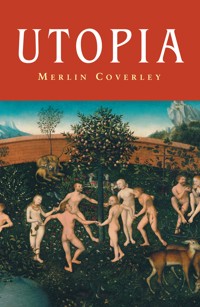
For more than 2,000 years utopian visionaries have sought to create a blueprint of the ideal society: from Plato to HG Wells, from Cloud cuckoo land to Shangri-La, the utopian impulse has generated a vast body of work, encompassing philosophy and political theory, classical literature and science fiction. And yet these utopian dreams have often turned to nightmare, as utopia gives way to its dark reflection, dystopia. Utopia takes the reader on a journey through these imaginary worlds, charting the progress of utopian ideas from their origins within the classical world, to the rebirth of utopian ideals in the Middle Ages. Later we see the emergence of socialist and feminist ideas; while the twentieth century was to be dominated by expressions of totalitarian oppression. From the novel to the political manifesto, from satire to science fiction, utopias have always reflected the age that gave rise to them, and this guide will explore this historical context, offering both an analysis of the key texts and an account of their political and cultural background. Today, it is claimed that we are witnessing the death of utopia, as increasingly the ideals that give rise to them are undermined or dismissed. These arguments are explored and evaluated here, and contemporary examples of utopian thought used to demonstrate the enduring relevance of the utopian tradition.
Sie lesen das E-Book in den Legimi-Apps auf:
Seitenzahl: 203
Veröffentlichungsjahr: 2012
Das E-Book (TTS) können Sie hören im Abo „Legimi Premium” in Legimi-Apps auf:
Ähnliche

















For more than 2,000 years utopian visionaries have sought to create a blueprint of the ideal society: from Plato to HG Wells, from Cloudcuckooland to Shangri-La, the utopian impulse has generated a vast body of work, encompassing philosophy and political theory, classical literature and science fiction. And yet these utopian dreams have often turned to nightmare, as utopia gives way to its dark reflection, dystopia.
The Pocket Essential Utopia takes the reader on a journey through these imaginary worlds, charting the progress of utopian ideas from their origins within the classical world, to the rebirth of utopian ideals in the Middle Ages. Later we see the emergence of socialist and feminist ideas; while the twentieth century was to be dominated by expressions of totalitarian oppression. From the novel to the political manifesto, from satire to science fiction, utopias have always reflected the age that gave rise to them, and this guide will explore this historical context, offering both an analysis of the key texts and an account of their political and cultural background.
Today, it is claimed that we are witnessing the death of utopia, as increasingly the ideals that give rise to them are undermined or dismissed. These arguments are explored and evaluated here, and contemporary examples of utopian thought used to demonstrate the enduring relevance of the utopian tradition.
Merlin Coverley is a writer and bookseller. He is the author of Pocket Essentials on Utopia, London Writing, Psychogeography, Occult London and The Art of Wandering.
pocketessentials.com
Other books in this series by the same author:
London Writing
Psychogeography
Occult London
To Orla
Contents
Introduction
The Birth of Utopia: The Golden Age
The Myth of Atlantis; The Golden Age; Lycurgus and the Spartans; Plato, The Republic; St Augustine, City of God
More,Utopiaand the Early Modern Era
Thomas More, Utopia; Michel de Montaigne, On Cannibals; Tommaso Campanella, City of the Sun; Francis Bacon, New Atlantis; Margaret Cavendish, The Blazing World; Henry Neville, The Isle of Pines
Shipwrecked:Crusoeand the Imaginary Voyage
Daniel Defoe, Robinson Crusoe; Jonathan Swift, Gulliver’s Travels; Voltaire, Candide; Samuel Johnson, Rasselas; De Bougainville, Voyage Around the World
Socialism and Utopia
Claude-Henri de Saint-Simon; Charles Fourier; Robert Owen, A New View of Society; Karl Marx & Friedrich Engels, The Communist Manifesto; Edward Bellamy, Looking Backward; William Morris, News From Nowhere
Totalitarian Nightmares
HG Wells, A Modern Utopia; Jack London, The Iron Heel; Yevgeny Zamyatin, We; Katherine Burdekin, Swastika Night; Aldous Huxley, Brave New World; George Orwell, 1984
The Cold War to the Present
Kurt Vonnegut, Player Piano; Derek Raymond, A State of Denmark; Ursula K. Le Guin, The Dispossessed; Marge Piercy, Woman on the Edge of Time; Margaret Atwood, The Handmaid’s Tale; JG Ballard, Kingdom Come
Afterword: The Death of Utopia?
Further Reading
Websites
Copyright
Introduction
By then I had realised – and if I had not, I would have been singularly obtuse – that the idea of a perfect world had, through the ages, embedded itself inextricably in the feelings of the human race. The more I searched for examples, definitions and hopes, the more all-enveloping did the idea become. The range of utopias was, as far as I could see, infinite, and any kind of catalogue would have been impossible, if only because utopias are, amoeba-like, capable of indefinitely dividing themselves in half. Bernard Levin, A World Elsewhere1
Judged on the brief definition above, the concept of utopia at first appears reassuringly straightforward – a perfect but imaginary place – and one which we all recognise. And yet on closer inspection this term reveals itself to be something rather more ambiguous. Utopia is, of course, the name Sir Thomas More created for his book of 1516. But More’s title combines two Greek neologisms, outopia, meaning no-place, and eutopia, meaning good-place, to create a word that is also a pun, and a place that is simultaneously good and non-existent. As a consequence, later writers have attempted to coin a term to suggest the opposite, a bad but equally imaginary place. Firstly, Jeremy Bentham, in 1818, introduced the term cacotopia, meaning bad or worst place. But this was to be superseded by the term dystopia, first used by Bentham’s younger colleague John Stuart Mill in an address to Parliament in 1868. Since then, however, there has been a further attempt to reclassify the growing multiplicity of utopian worlds by separating those which are intentionally dystopian from those which sought to be utopian but whose aims were somehow perverted. This latter group of utopias gone bad have become known since the 1960s as anti-utopias. Further-more, in recent decades, new variants upon the utopian theme have begun to emerge. Amongst these are: ecotopia, an ecological utopia and the title of Ernest Callenbach’s utopian novel of 1975; e-topia, the translation of utopia to the virtual realm; and finally heterotopia, Michel Foucault’s puzzling notion of a place outside or between the categories of the physical and the mental whose otherness challenges our everyday understanding of time and place.
In this account I will be employing the term utopia in its broadest sense, as an umbrella under which accounts of imaginary worlds, good, bad, and most frequently both, take shelter alongside more practical attempts to make such dreams a reality. My emphasis here will be upon utopia as primarily a literary tradition, the precursors to which precede the publication of More’s Utopia by more than two thousand years. As a literary genre, however, accounts of utopia are not restricted to the novel, a relatively recent addition to the utopian tradition, and one which is supplemented by poetry and polemic, apocalyptic visions and eye-witness statement. Of course, not every account of an imaginary place can qualify as utopian, and the entries here all offer a detailed and sustained attempt to outline a fully-realised alternate world. Equally importantly, such entries must capture the hopes and fears of their authors and the societies that produced them. Consequently, as historical fashions change, so one generation’s utopia may, and almost always does, become the following generation’s nightmare. Hence, the utopias of Plato and More, Owen and Wells, may well contain within them elements that appear sensible or even attractive but one would be challenged to find a contemporary reader willing to join the communities they envisaged.
Writing in his introduction to More’s Utopia in 1965, Paul Turner notes that the utopian genre has since produced ‘well over a hundred specimens, the last in 1962’.3 Yet only fourteen years after the date of Turner’s last example, in 1976, Lyman Tower Sargent’s monumental British and American Utopian Literature, 1516–1985: An Annotated, Chronological Bibliography was to include more than 3,000 entries.4 This vast discrepancy simply highlights the fact that a precise definition of what constitutes a utopia remains as elusive as ever. In recent years there have been myriad academic ‘solutions’ to this particular problem, often involving an attempt to judge the ‘credibility’ of a particular utopian narrative through an analysis of the types of social organisation it employs.5 It is beyond the scope of this book to discuss such developments here, other than to note that any author compiling an overview of the utopian genre will quickly find himself in agreement with Bernard Levin’s remarks above. For the more one immerses oneself in the utopian tradition the more one is made aware of its sheer scale and complexity, as the search for new examples reveals endless new lines of inquiry. Needless to say, any attempt to accommodate all, or even a substantial part, of the utopian canon in this account, would render it little more than an exercise in bibliography.
Instead, I have chosen to select a representative sample from those texts which have captured most clearly the utopian hopes and fears of their day. This selection is restricted to the Western literary tradition, although many of these narratives site their utopias far beyond the borders of the Western world, often within the then uncharted spaces of the southern hemisphere. Of course, several entries simply demand inclusion – it would be hard to envisage an overview of the utopian genre that omitted Plato’s Republic, More’s Utopia, or the works of Robert Owen and HG Wells. Elsewhere, however, I have chosen to discuss utopias more frequently overlooked in standard accounts of the genre: works such as Henry Neville’s The Island of Pines, Louis de Bougainville’s Voyage Round the World, and a more recent example, Derek Raymond’s A State of Denmark. Inevitably in a project of this scope one is faced with awkward choices, particularly as one approaches congested periods such as the late nineteenth century, in which the production of utopias was to increase exponentially. Indeed, it soon becomes clear that for each utopia listed within these pages, many others have been omitted: so while Swift’s eighteenth-century satire, Gulliver’s Travels, has been included, Samuel Butler’s nineteenth-century equivalent, Erewhon, has not; Rousseau’s account of the noble savage has been overlooked in favour of Montaigne’s essay On Cannibals; Charlotte Perkins Gilman’s pioneering feminist utopia, Herland, has had to make way for Katherine Burdekin’s equally ground-breaking dystopia, Swastika Night; while, amidst a positive glut of totalitarian nightmares from the twentieth century, Zamyatin’s We and Orwell’s Nineteen Eighty-Four have eclipsed Ray Bradbury’s Fahrenheit 451 and Anthony Burgess’s A Clockwork Orange.
As an afterword to this book, I have briefly summarised current arguments surrounding the idea that utopia is an exhausted, or even dying concept. Despite, or perhaps as a result of this debate, however, publications on the subject of utopia in books, journals and online continue to grow. I have compiled a short selection of such material for further reading, and several of these titles are worthy of particular attention. The Faber Book of Utopias (1999), edited by John Carey and The Utopia Reader (1999), edited by Gregory Claeys and Lyman Tower Sargent, are the most accessible and informative single-volume overviews of the utopian literary tradition; both have proven an invaluable source of information. While Lyman Tower Sargent’s colossal bibliography, mentioned above, remains the most comprehensive reference work upon the subject, this position is challenged by Mary Ellen Snodgrass’s similarly exhaustive Encyclopaedia of Utopian Literature. For those seeking to understand the lasting influence exerted upon utopian ideas by the islands of the South Pacific, Neil Rennie’s Far Fetched Facts: The Literature of Travel and the Idea of the South Seas provides the definitive account. Finally, Bernard Levin’s A World Elsewhere is a politically alert, and often very witty, history of the genre, born of a lifetime’s reflection on the subject.
Notes
1Bernard Levin, A World Elsewhere, London: Jonathan Cape, 1994, p. xvi.
2Concise Oxford Dictionary, Sixth Edition (1976), ed. by JB Sykes, Oxford: Oxford University Press, 1976, p. 1282.
3Paul Turner, ed. Utopia, Thomas More (1516), London: Penguin, 1965, Introduction, p. 16.
4Lyman Tower Sargent, British and American Utopian Literature, 1516–1985: An Annotated, Chronological Bibliography, Boston: GK Hall, 1979.
5For an account of two such attempts at definition, see Susan Bruce, ed., Three Early Modern Utopias, Oxford: Oxford University Press, 1999, Introduction, p. xii.
The Birth of Utopia: The Golden Age
The first eutopias we know of are myths that look to the past of the human race or beyond death for a time when human life was or will be easier and more gratifying. They have various labels – golden ages, Arcadias, earthly paradises, fortunate isles, isles of the blest. They are peopled with our earliest ancestors; heroes and, very rarely, heroines; the virtuous dead; or in some cases, contemporaneous but little-known noble savages…These utopias of sensual gratification are social dreaming at its simplest. Every culture has some such stories. Gregory Claeys & Lyman Tower Sargent.1
The term Utopia was coined by Thomas More in his work of 1516 and has spawned a vast literary tradition that continues to this day. And yet the desires and the fears which this term has come to encapsulate are to be found within the earliest forms of human expression, present in both the oldest examples of the written word, and no doubt originating in the oral traditions which preceded them. In the Western world, this utopian tradition anticipates More’s celebrated text by more than 2,000 years, and it is rooted in the earliest myths of a golden age. Many of these myths are also to be found in the utopias of the Middle Ages, brought together through the intervening centuries by the crucial role of Christianity in shaping these early utopian longings into a coherent system of belief. The Christian millennium provides a utopian future towards which the believer may strive, while heaven awaits for the chosen few after death. But, in the pre-Christian era, utopias tended to describe a time long since passed, a lost age of earthly abundance to be contrasted with the hardships of the present. It is here that utopia was born, within tales of lost civilisations whose history continues to resonate today.
The Myth of Atlantis
The source of the Atlantis myth is commonly ascribed to Plato.2 As the story goes, Egyptian priests told Solon, the semi-mythical Athenian poet and lawgiver who lived some three generations before Plato, about a city which had been destroyed by a cataclysmic flood some 9,000 years earlier – in around 9600BC.3 First in the Timaeus, and later in the Critias, in which the island is described in some detail, Plato relates how Atlantis was founded by the god Poseidon, who fathered the island’s first inhabitants in conjunction with the beautiful Cleito. This Atlantean civilisation was based upon a main island which also ruled over several lesser kingdoms on smaller islands and was, initially at least, an earthly paradise of abundance and harmony. The historian of the occult, Jonathan Black, has provided the following summary of the Platonic account:
The largest island was dominated by a beautiful and fertile plain and a large hill. Here Cleito lived, and the people enjoyed food which grew abundantly on the island. Two streams of water came up through the earth, one of hot water and one of cold.
To keep Cleito for himself, Poseidon had a series of circular canals dug around the hill. In time a sophisticated civilisation grew up, taming wild animals, mining metals and building – temples, palaces, race-courses, gymnasiums, public baths, government buildings, harbours and bridges. Many walls were coated with metals – with brass, tin and a red metal, unknown to us, called orichalcum. The temples had roofs of ivory and pinnacles of silver and gold. The islands of Atlantis were ruled over by ten kings each with his own kingdom, the nine others being subservient to the ruler of the largest island. The central temple, dedicated to Poseidon, had statues of gold, including one of the god standing in a chariot pulled by six-winged horses and flanked by hundreds of Nereids riding dolphins. Live bulls roamed freely around the forest of columns in this temple, and every five or six years the kings who ruled the islands were left alone in the temple to hunt these bulls without weapons. They would capture one, lead it up to the great column of orichalcum, inscribed with the laws of Atlantis, and there behead it.
Life on the islands of Atlantis was generally idyllic. In fact life was so good that eventually people could not bear it any longer and began to become restless, decadent and corrupt, searching after novelty and power. So Zeus decided to punish them. The islands were flooded until only small islets remained, like a skeleton sticking out of the sea. Then finally a great earthquake engulfed all that was left in the course of one day and one night.4
For Plato, the history of Atlantis is a cautionary tale, in which a society that could once boast perfection is gradually weakened by luxury and corruption, a process of degeneration through which this first utopia is gradually transformed into its opposite, a dystopia. Indeed, Plato contrasts the negative example of Atlantis with the ideal attributes of Athens, the society which was to attain greatness through its heroic struggle with Atlantis. In this light, Plato’s Atlantis can be viewed as little more than a fairy tale, a device with which to bolster the foundation myth of Athens, and it has since been dismissed as a product of Plato’s imagination. Aristotle implies precisely this when he claims, ‘Plato alone made Atlantis rise out of the sea, and then he submerged it again.’5 But Plato’s account is corroborated by numerous other references to Atlantis throughout classical literature, from Proclus to Pliny, and Plutarch to Posidonius. Indeed, Plato’s description finds further confirmation in other ancient cultures: ‘The Aztecs recorded that they came from “Aztlan… the land in the middle of the water”. Sometimes this land was called “Aztlan of the Seven Caves”. It was depicted as a central, large step pyramid surrounded by six smaller pyramids. According to traditions collected by the invading Spaniards, humanity had nearly been wiped out by a vast flood…’6 Certainly, Plato’s date of 9600BC corresponds with that of the Aztecs, in placing this flood at around the end of the Ice Age. This lends the Atlantis legend both the support of modern geological science, as well as placing it within the wider context of biblical accounts of the Flood, which have been recounted across numerous other cultures.
The legend of Atlantis is a powerfully symbolic one, for there is no clear agreement as to its true location. Today, its existence acts as a shorthand for all those civilisations that time has erased but whose identity lives on in a kind of half-life, somewhere between the reassuring permanence of historical fact and the ethereal otherworldliness of myth. Furthermore, the destruction of Atlantis was an act of punishment, and here its utopian perfection can be identified as the very cause of its downfall, acting both as a rebuke against hubris and a reminder of the inherent dangers of the quest for human perfectibility: ‘The Atlantis belief helps to perpetuate the idea of a multiplicity of worlds, all striving to attain perfection, seeking absolution for the sin that drowned their world and gradually growing nearer forgiveness through the ages.’7
The Golden Age
In the Epic of Gilgamesh, dating from the third millennium BC, Utnapishtim, Noah’s Sumerian counterpart, describes a place called Dilmun, where ‘the croak of the raven was not heard, the bird of death did not utter the cry of death, the lion did not devour, the wolf did not tear the lamb, the dove did not mourn, there was no widow, no sickness, no old age, no lamentation.’8
Of course, the literary myth of a primeval world of limitless abundance is a universal one, its Christian equivalent to be found in the Book of Genesis as the Garden of Eden. An anthropological explanation for the ubiquity of such imagery, in which fantasies about food predominate, appears to be that, contrary to common belief, early hunter-gatherer societies enjoyed both better nutrition and greater leisure than the primitive agriculturists which were to succeed them.9 Because men and women were forced to abandon a way of life that was, relatively speaking, one of ease and plenty, in order to accommodate a higher density of population, these ancient dreams of the good life invariably display a retrogressive longing for a time now passed, a Golden Age never to be revisited.
This outlook was to find its most fervent expression in the poem Works and Days, by the Greek poet of the eighth century BC, Hesiod. A farmer’s son living on the slopes of Mount Helicon in central Greece, and disenchanted with the unrelenting toil of his own age, Hesiod imagines a long-lost era of prosperity in which men lived as gods, contrasting this Golden Age with the paucity of his own existence. In this way, Hesiod describes a process of gradual deterioration, as the Golden Age was to give way to a Silver Age and later a Bronze, as man’s innate foolishness and warlike nature destroy the idyllic existence that he once enjoyed. Following the brief respite afforded by the Age of Heroes, Hesiod describes man’s fall into the fifth and final age, his own Age of Iron, a time characterised by strife and hunger:
Fifth is the race that I call my own and abhor.
O to die, or be later born, or born before!
This is the Race of Iron. Dark is their plight.
Toil and sorrow is theirs, and by night
The anguish of death and the gods afflict them and kill,
Though there’s yet a trifle of good amid manifold ill.
An unhappy age made all the more difficult to bear through comparison with its golden forbear:
The gods who own Olympus as dwelling-place
deathless, made first of mortals a Golden Race
(this was the time when Kronos in heaven dwelt)
and they lived like gods and no sorrow of heart they felt.
Nothing for toil or pitiful age they cared,
but in strength of hand and foot still unimpaired
they feasted gaily, undarkened by sufferings
They died as if falling asleep; and all good things
were theirs, for the fruitful earth unstintingly bore
unforced her plenty, and they, amid their store
enjoyed their landed ease which nothing stirred
loved by the gods and rich in many of herd.10
Bernard Levin has argued that it is better to read Hesiod’s poem backwards, his tragic lament for that which has been lost (but which, of course, had never been) characteristic of a pessimistic strand of utopianism which chooses to romanticise the past at the expense of the present.11 The baleful consequence of yearning for something long gone (or never to arrive), is an entropic sense of time passed, a retrospective faith in past glories that can both emasculate the present and undermine the future. And yet this frustrated longing cannot so easily be discharged, and some six hundred years later, the Roman poet, Ovid, was to echo Hesiod’s melancholic lament in his Metamorphoses:
In the beginning was the Golden Age, when men of their own accord, without threat of punishment, without laws, maintained good faith and did what was right. There were no penalties to be afraid of… indeed, there were no judges, men lived securely without them. Never yet had any pine tree, cut down from its home on the mountains been launched on ocean’s waves, to visit foreign lands: men knew only their own shores…The peoples of the world, untroubled by any fears, enjoyed a leisurely and peaceful existence, and had no use for soldiers. The earth itself, without compulsion, untouched by the hoe, unfurrowed by any share, produced things spontaneously, and men were content with foods that grew without cultivation… It was a season of everlasting spring, when peaceful zephyrs, with their warm breath, caressed the flowers that sprang up without having been planted…Then there flowed rivers of milk and rivers of nectar, and golden honey dripped from the green holm-oak.12
Yet, if life remains hard and one can find solace only in the recall of a golden past, one may also look forward to an afterlife which, for some at least, will be spent in paradise. This paradise has, of course, been imagined in myriad forms and, in classical mythology, those favoured by the gods enjoyed their afterlife in the Elysian Fields or the Islands of the Blessed. The former, also known as the Elysian Plains or the Fields of Asphodel, were the final resting place of the heroic and the virtuous. The Elysian Fields lay on the Western boundary of the Earth and were encircled by the stream of Oceanus, which, according to Homer in the Odyssey (8th century BC), ‘sends up breezes of the West Wind blowing briskly for the refreshment of mortals.’13 Hesiod refers to the Isles of the Blessed as lying in the Western Ocean, where the fortunate dead live a heavenly existence under the rule of Kronos, while the poet Pindar describes a single island whose inhabitants spend eternity, ‘with horses and with wrestling; others with draughts; and with lyres; while beside them bloometh the fair flower of perfect bliss.’14




