


98,99 €
Mehr erfahren.
- Herausgeber: John Wiley & Sons
- Kategorie: Fachliteratur
- Sprache: Englisch
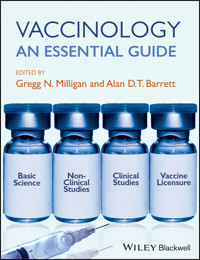
Vaccinology: An Essential Guide outlines in a clear, practical format the entire vaccine development process, from conceptualization and basic immunological principles through to clinical testing and licensing of vaccines. With an outstanding introduction to the history and practice of vaccinology, it also guides the reader through the basic science relating to host immune responses to pathogens.
Covering the safety, regulatory, ethical, and economic and geographical issues that drive vaccine development and trials, it also presents vaccine delivery strategies, novel vaccine platforms (including experimental vaccines and pathogens), antigen development and selection, vaccine modelling, and the development of vaccines against emerging pathogens and agents of bioterror. There are also sections devoted to veterinary vaccines and associated regulatory processes.
Vaccinology: An Essential Guide is a perfect tool for designed for undergraduate and graduate microbiologists and immunologists, as well as residents, fellows and trainees of infectious disease and vaccinology. It is also suitable for all those involved in designing and conducting clinical vaccine trials, and is the ideal companion to the larger reference book Vaccinology: Principles and Practice.
Sie lesen das E-Book in den Legimi-Apps auf:
Seitenzahl: 1083
Veröffentlichungsjahr: 2014
Ähnliche



















Table of Contents
Title page
Copyright page
Contributors
Preface
1: The History of Vaccine Development and the Diseases Vaccines Prevent
The 18th Century: Vaccines for Smallpox
The 19th Century: New Understanding of Infectious Diseases and Immunity
The 20th Century: The Control of Diseases Using Vaccines
Vaccines
Influenza
Rotavirus Vaccines
Further reading
2: The vaccine Development Pathway
Introduction
Regulation and Approval of Vaccines
Investigational New Drug Application: The “IND”
The Biologics License Application
Further reading
3: Control and Eradication of Human and Animal Diseases by Vaccination
The Control of Diseases by Vaccination
Further reading
4: Pathogenesis of Infectious Diseases and Mechanisms of Immunity
Introduction
Definitions: Colonization, Infection, Disease, Signs, Symptoms
Transmission and Portal of Entry
Routes of Spread in the Body
Target Organs and Cells
Mechanisms of Tissue Injury and Disease
Pathogen Evasion of Host Defenses
Vaccines for Infectious Diseases and Mechanisms of Vaccine-Induced Immunity
Toxin-Mediated Diseases
Diseases for Which Killed Pathogen Vaccines Were Developed
Live Attenuated Pathogen Vaccines
Subunit Vaccines
Further reading
5: The Host Immune Response, Protective Immunity, and Correlates of Protection
Introduction
Induction of Innate Immunity
Bridging Innate and Adaptive Immunity
Development of Adaptive Immune Responses
T Lymphocyte Immunity
B Lymphocyte Immunity
T Cell-Dependent B-Cell Responses
Persistent Production of Vaccine-Specific Antibody and B-cell Memory
T Cell-Independent B-Cell Responses
Mechanisms of Antibody-Mediated Protection
Development of Immunity at Mucosal Sites
Correlates of Protection
Benefits of Identifying a Vaccine Correlate of Protection
Mechanisms of Vaccine-Induced Protection
Further Reading
6: Adjuvants: Making Vaccines Immunogenic
What Is an Adjuvant and Why Are They Added to Certain Vaccines?
Characteristics of a Good Adjuvant
Safety
Types of Vaccine Adjuvants
Combination Adjuvants
Adjuvants for Veterinary Vaccines
Future Challenges
Further reading
7: Discovery and the Basic Science Phase of Vaccine Development
Basic Science and Translational Research
Mechanisms of Disease and Comparative Pathogenesis
Molecular Biology and Recombinant Vaccines
Therapeutic Vaccines and Vaccines Against Noninfectious Agents
Immunology of Protection and Adjuvants
High-Throughput Methods and Systems Biology
Bioinformatics and Reverse Vaccinology
Additional Roles for Basic Science in Vaccine Development
Conclusions
Further reading
8: Microbial-Based and Material-Based Vaccine Delivery Systems
Virus Vectors as Vaccine Platforms
DNA Viruses
RNA Viruses
Other Vaccine Vectors
Bacterial Vectors as Vaccine Platforms
Novel Tuberculosis Vaccines
Novel Delivery Systems
Plant Vectors
Biomaterials: a New Generation of Vaccine Adjuvants and Vaccine Platforms
Strategies for Antigen Encapsulation and Presentation
Strategies for Antigen Delivery
Strategies for Activating Innate Immunity
Conclusions and Future Directions for Biomaterials
Further reading
9: Licensed Vaccines for Humans
Introduction
Immunization Strategies
Specific Vaccine Types
Further reading
10: Veterinary Vaccines
Vaccine Selection for Companion and Food-Producing Animals
Status of Veterinary Vaccines for Infectious and Noninfectious Diseases in Companion and Food-producing Animals
Viruses
Bacteria
Parasites
Fungi
Status of Vaccines for Aquaculture
Future Challenges
Further Reading
11: Development of Vaccines for Microbial Diseases
Introduction
Principles of Vaccine Design
Examples of Vaccine Development and Production
Inactivated Virus Vaccine Development (Yellow Fever)
Animal Models
Good Laboratory Practices
Further Reading
12: The regulatory Path to Vaccine Licensure
Introduction
Regulation of Biologics
The Biological IND
The US FDA CBER IND Review Process
Alternate Licensure Strategies
Environmental Risk Assessment
New Drug Application and Common Technical Document
Worldwide Regulatory Authorities
Further Reading
13: Veterinary Vaccines: Regulations and Impact on Emerging Infectious Diseases
Global Veterinary Vaccine Market
Veterinary versus Human Vaccine Development
Veterinary Vaccine Regulations: an Overview
Veterinary Vaccine Regulations: USA, European Union, and Australia
Animal Testing During Vaccine Development
Impact of Veterinary Vaccines in Public Health
Response of National Authorities to Animal Disease Threats
Future Challenges
Further Reading
14: Vaccine Manufacturing
Introduction
Manufacturing Principles
Analytical Aspects
Good Manufacturing Practices
Future Outlook
Note
Further reading
15: Clinical Evaluation of Vaccines
Introduction
Phases of Clinical Trials
Government Jurisdiction
The Investigational New Drug Process
Good Clinical Practice (GCP)
The Sponsor
The Investigator
Institutional Review Boards and Independent Ethics Committees
Conclusion
Further reading
16: Vaccine Recommendations and Special Populations
What Happens After a Vaccine Is Licensed?
What Are Vaccination Schedules?
Are There Any Exceptions for Certain People (Special Populations)?
Conclusion
Further reading
17: Vaccine Safety
Introduction
Vaccine Safety in Vaccine Development
Vaccine Safety Post-Approval
Causality Assessment
Examples of Vaccine Fears
Communication Perspective in Vaccine Safety
Further reading
18: Understanding and Measuring the Dynamics of Infectious Disease Transmission
Concepts of Infectious Disease Transmission
Measures of Disease Transmission
Introduction to Infectious Disease Modeling
Further Reading
19: Vaccines from a Global Perspective
The Global Perspective
Diseases
Infrastructure
Regulatory
Future Challenges
Further Reading
20: Political, Ethical, Social, and Psychological Aspects of Vaccinology
Introduction
Politics in Vaccinology
Cognitive Biases, Distortions, and Preferred Cognitive Styles in Vaccine Decision Making
Ethical Issues in Vaccination
Further Reading
Index
End User License Agreement
List of Tables
Table 1.1 Vaccine-Preventable Illnesses Before and Since Routine Childhood Vaccination in the USA
Table 1.2 Properties of Infectious Disease Preventive Vaccines
Table 1.3 The Impact of Tetanus Toxoid Among US Soldiers
Table 1.4 Rubella, Netherlands, September 2004–2005.
Table 1.5 Direct and Indirect Effects of 7-Valent Pneumococcal Conjugate Vaccine
Table 4.1 Portals of Entry for Bacterial and Viral Pathogens
Table 4.2 Host Defense Subversion Strategies by Pathogenic Bacteria and Viruses
Table 5.1 Pattern Recognition Receptors
Table 5.2 Characteristics of Human Immunoglobulins
Table 6.1 Examples of Licensed and Developmental Adjuvants
Table 6.2 Utilization of Adjuvants in Vaccines for Veterinary Use
Table 7.1 Potential Roles of Cytokine and Chemokine Adjuvants
Table 7.2 Overview of “-Omics” Technologies
Table 7.3 Commonly Used Bioinformatics/Systems Biology Analysis Software Applications and Databases
Table 9.1 Definitions of Different Types of Vaccines
Table 9.2 Examples of Licensed Vaccines
Table 9.3 Examples of Immunoglobulins Available for Passive Immunization
Table 9.4 Number of Doses and Route of Administration for Commonly Used Vaccines
Table 9.5 Characteristics of an Ideal Vaccine
Table 9.6 Different Types of Vaccines
Table 9.7 Conditions That May Affect Whether or Not to Receive a Live Vaccine
Table 9.8 Examples of Multiple Vaccines Given on the Same Day
Table 9.9 Impact of Childhood Vaccines in the USA in the 20th Century
Table 9.10 Infectious Diseases That Can Be Eradicated…We Have Vaccines
Table 10.1 Partial Listing of Viruses That Are of Global Importance in Veterinary Medicine, Listed by Target Animal
a
Table 10.2 Second- and Third-Generation Licensed/Commercialized Veterinary Viral Vaccines, Listed by Target Animal
Table 10.3 Recently Commercialized Veterinary Bacterial Vaccines, Listed by Target Animal
Table 10.4 Veterinary Protozoal Vaccines, Listed by Target Animal
Table 11.1 Key Considerations for Vaccine Development
Table 11.2 Quality Control Testing of a Viral Vaccine Product from Harvest to Filled Drug Product
Table 11.3 Vaccine Potency Assays with Recommended Human Vaccine Dose
Table 11.4 Examples of Vaccine Manufacturing Processes (Source: Vaccine package insert)
Table 12.1 Environmental Risk Analysis for Release of a Genetically Modified Organism (GMO) Vaccine
Table 13.1 Overview of the Research and Development Phases for a Veterinary Vaccine
a
Table 14.1 Historic Dates and Events Related to Vaccines, Licensing, and Events
Table 14.2 Manufacturing Process and Examples of Vaccines
Table 14.3 Some Definitions in the Manufacturing Process
Table 14.4 Some examples of Assays Used in Quality Control of Vaccines
Table 15.1 Vaccine Clinical Trial Phases
Table 15.2 GCP Sponsor Responsibilities
Table 15.3 GCP Investigator Responsibilities
Table 15.4 Common Mistakes Leading to Noncompliance
Table 15.5 Institutional Review Board Responsibilities
Table 16.1 Factors Considered in Making Universal Vaccine Recommendations
Table 16.2 Typical Travel-Related Vaccines
Table 17.1 Summary of Efficacy Trials of Two Rotavirus Vaccine Candidates
Table 17.2 Summary of Vaccine Safety Trials With an Emphasis on Intussusception, With the Relative Risk of the Condition Following Receipt of the Rotavirus Vaccine Candidate or Control
Table 18.1 Values of
R
0
for Well-Known Infectious Diseases
Table 18.2 Values of the Herd Immunity Threshold for Well-known Infectious Diseases
Table 19.1 Diseases for Vaccine Research and Development
a
Table 19.2 Priority Areas for Research and Development of New or Improved Vaccines
Table 19.3 Characteristics of a Vaccine
Table 19.4 Examples of Combination Vaccines
Table 19.5 Major Diseases Caused by Infectious Agents in 2010
Table 19.6 Components of Vaccine Implementation
Table 19.7 Catalog of Available Immunization Policy Recommendations
Table 20.1 The Basis for Population-Based Vaccination Programs
Table 20.2 Political Issues Relevant to Mass Vaccination
Table 20.3 Stages of Change Applied to Vaccine Decision Making
Table 20.4 The Effect of Ecological Systems on Vaccine Decision Making
Table 20.5 Common Biases and Heuristics Applied to Vaccine Decision Making
Table 20.6 Preferred Cognitive Styles Applied to Vaccine Decision Making
List of Illustrations
Figure 1.1 “Baby” Ruth Cleveland, first child of President and Mrs. Grover Cleveland, who died of diphtheria in 1904, aged 12 years. The former president and the remainder of the family were treated with diphtheria antitoxin and remained symptom free.
Figure 1.2 Cases of diphtheria in the Russian Federation per 100,000 population 1992–2006. The bars demonstrate the immunization coverage rate for children as measured by the Department of Sanitation, Russian Federation. Data provided by Dr. Olga Shamshava, 2007.
Figure 1.3 A 7-day-old infant with neonatal tetanus. Intense spasmodic muscle contractions shown as clenching of the feet (left) and of the facial muscles causing risus sardonicus, literally a “sardonic grin” (right). The child's mother had not previously been immunized. © Martin G. Myers
Figure 1.4 Pertussis attack rate in England and Wales (1940–1982). Reprinted from Cherry JD. (1984). The epidemiology of pertussis and pertussis immunization in the United Kingdom and the United States: a comparative study. Current Probl Pediatr 14(2), 80.
Figure 1.5 One of the last wild-type poliomyelitis cases in the USA, a 12-year-old girl in 1979, shown here with paralysis of her right leg and arm, the “tripod sign” when trying to sit up, and the epidemiologic link, her Amish cap. Poliovirus, type 1, was recovered from her. © Martin G. Myers
Figure 1.6 Serum and secretory antibody responses to orally administered, live attenuated polio vaccine and to intramuscular inoculation of inactivated polio vaccine. From Ogra PL, Fishant M, Gallagher MR (1980). Viral vaccination via mucosal routes. Review of Infectious Diseases 2(3); 352–369.
Figure 1.7 Measles in a boy demonstrating the typical rash of measles. © Martin G. Myers
Figure 1.8 Measles in (A) the USA (Centers for Disease Control and Prevention, 1995) and (B) Iowa (Iowa Department of Health, 2007, www.idph.state.is.us/adper/pdf/cade/decades/pdf) 1960–1989. Measles vaccine was licensed in 1963, and mandatory immunization laws were enacted widely by states in the late 1960s and 1970s. Iowa enacted its immunization law in 1977 (Iowa Administrative Code, 1977). From chapter 17 in Myers & Pineda in Barrett & Stanberry (Elsevier).
Figure 1.9 Newborn with congenial rubella syndrome, including hepatosplenomagly, cataracts, purpura, and microcephaly. © Martin G. Myers
Figure 1.10 Early vesicle formation following VZV infection. © Martin G. Myers
Figure 1.11 Group A streptococcal fasciitis in a previously normal child with varicella. © Martin G. Myers
Figure 1.12 Age-specific incidence of herpes zoster as a function of age. From figure 39.2 in Levin M in Plotkin et al. (eds) Vaccines, 6th edition (with permission from J. Pellissier and M. Brisson, Merck & Co, Inc.).
Figure 1.13 Age-related cellular immune response to varicella zoster virus. From figure 39.3 in Levin M in Plotkin et al (eds) Vaccines, 6th edition. Data from Burke et al.
Figure 1.14 A child with leukemia and herpes zoster with the characteristic distribution of rash in the distribution of a dermatome. © Martin G. Myers
Figure 1.15 The relation of age incidence of influenzal meningitis to the bactericidal power of human blood at different ages against a smooth meningeal strain or
H. influenzae
. From Fothergill LD and Wright J (1933). Journal of Immunology 24, 273–284.
Figure 1.16 Incidence of
Haemophilus influenzae
invasive disease, United States, 1987–1997. From Centers for Disease Control and Prevention. (1998). Progress towards eliminating Haemophilus influenzae Type b disease among infants and children—United States, 1987–1997. Morbidity and Mortality Weekly Report 47(46), 993–998.
Figure 1.17 Incidence of invasive pneumococcal disease (IPD)/100,000 in children younger than 5 years of age. From Centers for Disease Control and Prevention. (2008). Invasive pneumococcal disease in children 5 years after conjugate vaccine introduction—Eight States, 1998–2005. Morbidity and Mortality Weekly Report 57(6), 144–148.
Figure 1.18 Purpura fulminans in a young child with shock due to meningococcal bacteremia. © Martin G. Myers
Figure 1.19 Rate of hepatitis A by county in the USA, 1987–1997 and 2004, per 100,000 population.. From Centers for Disease Control and Prevention. (2006). Prevention of Hepatitis A through active or passive immunization: recommendations of the Advisory Committee on Immunization Practices (ACIP). Morbidity and Mortality Weekly Report 55 (No. RR-7), 1–23.
Figure 1.20 Host (avian, human and swine) origins for the gene segments of the 2009 A(H1N1) virus: PB2, polymerase basic 2; PB1, polymerase basic 1; PA, polymerase acidic; HA, hemagglutinin; NP, nucleoprotein; NA, neuraminidase; M, matrix gene; NS, nonstructural gene. Color of gene segment in circle indicates host. From Garten RJ, Davis CT, Russell CA, et al. (2009). Antigenic and genetic characteristics of swine-origin 2009 A(H1N1) influenza viruses circulating in humans. Science 325(5937), 197–201.
Figure 1.21 Percentage of positive rotavirus tests by week and year: USA 2000–2010. From panel A of figure 1, Tate JE, Mutuc JD, Panozzo CA, et al. (2011). Sustained decline in rotavirus detection in the United States following the introduction of rotavirus vaccine in 2006. Pediatric Infectious Diseases 30; S30–S34.
Figure 1.22 Number of children with mild/moderate and severe rotavirus diarrhea in Aracaju, 2006–2008. From Gurgel RG et al. (2009). Gastroenterology 137:1970–1975.
Figure 2.1 A schematic of the typical phases of vaccine development and approval.
Figure 3.1 Photograph showing a young girl with severe rash characteristic of smallpox. Photograph from James Hicks/ Center for Disease Control and Prevention.
Figure 3.2 Introduction of rinderpest into Africa resulted in a massive pandemic with huge livestock losses due to the disease and associated “stamping-out” policy initiated to stop its spread as shown in this photograph. Photograph from Agricultural Research Council: Onderstepoort Veterinary Institute.
Figure 3.3 This photograph shows people waiting in line to receive polio vaccination in San Antonio, Texas (1962), illustrating the public demand for this vaccine. Photograph from Mr. Stafford Smith/ Centers for Disease Control and Prevention.
Figure 3.4 Slaughtered livestock are burned to prevent spread of foot-and-mouth disease during the outbreak in the United Kingdom in 2001. The large number of uninfected animals slaughtered during recent outbreaks had led to demands for changes in strategy to control outbreaks. Photograph by Murdo Macleod.
Figure 4.1 Portals of entry/shedding for pathogenic microbes.
Figure 4.2 Routes of spread and sites of replication for pathogenic microbes.
Figure 4.3 Inflammation at the site of infection initiated by complement activation.
Figure 4.4 During sepsis bacterial components trigger generation of inflammatory mediators and an inflammatory cascade.
Figure 4.5 Pathogen (direct) and host response (indirect) mediated tissue damage during infection.
Figure 4.6 Primary immune mechanisms against extracellular and intracellular pathogens.
Figure 4.7 Mechanisms of bacterial toxin mediated damage.
Figure 5.1 Primary and secondary immune responses to pathogens or vaccine antigens. Primary exposure of naïve T and B cells to pathogen or vaccine antigen results in a rapid increase in antigen-specific cell number. As the pathogen is cleared, a rapid contraction of the population due to cell death ensues. However, a portion of the antigen-specific population survives and is maintained for long periods of time as memory cells such that an increased frequency of antigen-specific cells is present in secondary lymphoid tissues and peripheral tissues. These populations rapidly expand following reexposure to antigen and are capable of providing protection and rapidly clearing the pathogen from the site of infection.
Figure 5.2 T cell-dependent B-cell responses. Antigen is presented to naïve T cells in the T-cell zone of secondary lymphoid tissue (A). Antigen also binds to the BCR of antigen-specific B cells, which then also migrate to the T-cell zone. Activated T cells provide help to the recently activated B cells (B). The B cells then either produce antibody outside of the B-cell follicle (C) or enter the follicle and cycle between an area of intense B cell proliferation and somatic hypermutation of BCR genes, the Dark zone (D), and an area where antigen selection and class switch occur, the Light zone (E). B cells that successfully compete for antigen depots on follicular dendritic cells and receive survival signals from follicular T cells (F) may undergo further rounds of proliferation and selection or exit the germinal center to become memory B cells (G) or antibody-secreting plasma cells (H).
Figure 5.3 Induction of antibody responses using polysaccharide-protein conjugate vaccines. (A) Cross-linking of BCR on polysaccharide-specific B cell results in activation, proliferation, and production of IgM antibody. In the absence of T-cell help, the class switch to IgG antibody production and differentiation of memory B cells is extremely limited. (B) Conjugation of a protein molecule such as diphtheria toxoid to the polysaccharide results in binding to polysaccharide-specific BCR on the B cell surface, internalization and processing of the toxoid molecule, and presentation on class II MHC molecules. Recognition of the complex by toxoid-specific helper T cells results in delivery of critical co-stimulatory signals (CD40–CD40 ligand) and cytokines necessary for induction of class switch and differentiation of polysaccharide-specific memory B cells.
Figure 5.4 Development and retention of adaptive immune responses in the gut mucosa (A). Macrophages and dendritic cells in the dome region take up antigen that has transcytosed from the gut lumen through M cells and deliver it to the T-cell area of the mucosal associated lymphoid tissue (B). Antigen is presented to T cells, which become activated and migrate to the germinal center (C) and provide help for antigen-specific B cells. Activated, antigen-specific B and T cells migrate to the lymph node (D) and ultimately enter the bloodstream. As these cells circulate and pass through mucosal capillaries in the lamina propria region (E), they bind to the endothelial cells by a mechanism involving a MadCAM-1/α4β7 integrin interaction. T cells may stay in the lamina propria or further migrate to sites between the gut epithelial cells. IgA antibody secreted by lamina propria plasma cells binds to the pIgR on mucosal epithelial cells (F), is internalized, and is transported to the gut lumen.
Figure 6.1 Local events following injection of vaccine formulated with an antigen delivery adjuvant. Antigen depots are deposited at the injection site and are maintained over time, resulting in a prolonged release of free antigen for activation of T and B lymphocytes in the lymph node. Inflammatory events from the injection result in local production of proinflammatory cytokines, which in turn attract tissue monocyte/macrophages or dendritic cells to the injection site. These cells take up and process antigen into antigenic peptides for association with MHC molecules and mature in the presence of the proinflammatory cytokines to express high levels of MHC molecules, co-stimulatory molecules, and the CCR7 molecule required for homing of the cells to the T-cell zone of the lymph node.
Figure 6.2 Local events following injection of antigen-loaded ISCOMs or liposomes. Inflammatory events following the injection result in recruitment of dendritic cells and monocyte/macrophages. Uptake of ISCOMs or liposomes may be accomplished through mechanisms such as phagocytosis, pinocytosis, or fusion with the plasma membrane such that the vehicles are delivered to endosomal or cytoplasmic compartments for degradation and presentation with cellular MHC proteins. Cell maturation events result in homing of the antigen presenting cell to T-cell zones in the lymph node. It is also possible that “free” liposomes or ISCOMs may reach the lymph node via the lymphatic system for activation of B lymphocytes or processing and presentation by lymphoid resident dendritic cells.
Figure 6.3 Immunogenicity of vaccine formulated with an immunostimulatory adjuvant. (A) Immunization with live attenuated vaccine results in maturation of dendritic cells and the production of co-stimulatory molecules (B7), proinflammatory cytokines, and type I IFNs. These cells provide all the antigen and co-stimulatory signals necessary to drive naïve T-cells to proliferate, produce cytokines and express cytotoxic activity and to differentiate into memory T cells. (B) Immunization with purified recombinant protein in the absence of any PAMP does not result in maturation of dendritic cells, and important co-stimulatory and cytokine signals are not provided so that the T-cell response is not maintained and T-cell memory is not induced. (C) Immunization of the same recombinant protein in the presence of an immunostimulatory adjuvant, in this case MPL, results in recognition of the adjuvant by cell-associated PRRs and subsequent maturation of dendritic cells. Again, appropriate cytokine and co-stimulatory signals are provided to drive proliferation of antigen-specific T cells with ultimate differentiation into memory T cells.
Figure 7.1 The “iceberg” of infection.
Figure 7.2 Virus reassortment.
Figure 7.3 Comparative pathogenesis by expression profiling.
Figure 7.4 The classical vaccine development pathway.
Figure 7.5 The reverse vaccinology pathway.
Figure 8.1 (A) Stylized depiction of poxvirus structure (from http://www.utmb.edu/virusimages/ with permission of Frederick Murphy, University of Texas Medical Branch [UTMB], Galveston, Texas). (B) A smallpox virion visualized by negative stain electron microscopy. Magnification about ×150,000. Micrograph from Frederick Murphy, UTMB, Galveston, Texas. (C) Plasmids encoding a vaccinia virus promoter and vaccine gene flanked by regions homologous to the insertion region of MVA genome are transfected into MVA-infected chick embryo fibroblasts. The promoter and vaccine gene are inserted into the MVA genome by homologous recombination. Recombinant MVA virions expressing the protein of interest are selected and plaque purified.
Figure 8.2 (A) Stylized depiction of adenovirus structure (from http://www.utmb.edu/virusimages/ with permission of Frederick Murphy, UTMB). (B) Colorized transmission electron micrograph of adenovirus. Micrograph from Dr. G. William Gary, Jr., Center for Disease Control and Prevention. (C) Genes encoding vaccine antigens can be inserted into expression cassettes located at the sites of adenovirus gene deletion. A first-generation replication defective adenovirus vector with deletions of E1 and E3 genes is shown.
Figure 8.3 (A) Stylized depiction of alphavirus structure (from http://www.utmb.edu/virusimages/ with permission of Frederick Murphy, UTMB). (B) Ultra-thin section of a Vero cell culture infected with Eastern equine encephalitis virus (24-hr infection) (from http://www.utmb.edu/virusimages/ with permission of Frederick Murphy). Magnification approximately ×70,000. Micrograph from F.A. Murphy, UTMB, Galveston, Texas. (C) Vector construction of three types of alphavirus vectors. The small green arrow indicates the site of the subgenomic promoter. (1) Layered DNA–RNA vector. (2) Virus-like particle vector. (3) Replication competent alphavirus vector.
Figure 8.4 (A) Stylized depiction of flavivirus structure (from http://www.utmb.edu/virusimages/ with permission of Frederick Murphy, UTMB, Galveston, Texas). (B) Transmission electron micrograph of dengue virus. Photo taken by Fredrick Murphy and provided by Frederick Murphy and Cynthia Goldsmith, Center for Disease Control and Prevention. (C) Electron micrograph of yellow fever virus (×234,000). Electron micrograph from Erskine Palmer, Center for Disease Control and Prevention. (C) Construction of the ChimeriVax dengue vaccine. The genes for the premembrane (prM) and envelope (E) proteins of yellow fever virus are deleted and replaced with the prM and E genes from dengue1, dengue 2, dengue 3, or dengue 4. Precise amounts of each vaccine virus must be mixed to provide protective immunity against all four dengue serotypes.
Figure 8.5 Examples of carrier outer membrane proteins (Omp or Porin) used to display the passenger amino acid sequence of a foreign antigen.
Figure 8.6 The AIDA-I autotransporter protein used in vaccine design to display the
Y. enterocolitica
heat shock protein Hsp60 (Hsp6074-86).
Figure 8.7 Bacterial ghosts are cell envelopes derived from Gram-negative bacteria devoid of all cytoplasmic content but preserving immunogenic cell surface structures.
Figure 8.8 A simplified view of antigen presentation by dendritic cells. Left, exogenous particles, proteins or pathogens can be taken into the cell through various pathways, including phagocytosis (for particles >1 μm), macropinocytosis (<1 μm), and endocytosis from caveolae (∼60 nm) or clathrin-coated pits (∼120 nm). Exogenous antigens are then processed in endocytic vesicles (phagosomes, endosomes, lysosomes and/or endolysosomes; dashed arrows represent multiple vesicular steps). Processed antigen (peptide) is subsequently loaded onto MHC class II molecules (which have been assembled in the endoplasmic reticulum, transported through the Golgi apparatus and targeted to endocytic compartments) in a lysosome or MHC class II compartment (MIIC). The peptide–MHC class II complexes then move through exocytic vesicles to the cell surface, where antigen presentation occurs. MHC class II loading of endogenous antigen provided by autophagy can also occur, particularly when the cell is under stress. Right, antigen can be loaded onto MHC class I molecules through two main pathways. In the classical pathway, endogenous or viral proteins in the cytosol are processed through the proteasome, transported into the endoplasmic reticulum through the molecule TAP (transporter associated with antigen processing), loaded onto MHC class I molecules, and then transported through the Golgi apparatus and exocytic vesicles to the cell surface for presentation. In addition, exogenous antigens that have been phagocytosed, macropinocytosed, or endocytosed can be cross-presented on MHC class I molecules by some subsets of the dendritic cell. In this pathway, antigen either may be loaded in endocytic compartments (not shown) or may escape endosomes and arrive in the cytosol, where it is processed through the proteasome as usual, loaded onto MHC class I molecules and transported to the surface. Finally, terminal degradation pathways can occur (for example, when apoptotic cells are internalized). Reprinted by permission from Macmillan Publishers Ltd: Hubbell JA, Thomas SN, Swartz MA (2009). Materials engineering for immunomodulation. Nature, 462:449–460.
Figure 9.1 Comparison of the mechanisms associated with different vaccination strategies. Whereas immunization with killed virus elicits mainly antibody-mediated immunity and delivery of conventional DNA vaccines confers primarily cell-mediated immunity, a “split-genome” DNA construct generates single-round infectious particles that generate both humoral and cell-mediated protection almost as potent as the response to a live attenuated virus. Single-round infectious particles eliminate concerns about the safety of infection with live attenuated viruses w, weak response. (From Barrett, AD [2008]. Flavivirus DNA vaccine with a kick. Nature Biotechnology 26, 525–526.)
Figure 9.2 The eight-plasmid reverse-genetics system. Generation of recombinant vaccines for pandemic influenza. (a) Six plasmids encoding the internal proteins of the high-growth influenza A/Puerto Rico/8/34 (PR8) donor virus or the attenuated, cold-adapted (ca) H2N2 A/Ann Arbor/6/60 (AA) donor virus are cotransfected with two plasmids encoding the avian influenza virus haemagglutinin (HA; modified to remove virulence motifs, if necessary) and neuraminidase (NA) glycoproteins into qualified mammalian cells and the recombinant virus is then isolated. Recombinant viruses containing internal protein genes from the PR8 virus are used to prepare inactivated influenza virus vaccines. Recombinant viruses containing internal protein genes from the attenuated, cold-adapted AA virus are used to prepare live attenuated influenza virus vaccines. (b) The generation of pandemic influenza vaccine viruses by classical reassortment. The reassortant viruses derive six internal protein genes from the vaccine donor virus and the HA and NA genes from the circulating avian influenza virus. The reassortant virus is selected using antisera specific for the HA and NA glycoproteins of the donor virus. M, matrix protein; NP, nucleoprotein; NS, nonstructural protein; PA, polymerase acidic protein; PB, polymerase basic protein. (From Subbarao K and Joseph T [2007]. Scientific barriers to developing vaccines against avian influenza viruses. Nature Reviews Immunology 7, 267–278.)
Figure 9.3 Construction of ChimeriVax-based vaccines. Chimeric flaviviruses vaccines are constructed by replacing the genes coding for premembrane (prM) and envelope (E) proteins from yellow fever virus (YFV) 17D-204 vaccine with those of heterologous flaviviruses (dengue [DENV], Japanese encephalitis virus [JEV] or West Nile virus [WNV]). After DNA cloning, RNA is transcribed and transfected into Vero cells to obtain chimeric viruses possessing the YFV 17D replication machinery and the external coat of the relevant heterologous flavivirus.
Figure 9.4 Development of a
Neisseria meningitidis
type B candidate vaccine by reverse vaccinology.
Figure 11.1 Generalized outline indicating the major steps involved in the vaccine research and development pathway.
Figure 11.2 Outline of the sequence of events involved in identification of vaccine antigens, manufacture of the vaccine, and overall clinical investigation plan through licensure of the vaccine with regulatory authorities.
Figure 11.3 Generalized process model for production, purification, and formulation of vaccines in culture initiated by fermentation, purification, characterization, formulation, and regulatory release.
Figure 11.4 Scheme for the purification of a candidate inactivated yellow fever 17D virus vaccine produced in suspension cultures of Vero cells.
Figure 12.1 Drug development process.
Figure 12.2 The Common Technical Document (CTD) triangle. The CTD is organized into five modules. Module 1 is region specific, and modules 2, 3, 4, and 5 are intended to be common for all regions.
Figure 13.1 Charts showing the relative contribution of zoonotic pathogens to human emerging infectious diseases. Emerging infectious diseases are dominated by zoonoses, where the majority of these zoonotic diseases originate from wildlife. Adapted from Jones et al. (2008).
Figure 14.1 Seasonal influenza vaccine manufacturing time line.
Figure 15.1 An overview of the vaccine development time line.
Figure 16.1 The 2014 WHO-recommended immunization chart for routine immunization. This table summarizes the WHO vaccination recommendations. It is designed to assist the development of country-specific schedules and is not intended for direct use by health care workers. Country specific schedules should be based on local epidemiologic, programmatic, resource, and policy considerations. While vaccines are universally recommended, some children may have contraindications to particular vaccines. Refer to http://www.who.int/immunization/documents/positionpapers/ for the footnotes and most recent version of this table. This version was updated February 26, 2014.
Figure 16.2 Recommended immunization schedule for persons aged 0 through 18 years—United States, 2014. This schedule includes recommendations in effect as of January 1, 2014. For those who fall behind or start late, see the catch-up schedule in Figure 16.4. The recommendations must be read along with the footnotes (found at: http://www.cdc.gov/vaccines/schedules/hcp/imz/child-adolescent.html).
Figure 16.3 Recommended Adult Immunization Schedule—United States, 2014. The figure below provides adult vaccination schedules according to age. Always use this table in conjunction with their respective footnotes (found at: http://www.cdc.gov/vaccines/schedules/downloads/adult/adult-schedule.pdf).
Figure 16.4 Catch-up immunization schedule for persons aged 4 months through 18 years who start late or who are more than 1 month behind—United States, 2014. This figure provides catch-up schedules and minimum intervals between doses for children whose vaccinations have been delayed. A vaccine series does not need to be restarted regardless of the time that has elapsed between doses. Use the section appropriate for the child's age. Always use this table in conjunction with the accompanying childhood and adolescent immunization schedule (Figure 16.2) and their respective footnotes (found at: http://www.cdc.gov/vaccines/schedules/downloads/child/0-18yrs-child-combined-schedule.pdf).
Figure 18.1 Epidemiologic triad of disease causation.
Figure 18.2 Natural history of disease.
Figure 18.3 Stages of infection and disease.
Figure 18.4 Schematic of the basic reproductive number.
Figure 18.5 Relationship between herd immunity threshold and
R
0
.
Guide
Cover
Table of Contents
Start Reading
Preface
CHAPTER 1
Index
Pages
iv
vii
viii
ix
x
1
2
4
5
6
7
8
9
10
11
12
13
14
15
16
17
18
19
20
21
22
23
24
25
26
27
28
29
30
31
32
33
34
35
36
37
38
39
40
41
42
43
44
45
46
47
48
49
50
51
52
53
54
55
56
57
58
59
60
61
62
63
64
65
66
67
68
69
70
71
72
73
74
76
77
78
79
80
81
82
83
84
85
86
87
88
89
90
91
92
93
95
96
97
98
99
100
101
102
103
104
105
106
107
108
109
110
111
112
113
114
115
116
117
118
119
120
121
122
123
124
125
126
127
128
129
130
131
132
133
134
135
136
137
138
139
140
141
142
143
144
145
146
147
148
149
150
151
152
153
154
155
156
157
161
162
163
164
165
166
167
168
169
170
171
172
173
174
175
176
177
178
179
180
181
182
183
184
185
186
187
188
189
190
191
192
193
194
195
196
197
198
199
200
201
202
203
204
205
206
207
208
209
210
211
212
213
214
215
216
217
218
219
220
221
222
223
224
225
226
227
228
229
230
231
232
233
234
236
237
238
239
240
241
242
243
245
246
247
248
249
250
251
252
253
254
255
256
257
258
244
259
260
262
261
263
264
265
266
267
268
269
270
271
272
273
274
275
276
278
279
280
277
281
282
283
284
285
286
287
288
289
291
292
293
294
295
296
297
298
299
300
301
302
303
304
305
306
307
308
309
310
311
312
313
314
315
316
317
318
319
321
322
320
323
324
325
326
327
328
329
330
331
332
333
334
335
336
337
338
339
340
341
342
343
344
345
346
347
349
350
351
352
353
354
355
356
357
358
359
360
361
362
363
364
365
366
367
368
369
370
371
372
373
374
375
376
377
378
379
380
381
382
383
384
385
386
387
388
389
390
This edition first published 2015 © 2015 by John Wiley & Sons, Ltd.
Registered office: John Wiley & Sons, Ltd, The Atrium, Southern Gate, Chichester, West Sussex, PO19 8SQ, UK
Editorial offices: 9600 Garsington Road, Oxford, OX4 2DQ, UK
The Atrium, Southern Gate, Chichester, West Sussex, PO19 8SQ, UK
111 River Street, Hoboken, NJ 07030-5774, USA
For details of our global editorial offices, for customer services and for information about how to apply for permission to reuse the copyright material in this book please see our website at www.wiley.com/wiley-blackwell.
The right of the author to be identified as the author of this work has been asserted in accordance with the UK Copyright, Designs and Patents Act 1988.
All rights reserved. No part of this publication may be reproduced, stored in a retrieval system, or transmitted, in any form or by any means, electronic, mechanical, photocopying, recording or otherwise, except as permitted by the UK Copyright, Designs and Patents Act 1988, without the prior permission of the publisher.
Designations used by companies to distinguish their products are often claimed as trademarks. All brand names and product names used in this book are trade names, service marks, trademarks or registered trademarks of their respective owners. The SCVD mark is a licensed trademark of the University of Texas (UT); UT Medical Branch Galveston, Sealy Center for Vaccine Development and is reproduced under license. UT reserve all rights in such trademark. The publisher is not associated with any product or vendor mentioned in this book. It is sold on the understanding that the publisher is not engaged in rendering professional services. If professional advice or other expert assistance is required, the services of a competent professional should be sought.
The contents of this work are intended to further general scientific research, understanding, and discussion only and are not intended and should not be relied upon as recommending or promoting a specific method, diagnosis, or treatment by health science practitioners for any particular patient. The publisher and the author make no representations or warranties with respect to the accuracy or completeness of the contents of this work and specifically disclaim all warranties, including without limitation any implied warranties of fitness for a particular purpose. In view of ongoing research, equipment modifications, changes in governmental regulations, and the constant flow of information relating to the use of medicines, equipment, and devices, the reader is urged to review and evaluate the information provided in the package insert or instructions for each medicine, equipment, or device for, among other things, any changes in the instructions or indication of usage and for added warnings and precautions. Readers should consult with a specialist where appropriate. The fact that an organization or website is referred to in this work as a citation and/or a potential source of further information does not mean that the author or the publisher endorses the information the organization or website may provide or recommendations it may make. Further, readers should be aware that Internet Websites listed in this work may have changed or disappeared between when this work was written and when it is read. No warranty may be created or extended by any promotional statements for this work. Neither the publisher nor the author shall be liable for any damages arising herefrom.
Library of Congress Cataloging-in-Publication Data
Vaccinology : an essential guide / edited by Gregg N. Milligan, Alan D.T. Barrett.
p. ; cm.
Includes bibliographical references and index.
ISBN 978-0-470-65616-7 (pbk.)
I. Milligan, Gregg N., editor. II. Barrett, A. D. T. (Alan D. T.), editor.
[DNLM: 1. Vaccines–pharmacology. 2. Vaccines–therapeutic use. 3. Drug Discovery. 4. Vaccination. QW 805]
RM281
615.3'72–dc23
2014011447
A catalogue record for this book is available from the British Library.
Wiley also publishes its books in a variety of electronic formats. Some content that appears in print may not be available in electronic books.
Cover images: Vial image: courtesy of Diane F. Barrett. Syringe image: Stock Photo File #5255912. © JurgaR.
Cover design by Andy Meaden
Contributors
A. Paige Adams, DVM, PhD
Lesen Sie weiter in der vollständigen Ausgabe!
Lesen Sie weiter in der vollständigen Ausgabe!
Lesen Sie weiter in der vollständigen Ausgabe!
Lesen Sie weiter in der vollständigen Ausgabe!
Lesen Sie weiter in der vollständigen Ausgabe!
Lesen Sie weiter in der vollständigen Ausgabe!
Lesen Sie weiter in der vollständigen Ausgabe!
Lesen Sie weiter in der vollständigen Ausgabe!
Lesen Sie weiter in der vollständigen Ausgabe!
Lesen Sie weiter in der vollständigen Ausgabe!
Lesen Sie weiter in der vollständigen Ausgabe!
Lesen Sie weiter in der vollständigen Ausgabe!
Lesen Sie weiter in der vollständigen Ausgabe!
Lesen Sie weiter in der vollständigen Ausgabe!
Lesen Sie weiter in der vollständigen Ausgabe!
Lesen Sie weiter in der vollständigen Ausgabe!
Lesen Sie weiter in der vollständigen Ausgabe!
Lesen Sie weiter in der vollständigen Ausgabe!
Lesen Sie weiter in der vollständigen Ausgabe!
Lesen Sie weiter in der vollständigen Ausgabe!
Lesen Sie weiter in der vollständigen Ausgabe!
Lesen Sie weiter in der vollständigen Ausgabe!
Lesen Sie weiter in der vollständigen Ausgabe!




