


103,99 €
Mehr erfahren.
- Herausgeber: John Wiley & Sons
- Kategorie: Fachliteratur
- Sprache: Englisch
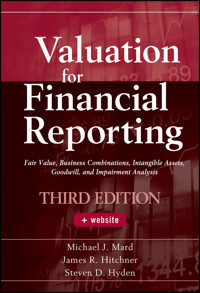
Now in a third edition, Valuation for Financial Reporting provides practical implementation guidance for practitioners, auditors, and their clients in the private and public sectors. This one-stop resource clearly explains SFAS 141R, Business Combinations; SFAS 160, Noncontrolling Interests in Consolidated Financial Statements; and SFAS 157, Fair Value Measurements. The new edition furthers the elements of fair value in financial reporting in accordance with recent standards, providing primary emphasis on fair value measurements and reporting, and the valuation and impairment analysis of intangible assets and goodwill.
Written by leading experts in the valuation field, the Third Edition features:
- Invaluable tools including flowcharts for SFAS 157 and SFAS 141R, a checklist for implementing the fair value measurement standard, and a preparer’s worksheet
- Discussion of the valuation aspects of the new financial reporting requirements, including how to identify and measure contingent considerations
- Interpretations of the accounting requirements with application of the requirements to specific facts and circumstances
- Specific guidance for determining fair value in a business combination
- Guidance for determining fair value measurement, including fair value definition, transaction costs, transportation costs, market participants, and highest and best use
Now featuring an accompanying Website, Valuation for Financial Reporting, Third Edition is practical and easy to follow, with detailed examples of an impairment analysis as well as a business combination in which tangible and intangible assets are identified and valued. It is the authoritative reference every valuation professional must have.
Sie lesen das E-Book in den Legimi-Apps auf:
Seitenzahl: 344
Veröffentlichungsjahr: 2010
Ähnliche



















Copyright © 2011 by Michael J. Mard, James R. Hitchner, Steven D. Hyden. All rights reserved.
Published by John Wiley & Sons, Inc., Hoboken, New Jersey.
Published simultaneously in Canada.
No part of this publication may be reproduced, stored in a retrieval system, or transmitted in any form or by any means, electronic, mechanical, photocopying, recording, scanning, or otherwise, except as permitted under Section 107 or 108 of the 1976 United States Copyright Act, without either the prior written permission of the Publisher, or authorization through payment of the appropriate per-copy fee to the Copyright Clearance Center, Inc., 222 Rosewood Drive, Danvers, MA 01923, (978) 750-8400, fax (978) 646-8600, or on the Web at www.copyright.com. Requests to the Publisher for permission should be addressed to the Permissions Department, John Wiley & Sons, Inc., 111 River Street, Hoboken, NJ 07030, (201) 748-6011, fax (201) 748-6008, or online at http://www.wiley.com/go/permissions.
Limit of Liability/Disclaimer of Warranty: While the publisher and author have used their best efforts in preparing this book, they make no representations or warranties with respect to the accuracy or completeness of the contents of this book and specifically disclaim any implied warranties of merchantability or fitness for a particular purpose. No warranty may be created or extended by sales representatives or written sales materials. The advice and strategies contained herein may not be suitable for your situation. You should consult with a professional where appropriate. Neither the publisher nor author shall be liable for any loss of profit or any other commercial damages, including but not limited to special, incidental, consequential, or other damages. For general information on our other products and services or for technical support, please contact our Customer Care Department within the United States at (800) 762-2974, outside the United States at (317) 572-3993 or fax (317) 572-4002.
Wiley also publishes its books in a variety of electronic formats. Some content that appears in print may not be available in electronic books. For more information about Wiley products, visit our web site at www.wiley.com.
Library of Congress Cataloging-in-Publication Data
Mard, Michael J.
Valuation for financial reporting : fair value, business combinations, intangible assets, goodwill and impairment analysis / Michael J. Mard, James R. Hitchner, Steven D.
Hyden. — 3rd ed.
p. cm.
Includes bibliographical references and index.
ISBN 978-0-470-53489-2 (cloth); ISBN 978-0-470-93335-0 (ebk);
ISBN 978-0-470-93341-1 (ebk); ISBN 978-0-470-93342-8 (ebk)
1. Intangible property—Accounting. 2. Goodwill (Commerce)—Accounting.
I. Hitchner, James R. II. Hyden, Steven D. III. Title.
HF5681.I55V348 2011
657′.3—dc22
2010026661
To our families, near and far, young and old,
those that have come to us recently
and those that have gone before us:
we love you and thank you.
To Pam, Seph, Joe, Shelley, and
Isabelle (coming this Thanksgiving),
Mom and Greg:
Thank you for your love and support,
which make this book possible.
—Mike Mard
To my three children,
Jason, Michael, and Deborah.
I couldn't be more proud of you.
To Karen, with love,
you make all we do so much better.
—Jim Hitchner
To my loves, Maria and Amy:
Your support means everything.
—Steve Hyden
Contents
Cover
Title Page
Copyright
Dedication
Preface
Acknowledgments
About the Authors
About the Website
Chapter 1 Fair Value Measurements and Financial Reporting: Financial Reporting and the Current Environment
Fair Value Measurements
Mark-to-Market Accounting
Appendix 1.1: Fair Value Flowchart
Chapter 2 Business Combinations
Intangible Assets
Business Combinations
The Acquisition Method
Recognition and Measurement
Goodwill
Recording the Consideration Transferred
Disclosure
Appendix 2.1: Business Combination Flowchart
Appendix 2.2: Business Combination Overview
Appendix 2.3: Intellectual Property
Chapter 3 Case Study 1: Determining the Value of Goodwill and Other Intangible Assets in a Business Combination
Consideration and Calculation of the Total of Intangible Assets and Goodwill
Business Enterprise Analysis
Valuation of Tangible Assets
Valuation of Intangible Assets
Valuation of Goodwill
Weighted Average Return on Assets
Disclosure
Chapter 4 Noncontrolling Interests and Impairment
Noncontrolling Interests
Impairment
Chapter 5 Case Study 2: Impairment Analysis
Valuation of Tangible Assets
Valuation of Intangible Assets
Conclusion
Chapter 6 Implementation and Reference Aids
Business Valuation Reporting Standards
Reference Aids
Implementation Aids
Index
Preface
The third edition of this book furthers the elements of fair value in financial reporting in accordance with recent standards, with primary emphasis on fair value measurements and reporting, and the valuation and impairment analysis of intangible assets and goodwill. Chapter 1 discusses the objectives of financial reporting and the adoption of the Financial Accounting Standards Board's (FASB) Accounting Standards Codification (ASC), including Fair Value Measurements, from the perspective of the valuation specialist. In addition, Chapter 1 describes work done by academic researchers on the relevance of fair value accounting.
This book is designed to provide practical implementation guidance to CFOs, auditors, and other CPAs in the private and public sectors. Because of the requirements for financial reporting of intangible assets and goodwill, auditors and valuation analysts will not only have to focus on determining the fair values of assets in accordance with Topics 350 and 820 of the ASC, they also must assess on at least an annual basis whether impairment of those assets has occurred. This book explains the valuation aspects of the new financial reporting requirements, including how to identify and measure contingent consideration, consideration transferred, goodwill, and identifiable intangible assets for both controlling and noncontrolling interests. It shows how to determine if impairment has occurred and employs specific methods to assess the financial impact of such impairment.
In later chapters, readers are provided an example of a business combination in which tangible and intangible assets are identified and value measured. A detailed example of an impairment analysis is also provided. These case studies cover the determination of fair value of assets and reporting units under ASC Topics 350 and 805, which incorporate FASB's Fair Value Measurement requirements.
Significant issues related to impairment testing are addressed, including treatment of previously identified but unbooked intangible assets subsumed in goodwill, what constitutes a reporting unit, and how to handle synergies resulting from the business combination and subsequent impairment.
We have included a checklist for data gathering and a flowchart and work program designed to guide the valuation analyst through the maze of methodologies that may be employed in the determination of the value of intangibles. To assist with the financial reporting standards, we have included a flowchart and worksheet for the fair value measurement process. In-process research and development (IPR&D) receives special attention, with the inclusion of the American Institute of Certified Public Accountants (AICPA) Model Audit Program, which delineates procedures to be considered when auditing a business combination transaction that may include the purchase of IPR&D.
This book covers in broad terms the financial reporting disclosures required by generally accepted accounting principles (GAAP). We believe such matters to be corporate and audit decisions. Our goal has been to provide a concise and understandable explanation of the regulatory and conceptual issues underlying fair value measurements in business combinations and impairment testing. We would like to address attention to the fact that the AICPA Practice Aid Assets Acquired in a Business Combination to Be Used in Research and Development Activities: A Focus on Software, Electronic Devices, and Pharmaceutical Industries is no longer in print but is being revised by the AICPA. However, at this writing the revision has not been completed. The elements we cite from the original document are, we believe, fundamentally and economically sound. We believe that citing the original document accurately enhances fair value measurement and allows us to bring this text to market in a more timely fashion. The authors hope that this third edition will provide practical implementation guidance for the preparer, as well as a useful framework for interpretation by the user.
Acknowledgments
To Deanna Muraki, special thanks for your hard work, constructive editing, and for keeping us focused on the finish line. This book was made possible with your service as in-house editor and processor. We also thank John DeRemigis, editor, Judy Howarth, associate editor, and Chris Gage, production editor, for providing John Wiley & Sons’ formidable support. We particularly thank John Wiley & Sons and Edward Trott (retired FASB) for allowing us to utilize material from Business Combination with SFAS 141R, 157, and 160, A Guide to Financial Reporting, from which much was drawn for this text. Thank you to Donald Wisehart for his contribution in the reporting standards comparison in Chapter 6. Our staff deserves special thanks for keeping the wheels turning while we were elsewhere engaged.
We wish to thank our reviewers for their many comments and suggestions for improving this third edition: Neil Beaton, CPA/ABV, ASA, CFA, Grant Thornton International, Ltd.; Darren S. Cordier, CFA, FV Specialists, Inc.; Michael A. Crain, CPA/ABV, ASA, CFA, CFE, The Financial Valuation Group; Gordon Goodman, trading control officer, Occidental Petroleum and member of the FASB's Valuation Resource Group; Robin Taylor, CPA/ABV, CBA, CFE, CVA, Dixon Hughes, PLLC and current AICPA Chair; Chris Thorn, BNP Paribas Real Estate and current International Valuation Standards Council representative to the FASB's Valuation Resource Group; and Donald P. Wisehart, CPA/ABV, CVA, MST, Wisehart, Inc.
Special thanks are also given to the Financial Accounting Standards Board. Portions of various documents, copyrighted by the Financial Accounting Foundation (FAF), 401 Merritt 7, P.O. Box 5116, Norwalk, CT 06856-5116, USA, are reproduced with permission. Complete copies of these documents are available from the FAF.
Finally, we express our gratitude to Bob Herz, FASB Chair (2002–2010), and the many FASB Board members serving throughout this period of change and controversy. Their efforts have brought about a successful transformation in accounting and financial reporting, producing comprehensive principles, improved transparency, and expanded relevance for users of financial statements.
Michael J. Mard
James R. Hitchner
Steven D. Hyden
About the Authors
Michael J. Mard, CPA/ABV/CFF, ASA, is president of The Financial Valuation Group of Florida, Inc. (FVG) in Tampa, Florida (www.fvgfl.com). FVG is a financial advisory firm specializing in valuation and litigation services. Mr. Mard was founding president of the Financial Consulting Group, a national association of professional service firms dedicated to excellence in valuation, litigation, and financial consulting. He has bachelor's and master's degrees in accounting from the University of South Florida. He holds the American Institute of Certified Public Accountant's (AICPA) Accreditation in Business Valuation (ABV) and Certified in Financial Forensics (CFF) designations, and is an Accredited Senior Appraiser (ASA) with the American Society of Appraisers.
Mr. Mard has been a full-time business appraiser and expert witness for more than 25 years, specializing in intangible assets, specifically intellectual property. He has developed analyses that have been reviewed and accepted by the Securities and Exchange Commission (SEC), major accounting firms, the Internal Revenue Service (IRS), and the courts. Mr. Mard has provided expert testimony some 125 times in both federal and state courts related to intangible assets, intellectual property, business damages, marital dissolution, shareholder disputes, and IRS matters.
Mr. Mard is lead author of Valuation for Financial Reporting: Intangible Assets, Goodwill, and Impairment Analysis, SFAS 141 and 142; Valuation for Financial Reporting: Fair Value Measurements and Reporting, Intangible Assets, Goodwill, and Impairment, 2nd edition; Business Combinations with SFAS 141R, 157, and 160: A Guide to Financial Reporting; Driving Your Company's Value: Strategic Benchmarking for Value; and Financial Valuation Workbook (1st, 2nd, and 3rd editions) all published by John Wiley & Sons. He is co-author of Financial Valuation: Applications and Models (1st, 2nd, and 3rd editions), also published by John Wiley & Sons. Mr. Mard is co-author of AICPA's three-part self-study video course series on SFAS No. 141 and 142 on business combinations, intangible assets, and goodwill impairment. Mr. Mard has co-authored 25 courses and published more than 75 articles. He has been a presenter, speaker, and instructor more than 80 times.
Mr. Mard is active at state and national levels, with an emphasis on business valuation standards and intellectual property valuations. He has served on numerous committees and task forces of the AICPA, Florida Institute of Certified Public Accountants, American Society of Appraisers, and the Financial Accounting Standards Board (FASB), including continuing to serve on the FASB's Valuation Resource Group (ten years). He has received the AICPA Business Volunteer of the Year Award and has been inducted into the AICPA Business Valuation Hall of Fame.
James R. Hitchner, CPA/ABV/CFF, ASA, is managing director of Financial Valuation Advisors (www.finvaluation.com) and is president of the Financial Consulting Group (www.gofcg.org). He is also CEO of Valuation Products and Services (www.valuationproducts.com), which created and distributes the Business Valuation Standards Compliance Toolkit and presents monthly webinars. He is also editor in chief of Financial Valuation and Litigation Expert, a bimonthly journal that presents views and tools from some of the leading experts in valuation, forensics/fraud, and litigation services.
Mr. Hitchner is editor/co-author of the books Financial Valuation: Applications and Models (FVAM) (1st, 2nd, and 3rd editions), Financial Valuation Workbook (FVW) (1st, 2nd, and 3rd editions), Valuation for Financial Reporting: Intangible Assets, Goodwill, and Impairment Analysis, SFAS 141 and 142, and Valuation for Financial Reporting: Fair Value Measurements and Reporting, Intangible Assets, Goodwill, and Impairment, 2nd edition, all published by John Wiley & Sons. He is also co-author of PPC's Guide to Business Valuations, 20th edition, published by Thomson Reuters. FVAM and FVW have been adopted by the AICPA for its five-day National Business Valuation School courses and by NACVA for its three-day Advanced Business Valuation courses.
Mr. Hitchner has been recognized as a qualified expert witness and has provided testimony on valuations in numerous state and federal courts. He has also been involved in hundreds of intangible asset valuations and was an ad hoc advisor to the FASB on its deliberations concerning SFAS 141/142 and presented two sessions to the Board on valuing and lifing intangible assets.
He has spent more than 30 years in valuation services including as a shareholder with Phillips Hitchner Group, partner-in-charge of valuation services for the Southern Region of Coopers & Lybrand (currently PricewaterhouseCoopers), and senior appraiser with American Appraisal Associates. In the valuation area he has co-authored more than 20 courses, taught more than 60 courses, published more than 80 articles, and has made more than 180 conference presentations. He is also an inductee in the AICPA Business Valuation Hall of Fame and a two-time recipient of the AICPA's Business Valuation Volunteer of the Year award. He was also one of four members of the AICPA Business Valuation Standards Writing Task Force and served for its entire six years up to the June 2007 official release of the standards.
Steven D. Hyden, CPA/ABV, ASA, is chief operating officer of The Financial Valuation Group of Florida, Inc. in Tampa, Florida (www.fvgfl.com). Mr. Hyden is also president of Hyden Capital, Inc., an affiliate providing merger and acquisition advisory services. Mr. Hyden has been a full-time business appraiser and expert witness for more than 22 years, specializing in intangible assets, including intellectual property. He has developed analyses that have been reviewed and accepted by the SEC, major accounting firms, the IRS, and the courts.
Mr. Hyden is co-author of Valuation for Financial Reporting: Intangible Assets, Goodwill, and Impairment Analysis, SFAS 141 and 142; Valuation for Financial Reporting: Fair Value Measurements and Reporting, Intangible Assets, Goodwill, and Impairment, 2nd edition; and Business Combinations with SFAS 141R, 157, and 160: A Guide to Financial Reporting, all published by John Wiley & Sons. He is co-author of Financial Valuation: Applications and Models (1st, 2nd, and 3rd editions), also published by John Wiley & Sons. He has published numerous articles, co-authored and taught multiple valuation courses including an A&A CPE course on SFAS No. 157, and was a guest expert for the AICPA Continuing Professional Education video course series “Valuation of Intellectual Property.”
Mr. Hyden has a bachelor's degree in marketing from Syracuse University and an MBA from Pace University in New York. He is a CPA and holds the AICPA Accreditation in Business Valuation (ABV) specialty designation. Mr. Hyden also is an Accredited Senior Appraiser (ASA) with the American Society of Appraisers and currently serves on the Appraisal Institute Task Force.
About the Website
This book, Valuation for Financial Reporting: Fair Value, Business Combinations, Intangible Assets, Goodwill, and Impairment Analysis, 3rd edition, includes a PowerPoint format of Appendix 2.2 to Chapter 2, Business Combinations and Noncontrolling Interests, Results of IASB/FASB Joint Project.
Please visit the supporting website to view these slides at www.wiley.com/go/mardvaluation3e.
Chapter 1
Fair Value Measurements and Financial Reporting
Financial Reporting and the Current Environment
Fair value is here to stay and fair value measurements are becoming a pillar of accounting and auditing. The accounting model has changed. No longer is accounting based solely on historical cost; in fact, it never was. It has always been a mixed-attribute system; a little historical cost here and a little fair value there. The more pronounced change, however, has been from hierarchal guidance that was predominantly rules-based to principles-based guidance. Accounting has always been regulatory driven. Until now, professionals could cite a specific rule to document compliance, a “one size fits all.” Now, though, the citations must be principles driven—“do what's right given the circumstances.”
Financial accounting and reporting are in the midst of one of the most significant revolutionary changes in modern history…. We are moving from an accounting paradigm that existed in the age of an industrial economy to an accounting paradigm that fits the economy in an information age. This redirection has resulted in the following: a change in the conceptualization and application of relevance and reliability, an increased use of fair value versus historical cost measurements, a renewed emphasis on principles versus rules, and an evaluation of the composition of the basic financial statements.
Lesen Sie weiter in der vollständigen Ausgabe!
Lesen Sie weiter in der vollständigen Ausgabe!
Lesen Sie weiter in der vollständigen Ausgabe!
Lesen Sie weiter in der vollständigen Ausgabe!
Lesen Sie weiter in der vollständigen Ausgabe!
Lesen Sie weiter in der vollständigen Ausgabe!




