


84,99 €
Mehr erfahren.
- Herausgeber: John Wiley & Sons
- Kategorie: Fachliteratur
- Sprache: Englisch
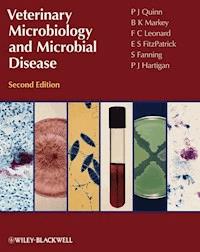
Microbiology is one of the core subjects for veterinary students, and since its first publication in 2002, Veterinary Microbiology and Microbial Disease has become an essential text for students of veterinary medicine. Fully revised and expanded, this new edition updates the subject for pre-clinical and clinical veterinary students in a comprehensive manner. Individual sections deal with bacteriology, mycology and virology. Written by an academic team with many years of teaching experience, the book provides concise descriptions of groups of microorganisms and the diseases which they cause. Microbial pathogens are discussed in separate chapters which provide information on the more important features of each microorganism and its role in the pathogenesis of diseases of animals. The international and public health significance of these pathogens are reviewed comprehensively. The final section is concerned with the host and is organized according to the body system affected.
Tables, boxes and flow diagrams provide information in an easily assimilated format. This edition contains new chapters on molecular diagnostics and on infectious conditions of the skin, cardiovascular system, urinary tract and musculoskeletal system. Many new colour diagrams are incorporated into this edition and each chapter has been updated.
Key features of this edition:
- Twelve new chapters included
- Numerous new illustrations
- Each chapter has been updated
- Completely re-designed in full colour
- Fulfils the needs of veterinary students and academics in veterinary microbiology
- Companion website with figures from the book as Powerpoints for viewing or downloading by chapter: www.wiley.com/go/quinn/veterinarymicrobiology
Veterinary Microbiology and Microbial Disease remains indispensable for all those studying and teaching this essential component of the veterinary curriculum.
Sie lesen das E-Book in den Legimi-Apps auf:
Seitenzahl: 2275
Veröffentlichungsjahr: 2011
Ähnliche


















Contents
Preface
Acknowledgements
Author biographies
Section I Introduction to Microbiology Infection Immunity and Molecular Diagnostic Methods
1 Microbiology microbial pathogens and infectious disease
Further reading
2 Subdivisions classification and morphological characterization of infectious agents
Microscopical techniques
Pathogenic microorganisms
Biological classification and nomenclature
References
Further reading
3 Infection and immunity
Normal flora
Comparative aspects of innate and adaptive immunity
Recognition of pathogens
Cells involved in innate immune responses
Complement
Adaptive immunity
Immunity to bacteria
Immunity to fungi
Immunity to viruses
Concluding comments
References
Further reading
4 Immunodeficiency diseases
Severe combined immunodeficiency diseases
Thymic aplasia or hypoplasia
Wiskott-Aldrich syndrome
Primary immunodeficiency diseases involving B lymphocytes
Secondary immunodeficiency
Further reading
5 Vaccines and vaccination
Vaccination
Inactivated vaccines
Live attenuated vaccines
Vaccines produced by recombinant nucleic acid technology
Synthetic peptide vaccines
DNA vaccines
Reverse vaccinology
Adjuvants
Administration of vaccines
Adverse reactions following vaccination
Vaccination failure
References
Further reading
6 Molecular diagnostic methods
Analytical properties of nucleic acid
Molecular hybridization
DNA sequencing
Polymerase chain reaction (PCR)
Real-time PCR
Diagnostic approaches to surveillance and subtyping of bacteria a comparison of phenotyping and genotyping methods
Molecular subtyping for definitive identification of bacteria
Plasmid profiling
Restriction endonuclease analysis (REA)
Ribotyping
Pulsed-field gel electrophoresis (PFGE)
PCR-based subtyping methods
Multilocus sequence typing (MLST)
DNA microarray technology
Whole bacterial genome sequencing
References
Further reading
Section II Introductory Bacteriology
7 The structure of bacterial cells
Capsule
Cell wall
Cytoplasmic membrane
Cytoplasm
Ribosomes
Nuclear material
Flagella
Pili
Biofilms
Protein secretion systems
Endospores
Reference
Further reading
8 Cultivation preservation and inactivation of bacteria
Bacterial growth
Bacterial nutrition
Physical and chemical factors which influence growth
Preservation of microorganisms
Physical methods for inactivating microorganisms
Biosafety cabinets
Reference
Further reading
9 Bacterial genetics mechanisms of genetic variation and gene databases
Replication of bacterial DNA
Transcription and translation the expression of genetic information
Mechanisms contributing to genetic variation
Examples of mobile genetic elements
Genetic engineering of bacteria in the laboratory
Genetic databases and bioinformatics
Further reading
10 Laboratory diagnosis of bacterial disease
Selection collection and transportation of specimens
Identification of pathogenic bacteria
Serology
Further reading
11 Antibacterial agents
Development of chemotherapy for bacterial infections
Mode and site of action
Combined antibacterial therapy
Factors influencing a ntibacterial activity
Further reading
12 Antibacterial resistance
Resistance mechanisms
Multiple drug resistance
Strategies for limiting a ntibacterial resistance
Antibacterial susceptibility testing
References
Further reading
13 Bacterial colonization tissue invasion and clinical disease
Commensals
Pathogens
Colonization and growth
Pathogen-host interactions
Virulence factors
Responses of the host to bacterial pathogens
The clinical spectrum of bacterial disease
References
Section III Pathogenic Bacteria
14 Staphylococcus species
Usual habitat
Differentiation of Staphylococcus species
Pathogenesis and pathogenicity
Diagnostic procedures
Clinical infections
References
Further reading
15 Streptococci
Usual habitat
Differentiation of the streptococci
Pathogenesis and pathogenicity
Diagnostic procedures
Clinical infections
References
Further reading
16 Actinobacteria
Actinomyces Arcanobacterium and Actinobaculum species
Nocardia species
Dermatophilus congolensis
Crossiella equi
References
Further reading
17 Corynebacterium species
Usual habitat
Differentiation of the corynebacteria
Pathogenesis and pathogenicity
Diagnostic procedures
Clinical infections
References
Further reading
18 Rhodococcus equi
Usual habitat
Clinical infections
References
Further reading
19 Listeria species
Usual habitat
Differentiation of Listeria species
Pathogenesis and pathogenicity
Clinical infections
References
Further reading
20 Erysipelothrix rhusiopathiae
Usual habitat
Definitive identification of Erysipelothrix rhusiopathiae
Pathogenesis and pathogenicity
Clinical infections
References
Further reading
21 Bacillus species
Usual habitat
Differentiation of Bacillus species
Clinical infections
Infections with Bacillus licheniformis
References
Further reading
22 Clostridium species
Usual habitat
Specimen collection and cultural requirements
Detection and differentiation of clostridia
Clinical conditions caused by neurotoxic clostridia
Clinical conditions caused by histotoxic clostridia
Enteropathogenic and enterotoxaemia-producing clostridia
References
Further reading
23 Mycobacterium species
Usual habitat
Differentiation of pathogenic mycobacteria
Clinical infections
References
Further reading
24 Enterobacteriaceae
Usual habitat
Differentiation of the Enterobacteriaceae
Escherichia coli
Salmonella serotypes
Yersinia species
Opportunistic pathogens
References
Further reading
25 Pseudomonas aeruginosa and Burkholderia species
Usual habitat
Differentiation of Pseudomonas and Burkholderia species
Clinical infections
References
Further reading
26 Actinobacillus species
Usual habitat
Differentiation of Actinobacillus species
Pathogenesis and pathogenicity
Clinical infections
References
Further reading
27 Pasteurella species Mannheimia haemolytica and Bibersteinia trehalosi
Usual habitat
Differentiation of Pasteurella Bibersteinia and Mannheimia species
Pathogenesis and pathogenicity
Diagnostic procedures
Clinical infections
References
Further reading
28 Francisella tularensis
Usual habitat
Epidemiology
Clinical infections
References
29 Histophilus somni Haemophilus parasuis and Avibacterium paragallinarum
Usual habitat
Differentiation of Histophilus somni Haemophilus parasuis and Avibacterium paragallinarum
Pathogenesis and pathogenicity
Diagnostic procedures
Clinical infections
References
Further reading
30 Taylorella species
Usual habitat
Clinical infections
References
Further reading
31 Bordetella species
Usual habitat
Differentiation of Bordetella bronchiseptica and B. avium
Pathogenesis and pathogenicity
Diagnostic procedures
Clinical infections
References
Further reading
32 Moraxella species
Moraxella bovis
References
33 Brucella species
Usual habitat
Differentiation of Brucella species
Pathogenesis and pathogenicity
Diagnostic procedures
Clinical infections
References
Further reading
34 Campylobacter and Helicobacter species
Campylobacter species
Helicobacter species
References
Further reading
35 Lawsonia intracellularis
Usual habitat
Pathogenesis and pathogenicity
Clinical signs
Diagnosis
Treatment and control
References
Further reading
36 Spirochaetes
Leptospira species
Borrelia species
Brachyspira and Treponema species
References
Further reading
37 Pathogenic anaerobic non-spore-forming Gram-negative bacteria
Usual habitat
Diagnostic procedures
Differentiation of the non-spore-forming Gram-negative anaerobes
Pathogenesis and pathogenicity
Clinical infections
References
Further reading
38 Mycoplasmas
Usual habitat
Differentiation of the mycoplasmas
Pathogenesis and pathogenicity
Diagnostic procedures
Clinical infections
References
Further reading
39 Chlamydia and Chlamydophila species
Usual habitat
Pathogenesis and pathogenicity
Diagnostic procedures
Clinical infections
References
Further reading
40 Rickettsiales and Coxiella burnetii
Epidemiology
Pathogenesis and pathogenicity
Recognition and differentiation of members of the Rickettsiales
Clinical infections
References
Further reading
41 Bacterial species of limited pathogenic significance
Acinetobacter species
Bartonella species
Aeromonas species Plesiomonas shigelloides and Vibrio species
Chromobacterium violaceum
Ornithobacterium rhinotracheale
Riemerella anatipestifer
Streptobacillus moniliformis
References
Section IV Mycology
42 General features of fungi associated with disease in animals
Structure
Growth reproduction and colonial formation
General features of fungal disease
Diagnosis of fungal diseases
Differentiation of fungal species
Antifungal chemotherapy
References
Further reading
43 Dermatophytes
Usual habitat
Laboratory recognition and differentiation
Pathogenesis and pathogenicity
Diagnostic procedures
Clinical infections
References
Further reading
44 Aspergillus species
Usual habitat
Recognition of Aspergillus species
Pathogenesis and pathogenicity
Diagnostic procedures
Clinical infections
References
Further reading
45 Yeasts and disease production
Candida species
Cryptococcus species
Malassezia pachydermatis
‘Megabacteria’ (Macrorhabdus ornithogaster)
Trichosporon beigelii
Geotrichum candidum
References
Further reading
46 Dimorphic fungi
Blastomyces dermatitidis
Histoplasma capsulatum
Coccidioides species
Sporothrix schenckii
References
Further reading
47 Zygomycetes of veterinary importance
Mucorales and Mortierellales
Entomophthorales
References
Further reading
48 Fungus-like organisms of veterinary importance
Pythium insidiosum
Rhinosporidium seeberi
Lacazia loboi
References
Further reading
49 Pneumocystis carinii
Usual habitat
Pathogenesis and pathogenicity
Diagnostic procedures
Clinical infections
References
Further reading
50 Opportunistic infections caused predominantly by phaeoid fungi
Usual habitat
Clinical infections
Diagnosis
Treatment
References
Further reading
51 Mycotoxins and mycotoxicoses
Aflatoxicosis
Citrinin toxicosis
Cyclopiazonic acid toxicosis
Diplodiosis
Ergotism
Facial eczema
Fescue toxicosis
Fumonisin toxicoses
Mouldy sweet potato toxicity
Mycotoxic lupinosis
Ochratoxicosis
Mycotoxic oestrogenism
Patulin toxicosis
Slaframine toxicosis
Sterigmatocystin toxicosis
Tremorgen intoxications
Trichothecene toxicoses
References
Further reading
52 Pathogenic algae and cyanobacteria
Prototheca species
Chlorella species
The cyanobacteria
References
Further reading
53 Antifungal chemotherapy
Antifungal drugs
Resistance to antifungal drugs
References
Further reading
Section V Introductory Virology
54 Nature structure and taxonomy of viruses
The origin of viruses
Structure of viruses
Taxonomy of viruses
References
Further reading
55 Replication of viruses
Replication of DNA viruses
Replication of RNA viruses
Protein synthesis
Assembly and release of virions
References
Further reading
56 Genetics and evolution of viruses
Mutation
Viral recombination
Viral genomic sequence analysis
Evolution of viruses
References
Further reading
57 Propagation of viruses and virus-cell interactions
Propagation of viruses
Determination of virus concentration
Virus-host cell interactions
Further reading
58 Pathogenesis of viral diseases
Routes of infection
Dissemination in the host
Clinical signs
Virus shedding and patterns of infection
Further reading
59 Laboratory diagnosis of viral infections
Collection preservation and transportation of samples
Detection of virus viral antigens or nucleic acid
Diagnostic serology
Interpretation of test results
Further reading
60 Antiviral chemotherapy
Introduction
Development of antiviral drugs
Viral infections and strategies for interrupting virus replication
Immunomodulators
Ion channel blocking compounds
Neuraminidase inhibitors
Antiviral drugs which inhibit viral genome replication
Antiretroviral drugs
Resistance to antiviral drugs
Future developments
References
Further reading
Section VI Viruses and Prions
61 Herpesviridae
Clinical infections
References
Further reading
62 Papillomaviridae
Clinical infections
References
Further reading
63 Adenoviridae
Clinical infections
References
Further reading
64 Poxviridae
Clinical infections
References
Further reading
65 Asfarviridae
Africans wine fever
References
Further reading
66 Parvoviridae
Clinical infections
References
Further reading
67 Circoviridae
Clinical infections
References
Further reading
68 Retroviridae
Clinical infections
References
Further reading
69 Reoviridae
Clinical infections
References
Further reading
70 Birnaviridae
Clinical infections
Further reading
71 Orthomyxoviridae
Clinical infections
References
Further reading
72 Paramyxoviridae
Clinical infections
References
Further reading
73 Rhabdoviridae
Clinical infections
References
Further reading
74 Bornaviridae
Clinical infections
References
Further reading
75 Bunyaviridae
Clinical infections
References
Further reading
76 Picornaviridae
Clinical infections
References
77 Caliciviridae
Clinical infections
References
Further reading
78 Astroviridae
Clinical infections
References
79 Coronaviridae
Clinical infections
References
Further reading
80 Arteriviridae
Clinical infections
References
Further reading
81 Flaviviridae
Clinical infections
References
Further reading
82 Togaviridae
Clinical infections
References
Further reading
83 Prions: unconventional infectious agents
Clinical infections
References
Further reading
Section VII Microbial Agents and Disease Production
84 Tissue and system preferences of bacterial fungal and viral pathogens and the nature of the diseases caused by these infectious agents
References
Further reading
85 Interactions of microbial pathogens with the nervous system
Haematogenous bacterial infections
Haematogenous viral infections
Infection via peripheral nerves
Infections with lentiviruses
Viral infections which cause developmental anomalies
Transmissible spongiform encephalopathies (TSEs)
Algal bacterial and fungal neurotoxicity
Algal and fungal infections
Further reading
86 Interactions of microbial pathogens with the male and female reproductive systems
Infections of the male reproductive system
Infections of the non pregnant uterus
Infections of the pregnant uterus
Further reading
87 The role of microbial pathogens in intestinal disease
Intestinal structure and function
Normal flora
Pathogenetic mechanisms in enteritis
Further reading
88 The role of microbial pathogens in respiratory disease
Defence mechanisms in the conducting airways
Defence mechanisms in the lungs
Microbial diseases of the conducting airways
Microbial diseases of the lungs
References
Further reading
89 Interactions of microbial pathogens with the renal system
Ascending infection of the excretory pathway
Structure and function of the excretory passages
Virulence factors of uropathogens
Responses of the host to ascending bacterial infection of the excretory pathway
Infectious diseases of the kidneys
References
90 Microbial diseases of the cardiovascular system
The heart: structural and functional relationships
Infections of the heart
Infections of the vascular channels
References
91 Interactions of microbial pathogens with the musculoskeletal system
Responses of muscle to microbial pathogens
Distinctive structural features of skeletal muscle
Responses of muscle to injury
Responses of muscle to bacterial infection
Responses of bone to microbial pathogens
Responses of joints to microbial pathogens
Foot infections of cattle sheep and pigs associated with microbial agents
References
92 The role of microbial pathogens in diseases of the integumentary system
Structural and functional perspectives
Responses of the skin to microorganisms
Bacterial diseases of skin
Viral diseases of skin
Fungal diseases of skin
References
93 Bacterial causes of bovine mastitis
Mammary gland defence mechanisms
Contagious mastitis
Environmental mastitis
Diagnosis
Treatment
Prevention and control
References
94 Disinfection biosecurity and other aspects of disease control
Survival of infectious agents in the environment
Transmission of infectious agents
Biosecurity
Animals
Feed
Water
Environment of domestic animals
Vehicular and pedestrian traffic
Equipment
Animal waste
Wild mammals and birds
Cleaning and disinfection of farm buildings
Thermal inactivation of microbial pathogens
Disinfection antisepsis and sterilization
Characteristics modes of action and selection of chemical disinfectants
Chemical inactivation of microbial pathogens
Bacteria
Fungal pathogens
Viruses
Prions
Chemicals used as disinfectants in veterinary medicine
Microbial resistance to disinfection
Disinfection procedures
References
Further reading
Appendix: Relevant websites
General topics
Genomic analysis
Bacteriology
Mycology
Virology
Infectious diseases
Index
This edition first published 2011
© 2002 by Blackwell Science Ltd
© 2011 by P.J. Quinn, B.K. Markey, F.C. Leonard, E.S. FitzPatrick, S. Fanning and P.J. Hartigan
Wiley-Blackwell is an imprint of John Wiley & Sons, formed by the merger of Wiley’s global Scientific,
Technical and Medical business with Blackwell Publishing.
Registered office:
John Wiley & Sons Ltd, The Atrium, Southern Gate, Chichester, West Sussex, PO19 8SQ, UK
Editorial offices:
9600 Garsington Road, Oxford, OX4 2DQ, UK
The Atrium, Southern Gate, Chichester, West Sussex, PO19 8SQ, UK
2121 State Avenue, Ames, Iowa 50014-8300, USA
For details of our global editorial offices, for customer services and for information about how to apply for permission to reuse the copyright material in this book please see our website at www.wiley.com/wiley-blackwell.
The right of the author to be identified as the author of this work has been asserted in accordance with the UK Copyright, Designs and Patents Act 1988.
All rights reserved. No part of this publication may be reproduced, stored in a retrieval system, or transmitted, in any form or by any means, electronic, mechanical, photocopying, recording or otherwise, except as permitted by the UK Copyright, Designs and Patents Act 1988, without the prior permission of the publisher.
Designations used by companies to distinguish their products are often claimed as trademarks. All brand names and product names used in this book are trade names, service marks, trademarks or registered trademarks of their respective owners. The publisher is not associated with any product or vendor mentioned in this book. This publication is designed to provide accurate and authoritative information in regard to the subject matter covered. It is sold on the understanding that the publisher is not engaged in rendering professional services. If professional advice or other expert assistance is required, the services of a competent professional should be sought.
Library of Congress Cataloging-in-Publication Data
Veterinary microbiology and microbial disease / P.J. Quinn, MVB, PhD, MRCVS, Professor Emeritus, Former Professor of Veterinary Microbiology and Parasitology, School of Veterinary Medicine, University College, Dublin, B.K. Markey, MVB, PhD, Dip Stat, MRCVS, Senior Lecturer in Veterinary Microbiology, School of Veterinary Medicine, University College, Dublin, F.C. Leonard, MVB, PhD, MRCVS, Senior Lecturer in Veterinary Microbiology, School of Veterinary Medicine, University College, Dublin, E.S. FitzPatrick, FIBMS, Chief Technical Officer, School of Veterinary Medicine, University College, Dublin, S. Fanning, BSc, PhD, Professor of Food Safety and Zoonoses, Director of Academic Centre for Food Safety, University College Dublin, P.J. Hartigan, BSc, MVM, MA, PhD, MRCVS, Former Senior Lecturer in Veterinary Pathology, Trinity College, Dublin. - Second Edition.
p. ; cm.
Includes bibliographical references and index.
ISBN 978-1-4051-5823-7 (pbk. : alk. paper) 1. Veterinary microbiology. I. Quinn, P. J. (Patrick J.), author. II. Markey, B. K. (Bryan K.), author. III. Leonard, F. C., author. IV. FitzPatrick, E. S., author.
V. Fanning, S., author. VI. Hartigan, P. J., author.
[DNLM: 1. Microbiology. 2. Veterinary Medicine. 3. Communicable Diseases—microbiology.
4. Communicable Diseases—veterinary. QW 70]
SF780.2.V485 2011
636.089′69041–dc22
2010049404
This book is dedicated to the memory of Margery E. Carter and W.J.C. (Bill) Donnelly, co-authors of the first edition
Preface
The pace of change in microbiology has accelerated in recent years as molecular techniques, applied to microbial pathogens, elucidate the pathogenesis of many infectious diseases and improve the reliability of diagnostic test procedures. Today, microbiology occupies a central position in the veterinary curriculum and has developed into a subject of vast complexity. Since the publication of Veterinary Microbiology and Microbial Disease in 2002, many changes have occurred in veterinary microbiology, some on the recommendations of international committees and others as a consequence of relevant research.
The second edition of our book incorporates changes in individual chapters which have been updated and expanded. In addition, new chapters on immunodeficiency diseases, vaccines and vaccination, molecular diagnostic methods, antibacterial resistance, antifungal chemotherapy, antiviral chemotherapy and microbial diseases of the urinary tract, cardiovascular system, musculoskeletal system and the integumentary system have been added.
This edition is divided into seven sections. The first section provides an introduction to microbiology, infection, immunity and molecular diagnostic methods. Section II contains chapters on introductory bacteriology. Pathogenic bacteria are dealt with in Section III. The twelve chapters in Section IV are concerned with mycology. Introductory virology is presented in Section V. Viruses and prions are covered in Section VI. The final section, Section VII, includes chapters on the interactions of microbial pathogens with body systems. A separate chapter in this section deals with bovine mastitis and the final chapter provides a comprehensive review of disinfection, biosecurity and other aspects of disease control.
To facilitate readers requiring additional information on topics included in the book, a list of websites is provided at the end of Section VII.
The use of colour in this edition enhances the quality of the illustrations and facilitates the interpretation of complex diagrams.
The authors would be pleased to receive notification of errors or inaccuracies in this edition of our book.
Acknowledgements
We wish to acknowledge the constructive comments of the following colleagues who offered scientific, technical and editorial advice on individual chapters or who assisted in other ways: Hester McAllister, Marijka Beltman, Aidan Kelly, Paul Stanley, Carolyn Cummins, Eva Maischberger, Jane Irwin, Robert Shiel, Clodagh Kearney, Gráinne McCarthy, Hanne Jahns, Joe Cassidy, Yvonne Abbott, Dores Maguire, Frances LeMatti, Ruth Henry, Pauline Coyle, Sean Hogan, Jarlath Nally, Steve Gordon, Brian Sheahan, Mark Rogers, Shane Cooney, Orla Condell, Marta Martins, Matthew McCusker, Stephen O’Brien, Katie Solomon, Karen Power, Paul Whyte, Patrick Wall and Theo De Waal, School of Veterinary Medicine, University College Dublin; Cliona O’Farrelly, Tim Foster and Patrick Prendergast, Trinity College Dublin; Pat Lenihan, Maire McElroy, Kevin Kenny, Peter O’Neill and Pat Raleigh, Central Veterinary Research Laboratory, Backweston; Patrick Rogan, Department of Agriculture, Fisheries and Food; Hywel Ball, Agri - Food and Biosciences Institute, Stormont; Patrick McDonough, College of Veterinary Medicine, Cornell University; Helen O’Shea, Department of Biological Sciences, Cork Institute of Technology; Alan Reilly and Wayne Anderson, Food Safety Authority of Ireland; Brendan Crowley, Department of Medical Microbiology, St. James’s Hospital, Dublin; Donal Walsh, School of Veterinary Medicine, University of California, Davis; Ross Fitzgerald, Universitry of Edinburgh; Davida Smyth, NewYork University; Clive Lee, Royal College of Surgeons in Ireland; James Buckley, Veterinary Department, Cork County Council.
The facilities and support provided by the librarian, Mr. Diarmuid Stokes, and staff at the veterinary library, Paul Gogarty, Michelle Latimer, Vanessa Buckley, Kathryn Smith and Marie McGourn is acknowledged with gratitude.
Justinia Wood, Nick Morgan, Lucy Nash and their colleagues at Wiley-Blackwell provided advice and assistance throughout this long project. The careful editing of the manuscript by Mary Sayers, copy editor, improved the accuracy of the text, illustrations and references. As Project Manager, Ruth Swan coordinated corrections and advised the authors on technical aspects of changes to the manuscript.
Dublin, July 2011
Author biographies
P.J. Quinn, MVB, PhD, MRCVS, was Professor of Veterinary Microbiology and Parasitology and Head of the Department in the Faculty of Veterinary Medicine, University College Dublin, from 1985 to 2002. After graduating from University College Dublin in 1965, he spent some time in veterinary practice before enrolling as a postgraduate student in Ontario Veterinary College, University of Guelph, Canada. In 1970, he was awarded a PhD for research in veterinary immunology and he remained on the staff of Ontario Veterinary College until his return to the Faculty of Veterinary Medicine, University College Dublin, in 1973.
His research interests have included allergic skin reactions in the horse to biting insects, the epidemiology of toxoplasmosis in sheep, immune mechanisms in the respiratory tract of calves, leptospirosis in dairy cattle, immunomodulation, mechanisms of immunity in the respiratory tract of specific pathogen-free and conventional cats, botulism in gulls around the Irish coastline, factors influencing the tuberculin test in cattle, airborne dispersal of bacteria during slurry spreading, and evaluation of the efficacy of chemical disinfectants against Brucella abortus and Mycobacterium bovis.
In addition to many refereed publications in journals and chapters in books, he edited Cell-mediated Immunity (1984), is senior co-author of Animal Diseases Exotic to Ireland (1992), Clinical Veterinary Microbiology (1994), Microbial and Parasitic Diseases of the Dog and Cat (1997), Veterinary Microbiology and Microbial Disease (2002) and Concise Review of Veterinary Microbiology (2003) and is co-author of Veterinary Embryology (2006).
He was awarded the title Professor Emeritus by University College Dublin in 2002. In 2006, he was recipient of the Association of Veterinary Teachers and Research Workers outstanding teaching award. For his contribution to teaching and faculty development in the Faculty of Veterinary Medicine in Tirana, he was awarded an honorary doctorate by the Agricultural University of Tirana, Albania, in May 2010.
Bryan K. Markey, MVB, PhD, MRCVS, Dip Stat, graduated from the Faculty of Veterinary Medicine, University College Dublin, in 1985. Following a short period in general practice he was appointed house surgeon in the Faculty of Veterinary Medicine, University College Dublin. In 1986, he joined the academic staff as an assistant lecturer in the Department of Veterinary Microbiology and Parasitology. He spent one year on study leave at the Veterinary Sciences Division, Belfast, and enrolled for a PhD degree at Queen’s University. He was awarded a PhD from Queen’s University, Belfast in 1991 and was promoted to senior lecturer in veterinary microbiology in 1997. From 2002 to 2004 he served as Head of Department. In 2005 he was visiting professor at the College of Life Sciences, Queensland University of Technology, Brisbane.
His research interests include chlamydial infections of domestic animals and methicillin-resistant Staphylococcus aureus infection in veterinary species. He has contributed chapters to books on veterinary disinfection and is co-author of Animal Diseases Exotic to Ireland (1992), Clinical Veterinary Microbiology (1994), Microbial and Parasitic Diseases of the Dog and Cat (1997), Veterinary Microbiology and Microbial Disease (2002) and Concise Review of Veterinary Microbiology (2003).
Finola C. Leonard, MVB, PhD, MRCVS, graduated from the Faculty of Veterinary Medicine, University College Dublin, in 1983. She was house surgeon in the Department of Large Animal Medicine, Royal (Dick) School of Veterinary Studies, Edinburgh, for one year and engaged in veterinary practice for three years. She commenced postgraduate studies in the Faculty of Veterinary Medicine, University College Dublin, on leptospirosis in dairy cattle while based at Teagasc, Moorepark, Co. Cork, and was awarded a PhD for research on this topic in 1991. She remained in Moorepark as a postdoctoral research worker until 1997. Her research was concerned with foot lameness in dairy cattle and the influence of housing on the behaviour and welfare of cattle and pigs.
She was appointed college lecturer in the Department of Veterinary Microbiology and Parasitology in the Faculty of Veterinary Medicine, University College Dublin in 1997 and was promoted to senior lecturer in veterinary microbiology in 2002. Her research interests include Salmonella infection in pigs, other zoonotic infections, and antimicrobial resistance, including methicillin-resistant Staphylococcus aureus infection in farm and companion animals.
Eamonn S. FitzPatrick, FIBMS, was awarded Fellowship of the Institute of Biomedical Science in 1978 and was appointed to the post of Principal Technician in the Department of Veterinary Anatomy, University College Dublin. He was appointed to the Histopathology Advisory Committee of the Irish Academy of Medical Laboratory Sciences in 1979. From 1987 to 1989 he was External Examiner for the Diploma in Medical Laboratory Science—Histopathology Option, at the Dublin Institute of Technology, where he also lectured for many years on electron microscopy in the Medical Laboratory Sciences Degree course. He was appointed Chief Technical Officer in the Veterinary Science Unit of the School of Veterinary Medicine, University College Dublin, in 2006. He has been teaching veterinary anatomy and histology for over 25 years.
Recent published work includes papers on hormone receptors in the bovine reproductive tract and the effect of diet supplements on the alimentary tracts of weanling pigs. His current research interests are centred mainly on mucins, mucus gels and the interaction of microbial pathogens with epithelial surfaces, especially of the bovine and equine reproductive tracts. He is co-author of Veterinary Embryology (2006).
Séamus Fanning, BSc, PhD, graduated in Biochemistry and Microbiology from University College Cork. He was awarded a Fulbright Fellowship in 1995 and worked at Baylor College of Medicine, Houston. In 2002 he was appointed as the Professor of Food Safety and Zoonoses at University College Dublin and set up the UCD Centre for Food Safety. Currently, his research interests include the application of molecular methods to food safety to aid in the control of zoonotic bacteria. A significant part of his research is related to the characterization of the genetic mechanisms contributing to the emergence of multiple drug resistance in food - borne pathogens. In particular, this work is related to strain virulence and its influence on survival in the food chain. His research group is involved in characterizing the emerging pathogen, Cronobacter species (formerly known as Enterobacter sakazakii), linked to powdered infant milk formula. The UCD Centre for Food Safety was designated as the World Health Organization (WHO) Collaborating Centre for Research, Reference and Training on Cronobacter.
Patrick J. Hartigan, BSc, MVM, MA, PhD, MRCVS, graduated from the Veterinary College of Ireland in 1955. After a decade in large animal practice in Co. Kerry, he registered as a graduate student at the School of Veterinary Medicine, Trinity College, Dublin. His studies on uterine pathology in repeat breeder cows were rewarded with a PhD in 1970. After 10 years as a pathologist in the School of Veterinary Medicine, he moved to a post as Senior Lecturer in Reproductive Physiology at the Department of Physiology in the Faculty of Health Sciences at Trinity College, where he remained until retirement. At present, he is a Research Associate in the Department of Physiology.
Section IIntroduction to Microbiology, Infection, Immunity and Molecular Diagnostic Methods
Chapter 1
Microbiology, microbial pathogens and infectious disease
The earliest forms of life on this planet are presumed to have had characteristics resembling those of bacteria, most likely anaerobic bacteria. It is postulated that prokaryotes evolved from primitive forms of life and that the subsequent availability of oxygen resulting from photosynthesis contributed to microbial diversity. The chronological sequence of evolutionary events relating to the emergence of microbial life and, subsequently, eukaryotic cells is outlined in Fig. 1.1. This proposed scheme is based on limited factual information, some deriving from information gleaned from fossilized remains of prokaryotic cells approximately 3.5 billion years old and also from studies of ribosomal RNA among microorganisms.
Before the causes of infectious diseases could be discussed and evaluated in a rational manner, events associated with the emergence of life forms required explanation. Traditional views on the origin of life were strongly influenced by the writings of classical Greek and Roman scholars, many of whom espoused the view of spontaneous generation of small living entities. Disease was often attributed to evil forces associated with disturbances in the upper atmosphere, poisonous vapours called miasmas, supernatural events and other influences unrelated to biology. Awareness of the possible existence of forms of life not visible to the naked eye emerged slowly. As early as 1546, in his treatise , Girolamo Fracastoro suggested that animate agents were responsible for disease. Concepts of infectious diseases were closely related to the demonstration of organisms too small to be observed without magnification and to the isolation and characterization of these small organisms, termed microorganisms. Major developments in microbiology, the study of these microorganisms, began with theories relating to the causes of infectious diseases and continued with the development of microscopy, which confirmed the existence of microorganisms visible only by substantial magnification. Towards the middle of the nineteenth century, the pioneering work of Louis Pasteur and Robert Koch confirmed the microbial aetiology of infectious diseases. Progressive developments contributed to the rapid expansion of knowledge and the establishment of microbiology as a subject of major importance not only in human and animal health but also in food processing and preservation.
Lesen Sie weiter in der vollständigen Ausgabe!
Lesen Sie weiter in der vollständigen Ausgabe!
Lesen Sie weiter in der vollständigen Ausgabe!
Lesen Sie weiter in der vollständigen Ausgabe!
Lesen Sie weiter in der vollständigen Ausgabe!
Lesen Sie weiter in der vollständigen Ausgabe!
Lesen Sie weiter in der vollständigen Ausgabe!
Lesen Sie weiter in der vollständigen Ausgabe!
Lesen Sie weiter in der vollständigen Ausgabe!
Lesen Sie weiter in der vollständigen Ausgabe!
Lesen Sie weiter in der vollständigen Ausgabe!
Lesen Sie weiter in der vollständigen Ausgabe!
Lesen Sie weiter in der vollständigen Ausgabe!
Lesen Sie weiter in der vollständigen Ausgabe!
Lesen Sie weiter in der vollständigen Ausgabe!
Lesen Sie weiter in der vollständigen Ausgabe!
Lesen Sie weiter in der vollständigen Ausgabe!
Lesen Sie weiter in der vollständigen Ausgabe!
Lesen Sie weiter in der vollständigen Ausgabe!
Lesen Sie weiter in der vollständigen Ausgabe!
Lesen Sie weiter in der vollständigen Ausgabe!
Lesen Sie weiter in der vollständigen Ausgabe!
Lesen Sie weiter in der vollständigen Ausgabe!
Lesen Sie weiter in der vollständigen Ausgabe!
Lesen Sie weiter in der vollständigen Ausgabe!
Lesen Sie weiter in der vollständigen Ausgabe!
Lesen Sie weiter in der vollständigen Ausgabe!
Lesen Sie weiter in der vollständigen Ausgabe!
Lesen Sie weiter in der vollständigen Ausgabe!
Lesen Sie weiter in der vollständigen Ausgabe!
Lesen Sie weiter in der vollständigen Ausgabe!
Lesen Sie weiter in der vollständigen Ausgabe!
Lesen Sie weiter in der vollständigen Ausgabe!
Lesen Sie weiter in der vollständigen Ausgabe!
Lesen Sie weiter in der vollständigen Ausgabe!
Lesen Sie weiter in der vollständigen Ausgabe!
Lesen Sie weiter in der vollständigen Ausgabe!
Lesen Sie weiter in der vollständigen Ausgabe!
Lesen Sie weiter in der vollständigen Ausgabe!
Lesen Sie weiter in der vollständigen Ausgabe!
Lesen Sie weiter in der vollständigen Ausgabe!
Lesen Sie weiter in der vollständigen Ausgabe!
Lesen Sie weiter in der vollständigen Ausgabe!
Lesen Sie weiter in der vollständigen Ausgabe!
Lesen Sie weiter in der vollständigen Ausgabe!
Lesen Sie weiter in der vollständigen Ausgabe!
Lesen Sie weiter in der vollständigen Ausgabe!
Lesen Sie weiter in der vollständigen Ausgabe!
Lesen Sie weiter in der vollständigen Ausgabe!
Lesen Sie weiter in der vollständigen Ausgabe!
Lesen Sie weiter in der vollständigen Ausgabe!
Lesen Sie weiter in der vollständigen Ausgabe!
Lesen Sie weiter in der vollständigen Ausgabe!
Lesen Sie weiter in der vollständigen Ausgabe!
Lesen Sie weiter in der vollständigen Ausgabe!
Lesen Sie weiter in der vollständigen Ausgabe!
Lesen Sie weiter in der vollständigen Ausgabe!
Lesen Sie weiter in der vollständigen Ausgabe!
Lesen Sie weiter in der vollständigen Ausgabe!
Lesen Sie weiter in der vollständigen Ausgabe!
Lesen Sie weiter in der vollständigen Ausgabe!
Lesen Sie weiter in der vollständigen Ausgabe!
Lesen Sie weiter in der vollständigen Ausgabe!
Lesen Sie weiter in der vollständigen Ausgabe!
Lesen Sie weiter in der vollständigen Ausgabe!
Lesen Sie weiter in der vollständigen Ausgabe!
Lesen Sie weiter in der vollständigen Ausgabe!
Lesen Sie weiter in der vollständigen Ausgabe!
Lesen Sie weiter in der vollständigen Ausgabe!
Lesen Sie weiter in der vollständigen Ausgabe!
Lesen Sie weiter in der vollständigen Ausgabe!
Lesen Sie weiter in der vollständigen Ausgabe!
Lesen Sie weiter in der vollständigen Ausgabe!
Lesen Sie weiter in der vollständigen Ausgabe!
Lesen Sie weiter in der vollständigen Ausgabe!
Lesen Sie weiter in der vollständigen Ausgabe!
Lesen Sie weiter in der vollständigen Ausgabe!
Lesen Sie weiter in der vollständigen Ausgabe!
Lesen Sie weiter in der vollständigen Ausgabe!
Lesen Sie weiter in der vollständigen Ausgabe!
Lesen Sie weiter in der vollständigen Ausgabe!
Lesen Sie weiter in der vollständigen Ausgabe!
Lesen Sie weiter in der vollständigen Ausgabe!
Lesen Sie weiter in der vollständigen Ausgabe!
Lesen Sie weiter in der vollständigen Ausgabe!
Lesen Sie weiter in der vollständigen Ausgabe!
Lesen Sie weiter in der vollständigen Ausgabe!
Lesen Sie weiter in der vollständigen Ausgabe!
Lesen Sie weiter in der vollständigen Ausgabe!
Lesen Sie weiter in der vollständigen Ausgabe!
Lesen Sie weiter in der vollständigen Ausgabe!
Lesen Sie weiter in der vollständigen Ausgabe!
Lesen Sie weiter in der vollständigen Ausgabe!
Lesen Sie weiter in der vollständigen Ausgabe!
Lesen Sie weiter in der vollständigen Ausgabe!
Lesen Sie weiter in der vollständigen Ausgabe!
Lesen Sie weiter in der vollständigen Ausgabe!
Lesen Sie weiter in der vollständigen Ausgabe!
Lesen Sie weiter in der vollständigen Ausgabe!
Lesen Sie weiter in der vollständigen Ausgabe!
Lesen Sie weiter in der vollständigen Ausgabe!




