


Erhalten Sie Zugang zu diesem und mehr als 300000 Büchern ab EUR 5,99 monatlich.
- Herausgeber: Musaicum Books
- Kategorie: Geisteswissenschaft
- Sprache: Englisch
In 'Virginia Woolf: The Moment & Other Essays', Virginia Woolf explores the concept of the 'moment' in various aspects of life through her signature stream-of-consciousness style. The essays delve into the complexities of human experiences and emotions, offering profound insights into themes such as identity, perception, and memory. Woolf's lyrical prose and experimental narrative structure showcase her mastery of the modernist literary movement, making this collection a captivating read for those interested in 20th-century literature. Virginia Woolf wrote 'The Moment & Other Essays' during a period of personal introspection and artistic growth. Drawing from her own struggles with mental health and societal expectations, Woolf seeks to challenge conventional norms and provoke readers to think critically about the world around them. Her unique perspective as a woman writer in a male-dominated literary landscape adds depth and richness to the essays, making them a valuable contribution to feminist literature. I recommend 'Virginia Woolf: The Moment & Other Essays' to readers who appreciate profound introspection, poetic prose, and thought-provoking reflections on the complexities of human existence. This collection serves as a testament to Woolf's enduring legacy as one of the most innovative and influential writers of the 20th century, offering readers a glimpse into the mind of a literary trailblazer. In this enriched edition, we have carefully created added value for your reading experience: - A comprehensive Introduction outlines these selected works' unifying features, themes, or stylistic evolutions. - The Author Biography highlights personal milestones and literary influences that shape the entire body of writing. - A Historical Context section situates the works in their broader era—social currents, cultural trends, and key events that underpin their creation. - A concise Synopsis (Selection) offers an accessible overview of the included texts, helping readers navigate plotlines and main ideas without revealing critical twists. - A unified Analysis examines recurring motifs and stylistic hallmarks across the collection, tying the stories together while spotlighting the different work's strengths. - Reflection questions inspire deeper contemplation of the author's overarching message, inviting readers to draw connections among different texts and relate them to modern contexts. - Lastly, our hand‐picked Memorable Quotes distill pivotal lines and turning points, serving as touchstones for the collection's central themes.
Sie lesen das E-Book in den Legimi-Apps auf:
Seitenzahl: 258
Veröffentlichungsjahr: 2017
Das E-Book (TTS) können Sie hören im Abo „Legimi Premium” in Legimi-Apps auf:
Ähnliche
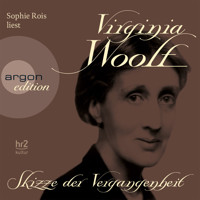
Virginia Woolf: The Moment & Other Essays
Published by
Books
Table of Contents
Introduction
This volume gathers a representative range of Virginia Woolf’s shorter prose under the title Virginia Woolf: The Moment & Other Essays, presenting her as an inquiring critic, a biographer in miniature, and a maker of reflective forms. Drawn from the posthumous collection The Moment and Other Essays (1947), these pieces do not seek completeness of subject or era; rather, they assemble luminous instances of thinking on literature and art. The purpose is not to offer a definitive canon of her criticism, but to bring into one place essays that show Woolf’s characteristic way of reading—experimental yet exacting—and her power to animate the past while testing the materials of modern life and mind.
The texts represented here are primarily essays: criticism, appreciations, notes, brief biographies, and lectures adapted for print. They range from the quick, exact measures of periodical reviewing to meditative studies of writers and traditions. Alongside these stands a short piece of lyrical prose, The Moment: Summer’s Night, whose concentrated atmosphere and patterning of perception show Woolf’s creative method at its most distilled. No fiction, letters, or diaries are included; the collection is devoted to nonfictional prose in its several modes, demonstrating how Woolf made the essay a versatile instrument capable of analysis, evocation, and quiet acts of intellectual discovery.
What unifies these varied writings is Woolf’s attention to the instant when thought and sensation meet. She repeatedly tests how a reader’s present aligns with the historical text, how a gust of feeling becomes judgment without forfeiting its edge. Her style is lucid yet sinuous, favoring suggestive analogies and rhythmic turns that keep the prose alive to transition. She is wary of doctrine and welcomes the provisional. Her criticism proceeds by placing works within a living web of forms, voices, and habits, asking how literature composes experience and how readers, in turn, compose themselves through the act of reading.
Her compass across literary history is broad. In The Faery Queen and Congreve’s Comedies she addresses, respectively, the epic allegory of Edmund Spenser and the Restoration theatre of wit, testing what survives and what dates in their methods of delight. Sterne’s Ghost considers Laurence Sterne’s bequest to later prose, while Mrs. Thrale and Lockhart’s Criticism draw on the eighteenth and nineteenth centuries’ biographical and critical practices. Woolf’s interest is less in erecting monuments than in recovering movement—how temperament, social setting, and form work together to make a writer’s presence felt across time.
The two essays on Sir Walter Scott exemplify her tact in approaching a figure both historical and persistently popular. Gas at Abbotsford explores the aura of Scott’s house and the traces of a working life embedded in place, balancing observation with critique. The Antiquary considers the novel in relation to Scott’s broader art without venturing beyond its premise or divulging its turns. Together they show Woolf’s belief that criticism profits from proximity—whether to rooms, tools, or sentences—so that judgment arises from things seen as much as from arguments rehearsed.
The nineteenth century appears again in David Copperfield, where Woolf treats Charles Dickens’s story of a young man’s growth as an experiment in narrative energy and sympathy rather than as a chain of incidents. Lewis Carroll receives attention for the peculiar clarity of his imaginative bounds and freedoms. Edmund Gosse is weighed as poet, memoirist, and critic within the institutions that formed him. Throughout, Woolf attends to tone and structure before verdict, asking what kind of gaze each writer invites, and how that invitation shapes a reader’s trust.
Her modern contemporaries and influences also enter. Notes on D.H. Lawrence approaches a novelist of intense feeling with wary admiration, examining the pressures his subjects place upon style. Roger Fry, painter and critic, is treated as a central interlocutor for modern art’s values and for Woolf’s own understanding of form. The Leaning Tower reflects on literature written under the visible stress of social division and war, testing whether the writer’s vantage—elevated, precarious, or otherwise—alters what can be said. These essays situate Woolf not apart from her moment but inside its debates about art’s duties and liberties.
Several pieces speak directly to fiction as craft and practice. The Art of Fiction considers what the novel may rightly demand of its makers and readers, and how freedom of method is earned by exactness of perception. American Fiction looks outward, measuring temperaments and conventions across the Atlantic without forcing them into a single mold. On Re-reading Novels reflects on the second life of books, how knowledge of a premise can deepen rather than dull attention. In each, Woolf proposes an ethics of reading that values openness, patience, and the courage to let feeling refine judgment.
The collection opens with The Moment: Summer’s Night, a brief, concentrated meditation whose focus on stillness and suddenness supplies a key to the criticism that follows. Here, perception becomes a structure, and time thickens into pattern. This is not narrative in the sense of plot, but a composition of sensibility that trains the reader to register gradations of light, sound, and thought. Placed first, it suggests that Woolf reads the world before she reads books, and that the discipline of noticing—how a moment discloses more than it seems—underwrites her critical practice.
Stylistically, Woolf’s essays balance poise and pressure. She prefers the exploratory paragraph to the emphatic decree, the carefully placed metaphor to the exhaustive taxonomy. Her sentences move by nuance, allowing qualifications to accumulate until a shape appears. She is attentive to voices often discounted by institutional criticism and skeptical of the inherited authorities that flatten varied experiences into single plots. Without programmatic insistence, she proposes a criticism hospitable to difference—of period, class, nation, and gender—while maintaining standards of accuracy, proportion, and form. The result is a criticism that is both searching and humane.
The arrangement here keeps distinct subjects in conversation, allowing themes to echo across centuries: how comedy interrogates power, how biography shapes reputation, how art instructs feeling. Readers will find pieces first printed as reviews or lectures beside more reflective studies, but the shift in occasion does not diminish coherence. The notes supplied under Footnotes identify persons, places, and textual references that may have receded from common knowledge, guiding readers without oversteering interpretation. The aim is clarity rather than augmentation, so that Woolf’s voice remains primary and the historical texture of her allusions is legible.
Taken together, these essays affirm Woolf’s lasting significance as a writer who made criticism an art of attention. She restores to reading its pleasures and its responsibilities, enjoining us to test impressions against forms and to let forms affect us fully. By traversing periods and temperaments, she makes tradition feel porous and alive. The essays endure not because they simplify, but because they keep faith with complexity while remaining inviting to the common reader. In their company, books are not artifacts to be filed, but presences to be met—moment by moment—until judgment, like perception, becomes an act of imagination.
Author Biography
Virginia Woolf (1882–1941) stands as a defining voice of English literary modernism, reshaping the possibilities of fiction and the essay in the first half of the twentieth century. A novelist, critic, and biographer, she pursued new forms to register consciousness, time, and the felt texture of ordinary life. Her landmark novels and essays together forged a method both analytical and lyrical, attentive to the inner life yet alert to culture and history. Across decades of reviewing and experimentation, Woolf developed a critical language that questioned inherited conventions and proposed alternatives—making her a central figure in discussions of narrative form, authorship, and the ethics of reading.
Woolf’s education combined rigorous home study with formal coursework at the Ladies’ Department of King’s College London in the late 1890s and early 1900s. There she encountered classical languages, history, and emerging debates about women’s education that would shape her later arguments. Her intellectual formation drew on wide reading in eighteenth- and nineteenth-century literature as well as contemporary philosophy and the visual arts. Associated with the Bloomsbury Group, she participated in ongoing conversations about aesthetics, ethics, and social change. This blend of scholarship, conversation, and independent study informed a style that unites historical grasp with exploratory poise.
Woolf’s career began in the early 1900s with prodigious reviewing, notably for periodicals that valued exacting criticism. Her essay practice—lucid, witty, and historically alert—can be traced through pieces such as “Congreve’s Comedies,” “Sterne’s Ghost,” “Mrs. Thrale,” “Lockhart’s Criticism,” and the paired studies “Sir Walter Scott, I. Gas at Abbotsford” and “Sir Walter Scott, II. ‘The Antiquary.’” By revisiting canonical authors, she tested how tradition both enables and constrains the present. Essays like “David Copperfield” and “Lewis Carroll” exemplify her method: sympathetic yet unsentimental, attentive to craft, and alive to the textures of style, voice, and the reader’s imaginative labor.
Alongside close criticism, Woolf theorized fiction’s changing aims. “The Art of Fiction” considers how narrative might shed mechanical plotting for a more elastic record of perception. “American Fiction” surveys transatlantic developments, situating new techniques within broader cultural energies. “On Re-reading Novels” turns inquiry upon the act of reading itself, weighing memory, pattern, and renewed attention. “The Moment: Summer’s Night,” with its evanescent perceptions, dramatizes what she elsewhere named the search for “moments” that crystallize experience. This crosscurrent of practice and reflection shows Woolf placing the reader at the center of literary value, testing how form reshapes understanding.
Life-writing was another field she renewed. Her full-length biography “Roger Fry” interweaves documentary evidence with interpretive tact, reflecting on the biographer’s responsibilities and the pressures of public narrative. Shorter essays—“Edmund Gosse,” “Mrs. Thrale,” and “Sterne’s Ghost”—extend this inquiry, examining how lives are constructed through letters, diaries, and the stories posterity prefers. Even when assessing criticism, as in “Lockhart’s Criticism,” Woolf keeps biography in view, asking how a critic’s position influences the portraits they compose. Across these works, she proposes a biography alert to temperament, milieu, and the delicate boundary between fact and shaping imagination.
Woolf’s convictions regarding intellectual freedom and women’s creative lives inform both her fiction and criticism. In essays such as “The Leaning Tower,” she probes class and cultural authority, considering the social machinery that guides taste and opportunity. “Notes on D. H. Lawrence” models her approach to contemporaries: clear-eyed, measured, and alive to complexity. Beyond individual judgments, her work argues for conditions that enable art—time, space, and access to education—principles she articulated more fully in widely known feminist writings. Through publishing ventures that supported experimental and international voices, she helped create a public for modern literature.
In her later years, Woolf wrote under the shadow of war yet continued to innovate, culminating in fiction and essays that extend her long inquiry into community, memory, and artistic form. Her final novel appeared shortly after her death in the early 1940s, and posthumous collections preserved a broad range of essays, lectures, and occasional pieces. The present selection—from “The Moment: Summer’s Night” to “FOOTNOTES”—illustrates her reach: historically informed criticism, theoretical reflection, and portraits of writers across centuries. Woolf’s legacy endures in narrative theory, feminist thought, and the practice of essay-writing, where her balance of intelligence and sensuous detail remains a touchstone.
Historical Context
Virginia Woolf’s career unfolded amid the upheavals of late Victorian legacies, the First World War, and the anxious 1930s. A central figure in the Bloomsbury Group and co‑founder of the Hogarth Press in 1917, she helped shape British modernism’s experiments in form and voice. The essays gathered in The Moment & Other Essays look backward across four centuries of English literature while registering the cultural aftershocks of industrialization, imperial expansion, mass literacy, and mechanized war. By pairing Renaissance epic and Restoration comedy with the Victorians and contemporaries, the collection situates Woolf’s modernist sensibility within long debates about tradition, authority, taste, and the social purpose of art.
Woolf wrote as a professional reviewer from the early 1900s, contributing to journals such as the Times Literary Supplement and cultivating an essayistic mode that joined attentive reading to social observation. The collection’s title piece, The Moment: Summer’s Night, exemplifies a modernist preoccupation with temporal consciousness and fleeting perception, a counterpoint to the longue durée of literary history elsewhere in the volume. Her method relies on archival traces, biographies, and editions made widely available by 19th‑ and early 20th‑century scholarship and reprint culture, allowing her to set canonical texts within the conditions of their making and transmission to modern readers.
In the essay on the Faery Queen, Woolf revisits the Elizabethan milieu of Edmund Spenser, whose epic appeared in parts in 1590 and 1596 under the patronage systems of the Tudor court. That world combined Protestant statecraft, expansionist policy in Ireland, and humanist learning with a thriving print trade centered in London. Allegory carried civic and moral instruction, shaped by Reformation debates and classical rhetoric. Woolf’s historical lens acknowledges the poem’s dependence on courtly favor and on a readership educated in emblematic thinking, while tracing how its moral and political codes traveled into later criticism and school curricula shaped by Victorian classicism.
Congreve’s Comedies returns to the theatres restored under Charles II after 1660. William Congreve’s late‑1690s plays belong to a brief efflorescence of urbane wit, courtly libertinism, and commercial playhouses drawing audiences of rank and trade. The period’s moral controversy—sharpened by Jeremy Collier’s 1698 attack on stage profaneness—helped tilt fashion toward sentimental comedy in the 18th century. Woolf treats Restoration dramaturgy as a historical artifact of metropolitan sociability, coffeehouse conversation, and press culture, while noting the later weight of licensing and managerial control that shaped repertory. Her interest lies in how shifting codes of decorum altered both dialogue and character across the long 18th century.
Sterne’s Ghost addresses the mid‑18th‑century print marketplace in which Laurence Sterne published Tristram Shandy (1759–1767) and A Sentimental Journey (1768). Grub Street’s pamphleteers, subscription publishing, and a growing reading public permitted Sterne’s digressive form and typographical play. Enlightenment skepticism and the cult of sensibility furnished his themes, while periodical quarrels and copyright debates set limits and opportunities. Woolf recognizes Sterne’s technical audacity as the invention of a narrative self conscious of its own assembly—an ancestor to modernist experimentation—yet anchored in the salon, club, and bookseller networks that carried such eccentricity into fashionable talk and continental translation.
Mrs. Thrale brings Hester Thrale Piozzi into view as a chronicler of Samuel Johnson’s circle. Her Anecdotes (1786) and Thraliana, informed by salon sociability and private diary culture, stand at the intersection of women’s authorship, domestic archives, and the emerging market for literary biography. Late‑Georgian London prized conversation as social capital, and Thrale’s later marriage to the musician Gabriel Piozzi drew public censure that reveals gendered norms governing reputation. Woolf reads Thrale as witness to the making of canon through dinner tables, patronage, and publishers, showing how memory, gossip, and documentation shaped the Johnsonian legend inherited by Victorian scholarship.
Sir Walter Scott, I. Gas at Abbotsford juxtaposes Romantic historicism with early industrial modernity. Scott’s building of Abbotsford in the 1810s–1820s coincided with Britain’s rapid adoption of gas lighting—first commercially exploited in London in the 1810s—and with new infrastructures of steam power and publishing. Woolf treats the spectacle of illumination as a symbol of technological enchantment meeting medievalist taste. Scott’s celebrity, his entanglement with the credit crises of the 1820s, and the commodification of authorship make Abbotsford a case study in public culture: the house as museum, brand, and laboratory for reconciling the past’s romance with the present’s utilities.
Sir Walter Scott, II. The Antiquary centers on an 1816 novel composed in the aftermath of the Napoleonic Wars, when Britain negotiated veterans’ returns, economic dislocation, and debates about national identity. Antiquarian societies prospered, collecting folklore and relics amid agrarian ‘improvements’ and urban expansion. Scott’s historical method—mingling documentary habits with invented lives—helped naturalize the historical novel as a British form. Woolf reads this against the background of the 1707 Union and the Scottish Enlightenment’s interest in stages of society, seeing in Scott both the preservation and transformation of local memory as the book market standardized national narratives.
Lockhart’s Criticism examines the conservative authority of 19th‑century reviewing. John Gibson Lockhart wrote the Life of Scott (1837–1838) and, as editor of the Quarterly Review from the late 1820s, helped police literary reputations through a Tory lens. His earlier association with periodical polemics—such as the attacks on the so‑called ‘Cockney School’ in Blackwood’s—illustrates how politics, patronage, and metropolitan prejudice shaped reception. Woolf situates Lockhart within a regime where long reviews could make or unmake careers, connecting his practice to a culture of anonymity and partisanship that persisted into the Victorian era’s powerful weekly and monthly organs.
David Copperfield allows Woolf to engage the Victorian serial novel, a form sustained by monthly parts, lending libraries, and a rapidly expanding reading public. Published in 1849–1850, Dickens’s narrative emerged amid campaigns for legal reform, public health measures, and controversies over factory labor. The Poor Law, debtors’ prisons, and the rhetoric of self‑help provided a social backdrop recognized by contemporaries. Woolf’s approach treats Dickens as both beneficiary and critic of the urban press and theatricality of mid‑century London. She also gestures toward later rereading cultures—cheap editions, school syllabi, and public libraries—that fixed Dickens within a national canon.
Lewis Carroll appears within the late‑Victorian turn toward children’s literature as a distinct market, supported by advances in illustration and printing. Charles Lutwidge Dodgson’s Alice books (1865, 1871), with John Tenniel’s images, exemplify a nexus of Oxford scholarship, middle‑class leisure, and gift‑book commerce. Nonsense verse, parlour games, and mathematical logic intersected with a broader educational expansion under mid‑century school reforms. Woolf examines how Carroll’s imaginative play and precise diction reflect Victorian tastes for whimsy and order, while revealing the commercial and technological conditions—the wood‑engraved image, the decorated volume—that made speculative fantasy a durable cultural export.
Edmund Gosse represents the late‑Victorian and Edwardian professional man of letters, active as critic, biographer, and cultural mediator. His Father and Son (1907) anatomized generational conflict between evangelical piety and secular aesthetics, emblematic of a broader transition in English intellectual life. Gosse promoted Scandinavian and French authors to English readers and occupied institutional posts that tied literature to the state and academy, including service as Librarian to the House of Lords. In this context, Woolf’s brief piece Footnotes reflects on the scholarly apparatus that had grown around literature—philology, annotated editions, and citation—marking the discipline’s increasing professionalization.
Notes on D. H. Lawrence places Lawrence within early 20th‑century literary radicalism and censorship. The Rainbow was prosecuted for obscenity in 1915; Lady Chatterley’s Lover, published privately in 1928, remained banned in Britain until 1960. Lawrence’s fiction of sexuality, class, and industrial landscapes emerged from wartime suspicion, exile, and post‑Victorian moral contest. Woolf, herself wary of didacticism, reads his intensity against a publishing climate where police raids, customs seizures, and protective publishers shaped what could circulate. The essay situates Lawrence’s experiments as both reaction to and product of a culture renegotiating privacy, authority, and the limits of permissible speech.
Roger Fry commemorates the critic who introduced Post‑Impressionism to Britain through landmark exhibitions at the Grafton Galleries in 1910 and 1912. Fry’s advocacy of Cézanne, Gauguin, Van Gogh, and Matisse, along with the Omega Workshops (1913–1919), remodeled British taste and aligned Bloomsbury aesthetics with continental modernism. Woolf links Fry’s formalism—attention to design, rhythm, and significant form—to parallel experiments in prose syntax and narrative perspective. The essay places visual art’s revolution within the same metropolitan circuits of galleries, reviews, and lectures that sustained modernist writing, while acknowledging the backlash such exhibitions provoked in a public accustomed to academic realism.
The Art of Fiction intervenes in a long argument about the novel’s aims, from Henry James’s 1884 essay to early 20th‑century disputes pitting representation against form. Woolf engages questions of point of view, interiority, and character, while recalling contemporaneous quarrels with Edwardian realists such as Arnold Bennett over the depiction of social reality. The essay assumes a readership trained by a half‑century of criticism and new university courses in English. Its preoccupation with craft is complemented by On Re‑reading Novels, which treats rereading as a historical practice made possible by libraries, cheap reprints, and the stabilization of a modern canon.
American Fiction registers transatlantic exchanges intensified by steamship travel, international copyright, and magazine markets. By the early 20th century, American novelists variously fused realism, naturalism, and experiment to depict urbanization, immigration, and regional cultures. Woolf observes how Puritan legacies, frontier myths, and industrial capitalism inform tone and structure, while magazines and little‑press networks circulated styles across the Atlantic. Her analysis recognizes a shared modernist vocabulary—montage, interior monologue, irony—arriving through review culture and personal correspondence, yet also notes institutional differences: the sway of mass‑market periodicals in the United States and the distinct role of universities and book clubs in canon formation.
The Leaning Tower, first delivered as a lecture in 1940, confronts class division, mass education, and the imminence of total war. Woolf critiques a ‘gentlemanly’ literary tradition propped by privilege and suggests that expanded secondary schooling and worker education were tilting the structure of culture. The 1930s brought unemployment, the Spanish Civil War, and the rise of fascism; these pressures reframed literary responsibility. In calling for a literature responsive to democratic readerships, Woolf echoes interwar debates over sponsorship, censorship, and propaganda, while measuring how radio, paperback publishing, and public libraries were redrawing the map of readership within Britain and beyond as war approached.
Synopsis (Selection)
The Moment: Summer’s Night
A lyrical meditation on a summer evening’s passing instants, this essay distills perception into a series of luminous impressions. Woolf traces how consciousness gathers and disperses, suggesting that reality resides in transient alignments rather than fixed events, in a contemplative and quietly rapt tone.
Restoration and Eighteenth-Century Portraits
“The Faery Queen” revisits an epic pageant to weigh its allegorical splendor against modern sensibilities. Woolf considers how moral emblem, sensuous surface, and distance in time shape a reader’s response, balancing admiration with analytic poise.
Congreve’s Comedies examines wit and social performance, testing sparkle and poise against emotional depth. Woolf probes the mechanics of brilliance—language, artifice, and power—while asking what survives beyond fashion and display.
Sterne’s Ghost explores the lingering presence of a master of digression and feeling. Woolf weighs playful invention against sentiment, showing how irony, interruption, and intimacy anticipate later narrative experiment.
Mrs. Thrale offers a nuanced portrait of a vigorous voice within a literary milieu. Attentive to personality, observation, and the textures of everyday record, Woolf reflects on how a distinct sensibility both illuminates and resists its age.
Sir Walter Scott and His Circle
Sir Walter Scott, I. Gas at Abbotsford uses the site of authorship to reassess the romance of Scott’s vision. Juxtaposing relics and the signs of modern life, Woolf measures the weight of legend against the facts of place and change.
Sir Walter Scott, II. “The Antiquary” reads a single novel to show how character, history, and setting interlock. Woolf tracks pacing and structure with judicious sympathy, considering how narratives of the past speak to the present.
Lockhart’s Criticism evaluates a critic-biographer’s procedures and tone, asking how judgment is framed and reputations are made. Woolf’s analysis, exacting yet even-handed, scrutinizes method, bias, and the responsibilities of critical craft.
Victorian Imagination and Legacy
“David Copperfield” appraises a coming-of-age narrative’s architecture and charm. Woolf considers memory, voice, and an ensemble of characters to show how vitality and design reinforce each other.
Lewis Carroll studies the poise between logic and fantasy, where play clarifies rather than dissolves meaning. Woolf’s tone is curious and precise, noting how childlike perspectives unsettle adult habits of thought.
Edmund Gosse balances the graces of style with questions of self-presentation and taste. Woolf traces shifts in critical fashion and public role, measuring polish against lasting substance.
Modern Figures
Notes on D.H. Lawrence offers compact, candid reflections on intensity, excess, and the tug-of-war between body and idea. Woolf tests the limits of rhetoric and vision, using sharp probes rather than a single verdict.
Roger Fry portrays a modern advocate of seeing freshly and thinking rigorously about art. Woolf connects the acuity of response to everyday perception, sketching a values-driven case for modern aesthetics.
Principles of Fiction and Reading
The Art of Fiction proposes that the novel’s vitality lies in freedom—of form, perspective, and attention to inner life. Woolf’s exploratory tone outlines aims and hazards, urging responsiveness over rule.
American Fiction surveys tendencies of scope, voice, and social concern across a national literature. With a comparative eye, Woolf gauges energy and constraint, asking how conditions imprint style.
The Leaning Tower investigates how class and historical pressure tilt the writer’s outlook. Woolf’s diagnostic urgency presses on responsibility and position, while imagining paths for art under strain.
On Re-reading Novels reflects on how second encounters reveal pattern, texture, and surprise. Woolf suggests that rereading tests endurance and depth, altering earlier judgments through a calmer, keener gaze.
Footnotes
FOOTNOTES gathers precise asides that anchor, qualify, or extend arguments. In their meticulous, self-aware tone, they reveal method and measure, underscoring a critical ethic of clarity and accountability.
Virginia Woolf: The Moment & Other Essays
The Moment: Summer’s Night.
“The Faery Queen”.
Congreve’s Comedies.
Sterne’s Ghost.
Mrs. Thrale.
Sir Walter Scott, I. Gas at Abbotsford.
Sir Walter Scott, II. “The Antiquary”.
Lockhart’s Criticism.
“David Copperfield”.
Lewis Carroll.
Edmund Gosse.
Notes on D.H. Lawrence.
Roger Fry.
The Art of Fiction.
American Fiction.
The Leaning Tower.
On Re-reading Novels.
The Moment: Summer’s Night.
The night was falling so that the table in the garden among the trees grew whiter and whiter; and the people round it more indistinct. An owl, blunt, obsolete looking, heavy weighted, crossed the fading sky with a black spot between its claws. The trees murmured. An aeroplane hummed like a piece of plucked wire. There was also, on the roads, the distant explosion of a motor cycle, shooting further and further away down the road. Yet what composed the present moment? If you are young, the future lies upon the present, like a piece of glass, making it tremble and quiver[1q]. If you are old, the past lies upon the present, like a thick glass, making it waver, distorting it. All the same, everybody believes that the present is something, seeks out the different elements in this situation in order to compose the truth of it, the whole of it.
To begin with: it is largely composed of visual and of sense impressions. The day was very hot. After heat, the surface of the body is opened, as if all the pores were open and everything lay exposed, not sealed and contracted, as in cold weather. The air wafts cold on the skin under one’s clothes. The soles of the feet expand in slippers after walking on hard roads. Then the sense of the light sinking back into darkness seems to be gently putting out with a damp sponge the colour in one’s own eyes. Then the leaves shiver now and again, as if a ripple of irresistible sensation ran through them, as a horse suddenly ripples its skin.
But this moment is also composed of a sense that the legs of the chair are sinking through the centre of the earth, passing through the rich garden earth; they sink, weighted down. Then the sky loses its colour perceptibly and a star here and there makes a point of light. Then changes, unseen in the day, coming in succession seem to make an order evident. One becomes aware that we are spectators and also passive participants in a pageant. And as nothing can interfere with the order, we have nothing to do but accept, and watch. Now little sparks, which are not steady, but fitful as if somebody were doubtful, come across the field. Is it time to light the lamp, the farmers’ wives are saying: can I see a little longer? The lamp sinks down; then it burns up. All doubt is over. Yes the time has come in all cottages, in all farms, to light the lamps. Thus then the moment is laced about with these weavings to and fro, these inevitable downsinkings, flights, lamp lightings.
But that is the wider circumference of the moment. Here in the centre is a knot of consciousness; a nucleus divided up into four heads, eight legs, eight arms, and four separate bodies. They are not subject to the law of the sun and the owl and the lamp. They assist it. For sometimes a hand rests on the table; sometimes a leg is thrown over a leg. Now the moment becomes shot with the extraordinary arrow which people let fly from their mouths—when they speak.
“He’ll do well with his hay.”
The words let fall this seed, but also, coming from that obscure face, and the mouth, and the hand so characteristically holding the cigarette, now hit the mind with a wad, then explode like a scent suffusing the whole dome of the mind with its incense, flavour; let fall, from their ambiguous envelope, the self-confidence of youth, but also its urgent desire, for praise, and assurance; if they were to say: “But you’re no worse looking than many—you’re no different—people don’t mark you out to laugh at you”: that he should be at once so cock-ahoop and so ungainly makes the moment rock with laughter, and with the malice that comes from overlooking other people’s motives; and seeing what they keep hid; and so that one takes sides; he will succeed; or no he won’t; and then again, this success, will it mean my defeat; or won’t it? All this shoots through the moment, makes it quiver with malice and amusement; and the sense of watching and comparing; and the quiver meets the shore, when the owl flies out, and puts a stop to this judging, this overseeing, and with our wings spread, we too fly, take wing, with the owl, over the earth and survey the quietude of what sleeps, folded, slumbering, arm stretching in the vast dark and sucking its thumb too; the amorous and the innocent; and a sigh goes up. Could we not fly too, with broad wings and with softness; and be all one wing; all embracing, all gathering, and these boundaries, these pryings over hedge into hidden compartments of different colours be all swept into one colour by the brush of the wing; and so visit in splendour, augustly, peaks; and there lie exposed, bare, on the spine, high up, to the cold light of the moon rising, and when the moon rises, single, solitary, behold her, one, eminent over us?




