


9,99 €
Mehr erfahren.
- Herausgeber: 50Minutes.com
- Kategorie: Sachliteratur, Reportagen, Biografien
- Serie: History
- Sprache: Englisch
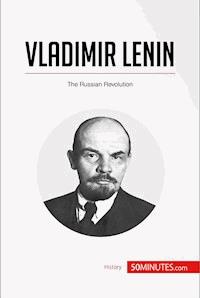
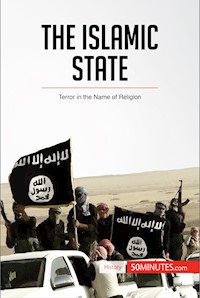
Keen to learn but short on time? Get to grips with the life of Vladimir Lenin in next to no time with this concise guide.
50Minutes.com provides a clear and engaging analysis of Vladimir Lenin. Having seen his brother executed for a political conspiracy and expelled from university under similar suspicions, Lenin grew up in an environment in which the Russian tsars had an uncomfortable concentration of power. Nonetheless, through his readings of Marx’s texts and his committed following from the Bolsheviks, he survived failed insurrections and years in exile to become one of Russia’s most renowned leaders, as well as the founder of the Soviet Union.
In just 50 minutes you will:
• Learn about Vladimir Lenin’s life and the formation of his political ideology
• Understand Russian politics in the early 20th century, including the fall of the tsarist regime and the violence of Bloody Sunday
• Analyse Lenin’s legacy, including the establishment of the Soviet Union and his enduring cult of personality
ABOUT 50MINUTES.COM | History & Culture
50MINUTES.COM will enable you to quickly understand the main events, people, conflicts and discoveries from world history that have shaped the world we live in today. Our publications present the key information on a wide variety of topics in a quick and accessible way that is guaranteed to save you time on your journey of discovery.
Das E-Book können Sie in Legimi-Apps oder einer beliebigen App lesen, die das folgende Format unterstützen:
Seitenzahl: 35
Veröffentlichungsjahr: 2017
Ähnliche







Lenin
Key information
Born: 22 April 1870 in Simbirsk (Russia).Died: 21 January 1924 in Gorky (modern-day Nizhny Novgorod, Russia).Main achievements: creating the Union of Soviet Socialist Republics (USSR): Lenin was the main driver of the fall of the tsarist regime that ruled over Russia.Introduction
Vladimir Ilich Ulyanov, who would go on to take the name Lenin, was from a background affiliated with the autocracy of the tsars who had ruled over the vast Russian Empire since the 16th century. The son of an aristocrat, he did not initially seem like a man who would have wanted a different future than the one expected by all the heirs from the same background as him, which was to follow in his father’s footsteps as a dignitary of the tsar. However, he would be responsible for one of the greatest revolutions in the 20th century and would become a legendary figure for the Russian proletariat.
The political context of his birth turned out to be relatively calm. Tsar Alexander II (1818-1881), nicknamed ‘Alexander the Liberator’ following his decision to abolish serfdom in 1861, was the emperor. His reforms were going well, bringing hope for a relaxation of tsarist absolutism in favour of more modern policies, which would mean following the model of nations in the West.
However, Lenin defied social determinism and led Russia into a political venture that would have a lasting and decisive impact on the modern world. He was only 17 years old when his brother Aleksandr (1866-1887), an idealistic revolutionary and active terrorist, was hanged for his contribution to conspiracies to kill Tsar Alexander III (1845-1894). Permanently affected by this tragic event and deprived of a brother who had been his role model, Lenin’s political outlook became more radical. From then on, between periods of exile, he resolutely fought against the reign of Tsar Nicholas II (1868-1918), who had come to power in 1894, and whose repressive regime led to Lenin’s first imprisonment in 1895. His April Theses and his influence on socialist militancy meant that he was the main protagonist in the October 1917 coup d’état, which led to the establishment of the first Soviet regime.
Even now, Lenin remains one of the most renowned figures of Russian culture and politics. However, despite this, his standing is often questioned as historical research shows an increasing tendency towards deconstructing the mythical reputation that surrounded him for many years.
Lenin’s life
The Ulyanovs, from peasantry to nobility
On 22 April 1870 (or 10 April 1870 according to the Orthodox calendar), Vladimir Ulyanov was born in Simbirsk, on the Volga River. At the time, the city resembled any other provincial Russian municipality, and was reaping the benefits of the fast urbanisation that the country had experienced in the 19th century, growing from 10 000 inhabitants in 1800 to 43 000 in 1870.
Did you know?
In 1924, the city of Simbirsk was renamed Ulyanovsk, as a tribute to Lenin.
His parents had seven other children, four of whom died at a young age. For a long time, the Ulyanov family’s social origins raised questions. Lenin’s father, Ilya Nikolayevich Ulyanov (1831-1886), is believed to have come from serf ancestry, referring to a great-grandfather who was probably liberated well before the 1861 Emancipation Manifesto. From this emancipation onwards, the Ulyanov descendants gradually climbed the social ladder, as did Ilya Ulyanov who attained the prestigious duty of state administrator, enabling him to become a hereditary nobleman. This new social inheritance was handed down to his heirs, including Lenin.
Kalmyk origins
Lenin’s grandmother was Kalmyk, part of a Mongol population who had settled in Russia and were one of the many minorities that made up the Russian Empire. In 1771 Empress Catherine II (1729-1796) had reduced their autonomy and made them renounce their religion, Buddhism. Lenin had inherited some typical features from this grandmother, including his slanting eyes.




