


Erhalten Sie Zugang zu diesem und mehr als 300000 Büchern ab EUR 5,99 monatlich.
- Herausgeber: The History Press
- Kategorie: Geisteswissenschaft
- Sprache: Englisch
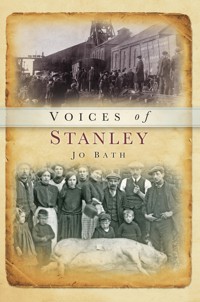
Voices of Stanley is a remarkable compilation of oral history extracts drawn from the extensive Beamish Museum Audio Archive, recalling life in the area between 1880 and 1950. Vivid memories are recounted, including childhood and schooldays, work and play, sport and leisure, as well as recollections of the war years. It covers the harrowing search for bodies following the Stanley pit disaster of 1909 and the hardships of life during the General Strike of 1926, as well as local traditions like egg jarping, pitch and toss, and making Christmas mistletoes. Richly illustrated with over sixty pictures from the museum collection, many previously unpublished, this volume paints a revealing picture of life in Stanley and the surrounding pit villages in years gone by. Anyone who knows the town will enjoy this nostalgic look at the unique history of the area through the eyes of its residents.
Sie lesen das E-Book in den Legimi-Apps auf:
Seitenzahl: 161
Veröffentlichungsjahr: 2014
Das E-Book (TTS) können Sie hören im Abo „Legimi Premium” in Legimi-Apps auf:
Ähnliche



















For Paul, Richard and Mike, who kept me sane(ish).
CONTENTS
Title Page
Dedication
Acknowledgements
Introduction
One Domestic Work
Two Home Life
Three Backyards and Village Streets
Four Down the Shops
Five Leisure Time
Six Down the Mines
Seven Tough Times
Eight At School and Church
Nine Country Life
Copyright
ACKNOWLEDGEMENTS
Voices of Stanley is drawn from the extensive and fascinating collections of Beamish, the Living Museum of the North. Without the museum’s dedication to the collection and preservation of interviews, photographs and archive material of north-eastern life, sustained for over forty years, this book could not have been written. My thanks go in particular to Paul Castrey.
I would also like to thank Northumbria Police, who came to my rescue when a draft of this book was stolen. Sadly they could not recover my work, but they did show me every consideration and they did catch the thieves.
Most of all, my thanks go out to all those men and women who, between 1974 and 2010, sat down with an audio recorder to leave for posterity such vivid glimpses into life in the pit villages of northern County Durham.
INTRODUCTION
For reasons of space and clarity it has been necessary to edit some of the memories presented here, but I have done this with as light a hand as possible, to allow the interviewees’ own personal stories to shine through. Still, something is lost in the transcription of the spoken interview to the written book, not least of which is the distinctive accent of the region.
In the first half of the twentieth century, Stanley stood at the heart of a network of villages dominated by, and often built to house the workforce of, the coal-mining industry. In the memories that follow, the influence of the pits shows up in all sorts of ways, obvious and subtle. And since the mines’ closure, the world they supported – with its pit buzzers and poss tubs, jarping and netties – is gradually passing out of memory. This book represents a small window into that world.
Jo Bath, 2014
One
DOMESTIC WORK
King, Queen and Boss
Mother was king, queen, boss; yes, the whole lot. My father was the wage earner, the supplier of money. He was always in the background, always there, very important – if he wasn’t at work, of course. If ever we hurt ourselves it was to mum we went, and if we had to be punished, it was mother – I’ve never heard my father raise his voice towards me, to any of us in fact.
Ernie Cheeseman
Five to Look After
Mother had five to look after: she had five pairs of boots to get clean every morning for us to get off to school, and for the two girls she had to put their hair in ringlets hanging down their neck. There was a lot of fighting; they had a job to separate us when we were younger. We had to be in at eight o’clock on a night, if we were in a minute after eight father would take his cap off and clout you cross the back of the neck.
Jack Edgell
The Chancellor of the Exchequer
The woman was the master as well as the mistress of the house. The poor old miner, considering the amount of work he had to do hewing coal, was only a wage-getter. The Chancellor of the Exchequer, all that sort of thing, that was the woman of the house, his wife. She would make the meal, and she would put the meal on the table. No one but no one was allowed to touch that meal until the miner himself had had his fill, then what he left the family could have. Nowadays that seems terrible, but look at it this way, if he didn’t eat to gain energy, if he didn’t keep his health, he couldn’t go to work and nobody ate.
Ernie Cheeseman
Amateur photographer Mr Watson with his family. Mr Watson, from South Moor, took pictures of Edwardian Stanley and also took a photographic booth to local fairs and galas.
Bacon for the Pitman
A pitman hadn’t a good feed for his breakfast if he didn’t get bacon on the morning, a good fry of bacon. It used to be pretty thick, there was lovely dripping out of it – they used to dip the kids bread in it and things like that. At Christmastime you would save the goose dripping and spread that on your bread just the same as butter. And if lads run a message for anybody, when they came back they would be asked, ‘Would you like a slice of jam and bread?’ They were glad of a slice of jam and bread, or a slice of dripping bread, people hadn’t money to give them you see.
Jack Edgell
The Kitchen Range
We had the coal fire and we’d open up the boiler, and that fire did everything. My mother used to bake, and on the fireside you’d see about eight loaf tins when she was doing the baking; and that went on in every miner’s home. And in the oven there would be some dinner, and on the side would be the big end boiler where she boiled the water for us to get washed. When there was nobody to get washed then we used to keep this side boiler full of water every day. My mother would fill the large iron pan with broth and that broth would be used two or three times in a week, so really them big, black pans made a lot of broth and they lasted a family for quite a while.
Samuel Jackson
First World War Rations
My mother used to make potatoes and turnips and meat, but you didn’t get much meat you know. She said, ‘Well I’ll make a pie with that,’ and everybody got a decent share in the pie dish. Put some carrots in or peas or something like that, nice. And of course when you wanted tea you could always guarantee it was jam, that’s all you would get. Or a bit of bread and cheese. You didn’t grumble, you just carried on, made the most of things.
Joseph French
Here, Beamish Museum has recreated the interior of a pit cottage from around 1913.
Onions Seven Days a Week
My father had moved with the pit closing down and we were left and the neighbours looked after us. My father was sending them money every week to buy us grub. And we had onions for breakfast, onions for dinner, onions for tea and onions for supper: fried, boiled, any way. My father had been away about a month when he got a weekend home. And he came home and he said, ‘Everything alright?’ And before he could say anything else I said, ‘It would be if we could get anything other than onions to eat! We’ve had nowt but onions – breakfast, dinner, tea and supper – onions! Onions every day, seven days a week! I’m sick of bloody onions!’ My father went mad – he’d been sending them two pounds a week, something like that, which was a hell of a lot of money in those days. And they were living off the fat of the land and were feeding us onions out of the allotment. And my father said, ‘That’s it! I’ll have you away from here!’ And within a fortnight we were on the back of a wagon on our way to Billingham.
Anonymous
Fruit and Veg
My mother used to make all her own jams and chutneys and pickles. There was a garden where we had all our vegetables – potatoes, turnips and carrots and parsnips and celery and leeks. My mother always had a fruit basket in the pantry, there’d be apples and oranges and plums. We would always get something to take to school.
R. Powton
Stotty Cakes
I used to walk from the school and at the house at the end of the terrace, Eden Terrace, there was a woman called Mrs Burns. She had a family of a lot of boys, and often she used to be baking stotty cakes. Just out the window there was sort of a grill thing, and she used to put them outside to cool. And sometimes she’d say to me, ‘Would you like a bit of stotty cake, Hinnie?’ And she’d go and put some margarine or whatever it was on it, and hand me this piece of stotty cake.
Irene Wilson
Baking Day
Wednesday was baking day. The house was filled with lovely smells of freshly baked bread. My mother used to bake for the four of us. After kneading for a little while, there would be a spotless clean towel put over it allowing it to rise, and then it would be cut into small portions and put into tins, which would be put along the steel fender in front of the fire to let it rise a little bit further. You could tell when the oven became a proper temperature by opening the oven door and putting your elbow in – or get some flour and sprinkle it on the steel shelves in the oven and the different hues of brown would tell you if it was the right temperature for pastry or what have you. So the bread would be put into the oven and brought out and put on the backyard wall to cool off. There was a little bit of dough left and if we were at home we would make different shapes – men and what have you. Every house had an earthenware jar in the coldest part of the pantry with a towel over it to keep the bread fresh. It was always a treat to come running home from school on baking day and get a fresh slice of bread with occasionally butter, but more often than not margarine, lovely margarine, and a whacking great dollop of jam. It was beautiful!
Ernie Cheeseman
Thursday Baking
Nearly all Hobson village baked on a Thursday, and it was a delight – in fact the minister used to like to come on a Thursday because there was always a lovely tea, straight out of the oven. There would be brown bread and white bread and teacakes and scones and sandwich cakes, and always a fruit tart of some description. My mother used to make macaroons with jam and coconut on the top, and that would last us a week.
R. Powton
Sunday Dinner
Mother would seldom go to chapel on Sunday morning because there was the Sunday dinner to prepare. If we were ill and stayed home on a Sunday morning the smell of mothballs slowly changed to the delicious smell of roast beef. The Yorkshire pudding was the highlight of the Sunday dinner: the highlight of the week, culinary speaking.
Ernie Cheeseman
Ploating Chickens
I remember as a girl, Mrs Hobbsby asked my mother if she would help her ploat all these fowl – ducks and chickens and turkeys. So mum said she would, and of course mother says, ‘You can come with me; you can pick the feathers up and put them in the bag’ – you always had to do something in those days. They would sit in this big room and it was very cold, and ploat these ducks and hens. They were for sale; local people always ordered their fowl from the local farmer you see.
Ethel Murray
Ginger Beer
On Thursdays in our house my mother would brew ginger beer in a huge basin. If it was thundering my mother would say, ‘Oh dear, it will make my beer go flat!’ She would bottle it and on a Thursday morning before we went to chapel people would come and buy a bottle of ginger beer for a penny. A penny was quite something in those days, and that went towards the finances of the house, because we weren’t well-off money wise.
Ernie Cheeseman
There Wasn’t a Thing Wasted
Miners worked hard but they also ate well to keep up the energy. It was all energy-giving stuff: suet puddings, dumplings, mince meat, pie meat, stews – sheep’s heads, beast’s cheek. There wasn’t a thing wasted, cow heel, tripes. Monday was a day for killing and getting meat at the shop. On a Tuesday it was sausages, minced meat, a few chops. On the Wednesday it was pie meat and stewing steak, tatty pots, pot pies, meat in the cloth. All stodgy food, plenty of suet in, plenty of kidney. You could sell every bit of dripping. They used to get big chunks of dripping because they didn’t use cooking oil. They used beef dripping for chips. Friday was usually fish day. Of course the Catholics wouldn’t eat meat on a Friday. And on a Saturday it was back to the joint.
Mr Wears
Christmas Cake and Rice Cake
My grandfather kept hens so we always had a cock chicken for Christmas, which in those days was a luxury. My grandmother always made my mother a Christmas cake and a rice cake, she would never give her the recipe for the cake but she always provided them. We were a lot luckier than most people.
Iris Summers
Demonstrators baking pies in Foulbridge Colliery Cottage, Beamish Museum.
Wash Day
On washing day the house was filled full of steam and smelling of ammonia and blue mottled soap. Believe me, the muscles my mother must have had to scrub. How did the woman get her whites white? With hard work and dolly blue. If the household had girls their underwear would always be done in Lux Flakes, whereas the pit shirts would be mottle blue. It was just one step away from caustic soda. It would take the skin off you! But they were very dirty, and they used to get them white. We had a mangle as well. You changed the gear and you turned the handle – that was always my job. And this would be going round and around, and horizontally rather than vertically washing the clothes. Then you would take the clothes out and change the gear for the rollers and squeeze the water out and you would put them on the table and further scrub them.
Ernie Cheeseman
Dirty Overalls
Overalls really did get greasy. If you took them home to be washed in the washer, you had to wash the washer out afterwards. So you’d just smack them against the wall, or stand them in a pail of water with this degreaser stuff you used to get at the pits, like some sort of acid, and leave them in there and then hang them out to dry.
John and Eddie Nicholson
Dadding
Understand that when you are bringing coal into the house for the fire you are bringing muck into the house. There was no pit head baths. My father would take his boots off at the door; he would undress in front of the fire. His clothes would be full of dust and they would be carefully picked up and ‘dadded’ against the wall – bang the dust out against the backyard wall. That was a joke as well, ‘Me wife’s gone and dadded me pit watch again!’ It must have happened once or twice.
Ernie Cheeseman
Mother’s Sewing
Mother used to do an awful lot of sewing. She used to wash once a fortnight, and the next week she would sew. She used to make petticoats, nightdresses, shirts, dresses for us to go to school, pinafores and aprons, pillowcases, foot bases for round the bottom of the bed. And quilts. She hemmed all the sheets, all the tea towels, and she used to sew for my grandmother too.
R. Powton
Ironing
On Tuesday the irons were put on the fire. It’s no use putting your irons in a smoky fire, it had to be built up, get all the blackness off the fire. Then you could put your irons close to the fire otherwise you’ve got all your hard work with a soot mark. There were different shaped irons. My mother just had the inverted heart shape. There were others, of course, which were probably not so good. They would open up the iron and take out the cast-iron part inside and put it in the fire and when it was red hot put it back in there and close it up. But if you were the colliery manager’s wife you would have a gas iron.
Ernie Cheeseman
Shoes
When you got shoes you had to take care of them, not gan kicking this and kicking that you know. Mostly people used to buy clogs. They were only half a crown a pair, and they were warm. I used to get some little short cobblers’ nails and I used to buy the leather, cut it and nail it on and that saved it for quite a long while.
Joseph French
Shoe Mending
My dad used to mend all the shoes in the house. He used to go to Stevenson’s down the moor, buy a bit of leather for one and six, bring it back and he would sole the shoes. I had a pair of football boots with studs in, he took them out and I went to school in them boots.
Derek Hall
Bath Water
I can recollect my Uncle Joe – who lived up at Beamish – coming in and sitting in the bath and my Aunt Bertha washing his back and the water turning black and soapy, and the little Labrador dog coming and drinking it when my Uncle Joe was in the bath!
John Nicholson
Tin Bath
Father would kneel at the bath and wash his top half. He would strip right down to his pit hoggers (they were ordinary trousers but cut off very short), and he would sit on a cracket and put his feet in and wash up to the bottom of his hoggers. He wouldn’t wash his private parts whilst there was people around and so it would probably be once a week when no one was in the house.
Ernie Cheeseman
A member of staff at Beamish Museum about to demonstrate a traditional bath, 1983.
Old-Fashioned Dressing Table
At Beamish Hall they were all four-poster beds and every bed had a commode at the side and there was like a little step. There was two steps, you know, and the middle one pulled out and that was the potty. And that was a step to get into bed – they were so high! And there were old-fashioned dressing tables, wash stands with a bowl and jug, and you put your brass can of water in. The towels were over the top to keep them warm. We carried water often – they had to have their hands washed for midday lunch, and for the four o’clock afternoon tea, and then at half past seven at night. Then you’d to go round every time they’d been in their room, you had to go round with your slop bucket and your towels, wash all these basins out, collect the cans, empty the potties, sweep the hearth, oh it was constant!
Minnie Arbuckle
Black Leading
Friday morning was filled full of metal polish and black lead, because that was the time that mother cleaned the huge iron kitchen range. Ours was all stamped, you know, with a bull’s head cast in it. And it was made absolutely beautiful and all the fire irons, the steel fender, all had to be silver steel-looking, and all the brass had to be brilliant. That was a whole morning and mam would be getting the Friday dinner ready looking like a pitman, all smudges and what have you.
Ernie Cheeseman




