


20,99 €
Mehr erfahren.
- Herausgeber: John Wiley & Sons
- Kategorie: Geisteswissenschaft
- Sprache: Englisch
What do we know about war crimes and justice? What are the discursive practices through which the dominant images of war crimes, atrocity and justice are understood?
In this wide ranging text, Michael J. Shapiro contrasts the justice-related imagery of the war crimes trial (for example the solitary, headphone-wearing defendant at the Hague listening with intent to a catalogue of charges) with ?literary justice?: representations in literature, film, and biographical testimony, raising questions about atrocities and justice that juridical proceedings exclude.
By engaging with the ambiguities exposed by the artistic and experiential genres, reading them alongside policy and archival documentation and critical theoretical discourses, Shapiro?s War Crimes, Atrocity, and Justice challenges traditional notions of ?responsibility? in juridical settings. His comparative readings instead encourage a focus on the conditions of possibility for war crimes as they arise from the actions of states, non-state agencies and individuals involved in arms trading, peace keeping, sex trafficking, and law enforcement and adjudication.
Theory springs to life as Shapiro draws on examples from legal discourse, literature, media, film, and television, to build a nuanced picture of politics and the problem of justice. It will be of great interest to students of film and media, literature, cultural studies, contemporary philosophy and political science
Sie lesen das E-Book in den Legimi-Apps auf:
Seitenzahl: 340
Veröffentlichungsjahr: 2014
Ähnliche



















Copyright © Michael J. Shapiro 2015
The right of Michael J. Shapiro to be identified as Author of this Work has been asserted in accordance with the UK Copyright, Designs and Patents Act 1988.
First published in 2015 by Polity Press
Polity Press
65 Bridge Street
Cambridge CB2 1UR, UK
Polity Press
350 Main Street
Malden, MA 02148, USA
All rights reserved. Except for the quotation of short passages for the purpose of criticism and review, no part of this publication may be reproduced, stored in a retrieval system, or transmitted, in any form or by any means, electronic, mechanical, photocopying, recording or otherwise, without the prior permission of the publisher.
ISBN-13: 978-0-7456-7154-3 (hardback)
ISBN-13: 978-0-7456-7155-0 (paperback)
ISBN-13: 978-0-7456-8955-5 (epub)
ISBN-13: 978-0-7456-8954-8 (mobi)
A catalogue record for this book is available from the British Library.
The publisher has used its best endeavors to ensure that the URLs for external websites referred to in this book are correct and active at the time of going to press. However, the publisher has no responsibility for the websites and can make no guarantee that a site will remain live or that the content is or will remain appropriate.
Every effort has been made to trace all copyright holders but if any have been inadvertently overlooked the publisher will be pleased to include any necessary credits in any subsequent reprint or edition.
For further information on Polity, visit our website: politybooks.com
Preface and Acknowledgments
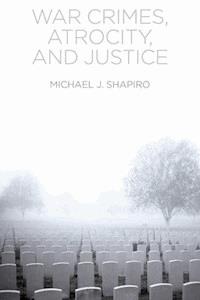
Early on in his history of pornography, The Secret Museum, Walter Kendrick remarks that historically pornography has not been a thing; it has been an argument. The same can be said of war crimes. I have become sensitive to the homology between Kendrick's and my subject matter thanks to productive discussions with my editors, Louise Knight and Pascal Porcheron at Polity, about what to put on the cover, and to my conversations with Dr Keanu Sai, a Hawaiian scholar, who with other members of Hawaii's shadow government (officials of “The Hawaiian Kingdom,” a formerly recognized state that was illegally overthrown in 1893 by a militia of US citizens, spurred by sugar planters and descendants of missionaries), secured legal counsel to lodge a war crimes complaint at the International Criminal Court at The Hague.
War crimes are not unambiguous objects of representation. To borrow a phrase from Jacques Rancière, a war crime is a phenomenon that “leaves representation in ruins by shattering any harmonious relationship between presence and absence, between the material and the intelligible.” In accord with that disharmony, my investigation relies on non-representational philosophical discourses for conceptual framing and on the arts for illustrations that resist closure. With respect to the latter, I am deeply indebted to two novels, my engagement with which provides the bookends of my text: Mathias Énard's Zone, whose main protagonist is headed to Rome to place a trove of material on atrocities that have occurred in the Mediterranean area in the Vatican archives, and Laszlo Krasznahorkai's War and War, whose protagonist heads to New York (which he regards as the “new Rome,”) to place a manuscript on war on the Internet.
Other debts have been incurred as I worked on and presented some of the chapters at various academic venues. The names of people whose help and/or inspiration I wish to acknowledge include those to whom I am indebted for the individual lecture and conference invitations that prompted the prototypes of chapters, to those who inspired me by reading and responding to drafts, to those who inspired me in general by example (some of whom I served with on panels at professional meetings), to those who encouraged me in discussions about my ideas for the book, and to students who helped me formulate my approach to my analyses as I discussed them in my courses. The list, in alphabetical order, without role differentiation includes: Anna Agathangelou, Elena dell'Agnese, Linda Åhäll, Rune Saugman Anderson, Florentina Andreescu, Jens Bartelson, Paul Battersby, Jane Bennett, Bettina Brown, Cesare Casarino, Charmain Chuae, Bill Connolly, Elizabeth Dauphinee, James Der Derian, Mick Dillon, Jenny Edkins, Brad Evans, Thomas Gregory, Jairus Grove, Julia Peres Guimarães, Marjaana Jauhola, Andy Kear, Garnet Kindervater, Chuck Lawrence, Luis Lobo Guerrero, Tom Lundborg, John Mowitt, Peter Narby, Michelle Pace, Sami Pihlström, François-Xavier Plasse-Couture, Sam Opondo, Julian Reid, Nick Robinson, Mark Salter, Peer Schouten, Manfred Steger, Hannah Tavares, Corey Walker-Mortimer, Andreja Zevnik.
Shorter prototypes of three of the chapters in this book have been previously published: “Life's Contested Dispositifs: Apparatuses of Capture/Exuberant Lines of Flight,” Theory & Event 16: 4 (2013); “Justice and the Archives: ‘The Method of Dramatization’,” in Jenny Edkins and Adrian Kear, eds. International Politics and Performance: Critical Aesthetics and Creative Practice (Routledge, 2014); and “War Crimes: The Justice Dispositif,” in Paul Battersby, Joseph Siracusa, and Manfred Steger, eds. The SAGE Handbook of Globalization (Sage, 2014). I am grateful to the publishers for granting permission for republication.
Introduction
My inquiry into war crimes, atrocities, and justice in this book mobilizes political and philosophical concepts and deploys them on global spaces, forces, and events, primarily (but not exclusively) as they are articulated through artistic texts. I focus on such texts because aesthetically oriented approaches to life-worlds provoke critical thinking. They “destabilize the epistemic ground;”1 their “heteroglossia”2 (clash of centrifugal voices, in the case of literature, and montage of images, in the case of cinema) challenge the unreflective protocols of official and institutionalized sense making; and crucially for my investigations, they evince a “literary justice,” which in contrast to “legal justice,” keeps issues open and available for continuous reflection rather than imposing definitive judgments.3
As is well known, “literature is not verifiable,”4 as Gayatri Spivak has put it; it will not offer definitive judgments about what should be known. In the face of such epistemic uncertainty, what can an inquiry into war crimes and justice, which foregrounds reflections in literature and film on the interrelationships between epistemological, ethical, and political fields, offer that social science investigations cannot? Spivak's suggestion is that “the protocols of fiction give us a practical simulacrum of the graver discontinuities inhabiting (and operating?) the ethico-epistemic and ethico-political…an experience of the discontinuities that remain in place in ‘real life’.” Fiction, as an “event – an indeterminate ‘sharing’ between the writer and reader” can provide an “angle of vision” that provokes thinking rather than offering definitive knowledge judgments.5
The angles of vision operating in fictional texts are effectively invitations to the reader to consider the indeterminacy of positions that afflict all ethico-epistemic and ethico-political perspectives. What I take from such affliction is an imperative to reflect on and add complexity to rather than seek definitive judgments about such contentious and undeconstructable concepts as war crimes and justice. And crucially, rather than seeing writers/investigators and readers as fixed subjects who stand in a stable epistemological field, I suggest that we regard them as historically evolving personae, as becoming subjects who are, in M. M. Bakhtin's terms, “unconsummated”; they are subjects who are…“axiologically yet to be.”
Lesen Sie weiter in der vollständigen Ausgabe!
Lesen Sie weiter in der vollständigen Ausgabe!
Lesen Sie weiter in der vollständigen Ausgabe!
Lesen Sie weiter in der vollständigen Ausgabe!
Lesen Sie weiter in der vollständigen Ausgabe!
Lesen Sie weiter in der vollständigen Ausgabe!




