


16,99 €
Mehr erfahren.
- Herausgeber: John Wiley & Sons
- Kategorie: Geisteswissenschaft
- Serie: What is History series
- Sprache: Englisch
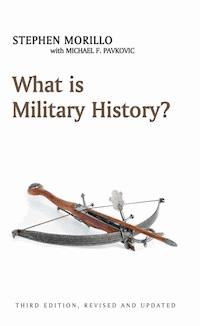
The third edition of What is Military History? has been thoroughly updated, and includes a new bibliography and new case studies on naval warfare and the origins of war, as well as expanded sections on historiography, environmental history and world history.
This popular textbook showcases a field that encompasses not only accounts of campaigns and battles, but includes a wide range of perspectives on all aspects of past military organization and activity. Its global and comparative analysis covers: the history of military history, showing how it has developed from ancient times to the present; the key ideas and concepts that shape analysis of military activity; the current controversies about which military historians argue, and why they are important; a survey of who does military history, where it is taught and published, and how it is practiced; and a look at where military history is headed in the future.
Ideal for any interested reader and for classes in military history and in historiography generally, the third edition of this popular book thoroughly explains the dynamics of this rich and growing area of study.
Sie lesen das E-Book in den Legimi-Apps auf:
Seitenzahl: 312
Veröffentlichungsjahr: 2017
Ähnliche



















Table of Contents
Series page
Title page
Copyright page
Preface to the Third Edition
1: An Introduction to Military History
Military History: Definitions, Topics, Scope
Who Studies Military History and Why?
Overview of this Book
Note
2: Military Historiography
Classical Roots: Military History in Ancient Times
Military History in the Traditional World: Histories, Manuals, and War Tales
Science, Nationalism, and General Staffs: Military History in the Nineteenth and Early Twentieth Centuries
New Military Histories: The Transformations of the Last 60 Years
Notes
3: Conceptual Frameworks
Military History and Philosophy of History
Military Art and Practice
War and Society: Interdisciplinary Influences
Global History and Comparative Methodology
Conclusions
Notes
4: Current Controversies
Military Revolutions
Counter-Insurgency: History and Policy
“The West”: Exceptionalism and Dominance?
Is Naval History Military History?
War, Society, and Culture: Other Controversies
Conclusion: Revisionism and Reading the Process of History
Notes
5: Doing Military History
Forms
Sources
Programs
Journals, Presses, and Associations
Notes
6: The Future of Military History
Trends in the Field
The Politics of Military History
Notes
Further Reading
Battles and Campaigns
Strategy and Tactics
Institutional Military History
War, Society, and Culture
Military Revolutions, Technology, and Military Transformation
Other Perspectives and Disciplines
Index
End User License Agreement
List of Tables
Table 3.1 US army unit hierarchy
Guide
Cover
Table of Contents
Start Reading
Preface
CHAPTER 1
Index
Pages
ii
iv
vii
viii
1
2
3
4
5
6
7
8
9
10
11
12
13
14
15
16
17
18
19
20
21
22
23
24
25
26
27
28
29
30
31
32
33
34
35
36
37
38
39
40
41
42
43
44
45
46
47
135
136
137
138
48
49
50
51
52
53
54
55
56
57
58
59
60
61
62
63
64
65
66
67
68
69
70
71
72
73
74
75
76
77
78
79
139
140
141
142
143
80
81
82
83
84
85
86
87
88
89
90
91
92
93
94
95
96
97
98
99
100
101
102
103
104
105
106
107
108
109
110
111
112
113
114
144
145
146
147
148
149
115
116
117
118
119
120
121
122
123
124
125
126
127
150
128
129
130
131
132
133
134
151
152
153
154
155
156
157
158
159
160
161
162
163
164
165
166
167
168
169
170
171
172
173
174
175
176
177
178
179
180
181
182
183
184
Series page
What is History? series
John H. Arnold,
What is Medieval History?
Peter Burke,
What is Cultural History? (2
nd
edition)
Peter Burke,
What is the History of Knowledge?
John C. Burnham,
What is Medical History?
Pamela Kyle Crossley,
What is Global History?
Pero Gaglo Dagbovie,
What is African American History?
Shane Ewen,
What is Urban History?
Christiane Harzig and Dirk Hoerder, with Donna Gabaccia,
What is Migration History?
J. Donald Hughes,
What is Environmental History? (2
nd
edition)
Andrew Leach,
What is Architectural History?
Sonya O. Rose,
What is Gender History?
Brenda E. Stevenson,
What is Slavery?
Jeffrey Weeks,
What is Sexual History?
Richard Whatmore,
What is Intellectual History?
Copyright page
Copyright © Stephen Morillo and Michael F. Pavkovic 2018
The right of Stephen Morillo and Michael F. Pavkovic to be identified as Authors of this Work has been asserted in accordance with the UK Copyright, Designs and Patents Act 1988.
First published in 2006 by Polity Press
This edition published in 2017 by Polity Press
Polity Press
65 Bridge Street
Cambridge CB2 1UR, UK
Polity Press
101 Station Landing
Suite 300
Medford, MA 02155, USA
All rights reserved. Except for the quotation of short passages for the purpose of criticism and review, no part of this publication may be reproduced, stored in a retrieval system or transmitted, in any form or by any means, electronic, mechanical, photocopying, recording or otherwise, without the prior permission of the publisher.
ISBN-13: 978-1-5095-1760-2
ISBN-13: 978-1-5095-1761-9 (pb)
A catalogue record for this book is available from the British Library.
Library of Congress Cataloging-in-Publication Data
Names: Morillo, Stephen, author. | Pavkovic, Michael F. (Michael Frederick), co-author.
Title: What is military history? / Stephen Morillo, Michael F. Pavkovic.
Description: Third edition. | Cambridge, UK ; Malden, MA : Polity, 2017. | Series: What is history? | Includes bibliographical references and index. | Description based on print version record and CIP data provided by publisher; resource not viewed.
Identifiers: LCCN 2017006856 (print) | LCCN 2017011633 (ebook) | ISBN 9781509517633 (Mobi) | ISBN 9781509517640 (Epub) | ISBN 9781509517602 (hardback) | ISBN 9781509517619 (paperback)
Subjects: LCSH: Military history. | BISAC: HISTORY / Historiography.
Classification: LCC D25 (ebook) | LCC D25 .M67 2017 (print) | DDC 355.009–dc23
LC record available at https://lccn.loc.gov/2017006856
Typeset in 10.5 on 12 pt Sabon by Toppan Best-set Premedia Limited
Printed and bound in the United Kingdom by Clays Ltd, St Ives PLC
The publisher has used its best endeavours to ensure that the URLs for external websites referred to in this book are correct and active at the time of going to press. However, the publisher has no responsibility for the websites and can make no guarantee that a site will remain live or that the content is or will remain appropriate.
Every effort has been made to trace all copyright holders, but if any have been inadvertently overlooked the publisher will be pleased to include any necessary credits in any subsequent reprint or edition.
For further information on Polity, visit our website: politybooks.com
Preface to the Third Edition
Like many academic fields, military history moves slowly at times, but it does move. Thus, while much about the field as described in the first edition of this book almost twelve years ago remains the same, a new and updated edition is not hard to justify.
The easiest of the changes to describe is that a steady stream of new and valuable publications continues to flow from the pens (well, mostly computers) of practicing military historians. We have recognized this in an expanded list of recommended readings, with additions not just to sections related to specific revisions in the text, but across the board of military history topics. These are matched by small revisions and additions to many sections of the text that reflect the ongoing productivity of the field.
One revised and expanded section deserves particular mention, as it demonstrates the accuracy with which the original edition of this book viewed contemporary trends in military history. We noted there the growth of cultural historical approaches to military history and predicted continued expansion of, among other things, gender analysis in the field. An expanded section on gender and military history in this edition testifies to the valuable insights that have indeed appeared since we first wrote.
We have, finally, added a major new section that corrects, in a sense, the fact that the first edition reflected the shape of the field perhaps too accurately. Naval history has at times been a somewhat neglected aspect of military history, and unfortunately we mirrored this neglect. But every problem is also an opportunity, and we have seized the chance to sail into this (self-created) breach with a section on the relationship of military to naval history, which has also allowed us to add significantly to the list of books on naval history in the recommended readings. As a result, a book that we described in the first edition as a roadmap to the field of military history is now also a sailing chart. Having now stretched this metaphor to the breaking point, we will simply say welcome to the third edition of What is Military History?
Stephen Morillo and Michael F. Pavkovic, April 2017
1An Introduction to Military History
Military history is not the most respected branch of historical inquiry in academic circles. In part this is because of (and despite) its popularity with the general public and its importance in educating professional military personnel. The root of the disrespect, however, mostly lies in its subject: war. There exists deep suspicion that to write about war is somehow to approve of it, even to glorify it – a suspicion not unfounded in the history of the writing of military history. But to recognize the importance of a subject in the study of the past does not mean approving of it, as any historian of the Holocaust will attest. Military history today is practiced by as broad a range of historians, in their political, ideological, and methodological interests, as any other branch of history, and both its topics and its methods lie (and should lie) solidly in the mainstream of historical study. This book is an introduction to this important field. Its favorable reception over the 11 years since the first edition appeared affirms both the appeal of military history and the breadth of practitioners in the field.1
In most places, by the time writing was invented, there were already kings and armies. It did not take long for kings to recognize the value of the new communication technology in publicizing and thus glorifying their exploits. Military victories proved especially useful for such publicity, as they demonstrated the ruler's capacity to protect his subjects, and to subject foreign populations with their riches to his rule (presumably to the benefit of the kingdom as a whole). Even more powerfully, the image of a war leader as presented in writing and pictures spoke directly of the very qualities most likely to enhance a ruler's reputation: strength, decisiveness, glory, even fearsomeness. A ruler with a good military publicist appeared favored by the gods.
Military history is therefore the oldest form of historical writing in many cultures. It has long since ceased to be the exclusive preserve of publicists for great leaders, although such types certainly still exist in abundance and the genre has produced some great literature, especially if one considers epics such as The Iliad as a form of military history. Indeed, it ceased to be the preserve of publicists in antiquity, when some of the finest minds in a number of classical civilizations turned to writing history, the history of wars in particular, partly in reaction to the tradition of heroic epics. Their more analytical approach to the study of history did not replace popular war tales, but coexisted with them. In both fictional and non-fictional forms, the appeal of writing about war remains. In many places today, military history continues to be one of the most popular sorts of history and of non-fiction generally. This popularity still extends beyond the written word, just as it did in the days of oral traditions of war tales such as The Iliad: the factual programming of The History Channel is dominated by military history.
Yet that very popularity means that there are many types of military history and a sometimes overwhelming volume of publications. The quality of this outpouring is inevitably uneven, and military history has not always enjoyed a high reputation in academic circles, for reasons we will explore further elsewhere in this book. The popularity of military history therefore complicates the problem of getting to know the field. Where does a student just embarking on their study of military history begin to understand this deep and complex tradition of historical writing? The intent of this book is to provide a beginner's roadmap: to introduce students to the history of military history, to its current forms, practitioners, audiences, and controversies, and to its key concepts and directions. In short, this book attempts to answer the question “What is Military History?”
We'll make an initial pass at this question from two angles. First, what is military history about? And second, who studies military history and why do they do so?
Military History: Definitions, Topics, Scope
We adopt a broad definition of military history. At the core of the field, of course, are histories of war – both particular wars and warfare (the conduct of military operations) more generally. But narratives of campaigns and battles, or even analyses of the patterns and principles of warfare illustrated by campaigns and battles, sometimes called the “art” or “science” of war, can be told in many ways. The historian can look at a war in terms of how it fits into the larger political aims of a country or leader, what strategies leaders adopted to achieve their larger aims, how and how well those strategies were executed, or what the results of the war were – that is, histories of particular wars and warfare are part of the larger topic of histories of war in all its complex manifestations and effects. The focus at any of these levels might be on the decisions made by leaders, the institutions that put those decisions into operation, the experience of individuals far from the decision-making process but close to the action generated by the decisions, or the world of ideas, beliefs, and ideologies, including religious beliefs and practices, that shaped the plans, decisions, and actions of individuals and groups.
Nor do such varied approaches to the narration and analysis of warfare exhaust the possibilities of military history. Some armies never fight wars, but as institutions they are important (or simply interesting) despite (or even because of) the fact that they didn't fight. Military institutions, in other words, are as much the province of military history as are military actions. This is particularly true since institutional history subsumes the history of military organization, unit structures, and allocations of equipment. Likewise, the varying roles of soldiers and warriors in different societies and the social impact of warfare – whether directly through the interaction of combatants with non-combatants or indirectly through taxation, conscription, and other effects associated with the intrusion into societies of states and organized violence – have become central to much military history. The basic constraints placed on warfare and those who wage it by deep factors such as environment, climate, geography, and patterns of economic production, as well as overall levels of economic productivity, have also entered the mainstream of military history, especially in terms of histories of military technology. Technology, science, and the impact of war on individuals intersect in the history of military medicine. And the very popularity of war tales in many cultures indicates just one of the ways in which warfare, military institutions, and military values (including warrior codes of behavior) interact with the cultural values and constructs of different societies, bringing cultural analyses of war and warriors into the debate. Furthermore, both social structures and cultural constructs, including gender roles, affect the ways armies are raised, how they fight, and how they interact with society more broadly. In other words, the relationship between war and military institutions on one hand and society and culture on the other is reciprocal.
As in any field of history, military historians face a choice between narrative exposition and thematic analysis when they present their answers to the many questions the past poses. That is, history tells a story about some aspect of the past. But simply recounting a series of events or retelling a story from a primary source barely qualifies as history: such writing is analogous to collecting ancient artifacts with no attempt to understand what they tell us about past times. A narrative without analysis, in other words, risks becoming antiquarianism, the display of disconnected pieces of the past for curiosity value. The job of the historian is to analyze his or her sources for what they say about bigger themes, not just display them. On the other hand, thematic analysis without a story about the past isn't history either. Historians must do both, balancing the sometimes conflicting demands of narrative and thematic analysis, of telling a story and highlighting the inner characteristics of the story. (We shall return to this topic in chapter 5.)
We therefore arrive at a broad definition of military history that encompasses not just the history of war and wars, but any historical study in which military personnel of all sorts, warfare (the way in which conflicts are actually fought on land, at sea, and in the air), military institutions, and their various intersections with politics, economics, society, nature, and culture form the focus or topic of the work. One obvious implication of such a broad definition is that many works of military history could also be classified variously as political, economic, institutional, intellectual, social, or cultural history. Indeed the best history, military and otherwise, necessarily crosses many of these abstract academic boundaries in order to present as rich and rounded a view of the past as possible. In practice, military history has benefited from methodological advances and insights derived from other subfields of history, as well as from separate but related academic fields such as anthropology, sociology, and literary criticism.
Historiography is the study of the history of historical writing; one of its basic principles is that while histories can be divided by their central intellectual or topical approaches, the historical categories used are not clear and compartmentalized, but overlap across fuzzy boundaries. The categories themselves are invented – there is nothing “natural” or essential about them – and so over time their definitions and boundaries are frequently contested and adjusted.
One reason history gets divided up into subfields is for convenience of historiographical analysis. Historical writing really does fall into recognizable groupings, even if the groupings can be rearranged if viewed from a different angle, just as any set of historical data can be divided up depending on the interests of the particular historian. But another reason is that many of the practitioners of historical writing since the mid-nineteenth century have become increasingly professionalized in specific ways that contribute to specialization and subdivision. Historians working within academic institutions – colleges, universities, and research institutes – are especially prone to specify their areas of specialization for a variety of reasons that include the utility of such divisions for historical research in an age of ever-increasing information, but are also influenced by academic politics, the interests of sources for funding research, and the workings of academic job markets.
The subfield of military history is complicated by such dynamics. The unpopularity of military history among many academic historians that we noted at the beginning of this chapter has meant that self-identification as a “military historian” can be a liability for those seeking jobs or promotions. Thus, paradoxically, much interesting and even groundbreaking work on the history of war and military organizations has been done by historians who do not self-identify as military historians or who do not appear to be part of the field in terms of association memberships and publishing venues (see chapter 5). This does not, of course, mean that what such historians write is not military history, any more than self-identified “military historians” must always write about military history topics. It just means that political perceptions and questions of identity are complicated among historians as much as among any other group of people!
The subfield of military history is further complicated by such dynamics because a significant amount of military history writing, owing to its attraction to popular audiences, has always come from outside of academic institutions. This brings us to the question of military history's practitioners and audiences.
Who Studies Military History and Why?
The audiences for military history have changed over time, with significant implications for who has written military history and why. The audiences for military history in today's modern world generally fall into three major types. First is the popular audience, those readers in the general population who are interested in military history as recreational reading. This has long been and continues to be a large and therefore economically significant group – a mass market, at least potentially – whose attractions draw writers not just from among academics and professional military personnel but also from professional authors and popularizers who happen to choose military topics for their marketability.
Second is the academic audience. We include in this category both professional academics whose specialty is military history and who read to keep up with developments in the field and in support of their own research and writing, and students at both the undergraduate and graduate levels whose reading of military history is (presumably) more focused and guided than that of the popular audience and is directly related to advancement of their academic careers. In this category, the audience and the practitioners, that is, those who write military history, are often the same people, though the most influential military history writing usually appeals to both a scholarly or academic audience and a popular audience. Success in “crossing over” from a purely academic audience to a mass popular audience can influence the academic careers of authors: John Keegan, one of the most successful academic historians to reach the mass market, eventually gave up his teaching post at Sandhurst Military Academy to write full time. Moreover, the “mass market” appeal of military history, even in the academic world, is evident in the robust enrollments often seen in courses that deal with the study of war and the military.
Keegan's academic position illustrates the overlap of the academic world with the third audience for military history: professional military personnel, for whom knowledge of military history is not simply an academic specialty of choice but, at least theoretically, a qualification for the demands of their job. In addition to academics, military specialists and authors from the ranks of government and in quasi-academic institutions (“think tanks” and the like) write for this audience. As a result, some of this professional military education (PME) literature is more technical and practice-oriented (though not necessarily less theoretically informed) than purely academic military history tends to be, as it is likely to have the most direct impact on the making of military policy and the implementation of military action by states and their armies. On the other hand, to bring this introductory discussion of practitioners and audiences full circle, a traditional sort of military history author has been the retired military officer who uses the credibility of both his military experience and his advertisable rank as entryways to the mass popular market. Although less common now than it was 60 years ago, the image of the “retired general” as author continues to inform the popular image of military history among both mass and academic audiences, with varying effects. Keegan, for example, felt it necessary to explain, in his Introduction to The Face of Battle, what he could bring to military history despite his lack of direct military experience.
The practical uses of military history for professional military personnel and the civilian governments that direct military activity today provide the clearest and most direct illustration of an important and general historiographical principle: that the questions historians ask about the past, in this case about past military actions, institutions, and so forth, are crucially shaped by their present concerns and perspectives. In other words, military history, like all history, is a dialogue between past and present. Because the present is constantly changing, views of the past change constantly as well. From the mid-1980s through the beginning of the twenty-first century, professional military history in the United States – those discussions among and aimed at military practitioners and policy makers – was dominated by the notion of a Revolution in Military Affairs (RMA) (which we will discuss at more length in chapter 4) that focused on high technology and its effect on the “battlefield of the future”, that evanescent place that changes in harness with the ever-changing present. The combined effects, however, of the September 11, 2001, terrorist attack on the World Trade Center, the problematic nature of the US occupation of Iraq in the wake of rapid battlefield “victory”, and the simultaneous US effort to stabilize Afghanistan have increasingly shifted attention to the problems associated with irregular warfare against unconventional, non- or quasi-military enemies, including strategies for counter-insurgency operations, problems not obviously liable to high-tech solutions but intimately related to complex questions of ideology, civil society and its relation to military manpower, and the role of the military. Meanwhile, a renewed threat (and reality) of nuclear proliferation in Iran, North Korea, and possibly elsewhere has raised the profile of issues including the relationship of diplomacy to force and strategic deployment of limited military resources. In short, the impact of Gulf War I on American military thought, with its emphasis on high technology and tactics, was significantly altered by the subsequent impact of 9/11, the Iraq War, and the occupations of Iraq and Afghanistan, in which high-tech and conventional tactics seem much less relevant, and the emphasis of professional military history has shifted in response. The problem of global terrorism has since altered analyses of the latter debate even further.
These shifts have obvious implications for the sorts of historical evidence historians engaged in these debates will bring to bear on their arguments. The relevant historical parallels and examples in the debate over the Revolution in Military Affairs involved other supposed cases of rapid technological and tactical change, especially the spread of gunpowder weaponry in sixteenth-century Europe (again, this is discussed at greater length in chapter 4). But the current debate looks much more to colonial wars in the nineteenth century, guerrilla wars of the mid-twentieth century, and even classical examples of imperial powers such as Rome dealing with “barbarian” neighbors and rebellious provincials. Such cases are chosen to gain insight into a contemporary situation in which disparities of technology and force do not have the same impact that they have had on the conventional battlefields of the past, including those cases highlighted by the earlier debate, and in which social and cultural factors seemingly outweigh traditional political relationships between states.
In both debates, however, the historical cases chosen as evidence for one argument or another are subject to rejection, reinterpretation, or revision by other historians who either see the problems of the present differently or see the crucial characteristics of the past differently, or both. Both debates, for instance, are much more central to military history published in the United States than elsewhere, since the concerns of other states that are neither the undisputed leaders in military technology nor likely to be seen as a new global Roman Empire are different from those of the US, which fits both criteria. Historians who do not share those concerns will bring a different perspective to both debates or will engage in other debates entirely.
Presented with this sort of endlessly qualified and complicated academic arguing, with its multiple interpretations, ways of looking at evidence, methodologies, and perspectives, some students are apt to throw up their hands and conclude that “it's all just opinion” and give up on history as being able to teach any lessons. But it isn't just “all opinion”. There are, for starters, better and worse uses and abuses of evidence, and all branches of historical inquiry remain empirically grounded in evidence. But more importantly, even if historical data prove incapable of decisively answering a current question (history never, after all, exactly repeats itself, though, as Mark Twain once said, it does rhyme), the fact that historians have, as a result of current concerns, asked new questions about the past leads to new understandings of the past. This is in part because not all interpretations of the past are mutually exclusive: most, in fact, are complementary, and the more of them we have, the more nuanced is our understanding of the past. This is a nice result, even if it makes drawing lessons from such complex understandings even harder (since lessons often need to be simple to be applicable).
In short, history, including military history, can be used to entertain; it can contribute to and advance academic careers, it can even perhaps teach lessons. But above all, given the prevalence of military activity in the past actions of humanity, it can help us understand the past and how we got to where we are today, even if the implications of that route for the future remain necessarily contentious.
Overview of this Book
We may summarize the previous two sections of this introduction by way of a photographic metaphor. If the past (in this case the part of the past connected to military activity) is the subject of the picture an historian creates, different approaches to the methodology of military history can be likened to the different lenses a photographer might use. An army looks different through an economic or social lens from the way it appears through a cultural or institutional lens. But the choice of a particular topic or approach depends on the interests of the historian and the interests of the intended audience for the history. A history written by and for professional staff officers will differ from one written for popular or academic readers. This can be thought of as the perspective of the photographer, the angle or location from which the picture is taken. (As this metaphor tries to make clear, every historian necessarily has a perspective: just as a photographer has to be somewhere to take a picture, an historian has to be somewhere, metaphorically, to write history. There is no such thing as omnisciently objective history. But perspective is not the same as bias. Bias results when an historian uses a particular perspective purposely to distort or exclude from view aspects of the subject necessary for understanding it. Different perspectives can be mutually complementary, building a better overall understanding of the subject. Different biases conflict unproductively, reducing understanding.)
The changing combinations of lenses and perspective that historians have brought to bear on the military past have produced the characteristics of military history that the rest of this book will explore in more detail. Chapter 2 traces the history of the writing of military history. How did military history come to be the field that it is today? Where did it start, and how has it evolved and changed over time? Chapter 3 explores the key concepts and theories that shape the study of military history currently. Chapter 4 extends this examination to some important or representative controversies in the field, showing what military historians are arguing about and why they do so. Chapter 5 discusses how military history is done, ranging from the sources military historians use and the forms in which it is presented to the places where it is taught and the key outlets for academic military history. Finally, chapter 6 looks at the future of military history. Where is it going? What is its relevance in the wider world of the twenty-first century?
In discussing all of these questions, finally, we would like to acknowledge and make explicit one limitation of our approach. This book, though global in scope and comprehensive in chronological coverage, focuses largely on English-language scholarship. The reason for this is that the intended audience for this book is English-speaking students. We will note some of the developments in military history around the globe in recent years, but a detailed survey would come at the expense of brevity, which has its own benefits for students.
In other words, a book this brief cannot possibly answer the question “What is Military History?” exhaustively. Inevitably, we'll miss some things and cover others too lightly. But we hope to provide newcomers to the field with a reliable roadmap that will make further explorations more comprehensible and thus more enjoyable.
Note
1
The question of the academic reputation of military history is examined in Tami Davis Biddle and Robert M. Citino,
The Role of Military History in the Academy
, A Society for Military History White Paper (2014), with the intent to explore ways to integrate the field into mainstream historical education more thoroughly.
2Military Historiography
As we noted in chapter 1, military history is one of the oldest fields of historical writing. In this chapter, we will trace the history of military history – the historiography of the field – from its origins down to the present. This chapter therefore answers several important questions about military history: Where did it start? How has it evolved and changed over time? What influenced and shaped those changes? In short, how did military history come to be the field that it is today? The same questions of audience and purpose that we began to explore in chapter 1, set in changing contexts of warfare, have shaped the writing of military history in all eras and places. Early military literature tended to lie somewhere on a continuum defined by two different sorts of audiences and purposes. At one pole of this continuum we find heroic war tales, often originally oral in form, told for the entertainment of warriors themselves. This sort of military literature was especially prevalent in societies with weak or divided states dominated by warrior elites. At the other pole we find formal analyses of warfare written for the didactic or propagandistic benefit of the rulers either of strong states or of those wishing to become so. This form was less common than war tales, as strong states were not so common in the ancient world, but retains more influence in the modern writing of military history. This accounts for the geographical focus of this survey, for two major analytic traditions with lasting influence emerged, one in the Greco-Roman world and one in the Chinese world. Ultimately, the academic intellectual tradition of Western Europe that descended from elements of the Greco-Roman tradition and flourished in the emerging nation-states of nineteenth-century Europe has come to dominate military history today. What thus might appear to be a Eurocentric bias is simply a reflection (though not necessarily an unproblematic one) of the historiographic record.
Classical Roots: Military History in Ancient Times
Militarily oriented “deeds of kings” have arisen in almost every complex society with a written language, from ancient Sumer and Egypt to Mayan Mesoamerica and ancient China. Aimed at polishing the reputation of rulers and, perhaps, providing instruction to their successors, they inform modern military history only as sources, not as models of historiography. And orally transmitted war tales undoubtedly existed even before kings and states, though we only know of those that entered a written tradition. Homer's Iliad is, in the western tradition, the foundational example of this type. These, too, are useful today mainly as sources, but are perhaps even more difficult as sources than are royal propaganda. For royal propaganda, though it often distorted the events it recounted, did so in fairly predictable ways and related recent events, whereas oral traditions can preserve elements of distant events and systems, but in distorted and miscontextualized ways that can be very hard to untangle. Military history that informs modern writing as more than source material therefore begins, in the West, with the Greeks of the fifth century bce.
The Greeks
History emerged in Greece as one form of rational inquiry about the world, and was thus part of the general intellectual flowering that is associated particularly with fifth-century bce Athens. The Greeks saw history as, like medicine, a search for causes of current events (though, as in medicine and other areas of Greek life, rationality coexisted with “irrational” and religious traditions that have often been underemphasized), and also as a rhetorical art for conveying its findings comparable to drama, philosophy, and poetry. And like much of the political and intellectual flowering of this time, history reflected the division of Greece into many small city-states that were endemically at war with each other and took as its initial inspiration a military event: the defeat of the Persian invasions of 490 and 481 by a rare coalition of those city-states.




