


4,79 €
Mehr erfahren.
- Herausgeber: Myriad Editions
- Kategorie: Geisteswissenschaft
- Sprache: Englisch
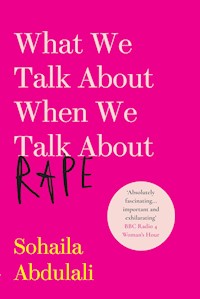
Thoughtful, provocative and intelligent, this game-changing book looks at sexual assault and the global discourse on rape from the viewpoint of a survivor, writer, counsellor and activist.Sohaila Abdulali was the first Indian rape survivor to speak out about her experience. Gang-raped as a teenager in Mumbai and indignant at the deafening silence on the issue in India, she wrote an article for a women's magazine questioning how we perceive rape and rape victims. Thirty years later she saw the story go viral in the wake of the fatal 2012 Delhi rape and the global outcry that followed.Drawing on three decades of grappling with the issue personally and professionally, and on her work with hundreds of other survivors, she explores what we think about rape and what we say. She also explores what we don't say, and asks pertinent questions about who gets raped and who rapes, about consent and desire, about redemption and revenge, and about how we raise our sons. Most importantly, she asks: does rape always have to be a life-defining event, or is it possible to recover joy?
Das E-Book können Sie in Legimi-Apps oder einer beliebigen App lesen, die das folgende Format unterstützen:
Seitenzahl: 298
Veröffentlichungsjahr: 2018
Ähnliche




















Selected praise forWhat We Talk About When We Talk About Rape
“The right to our own bodies is the first step in any democracy, and, by that measure, women in general—especially those of us also de-valued by race, caste or class—are still subject to an intimate dictatorship. Read the personal stories in What We Talk About When We Talk About Rape, and see how far we have come—and have yet to go.”
— Gloria Steinem
“Unflinching and nuanced… Her structure is disruptive and powerful for it—never letting us forget that there is a person who suffers, a body that gets broken. And, when a body is violated, all of society is at risk. This book could not be more timely, nor could there be a better thinker—herself a survivor—to write it. If the #MeToo campaign is to have any lasting impact for change in women’s circumstances across the world, it will be because of books such as this.”
— Preti Taneja, author of We That Are Young, winner of the 2018 Desmond Elliott Prize
“This is a vital, eye-opening exploration of a crime which affects too many of us, in often unspoken but always life-changing ways. Sohaila Abdulali’s book is an honest, wry, engaging and very human testament to the survivor’s voice as a necessary tool for change. It is filled will truths that will resonate with millions of us—and educate millions more.”
— Winnie M. Li, author of Dark Chapter
“An essential contribution to the current conversation about rape, rape culture, and the personal toll of sexual violence in the world today… Abdulali captures the complexity of this disturbing topic with clarity, compassion, and insight. Her prose is, at turns, comforting and enraging, confrontational and engaging, timely and timeless, humane and horrific. Yet, throughout, she focuses on our capacity and responsibility to contribute to a safer, healthier, and more fulfilling world for all. Abdulali teaches us that surviving sexual violence is essentially a creative act, and in her brave book she shares her, and many other, inspiring stories of surviving, thriving, and regaining wholeness.”
— Richard O. Prum, Professor of Ecology and Evolutionary Biology, Yale University, and author of The Evolution of Beauty
“Brilliant, frank, empowering, and urgently necessary. A powerful tool for examining rape culture and language on the individual, societal and global level that everyone can benefit from reading.”
— Jill Soloway
“Both hard to read and an amazing, vital read, this is the exact book we all need right now—to do better, we must know more. Empathy is a key character in this book. Sohaila is a brilliant and beautiful writer, and a star and thought leader for our generation.”
— Alyssa Mastromonaco, author of Who Thought This Was a Good Idea?: And Other Questions You Should Have Answers to When You Work in the White House, and former White House Deputy Chief of Staff
“This book is a public square for those who know a lot about rape, and for those who know little. It is a safe space for survivors, and a broad-minded attempt to open the conversation to everyone. It’s a global book, relevant in refugee camps and American suburbs.”
— Sarah McNally, McNally Jackson Books, New York
“Know this: the shock is not that Abdulali speaks frankly about rape. The shock is not that she interrogates the content, and limits, of our public discourses about rape culture with candour and warmth, with cool precision and justified rage, with wisdom and, yes, humour. The shock is that there are not more books like this. This is a powerful indictment of the way our socialised silences breed only injustice, fear and disconnection. Abdulali speaks into those voids and misperceptions, using the full register of her humanity in the hope for change. Read it, and do not stop talking.”
— Dr Sarah Krasnostein, author of The Trauma Cleaner
“What We Talk About When We Talk About Rape places the American #MeToo movement in a global context. Drawing on her experiences as a rape survivor and as scholar and advocate, Sohaila Abdulali takes us from the US, to India, South Africa, Mexico, Kuwait, and other countries, providing examples that illustrate both the intense particularity and infuriating similarities of sexual violence around the globe. Courageous, angry, compassionate, informative, hopeful, and wise, this book approaches this hard topic from a variety of angles. She addresses shame and the silencing of survivors, retaliation, victim blaming, the complexities of consent, recovery, and other issues.”
— Elizabeth A. Armstrong, Professor of Sociology, University of Michigan
“Such a lot of insight in this book. I wish I had written it. An international take on the contemporary movement towards learning to talk about rape. The more we talk, the more we learn. The more we learn, the more we can change. Read this book and be part of the change.”
—Una, author of Becoming Unbecoming
For Samara, Aidan, and Rafe Teatime forever
Contents
Disclaimer
1
Introduction
The light was draining out of the room, going back through the window where it had come from.
— Raymond Carver, “Beginners” (originally “What We Talk About When We Talk About Love”)
RAPE DRAINS the light. Like J.K. Rowling’s fantastically terrifying Dementors, it sucks joy. And, along with draining the light from victims’ lives, it tends to drain the light from sensible conversation. Discussions about rape are so often irrational, and sometimes outright bizarre. It’s the only crime to which people respond by wanting to lock up the victims. It’s the only crime that is so bad that victims are supposed to be destroyed beyond repair by it, but simultaneously not so bad that the men who do it should be treated like other criminals.
I want to let some light back in.
Rape. The word is so harsh. In Hindi, balatkaar. In Finnish, raiskata. In Indonesian, memperkosa. In Arabic, aightisab. In Slovenian, posilstvo. In Zulu, ukudlwengula. The English word “rape” probably comes from the Latin rapere—to snatch, to carry off. For the last seven hundred years, it’s meant “to take by force.” In Roman law, abducting a woman, whether or not you forced sex on her, was called “raptus.” Which sounds horribly, misleadingly, like “rapture.” Then again, the Oxford English Dictionary drily informs me that it comes from the word rapa, which means turnip. Even the definition is confusing.
I think about random examples from my own life—a male friend on a Nicaraguan beach with a woman friend, enjoying the night until someone beat him unconscious and raped her; a woman friend on another beach, in Greece, enjoying the day until a group of “cops” raped her; another woman really excited about a romantic evening with her new boyfriend until he grabbed her and forced himself on her. How have we managed to evolve as a species that is riddled with rape? When did we give ourselves permission to become this way? Sometimes I wonder if we consider bad table manners a worse breach of protocol than forcing a random object up a personal orifice.
I will be interested to see which shelves this book ends up on in bookstores. Essays? Not really. Sociology? Not learned or academic enough. Psychology? No, too opinionated. Research? Not comprehensive enough. Memoir? I hope not. It’s easy to say what this book isn’t, because it doesn’t neatly fit into any genre. This is just what I want, because in this space lies my freedom. I can do whatever I want, and I have. I can roam around the world and the internet, stopping where I want, chatting with whoever takes my fancy, and drawing my own conclusions—or not. I am very willing to take shameless advantage of my street cred as a rape survivor to generalize and opine, but I speak only for myself, not for anybody else.
So what is this book? It’s about what we talk about, but also what we don’t talk about. We don’t talk enough about aggravating phobias. We don’t talk enough about rebuilding trust. We don’t talk enough about joy and rage and how to fit both into our lives.
I began college weeks after being raped. I showed up at my freshman dorm still healing from physical injuries—a bump on my head and a bandage on my ankle. The ankle bandage wasn’t because of anything the rapists did. A few days after the rape, I was at the beach, so happy to be alive that I took a running leap off the front steps of the house and twisted my ankle. In college, I threw myself into the feminist movement like a drunken sailor on shore leave—these were my people, this was my place! And it still is. When you’re seventeen, with a bump on your head from almost dying and a bandaged foot from the rapture of living, clichés come easily. I joined marches and yelled, “Yes means yes! No means no!” Later, running in-service training sessions for police officers and doctors, I held forth on how rape has nothing to do with sex.
Now I realize that, well, sometimes yes doesn’t mean yes; and sometimes rape does have to do with sex.
Much has changed in how we talk about rape. In the last few years, people in India have come a long way in talking about it in everyday conversation. In my household, rape is just another topic. If we can expose our children to talk of genocide, racism, bikini waxing, and the inevitable melting of the planet, why should we leave out sexual abuse?
Happily, the global conversation on this issue is deepening too: the #MeToo campaign has shone a startling spotlight on sexual harassment. This is all happening while the US has a robust champion of sexual abuse for its president.1 It’s particularly unsettling in contrast to the last occupant of the White House, a dignified, feminist man who believed in evolution—of the species, of ideas and attitudes. It’s all very interesting, and confusing.
We must notice who is part of the conversation, and who is not. The #MeToo campaign is global, yes, but what is “global”? Let’s not forget that the man who brings buffalo milk to my family home in rural Maharashtra, or the King of Swaziland’s latest virgin wife, may not be on social media. Let’s not forget that, if you’re a trans person, your chances of being sexually assaulted are fifty-fifty 2—but your chances of finding understanding and support, or justice, are far lower.
In this book, I will contradict myself. Rape is always a catastrophe. Rape is not always a catastrophe. Rape is like any other crime. Rape is not like any other crime. It’s all true. Except for the foundational belief that rape is a crime, with a criminal and a victim, I will not take anything else for granted.
Rape drains the light. I want to let some light back in. I don’t have answers, but I hope to at least illuminate some of the questions and assumptions we all carry around with us. We must talk about rape, and we must talk about how we talk about rape.
Notes
1www.slate.com/blogs/the_slatest/2016/10/07/donald_trump_2005_tape_i_grab_women_by_the_pussy.html
2https://transequality.org/sites/default/files/docs/usts/USTS-Executive-Summary-Dec17.pdf
2
Who am I to talk?
She died from effrontery.
— Verlyn Klinkenborg, The Rural Life, about an annoying mosquito
IN 1980, I WAS seventeen, and had recently moved to the US with my family. I had just graduated from high school, and was spending the summer before college in my family home in Bombay with my father and grandmother, while my mother and brother were in the US. One evening, I was out with a male friend. We were accosted by four armed men, who forced us up a mountain, raped me, wounded us both, threatened to castrate my friend, almost killed us, but changed their minds after we made various promises, and released us hours later.
That’s a pithy description of a long and gruesome night, but it really covers all the essentials. What happened later is far more interesting.
A few days after this, the local paper admiringly reported another story of abduction. A married couple was going home at night on their scooter. Some men stopped them on the road, and took the woman away. Her husband drove home without telling anyone. The next morning, she came home, went into the kitchen, poured kerosene on herself, lit a match, and went up in flames. According to the article, her husband didn’t intervene.
My father and I both read the article. I think that was the moment it hit me that we must be a very odd family, because we simply couldn’t understand it. Why didn’t the man report the abduction? Why did the woman kill herself? Why did her suicide make her the hero of this story? Were we living in the same society?
I must be missing the Shame Gene that other Indian women are born with, because, for all the guilt, horror, trauma and confusion that followed my rape, it never occurred to me that I had anything to be ashamed of. Luckily for me, it didn’t occur to my parents either.
Three years later, back in the States, I won a grant to do my undergraduate thesis on rape in India, and blithely showed up again, expecting rape victims around every corner to tell me all about it. It didn’t quite happen that way.
I did find a group of women, including the fabulous Sonal Shukla and Flavia Agnes, two pioneers of the 1980s women’s movement in India, who swept me along to Delhi, to the first national avowedly feminist gathering of Indian women. This blew my untutored mind and I went back to Bombay dangerously charged up. I don’t know what sent me over the edge—all the people who kept saying rape didn’t exist for “people like us,” the upper classes; a dirty old man who heard what I was studying and decided it meant he could grope me; or just the growing conviction that I couldn’t possibly be the only one, could I? Could I?
My new-found feminist friends stoked my indignation and encouraged me to write my story. I did. I went to the post office with the boy who was with me during the rape, and sent it off to a magazine in Delhi with a photograph.
There was no internet in those days, and so, rightly at the time, I thought that if Manushi, the women’s magazine I had picked—the only publication of its kind in India in those days—did print it, it would appear and disappear quickly. Little did I know.
It did appear, and created a minor stir in India. Nobody had ever come out and talked about being raped before. And then the next issue was released, life went on, and thirty years passed. I never fully left the subject, while I went on living my life, writing books, doing odd jobs, traveling, becoming a mother. Even when it stopped being quite so personal, it was an intellectual challenge to grapple with sexual violence. I wrote my undergraduate thesis on rape. I wrote my graduate thesis on rape. For my first job out of college I was hired by a group of thirty-five fierce volunteers to run a rape crisis center in Cambridge, Massachusetts. I counseled survivors, raised funds, trained doctors and police officers and teachers, and learned a whole lot of useful lessons. Later, through many jobs and moves and relationships, I often returned to gender-based violence, increasingly out of fascination and passion rather than because of how it had affected me personally. I took pains to separate myself from the past—not because I was ashamed, but because other things took over and I didn’t want to be boxed in by one thing. It all worked out well; life was good and full of love.
Then, on December 16th, 2012, Jyoti Singh, a young physiotherapy student in New Delhi, went out for an evening with a male friend. She was gang-raped on a bus, and left with grievous injuries. She died a few days later, and the country went into an uproar. The story electrified the country, and the world. It set off storms of protest in India, and exposed some truly horrendous aspects of our culture, and rape culture in general.
One protester’s sign said, Don’t tell your daughter not to go out. Tell your son to behave properly.
Another sign said, Chop their raping tools.
The Indian president’s son, an MP himself, said, “Women who are participating in candle-light vigils and those who are protesting have no connection with ground reality. These pretty ladies coming out to protest are highly dented and painted.”3
On film, one of the rapists said that only about twenty percent of girls are “good.” If they go out at night with boys, they are asking for trouble. If they don’t want to be killed, they should just lie back and submit. He and his friends were teaching Jyoti a lesson, he said, and her death was an accident.
(There must be a manual for rapists somewhere. That is exactly what the men who raped me said—that they were teaching me a lesson for my own good.)
One of the rapists’ lawyers explained helpfully in the same film (India’s Daughter by Leslee Udwin) that women are like flowers and men are like thorns. “If you put that flower in a gutter, it is spoilt. If you put that flower in a temple, it will be worshipped.” Later he compared women to diamonds and men to dogs. I couldn’t keep track of the metaphors after that.
Suddenly rape was trending. It was all over the news, part of every conversation, the topic of the moment.
Through all of this, I said nothing. I was horrified at the tragic story of Jyoti Singh’s murder, heartened to see the crime getting so much attention, and relieved that I had nothing to do with any of it because I had done my bit three decades ago, and now other people were fighting the good fight.
Then, a couple of weeks later, on New Year’s Day, I was on a train from Boston to New York with my family when I got an email from a friend in Delhi. “This is doing the rounds on Facebook.” I clicked on the link and was transfixed to see my teenage face on my phone screen. Not being on social media, I had had no clue that somebody had dug out the old Manushi article, photo and all, and posted it. It instantly went viral. I was still the Only Living Rape Victim of India.
And then all hell broke loose. Rape is a lot about loss of control, and this was a very familiar feeling. I had spent thirty years getting past this, and it was back with no warning. My story was all over Facebook and Twitter and all the other platforms I didn’t even know how to use. Relatives and friends who had no idea that this was part of my history were finding it on their phones and computers. Indian TV stations called and asked for interviews. The Western media, eager to capitalize on the buzzy news story of the world’s new Rape Hot Spot, but with no actual victims to talk to, asked me for interviews. I just sat there, shocked, wondering when my eleven-year-old was going to ask about all the phone calls.
I said no to everyone, but over the next few days of mayhem I became increasingly confused. Should I respond? Should I let it die down? Was it my duty to speak? Who cared what I had to say, anyway? I didn’t want to upset my mother by prolonging the attention. I didn’t want the rape to define my life. But I didn’t want my slightly overwrought manifesto of so long ago to be my last word on the subject, either. Should I say something?
My spouse sensibly said, “First decide if you have something to say.” It sounds obvious, but I had been so busy spinning my wheels that I hadn’t actually considered that. I thought back to what I had written in Manushi—the defiant cry of a young girl who refused to be ashamed. Then I thought of who I was now—a mother, a survivor, a writer. I remembered being on that mountain being raped, and bearing it all by dissociating and writing a news story in my head. Well, here was my chance to actually do it.
The piece I wrote was a distillation of many of the ideas in this book—the idea that rape doesn’t have to define you, that it doesn’t have to reflect on your family, that it is terrible but survivable, that you can go on to have a joyous life, and that four men on a mountainside don’t have to own you forever. The New York Times ran it,4 and I went live on their web channel to talk about it. The editors let me say most of what I wanted, although, to my abiding regret, they changed “I reject the notion that men’s brains are in their balls” to “I reject the notion that men’s brains are in their genitals.” (“Balls” is just so much more evocative.)
Then all hell broke loose—again. I had put myself out there, this time, and so I had no right to whine, but I was still blindsided by the comprehensive panic that engulfed me when I woke up that morning and realized the paper was on my doorstep and on my computer, along with millions of other doorsteps and computers. I cowered under the covers at five-thirty a.m. and burst into tears. “I’ve changed my mind!” I wailed. “I don’t want to do it.” (I did the same thing when I was eight months pregnant—as usual, safely too late to change course.) Suddenly, “putting myself out there” seemed like an abysmally stupid idea. I didn’t know what image they would use to illustrate the piece. They hadn’t told me the title. I didn’t want to know. I had to know.
My brother called at six a.m. “It’s here!”
“Oh, my God. What’s the title? Is it Vagina Vagina Vagina Vagina Vagina?”
It wasn’t, and the image, though rather morose, wasn’t offensive either. But it was all over most of the editorial page. My boss emailed me that he was on the subway and the guy next to him was reading it. A random guy in the sandwich shop said, “I know you!” Journalists called again. Friends, colleagues, and total strangers flooded me with emails and calls. My website got three million hits in one month.
To the journalists I said I was done; but I saved the emails, and replied to almost all of them. Very few were nasty, and some of the nasty comments were too funny to sting. I particularly cherished the man who thought I had made up the story to sell my novels. That would have required a lot of cunning and foresight, since the rape happened long before I wrote any fiction, but I appreciated the confidence in my marketing ability. Then there were many emails entitled “Hats Off!” and even one with “Heads Off!” People wrote from India, the US, Denmark, Australia, Saudi Arabia, the UK, Canada … Women wrote saying they had been raped and never told anyone; men wrote expressing horror and helplessness; a neighbor from India wrote to tell me I was “one helluva tough cookie indeed”; friends wrote to say they were weeping. It was all very interesting. Some of it was terribly sad. Imagine the loneliness of someone who is being raped by someone close to her, and has to write to a total stranger because she has never had anyone else to share her burden or ease her pain. When I clicked on an email, I had no idea whether it would make me grin (“You make it sound so dramatic, there is no reason for that”) or cry (“I’m tired of feeling helpless. Tired of getting up in the middle of the night to terrifying nightmares of me being abused, and people watching, and me helpless”).
It was odd, “outing” myself this way, because I was suddenly getting all this sympathy and support, which was lovely, except that I didn’t need any of it. I was three decades past needing it. People who read it were shocked and upset that I had been through this, but I had finished being shocked and upset long ago. The story wasn’t news to me. So I was in the strange position of comforting the people who wanted to offer me comfort.
If you’re a survivor yourself and reading this, you know that when I write “I had finished being shocked and upset long ago” I don’t mean it’s done and dusted and put away and now I’m finished with the rape. I remember a male friend to whom I talked less than a year after it happened. “Do you think I’m thinking about it for too long?” I wanted to know. “I still feel scared and upset; do you think I’m making too big a deal out of it?” “Yes,” he said, “you are. You should be over it by now.” That shut me up for quite a while.
It took me a long time to see how clueless he was. You don’t “get over it” so easily. It doesn’t work like that. Rape is no different from any other trauma in that way—you can’t make it unhappen. No matter how much you heal, you can never be unraped, any more than you can be undead. I mean that it is one of the patchwork of events that have made me the person I am. Sometimes it’s upsetting; usually it’s just there. I have made my peace with it—mostly.
I also felt a bit sheepish about getting so much attention. My novels never created a stir like this—now that would be a dream come true. Was I just cashing in on a sensational story to make waves?
Of course, the New York Times piece only finished what the reborn Manushi piece had already started—put me front and center as the Rape Victim. I was back to square one, and I’ve spent the last couple of years working hard once again to make sure that that is not what defines me. I wrote a newspaper column about many things that have nothing to do with rape—gardens, bicycles, architecture, education …
So why on earth am I back, writing about it again? The fact is, even if it doesn’t define me, it fascinates me. Now, more than ever before, people are writing and talking about rape. In the past couple of years quite a few brave people all over the world have spoken out about their own experiences of being raped. Sexual abuse is all over the Western media. I’m an odd sort of skeptical observer to it all: a brown bisexual middle-aged atheist Muslim survivor immigrant writer without a Shame Gene. Those are my qualifications.
Unlike Verlyn Klinkenborg’s mosquito, who didn’t know when to quit, I didn’t die. I told the men who raped me that I would keep their secret. I made up a whole scenario about meeting them again if they let me go. I told them I had a disease. I told them that they were better than this. I told them about my grandmother. I tried every crazy argument I could think of to change their minds about committing murder. I talked non-stop. I talked my way out of oblivion. And I’m still talking.
Notes
3www.youtube.com/watch?v=c6sxzOpHQrY
4www.nytimes.com/2013/01/08/opinion/after-being-raped-i-was-wounded-my-honor-wasnt.html
3
Shut up or die, crazy bitch
I don’t know why I am writing this email but I want to be free from the burden I am carrying inside my heart … living through this nightmare seems almost impossible to me … I have also tried to kill myself … I don’t know what to do with my life ahead.
— email, 2013
The first person I spoke to was my sister. She refused to believe me. He had raped me. I was bleeding and pregnant. He took my keys so I couldn’t go to the hospital. I called my sister. She drove me to the hospital and I told her on the way. She said, “Khabardar,5 if you tell anyone …” She said I was a liar.
— Angie, raped and beaten by her husband for years before leaving him
I TOLD MY story. Others don’t, for so many reasons.
“Every morning I would wake up to him doing something.” Rida was three or four. Her father was in the Army, and the family constantly moved between postings. In a small Maharashtra town, corporals were assigned to work in their houses as orderlies—glorified servants. “He” was one of these men.
It happened for months, maybe longer, she’s not sure how long. “My pyjamas would be off and he would be on top of me. I remember fearing what my mornings would be like when I woke up. I would always try running away from him when I woke up.”
She didn’t tell anyone. “Some things you don’t talk about. I recognized this very early on … One day I woke up and saw his full erection. He was a huge, bulky man. I kicked him very hard. It stopped after that.”
She didn’t have the words to tell anyone, and, looking back now, she thinks she probably understood that she would be blamed. “I was a tomboy. I was very friendly with everyone, no matter what class they were. I had no inhibitions. I was very comfortable with the household help. My parents didn’t appreciate that. My family was quite conservative. Maybe subconsciously I felt they would blame me.
“We learned lessons like, ‘Don’t be found lying down by a man.’”
The first time she told anyone, she was seventeen years old and in college. Something happened then and she was with a group of friends talking about the incident. “Every girl had a story. More than one. I told them what had happened to me. I cried then. It was amazing. It was cathartic. I finally had a way to make sense of it. I felt like a weight actually lifted off me.”
Some years later, she took a class where the students were given an assignment that involved writing to someone close to them and disclosing a secret. She wrote to her sister, telling her about the abuse. Then she called her sister to warn her that the letter about to arrive was very serious and to try not to be too shocked. Her sister read the letter and called immediately to say that the same man had done the same thing to her. They had grown up together, each alone with the same secret.
What happens when you keep such a big secret? What happens to you, and what does your silence mean for the people around you and your community?
It took Angie ten years to leave her husband, ten years in which she had nobody to confide in. “Some women have scars on them they can show. My scars are inside me,” she told me. Manassah, a male survivor, spent many years feeling totally alone. When he finally met another man who had been raped, “It was awesome!”
Cheryl grew up in a small Midwestern city in the US. She was raped in high school by the most popular boy in class. Talking to me, she remembered how alone she felt. “I lived with it very quietly, very stressed out. I was already an anxious kid and this sent me over the edge. I was in classes with him. I started dressing differently, wearing baggy clothes and black. I wrote him a note—Why did you do this?—and he wrote back, Leave me the hell alone, stoplying about me.”
Why do we keep quiet? The easy answer is shame, and often that is the reason. We think it’s our fault for being available or vulnerable or clueless. All over the world, we blame ourselves, quite unable to take on board that another human being committed the crime. It’s easier to feel ashamed than to accept that someone violated us in the most viciously intimate way and we couldn’t do anything about it.
Cheryl started telling me her story in a very familiar self-deprecating way: “The most popular guy in school asked me to help him with his homework. And I fell for it like a dumbass.”
Heather was gang-raped. She told me why she avoided talking about it: “It was an issue of embarrassment, of disgust. My number one goal was to feel clean and forget what had happened. For me I think it was just, Okay, that’s done. Clean yourself up and move on.”
The men who raped me had a very sharp weapon, and every intention of using it on my friend and me. We lived because I promised them that I wouldn’t talk, in exchange for not being murdered. They had no hesitation in believing me. They clearly knew Indian society better than I did.
Taboos are as varied as societies. In the townships of Port Elizabeth, South Africa, people do talk about rape. Busisiwe Mrasi is twenty-three. She has a huge white smile (and a perfect gap in her front teeth—to let the light in) and told me her story of being raped at nine. She’s dealt with many challenges. She contracted HIV from the rapist. Her mother was an alcoholic and her father suffered from debilitating asthma. She lived alone for a while and went to school. Now she has a three-year-old son, and they both get solid health and education support through Ubuntu Pathways, which is how I connected with her. I asked Busisiwe if she talks about being assaulted. Absolutely, she said. “I tell people that I was raped, and living with HIV. I hear about other people, and I have that heart for them.”
Nomawethu Siswana from Ubuntu says this is quite normal. People in the townships do talk openly about rape—as long as it is rape by a stranger. “It’s secretive when a family member is the perpetrator.”




