


22,99 €
Mehr erfahren.
- Herausgeber: John Wiley & Sons
- Kategorie: Geisteswissenschaft
- Sprache: Englisch
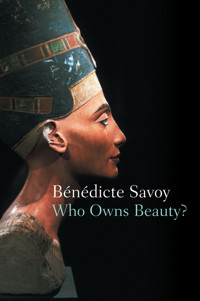
Beauty belongs to no one. But what about the objects that museums celebrate as great works of art: to whom do they belong? Do they belong to the places where they originated? To the cultures whose genius they embody? To the enlightened collectors who saw their value and appropriated them? Or to the whole of humanity which has access to them through institutions dedicated to their preservation? And if the latter, how can we justify the fact that some people are able to enjoy what is supposed to be a universally shared heritage while others cannot?
We can begin to answer these questions, argues Bénédicte Savoy, by examining how these objects actually came to be with us and what their journeys reveal about our history and its violence and asymmetries, both symbolic and real. These objects have no doubt left their mark on the places where they arrived; they have also left wounds that are still raw in the places from which they came. The bust of Nefertiti, the Great Pergamon Altar, The Adoration of the Mystic Lamb, the ‘Sistine Madonna’, the Old Summer Palace bronze heads, Watteau’s L'Enseigne de Gersaint, the ‘Bangwa Queen’, Klimt’s Portrait of Adele Bloch-Bauer, the Benin bronzes: through the journeys of these iconic works, Savoy reflects on desire and domination, on rupture and restitution, and on the profound emotions evoked by beauty when it is laced with the pain of historical loss.
This timely and highly original reflection on beauty, provenance, power, and loss will be essential reading for all those concerned with the preservation and restitution of cultural objects and it will appeal to anyone interested in art, culture, and politics today.
Sie lesen das E-Book in den Legimi-Apps auf:
Seitenzahl: 359
Veröffentlichungsjahr: 2025
Ähnliche



















Table of Contents
Cover
Title Page
Copyright Page
Dedication
Acknowledgements
Publisher’s Note
Introduction
Notes
1 The Bust of Nefertiti
Cairo
Berlin
Restoring an international icon?
Notes
2 The Pergamon Altar
A translocation in spare parts
To take and to understand
A model of reconstruction with a universalist vocation?
Notes
3 The Altarpiece of ‘The Mystic Lamb’ by the Van Eyck Brothers
An annexed heritage
From dismantlement to reconstruction
Evacuation, looting, restoration
Notes
4 Raphael’s ‘Sistine Madonna’
The advent of the public museum
The Dresden ‘Madonna’
Saving or appropriating a ‘treasure of humanity’?
Notes
5 The Bronze Heads of the Summer Palace in Beijing
Money, nation, heritage
The price of pillage
Repairing history?
Sharing, giving back, or leaving behind
Full circle
Notes
6 Watteau’s
L’Enseigne de Gersaint
The diplomacy of exhibitions
Potsdam, the 1740s
Crime, art, and punishment
Notes
7 The Statue of the ‘Bangwa Queen’ of Cameroon
A massive cultural extraction
Invisible in Berlin
International career
Notes
8 The
Portrait of Adele Bloch-Bauer
by Gustav Klimt
Collectors, donors, patrons
The world of yesterday
Discriminations, dislocations
‘Ciao Adele’
Notes
9 Benin’s ‘Royal Treasures’
Heritage moved, heritage replaced
Reconnecting through the arts
Intellectual reappropriation
Notes
Conclusion
Notes
End User License Agreement
Guide
Cover
Table of Contents
Begin Reading
Pages
iii
iv
v
vi
ix
x
1
2
3
4
5
6
7
8
9
10
11
12
13
14
15
16
17
18
19
20
21
22
23
24
25
26
27
28
29
30
31
32
33
34
35
36
37
38
39
40
41
42
43
44
45
46
47
48
49
50
51
52
53
54
55
56
57
58
59
60
61
62
63
64
65
66
67
68
69
70
71
72
73
74
75
76
77
78
79
80
81
82
83
84
85
86
87
88
89
90
91
92
93
94
95
96
97
98
99
100
101
102
103
104
105
106
107
108
109
110
111
112
113
114
115
116
117
118
119
120
121
122
123
124
125
126
127
128
129
130
131
132
133
134
135
136
137
138
139
140
141
142
143
144
145
146
147
148
149
150
151
152
153
154
155
156
157
158
159
160
161
162
163
164
165
166
167
168
169
170
171
172
173
174
175
176
177
178
179
180
181
182
183
184
185
186
187
188
189
190
191
192
193
194
195
196
197
198
199
200
201
202
203
204
205
206
207
208
Who Owns Beauty?
BÉNÉDICTE SAVOY
In collaboration with Jeanne Pham Tran
Translated by Andrew Brown
polity
Copyright Page
Originally published in French as À qui appartient la beauté? by Bénédicte Savoy © Éditions La Découverte, Paris, 2024.
This English translation © Polity Press, 2025.
This book is supported by the Institut français (Royaume-Uni) as part of the Burgess programme.
Polity Press
65 Bridge Street
Cambridge CB2 1UR, UK
Polity Press
111 River Street
Hoboken, NJ 07030, USA
All rights reserved. Except for the quotation of short passages for the purpose of criticism and review, no part of this publication may be reproduced, stored in a retrieval system, or transmitted, in any form or by any means, electronic, mechanical, photocopying, recording, or otherwise, without the prior permission of the publisher.
ISBN-13: 978-1-5095-6861-1 – hardback
A catalogue record for this book is available from the British Library.
Library of Congress Control Number: 2025933435
by Fakenham Prepress Solutions, Fakenham, Norfolk NR21 8NL
The publisher has used its best endeavours to ensure that the URLs for external websites referred to in this book are correct and active at the time of going to press. However, the publisher has no responsibility for the websites and can make no guarantee that a site will remain live or that the content is or will remain appropriate.
Every effort has been made to trace all copyright holders, but if any have been overlooked the publisher will be pleased to include any necessary credits in any subsequent reprint or edition.
For further information on Polity, visit our website: politybooks.com
Dedication
To Marie and Louise, who do own beauty
Acknowledgements
This book would not have seen the light of day without the infectious enthusiasm, professionalism, and patience of Jeanne Pham Tran. She came up with the idea of the delicate transposition of an oral course into a written text. She prepared the first manuscript, gave me the benefit of her valuable and judicious comments, and allowed me to clarify certain aspects and correct many flaws. She also assembled the elements necessary for the creation of the maps, and smoothed the final text. I would like to thank her most warmly. My gratitude also goes to the Atelier de création cartographique Afdec, as well as to Bruno Auerbach for his critical, precise, and friendly proofreading.
Without the support of Pierre Rosenberg, Marc Fumaroli, Carlo Ossola, and Antoine Compagnon, the Collège de France course that led to the present text would not have existed. Thanks go to Hartwig Fischer for the countless happy hours spent imagining the future of museums, to Felwine Sarr for opening my conscience to the heritage issues that arise on the African continent, and to the team of my research laboratory at the Technical University of Berlin for its abundant intellectual energy.
Publisher’s Note
This book is based on a course given at the Collège de France by Bénédicte Savoy in 2017: ‘À qui appartient la beauté? Arts et cultures du monde dans nos musées’. She takes up in the introduction certain passages from her inaugural lecture published under the title Objets du désir, désirs d’objets (Paris: Fayard, 2017); extracts from a 2015 interview conducted by Cristelle Terroni for the website La Vie des idées (https://laviedesidées.fr/La-memoire-restituee-des-œuvres-volees); and, in conclusion, a few paragraphs from the postface, translated from German by Frédéric Gendre, that she wrote for the new edition of Arno Bertina’s work, Des lions comme des danseuses (Paris: La Contre Allée, 2019 [2015]), under the title ‘L’héritage des autres’.
Introduction
At the end of the eighteenth century, in Paris and London, in Rome and in Weimar, the massive transfer of cultural goods and the real or symbolic violence that underlay them started to provoke reactions of unease in enlightened circles. In France, in 1796, Antoine Chrysostome Quatremère de Quincy attacked the policy of artistic conquests pursued by the French Directoire in Italy, and described in admirable and frequently quoted pages the sacred unity that, in his view, linked the object of art to its original context:
Neither in the midst of the fogs and smokes of London, the rains and muds of Paris, or the ice and snows of Petersburg; neither in the midst of the tumult of the great cities of Europe, nor in the midst of the chaos of distractions of a needy people occupied with mercantile cares, can a profound sensitivity for beautiful things develop.1
In 1812, in England, Lord Byron protested against Lord Elgin’s transfer of the Parthenon friezes from Athens to what he called England’s ‘northern climes abhorr’d’.2 Half a century later, in 1861, Victor Hugo, revolted by the sack of the Summer Palace in Beijing by the French and British armies, denounced in what was to become a famous letter what he viewed as a crime perpetrated by European barbarism against Chinese civilization.3
These indictments have long been forgotten, and we have mainly just remembered the positive side of the accumulation of cultural capital between the eighteenth and twentieth centuries that forged the reputation of European museums. Admittedly, from the gathering and conservation of these objects, from the individual and collective emotions that they aroused, the very idea of a universal heritage was born. But what happened to the places where they were no longer to be found? How can we accept that the symbolic and real capital generated by these museums is not shared? And how can we not want – through museums, thanks to museums, because they have given us so much and we have taken so much – to seek to engage in a fairer policy towards the dispossessed?
Since the history of Europe has for centuries been the painful tale we are so familiar with – a history of enmities between our nations, of bloody wars and discriminations painfully overcome after the Second World War – we have within ourselves the sources and resources to understand the sadness, anger, and hatred of those who – in other tropics, further away, poorer, weaker – were subjected in the past to the ‘intense absorbent power’4 of our continent. Or, to put it simply: today, all we need is a tiny effort of introspection and a slight change in perspective to empathize with them.
Introspection is the effort that consists, collectively, in connecting the objects that our museums hold to the story of their arrival among us and to the people who still live in the places we once occupied. It means we need to show and to think; to consciously embrace the problematic part of our history as Europeans ‘to whom everything came’.5 It means we must pay extreme, constant, and critical attention to the voices of all those who, inside and outside Europe, see heritage as a political issue. In short, we have to try to do what Achille Mbembe encourages us to do:
To move across [a multiplicity of places] as responsibly as possible, as the holders of rights that we all are, but in a total relationship of freedom and, where necessary, of detachment. In this process, one that involves translation, but also conflict and misunderstandings, certain questions will dissolve by themselves. Then, in relative clarity, we will see emerge the demand, if not for a possible universality, at least for an idea of the earth as what is common to us, our common condition.6
Beyond the simple question of the ‘belonging’ of works of art, we must question their history and that of the populations on whose lives they had an impact; we must shed light on the past of these objects and the conditions in which they were exiled; we must expose in all transparency the historical, economic, and cultural contexts from which they were torn, and the way in which they were received in the enlightened and then industrialized Europe that appropriated and transformed them. To answer the question of restitution, we must first look at our history.
How can we justify that some people enjoy a heritage deemed to be universal while others are kept away from it, physically and economically? What are we to think of the fact that the latter are those who have been deprived of their possessions by the violence and asymmetries of history? What can we say to them? What are the consequences of the connection – real or felt, legally fixed or couched as a cultural demand – to these objects of dispute? What view(s) should we take of them? What do our emotions, individual and collective, refer to when faced with these icons of beauty?
Who owns beauty? The question is rhetorical: of course, nobody owns beauty. However, since the eighteenth century and the invention of museums as we know them today, certain objects have been chosen and exhibited precisely for their beauty. As ‘objects of desire’, they have been bought, stolen, hidden, plundered, offered, or donated; they have constantly given rise to germinations, aesthetic fertilizations, and unexpected crystallizations. However, any object ‘transported’ from one place to another also creates a ‘lack’ where it is no longer. This is why we will alternately adopt the gaze of the admirer, whose fascination can lead to the acquisition or confiscation of the work in question, and the point of view of the dispossessed, in whom the feeling of loss, injustice, and absence can lead to indignation and protest. Through objects, a transnational history of Europe and the world emerges, the writing of which engages in a dialogue between disciplines and historiographies.
The challenge of the present work is to think simultaneously about the ‘movement’ of objects, and the very varied conditions under which they were moved: pillage, archaeological excavations, scholarly expeditions, looting, acquisitions, donations, etc. Some of these terms already constitute a political reading of the events. This is particularly apparent when we try to translate them.
In French, spoliation (‘looting’) and pillage (‘pillage’) immediately evoke the period of the German Occupation. On the other hand, we avoid these terms when it comes to describing our own actions: when, under the Revolution and then the Napoleonic Empire, France seized works of art throughout Europe, we tended to speak of ‘artistic conquests’ or ‘revolutionary confiscations’ – gentle euphemisms to legitimize their capture. We therefore note that ‘looting’ tells the point of view of the victims, while ‘artistic conquest’ refers to that of the victors. The Italians still speak today of spoliazioni (‘lootings’) and furti napoleonici (‘Napoleonic thefts’) when referring to the French policy of appropriation in the 1800s. We find equivalent expressions in Spain, the Netherlands, and Luxembourg. Germany, which – like France – has been both victim and perpetrator, uses different terms for each situation: Beutekunst (‘artistic spoils’) to designate the confiscations of works of art carried out by the Red Army in 1945 that were suffered by Germany, and Kunstraub (‘art theft’) for the lootings perpetrated by the Nazi regime against Jewish families. Indeed, in the German-speaking context, almost untranslatable expressions have emerged in recent years to refer to the latter: NS-verfolgungsbedingt entzogene oder kriegsbedingt verlagerte Kulturgüter (‘cultural property removed as a result of Nazi persecution, or displaced due to conflict’). In Russia, the term ‘war trophies’ is still used to refer to the collections of German libraries and museums that remained on the territory of the former USSR after the great wave of restitution to the German Democratic Republic (GDR) in the 1950s. In short, words always convey points of view.
This is why, after working for many years on these issues from a transnational perspective, I propose the more neutral term ‘heritage translocations’ – not to depoliticize the debate, but to include all types of appropriations of works of art and heritage that are carried out to the detriment of the party that is economically or militarily weakest. And I also wish to emphasize the multiplicity of points of view involved. For wars are only one subcategory among others. The dispersion of African art in the nineteenth and twentieth centuries was not only the result of war or colonization. After decolonization, it was also a result of the art market. Nazi lootings and archaeological transfers did not have the same goal or the same meaning: in one case, it was a massive and planned dispossession of works of art, linked to genocide; in the other, a displacement of fragments or entire works by archaeologists for scientific and scholarly reasons. It is not a question of mixing together what are distinct subjects, historical contexts, and dramas. The fact remains that all these objects that were taken, moved, or torn away by force, ultimately arrived in the same place, in the same receptacle – namely, the museums dedicated to the conservation of heritage.
Originally, ‘translocation’ is a term from gene chemistry designating an exchange between chromosomes caused by breakage and repair, an exchange involving mutations. Obviously, genetic heritage and cultural heritage are not comparable. And yet the analogy works: applied to lootings, it first has the advantage of putting a particular place at the centre of the discussion. This question of place (the place of origin and the place of conservation of a work of art; the place where it is and the place from which it is missing; the place deemed safe or risky for it; the environment that is deemed natural for it – such as a church, a collector’s living room, or the sand of Egypt; and the environment that is felt to be unnatural, such as a museum, or a distant continent) is crucial for understanding, analysing, and identifying the emotions and discourses that have always been linked to the forced displacement of works of art, books, manuscripts, objects of natural history, musical instruments, archives, etc.
Taken in its primary sense, the notion of translocation also leads us to consider the ‘breaks’ and ‘repairs’ linked to displacements – the individual or collective traumas that they imply in the long term. Finally, it gives full place to the question of ‘mutations’, the multiple transformations that affect the displaced objects and the societies that receive them or lose them under the effect of displacement. The connection between these three elements – the place, the injury done, and the transformation – is decisive for understanding the logic of heritage annexations and their effects, and, in a certain way, the history of European museums.
Thus, the translocations of the works that we will be examining inform us both about the history of art and about global geopolitical relations, the rise of European museums and the history of the art market, the evolution of legal systems and the evolution of mentalities. They shed light on the very notion of ‘heritage’ which, in France at least, has been as important as that of ‘secularism’ or ‘Republic’ in the construction of the country since the nineteenth century (which is not the case in other European countries).
*
These questions have recently hit the headlines for several reasons: political and legislative initiatives by several governments; the advent of postcolonial and decolonial studies; and the growing demands for restitution from families, communities, or countries stripped of their goods.
A sign of this large-scale awareness is the enthusiasm that the cinema has shown for the subject: since the 1960s, and particularly in recent years, more and more fiction films have depicted the wanderings of emblematic works of art. The fact that American and Chinese blockbusters are investing millions of dollars or yuan to make films on this subject is evidence of the place that the question occupies in the collective imagination, particularly among younger generations. Halfway between history, the work of memory, emotion, and identity construction, these films advance at the same pace as historiography, but in a different, visual, and therefore more immediately striking, mode for contemporary audiences.
The most famous of such films has to be The Monuments Men, written and directed by George Clooney, and co-produced in 2014 by the United States and Germany. Adapted from the book by Robert M. Edsel, a huge bestseller in the United States, the film depicts the work of the Allies to recover the works looted by the Nazis during the Second World War. Released in 2015, Woman in Gold, the film directed by Simon Curtis, retraces the fight led by Maria Altmann to recover the portrait of her aunt, Adele Bloch-Bauer, painted by Klimt. Confiscated by the Nazis, it was then exhibited at the Belvedere Museum in Vienna. On the looting suffered during the Second World War, there is also the French film L’Antiquaire (The Art Dealer) directed by François Margolin, released in 2015, based on a true story: a young woman’s investigation to recover the collection of paintings stolen from her Jewish family during the war. Blood of War, a film directed by Ukrainian Aleksandr Berezan, shot in 2011, depicts the evacuation ordered by Stalin of valuable items from the heritage preserved on the front line between the USSR and Nazi Germany, items that Hitler wanted to seize. In 2014, the Greek film Promakhos (The First Line) drew on the legal and political battle demanding the return of the Parthenon marbles to Greece. All these films are both mirrors of historical events and actors in current debates, since they express certain definite opinions.
But let us focus on a particular case, which, in its own way, sheds light on all the others. In December 2012, when Xi Jinping had just taken power, a blockbuster was released in China called Chinese Zodiac, a China / Hong Kong action film written and directed by Jackie Chan, set at the beginning of the twenty-first century. In a series of breathtaking kung fu scenes, the famous Chinese actor deploys all his agility, intelligence, and pugnacity to recover works of art looted from China in the nineteenth century and taken to France. Against a background of wonderful special effects, he too answers our question: who owns beauty?
Jackie Chan’s film is relevant for at least four reasons. First, it refers to a real episode in the history of artistic heritage that links Asia and Europe. In February 2009, Christie’s auctioned the collection of Pierre Bergé and Yves Saint Laurent in a spectacular setting at the Grand Palais. Two bronze heads of Chinese zodiac animals, looted from the Summer Palace in Beijing by the French and British armies in 1860, were up for sale. The announcement of their sale caused a profound stir in the media and in public opinion. The Chinese government tried to prevent the sale and obtain the restitution of these works. Finally, a Chinese buyer, supported by the Beijing authorities, refused at the last moment to pay, arguing that these objects were part of his country’s national heritage.
Second, through the scenes of chases, stunts, and martial arts fights, Chinese Zodiac expresses a strong and explicit opinion. It is less heritage that serves as a pretext for kung fu than kung fu that serves as a pretext for a political message, in a Chinese context that was especially sensitive to the issue: between 2009 and 2012, in the time between the film’s release and the Parisian event just described, nationalist rhetoric in China was experiencing a significant boom. When it was released in 2012, the film stayed at the top of the box-office charts in China, Thailand, Malaysia, and Russia for several weeks and grossed a total of $170 million, including $145 million at the Chinese box office alone. It was released in Hindi, Tamil, Turkish, Arabic, and many other languages. Not only was Chinese Zodiac seen all over the world, it was specifically seen by a young audience. Needless to say, it was not as successful when it was released in France and Europe. Who owns beauty? For Jackie Chan, the answer is clear.
Third, the film poses in a very schematic way the questions that structure an otherwise very complex debate. It addresses the idea of the ownership of a work of art. One of the characters, an old man in a wheelchair, the descendant of a British officer, speaks of the ‘treasures brought back by his ancestors a hundred and fifty years ago, though they did not own them’ and regrets that ‘the bronzes are the property of only one or two people’. This reflection is deployed over two time periods: during the sacking of the Summer Palace in the Second Opium War in 1860, and during the controversy caused by the auction of the bronzes in Paris in 2009. The old man also makes us think about the accessibility of works of art: in his view, if these works remain the property of a single person, then they are not only lost to the original community, but also to the rest of humanity. The film highlights the question of the uniqueness of these works. No copy could ever replace them. So, in Chinese Zodiac, Jackie Chan absolutely has to get his hands on the originals.
Finally, the question arises of the ‘right place’ for these works of art. The film shows Paris as an ‘unjust place’: a group of students from various countries demonstrate in front of the Eiffel Tower to demand the restitution of the works to their place of origin. The banners of the attractive young activists, fired by zeal, read: ‘No more sales of national treasures’, ‘Return these treasures to their country of origin’. The message is clear: objects of art belong to the territory from which they were taken. Geographical logic takes precedence over all others.
Naturally, the history of the translocation of works of art refers to different logics – military, political, scientific, cultural, etc. – but they are all associated with a relationship of domination, and very often with a ‘feeling of belonging’, whether it is linked to a territory, a community, a cultural, ethnic, religious, artistic identity, etc., or whether it is a more complex form of recognition, identification, or even projection. Etymologically, the word appartenir in French, meaning ‘to belong’, shares the same root as the word parent, which in French can refer either to a mother or to a father, and also to other relatives. Therefore, those who claim to be the owners or possessors of a work of art feel an attachment to it that implies feelings, emotions, and subjective perceptions that are difficult to verify or quantify, and often go beyond the domain of the law strictly speaking.
The question of the belonging (appartenance) of works of art, and of art in general, has long been the subject of in-depth research and publications among anthropologists, archaeologists, lawyers, and heritage specialists, at UNESCO, in museums, and in universities. Emblematic works include: Who Owns Antiquity? by James Cuno, Art as a Plunder by Margaret M. Miles, and Whose Pharaohs? by Donald Malcolm Reid.7 For James Cuno, the president of the Getty Foundation in Los Angeles: ‘[A]ntiquities are the cultural property of all humankind – of people, not peoples – evidence of the world’s ancient past and not that of a particular modern nation. They comprise antiquity, and antiquity knows no borders.’8 And Cuno praises ‘the concept of the museum dedicated to ideas, not ideologies, the museum of international, indeed universal aspirations, and not of nationalist limitations, curious and respectful of the world’s artistic and cultural legacy as common to us all.’9
James Cuno does not here dwell on the question of the real accessibility of museums, which, because of border regulations (visas) or for economic reasons (mobility costs), are accessible only to a tiny minority of citizens from the countries of origin of the works, most of whom cannot ever hope to visit these so-called universal places.
This museological approach is coupled with international legal work on what English speakers call ‘cultural property’; in French it is called – without any emphasis on the notion of property – ‘heritage’ (patrimoine) or ‘cultural goods’. How does the idea of associating culture with property pose a problem?10 ‘Cultural property’ has been the subject of two international definitions set within the framework of UNESCO conventions and frequently cited. The Hague Convention of 14 May 1954 for the ‘Protection of Cultural Property in the Event of Armed Conflict’ begins as follows:
Recognizing that cultural property has suffered grave damage during recent armed conflicts and that, by reason of the developments in the technique of warfare, it is in increasing danger of destruction;
Being convinced that damage to cultural property belonging to any people whatsoever means damage to the cultural heritage of all mankind, since each people makes its contribution to the culture of the world;
Considering that the preservation of the cultural heritage is of great importance for all peoples of the world and that it is important that this heritage should receive international protection;
Guided by the principles concerning the protection of cultural property during armed conflict, as established in the Conventions of The Hague of 1899 and of 1907 and in the Washington Pact of 15 April, 1935;
Being of the opinion that such protection cannot be effective unless both national and international measures have been taken to organize it in time of peace;
Being determined to take all possible steps to protect cultural property. …11
From the outset, a certain tension is perceptible. It is stated that there is a ‘cultural heritage of all mankind’, but it is immediately specified that cultural goods belong to different peoples.
The second text, signed on 14 November 1970 and ratified only in 1997 by France, is entitled ‘Convention on the Means of Prohibiting and Preventing the Illicit Import, Export and Transfer of Ownership of Cultural Property’:
Considering that cultural property constitutes one of the basic elements of civilization and national culture, and that its true value can be appreciated only in relation to the fullest possible information regarding its origin, history and traditional setting,
Considering that it is incumbent upon every State to protect the cultural property existing within its territory against the dangers of theft, clandestine excavation, and illicit export,
Considering that, to avert these dangers, it is essential for every State to become increasingly alive to the moral obligations to respect its own cultural heritage and that of all nations …12
In this document, UNESCO states that cultural property is one of the basic elements of each civilization. The recognition of a link between people, geography, and culture implies in return an ethical responsibility, with the mission falling to each state to ensure the integrity of its property as well as its maintenance on that country’s territory: the text does not mention the idea of possibly demanding its return, even though this is a corollary.
While these texts have at least the merit of existing, they are full of contradictory energies and they certainly do not facilitate the conceptual work of heritage professionals. Moreover, their translation alone poses a problem since the concepts of ‘museum’ and ‘heritage’ are untranslatable in many languages spoken in regions that have been victims of dispossession.13
*
The first major texts that relate the question of beauty to that of property date from Antiquity. In the first century bc, Cicero formulated his set of speeches known as Against Verres. As a still young lawyer, Cicero had just obtained his first position in Sicily, at the age of thirty-six. The Sicilians had sought his help in a lawsuit against Gaius Lucinus Verres, the Roman governor of their colonized island. During the First Punic War (or Sicilian War) in the third century bc, the Carthaginians had plundered some of their treasures. During the Third Punic War, Rome recovered these precious works of art, objects, and carpets from Carthage (on the Mediterranean coast of present-day Tunisia) to return them to the Sicilians, thus demonstrating its loyalty to its colony. Less than a generation later, Verres seized these objects and had them transported to his home in Rome.
In this story, questions of ownership and restitution are already on the agenda. This is evidenced by Cicero’s speeches, which he was unable to deliver in their entirety at the hearing, but which he published under the title Verrines (Against Verres) in 70 bc:
There was among the Segestans a statue of Diana, of brass, not only invested with the most sacred character, but also wrought with the most exquisite skill and beauty. When transferred to Carthage, it only changed its situation and its worshippers; it retained its former sanctity. For on account of its eminent beauty it seemed, even to their enemies, worthy of being most religiously worshipped.… When that enemy of all sacred things, that violator of all religious scruples [i.e. Verres] saw it, he began to burn with covetousness and insanity, as if he himself had been struck with that torch. He commands the magistrates to take the statue down and give it to him; and declares to them that nothing can be more agreeable to him. But they said that it was impossible for them to do so; that they were prevented from doing so, not only by the most extreme religious reverence, but also by the greatest respect for their own laws and courts of justice.… Therefore, at last, the Segestans, subdued by much ill-treatment and by great fear, resolved to obey the command of the praetor. With great grief and lamentation on the part of the whole city, with many tears and wailings on the part of all the men and women, a contract is advertised for taking down the statue of Diana.14
Who owned the statue of Diana? The man who ‘burned’ for it and who had the administrative power to seize it? The city which had lost it and then found it again, which venerated it and which collectively felt the pain of its loss? This was Cicero’s view. In addition to the matter of heritage, and the political, legal, and financial questions, there is also the issue of the emotions and the symbolic and real violence that this translocation provoked.
Caius Heius is a Mamertine – all men will easily grant me this who have ever been to Messana; the most accomplished man in every point of view in all that city. His house is the very best in all Messana, – most thoroughly known, most constantly open, most especially hospitable to all our fellow-citizens. That house before the arrival of Verres was so splendidly adorned, as to be an ornament even to the city.…
There was in the house of Heius a private chapel of great sacredness, handed down to him from his ancestors, very ancient; in which he had four very beautiful statues, made with the greatest skill, and of very high character; calculated not only to delight Verres, that clever and accomplished man, but even any one of us whom he calls the mob … They were open every day for people to go to see them. The house was not more an ornament to its master, than it was to the city.…
Shall Verres take away everything which is most beautiful everywhere? … Was it for this reason that none of his predecessors ever touched these things, that he might be able to carry them off? … But why am I borne on so impetuously? I shall in a moment be refuted by one word. ‘I bought it,’ says he. O ye immortal gods, what a splendid defence! … For this defence seems to me to be got ready for everything; that he bought them …
[It is] you [who], under the presence of purchase which you put forward, in reality seized and took away these things by force, through fear, by your power and authority, from that man.15
Who owns these four statues, in the final analysis? The man who has the financial means to acquire them, says Verres. The person for whom they have no price, or else an emotional price, retorts Cicero. The lawyer continues by using the argument of the accessibility and visibility of works of art – a notion that the Republican and Napoleonic armies would not hesitate to take up again during the French Revolution and then under the Empire, when they decided to assemble in Paris all the collections of Europe.
For example, Vivant Denon, director general of the museums of France between 1802 and 1815, argued that the Louvre, renamed the Musée Napoléon, was much better equipped than others, financially and scientifically, to showcase works of art. Acting on his words, he explained to the director of the Brunswick Museum that the 900 pieces of porcelain from his establishment would be more advantageously exhibited in Paris because they ‘would finally be useful to the public’! For Denon, beauty belonged to those who knew how to showcase and preserve it.16
The vanquished and dispossessed of the time were already starting to protest vociferously: beauty could not be the property of a people, even a liberated, egalitarian, and fraternal one, because it was not the concrete property of anyone. In 1798, following the arrival in Paris of works ‘conquered’ in Rome, protests were heard. August Wilhelm Schlegel, a German poet, philosopher, and critic, lent his voice to the statues seized in Italy. Speaking through them, he addressed the French in his poem entitled ‘The Stolen Gods’ (1798):
Do you have a sanctuary for us?
And can the charms of Greece be conquered by force of arms?
Are the gods also the property of men?17
While the Galerie des Antiquités had just opened at the Louvre, the German poet and writer Friedrich Schiller expressed the same sentiments in this short poem dated 1802, ‘Antiquities in Paris’:
That which Grecian art created,
Let the Frank, with joy elated,
Bear to Seine’s triumphant strand,
And in his museums glorious
Show the trophies all-victorious
To his wondering fatherland.
They to him are silent ever,
Into life’s fresh circle never
From their pedestals come down.
He alone e’er holds the Muses
Through whose breast their power diffuses, –
To the Vandal they’re but stone!18
For Schiller, the person who owns beauty is the one who feels it in his or her heart, and not the one who appropriates it materially: the latter knows neither how to make it speak nor how to hear it. Beauty belongs to those who understand it. However, as is often the case, this argument is also hijacked, as much by the victors as by the vanquished. Many voices are raised in Western museums to demonstrate the ‘benefits’ (often the benefits of hindsight) derived from translocations and even lootings that, they claim, have allowed (and still allow) these museums to protect, even to ‘save’, many works of art which would otherwise have been destroyed, ransacked, dismantled by wars, or sold off in fragments by traffickers.
In 2014, after the lawyer (and wife of George Clooney) Amal Alamuddin came to England to negotiate the return of the Parthenon friezes exhibited in London since the beginning of the nineteenth century, the journalist Jeremy Paxman waxed indignant in the Telegraph: ‘The Parthenon marbles belong in Britain, Mrs. Clooney. Had the ghastly Lord Elgin not plundered his works of art, they could have ended up in the footings of some Athens kebab stand.’19 In other words, the ‘others’ from whom ‘we’ took works of art at a certain moment in history are not worthy, not capable – aesthetically, culturally, or morally – of preserving them. From there to expecting them to thank the kidnappers for their great magnanimity takes only a small step. What would Cicero have retorted if he had been there? He would doubtless have defended the Greeks against the British.
Then there is the film that made a great impression in 1964: The Train, by John Frankenheimer, with Burt Lancaster and Jeanne Moreau. It is the story of the derailment of the Aulnay train in August 1944. Resistance railway workers are trying to prevent the convoy, requisitioned by the Nazis and loaded with works of art, from arriving in Germany. A Nazi officer insults the railway worker played by Burt Lancaster: ‘You are nothing, Labiche. A lump of flesh. The paintings are mine. They always will be. Beauty belongs to the man who can appreciate it. They will always belong to me or to a man like me. Now, this minute, you couldn’t tell me why you did what you did!’20
Here, the argument that a work of art belongs to those who can understand it is turned against the simple man, the railway employee who has just derailed a train carrying works looted from France by the Nazis. But what does the spectator think? Does beauty belong to the Nazi soldier who claims to appreciate it at its just worth, thanks to his distinguished culture, or to poor Labiche who, admittedly, does not possess the codes of the dominant culture, but who acts for good and commits his life to the struggle against the Fascist power?
In the debates on translocation currently agitating cultural circles, we often hear voices claiming that ‘we’ have, in European museums, the technological and intellectual skills to conserve works of art, while the ‘others’ do not. Yet, in books, films, and newspapers, it is often the point of view of the ordinary person that is defended – of the one whose relationship to beauty is neither intellectual nor cultural, but ritual, intuitive, or emotional.
In the same period as The Train, in 1961, the German–Soviet war and propaganda film Five Days, Five Nights was released. This enormous production, the most expensive in the history of post-war cinema in the Eastern bloc, sold more than 2 million tickets in the GDR. The story takes place in Dresden in 1945. The Red Army enters the city completely destroyed by American–British bombings and extracts the masterpieces of the Dresden museum from the ruins to send them to Moscow. Some fifteen years later, these works are returned. The film was made to legitimize, a posteriori, their ‘rescue’ by the USSR. The way the museum is depicted in this film is meant to remind the audience in 1960s East Germany and the Soviet Union of what the news in the twenty-first century continues to emphasize: the translocation of works of art is a major cultural trauma in the history of European museums, whether they were victims or beneficiaries of past policies of heritage appropriation. By its very existence, the cinematography of translocation bears witness to the place of the subject in the contemporary collective consciousness and imagination.21
Observing the Red Army packing away the Dresden artworks, a young local painter, engaged during the war years in the resistance against the Nazi regime, is offended to see these paintings leave for the Soviet Union. Outraged, he denounces the theft. Suddenly, witnessing the emotion of the Russian sergeants in front of a Raphael Madonna, the painter understands his mistake. The veil that covered his eyes is torn: the victory of the Allies over the camp of hatred is reinforced by love of beauty. Thus, the film skilfully legitimizes the taking of the works from Germany in 1945 and their transfer to Moscow.
*
To the question ‘Who owns the beauty exhibited in our museums?’, two main answers therefore present themselves. The first claims that the works belong to a territory and have a link with those who live in the dispossessed regions. The other position affirms that beauty belongs to humanity and that museums provide access to it precisely through translocations. When working out one’s own position, it is useful to focus on concrete objects and to question how they arrived




