


22,99 €
Mehr erfahren.
- Herausgeber: John Wiley & Sons
- Kategorie: Geisteswissenschaft
- Sprache: Englisch
Why Cultural Studies? is a rallying call for a reinvigoration of the project of cultural studies that provides a critical analysis of its meteoric rise to the academic fore and makes a convincing argument for the pressing need for a renewed investment in, and re-evaluation of, its core ideals.
- Rodman argues that there are valuable lessons we can learn from cultural studies’ past that have the potential to lead cultural studies to an invigorated and viable future
- Makes the claim that cultural studies isn’t – and shouldn’t be – solely an academic subject, but open to both academics and non-academics alike
- Asserts that now more than ever cultural studies has a productive role to play in promoting social justice and building a better world
- Written by one of the leading figures in the area of cultural studies, and the current Chair of the Association for Cultural Studies
Sie lesen das E-Book in den Legimi-Apps auf:
Seitenzahl: 309
Veröffentlichungsjahr: 2014
Ähnliche




















This edition first published 2015
© 2015 Gilbert B. Rodman
Registered Office
John Wiley & Sons Ltd, The Atrium, Southern Gate, Chichester, West Sussex, PO19 8SQ, UK
Editorial Offices
350 Main Street, Malden, MA 02148-5020, USA
9600 Garsington Road, Oxford, OX4 2DQ, UK
The Atrium, Southern Gate, Chichester, West Sussex, PO19 8SQ, UK
For details of our global editorial offices, for customer services, and for information about how to apply for permission to reuse the copyright material in this book please see our website at www.wiley.com/wiley-blackwell.
The right of Gilbert B. Rodman to be identified as the author of this work has been asserted in accordance with the UK Copyright, Designs and Patents Act 1988.
All rights reserved. No part of this publication may be reproduced, stored in a retrieval system, or transmitted, in any form or by any means, electronic, mechanical, photocopying, recording or otherwise, except as permitted by the UK Copyright, Designs and Patents Act 1988, without the prior permission of the publisher.
Wiley also publishes its books in a variety of electronic formats. Some content that appears in print may not be available in electronic books.
Designations used by companies to distinguish their products are often claimed as trademarks. All brand names and product names used in this book are trade names, service marks, trademarks or registered trademarks of their respective owners. The publisher is not associated with any product or vendor mentioned in this book.
Limit of Liability/Disclaimer of Warranty: While the publisher and author have used their best efforts in preparing this book, they make no representations or warranties with respect to the accuracy or completeness of the contents of this book and specifically disclaim any implied warranties of merchantability or fitness for a particular purpose. It is sold on the understanding that the publisher is not engaged in rendering professional services and neither the publisher nor the author shall be liable for damages arising herefrom. If professional advice or other expert assistance is required, the services of a competent professional should be sought.
Library of Congress Cataloging-in-Publication Data
Rodman, Gilbert B., 1965–
Why cultural studies? / Gilbert B. Rodman.
pages cm
Includes bibliographical references and index.
ISBN 978-1-4051-2798-1 (cloth) – ISBN 978-1-4051-2797-4 (pbk.) 1. Culture–Study and teaching. I. Title.
HM623.R637 2014
306.07–dc23
2014017307
A catalogue record for this book is available from the British Library.
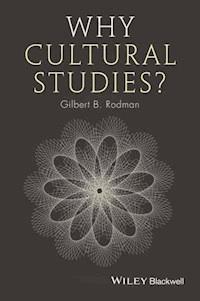
Cover image: Monochrome Guilloché © imacon / Getty Images
Preface
Once upon a time, there was this thing called “cultural studies.” The question of just what type of thing it actually was will be important later on the story. For now, though, all we need to know is that cultural studies began as a very small, isolated, and obscure thing—one that not a lot of people knew about—and then, with very little warning, it exploded into a highly visible global phenomenon. Lots of people who had never heard of cultural studies before were suddenly very excited about it, especially since it seemed to hold forth the promise of changing the world as they knew it in bold and important ways. Lots of other people (who had also never heard of it before) were just as horrified by its surprising prominence, and because they, too, saw in it the prospect of a radically transformed world—only that possibility struck them as something to be feared.
To be sure, even at the peak of the international boom in cultural studies in the 1990s, it wasn't anywhere near as popular as, say, Elvis Presley was in 1956. It was never that sort of thing, after all. Still, much like rock ’n’ roll in the 1950s (albeit on a somewhat smaller scale), cultural studies was a Very Big Deal. If you were in the Anglophone world in, say, 1992, and working anywhere near the humanities side of the university or academic publishing, you didn't necessarily have to do cultural studies—or even like it—but you would have been hard-pressed to ignore it. Cultural studies promised—or, if you were on the other side of the fence, threatened—to radically transform the ways in which people approached scholarship, cultural criticism, and political action.
Lesen Sie weiter in der vollständigen Ausgabe!
Lesen Sie weiter in der vollständigen Ausgabe!
Lesen Sie weiter in der vollständigen Ausgabe!
Lesen Sie weiter in der vollständigen Ausgabe!
Lesen Sie weiter in der vollständigen Ausgabe!
Lesen Sie weiter in der vollständigen Ausgabe!
Lesen Sie weiter in der vollständigen Ausgabe!
Lesen Sie weiter in der vollständigen Ausgabe!




