


57,99 €
Mehr erfahren.
- Herausgeber: John Wiley & Sons
- Kategorie: Fachliteratur
- Sprache: Englisch
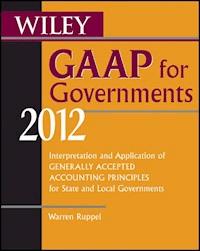
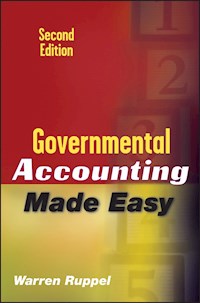
The most practical, authoritative guide to governmental GAAP Wiley GAAP for Governments 2012 is a comprehensive guide to the accounting and financial reporting principles used by state and local governments as well as other governmental entities. Designed with the needs of the user in mind, this comprehensive resource presents the important developments in governmental GAAP during the past year. * Full coverage of authoritative accounting standards * Extremely useful and user-friendly examples, illustrations, and helpful practice hints * A comprehensive guide to the accounting and financial reporting principles used by state and local governments as well as other governmental entities * Provides a look ahead to the status of current and future Governmental Accounting Standards Board standards and projects * Offers information on the very latest in standard-setting activities * Also by Warren Ruppel: Governmental Accounting Made Easy Wiley GAAP for Governments 2012 is a thorough, reliable reference financial professionals will consistently keep on their desks rather than on their bookshelves.
Sie lesen das E-Book in den Legimi-Apps auf:
Seitenzahl: 1294
Veröffentlichungsjahr: 2012
Ähnliche














CONTENTS
Preface
About the Author
Chapter 1: New Developments
Introduction
Recently Issued GASB Statements and Their Effective Dates
Exposure Drafts
Preliminary Views
GASB Project Plan
Summary
Chapter 2: Foundations of Governmental Accounting
Introduction
Chapter Overview
Entities Covered by Governmental Accounting Principles
Overview of The History of Governmental Accounting Standards Setting
Objectives of Governmental Accounting and Financial Reporting
Objectives of Financial Reporting
Communication Methods
Elements of Financial Statements
Hierarchy of Governmental Accounting Standards
Codification of Certain FASB and AICPA Accounting and Financial Reporting Guidance
Summary
Chapter 3: Fund Accounting Fundamentals
Introduction
Definition of Fund and The Purpose of Fund Accounting
A Synopsis of The Various Types of Funds Used by Governments For Accounting and Financial Reporting
A Definition of Basis of Accounting and Measurement Focus
Recognition and Measurement of Certain Fund Liabilities and Expenditures
A Synopsis of Basis of Accounting and Measurement Focus Used by Each Type of Fund
Summary
Chapter 4: General Fund and Special Revenue Funds
Introduction
Basis of Accounting and Measurement Focus
Nature and Use of The General Fund
Nature and Use of Special Revenue Funds
Accounting for Certain Revenue and Expenditures of General and Special Revenue Funds
Accounting For Assets, Liabilities, and Fund Balances of General and Special Revenue Funds
Summary
Chapter 5: Capital Projects Funds
Introduction
Basis of Accounting
Measurement Focus
When are Capital Projects Funds Used?
Revenues and Other Financing Sources
Summary
Chapter 6: Debt Service Funds
Introduction
Situations When A Debt Service Fund is Required or Desirable
Basis of Accounting and Measurement Focus
Expenditure Recognition for Debt Service Payments
Accounting For The Advance Refunding of Long-Term Debt
Summary
Chapter 7: Proprietary Funds
Introduction
Basis of Accounting and Measurement Focus For Proprietary Funds
Enterprise Funds
Internal Service Funds
Summary
Chapter 8: Fiduciary Funds
Introduction
Agency Funds
Pension (and Other Employee Benefit) Trust Funds
Investment Trust Funds
Private-Purpose Trust Funds
Summary
Chapter 9: Financial Statements Prepared by Governments
Introduction
Basic Financial Statements
Interfund Transactions—Fund Financial Statements
Intra-Entity Transactions—Government-Wide Financial Statements
Reporting Deferred Inflows and Outflows of Resources
Comprehensive Annual Financial Report
Cash Flow Statement Preparation and Reporting
Summary
Chapter 10: The Importance of Budgets to Governments
Introduction
Budget Background
Which Funds of The Government Adopt Budgets?
Differences Between The Budget and GAAP
Budgetary Control
Summary
Chapter 11: Definition of the Reporting Entity
Introduction
Background
Accountability Focus
Financial Reporting Entity Defined
Gasb Statement No. 61 (GASBS 61), The Financial Reporting Entity—An Amendment of GASB Statements No. 14 and No. 34
Determining Whether Certain Fund-Raising Organizations Are Component Units—Amendment of GASB Statement 14
GASB Technical Bulletin 2004-1, Tobacco Settlement Recognition and Financial Reporting Entity Issues (GASBTB 2004-1)
Display of Component Units
Summary
Chapter 12: Cash and Investments—Valuation and Disclosures
Introduction
Valuation of Investments
Gasb Statement 52, Land and Other Real Estate Held as Investments By Endowments
Financial Reporting Requirements
Required Disclosures
Deposits and Investment Risk Disclosures
Nature of Securities Lending Transactions
Previous Accounting Treatment
Gasbs 28’s Effect on The Balance Sheet
Gasbs 28’s Effect on The Operating Statement
Pooled Securities
Disclosure Requirements
Summary
Chapter 13: Derivative Instruments
Introduction
Summary
Chapter 14: Capital Assets
Introduction
Valuation of Assets Recorded
Depreciation of Capital Assets
Disclosures Relating to Capital Assets
Service Concession Arrangements
Capitalization of Interest
Summary
Chapter 15: Debt and Other Obligations
Overview of The Accounting For Debt and Other Obligations
Demand Bonds
Advance Refundings
Bond, Revenue, and Tax Anticipation Notes
Special Assessment Debt
Pollution Remediation Obligations
Gasb Statement 58, Accounting and Financial Reporting For Chapter 9 Bankruptcies (GASBS 58)
Sales and Pledges of Receivables and Future Revenues
Statement of Governmental Accounting Standards 47, Accounting For Termination Benefits, (GASBS 47)
Summary
Chapter 16: Landfill Closure and Postclosure Care Costs
Introduction
Applicability
Municipal Solid Waste Landfills
Responsibility For Landfill Closure and Postclosure Care Assumed by Another Entity
Disclosures
Summary
Chapter 17: Postemployment Benefits—Pension and Other
Introduction
Scope and Applicability
Requirements For Defined Benefit Pension and OPEB Plans
Calculation of The ARC
Parameters For Actuarial Calculations, Including The ARC
Net Pension Obligation
Net Opeb Obligation
Recording Pension-Related Assets, Liabilities, and Expenditures/Expenses
Recognition of OPEB Expenses/Expenditures, Liabilities and Assets
Additional Guidance on Expenditure/Expense Recognition
Gasb Technical Bulletin 2006-1, Accounting and Financial Reporting by Employers and OPEB Plans For Payments From The Federal Government Pursuant to The Retiree Drug Subsidy Provisions of Medicare Part D (GASBTB 2006-1)
Gasb Technical Buletin 2008-1, Determining The Annual Required Contribution Adjustment For Postemployment Benefits (GASBTB 2008-1)
Employer Pension and OPEB Disclosures
Employers With Defined Contribution Plans
Other Provisions
Summary
Chapter 18: Compensated Absences
Introduction
Scope of GASBS 16
Basic Principle
Financial Reporting Considerations
Summary
Chapter 19: Accounting for Leases
Introduction
Accounting Basis
Other Leasing Issues For Governmental Entities
Summary
Chapter 20: Nonexchange Transactions
Chapter 21: Risk Financing and Insurance-Related Activities/Public Entity Risk Pools
Introduction
Risk Financing and Insurance Activities of State and Local Governments (Other Than Public Entity Risk Pools)
Accounting and Financial Reporting For Public Entity Risk Pools
Summary
Chapter 22: Pension and OPEB Plan Financial Statements
Introduction
Pension Plan Accounting and Financial Reporting
Defined Benefit Pension Plans
GASB Statement 50, Pension Disclosures—An Amendment of GASB Statements No. 25 and 27
Defined Contribution Pension Plans
Postemployment Benefit Plans Other Than Pensions
Summary
Chapter 23: Educational and Other Governmental Entities
Introduction
School Districts
Governmental Colleges and Universities
Governmental Hospitals and Other Health-Care Providers
Governmental Not-For-Profit Organizations
Other Public Benefit Corporations
Summary
Appendix: Disclosure Checklist
Index
BECOME A SUBSCRIBER!
Did you purchase this product from a bookstore?
If you did, it’s important for you to become a subscriber. John Wiley & Sons, Inc. may publish, on a periodic basis, supplements and new editions to reflect the latest changes in the subject matter that you need to know in order stay competitive in this ever-changing industry. By contacting the Wiley office nearest you, you’ll receive any current update at no additional charge. In addition, you’ll receive future updates and revised or related volumes on a 30-day examination review.
If you purchased this product directly from John Wiley & Sons, Inc., we have already recorded your subscription for this update service.
To become a subscriber, please call 1-877-762-2974 or send your name, company name (if applicable), address, and the title of the product to
mailing address: Supplement Department, John Wiley & Sons, Inc., One Wiley Drive, Somerset, NJ 08875
e-mail: [email protected]
fax: 1-732-302-2300
online: www.wiley.com
For customers outside the United States, please contact the Wiley office nearest you:
Professional & Reference Division
John Wiley & Sons Canada, Ltd.
22 Worcester Road
Etobicoke, Ontario M9W 1L1
CANADA
Phone: 416-236-4433
Phone: 1-800-567-4797
Fax: 416-236-4447
Email: [email protected]
John Wiley & Sons Australia, Ltd.
33 Park Road
P.O. Box 1226
Milton, Queensland 4064
AUSTRALIA
Phone: 61-7-3859-9755
Fax: 61-7-3859-9715
Email: [email protected]
John Wiley & Sons, Ltd.
The Atrium
Southern Gate, Chichester
West Sussex, PO 19 8SQ
ENGLAND
Phone: 44-1243-779777
Fax: 44-1243-775878
Email: [email protected]
John Wiley & Sons (Asia) Pte. Ltd.
2 Clementi Loop #02-01
SINGAPORE 129809
Phone: 65-64632400
Fax: 65-64634604/5/6
Customer Service: 65-64604280
Email: [email protected]
This book is printed on acid-free paper.
Copyright © 2012 by John Wiley & Sons, Inc. All rights reserved.
Published by John Wiley & Sons, Inc., Hoboken, New Jersey
Published simultaneously in Canada.
No part of this publication may be reproduced, stored in a retrieval system, or transmitted in any form or by any means, electronic, mechanical, photocopying, recording, scanning, or otherwise, except as permitted under Section 107 or 108 of the 1976 United States Copyright Act, without either the prior written permission of the Publisher, or authorization through payment of the appropriate per-copy fee to the Copyright Clearance Center, 222 Rosewood Drive, Danvers, MA 01923, 978-750-8400, fax 978-750-4470, or on the Web at www.copyright.com. Requests to the Publisher for permission should be addressed to the Permissions Department, John Wiley & Sons, Inc., 111 River Street, Hoboken, NJ 07030, 201-748-6011, fax 201-748-6008, or online at http://www.wiley.com/go/permission.
Limit of Liability/Disclaimer of Warranty: While the publisher and author have used their best efforts in preparing this book, they make no representations or warranties with respect to the accuracy or completeness of the contents of this book and specifically disclaim any implied warranties of merchantability or fitness for a particular purpose. No warranty may be created or extended by sales representatives or written sales materials. The advice and strategies contained herein may not be suitable for your situation. You should consult with a professional where appropriate. Neither the publisher nor author shall be liable for any loss of profit or any other commercial damages, including but not limited to special, incidental, consequential, or other damages.
For general information on our other products and services, please contact our Customer Care Department within the US at 800-762-2974, outside the US at 317-572-3993 or fax 317-572-4002.
Wiley also publishes its books in a variety of electronic formats. Some content that appears in print may not be available in electronic books. For more information about Wiley products, visit our Web site at www.wiley.com.
ISBN: 978-0-470-92403-7 (paperback); 978-1-118-28206-9 (ebk); 978-1-118-28243-4 (ebk); 978-1-118-28678-4 (ebk)
PREFACE
Governmental accounting is a specialized area that has undergone significant changes over the past few decades. As governmental accounting standards have developed, the complexities of preparing financial statements for governmental entities have greatly increased. Providing meaningful financial information to a wide range of users is not an easy task. Adding to these challenges, the Governmental Accounting Standards Board (GASB) brought sweeping changes to the governmental financial reporting model and is now continuing the process of addressing many important accounting areas related to that model.
Given this rapidly changing environment, the financial statement preparer needs a technical resource that provides more than accurate, competent technical information. The resource needs to be written to fit today’s governmental accounting environment. It needs to take a fresh look at some of the long-standing accounting questions faced by governments and to provide meaningful up-to-date information on recently issued and soon-to-be-issued accounting pronouncements.
The purpose of this book is to meet these needs by providing a useful, complete, and practical guide to governmental accounting principles and financial reporting. Throughout, the book will provide the reader with
An understanding of the concepts and theories underlying each topic discussedA complete, authoritative reference source to assure the reader that all aspects of a particular topic are coveredPractical guidance to allow financial statement preparers and auditors to meet the requirements of generally accepted accounting principles for governments and to efficiently and effectively implement new requirementsThe philosophy of this book is to provide the reader with usable information in a useful format. Accounting theory must correspond with practical examples to be useful, because theory seldom matches the specific situation. For technical information to be usable, it must be clearly presented without clutter and unnecessary repetition. The substance of accounting requirements must also be understood in order for them to be properly applied. Understanding the reasons behind why technical requirements exist is an important ingredient in properly applying accounting standards.
The 2012 edition of this book begins with an overview of governmental accounting principles and a description of the various types of funds currently in use by governmental entities. It then describes basic financial statements and provides guidance for reporting various assets, liabilities, revenues and expenses/expenditures. Finally, it examines the accounting and financial reporting requirements for several specific types of governmental entities. The book also includes a “Disclosure Checklist,” which should prove very helpful in determining the completeness of a governmental entity’s financial statement disclosures.
This book would not have come to fruition without the hard work and perseverance of a number of individuals. John DeRemigis of John Wiley & Sons had the confidence to work with me in developing the original concept for the book and in ensuring its continuing quality and success. Pam Reh’s efforts in producing the book are greatly appreciated.
Of course, the time and effort needed to write and maintain this book would not be possible without a supportive family, for which I am grateful to my wife Marie, and my sons Christopher and Gregory.
Warren Ruppel
Woodcliff Lake, NJ
December 2011
ABOUT THE AUTHOR
Warren Ruppel, CPA, is a Partner at Marks Paneth & Shron LLP, New York, in the firm’s Nonprofit and Government Services Group and also is a leader in its Professional Practices Group. He formerly was the assistant comptroller for accounting of The City of New York, where he was responsible for all aspects of the City’s accounting and financial reporting. He has over thirty years of experience in governmental and not-for-profit accounting and financial reporting. He began his career at KPMG after graduating from St. John’s University, New York. His involvement with governmental accounting and auditing began with his first audit assignment—the second audit ever performed of the financial statements of The City of New York. From that time he served many governmental and commercial clients until he joined Deloitte & Touche in 1989 to specialize in audits of governments and not-for-profit organizations. Mr. Ruppel has also served as the chief financial officer of an international not-for-profit organization.
Mr. Ruppel has served as an instructor for many training courses, including specialized governmental and not-for-profit programs and seminars. He has also been an adjunct lecturer of accounting at the Bernard M. Baruch College of the City University of New York. He is the author of five other books, OMB Circular A-133 Audits, Not-for-Profit Organization Audits, Not-for-Profit Accounting Made Easy, Government Accounting Made Easy, and Not-for-Profit Audit Committee Best Practices.
Mr. Ruppel is a member of the American Institute of Certified Public Accountants as well as the New York State Society of Certified Public Accountants, where he serves on the Governmental Accounting and Auditing and Not-for-Profit Organizations Technical Committees and is the President of the Foundation for Accounting Education. He has also served as the Chair of the Society’s Audit Committee. He is also a past president of the New York Chapter of the Institute of Management Accountants. Mr. Ruppel is a member of the Government Finance Officers Association and serves on its Special Review Committee. He also serves on the Executive Advisory Board to the Department of Accounting and Taxation of St. John’s University.
Chapter 1
NEW DEVELOPMENTS
IntroductionRecently Issued GASB Statements and Their Effective DatesExposure DraftsExposure Draft—Technical Corrections—An Amendment of GASB Statements No. 10 and 62Effective DateExposure Draft—Reporting Items Previously Recognized as Assets and LiabilitiesRefundings of DebtNonexchange TransactionsImposed nonexchange revenue transactionsGovernment-mandated nonexchange transactions and voluntary nonexchange transactionsSales of Future Revenues and Intra-Entity Transfers of Future RevenuesSales of future revenuesIntra-entity transfers of future revenuesDebt Issuance CostsLeasesInitial direct costs of operating leasesSale-leaseback transactionsAcquisition Costs Related to Insurance ActivitiesLending ActivitiesLoan origination fees and costsCommitment feesPurchase of a loan or group of loansMortgage Banking ActivitiesLoan origination fees and costsFees relating to loans held for saleRegulated OperationsGeneral standards of accounting for the effects of regulationRevenue Recognition in Government FundsEffective Date and TransitionExposure Draft—Accounting and Financial Reporting for Pensions—An Amendment of GASB Statement No. 25Defined Benefit Pension PlansFinancial statementsNotes to financial statementsRequired Supplementary InformationMeasurement of the Net Pension Liability of the Employer(s)Projections of benefit paymentsDiscount rateAttribution methodDefined Contribution Pension PlansEffective Date and TransitionExposure Draft—Accounting and Financial Reporting for Pensions—An Amendment of GASB Statement No. 27Defined Benefit PensionsSingle and agent employer liabilities to employees for defined benefit pensionsMeasurement of Pension Expense and Deferred Outflows of Resources and Deferred Inflows of Resources Related to PensionsFinancial Statements Prepared Using the Current Financial Resources Measurement Focus and Modified Accrual Basis of AccountingNotes to Financial Statements of Single and Agent EmployeesRequired Supplementary Information of Single and Agent EmployersCost-Sharing EmployersDefined Contribution PensionsSpecial Funding SituationsEffective Date and TransitionPreliminary ViewsRecognition of Elements of Financial StatementsMeasurement ApproachesGASB Project PlanSummaryINTRODUCTION
The 2012 Governmental GAAP Guide incorporates all of the pronouncements issued by the Governmental Accounting Standards Board (GASB) through November 2010. This chapter is designed to keep the reader up to date on all pronouncements recently issued by the GASB and their effective dates, as well as to report on the Exposure Drafts, Preliminary Views, and Invitations to Comment for proposed new statements or interpretations that are currently outstanding. This chapter also includes relevant information on the GASB’s Technical Agenda for the upcoming year to give readers information as to potential areas for future GASB requirements.
RECENTLY ISSUED GASB STATEMENTS AND THEIR EFFECTIVE DATES
GASB StatementEffective DateWhere in this book51 Accounting and Reporting for Intangible AssetsPeriods beginning after 6/15/2009Chapter 1452 Land and Other Real Estate Held as Investments by EndowmentsPeriods beginning after 6/15/2008Chapter 1253 Accounting and Financial Reporting for Derivative InstrumentsPeriods beginning after 6/15/2009Chapter 1354 Fund Balance Reporting and Governmental Fund Type DefinitionsPeriods beginning after 6/15/2010Chapter 455 The Hierarchy of Generally Accepted Accounting Principles for State and Local GovernmentsEffective upon issuanceChapter 256 Codification of Accounting and Financial Reporting Guidance Contained in the AICPA Statements on Auditing StandardsEffective upon IssuanceChapter 557 OPEB Measurements by Agency Employers and Agent Multiple-Employer PlansPeriods beginning after 6/15/2011 (provisions related to the use and reporting of the alternative measurement method are effective immediately)Chapter 1758 Accounting and Financial Reporting for Chapter 9 BankruptciesPeriods beginning after 6/15/2009Chapter 1559 Financial Instruments OmnibusPeriods beginning after June 30, 2010Chapters 12, 13, 2260 Accounting and Financial Reporting for Concession AgreementsPeriods beginning after December 15, 2011Chapter 1461 The Financial Reporting Entity Omnibus—An Amendment of GASB Statements No. 14 and 34Periods beginning after June 15, 2012Chapter 1162 Codification of Accounting and Financial Reporting Guidance Contained in Pre-November 30, 1989 FASB and AICPA PronouncementsPeriods beginning after December 15, 2011Chapter 263 Financial Reporting of Deferred Outflows of Resources, Deferred Inflows of Resources, and Net PositionPeriods beginning after December 15, 2011Chapter 964 Derivative Instruments: Application of Hedge Accounting Termination Provisions—An Amendment of GASB Statement No. 53Periods beginning after June 15, 2011Chapter 13EXPOSURE DRAFTS
The GASB has a number of Exposure Drafts that it has issued which will affect future accounting and financial reporting requirements. The following provides a brief synopsis of what is being covered by each Exposure Draft. Readers should always be aware that the GASB often modifies Exposure Drafts based upon its continuing deliberations and consideration of comments that it receives on each Exposure Draft.
Lesen Sie weiter in der vollständigen Ausgabe!
Lesen Sie weiter in der vollständigen Ausgabe!
Lesen Sie weiter in der vollständigen Ausgabe!
Lesen Sie weiter in der vollständigen Ausgabe!
Lesen Sie weiter in der vollständigen Ausgabe!
Lesen Sie weiter in der vollständigen Ausgabe!
Lesen Sie weiter in der vollständigen Ausgabe!
Lesen Sie weiter in der vollständigen Ausgabe!
Lesen Sie weiter in der vollständigen Ausgabe!
Lesen Sie weiter in der vollständigen Ausgabe!
Lesen Sie weiter in der vollständigen Ausgabe!
Lesen Sie weiter in der vollständigen Ausgabe!
Lesen Sie weiter in der vollständigen Ausgabe!
Lesen Sie weiter in der vollständigen Ausgabe!
Lesen Sie weiter in der vollständigen Ausgabe!
Lesen Sie weiter in der vollständigen Ausgabe!
Lesen Sie weiter in der vollständigen Ausgabe!
Lesen Sie weiter in der vollständigen Ausgabe!
Lesen Sie weiter in der vollständigen Ausgabe!
Lesen Sie weiter in der vollständigen Ausgabe!
Lesen Sie weiter in der vollständigen Ausgabe!
Lesen Sie weiter in der vollständigen Ausgabe!
Lesen Sie weiter in der vollständigen Ausgabe!
Lesen Sie weiter in der vollständigen Ausgabe!




