


89,99 €
Mehr erfahren.
- Herausgeber: John Wiley & Sons
- Kategorie: Fachliteratur
- Serie: Wiley Regulatory Reporting
- Sprache: Englisch
A one-stop resource for understanding and applying current International Financial Reporting Standards
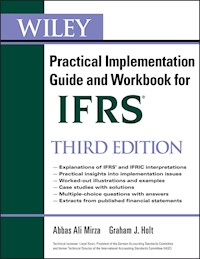
As the International Accounting Standards Board (IASB) makes rapid progress towards widespread acceptance and use of IFRS® (formerly named International Accounting Standards) worldwide, the need to understand these new standards increases. Now fully revised and updated, IFRS® Practical Implementation Guide and Workbook, Third Edition is the straightforward handbook for understanding and adapting the IFRS® standards.
This quick reference guide includes easy-to-understand IAS/IFRS®outlines, explanations, and practical insights that greatly facilitate understanding of the practical implementation issues involved in applying these complex standards.
Clearly explaining the IASB standards so that even first-time adopters of IFRS® will understand the complicated requirements, the Third Edition presents:
- Ten recently issued and revised IFRS® standards including business combinations, financial instruments and newly issued IFRS® for SMEs
- New International Financial Reporting Interpretations Committee (IFRIC) projects
- Multiple-choice questions with solutions and explanations to ensure thorough understanding of the complex IFRS®/IAS standards
- Case studies or "problems" with solutions illustrating the practical application of IFRS®/IAS
- Excerpts from published financial statements around the world
Designed with the needs of the user in mind, IFRS® Practical Implementation Guide and Workbook, Third Edition is an essential desktop reference for accountants and finance professionals, as well as a thorough review guide for the IFRS®/IAS certification exam.
Sie lesen das E-Book in den Legimi-Apps auf:
Seitenzahl: 1386
Veröffentlichungsjahr: 2011
Ähnliche

















Contents
Cover
Content
Title Page
Copyright
Forewords to First Edition
Preface
Acknowledgements
About the Authors
1. Introduction to International Financial Reporting Standards
INTRODUCTION
WORLDWIDE ADOPTION OF IFRS
REMAINING EXCEPTIONS
THE INTERNATIONAL ACCOUNTING STANDARDS COMMITTEE
THE INTERNATIONAL ACCOUNTING STANDARDS BOARD
STRUCTURE AND GOVERNANCE
THE WAY FORWARD
2. IASB Framework
INTRODUCTION
OBJECTIVE OF FINANCIAL STATEMENTS
UNDERLYING ASSUMPTIONS
QUALITATIVE CHARACTERISTICS OF FINANCIAL STATEMENTS
ELEMENTS OF FINANCIAL STATEMENTS
CONCEPTS OF CAPITAL AND CAPITAL MAINTENANCE
FUTURE DEVELOPMENTS
MULTIPLE-CHOICE QUESTIONS
3. Presentation of Financial Statements (IAS 1)
INTRODUCTION
SCOPE
PURPOSE OF FINANCIAL STATEMENTS
OVERALL CONSIDERATIONS
STRUCTURE AND CONTENT Identification of the Financial Statements
EXTRACTS FROM PUBLISHED FINANCIAL STATEMENTS
EXTRACTS FROM PUBLISHED FINANCIAL STATEMENTS
OTHER AMENDMENTS TO IAS 1
MULTIPLE-CHOICE QUESTIONS
4. Inventories (IAS 2)
BACKGROUND AND INTRODUCTION
SCOPE
MEASUREMENT OF INVENTORIES
COST OF INVENTORIES
TECHNIQUES FOR MEASUREMENT OF COSTS
COST FORMULAS
NET REALIZABLE VALUE
RECOGNITION OF EXPENSE
DISCLOSURE
EXTRACTS FROM PUBLISHED FINANCIAL STATEMENTS
MULTIPLE-CHOICE QUESTIONS
5. Statement of Cash Flows (IAS 7)
BACKGROUND AND INTRODUCTION
SCOPE
BENEFITS OF PRESENTING A STATEMENT OF CASH FLOWS
CASH AND CASH EQUIVALENTS
PRESENTATION OF THE STATEMENT OF CASH FLOWS
OPERATING ACTIVITIES
INVESTING ACTIVITIES
FINANCING ACTIVITIES
NONCASH TRANSACTIONS
DIRECT VERSUS INDIRECT METHOD
REPORTING CASH FLOWS ON A GROSS BASIS VERSUS A NET BASIS
FOREIGN CURRENCY CASH FLOWS
REPORTING FUTURES, FORWARD CONTRACTS, OPTIONS, AND SWAPS
RECONCILIATION OF CASH AND CASH EQUIVALENTS
ACQUISITIONS AND DISPOSALS OF SUBSIDIARIES AND OTHER BUSINESS UNITS
OTHER DISCLOSURES REQUIRED AND RECOMMENDED BY IAS 7
MULTIPLE-CHOICE QUESTIONS
6. Accounting Policies, Changes in Accounting Estimates and Errors (IAS 8)
BACKGROUND AND INTRODUCTION
ACCOUNTING POLICIES
SELECTION AND APPLICATION OF ACCOUNTING POLICIES
CONSISTENCY OF ACCOUNTING POLICIES
FACTORS GOVERNING CHANGES IN ACCOUNTING POLICIES
APPLYING CHANGES IN ACCOUNTING POLICIES
LIMITATIONS OF RETROSPECTIVE APPLICATION
DISCLOSURES WITH RESPECT TO CHANGES IN ACCOUNTING POLICIES
CHANGES IN ACCOUNTING ESTIMATES
CORRECTION OF PRIOR PERIOD ERRORS
EXTRACTS FROM PUBLISHED FINANCIAL STATEMENTS
MULTIPLE-CHOICE QUESTIONS
7. Events After the Reporting Period (IAS 10)
BACKGROUND AND INTRODUCTION
SCOPE
AUTHORIZATION DATE
ADJUSTING AND NONADJUSTING EVENTS (AFTER THE REPORTING PERIOD)
DIVIDENDS PROPOSED OR DECLARED AFTER THE BALANCE SHEET DATE
GOING CONCERN CONSIDERATIONS
DISCLOSURE REQUIREMENTS
EXTRACTS FROM PUBLISHED FINANCIAL STATEMENTS
MULTIPLE-CHOICE QUESTIONS
8. Construction Contracts (IAS 11)
BACKGROUND AND INTRODUCTION
COMBINING AND SEGMENTING CONSTRUCTION CONTRACTS
CONTRACT REVENUE
CONTRACT COSTS
RECOGNITION OF CONTRACT REVENUE AND EXPENSES
FIXED-PRICE CONTRACT
COST-PLUS CONTRACT
PERCENTAGE-OF-COMPLETION METHOD
IFRIC 12
IFRIC 15
DISCLOSURES
EXTRACTS FROM PUBLISHED FINANCIAL STATEMENTS
MULTIPLE-CHOICE QUESTIONS
9. Income Taxes (IAS 12)
BACKGROUND AND INTRODUCTION
CURRENT TAX LIABILITIES AND ASSETS
ACCOUNTING FOR DEFERRED TAX
CONSOLIDATED FINANCIAL STATEMENTS
TEMPORARY DIFFERENCES NOT RECOGNIZED FOR DEFERRED TAX
DEFERRED TAX ASSETS
TAX RATES
DISCOUNTING
CURRENT AND DEFERRED TAX RECOGNITION
DIVIDENDS
DISCLOSURE: KEY ELEMENTS
REVISION OF IAS 12
EXTRACTS FROM PUBLISHED FINANCIAL STATEMENTS
MULTIPLE-CHOICE QUESTIONS
10. Property, Plant, and Equipment (IAS 16)
BACKGROUND AND INTRODUCTION
SCOPE
RECOGNITION OF AN ASSET
DEPRECIATION
DERECOGNITION
IFRIC INTERPRETATION 1
DISCLOSURE
EXTRACTS FROM PUBLISHED FINANCIAL STATEMENTS
MULTIPLE-CHOICE QUESTIONS
11. Leases (IAS 17)
BACKGROUND AND INTRODUCTION
SCOPE
CLASSIFICATION OF LEASES
LEASES IN THE FINANCIAL STATEMENTS OF LESSEES Finance Leases
LEASES IN THE FINANCIAL STATEMENTS OF LESSORS
SALE AND LEASEBACK TRANSACTIONS AND OTHER TRANSACTIONS INVOLVING THE LEGAL FORM OF A LEASE
THE FUTURE OF LEASE ACCOUNTING
EXTRACTS FROM PUBLISHED FINANCIAL STATEMENTS
MULTIPLE-CHOICE QUESTIONS
12. Revenue (IAS 18)
BACKGROUND AND INTRODUCTION
SCOPE
MEASUREMENT OF REVENUE
IDENTIFICATION OF A TRANSACTION
SALE OF GOODS
RENDERING OF SERVICES
INTEREST, ROYALTIES, AND DIVIDENDS
DISCLOSURES
IFRIC 12,
SERVICE CONCESSION ARRANGEMENTS
IFRIC 13,
CUSTOMER LOYALTY PROGRAMS
AMENDMENT TO IAS 18 ANNUAL IMPROVEMENTS 2009
IFRIC 15,
AGREEMENTS FOR THE CONSTRUCTION OF REAL ESTATE
DISCLOSURES
IFRIC 18,
TRANSFERS OF ASSETS FROM CUSTOMERS
EXTRACTS FROM PUBLISHED FINANCIAL STATEMENTS
MULTIPLE-CHOICE QUESTIONS
13. Employee Benefits (IAS 19)
SCOPE
DEFINED CONTRIBUTION PLANS AND DEFINED BENEFIT PLANS— CLASSIFICATION
DEFINED BENEFIT PLANS
DEFINED CONTRIBUTION PLANS
CONTRASTING DEFINED BENEFIT AND DEFINED CONTRIBUTION
ACCOUNTING FOR DEFINED CONTRIBUTION SCHEMES
ACCOUNTING FOR DEFINED BENEFIT PLANS
KEY INFORMATION: DEFINED BENEFIT PLANS
STATEMENT OF FINANCIAL POSITION
STATEMENT OF COMPREHENSIVE INCOME
MEASURING THE DEFINED BENEFIT OBLIGATION
PLAN ASSETS
PENSION ASSETS AND LIABILITIES
CURTAILMENTS AND SETTLEMENTS
ACTUARIAL GAINS AND LOSSES—DEFINED BENEFIT PLANS
IFRIC 14,
IAS 19—THE LIMIT ON A DEFINED BENEFIT ASSET, MINIMUM FUNDING REQUIREMENTS, AND THEIR INTERACTION
DISCLOSURE
EXTRACTS FROM PUBLISHED FINANCIAL STATEMENTS
MULTIPLE-CHOICE QUESTIONS
14. Accounting for Government Grants and Disclosure of Government Assistance (IAS 20)
INTRODUCTION
SCOPE
GOVERNMENT GRANTS
RECOGNITION OF GOVERNMENT GRANTS
NONMONETARY GRANTS
PRESENTATION OF GRANTS RELATED TO ASSETS
REPAYMENT OF GOVERNMENT GRANTS
GOVERNMENT ASSISTANCE
DISCLOSURES
MULTIPLE-CHOICE QUESTIONS
15. The Effects of Changes in Foreign Exchange Rates (IAS 21)
OBJECTIVES
FUNCTIONAL CURRENCY
RECORDING FOREIGN CURRENCY TRANSACTIONS USING THE FUNCTIONAL CURRENCY
RECOGNITION OF EXCHANGE DIFFERENCES
TRANSLATION TO THE PRESENTATION CURRENCY FROM THE FUNCTIONAL CURRENCY
TRANSLATION OF A FOREIGN OPERATION
DISPOSAL OF A FOREIGN ENTITY
DISCLOSURE
EXTRACTS FROM PUBLISHED FINANCIAL STATEMENTS
MULTIPLE-CHOICE QUESTIONS
16. Borrowing Costs (IAS 23)
BACKGROUND
SCOPE
BORROWING COSTS
QUALIFYING ASSETS
RECOGNITION
BORROWINGS ELIGIBLE FOR CAPITALIZATION
EXCESS OF CARRYING AMOUNT OF THE QUALIFYING ASSET OVER THE RECOVERABLE AMOUNT
COMMENCEMENT OF CAPITALIZATION
SUSPENSION OF CAPITALIZATION
CESSATION OF CAPITALIZATION
DISCLOSURE
EXTRACT FROM PUBLISHED FINANCIAL STATEMENTS
MULTIPLE-CHOICE QUESTIONS
17. Related-Party Disclosures (IAS 24)
BACKGROUND AND INTRODUCTION
SCOPE
EXPLANATION AND FURTHER ELABORATION OF THE DEFINITIONS
SCOPE EXCLUSIONS AND EXEMPTION
DISCLOSURES
EXTRACTS FROM PUBLISHED FINANCIAL STATEMENTS
MULTIPLE-CHOICE QUESTIONS
18. Accounting and Reporting by Retirement Benefit Plans (IAS 26)
INTRODUCTION
SCOPE
DEFINED CONTRIBUTION PLANS
DEFINED BENEFIT PLANS
ADDITIONAL DISCLOSURES REQUIRED BY THE STANDARD
MULTIPLE-CHOICE QUESTIONS
19. Consolidated and Separate Financial Statements (IAS 27)
SCOPE
PRESENTATION OF FINANCIAL STATEMENTS
CONSOLIDATED FINANCIAL STATEMENTS
ACCOUNTING PROCEDURES
CHANGES IN THE OWNERSHIP INTERESTS
DISCLOSURES
EXTRACTS FROM PUBLISHED FINANCIAL STATEMENTS
MULTIPLE-CHOICE QUESTIONS
20. Investments in Associates (IAS 28)
BACKGROUND AND INTRODUCTION
SIGNIFICANT INFLUENCE
EQUITY METHOD
EXCEPTIONS TO THE EQUITY METHOD
INVESTOR CEASES TO HAVE SIGNIFICANT INFLUENCE
ACQUISITION OF AN ASSOCIATE AND ACCOUNTING TREATMENT
IMPAIRMENT LOSSES
SEPARATE FINANCIAL STATEMENTS
DISCLOSURES
EXTRACTS FROM PUBLISHED FINANCIAL STATEMENTS
MULTIPLE-CHOICE QUESTIONS
21. Financial Reporting in Hyperinflationary Economies (IAS 29)
SCOPE
DEFINITION OF HYPERINFLATION
CEASING TO BE HYPERINFLATIONARY
FUNCTIONAL CURRENCY AND HYPERINFLATION
RESTATEMENT OF FINANCIAL STATEMENTS: STATEMENT OF FINANCIAL POSITION
STATEMENT OF COMPREHENSIVE INCOME
SUNDRY POINTS
DISCLOSURE
MULTIPLE-CHOICE QUESTIONS
22. Interests in Joint Ventures (IAS 31)
SCOPE
DIFFERENT FORMS OF JOINT VENTURE
JOINTLY CONTROLLED OPERATIONS
JOINTLY CONTROLLED ASSETS
JOINTLY CONTROLLED ENTITIES
PROPORTIONATE CONSOLIDATION
EQUITY METHOD
EXCEPTION TO THE USE OF THE EQUITY METHOD AND PROPORTIONATE CONSOLIDATION
FINANCIAL STATEMENTS OF AN INVESTOR
SEPARATE FINANCIAL STATEMENTS
TRANSACTIONS BETWEEN A VENTURER AND A JOINT VENTURE
DISCLOSURE
EXTRACTS FROM PUBLISHED FINANCIAL STATEMENTS
MULTIPLE-CHOICE QUESTIONS
23. Financial Instruments: Presentation (IAS 32)
INTRODUCTION
SCOPE
PRESENTATION OF LIABILITIES AND EQUITY
PRESENTATION OF INTEREST, DIVIDENDS, LOSSES, AND GAINS
AMENDMENTS TO IAS 32—CLASSIFICATION OF “RIGHTS ISSUES”—EFFECTIVE 2010
EXTRACTS FROM FINANCIAL STATEMENTS
MULTIPLE-CHOICE QUESTIONS
24. Financial Instruments: Recognition and Measurement (IAS 39)
INTRODUCTION
SCOPE
CLASSIFICATION OF FINANCIAL ASSETS AND FINANCIAL LIABILITIES INTO CATEGORIES
RECOGNITION
DERECOGNITION
MEASUREMENT
DERIVATIVES
HEDGE ACCOUNTING
RECENT AMENDMENTS TO IAS 39
EXTRACTS FROM PUBLISHED FINANCIAL STATEMENTS
MULTIPLE-CHOICE QUESTIONS
25. Earnings Per Share (IAS 33)
BACKGROUND AND INTRODUCTION
ORDINARY SHARES
PRESENTATION OF EARNINGS PER SHARE
BASIC EARNINGS PER SHARE
RIGHTS ISSUES
DILUTED EARNINGS PER SHARE
PRESENTATION
DISCLOSURES
EXTRACTS FROM PUBLISHED FINANCIAL STATEMENTS
MULTIPLE-CHOICE QUESTIONS
26. Interim Financial Reporting (IAS 34)
OBJECTIVE
FORM AND CONTENT OF INTERIM REPORTS
SELECTED EXPLANATORY NOTES
DISCLOSURE OF COMPLIANCE WITH IFRS
PERIODS TO BE PRESENTED BY INTERIM FINANCIAL STATEMENTS
MEASUREMENT
SUNDRY POINTS
IFRIC 10 INTERIM FINANCIAL REPORTING AND IMPAIRMENT
EXTRACTS FROM PUBLISHED FINANCIAL STATEMENTS
MULTIPLE-CHOICE QUESTIONS
27. Impairment of Assets (IAS 36)
SCOPE
IDENTIFYING AN IMPAIRMENT LOSS
DETERMINATION OF A RECOVERABLE AMOUNT
FAIR VALUE LESS COSTS TO SELL
VALUE-IN-USE
FUTURE CASH FLOWS
DISCOUNT RATE
RECOGNITION AND MEASUREMENT OF AN IMPAIRMENT LOSS
CASH-GENERATING UNITS
GOODWILL
TIMING OF IMPAIRMENT TEST
GROUP OR DIVISIONAL ASSETS (CORPORATE ASSETS)
ALLOCATION OF IMPAIRMENT LOSS
REVERSAL OF AN IMPAIRMENT LOSS
DISCLOSURE REQUIREMENTS
EXTRACTS FROM PUBLISHED FINANCIAL STATEMENTS
MULTIPLE-CHOICE QUESTIONS
28. Provisions, Contingent Liabilities, and Contingent Assets (IAS 37)
BACKGROUND AND INTRODUCTION
SCOPE
PROVISIONS
CONTINGENT LIABILITIES
CONTINGENT ASSETS (Possible Assets)
INTERPRETATION OF IAS 37 (IFRIC)
DISCLOSURES
EXTRACTS FROM PUBLISHED FINANCIAL STATEMENTS
MULTIPLE-CHOICE QUESTIONS
29. Intangible Assets (IAS 38)
INTRODUCTION AND BACKGROUND
SCOPE
ELABORATION AND INTERPRETATION OF THE DEFINITIONS
RECOGNITION AND MEASUREMENT
INTERNALLY GENERATED INTANGIBLE ASSETS
RECOGNITION OF AN EXPENSE
WEB SITE DEVELOPMENT COSTS
MEASUREMENT AFTER RECOGNITION
USEFUL LIFE
AMORTIZATION
IMPAIRMENT
RETIREMENTS AND DISPOSALS
DISCLOSURES
EXTRACTS FROM PUBLISHED FINANCIAL STATEMENTS
MULTIPLE-CHOICE QUESTIONS
30. Investment Property (IAS 40)
BACKGROUND AND INTRODUCTION
INVESTMENT PROPERTY
RECOGNITION
MEASUREMENT
DISPOSALS
DISCLOSURES
MULTIPLE-CHOICE QUESTIONS
31. Agriculture (IAS 41)
BACKGROUND AND INTRODUCTION
RECOGNITION AND MEASUREMENT
GAINS AND LOSSES
FAIR VALUE RELIABILITY
GOVERNMENT GRANTS
ISSUES IN IAS 41
DISCLOSURES
EXTRACTS FROM PUBLISHED FINANCIAL STATEMENTS
MULTIPLE-CHOICE QUESTIONS
32. First-Time Adoption of International Financial Reporting Standards (IFRS 1)
BACKGROUND
SCOPE
DEEMED EXCEPTIONS TO THE “FIRST-TIME ADOPTER” RULE
OPENING IFRS STATEMENT OF FINANCIAL POSITION
ADJUSTMENTS REQUIRED IN PREPARING THE OPENING IFRS STATEMENT OF FINANCIAL POSITION (OR IN TRANSITION FROM PREVIOUS GAAP TO IFRS AT THE TIME OF FIRST-TIME ADOPTION)
ACCOUNTING POLICIES
REPORTING PERIOD
RATIONALE BEHIND USING THE “CURRENT VERSION OF IFRS”
TRANSITIONAL PROVISIONS IN OTHER IFRS
TARGETED EXEMPTIONS FROM OTHER IFRS
BUSINESS COMBINATIONS
SHARE-BASED PAYMENT TRANSACTIONS
INSURANCE CONTRACTS AND OIL AND GAS ASSETS
FAIR VALUE OR REVALUATION AS DEEMED COST
LEASES
EMPLOYEE BENEFITS
CUMULATIVE TRANSLATION DIFFERENCES
INVESTMENTS IN SUBSIDIARIES, JOINTLY CONTROLLED ENTITIES, AND ASSOCIATES
FINANCIAL INSTRUMENTS
IFRIC 1,
CHANGES IN EXISTING DECOMMISSIONING, RESTORATION, AND SIMILAR LIABILITIES
BORROWING COSTS
IFRIC 18,
TRANSFERS OF ASSETS FROM CUSTOMERS
ASSETS AND LIABILITIES OF SUBSIDIARIES, ASSOCIATES, AND JOINT VENTURES
EXCEPTIONS TO RETROSPECTIVE APPLICATION OF OTHER IFRS
PRESENTATION AND DISCLOSURE
EXTRACTS FROM PUBLISHED FINANCIAL STATEMENTS
MULTIPLE-CHOICE QUESTIONS
33. Share-Based Payments (IFRS 2)
BACKGROUND AND INTRODUCTION
RECOGNITION OF SHARE-BASED PAYMENT
EQUITY-SETTLED TRANSACTIONS
CASH-SETTLED TRANSACTIONS
TRANSACTIONS THAT CAN BE SETTLED FOR SHARES OR CASH
DEFERRED TAX IMPLICATIONS
DISCLOSURE
AMENDMENTS TO IFRS 2
EXTRACTS FROM PUBLISHED FINANCIAL STATEMENTS
MULTIPLE-CHOICE QUESTIONS
34. Business Combinations (IFRS 3)
BACKGROUND AND INTRODUCTION
IDENTIFYING AN ACQUIRER
COST OF ACQUISITION
NET ASSETS ACQUIRED
GOODWILL
STEP ACQUISITION
DISCLOSURES
EXTRACTS FROM PUBLISHED FINANCIAL STATEMENTS
MULTIPLE-CHOICE QUESTIONS
35. Insurance Contracts (IFRS 4)
BACKGROUND AND INTRODUCTION
FIRST PHASE
CHANGES IN ACCOUNTING POLICIES
CONCESSIONS IN IFRS 4
ACCOUNTING UNDER IFRS 4
RECENT PRONOUNCEMENTS
DISCLOSURES
EXTRACTS FROM PUBLISHED FINANCIAL STATEMENTS
FUTURE DEVELOPMENTS—AN INSIGHT
MULTIPLE-CHOICE QUESTIONS
36. Noncurrent Assets Held for Sale and Discontinued Operations (IFRS 5)
BACKGROUND AND SCOPE
EXTENSION OF PERIOD BEYOND ONE YEAR
SUNDRY POINTS
MEASUREMENT OF NONCURRENT ASSETS THAT ARE HELD FOR SALE
CHANGE OF PLANS
DISCLOSURE: NONCURRENT ASSETS
DISCONTINUED OPERATIONS: PRESENTATION AND DISCLOSURE
FUTURE DEVELOPMENTS
EXTRACTS FROM PUBLISHED FINANCIAL STATEMENTS
MULTIPLE-CHOICE QUESTIONS
37. Exploration for and Evaluation of Mineral Resources (IFRS 6)
INTRODUCTION
SCOPE
RECOGNITION
MEASUREMENT
IMPAIRMENT
DISCLOSURE
EXTRACTS FROM PUBLISHED FINANCIAL STATEMENTS
MULTIPLE-CHOICE QUESTIONS
38. Financial Instruments: Disclosures (IFRS 7)
INTRODUCTION
SCOPE
SIGNIFICANCE OF FINANCIAL INSTRUMENTS FOR FINANCIAL POSITION AND PERFORMANCE
NATURE AND EXTENT OF RISKS ARISING FROM FINANCIAL INSTRUMENTS
AMENDMENT TO IFRS 7,
IMPROVING DISCLOSURES ABOUT FINANCIAL INSTRUMENTS,
ISSUED MARCH 2009, EFFECTIVE FOR ANNUAL PERIODS BEGINNING ON OR AFTER JANUARY 1, 2009.
EXTRACTS FROM FINANCIAL STATEMENTS
MULTIPLE-CHOICE QUESTIONS
39. Operating Segments (IFRS 8)
INTRODUCTION
SCOPE
CORE PRINCIPLE
CHIEF OPERATING DECISION MAKER
OPERATING SEGMENTS
REPORTABLE SEGMENTS
DISCLOSURE REQUIREMENTS OF IFRS 8
MULTIPLE CHOICE QUESTIONS
40. Financial Instruments (IFRS 9)
INTRODUCTION AND PURPOSE
CLASSIFICATION
THE BUSINESS MODEL TEST
CONTRACTUAL TERMS OF FINANCIAL ASSET TEST
MEASUREMENT
RECLASSIFICATION
EMBEDDED DERIVATIVES
LOANS AND RECEIVABLES, AND HELD TO MATURITY
IMPAIRMENT AND AVAILABLE FOR SALE
OTHER ISSUES
EQUITY INVESTMENTS AT FAIR VALUE THROUGH OTHER COMPREHENSIVE INCOME
EFFECTIVE DATE AND TRANSITION
MULTIPLE-CHOICE QUESTIONS
41. IFRS for SMEs
INTRODUCTION
DEFINITION OF SME
RATIONALE
TOPICS OMITTED FROM IFRS FOR SMEs
KEY PRINCIPLES
TYPES OF SIMPLIFICATIONS
ACCOUNTING TREATMENTS DISALLOWED UNDER IFRS FOR SMEs
SPECIFIC RECOGNITION AND MEASUREMENT SIMPLIFICATIONS
SUMMARY OF THE IFRS FOR SMEs
PRACTICAL EXAMPLES OF DISCLOSURE
MULTIPLE-CHOICE QUESTIONS
Answers for Multiple-Choice Questions
Index
End User License Agreement
Guide
Cover
Table of Contents
Begin Reading
Pages
iii
iv
v
vi
vii
viii
xi
x
1
2
3
4
5
6
7
8
9
10
11
12
13
14
15
16
17
18
19
20
21
22
23
24
25
26
27
28
29
30
31
32
33
34
35
36
37
38
39
40
41
42
43
44
45
46
47
48
49
50
51
52
53
54
55
56
57
58
59
60
61
62
63
64
65
66
67
68
69
70
71
72
73
74
75
76
77
78
79
80
81
82
83
84
85
86
87
88
89
90
91
92
93
94
95
96
97
98
99
100
101
102
103
104
105
106
107
108
109
110
111
112
113
114
115
116
117
118
119
120
121
122
123
124
125
126
127
128
129
130
131
132
133
134
135
136
137
138
139
140
141
142
143
144
145
146
147
148
149
150
151
152
153
154
155
156
157
158
159
160
161
162
163
164
165
166
167
168
169
170
171
172
173
174
175
176
177
178
179
180
181
182
183
184
185
186
187
188
189
190
191
192
193
194
195
196
197
198
199
200
201
202
203
204
205
206
207
208
209
210
211
212
213
214
215
216
217
218
219
220
221
222
223
224
225
226
227
228
229
230
231
232
233
234
235
236
237
238
239
240
241
242
243
244
245
246
247
248
249
250
251
252
253
254
255
256
257
258
259
260
261
262
263
264
265
266
267
268
269
270
271
272
273
274
275
276
277
278
279
280
281
282
283
284
285
286
287
288
289
290
291
292
293
294
295
296
297
298
299
300
301
302
303
304
305
306
307
308
309
310
311
312
313
314
315
316
317
318
319
320
321
322
323
324
325
326
327
328
329
330
331
332
333
334
335
336
337
338
339
340
341
342
343
344
345
346
347
348
349
350
351
352
353
354
355
356
357
358
359
360
361
362
363
364
365
366
367
368
369
370
371
372
373
374
375
376
377
378
379
380
381
382
383
384
385
386
387
388
389
390
391
392
393
394
395
396
397
398
399
400
401
402
403
404
405
406
407
408
409
410
411
412
413
414
415
416
417
418
419
420
421
422
423
424
425
426
427
428
429
430
431
432
433
434
435
436
437
438
439
440
441
442
443
444
445
446
447
448
449
450
451
452
453
454
455
456
457
458
459
460
461
462
463
464
465
466
467
468
469
470
471
472
473
474
475
476
477
478
479
480
481
482
483
484
485
486
487
488
489
490
491
492
493
494
495
496
497
498
499
500
501
502
503
504
505
506
507
508
509
510
511
512
513
514
515
516
517
518
519
520
521
522
523
524
525
526
527
528
529
530
531
532
533
534
535
536
537
538
539
540
541
542
543
544
545
546
547
548
549
550
551
552
553
554
555
556
557
558
559
560
561
562
563
564
565
566
567
568
569
IFRS: Practical Implementation Guide and Workbook
Third Edition
Abbas Ali Mirza
Graham J. Holt
Portions of this book have their origins in copyrighted materials from the International Accounting Standards Board. These are noted by reference to the specific pronouncements, except for certain of the definitions introduced in bold type, which appear in a separate section at the beginning of each chapter. Complete copies of the international standards are available from the IASB. Copyright © International Accounting Standards Board, 30 Cannon Street, London EC4M 6XH, United Kingdom.
This book is printed on acid-free paper. ©
Copyright © 2011 by John Wiley & Sons, Inc. All rights reserved. Published by John Wiley & Sons, Inc., Hoboken, New Jersey Published simultaneously in Canada.
No part of this publication may be reproduced, stored in a retrieval system, or transmitted in any form or by any means, electronic, mechanical, photocopying, recording, scanning, or otherwise, except as permitted under Section 107 or 108 of the 1976 United States Copyright Act, without either the prior written permission of the Publisher, or authorization through payment of the appropriate per-copy fee to the Copyright Clearance Center, 222 Rosewood Drive, Danvers, MA 01923, (978)750-8400, fax (978)750-4470, or on the Web at www.copyright.com. Requests to the Publisher for permission should be addressed to the Permissions Department, John Wiley & Sons, Inc., 111 River Street, Hoboken, NJ 07030, (201)748-6011, fax (201)748-6008, or online at http://www.wiley.com/go/permission.
Limit of Liability/Disclaimer of Warranty: While the publisher and author have used their best efforts in preparing this book, they make no representations or warranties with respect to the accuracy or completeness of the contents of this book and specifically disclaim any implied warranties of merchantability or fitness for a particular purpose. No warranty may be created or extended by sales representatives or written sales materials. The advice and strategies contained herein may not be suitable for your situation. You should consult with a professional where appropriate. Neither the publisher nor author shall be liable for any loss of profit or any other commercial damages, including but not limited to special, incidental, consequential, or other damages.
For general information on our other products and services, please contact our Customer Care Department within the US at 800-762-2974, outside the US at 317-572-3993 or fax 317-572-4002.
Wiley also publishes its books in a variety of electronic formats. Some content that appears in print may not be available in electronic books. For more information about Wiley products, visit our Web site at www.wiley.com.
ISBN: 978-0-470-64791-2 (paperback); 978-1-118-01762-3 (ebk); 978-1-118-01763-0 (ebk); 978-1-118-01764-7 (ebk)
10 9 8 7 6 5 4 3 2 1
FOREWORD TO THE FIRST EDITIONby the Chairman of IASB
I and my fellow Board members at the International Accounting Standards Board (IASB) are committed to developing high quality, understandable, and enforceable global accounting standards that meet the demands for comparable and transparent information in the world’s capital markets. Recently we completed a work program to develop and issue a stable platform of such standards. Those standards, the International Financial Reporting Standards (IFRS), are now being implemented in a large number of countries around the world. This is a major achievement on the road towards the global acceptance of a single set of accounting standards.
The responsibility for achieving high quality financial reporting, however, does not rest solely with IASB. Our role is limited to providing the set of standards that entities should apply to achieve high quality, comparable, and transparent financial reporting. For IFRS to be properly understood, implemented, and applied in practice, education and training of all relevant parties— including financial statement preparers, auditors, regulators, financial analysts, and other users of financial statements as well as accounting students—is essential.
This book should be a helpful tool in this regard. The approach of the book is to discuss core concepts and other key elements of the standards and to provide training material in the form of worked case studies and questions to support successful learning of the material. Consequently, the book should be useful for students who prepare for professional exams and for financial statement preparers, auditors, regulators, financial analysts, and other users of financial statements who in their work need to be familiar with the standards. The book should help practitioners and students alike understand, implement, and apply the key elements of the standards.
Sir David Tweedie Chairman of IASB December 2005
FOREWORD TO THE FIRST EDITIONby the Secretary General of IOSCO
In recent years much has been written about International Financial Reporting Standards (IFRS) so it is opportune that a publication such as this would be released at this time particularly since this initiative helps to bring such clarity and focus to the debate.
Globalization is taking place at an ever more rapid pace. As cross-border financial activity increases, capital markets become more dependent on each other. As financial markets become ever more interdependent, there is a greater need for the development of internationally recognized and accepted standards dealing with capital market regulation.
The development of IFRS can be seen within this broader framework. They represent an especially useful instrument designed to promote a stable and more secure international regulatory environment. At the same time, IFRS deliver on accounting and disclosure objectives as well as the pursuit of improved transparency of global financial reporting.
For the International Organization of Securities Commissions (IOSCO), the development and subsequent progress of IFRS represents a priority outcome. The organization has been a key stakeholder with an active involvement in the process of setting the standards and in continually assessing their quality.
This involvement reflects a long history of commitment by IOSCO to efforts aimed at strengthening the integrity of international markets through the promotion of high quality accounting standards, including rigorous application and enforcement.
At the same time, there is an obligation of international standard setters to be responsive to concerns over the application and interpretation of the standards. This is a key complement to the success of IFRS and one which we take seriously.
Ultimately, accounting standards setting is a continuous process that must respond to changes and developments in the markets and the information needs of investors. Indeed, it has always been the case that effective financial reporting is fundamental to investor confidence as well as good corporate governance.
In the long term, the adoption of IFRS in many countries and their use in numerous crossborder transactions will help to bring about these high quality global accounting standards by providing transparent and comparable information in financial reports.
Although as an international standards setter IOSCO is not in position to endorse external publications, we have always recognized that by helping to promote clear information about the IFRS, publications such as this one serve a particularly useful function both as an educational opportunity and also to encourage confidence in these standards. On that basis it is most welcome.
Philippe Richard IOSCO Secretary General March 2006
PREFACE
Achieving consistency in financial reporting worldwide is the need of the hour, especially if meaningful comparisons are to be made of financial information emanating from different countries using accounting standards that, until recently, were vastly different from each other. Thus, there has arisen the urgent need for promulgation of a common set of global accounting standards or, in other words, global convergence into a common language of accounting for the financial world. International Financial Reporting Standards (IFRS), the standards promulgated by the International Accounting Standards Board (IASB), previously known as International Accounting Standards (IAS) that were issued by the International Accounting Standards Committee (IASC), the IASB’s predecessor body, appear to be emerging as the global accounting standards and, according to some, could even qualify for the coveted title of “the Esperanto of accounting.”
This is a challenging and exciting time to be writing a book on IFRS. Challenging, because it is indeed a daunting task to publish a book on a body of knowledge such as IFRS. This is also an exciting time to be writing a book on a subject of global importance such as IFRS, since the IASB standards are rapidly being adopted in a large number of countries all around the world. The FASB is working with the IASB to align their standards, which may mean that eventually the USA will adopt IFRS.
Whether you are an accountant, auditor, investor, banker, regulator, or financial analyst, understanding and appreciating the fundamental principles and requirements of IFRS has become more important than ever before. In this new financial world, knowledge of the fundamental principles of IFRS is essential to meet the growing demands of a changing regulatory and market environment. Cognizant of that, we embarked on this book project to help users and preparers of IFRS financial statements alike.
We have written this book with the end user in mind, which should make it user-friendly. For instance, if you are an accountant or an auditor working in a country that has adopted IFRS, you are now faced with the challenges of being able to apply these standards and to read and understand financial statements prepared in accordance with them. This book will help you to do that. We believe that this book’s real strength lies in the fact that it explains the IASB standards in a lucid manner so even first-time adopters of IFRS can understand the subject. The book illustrates the practical application of the IASB standards, using easy-to-apply illustrations and simple examples. It goes a step futher and provides copious learning aids in the form of case studies (with worked solutions), multiple-choice questions (with answers), and practical insights. We hope its simple, step-by-step approach will guide you in the application of IFRS.
In general, the structure and contents of the book are consistent with the order and scope of each standard; each chapter discusses a specific IFRS, and the chapters are ordered consistent with the numbering of the IFRS currently in effect. This structure allows you to use the book as a handbook, side by side with the bound volume of standards issued by IASB. The only exception is the chapter on IAS 39, which is located immediately after the chapter on IAS 32 in this book, since both standards address the same topic: the accounting for financial instruments. Also, the chapters dealing with IAS precede the chapters dealing with IFRS.
We hope that this book will greatly facilitate learning and will also help readers to understand the technical complexities of the standards. Although a great deal of effort has gone into writing this book, we sincerely believe that there is always scope for improvement. Any suggestions and comments for future editions are therefore encouraged. We humbly submit that any views expressed in this publication are ours alone and do not necessarily represent those of the firms or organizations we are part of.
Finally, we wish all our readers a very educating journey through the book.
Abbas Ali Mirza Graham Holt March 2011
ACKNOWLEDGMENTS
This book would not have seen the light of the day without the help of so many wonderful people around the globe who have helped us to put it together. This IFRS workbook project was conceived and conceptualized way back in 1998, but due to certain unanticipated issues that surfaced later, the project was dropped, only to be revived in 2005. We would be remiss in our duties if we did not thank the editors at John Wiley & Sons, Inc., USA, who had implicit faith in our abilities and greatly helped us in giving shape to this creative endeavor. In particular, we wish to place on record our sincere appreciation of the help provided to us by the following individuals of John Wiley & Sons: David Pugh, for his patronage of this book project; John DeRemigis, for his stewardship of this book project from its incubation stages in 1998 to its completion in 2011 and for his perseverance for these many years; Judy Howarth and Brandon Dust, for their able guidance and patience; Natasha Andrews-Noel and Pam Reh and their editorial staff, for their creative and valuable editorial comments and assistance; and the staff of the marketing department for their outstanding marketing plans and ideas.
We also wish to place on record our sincere appreciation of the untiring efforts of Ms. Liesel Knorr, the current president of the German Accounting Standards Board and formerly technical director of the International Accounting Standards Committee (IASC), the predecessor body to the IASB, for her thorough technical review of the entire manuscript. Her invaluable comments have all been taken into account in writing this book.
We are also grateful to all our friends and colleagues who helped us during the preparation of this book.
Abbas Ali Mirza wishes to place on record his sincere gratitude for all the constructive suggestions offered to him by his friends and family in conceptualizing the idea of such a workbook on IFRS during its formative stages. Furthermore, for their unstinting support, creative ideas, and invaluable contributions, he also wishes to thank his peers and mentors, in particular: Omar Fahoum, chairman and managing partner, Deloitte & Touche (M.E.); and all his partners and colleagues from Deloitte & Touche (M.E.), including but not limited to Joe El Fadl, Graham Lucas, Anis Sadek, Saba Sindaha, Cynthia Corby, Akbar Ahmed, Clovis Karam, Samir Madbak, Mutasem Dajani, Wissam Moukahal, Padmanabha Acharya, Ganesh Vishnampettai and Anish Mehta and Jude Rodrigues for their support and inspiration for the project, and his long-time friend, Graham Martins, managing partner, Pannell Kerr Forster (PKF), United Arab Emirates, for his guidance and support.
Graham Holt wishes to thank everyone who has directly and indirectly helped him in preparing this book, and his wife Joanne for her love and support.
ABOUT THE AUTHORS
Abbas Ali Mirza is a partner at Deloitte & Touche (M.E.) based in Dubai and handles audits as partner in charge of major international clients (including SEC clients) and large business groups of the firm. At Deloitte he is also responsible for regional functions, such as technical consultation on complex accounting issues. He is the designated “IFRS Leader” for Deloitte, Middle East, and has been featured for several years now on Deloitte’s IFRS global public Web site www.iasplus.com in the SPOTLIGHT on Deloitte IFRS Leaders’ section.
Abbas Ali Mirza has had a distinguished career in accounting, auditing, taxation, and business consulting and has worked for international audit and consulting firms in the United States of America, the Middle East, and India. He is a frequent principal/keynote speaker at major global conferences on International Financial Reporting Standards (IFRS) and has chaired world-class events on accounting, such as the World Accounting Summit held in Dubai since its inception in 2005 for seven years now. He has coauthored another book on IFRS published by John Wiley & Sons, Inc., Wiley: IFRS Interpretations and Application, for ten years since the book was first published in 1997. He holds or has held many important positions of repute in the accounting business and profession globally including
21st Session Chairman, United Nations’ Intergovernmental Working Group of Experts on International Standards on Accounting & Reporting (ISAR), to which position he was elected at the UNCTAD in Geneva in November 2004
Formerly member of the Developing Nations Permanent Task of the International Federation of Accountants (IFAC), later renamed IFAC’s Developing Nations Committee
Formerly member of the Accounting Standards Committee, Securities and Exchange Board of India (SEBI), India
Chairman of Auditors’ Group, Dubai Chamber of Commerce and Industry (DCCI)
Chairman of the Dubai Chapter of Institute of Chartered Accountants of India for three terms
Board Member and former President of the Indian Business and Professional Council of Dubai
Graham Holt qualified as a Chartered Accountant (Institute of Chartered Accountants in England & Wales) with Price Waterhouse and is a fellow of the Association of Chartered Certified Accountants (ACCA). He holds B.Com and MA Econ qualifications also. As a current ACCA examiner, he has been prominent in the development of their IFRS stream and their examination structure. He is an Executive Head of the Division of Accounting and Finance at the Manchester Metropolitan University Business School. Graham has given lectures on IFRS throughout the world and has many publications in the subject area. He has also been involved in running training courses on IFRS.
Chapter 1INTRODUCTION TO INTERNATIONAL FINANCIAL REPORTING STANDARDS
INTRODUCTION
Need for a Common Set of Accounting and Financial Reporting Standards
As the oft quoted verse from the world-renowned works of Shakespeare (Romeo and Juliet) goes: “What’s in a name? That which we call a rose by any other name would smell as sweet.” One wonders if the same can be said of financial statements prepared in different jurisdictions of the world. Not too far in the distant past, countries and economic regional blocs, such as Europe, would not be swayed by the thought of converging to a single set of global accounting standards and, due to nationalistic approaches to accounting standard setting, a financial statement issued in Japan (under the Japanese accounting standards) was vastly different in terms of accounting treatments and disclosures compared to a financial statement issued in other major parts of the world, say, in Germany where German accounting standards were used. In other words, the “name” that was given to the set of accounting standards used in the preparation of financial statements did matter for several countries since their national standard setters strongly believed that their own (national) accounting standards were suitable for their needs and were compatible to other globally preferred accounting standards.
However, due to the advent of globalization, the falling of the erstwhile insurmountable trade barriers between nations, and more recently the much-awaited response to the global financial crisis, together with calls by world leaders, things have changed dramatically in terms of the preferred set of standards of accounting globally. The accounting and financial world is now seriously considering the notion of using a single set of accounting and financial reporting standards that would be used by most, if not all, the nations around the globe, it appears that in all likelihood the name of that set of global accounting standards may be the International Financial Reporting Standards (IFRS®).
With this transformation of our world into a “flat world” (as some claim) the magical phenomenon of globalization has led to the emergence of a “global village” that we all live in now. The robust waves of globalization surging through the world seem to have transformed businesses across the globe as well as the manner in which they deal with each other across boundaries. If therefore, as the old adage goes, “accounting is the language of business,” then businesses around the world cannot afford to be speaking in different languages to each other while exchanging and sharing financial results of their international business activities with each other, and also while reporting the results of business and trade to their international stakeholders. As one school of thought believes, since business enterprises around the world are so highly globalized now and need to speak to each other in a common language of business, there is a real need for adopting a single set of accounting standards to unify the accounting world under one canvas and more importantly, solve the problem of diversity of accounting practices across borders.
Historically, countries around the world have had their own national accounting standards (which some countries have treasured for whatever reason, most likely due to the pride of national sovereignty). However, with such a compulsion to be part of the globalization movement, wherein businesses across national boundaries are realizing that it is an astute business strategy to embrace the world as their workplace and marketplace, having different rules (standards) of accounting for the purposes of reporting financial results would not help them at all (rather, it would serve as an impediment to smooth flows of information), and therefore, businesses have realized that they need to talk to each other in a common language. Thus, there is an urgent need for a common set of global, or even universal, accounting and financial reporting standards that are understood, used, and interpreted by different people around the world in the same manner.
The adoption of accounting standards that require high-quality, transparent, and comparable information is welcomed by investors, creditors, financial analysts, and other users of financial statements. Without a common set of accounting and financial reporting standards, it is difficult to compare financial information prepared by entities located in different parts of the world. In an increasingly global economy, the use of a single set of high-quality accounting standards facilitates investment and other economic decisions across borders, increases market efficiency, and reduces the cost of raising capital. International Financial Reporting Standards (IFRS) are increasingly becoming the set of globally accepted accounting standards that meet the needs of the world’s increasingly integrated global capital markets.
What Are IFRS?
IFRS is a set of standards promulgated by the International Accounting Standards Board (IASB), an international standard-setting body based in London, United Kingdom. The IASB places emphasis on developing standards based on sound, clearly-stated principles, on which interpretations may be required (sometimes referred to as principles-based standards). This contrasts with sets of standards, like US GAAP, the national accounting standards of the United States, which contain significantly more application guidance. These standards are sometimes referred to as rules-based standards, but that is really a misnomer as US standards also are based on principles—they just contain more application guidance (or “rules”). IFRS also generally do not provide “bright lines” in distinguishing between circumstances in which different accounting requirements are specified. This reduces the chances of ‘structuring’ transactions to achieve particular accounting effects.
According to one school of thought, since IFRS are primarily “principles-based” standards, the IFRS-approach to standard setting focuses more on the business or the economic purpose of a transaction and the underlying rights and obligations and therefore, instead of providing prescriptive rules (or guidance), IFRS promulgates Standards that lay down guidance in the form of “principles.”
This significant difference in approach to standard setting between IFRS and US GAAP is responsible for the limited number of pages that the IFRS Standards are spread over compared to US GAAP (US GAAP extends to over 20,000 pages of accounting literature as opposed to IFRS which presently is covered in approximately 2,000 to 3,000 pages).
WORLDWIDE ADOPTION OF IFRS
International Financial Reporting Standards (IFRS), which were initially called International Accounting Standards (IAS), are gaining acceptance worldwide. This section discusses the extent to which IFRS are recognized around the world and includes a brief overview of the history and key elements of the international standard-setting process. In the last few years, the international accounting standard-setting process has been able to claim a number of successes in achieving greater recognition and use of IFRS.
A major breakthrough came in 2002 when the European Union (EU) adopted legislation that required listed companies in Europe to apply IFRS in their consolidated financial statements. The legislation came into effect in 2005 and applies to more than 8,000 companies in 30 countries, including France, Germany, Italy, Spain, and the United Kingdom. The adoption of IFRS in Europe means that IFRS have replaced national accounting standards and requirements as the basis for preparing and presenting group financial statements for listed companies in Europe.
Outside Europe, many other countries also have been moving to IFRS. By 2005, IFRS had become mandatory in many countries in Africa, Asia, and Latin America. In addition, countries such as Australia, Hong Kong, New Zealand, Philippines, and Singapore have adopted national accounting standards that mirror IFRS. According to estimates, currently more than 100 countries require or permit IFRS in preparing and presenting financial statements, and many other countries are expected to adopt or apply IFRS in the coming years. In the period 2011–2012 several major players such as Canada and India are expected to adopt IFRS.
The adoption of standards that require high-quality, transparent, and comparable information is welcomed by investors, creditors, financial analysts, and other users of financial statements. Without common standards, it is difficult to compare financial information prepared by entities located in different parts of the world. In an increasingly global economy, the use of a single set of high-quality accounting standards facilitates investment and other economic decisions across borders, increases market efficiency, and reduces the cost of raising capital. IFRS are increasingly becoming the set of globally accepted accounting standards that meet the needs of the world’s increasingly integrated global capital markets.
REMAINING EXCEPTIONS
Measured in terms of the size of the capital markets, the most significant remaining exception to the global recognition of IFRS is the United States. In the US domestic entities continue to follow US GAAP (Generally Accepted Accounting Principles). However, IFRS are being considered for adoption in the United States as well.
The International Accounting Standards Board (IASB), the body responsible for setting IFRS, works closely with the national accounting standard-setting body in the US Financial Accounting Standards Board (FASB), to converge (that is, narrow the differences between) US GAAP and IFRS.
In the United States, the domestic securities regulator (Securities and Exchange Commission, SEC) has dropped its prior requirement for non-US companies that raise capital in US markets to prepare a reconciliation of their IFRS financial statements to US GAAP. This means that non-US companies (foreign private issuers, FPIs) raising capital in US markets no longer are required to reconcile their IFRS financial statement to US GAAP beginning with financial years ending after November 15, 2007. With this important SEC initiative IFRS have already made major inroads into the US capital markets.
The SEC is currently considering whether to permit US companies to use IFRS instead of US GAAP in preparing their financial statements. This is in response to the recognition that the world’s rapidly integrating capital markets would benefit from having a set of globally accepted accounting and financial reporting standards and that IFRS have become the primary contender for that title. Additionally, many question why US companies should continue to be required to use US GAAP when non-US companies are permitted to raise capital in US markets without reconciling their IFRS financial statements to US GAAP.
The SEC has announced a Work Plan whereby it will assess and confirm by 2011 whether or not it would recommend that the United States should abandon US GAAP and adopt IFRS, and if they do decide to adopt IFRS, when that would finally happen. The possible timescale for adoption of IFRS according to the initial SEC announcement through a SEC Roadmap (which approach was later modified and replaced with the SEC Work Plan) has been extended and is now expected to be around 2014.
On June 2, 2010, the IASB and the US Financial Accounting Standards Board (FASB), jointly referred to as the Boards, announced a modified strategy for the convergence of IFRS and US GAAP. The Boards first entered into a Memorandum of Understanding (MOU), which was updated in 2008, and a very aggressive work plan was agreed upon in order to complete the MOU projects by 2011. On June 24, 2010, the IASB issued a revised work plan for those MOU and non-MOU projects affected by the joint modified strategy announcement by the Boards, confirming their goal to complete several of these projects by June 2011 while extending the timeline for other nonurgent projects.
THE INTERNATIONAL ACCOUNTING STANDARDS COMMITTEE
From 1973 until 2001, the body in charge of setting the international standards was the International Accounting Standards Committee (IASC). The principal significance of IASC was to encourage national accounting standard setters around the world to improve and harmonize national accounting standards. Its objectives, as stated in its Constitution, were to
Formulate and publish in the public interest accounting standards to be observed in the presentation of financial statements and to promote their worldwide acceptance and observance
Work generally for the improvement and harmonization of regulations, accounting standards, and procedures relating to the presentation of financial statements
IASC and the Accounting Profession
IASC always had a special relationship with the international accounting profession. IASC was created in 1973 by agreement between the professional accountancy bodies in nine countries, and, from 1982, its membership consisted of all those professional accountancy bodies that were members of the International Federation of Accountants (IFAC), that is, professional accountancy bodies in more than 100 countries. As part of their membership in IASC, professional accountancy bodies worldwide committed themselves to use their best endeavors to persuade governments, standard-setting bodies, securities regulators, and the business community that published financial statements should comply with IAS.
IASC Board
The members of IASC (i.e., professional accountancy bodies around the world) delegated the responsibility for all IASC activities, including all standard-setting activities, to the IASC Board. The Board consisted of 13 country delegations representing members of IASC and up to four other organizations appointed by the Board. The Board, which usually met four times per year, was supported by a small secretariat located in London, United Kingdom.
The Initial Set of Standards Issued by IASC
In its early years, IASC focused its efforts on developing a set of basic accounting standards. These standards usually were worded broadly and contained several alternative treatments to accommodate the existence of different accounting practices around the world. Later these standards came to be criticized for being too broad and having too many options.
Improvements and Comparability Project
Beginning in 1987, IASC initiated work to improve its standards, reduce the number of choices, and specify preferred accounting treatments in order to allow greater comparability in financial statements. This work took on further importance as securities regulators worldwide started to take an active interest in the international accounting standard-setting process.
Core Standards Work Program
During the 1990s, IASC worked increasingly closely with the International Organization of Securities Commissions (IOSCO) on defining its agenda. In 1993, the Technical Committee of IOSCO held out on the possibility of IOSCO endorsement of IASC Standards for cross-border listing and capital-raising purposes around the world and identified a list of core standards that IASC would need to complete in order to gain such an endorsement. In response, IASC in 1995 announced that it had agreed on a work plan to develop the comprehensive set of core standards sought after by IOSCO. This effort became known as the Core Standards Work Program.
After three years of intense work to develop and publish standards that met IOSCO’s criteria, IASC completed the Core Standards Work Program in 1998. In 2000, the Technical Committee of IOSCO recommended that securities regulators worldwide permit foreign issuers to use IASC Standards for cross-border offering and listing purposes, subject to certain supplemental treatments.
International Accounting Standards and SIC Interpretations
During its existence, IASC issued 41 numbered Standards, known as International Accounting Standards (IAS), as well as a Framework for the Preparation and Presentation of Financial Statements. While some of the Standards issued by the IASC have been withdrawn, many are still in force. In addition, some of the Interpretations issued by the IASC’s interpretive body, the Standing Interpretations Committee (SIC), are still in force.
List of IAS Still in Force for 2009 Financial Statements
IAS 1, Presentation of Financial Statements
IAS 2, Inventories
IAS 7, Statement of Cash Flows
IAS 8, Accounting Policies, Changes in Accounting Estimates and Errors
IAS 10, Events After the Reporting Period
IAS 11, Construction Contracts
IAS 12, Income Taxes
IAS 16, Property, Plant, and Equipment
IAS 17, Leases
IAS 18, Revenue
IAS 19, Employee Benefits
IAS 20, Accounting for Government Grants and Disclosure of Government Assistance
IAS 21, The Effects of Changes in Foreign Exchange Rates
IAS 23, Borrowing Costs
IAS 24, Related-Party Disclosures
IAS 26, Accounting and Reporting by Retirement Benefit Plans
IAS 27, Consolidated and Separate Financial Statements IAS 28, Investments in Associates
IAS 29, Financial Reporting in Hyperinflationary Economies
IAS 31, Interests in Joint Ventures
IAS 32, Financial Instruments: Presentation
IAS 33, Earnings Per Share
IAS 34, Interim Financial Reporting
IAS 36, Impairment of Assets
IAS 37, Provisions, Contingent Liabilities, and Contingent Assets IAS 38, Intangible Assets
IAS 39, Financial Instruments: Recognition and Measurement IAS 40, Investment Property IAS 41, Agriculture
List of SIC Interpretations Still in Force for 2009 Financial Statements
SIC 7, Introduction of the Euro
SIC 10, Government Assistance—No Specific Relation to Operating Activities SIC 12, Consolidation—Special-Purpose Entities
SIC 13, Jointly Controlled Entities—Nonmonetary Contributions by Venturers SIC 15, Operating Leases—Incentives
SIC 21, Income Taxes—Recovery of Revalued Nondepreciable Assets
SIC 25, Income Taxes—Changes in the Tax Status of an Entity or Its Shareholders
SIC 27, Evaluating the Substance of Transactions Involving the Legal Form of a Lease
SIC 29, Service Concession Arrangements: Disclosures
SIC 31, Revenue—Barter Transactions Involving Advertising Services
SIC 32, Intangible Assets—Web Site Costs
THE INTERNATIONAL ACCOUNTING STANDARDS BOARD
In 2001, fundamental changes were made to strengthen the independence, legitimacy, and quality of the international accounting standard-setting process. In particular, the IASC Board was replaced by the International Accounting Standards Board (IASB) as the body in charge of setting the international standards.
Key Differences between IASC and IASB
The IASB differs from the IASC Board, its predecessor body, in several key areas:
Unlike the IASC Board, the IASB does not have a special relationship with the international accounting profession. Instead, IASB is governed by a group of Trustees of diverse geographic and functional backgrounds who are independent of the accounting profession.
Unlike the members of the IASC Board, members of the IASB are individuals who are appointed based on technical skill and background experience rather than as representatives of specific national accountancy bodies or other organizations.
Unlike the IASC Board, which only met about four times a year, the IASB Board usually meets each month. Moreover, the number of technical and commercial staff working for IASB has increased significantly as compared with IASC. (Similar to IASC, the headquarters of the IASB is located in London, United Kingdom.)
The interpretive body of the IASC (SIC) was replaced in 2002 by the International Financial Reporting Interpretations Committee (IFRIC). The latest name of this interpretive arm of the IASB is IFRS Interpretations Committee (which until March 31, 2010 was named International Financial Reporting Interpretations Committee (IFRIC)).
The name of the organization that comprises both the IASB and its Trustees is the IFRS Foundation (which until March 31, 2010, was named International Accounting Standards Committee Foundation). The objectives of the IFRS Foundation, as stated in its Constitution, are
To develop, in the public interest, a single set of high-quality, understandable, and enforceable global accepted financial reporting standards based on clearly articulated principles that require high-quality, transparent, and comparable information in financial statements and other financial reporting to help investors and other participants in the various capital markets of the world and other users of the information to make economic decisions.
To promote the use and rigorous application of those standards.
In fulfilling the objectives associated with 1. and 2., to take account of, as appropriate, the needs of a range of sizes and types of entities in diverse economic settings.
To promote and facilitate adoption of IFRS through convergence of national accounting standards and IFRS.
At its first meeting in 2001, IASB adopted all outstanding IAS issued by the IASC as its own Standards. Those IAS continue to be in force to the extent that they are not amended or withdrawn by the IASB. New Standards issued by IASB are known as IFRS. When referring collectively to IFRS, that term includes both IAS and IFRS.
List of IFRS Issued by the IASB to December 31, 2009
IFRS 1, First-Time Adoption of International Financial Reporting Standards
IFRS 2, Share-Based Payment
IFRS 3, Business Combinations
IFRS 4, Insurance Contracts
IFRS 5, Noncurrent Assets Held for Sale and Discontinued Operations
IFRS 6, Exploration for and Evaluation of Mineral Resources
IFRS 7, Financial Instruments: Disclosures
IFRS 8, Operating Segments
IFRS 9, Financial Instruments
IFRS for SMEs*
*NOTE: In July 2009 the IASB promulgated the much-awaited “IFRS for Small and Medium-Sized Enterprises (SMEs).” It provides standards applicable to private entities (that are not publicly accountable as defined in this standard).
One of the initial projects undertaken by IASB was to identify opportunities to improve the existing set of Standards by adding guidance and eliminating inconsistencies and choices. The improved Standards, adopted in 2003, formed part of IASB’s stable platform of Standards for use in 2005 when a significant number of countries around the world moved from national accounting requirements to IFRS, such as all the countries in the European Union.
STRUCTURE AND GOVERNANCE
Diagram of the Current IASB Structure
IFRS Foundation and the Trustees:
The governance of the IFRS Foundation rests on the shoulders of the Trustees of the IFRS Foundation (the “IFRS Foundation Trustees” or, simply, the “Trustees”). The Trustees comprise 22 individuals that are chosen from around the world. In order to ensure a broad international representation it is required that
Six Trustees are appointed from North America
Six from Europe
Six from Asia/Oceanic region
One from Africa
One from South America
Two from any part of the world, subject to maintaining overall geographical balance
The Trustees are independent of the standard-setting activities (which is the primary responsibility of the Board members of the IASB). The Trustees, on the other hand, are responsible for broad strategic issues, such as
Appointing the members of IASB, the IFRS Interpretations Committee, and the IFRS Advisory Council
Approving the budget of the IFRS Foundation and determining the basis of funding it
Reviewing the strategy of the IFRS Foundation and the IASB and its effectiveness, including consideration, but not determination, of the IASB’s agenda (which if allowed may impair the Trustees’ independence of the standard-setting process)
Establishing and amending operating procedures, consultative arrangements, and “due process” for the IASB, the IFRS Interpretations Committee, and the IFRS Advisory Council
Approving amendments to the Constitution after consulting the IFRS Advisory Council and following the required “due process”
Fostering and reviewing the development of the educational programs and materials that are consistent with the objectives of the IFRS Foundation
Generally, exercising all powers of the IFRS Foundation except those expressly reserved for IASB, the IFRS Interpretations Committee, and the IFRS Advisory Council
Monitoring Board
In order to enhance public accountability of the IFRS Foundation, while maintaining the operational independence of the IFRS Foundation and the IASB, the Monitoring Board, a new body, was created in 2009. The Monitoring Board comprises capital market authorities (e.g. representatives of institutions such as the IOSCO, the US SEC, and the European Commission) and its responsibilities include participating in the appointment of the Trustees of the IFRS Foundation, advising the Trustees in the fulfillment of their responsibilities, and holding meetings with the Trustees to discuss matters referred by the Monitoring Board to the IFRS Foundation or the IASB.




