


27,99 €
Mehr erfahren.
- Herausgeber: John Wiley & Sons
- Kategorie: Geisteswissenschaft
- Serie: Blackwell Introductions to Literature
- Sprache: Englisch
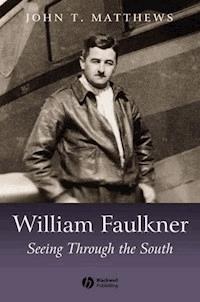
Considered by many to be the most influential US novelist the world has known, William Faulkner's roots and his writing are planted in a single obscure county in the Deep South. A foremost international modernist, Faulkner's subjects and characters, ironically, are more readily associated with the history and sociology of the most backward state in the Union. He experimented endlessly with narrative structure, developing an unorthodox writing style. Yet his main goal was to reveal the truth of "the human heart in conflict with itself," ultimately defining human nature through the lens of his own Southern experience. This comprehensive account of Faulkner's literary career features an exploration of his novels and key short stories, including The Sound and the Fury, As I Lay Dying, Absalom, Absalom!, and many more. Drawing on psychoanalytic, post-structuralist, feminist, and post-colonial theory, it offers an imaginative topography of Faulkner's efforts to reckon with his Southern past, to acknowledge its modernization, and to develop his own modernist method.
Sie lesen das E-Book in den Legimi-Apps auf:
Seitenzahl: 626
Veröffentlichungsjahr: 2011
Ähnliche




















Table of Contents
Cover
Endorsements
Blackwell Introductions to Literature
Title page
Copyright page
Illustrations
Preface
Acknowledgments
INTRODUCTION: Seeing Through the South: Faulkner and the Life Work of Writing
CHAPTER 1 An Artist Never Quite at Home: Faulkner’s Apprehension of Modern Life
CHAPTER 2 That Evening Son Go Down: The Plantation South at Twilight
CHAPTER 3 Come Up: From Red Necks to Riches
CHAPTER 4 The Planting of Men: The South and New World Colonialism
CHAPTER 5 Seeing a South Beyond Yoknapatawpha
Bibliography
Index
John Matthews’s new book on the fiction of William Faulkner is a lively and accessible discussion that offers fresh readings and new insights for everyone. While providing rich historical, cultural, and aesthetic contexts for reading Faulkner’s fiction, William Faulkner: Seeing Through the South is a pleasure to read; it is the best available discussion of the reach of Faulkner’s fiction we have now and will have for many years to come.
Patrick O’Donnell, Michigan State University
William Faulkner: Seeing Through the South is an introduction written by a major Faulkner scholar which both “introduces” and transforms its subject (a difficult trick) … The study unfailingly requires that in seeing Faulkner clear, we see him in new and necessary ways.
Richard Godden, University of California Irvine
Matthews lays out brilliantly the ideological systems that solicit Faulkner’s fiction. No troubled apologist for the Old South, Matthews’s Faulkner engages the challenges of modernity, taking on the disfigurements of colonialism and capitalism. Thanks to Matthews, we have a Faulkner for our time: one who sees through the South – demystifying its collective fantasies – even as he labors to see his region through.
Philip Weinstein, Swarthmore College
“Succint yet comprehensive account of Faulkner’s literary career, novels and key short stories.”
Bookseller Buyer’s Guide
“It is largely due to this diversity of approaches and Matthews’ ability to accessibly convey his formidable learning that his book achieves its dual aims: introducing Faulkner to first-timers while modifying an established critical tradition for the sake of a larger reading audience … seeing Through the South is a bold, many-sided, and at times surprising book-qualities that are not often combined in the typical introductory volume and are bolstered by Matthews’ enthusiasm for his subject and his subtle engagement with Faulkner’s daunting critical heritage.”
Notes and Queries
“The present excellent book deals with the cohesiveness of Faulkner’s work as an evolving project … Matthews is a master of literary theory without being mastered by it, and he has gifts as a close reader … Highly recommended.”
CHOICE
Blackwell Introductions to Literature
This series sets out to provide concise and stimulating introductions to literary subjects. It offers books on major authors (from John Milton to James Joyce), as well as key periods and movements (from Old English literature to the contemporary). Coverage is also afforded to such specific topics as “Arthurian Romance”. All are written by outstanding scholars as texts to inspire newcomers and others: nonspecialists wishing to revisit a topic, or general readers. The prospective overall aim is to ground and prepare students and readers of whatever kind in their pursuit of wider reading.
Published
1. John MiltonRoy Flannagan2. Chaucer and the Canterbury TalesJohn Hirsh3. Arthurian RomanceDerek Pearsall4. James JoyceMichael Seidel5. Mark TwainStephen Railton6. The Modern NovelJesse Matz7. Old Norse-Icelandic LiteratureHeather O’Donoghue8. Old English LiteratureDaniel Donoghue9. ModernismDavid Ayers10. Latin American FictionPhilip Swanson11. Re-Scripting Walt WhitmanEd Folsom and Kenneth M. Price12. Renaissance and ReformationsMichael Hattaway13. The Art of Twentieth-Century American PoetryCharles Altieri14. American Drama 1945-2000David Krasner15. Reading Middle English LiteratureThorlac Turville-Petre16. American Literature and Culture 1900–1960Gail McDonald17. Shakespeare’s SonnetsDympna Callaghan18. TragedyRebecca Bushnell19. Herman MelvilleWyn Kelley20. William Faulkner: Seeing Through the SouthJohn T. MatthewsForthcoming
Medieval LiteratureDavid WallaceEighteenth-Century FictionThomas KeymerThis paperback edition first published 2012
©2012 John T. Matthews
Edition history: Blackwell Publishing Ltd (hardback, 2009)
Blackwell Publishing was acquired by John Wiley & Sons in February 2007. Blackwell’s publishing program has been merged with Wiley’s global Scientific, Technical, and Medical business to form Wiley-Blackwell.
Registered Office
John Wiley & Sons Ltd, The Atrium, Southern Gate, Chichester, West Sussex, PO19 8SQ, United Kingdom
Editorial Offices
350 Main Street, Malden, MA 02148-5020, USA
9600 Garsington Road, Oxford, OX4 2DQ, UK
The Atrium, Southern Gate, Chichester, West Sussex, PO19 8SQ, UK
For details of our global editorial offices, for customer services, and for information about how to apply for permission to reuse the copyright material in this book, please see our website at www.wiley.com/wiley-blackwell.
The right of John T. Matthews to be identified as the author of this work has been asserted in accordance with the Copyright, Designs, and Patents Act 1988.
All rights reserved. No part of this publication may be reproduced, stored in a retrieval system, or transmitted, in any form or by any means, electronic, mechanical, photocopying, recording, or otherwise, except as permitted by the UK Copyright, Designs, and Patents Act 1988, without the prior permission of the publisher.
Wiley also publishes its books in a variety of electronic formats. Some content that appears in print may not be available in electronic books.
Designations used by companies to distinguish their products are often claimed as trademarks. All brand names and product names used in this book are trade names, service marks, trademarks, or registered trademarks of their respective owners. The publisher is not associated with any product or vendor mentioned in this book. This publication is designed to provide accurate and authoritative information in regard to the subject matter covered. It is sold on the understanding that the publisher is not engaged in rendering professional services. If professional advice or other expert assistance is required, the services of a competent professional should be sought.
Library of Congress Cataloging-in-Publication Data
Matthews, John T.
William Faulkner : seeing through the South / John T. Matthews.
p. cm.—(Blackwell introductions to literature ; 20)
Includes bibliographical references and index.
ISBN 978-1-4051-2481-2 (cloth) – 978-0-470-67240-2 (pbk.)
1. Faulkner, William, 1897–1962—Criticism and interpretation.
2. Southern States—In literature. I. Title.
PS3511.A86Z89163 2009
813′.52—dc22
2008020118
A catalogue record for this book is available from the British Library.
This book is published in the following electronic formats: ePDF 978-1-4443-0603-3; Wiley Online Library 978-1-4443-0602-6; ePub 978-1-4443-5491-1; Mobi 978-1-4443-2423-5
Illustrations
Figure 1 Faulkner posing in Royal Air Force uniform (July 1918). Cofield Collection, Southern Media Archive, University of Mississippi Special Collections (B1F38).
Figure 2 Faulkner in Hollywood (December 1942) by Alfred Eriss/Stringer/2870705/Getty Images.
Figure 3 Faulkner in 1930. Publicity still for Sanctuary. Cofield Collection, Southern Media Archive, University of Mississippi Special Collections (B1F1).
Figure 4 Faulkner boarding a flight to Stockholm for the Nobel Prize awards ceremony in 1950. Cofield Collection, Southern Media Archive, University of Mississippi Special Collections. Reproduced by permission of The Memphis Commercial Appeal.
Preface
Faulkner once remarked – in a fit of annoyance at having to provide autobiographical information to accompany an edition of his work – that he wished he might annihilate any knowledge of himself as a human being on the other side of the typewriter. That way there’d be nothing for the reader but the books. To write as if anonymous: that’s the dream of an author who put all of himself that mattered into the words on the page. It’s true that what we learn about any artist’s life and times may enrich our sense of the created works themselves. In the case of Faulkner, readers are fortunate to have a number of excellent biographies, each examining different facets of his outwardly simple but emotionally turbulent life.1 Most of these also give brief accounts of Faulkner’s literary works and artistic career as they interplay with the course of his personal life. As well, Faulkner’s stylistic inventiveness and his ability to imagine a whole fictional world full of extraordinary characters and stories have stimulated close study of his technique and themes. Faulkner’s art has inspired analysis as wide-ranging, intensive, and original as that of any author in English. Interpretive criticism continues to find fresh meaning in Faulkner’s writing and surprising new contexts for understanding its cultural and social environment. I have dealt with the abundance of specialized scholarship on Faulkner by trying to assimilate it as discreetly as possible into my discussions, conceding that it would be impossible to do justice to the many books and articles that constitute the professional body of work on Faulkner. I urge readers to explore the massive archive of criticism to discover how many other “Faulkners” emerge in distinct accounts of this hugely imaginative writer.
In my effort to survey the whole span of Faulkner’s creative life, and to introduce readers to the marvels of his artistry, I try to honor his preference for concentrating on the writing itself. I proceed as if the books themselves actually were the essence of Faulkner’s life, as I believe them to be. Biographies give us Faulkner’s personal and professional life, critical biographies the evolution of his imagination. General introductions offer overviews of Faulkner’s key concerns and achievement, while specialized analyses allow readers to pursue particular topics and interpretations of individual works. Seeing Through the South attempts something different: I try to present Faulkner’s entire imaginative career as a distinctively coherent project. My study reads all nineteen novels and a number of the best short stories as inter-related episodes in a vast chronicle of a world becoming modern; it shows the indispensable rooting of Faulkner’s imagination in the place he chose to live all his life; and it emphasizes how the US South was embedded in the history of global colonialism, in doing so suggesting what a Faulkner for our times might be.
Note
1 Joseph Blotner’s Faulkner: A Biography (one volume edition, New York: Random House, 1984) still provides the standard account of Faulkner’s life. Frederick Karl’s William Faulkner, American Writer: A Biography (New York: Weidenfeld & Nicolson, 1989) adds some information. The Life of William Faulkner: A Critical Biography by Richard Gray (Oxford, UK, and Cambridge, MA: Blackwell Publishers, 1994) concentrates on Faulkner’s writing in the context of events in his life. In William Faulkner and Southern History (New York: Oxford University Press, 1993), Joel Williamson focuses on Faulkner’s Southern past and makes several important discoveries about his family. Faulkner, The Transfiguration of Biography (Lincoln: University of Nebraska Press, 1979) by Judith Bryant Wittenberg demonstrates how Faulkner drew on experiences in his life for the subject matter of his novels. David L. Minter describes how Faulkner’s early life formed the basis of his fiction through The Sound and the Fury in William Faulkner: His Life and Work (Baltimore, MD: Johns Hopkins University Press, 1980). In Faulkner’s Career: An Internal Literary History (Ithaca, NY: Cornell University Press, 1979), Gary Lee Stonum shows how Faulkner developed as a writer by consciously setting new challenges for himself in each successive novel.
Acknowledgments
It would be impossible to identify all the debts I’ve incurred in writing this book, since it reflects a lifetime of learning about Faulkner from the published work of other scholars, from lively conversations with specialists, students, and fans everywhere (including several on Boston trolleys), and from exchanges with numerous colleagues over work in progress. I wish especially to thank Richard Godden, Patrick O’Donnell, and Philip Weinstein for reading this manuscript so carefully in its final stages, as well as for friendships of a lifetime forged around our regard for Faulkner’s art. I’ve benefited in countless ways from the collaborative teaching of Southern culture, including Faulkner, I’ve done at Boston University with my colleague Nina Silber, and from her own invaluable scholarship on Southern history. Leigh Anne Duck, Peter Lurie, Anne Goodwyn Jones, Donald Kartiganer, Noel Polk, and Theresa Towner helped me in a variety of particular ways for which I am grateful: confirming my approach, recommending more to read, correcting errors. Although the introductory format of this book prevents a full scholarly apparatus, I have tried to acknowledge sources for all material deriving directly from the work of others, and have attempted to mention as many principal book-length studies on Faulkner as space allowed. Nonetheless, I wrote this book cheerfully if humbly aware of how many other readers’ ideas have become indispensable to me as I think about Faulkner. Those companions will see themselves on every page. I trust them to grant me the privilege of transmitting accumulated knowledge to readers just beginning to appreciate the writer we have cared about for so long.
I also wish to thank the many students at Boston University who have come to share my passion for Faulkner’s fiction, and whom it has been my privilege to guide as they explored his created world. I’ve especially loved watching new dimensions of this remarkable writer come into view every few years in response to the changing interests of undergraduates and the shifting intersections of his imagination with the course of contemporary life. I’ve been blessed as well with superb graduate students through the years; they also will recognize the contributions they have made to my thinking through their hospitable yet tough-minded reactions to my ideas, and through the distinguished scholarship many have gone on to produce themselves.
My editors at Wiley-Blackwell have been extraordinary, beginning with Andrew McNeillie, who first proposed that I do such a book, and continuing to Emma Bennett, whose encouragement and support were unfailing, and thus decisive, as well as Rosemary Bird, Louise Butler, and Hannah Morrell, who superbly oversaw its final stages (which they must often have doubted they’d ever witness).
INTRODUCTION Seeing Through the South: Faulkner and the Life Work of Writing
We encounter William Faulkner in the twenty-first century as the greatest novelist America has yet produced. He may also be its most paradoxical. If Faulkner has become the United States’ most influential world novelist, he did so while setting his most significant fiction in a single obscure county in the Deep South, and spending his whole life in such a place himself. He was a foremost international modernist, yet his subjects and characters are unimaginable apart from the history and sociology of what was the most backward state in the Union. He experimented endlessly with narrative structure, and developed a difficult unorthodox style, yet he described his goal as simply trying to get at the truth of “the human heart in conflict with itself” (“Address upon Receiving the Nobel Prize for Literature,” Speeches, Essays, Public Letters, p. 119).
Although such contrary features of Faulkner’s imagination might seem to indicate the sort of genius that just transcends usual measures – think of him as the American Shakespeare – the purpose of this book is to show how his world’s contradictions were a key to Faulkner’s originality. Faulkner continues to speak to our contemporary world because his fiction described the seismic upheavals that formed modern life. Such disruptions caused a good deal of confusion and ambivalence, as one predominant way of life gave way to another. These changes seem commonplace now, and their stories familiar ones. But the sheer volume and degree of transformations can hardly be overestimated.
During Faulkner’s life (1897–1962), America grew from a disorganized second-rate federation of regions into a modern centralized economic empire and international political giant. A primarily rural and agricultural nation became a vast network of metropolitan centers; capitalism developed from the simple production of goods for local markets into a system of national and international corporations. America expanded its foreign might by seizing its first territories outside the continent in the Spanish-American War in 1898, then pursuing a course through two world wars that made it a Cold War super-power by mid-century. Longstanding civil rights movements brought the vote to many women in 1920 and to most African Americans by the 1960s. Centuries of lawful racial discrimination came to an end. Sexual behavior was transformed by new social patterns fostered by World War I. Developments in technology reinvented almost every aspect of everyday life. Faulkner’s father owned a livery stable in their hometown; twenty years later his son was flying airplanes. A child who grew up hearing tales about Civil War battles fought with saber and pistol, became the man who delivered his Nobel Prize speech four years after the US had dropped the first atomic bombs. Moreover, the events of modernity were hardly restricted to the United States. Throughout Western society similar changes were taking place, while across the globe peoples formerly controlled by European colonial empires began the struggle for independence and integration into the modern world.
It is not surprising that Faulkner’s fiction should emerge as one of the most valuable imaginative records we have of the changes that created much of our present world. His novels, one by one, take up all the crucial elements of the event of modernization. In Soldiers’ Pay (1926), his first novel, he concentrates on the way a traditional “provincial” society like the South’s was violently inducted into a modern “cosmopolitan” one like the New America’s after World War I. (1929) tells the story of the eclipse of the South’s landed gentry as a heartfelt tragedy; in his multiple novels about the Snopes family (starting with in 1940), Faulkner produces a corresponding comedy about the upward trickle of poor folk and the formation of a modern bourgeoisie. (1930) describes the awkward but determined journey of a family from its dying farm to the alluring town, while (1931) probes what Faulkner takes to be the horrific effects of urban mass entertainment and a culture of vicarious spectacle. In (1936) and (1942), Faulkner descends into the painful history of the plantation system, one whose origins he rightly locates in the earliest violations of the New World by European settlers, whether in North America or the West Indies. Some non-Southern novels take up other alarming features of the modern age, most monumentally, perhaps, in (1954), Faulkner’s ambitious meditation on the origins of the 1950s’ atomic age military-industrial complex in the America of World War I.
Lesen Sie weiter in der vollständigen Ausgabe!
Lesen Sie weiter in der vollständigen Ausgabe!
Lesen Sie weiter in der vollständigen Ausgabe!
Lesen Sie weiter in der vollständigen Ausgabe!
Lesen Sie weiter in der vollständigen Ausgabe!
Lesen Sie weiter in der vollständigen Ausgabe!
Lesen Sie weiter in der vollständigen Ausgabe!




